Images of my completed practical work (submitted 11 Feb 2026)
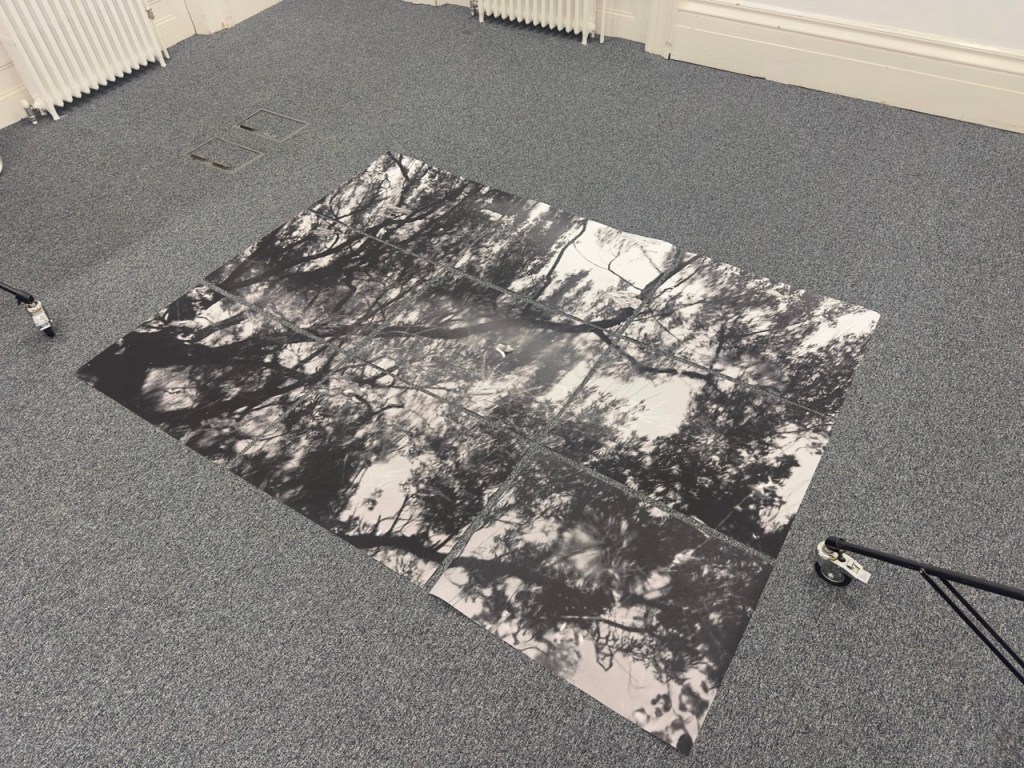
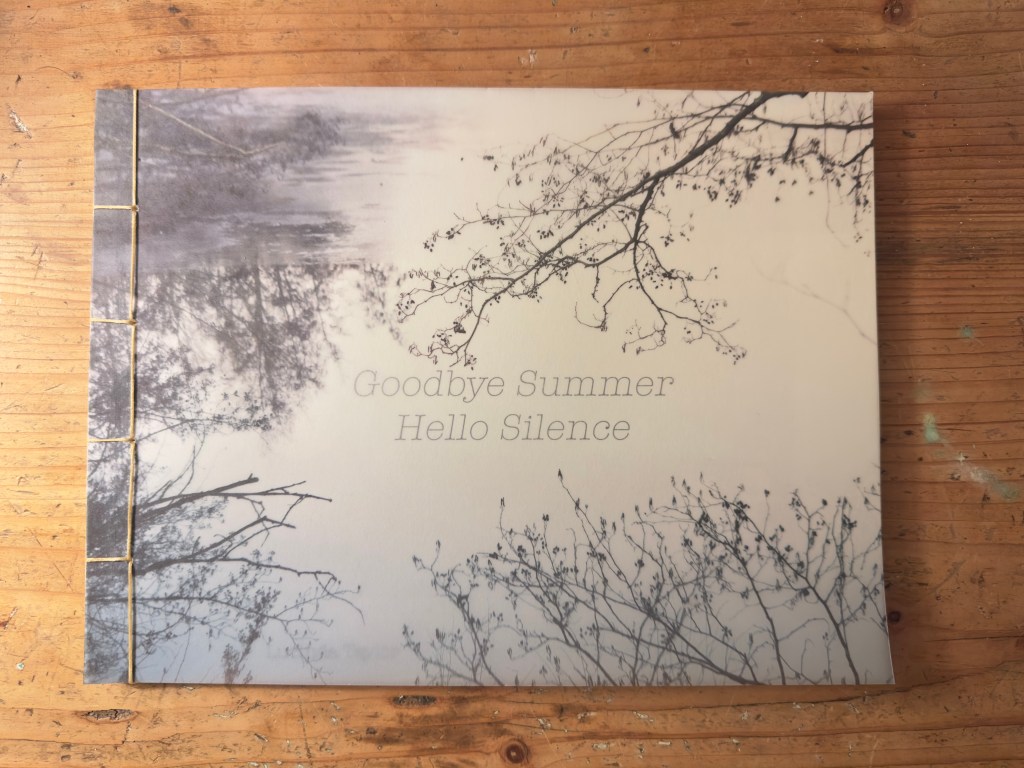
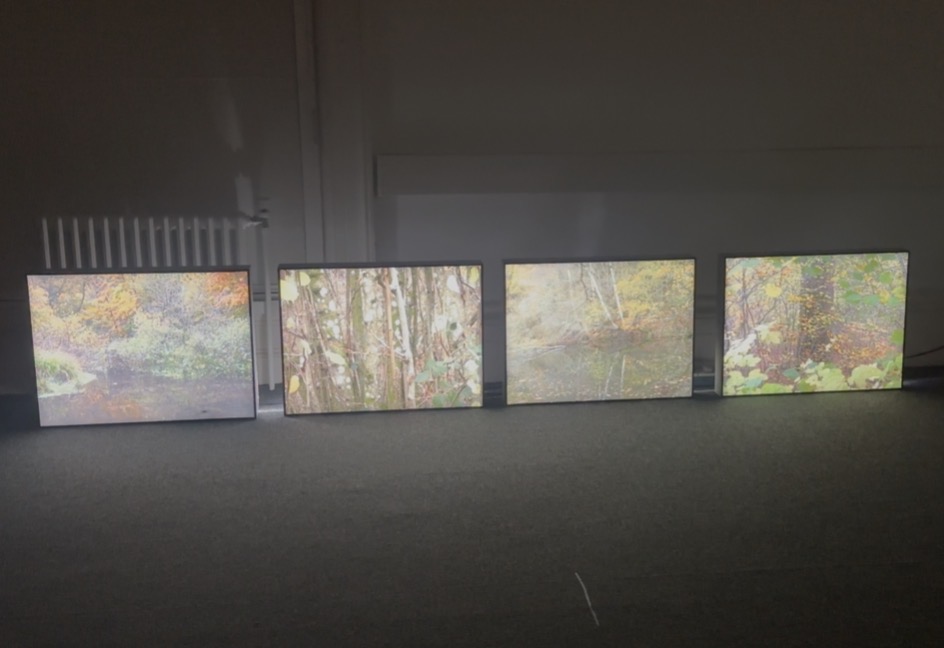
MA Photography
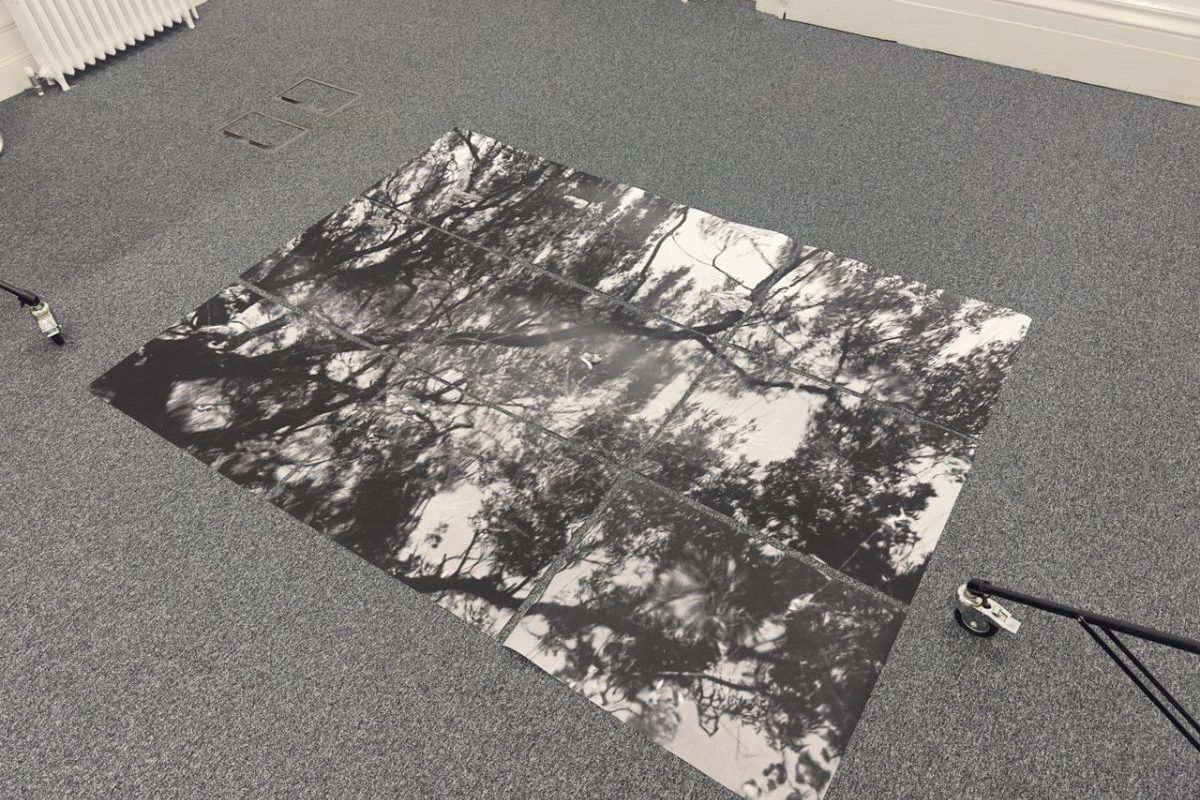
Images of my completed practical work (submitted 11 Feb 2026)
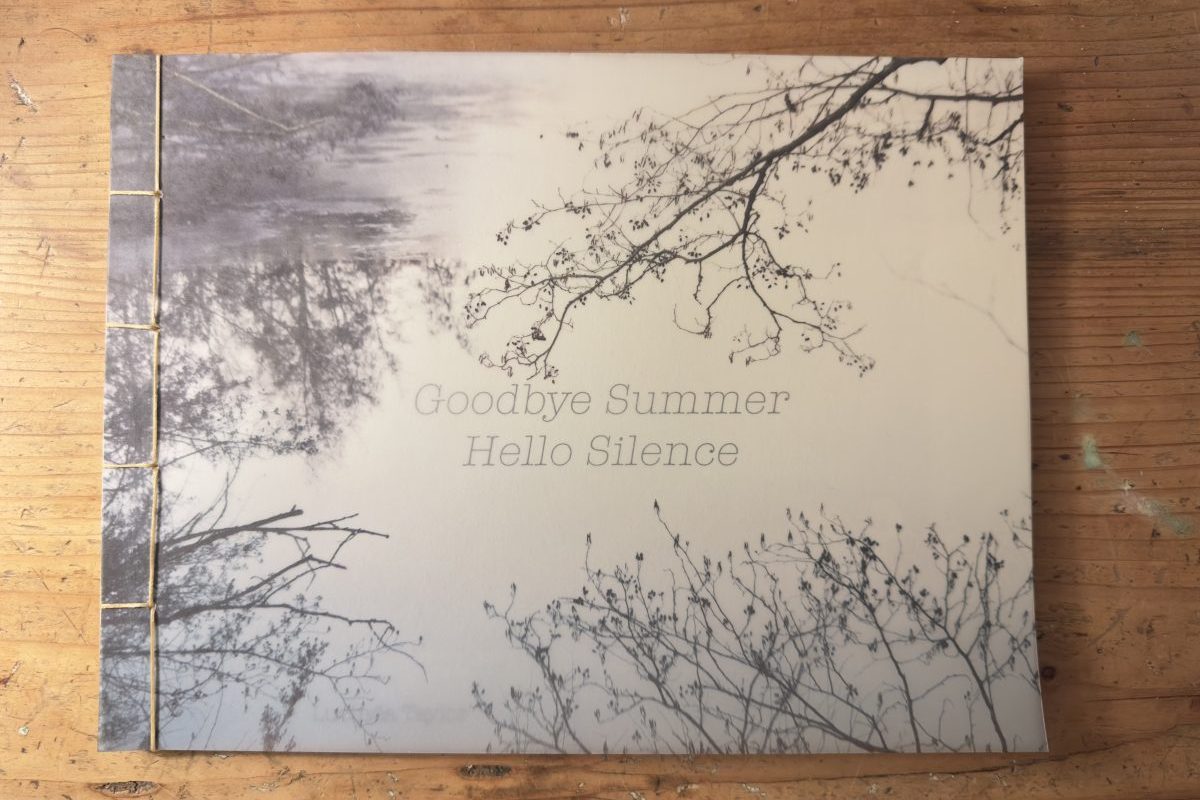
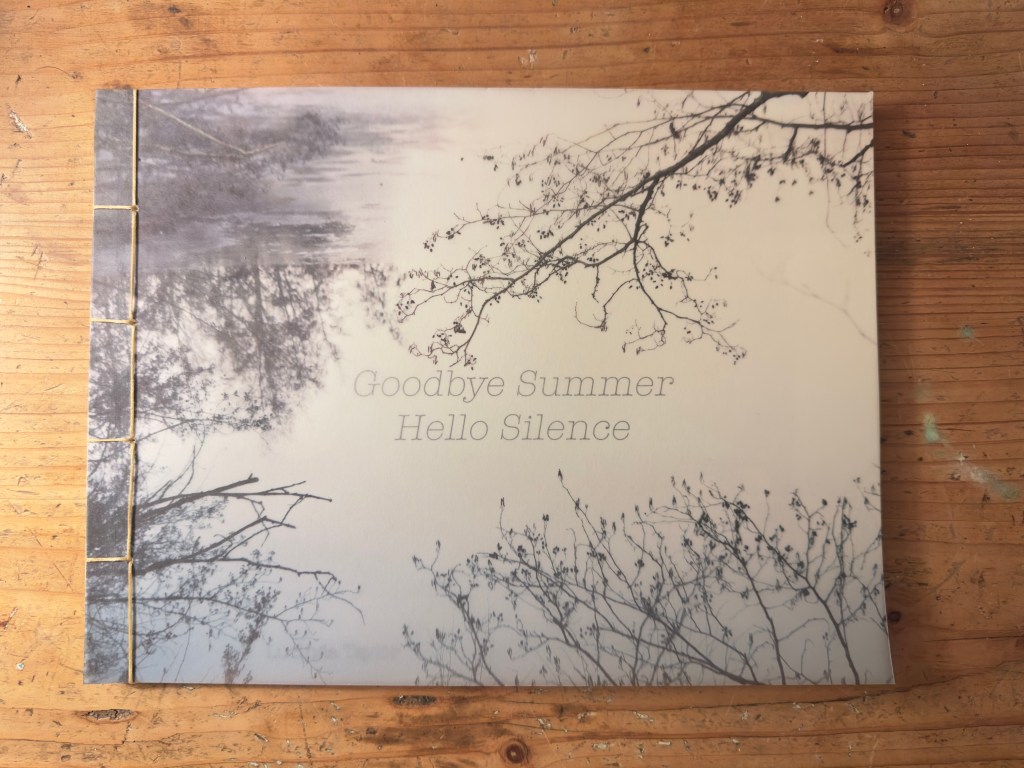
I am a prolific book collector. I find them to be objects in their own right and feature as such in my home. I love the way they feel, touch look and I am always intrigued by artist creators endless ideas for their artist books. For my final project I will produce a handmade book, possibly two; the project calls for a sort of ‘visual diary’ due to the volume of digital images that I have, it seems a shame to keep them out of sight for this and so I hope to create a simple tied book for viewers to see the extend of the ‘journey’ I’ve been on for this project. For my main submission, I will hand in an artist book, japanese bound (I like the visibility of this and it removes the need to fold pages)
Book examples & resources
John Gossage – The Pond – ‘the ordinariness of pursuit’ (quoted in interview with Tim Carpenter online) :
TC: Right. So tell me more about straining versus inhabiting.
JG: In the book, the closest I came to straining was picture of shopping center parking lot with the light of God. That was the over-reaching picture. Can you ask more from the literature of the picture than you actually can support? That’s what Romanticism is, by definition.
TC: That makes me think of a similar idea that prose is descriptive of an experience, whereas a poem embodies the experience.
JG: Yes, and the trap of poetry is to overreach, which happens all the time.
TC: Perhaps that’s a nice note to end on. Let’s not overreach.
From what I’ve read on Gossage he steers clear of romanticism and overreach (as above) – his approach to making work is less pressured in that he doesn’t insist of ideas of perfection and instead tends to work on instinct – he isn’t ‘career’ centred and so this could be quite freeing in his approach? he doesn’t worry if his books are well received or not. He discusses how in The Pond, the narrative is about the pathways to the place and the different directions taken, the journey and the discovery, not necessarily perfect or ideal.
In Robert Adams essay on Gossage’s The Pond, he suggests the work is more about presenting us with natures reassuring simplicity – this is how I feel too, much of what I do is about its gentleness, peacefulness, calming qualities. The photos I take are about a feeling, a melancholy but also there is something like a dreamstate. His photographs also show litter as other elemewnts of chaos, to demonstrate a general disregard for the natural environment, although by no one in particular and he doesn’t appear to blame, but he wants it shown that there is a collective responsibilty here – I wonder about my own work and how I try hard to not interfere, leave untouched, the place I am in.
In a world of unresolved tragedy we thus cast about, and it is the visual arts, it seems to me, that best offer a place of quiet as they remind us of a mystery in the Creation, one that implies coherence but that does not make its way plain. (Robert Adams)
In ‘Photographers Sketchbooks’ (McLaren and Formhals, 2014: p254) Alec Soth discusses his book ‘Broken Manual’ which he describes as a non linear book – no beginning, middle or end. Fragmentary pictures – some are grainy, black and white, others very detailed and colour – intentional and meant to show a personality falling apart. He describes how he would put the images on a wall, much like a serial killer might! Could my own book be a challenge of my own rigidity when it comes to being uniform, perfect? He says that he could have literally thrown the photos in the air and seen which order they landed in, to create his sequence. This is of course entirely dependent on the themes of the work as this might not work with something intended to be formal.
Process of sequencing
The decision to use or discard is challenging. I have looked at examples of artist books (of note, are those listed below) to see how best to proceed with this. As previously noted, photographers like Alec Soth and Ray Meeks have a fairly relaxed approach, in so far as they wait to see what they have before thinking about sequence.. ie its not a consideration when making the work.
Decisions on output
Which images to use – decision to make a digital ‘journal’ and then a more fine art, refined book as the accompaniment to the exhibited work.
Analogue only?
I have decided to print everything and see how the images might work together. Using the guidance I’ve had before, I know that this is often the best way to determine the ‘winners and losers’ as viewing only on screen can be so misleading. I think that ultimately I will end up with analogue sitting separately to digital images and I have decided that the submitted work will be analogue. Time permitting, I would like the digital work sitting alongside as a sort of diary / journal of this process. However, I am limited with my time availability so will need to organise this carefully to have a realistic chance.
My own experiments:
I made a couple of initial books up just to practice using indesign and see how I might sequence my work. I found the sequencing aspect to be quite daunting as I had so many to look at. Before I had made the decision to use my analogue images only, I split my work into categories and tried to mix the sequences between these.
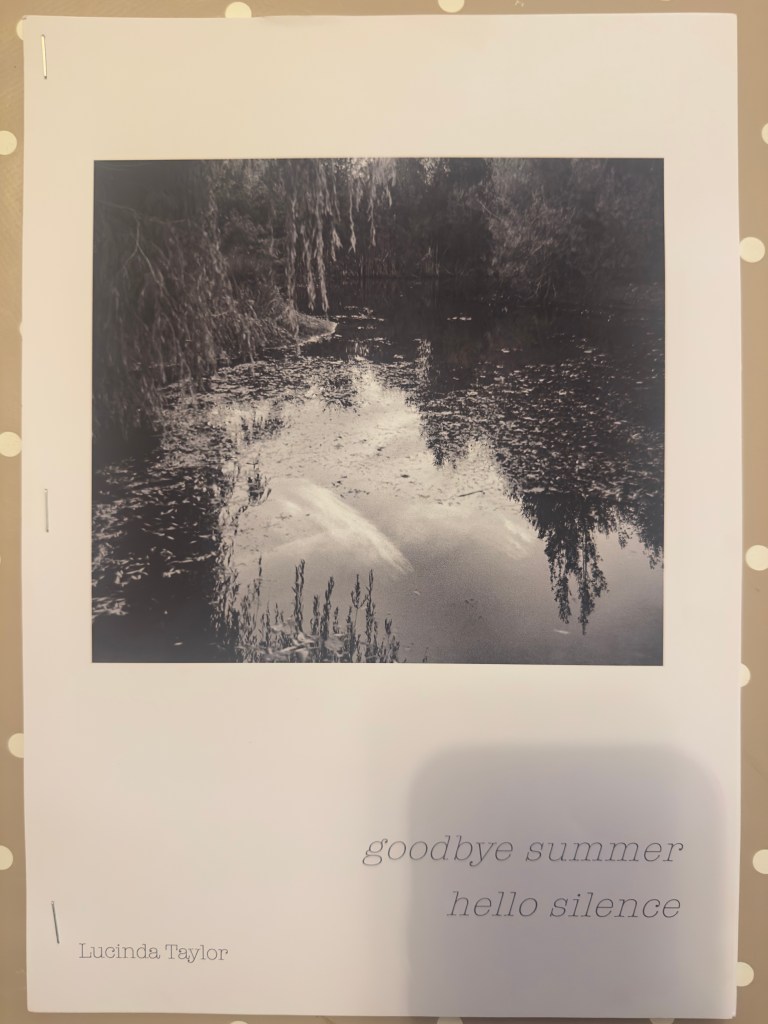
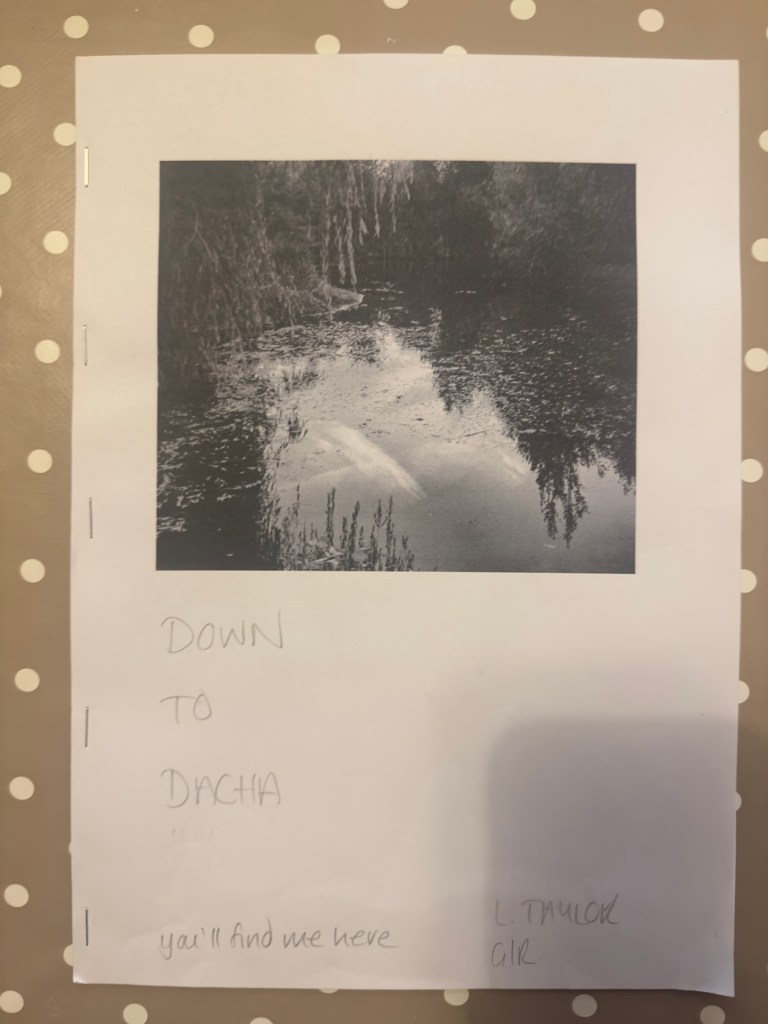
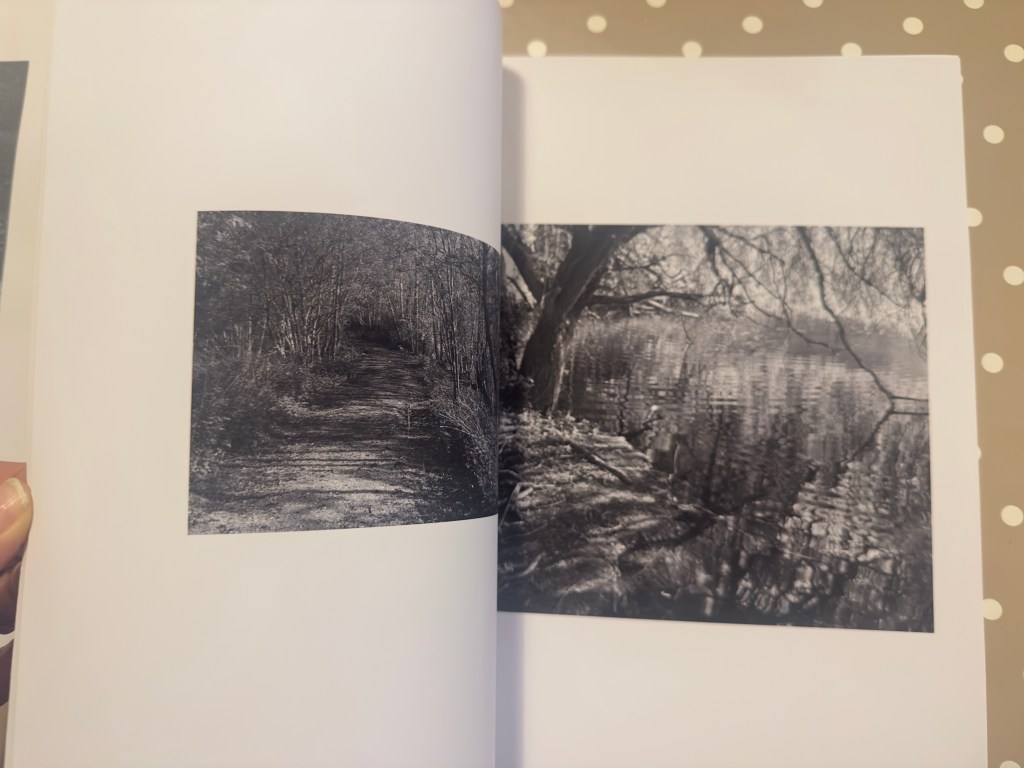
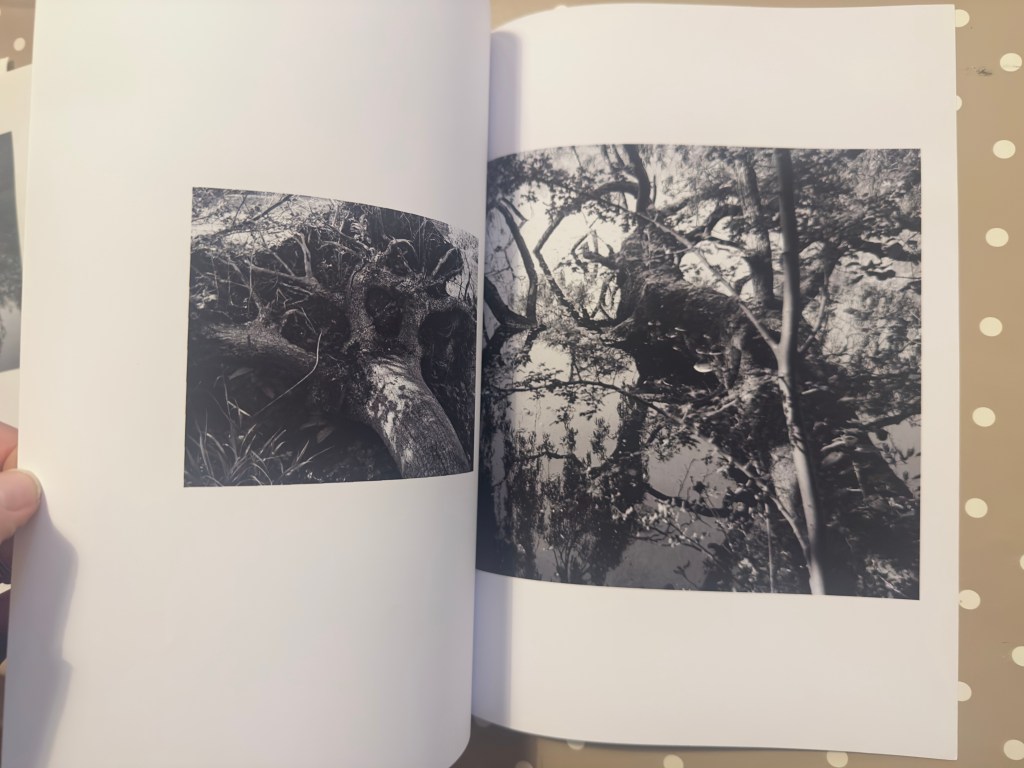
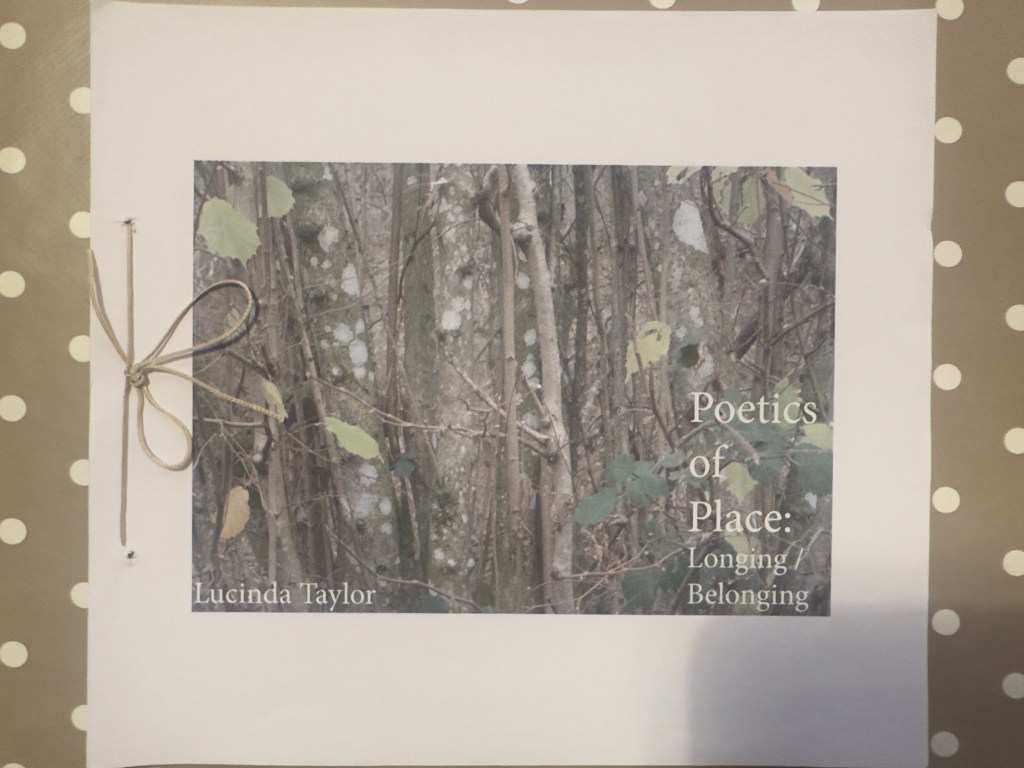
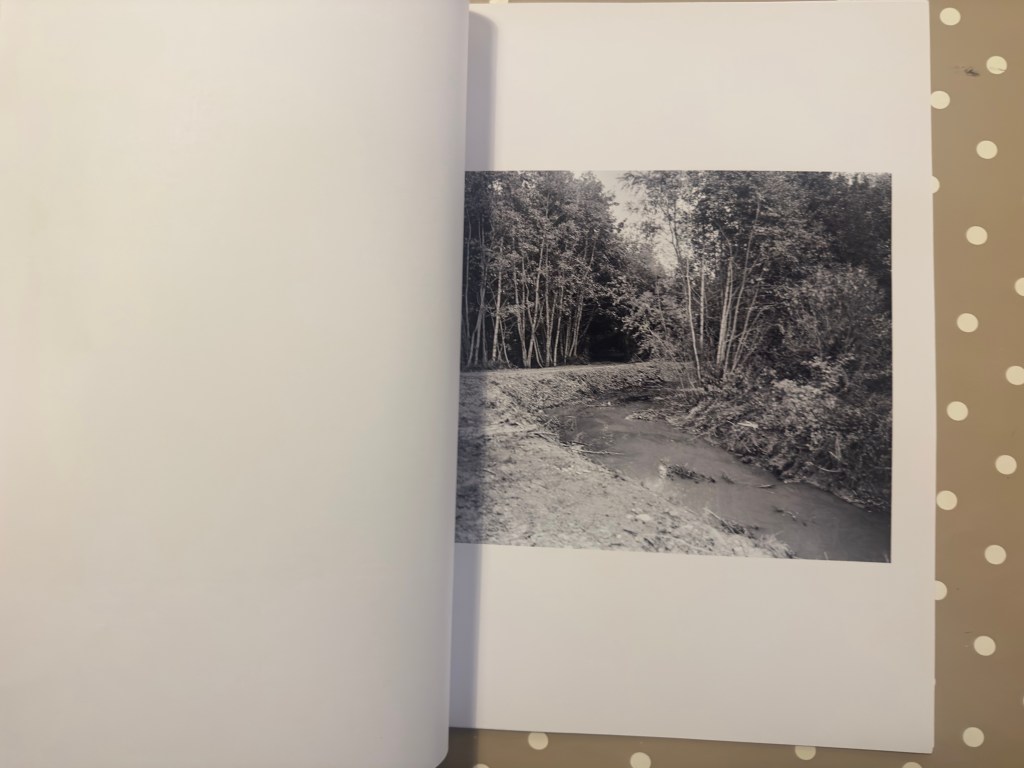
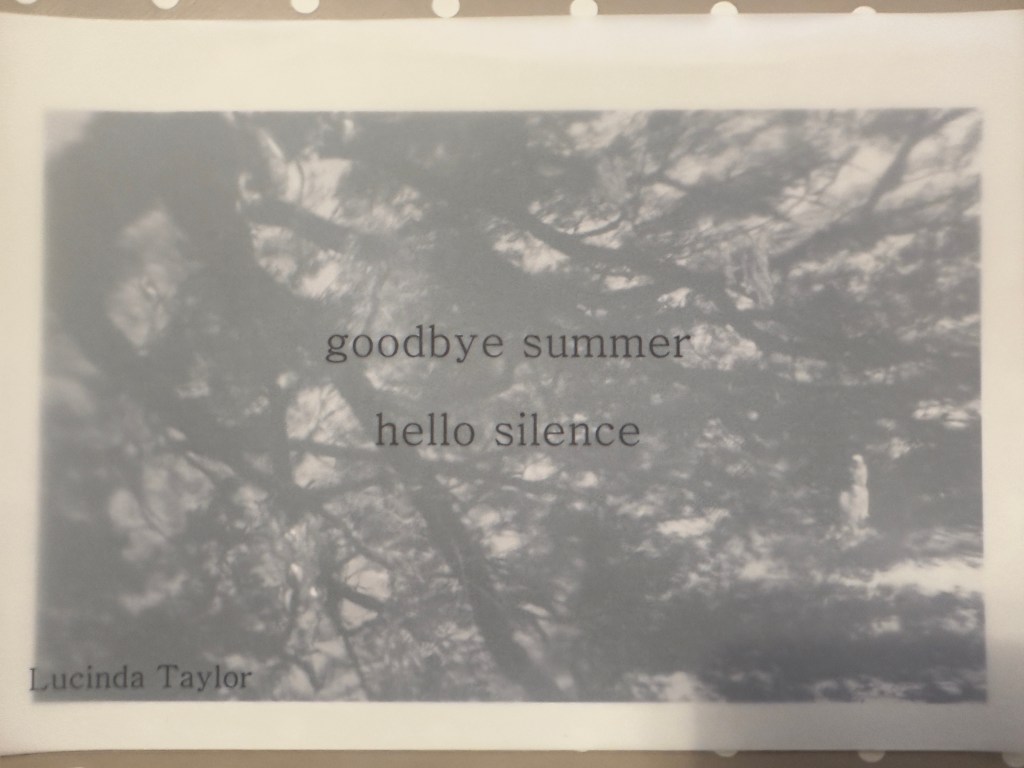
At one of my contact sessions at university we laid out the selection to that point (I continued shooting after this as didn’t feel I had exactly what I wanted image wise) and did a quick edit of work. This was helpful in so far as I could make instinctive decisions and not overthink this initial edit process too much.
Once my decision to use analogue images was made and to use a combination of colour and black and white, I created a mock up book. I originally intended to have images on some of the facing pages but on further discussion with our technician, we agree that the paper I wanted to use wouldn’t be suitable for this (it is one sided for printing) I would instead keep the facing page blank and have images printed in various aspect ratios, on the right hand page.
I have taken inspiration from a number of online sources for book making. In particular, I like the work of Lev Ladzyga. His work focuses a lot on a ‘zine’ type of book, which allows for a deconstructed, informal style. His bindings are sometimes made from wood or metal, more often than not, he binds traditional papers with Japanese style stitching. It is this which I like the most and will use for my own book. I feel it connects with a natural space, it feels more crafted and I don’t want the book to look as though it could have been made by a manufacturer. I am keen to ensure that it appears personal and cherished.
Here are examples of his work, from his website:
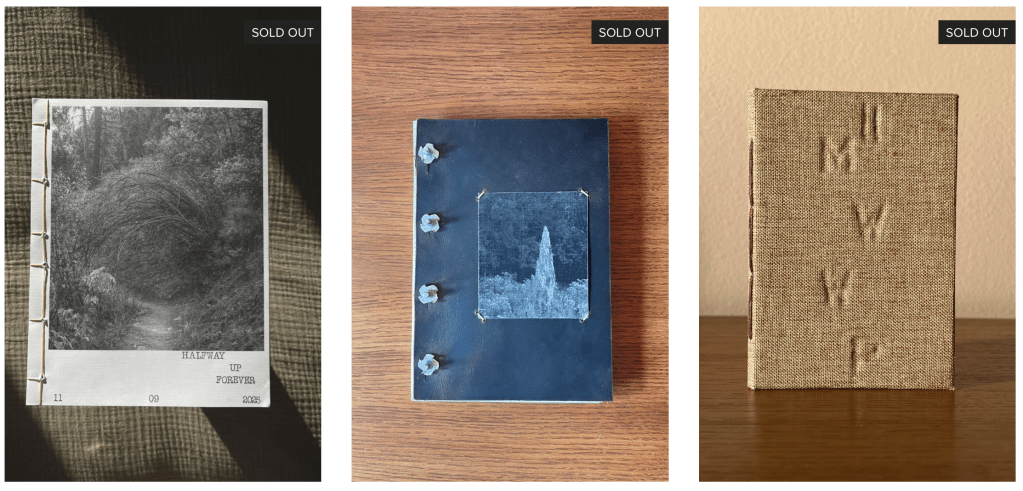
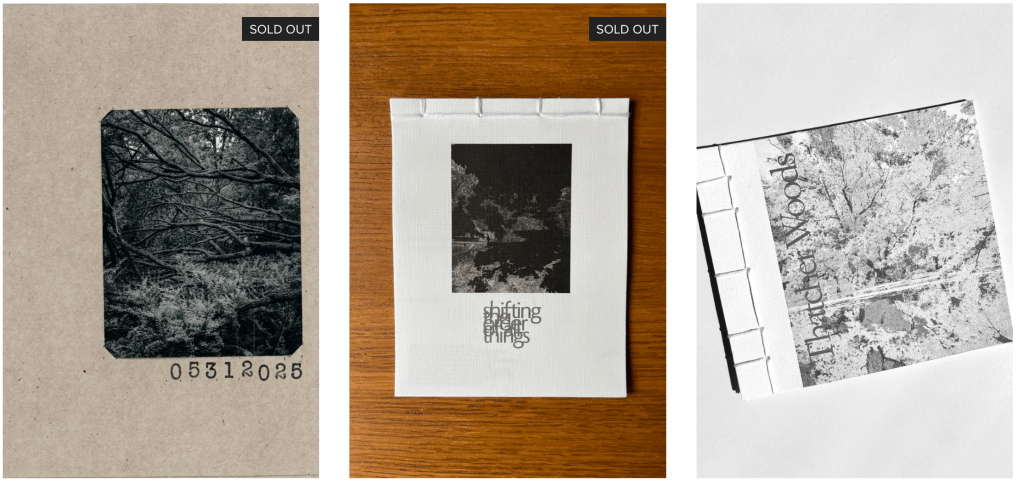
To finish the book, the technican pressed two pages of parchment together to create a thicker back and then once I’d cut it in the guillotine, I carefully lined all the pages up before marking out the holes on a template. I drilled the holes as it was too thick to use an awl:
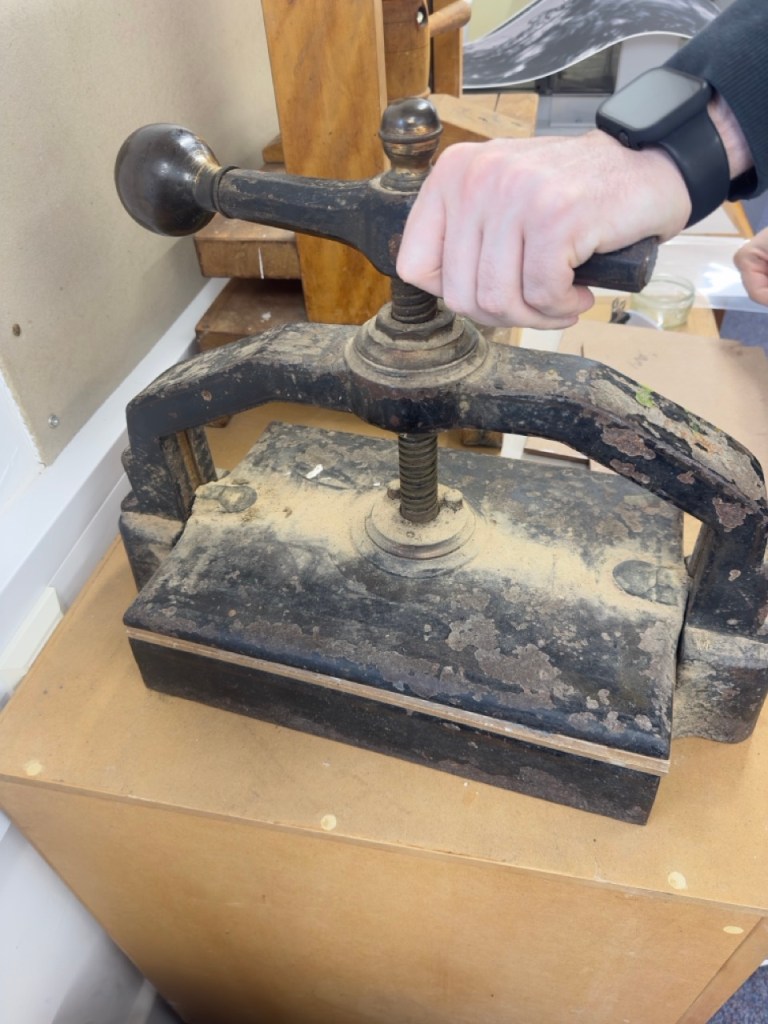
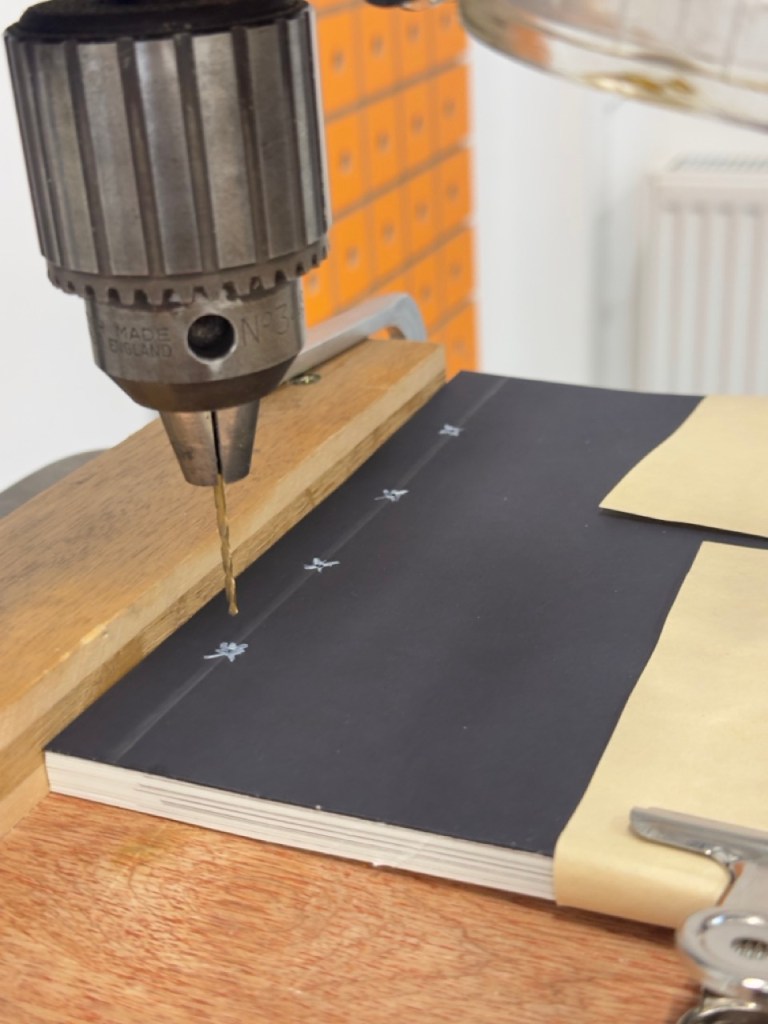
My finished book below: (I tried to upload a video but WP won’t allow this without a paid subscription!)
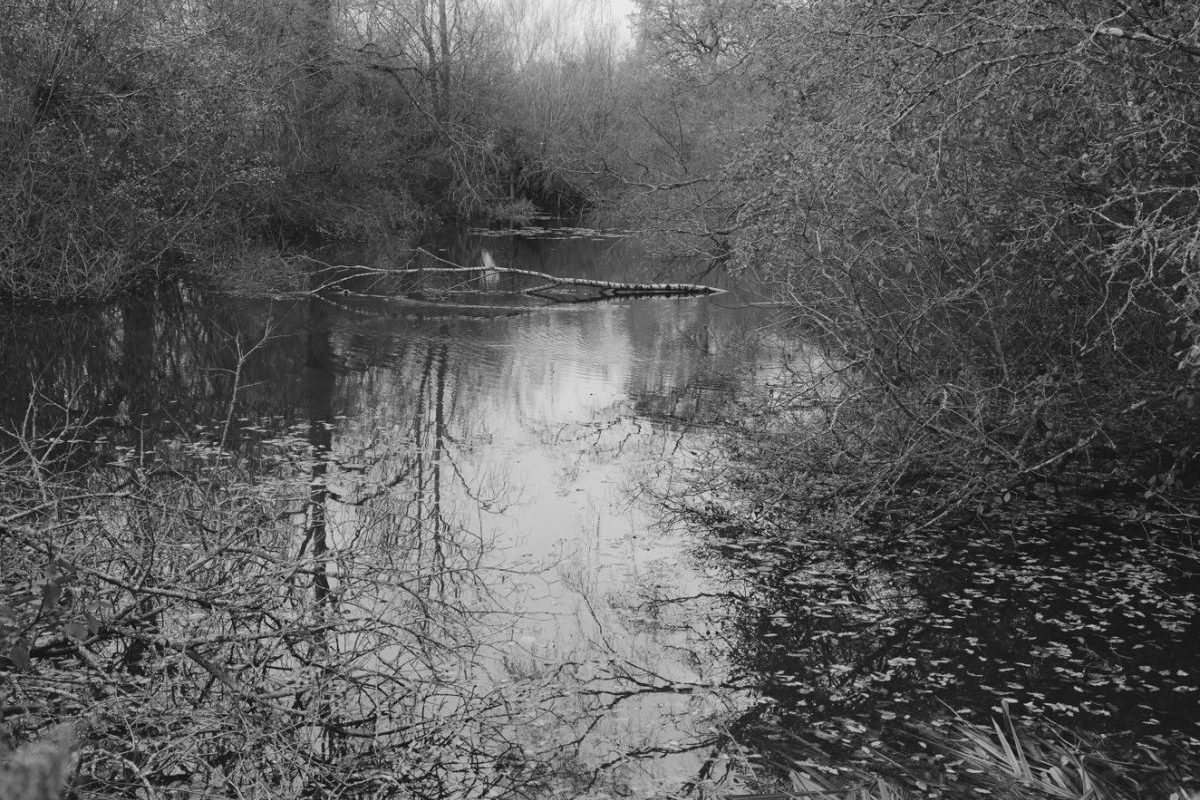
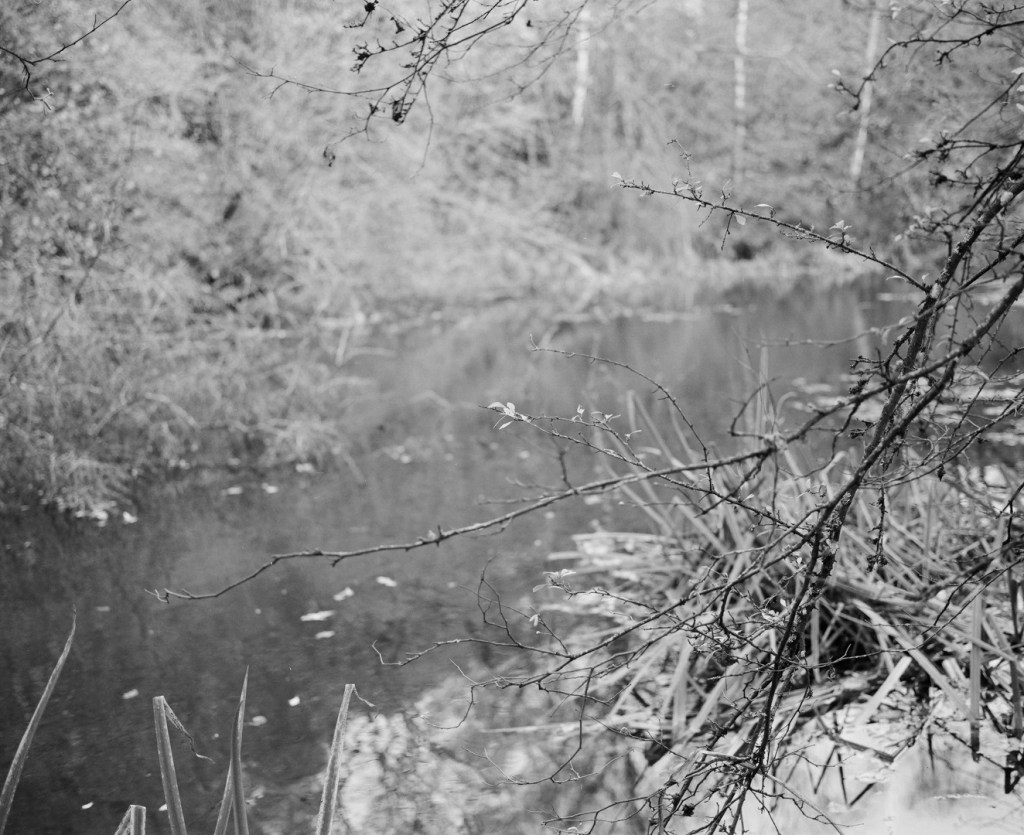
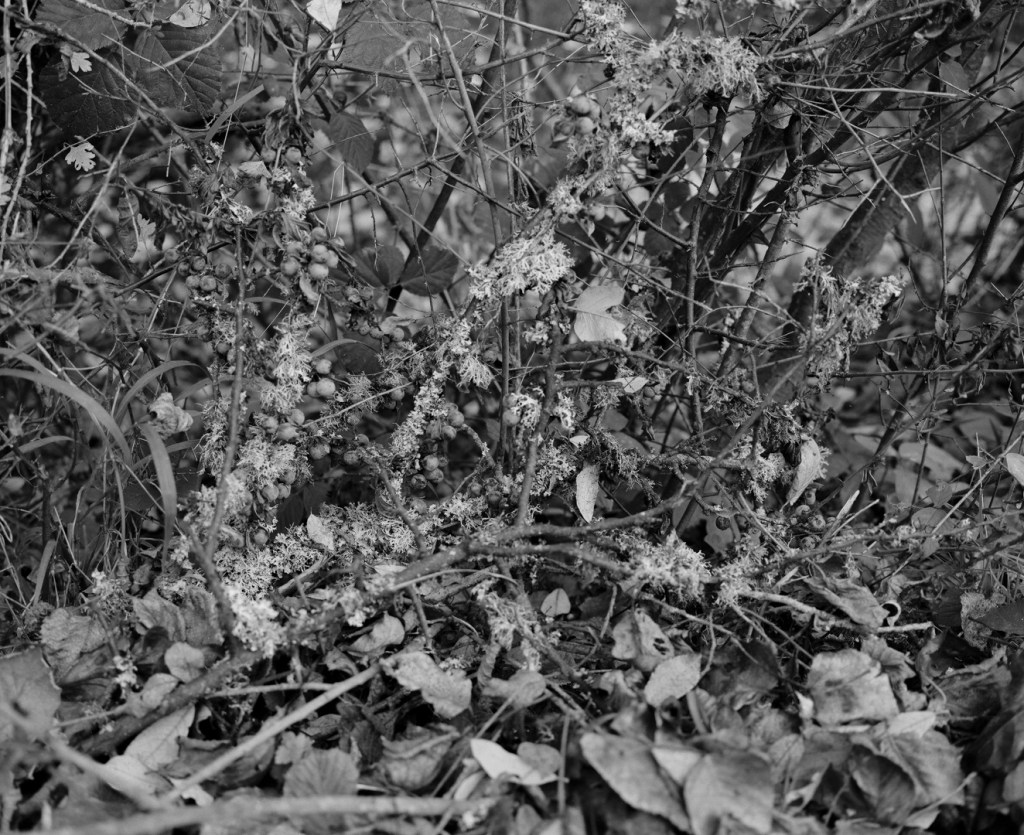
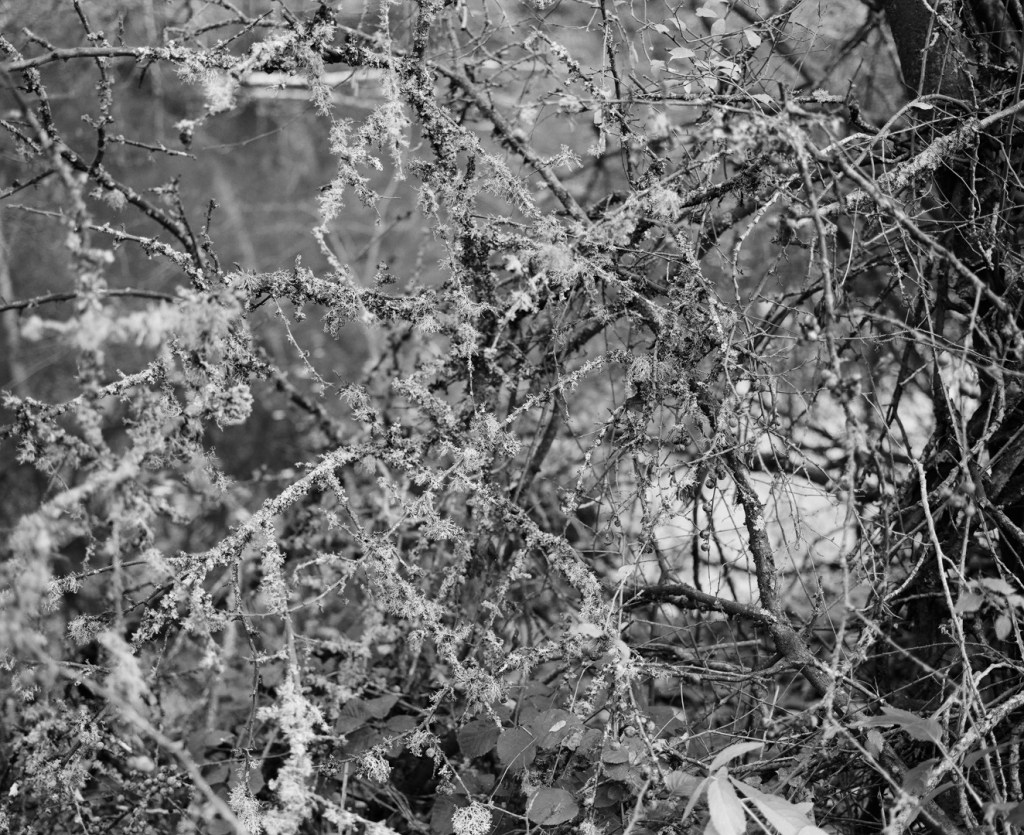
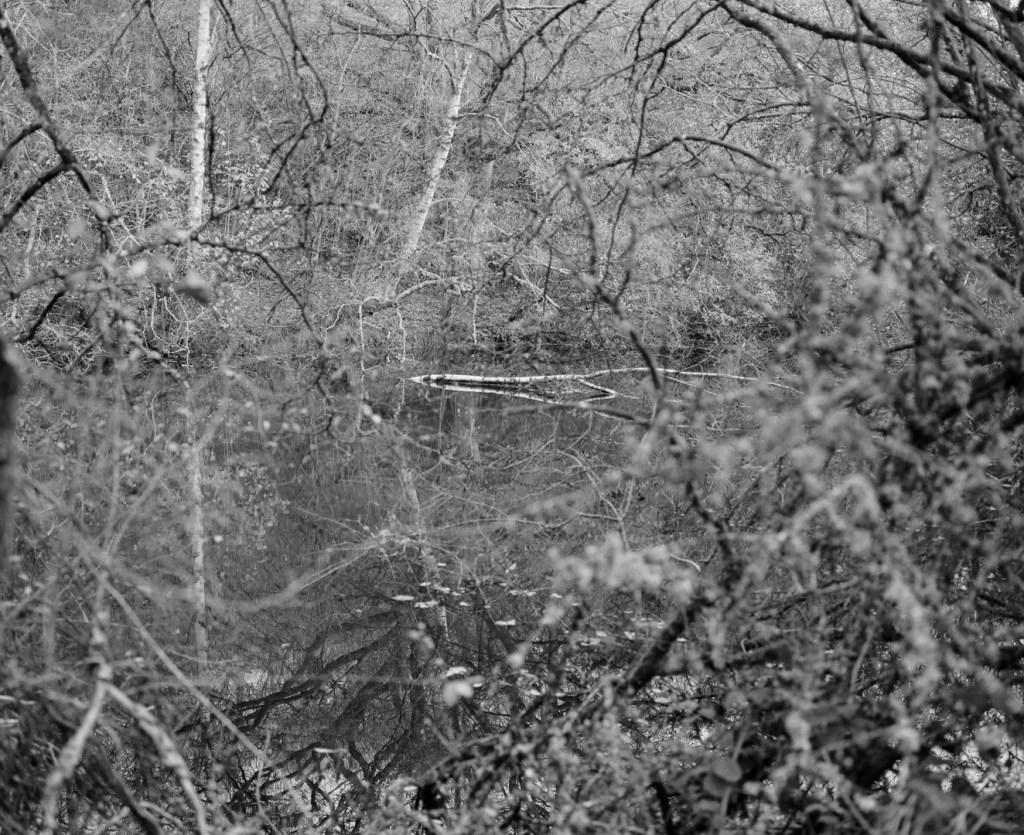
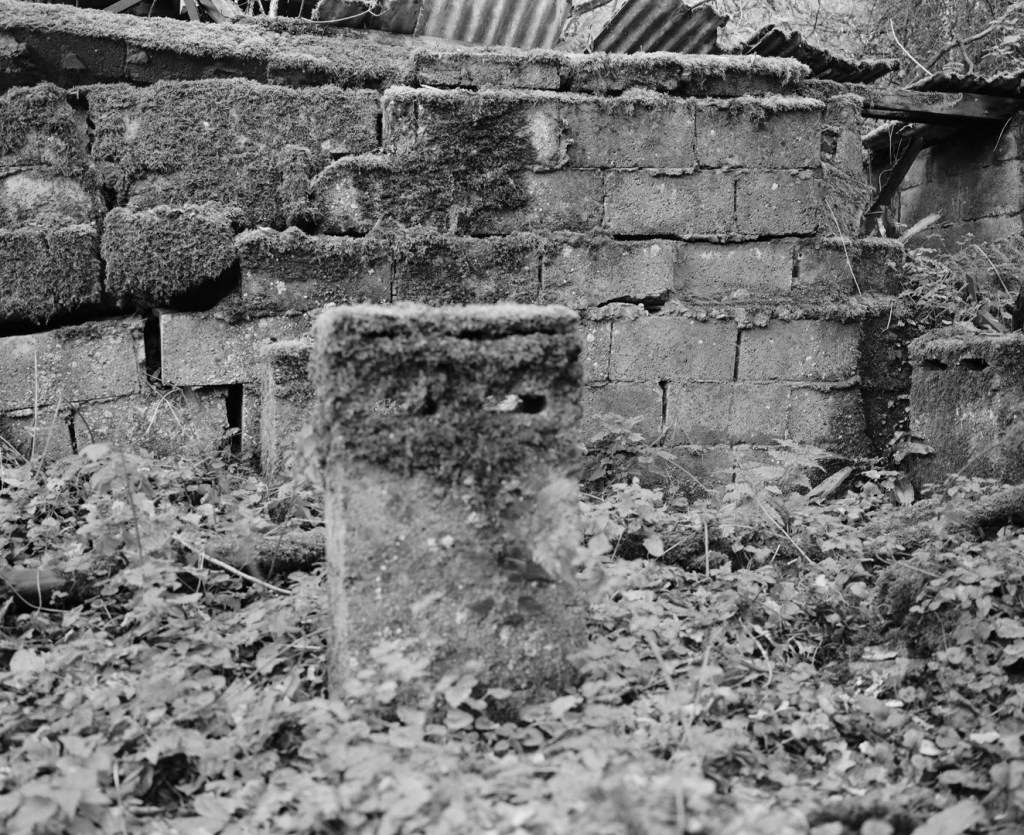
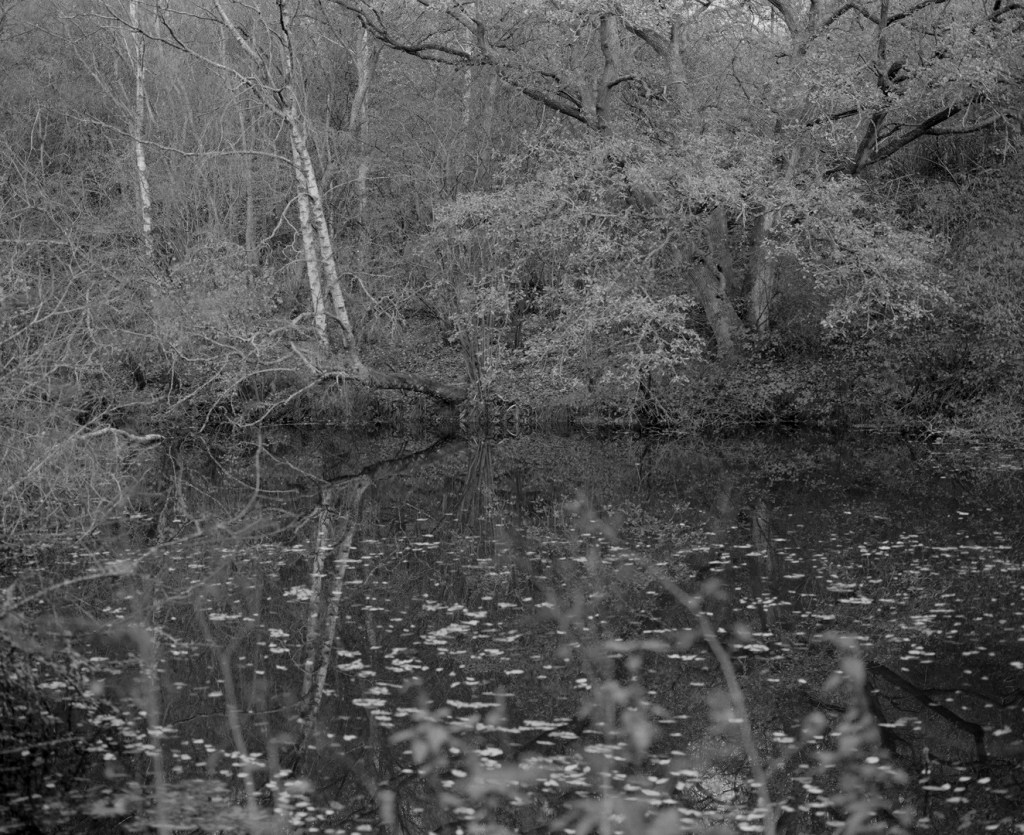

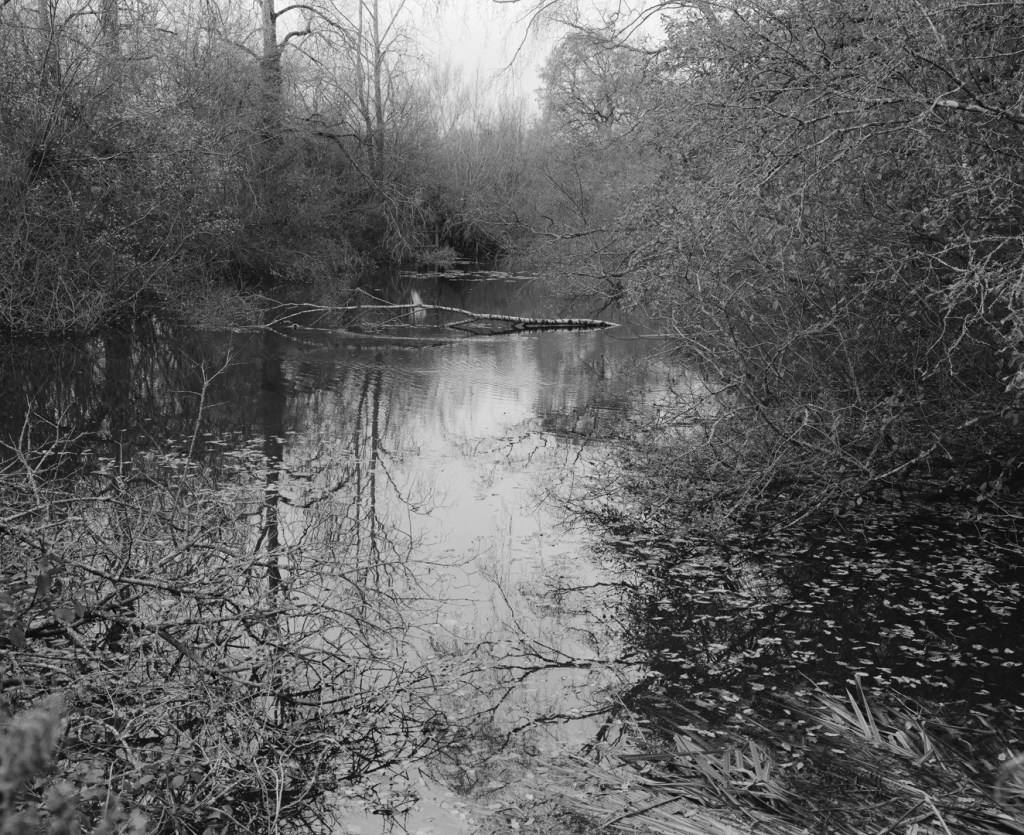
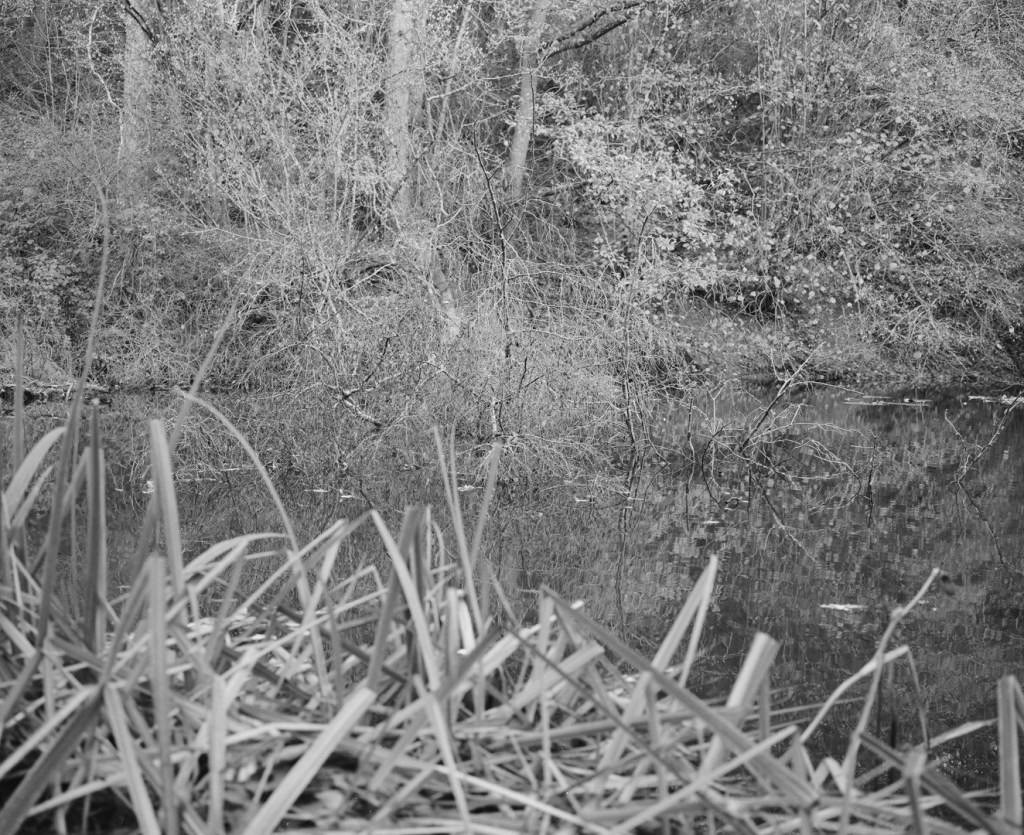
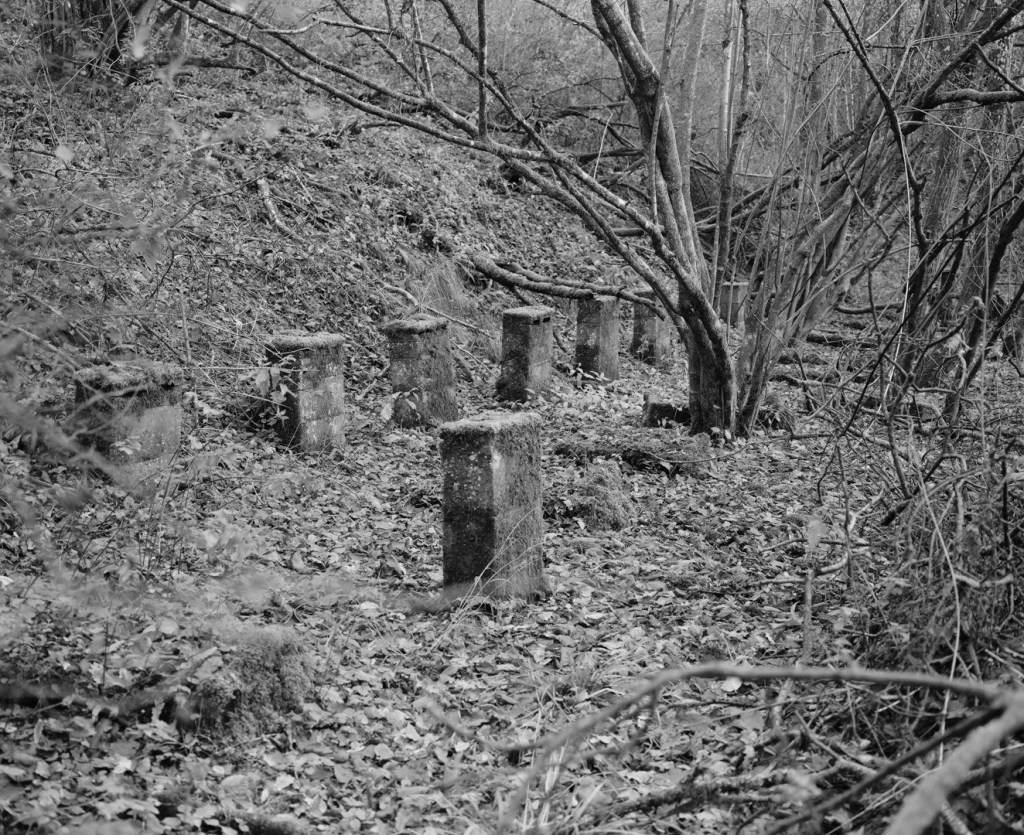
These photographs were shot on Ilford 400 film on a grey, overcast afternoon. Although fairly late in the day, it is on occasion I bit flat for photography! However, I decide that as I am not focussing on representation of the landscape but being in it, that is less of a concern.
This time for my practice in this area of woodland, I decided to use both cameras (digital and analogue) For the digital photographs, see blog post Guiting Wood (digital) 25.11.25 I wanted to go straight from the ‘settling in’ period with my digital camera and into my more immersive practice with the Mamiya. (this shouldn’t necessarily suggest I don’t operate mindfully with my digital, but that I am more so when I get to use my analogue, having familiarised myself with the environment)
This area of the wood is very quiet. There is an old collapsing building with the remnants of agricultural machinery gradually being consumed by the landscape. There are some eerie looking foundation stones from what I assume would have been an old agricultural barn, although I can’t find any reference to it to confirm. They really resemble gravestones in the way they all face the same way and lean as the ground gives way to them. Given their position, I wonder how long the trees have been there and which came first. I remember coming here many times as a child and I remember it being almost exactly as it is now.
Having already photographed the area with my other camera, I moved from location to location (all within 50 metres) with my camera on a tripod and positioned it for a while before taking a photograph. I spent time in the space, thinking and feeling my surroundings. Many times I didn’t take a photo, instead choosing to relocate.
My most successful photograph is the one shown below. I felt as though I was part of the landscape at this point, I was surrounded by it as I nestled in to the bank of the pond and just sat there a while. The corvids above were raucous but befitting. The moment was only broken by the sound of a small plane going over me above. I like that there is so much going on in this photograph, the scene is framed by the trees and the fallen branch in the water in the distance helps to anchor the image. The reflections in the water create some ambiguity which I always favour.
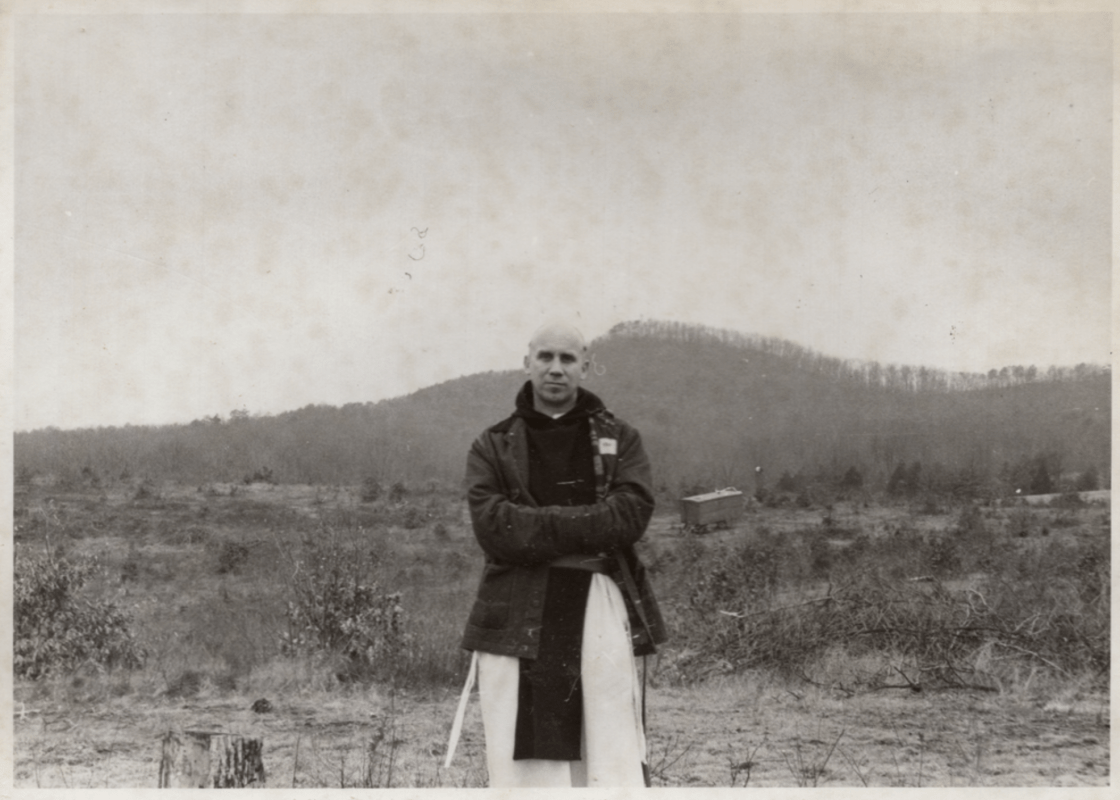
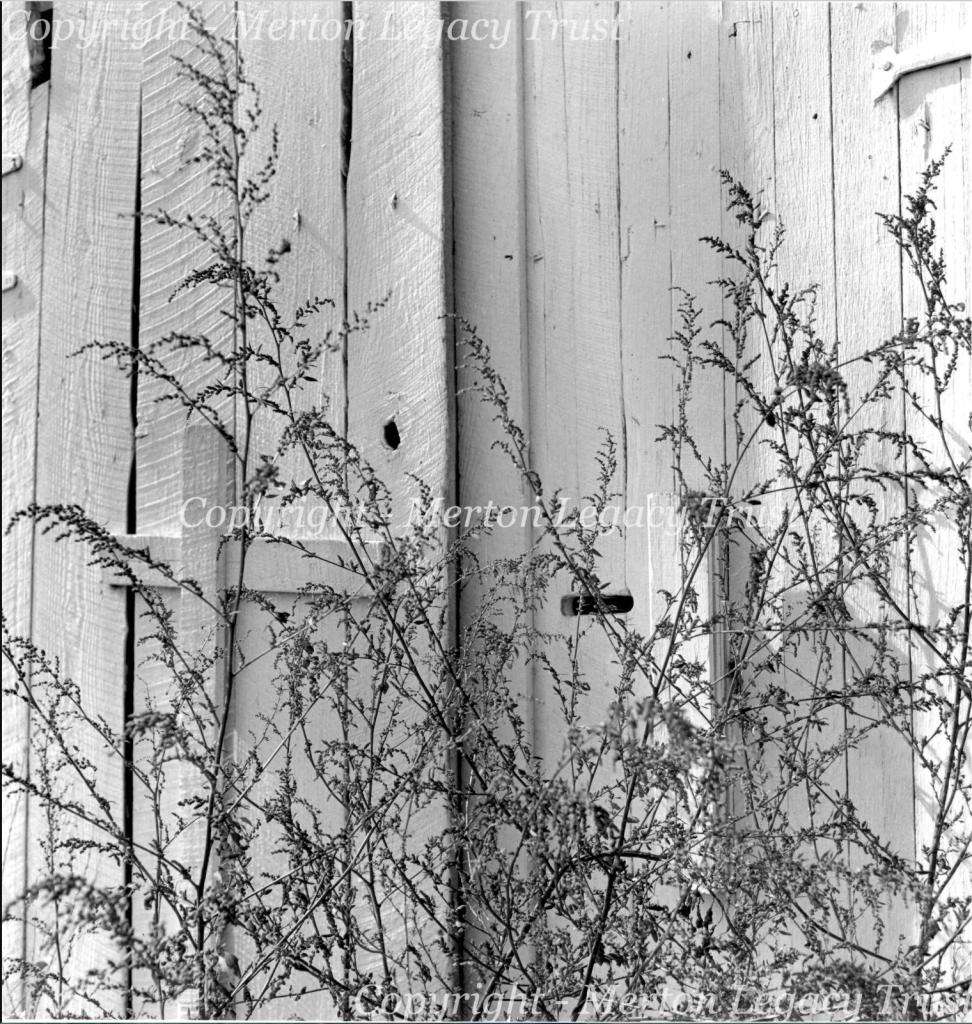
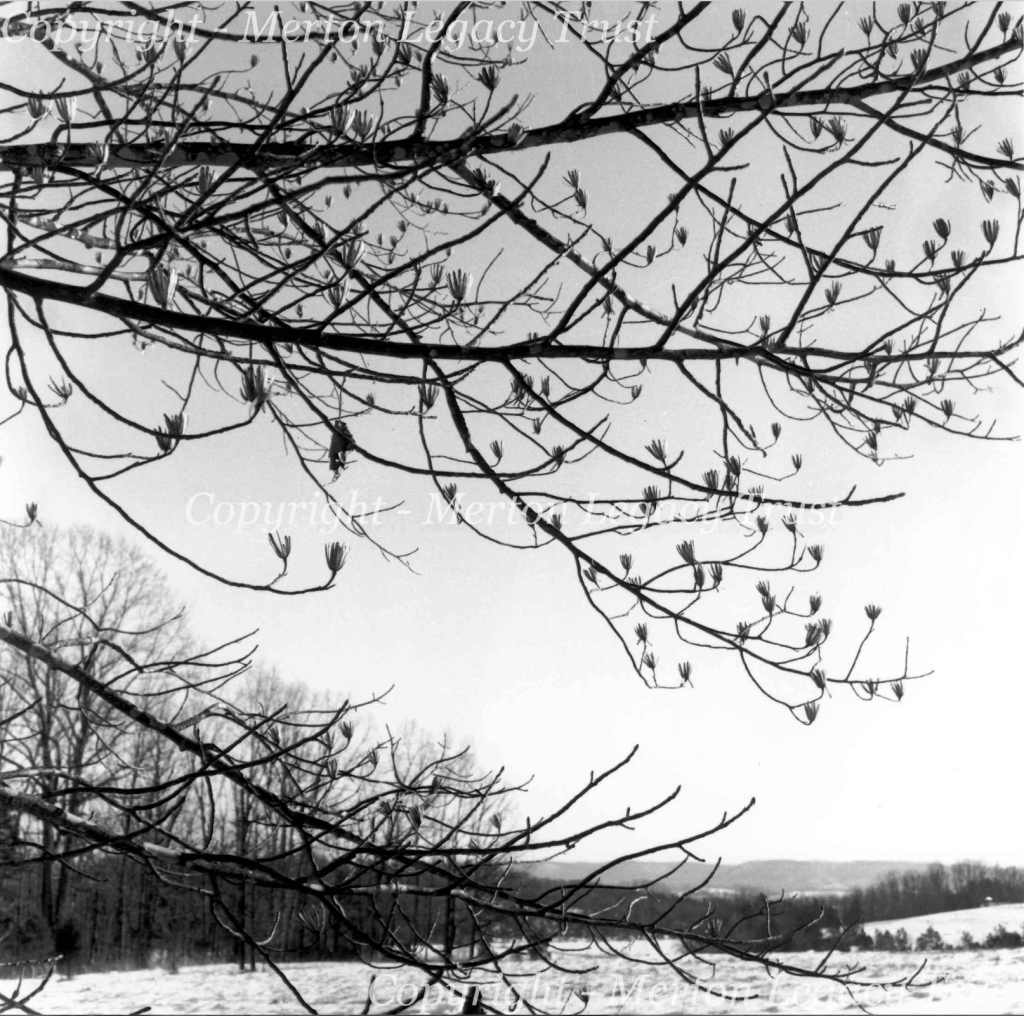
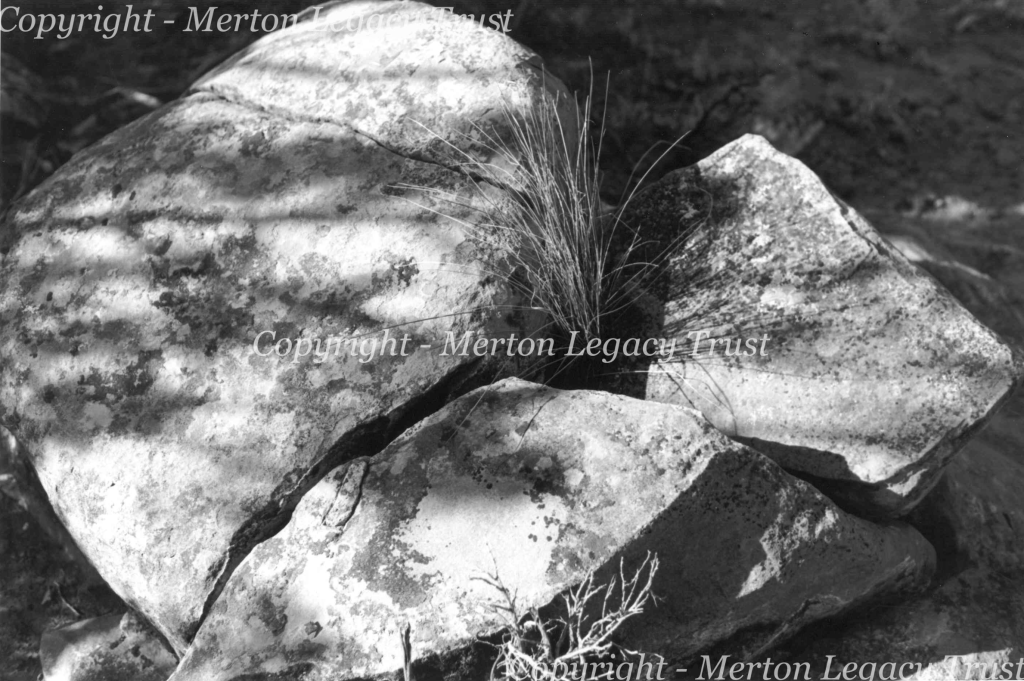
I have researched Thomas Merton because of his methodology in photography and his unique way of seeing and understanding the world. This piece of research has helped me understand the key principles behind contemplative, mindful creative practice and how it can be inter disciplined, combining writing, art and physical activity such as walking. He was a Trappist monk, based at Gethsemani in Kentucky and discovered photography in the last decade of his life, on the back of his prolific production of books (50 in 27 years) He paradoxically, perhaps, took up photography as a way to satisfy his need for simplicity and stillness.
Because he would have taken a vow of stability, he would have been limited to contemplate subjects in the hermitage and the immediate vicinity, his search for photographs was part of a highly developed visual awareness that revealed itself when in an intense contemplative state of mind. It is perhaps unsurprising that photography became a tool with which to study his world in fine detail.
He continued his journaling and writing alongside his photographic practice which means that there is a wealth of insight into his thoughts and wonderings directly related to this. I find this useful because where I have read plenty from nature writers, they are not typically engaged in a related pursuit. For example, in one journal entry, he details that instead of reading a Zen anthology, he was too distracted by his ‘dream camera’ as he kept seeing curious things to shoot instead. he said ‘the whole place is full of fantastic and strange subjects – a mine of zen photography‘ (Hamrick, 2020: online) further to this in another entry, he says “Marvelous, silent, vast spaces around the old buildings…Cold, pure light, and some grand trees…. How the blank side of a frame house can be so completely beautiful I cannot imagine” (Hamrick, 2010) so we can garner from these words just how invested he was in paying close attention to his surroundings.
Paul Pearson is the director of the Thomas Merton centre at Bellarmine University in Kentucky. He has edited a book ‘Beholding Paradise, The Photography of Thomas Merton’ (Pearson, 2020) In this he discusses how Merton is ‘inseeing‘ which is a concept by Rilke, inspired by Rodin and interpreted by Merton as ‘an inner event in the person who sees it, and it takes place in this encounter with something else, not just a subjective thing…our own existence is revealed to us, along with the meaning of our own life’ (p133) It seems to me that this description epitomises the act of mindful, contemplative thinking. Mertons words summarise this a ‘Visio Divinia’ meaning seeing, rather than just looking so that the essence of the thing is revealed to the viewer.
For anyone seeking to absorb themselves in the simplicity of things, the book provides a fascinating insight into a man who as well as being a master at contemplation and mindful practice, had plenty of humour, liked a beer or two and mused and wondered about the marvel of life. Many of his poems and essays are thought provoking, although obviously plenty of reference to a God that I don’t believe in does sometimes detract from the enjoyment for me, so I do read his work through a slightly different lens to the one he may have intended.
NB all images displayed are for analysis under the terms of fair use and belong to Merton Legacy Trust
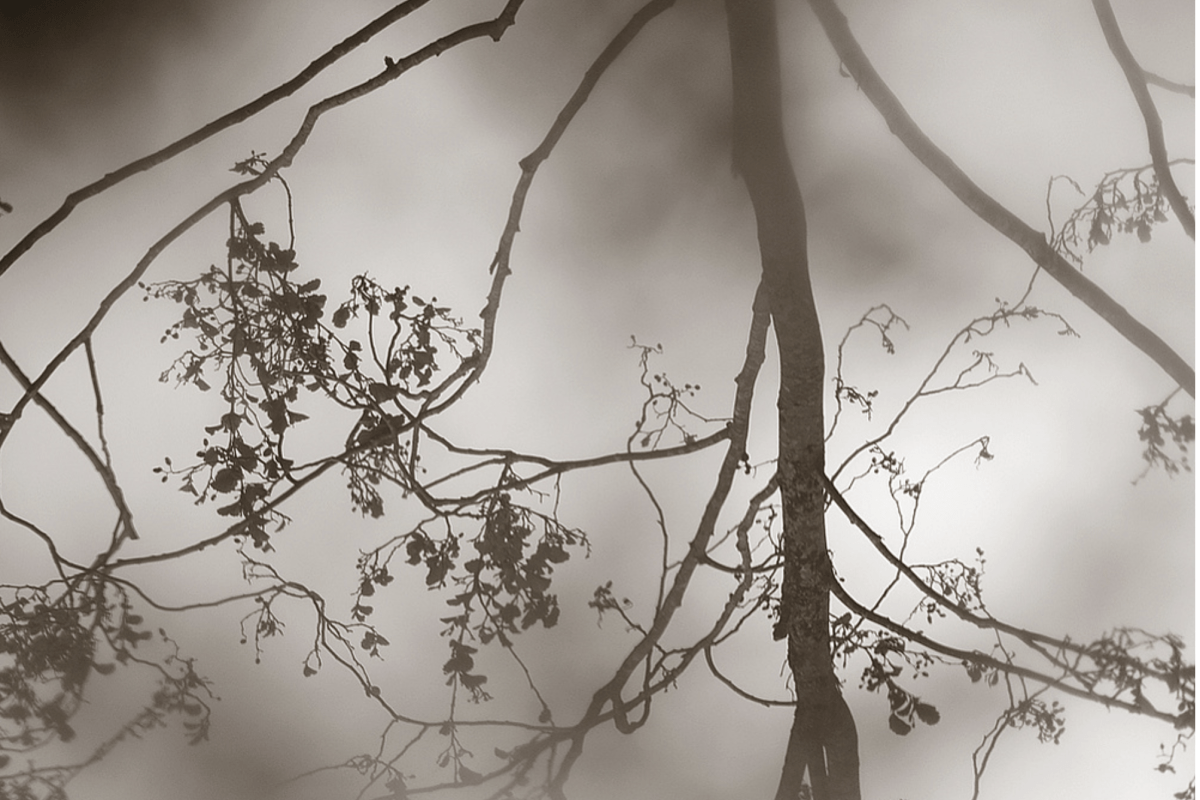
Iain Sarjeant’s project ‘The Pool’ centres around a small pond in his garden. The body of work he produced from this, are a series of close, detailed shots of selected elements of the pool. I think he successfully presents his subject beyond the ordinary by giving time and patience to his process.
The resulting photographs are like a labyrinth of flora, with a mix of sharply detailed leaves & branches, sometimes shown in shadow or as reflections, some elements are very blurry within the frame as his shallow depth of field emphasises his close proximity to his subjects. You feel he has nestled himself in to his environment, which creates a sense of immersion and a meditative aspect to the work. He says himself that ‘By singling out and focusing on individual elements, these complex and competing patterns are simplified and a sense of depth created‘ (https://iain-sarjeant.format.com/the-pool) which is a useful quote to think about when making my own work.
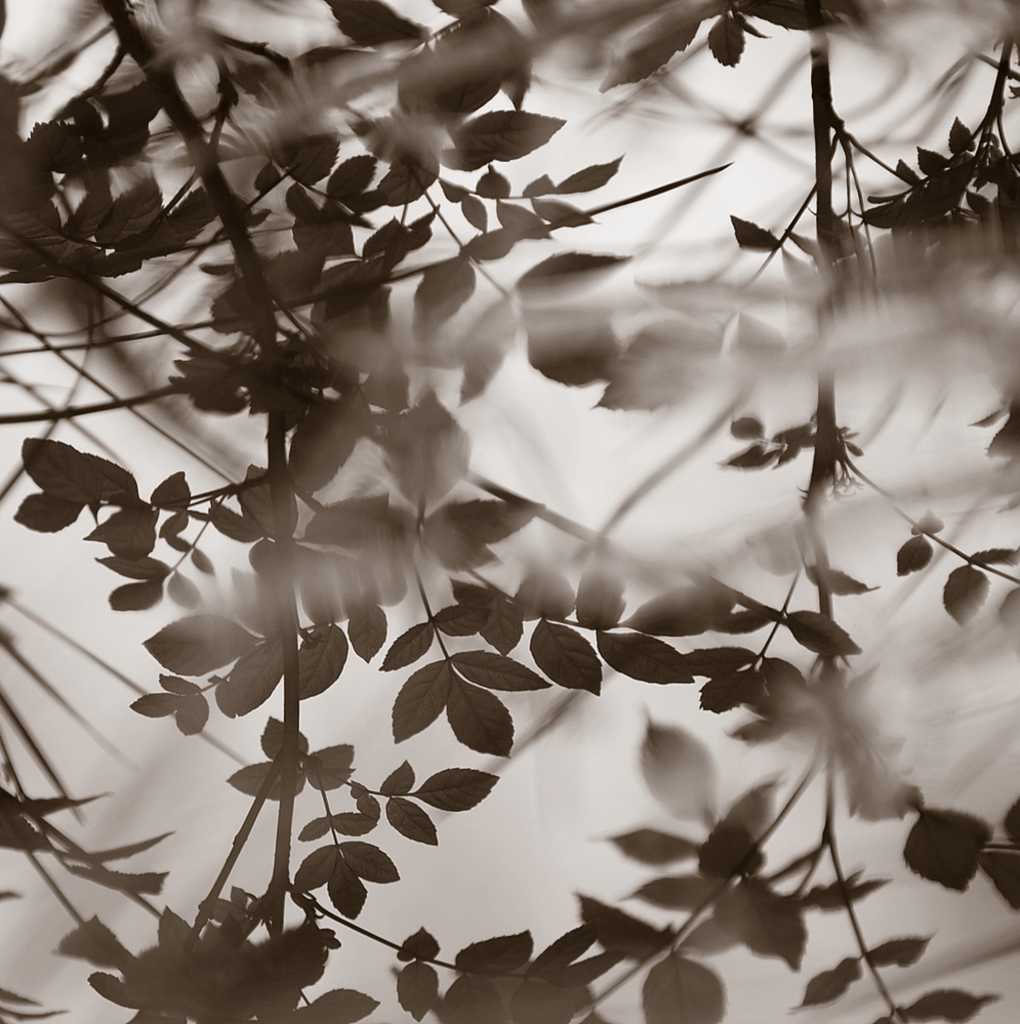
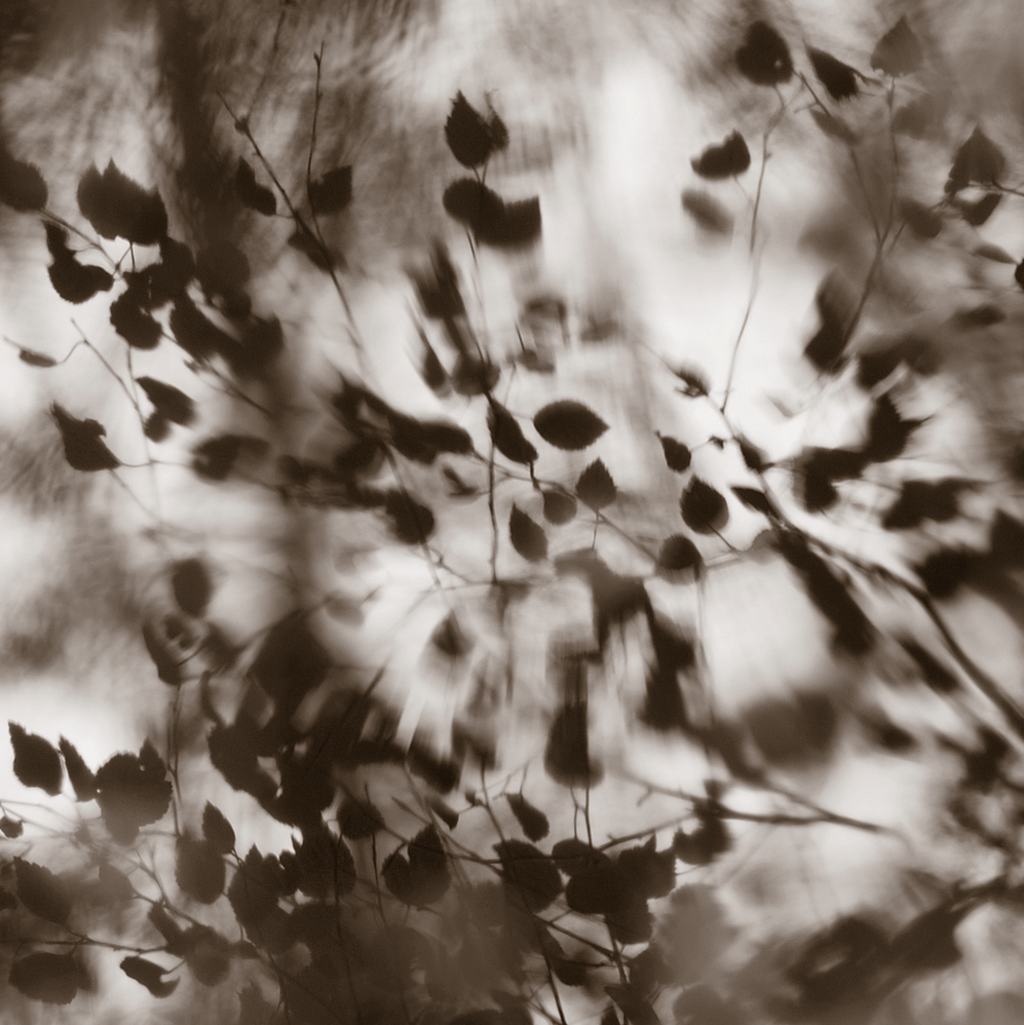
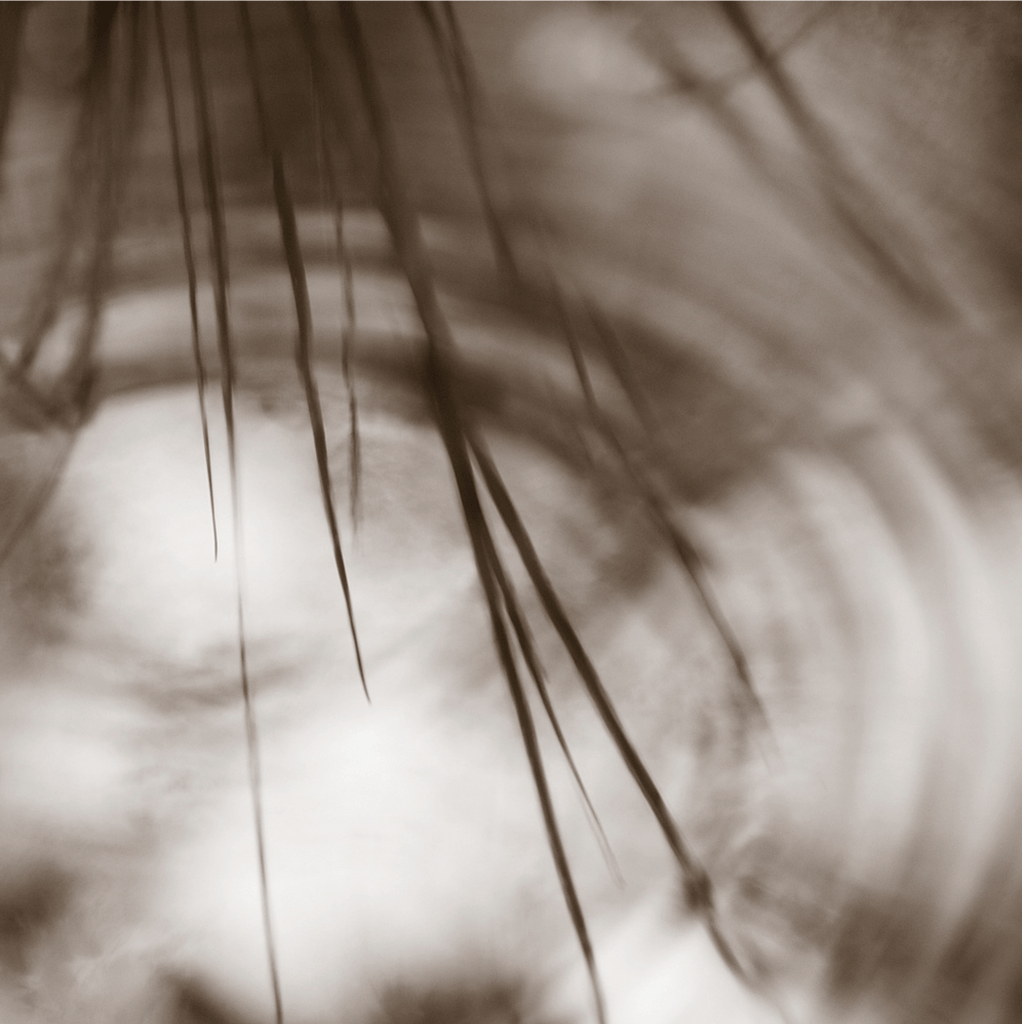
I recall the work of Nicholas Hughes and Susan Derges, both of whom I researched for 7803. I was immediately drawn to the ambiguity in their work. Both very different; Hughes photographs beautiful scenes of trees, undergrowth and foliage, then overlays the image with a nightsky for example. Derges makes photograms by submerging photosensitive paper in her local river at night, releasing a flash, resulting in a photograph of the ‘underneath’ ie just below the surface of the water. I see similarities between all three in these photographs by Sarjeant. I think it is the way that the light on the surface picks up the ripples in the water and the patterns made by the leaves and grasses seem to resemble Hughes’ work. It is difficult to know which way is up, which makes them ambiguous. I like this work a lot, it is an aesthetic and working method (contemplative, repeated study of a place) that resonates.
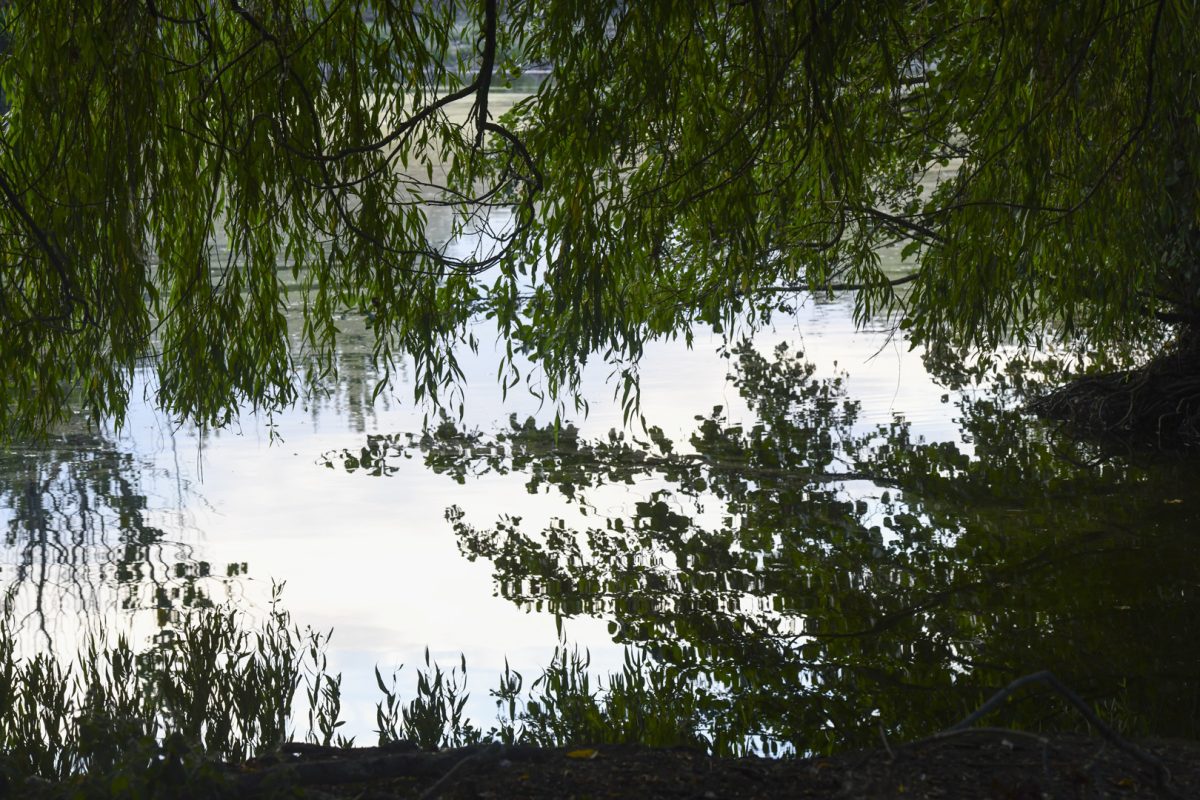
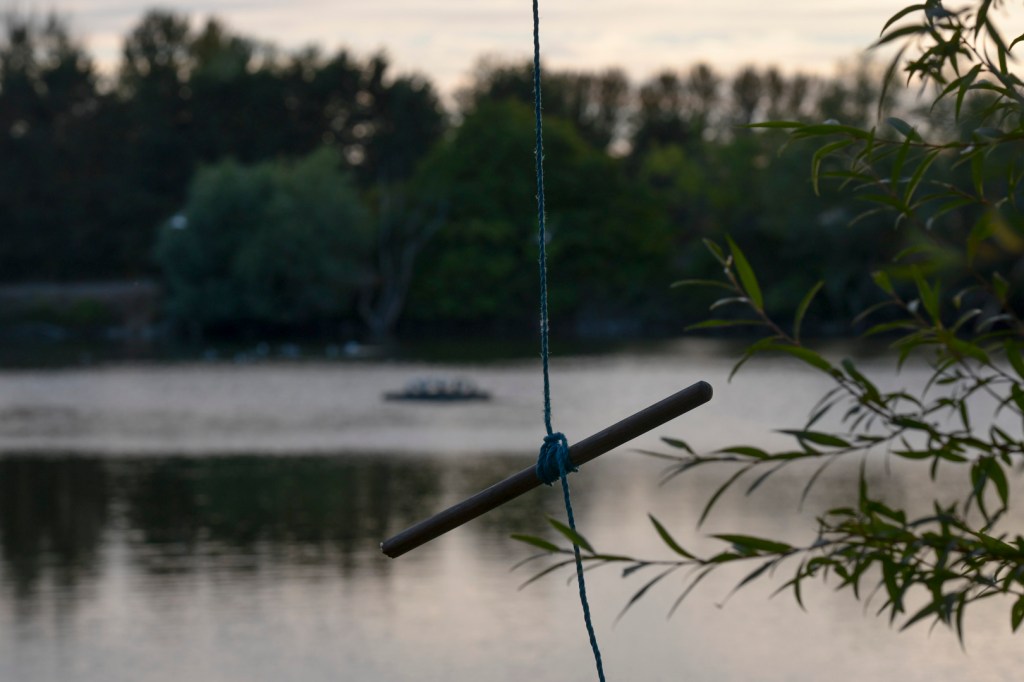
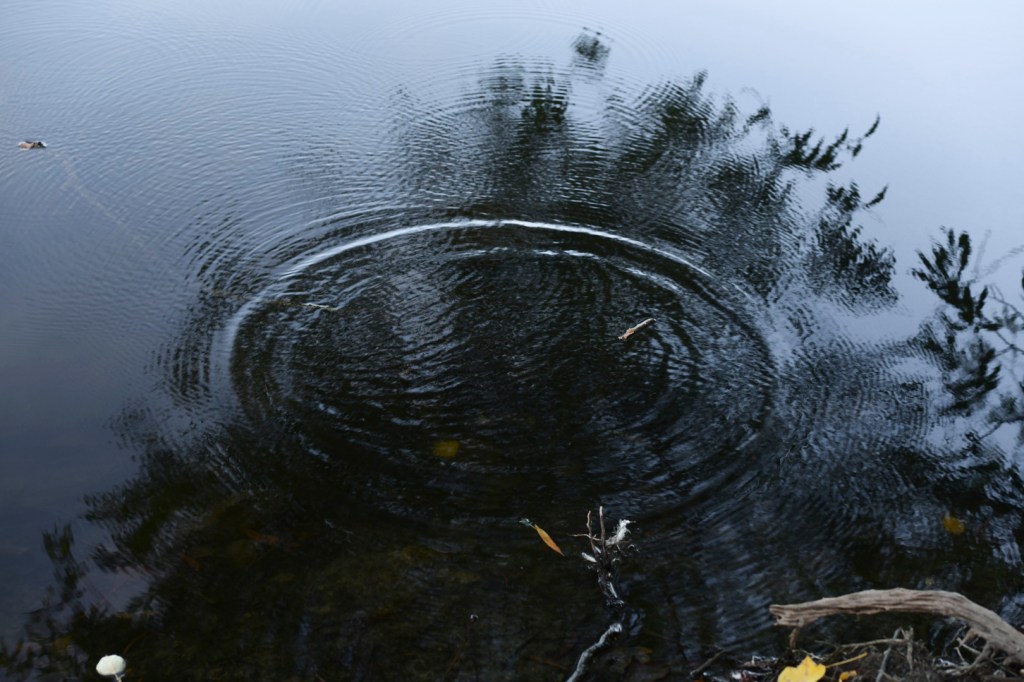
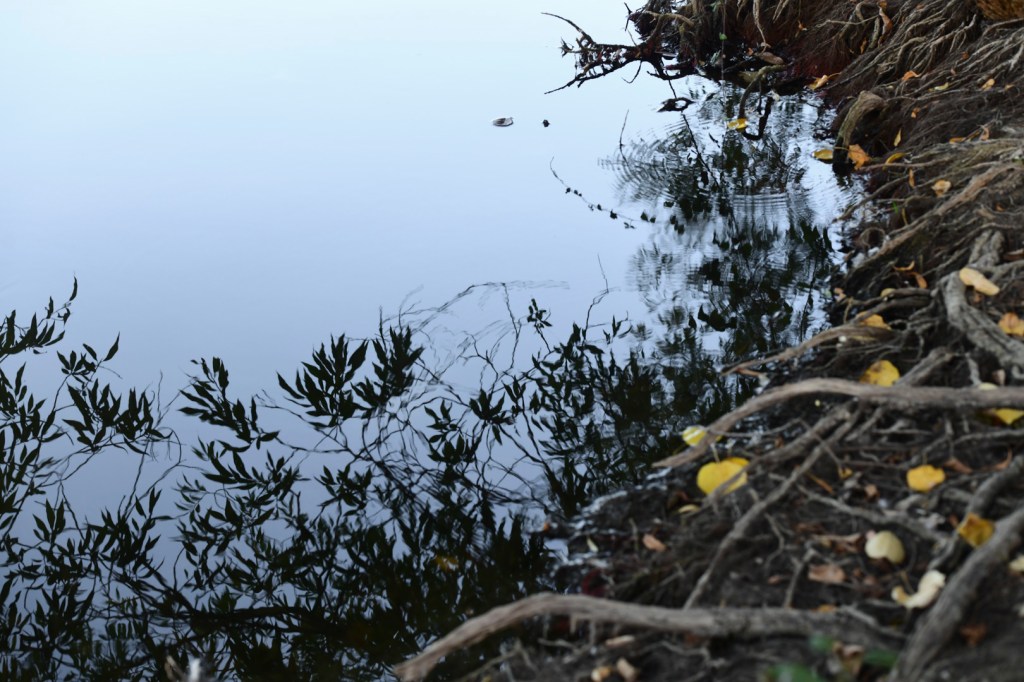
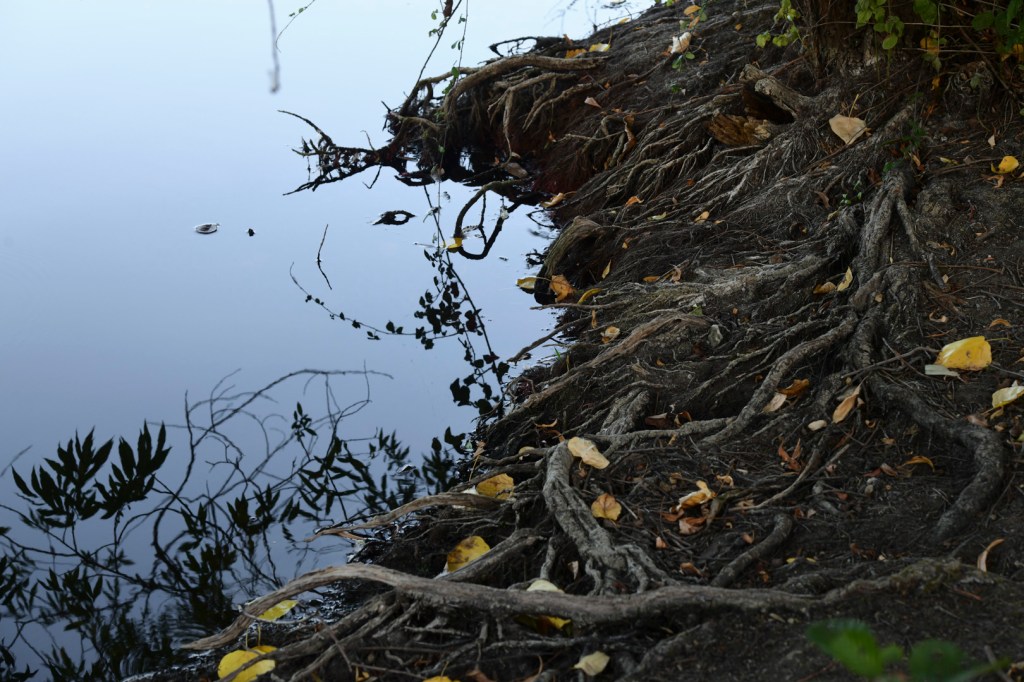
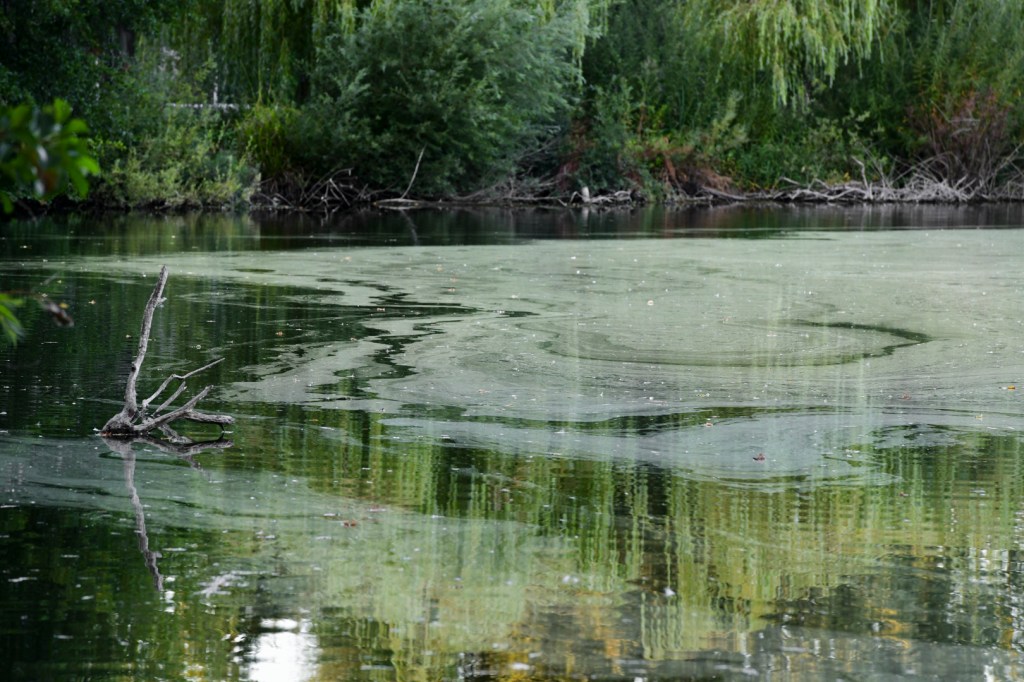
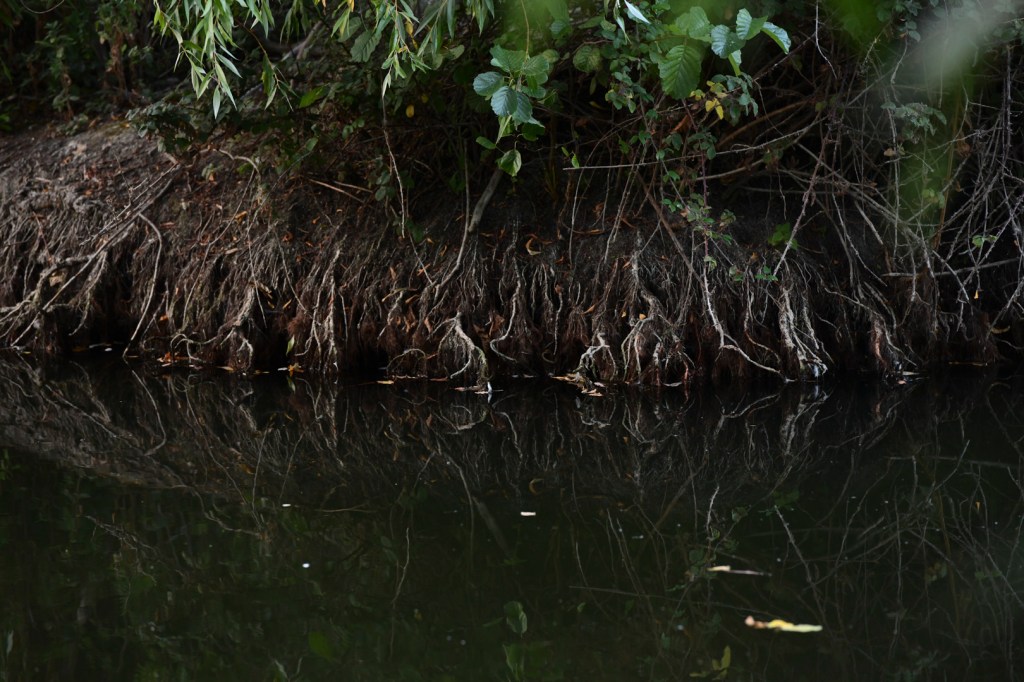
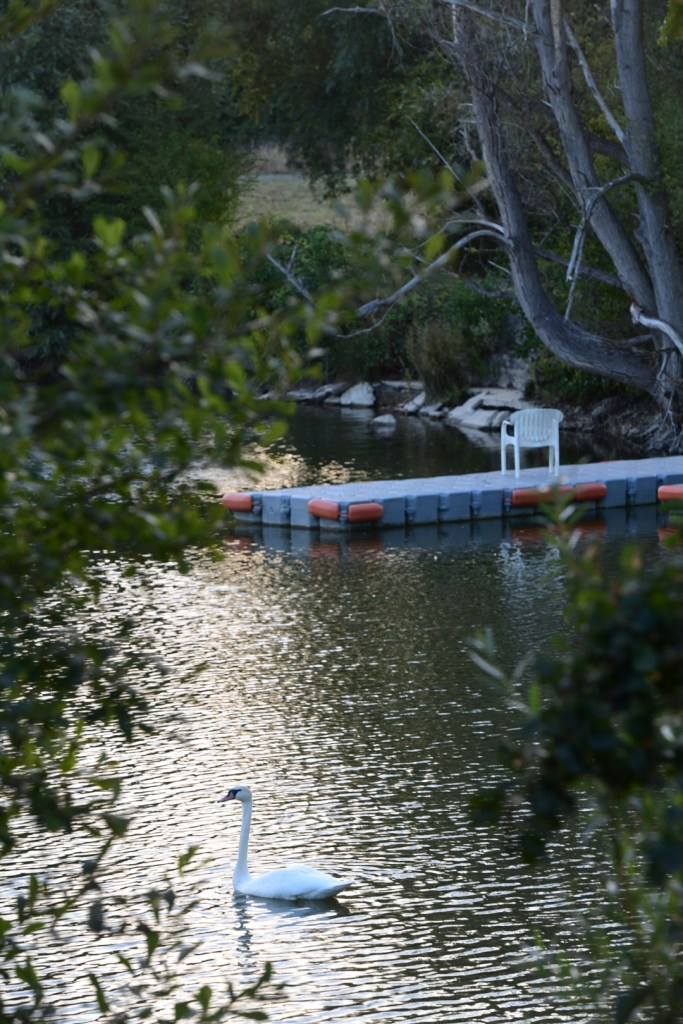
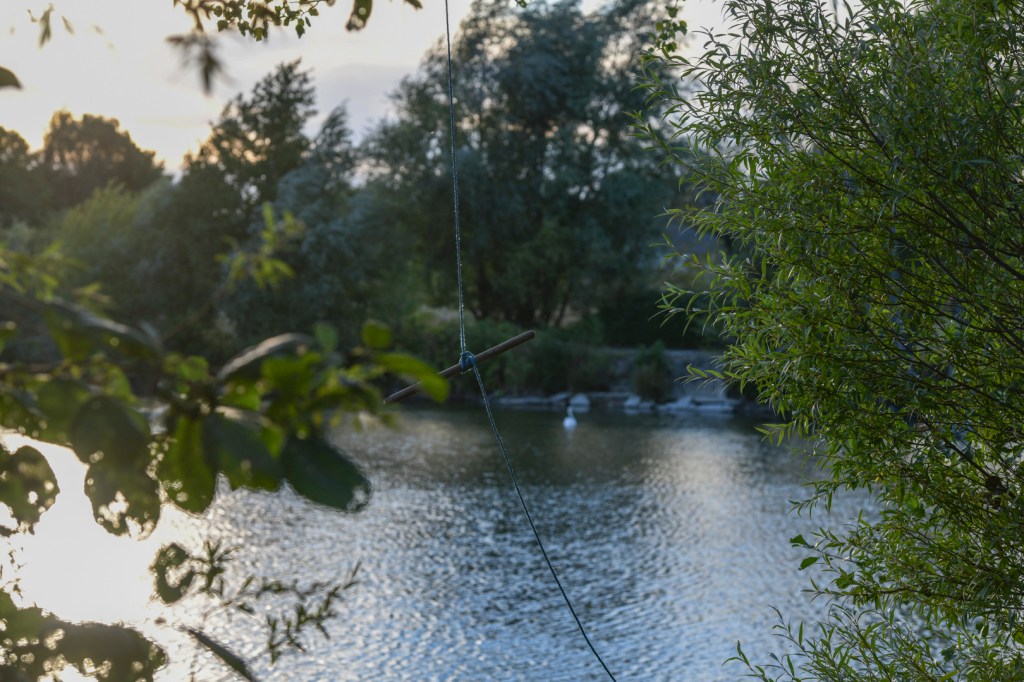
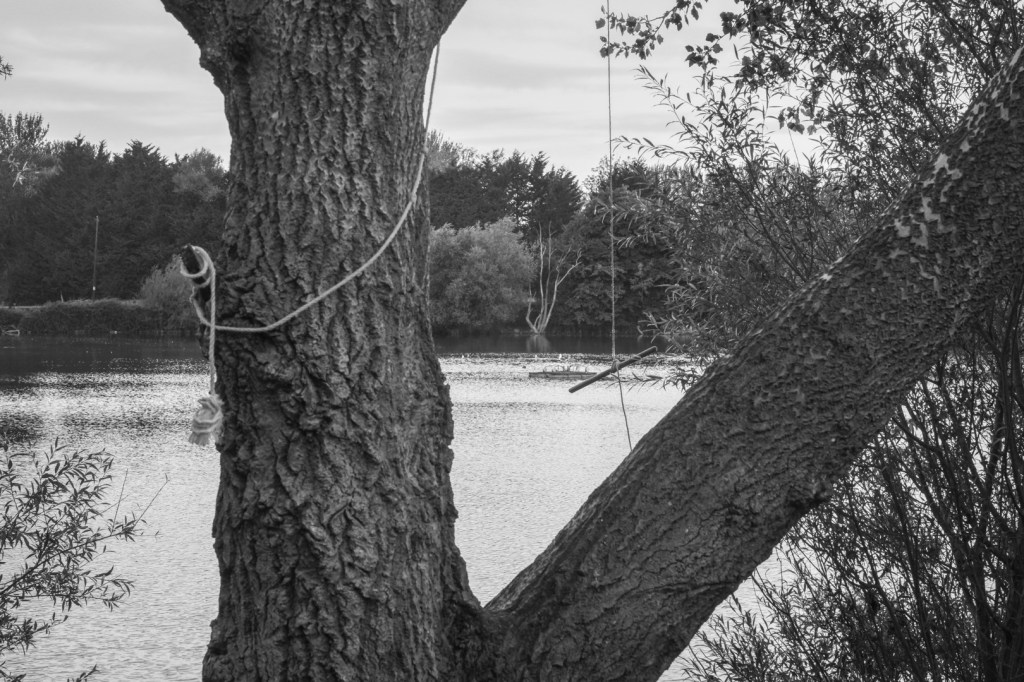
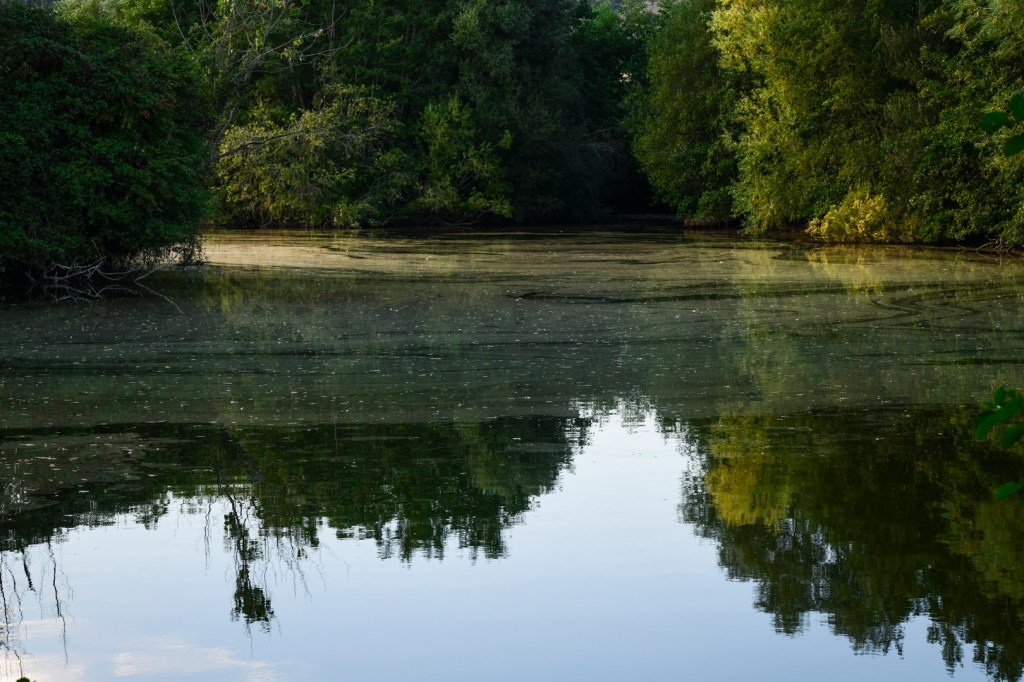
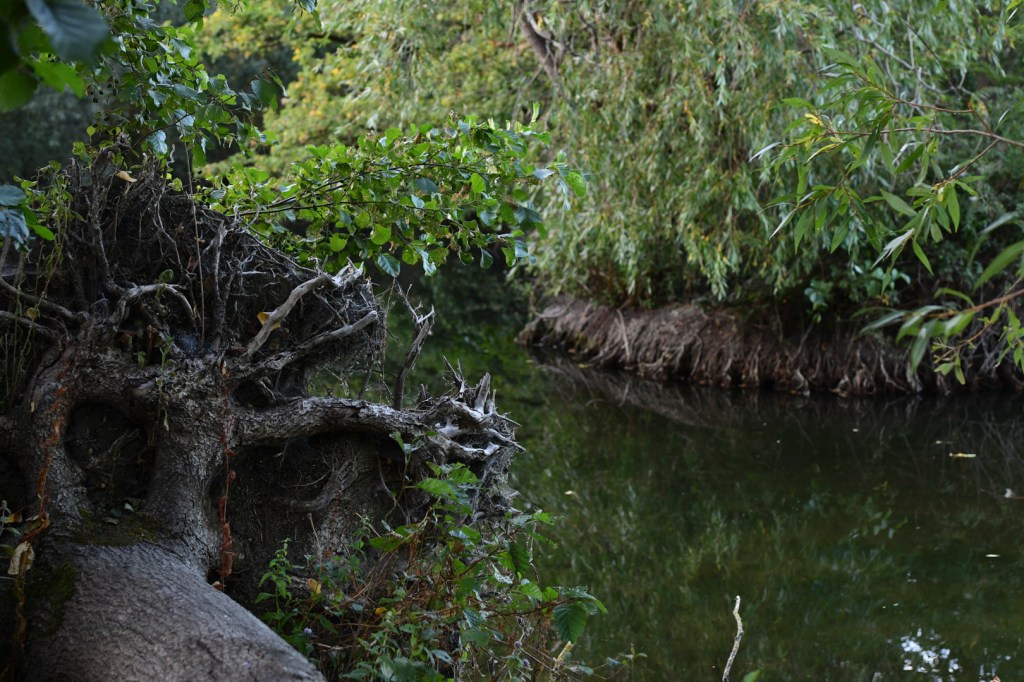
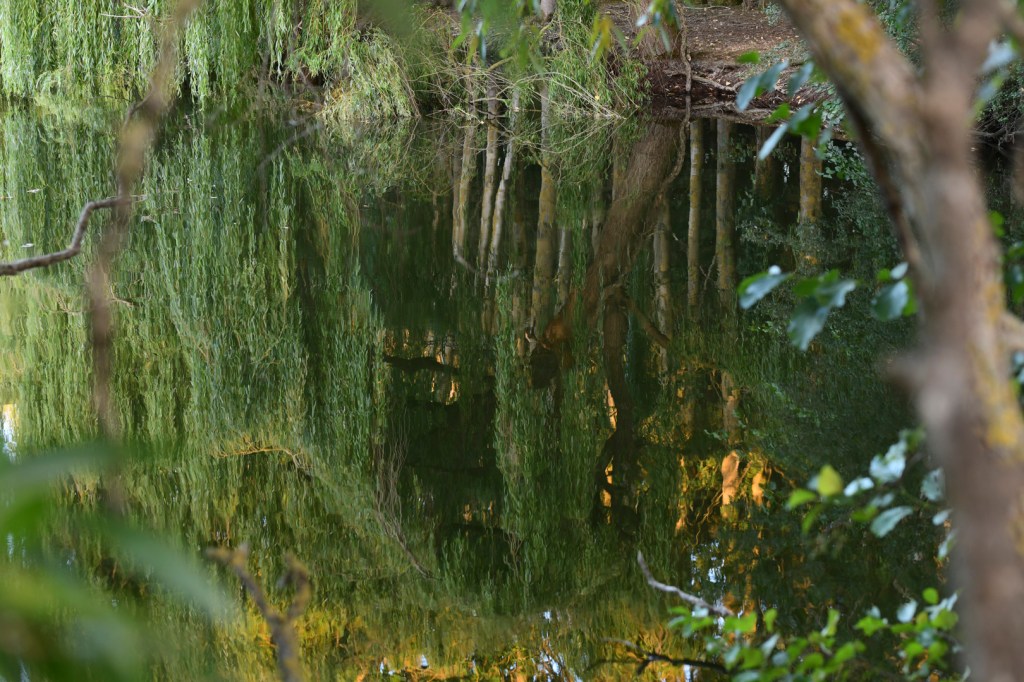
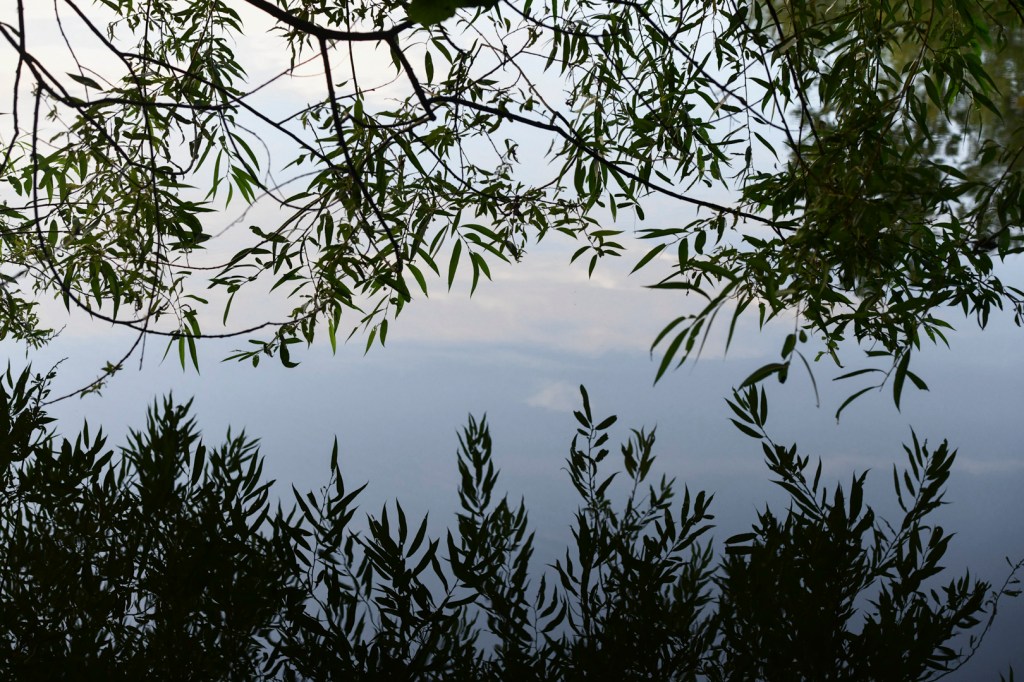
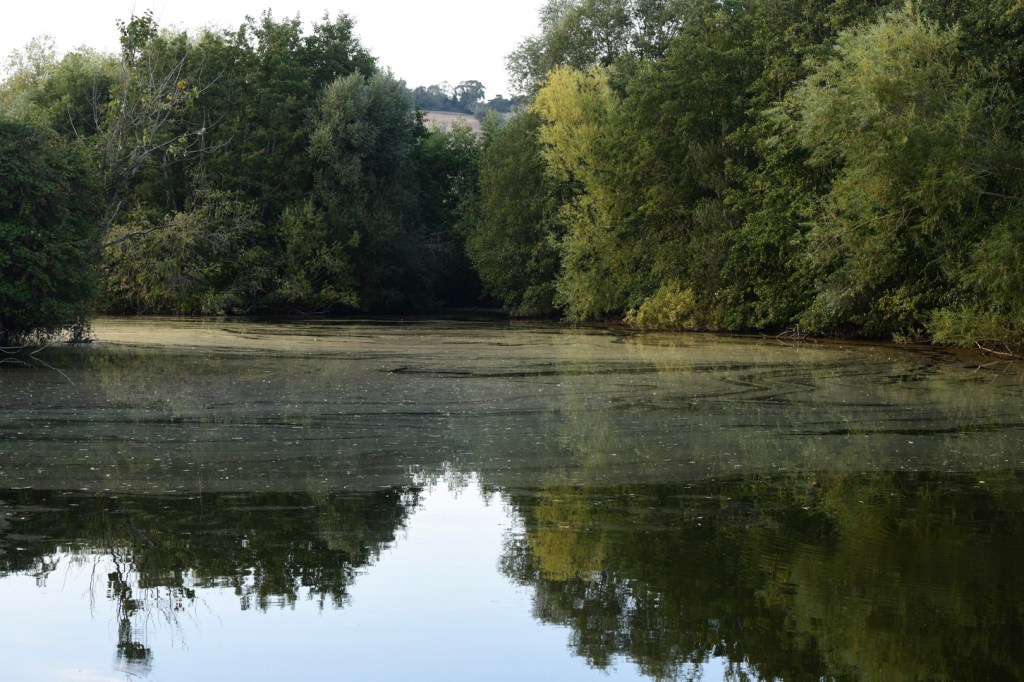
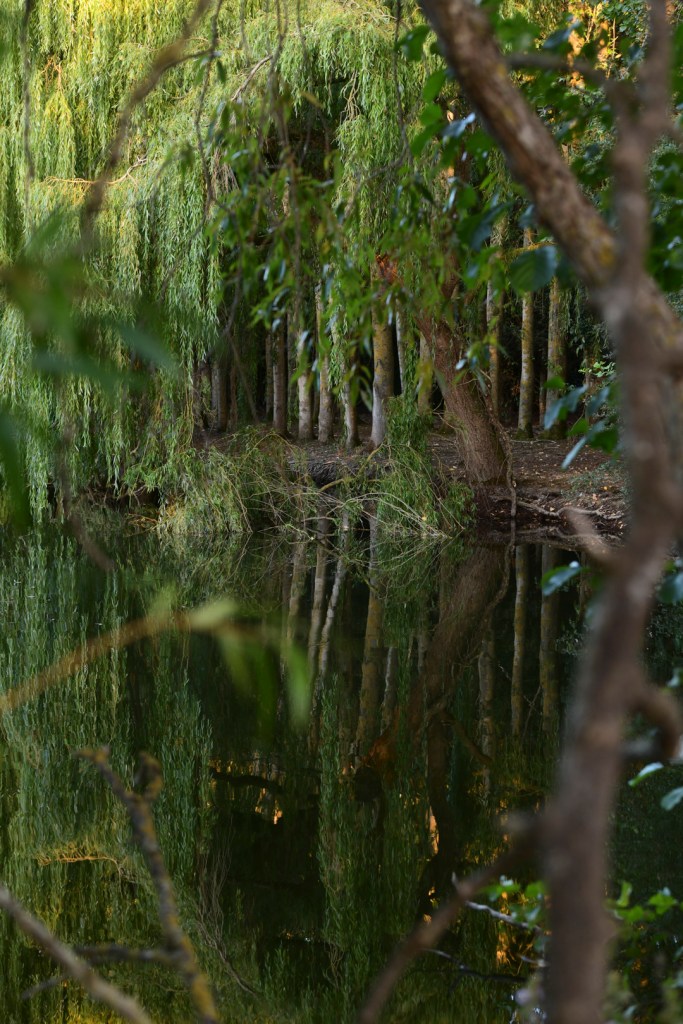
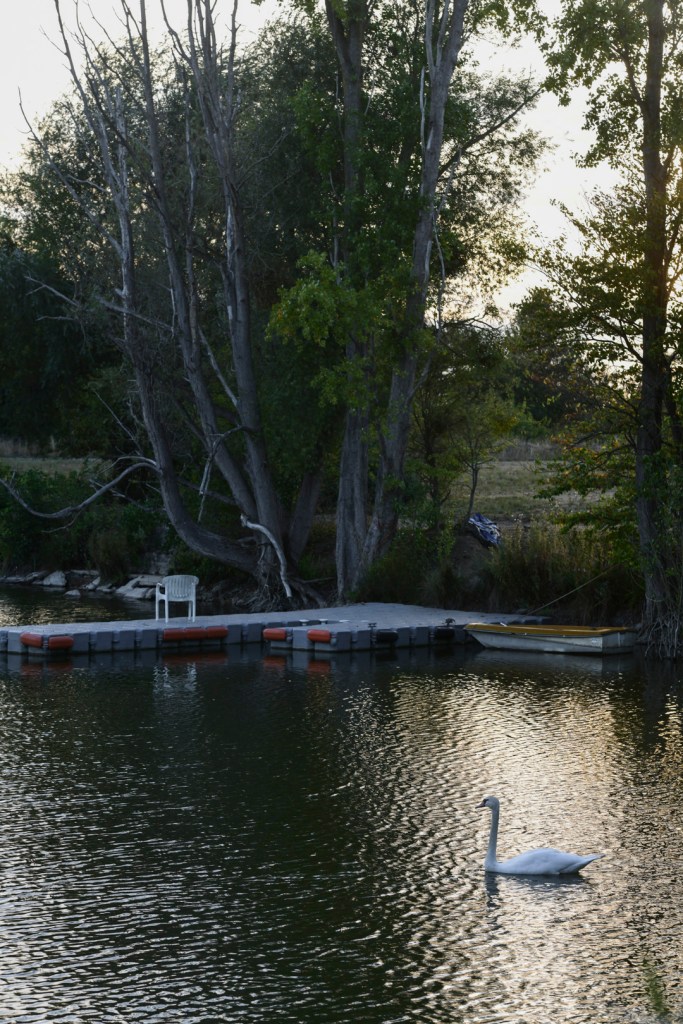
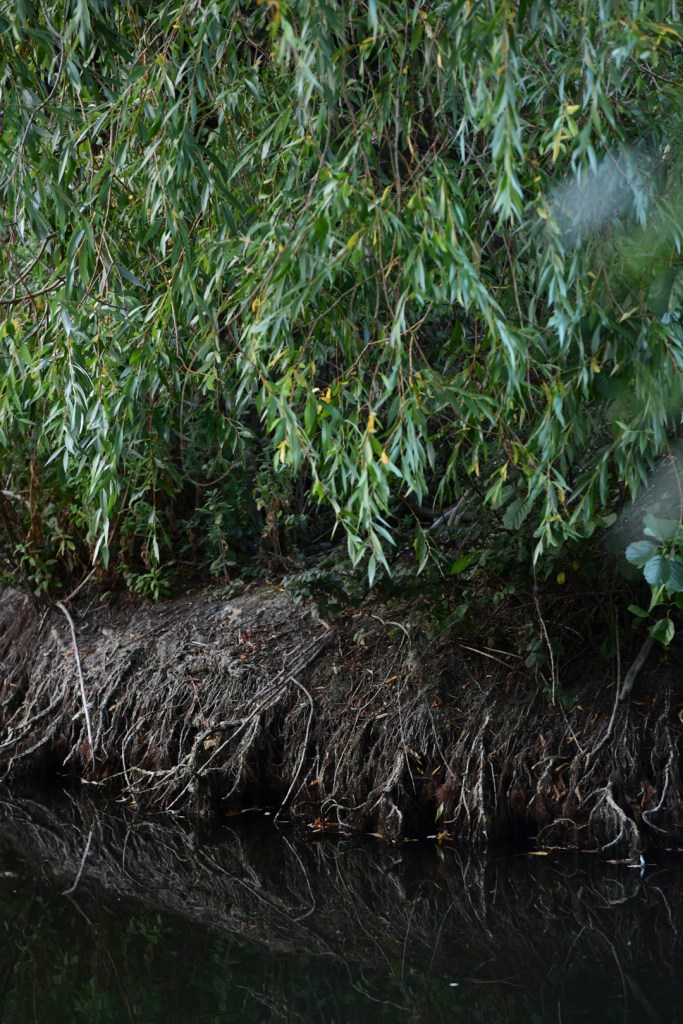
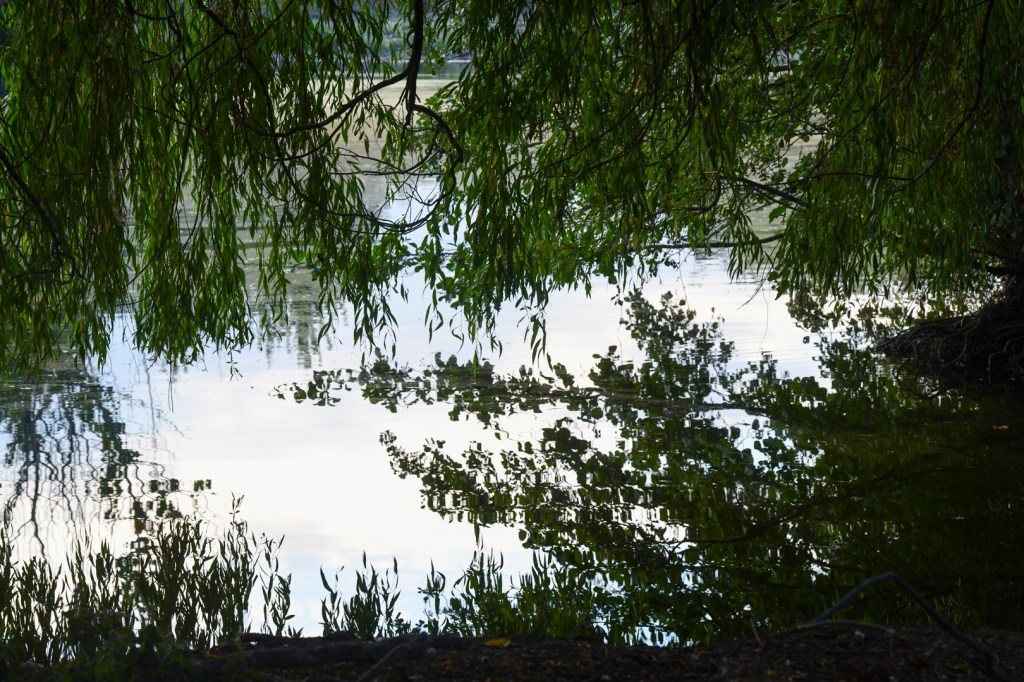
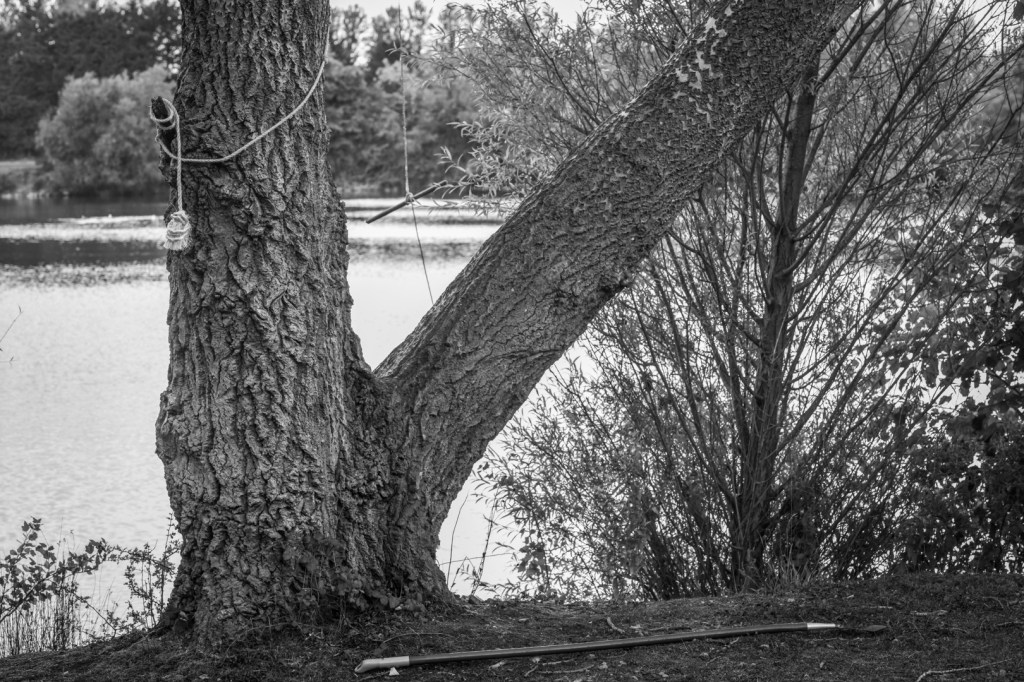

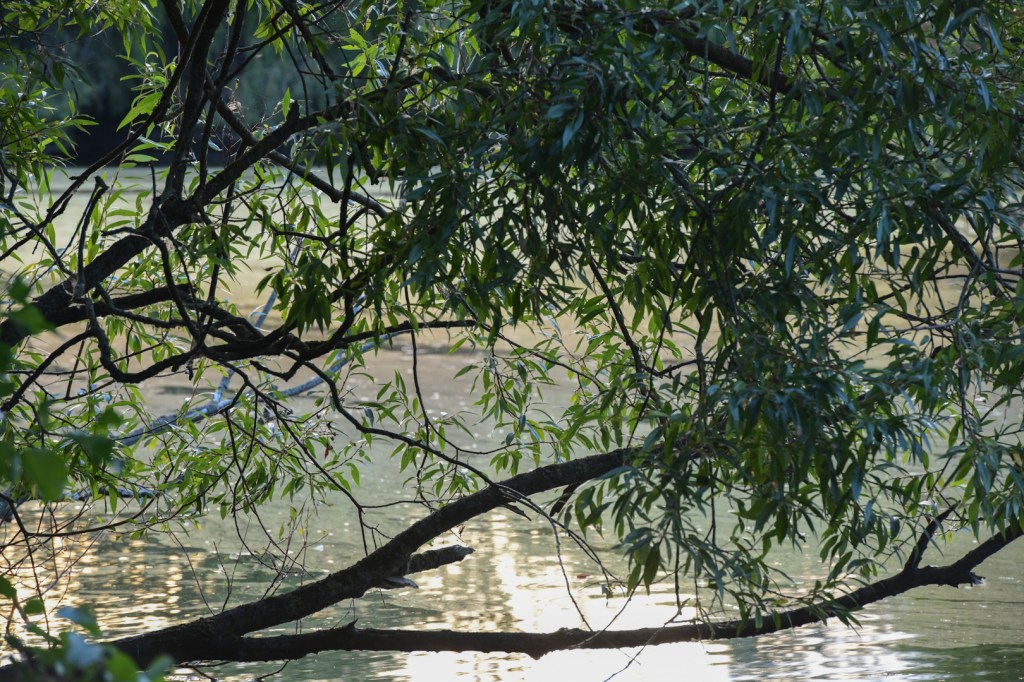
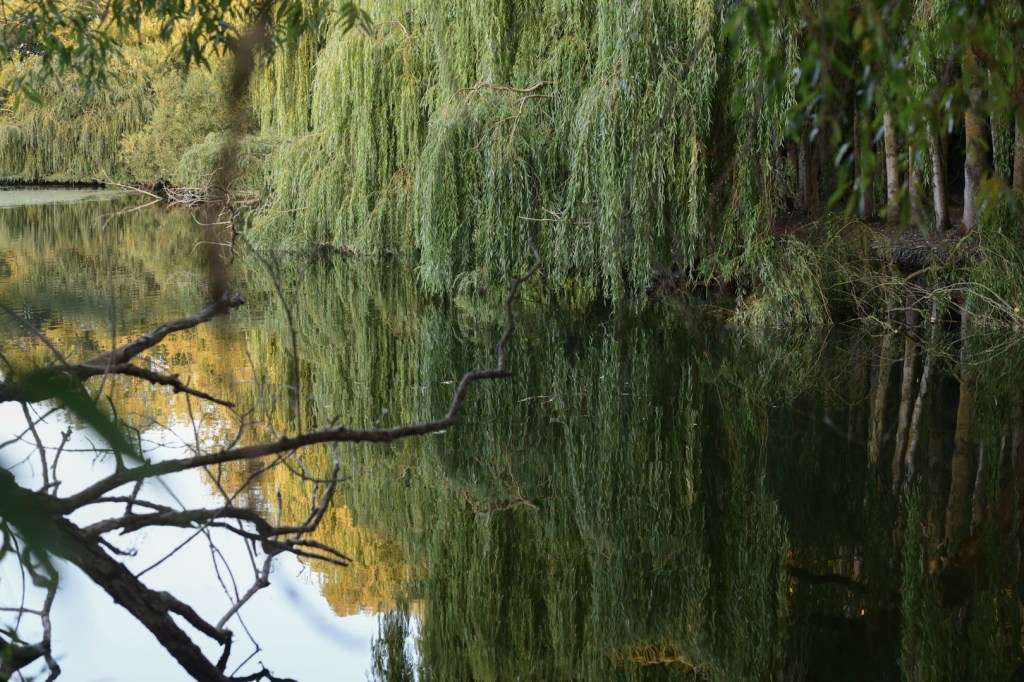

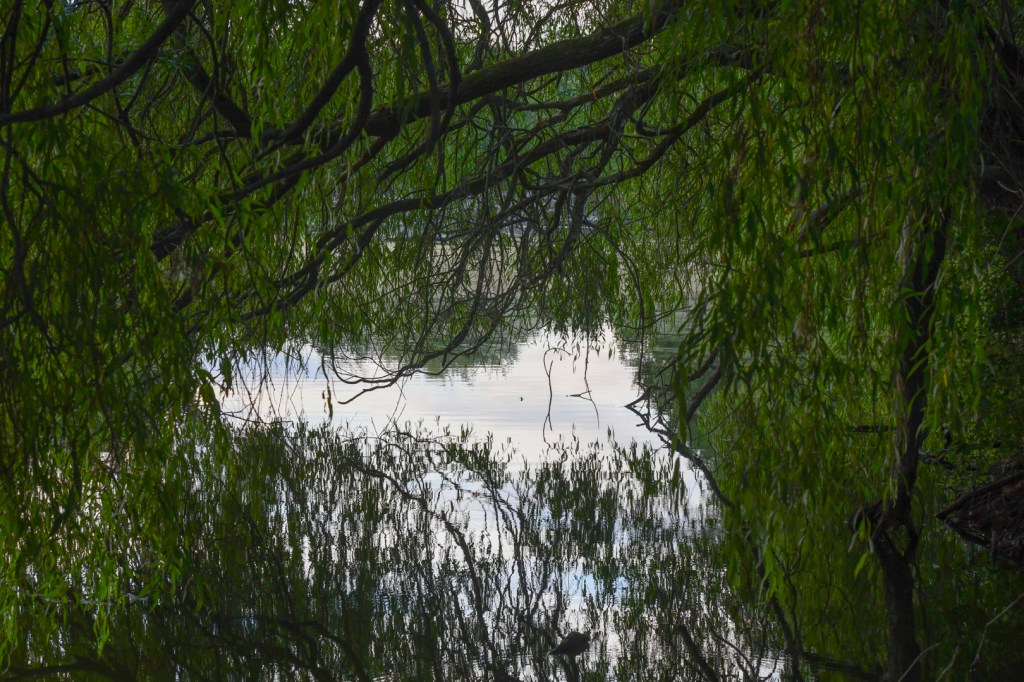
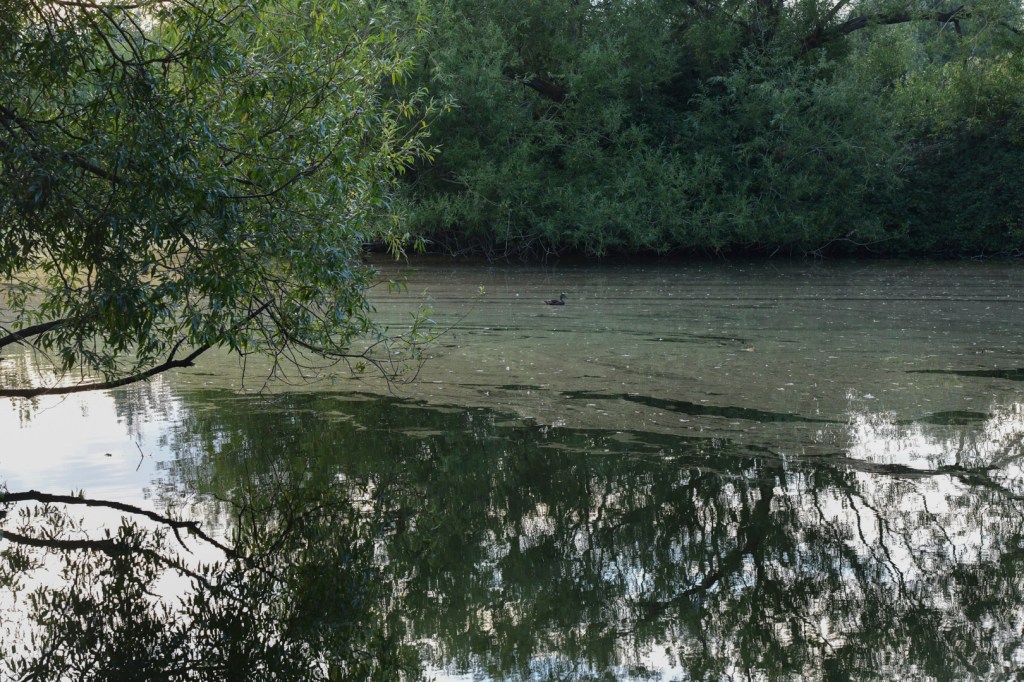
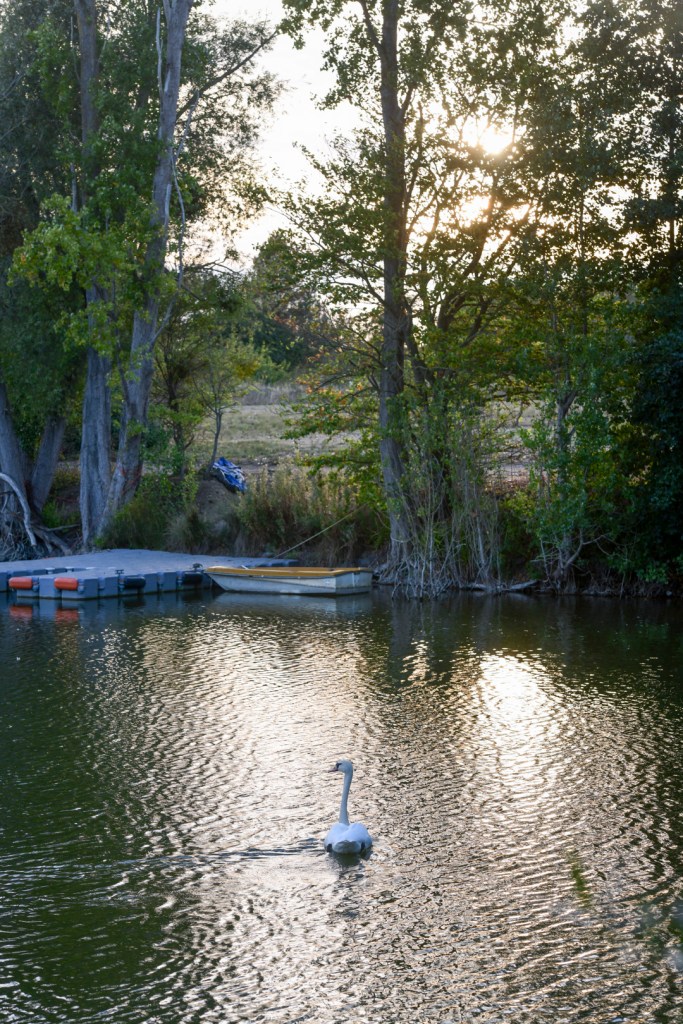
I took my Nikon out and treated the activity just as a walk rather than a photoshoot. Some of my photographs were banal but I’ve selected a few that I felt had the beginning of something more meaningful. Successes for me are the shots under the tree canopy at the waters edge. I, like many people am drawn to water and this is the place which contains the memories of mid summer when the lake is used for leisure and the teens ‘hang out’ on its banks. The swan is reclaiming its territory here, with everyone now headed home. I have ideas for other projects which centre on this lake. It centres around the summer months when it is very much in use by family and friends. Of course, thats not possible for this final project because it is being carried out over Autumn and Winter, when the landscape takes on a whole new meaning for me. A place of solitude and quiet where I get to lose myself in my own thoughts.
I shot alongside using my analogue camera, the images from that can be seen on the following post. The light was very bright even though late in the day and it was surprisingly tricky to get the balance right.
At this moment I was very much still trying to narrow down my theme and now, writing this up and having developed this further, I am not sure how these may / may not fit. I think that they do tell part of the story of the place itself.
In the first few images of the ‘square lake’ I have concentrated on the aspect of the lake which we use for socialising. My children are there as soon as the temperature climbs in the spring, until the last of the summer warmth. There is a deep connection with this place, when I think about the summers spent here and some essence of each of us remaining, memories are literally contained here and the rope swing in particular symbolises that. I admit to a tinge of sadness when I photographed this, knowing that this is another year of a rapidly disappearing childhood done. I think that may be why I chose to convert the tree and rope swing images in to black and white. I didn’t want the distraction of colour to detract from the memory. The garden hoe was used by the children to ‘grab’ the handle of the rope swing to pull it back in, ready for the next launch. The presence of the swan, peacefully swimming along whilst I photographed, did make me think about how it is probably enjoying the peace and quiet now. The white chair in the background, and also of the yellow boat on the late, as well as the kayak on the shore, is further intended to show where someone once was, enjoying the surroundings.
The next set of images is from the adjacent lake, this is less used as a ‘playground’ as it is close to holiday yurts that my mother and stepfather rent out. Also manmade, these have over the years changed shape as my stepfather digs out channels and creates small island areas for the wildlife. Not one to leave things be, he enjoys creating spaces for all (people, plants and animals alike) which results in an abundant landscape. For these images, I was able to concentrate on smaller details, like the reflections of the trees, plants and the exposed roots. This was taken at a time when Southern areas of the UK had no rain for 45 consecutive days. The impact of this was so clear to me when I took these photos. Areas of the lake were completely dried up and you could walk from one section to another, without getting wet! Even the algae bloom was everywhere this year which you can clearly see on the lake surface. I like the traces of the ducks etc in the water, revealing where they’ve been, which of course would be impossible without the algae.
I think I have some nice photographs but none of them really say anything about what I am trying to create. I do feel some frustration at this stage, I have also photographed using my analogue camera, I am hopeful that the film will be more rewarding as I have taken more time with it, with only 10 frames per roll of film, it commands a slower, more considered approach. I have realised I am almost using my digital camera to document this process.
Link to images: 7800 IMAGES
 Lucinda Taylor