Images of my completed practical work (submitted 11 Feb 2026)
MA Photography
Images of my completed practical work (submitted 11 Feb 2026)
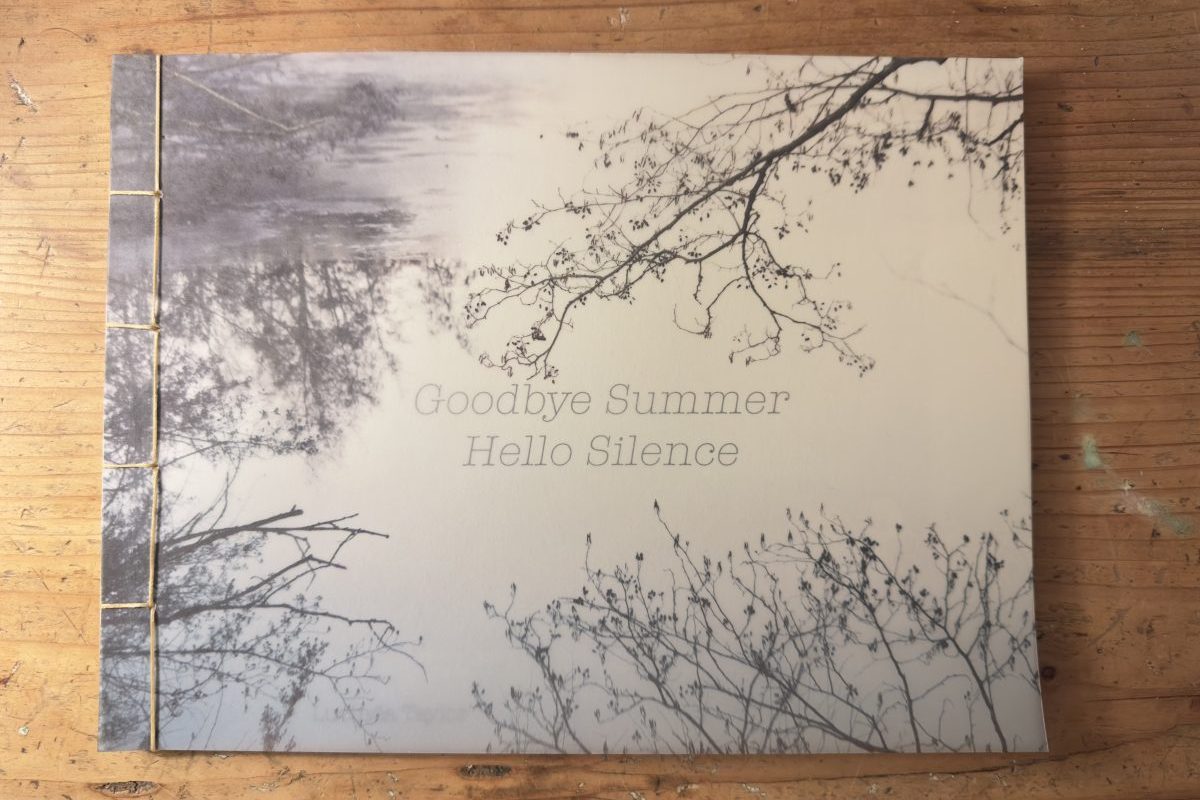
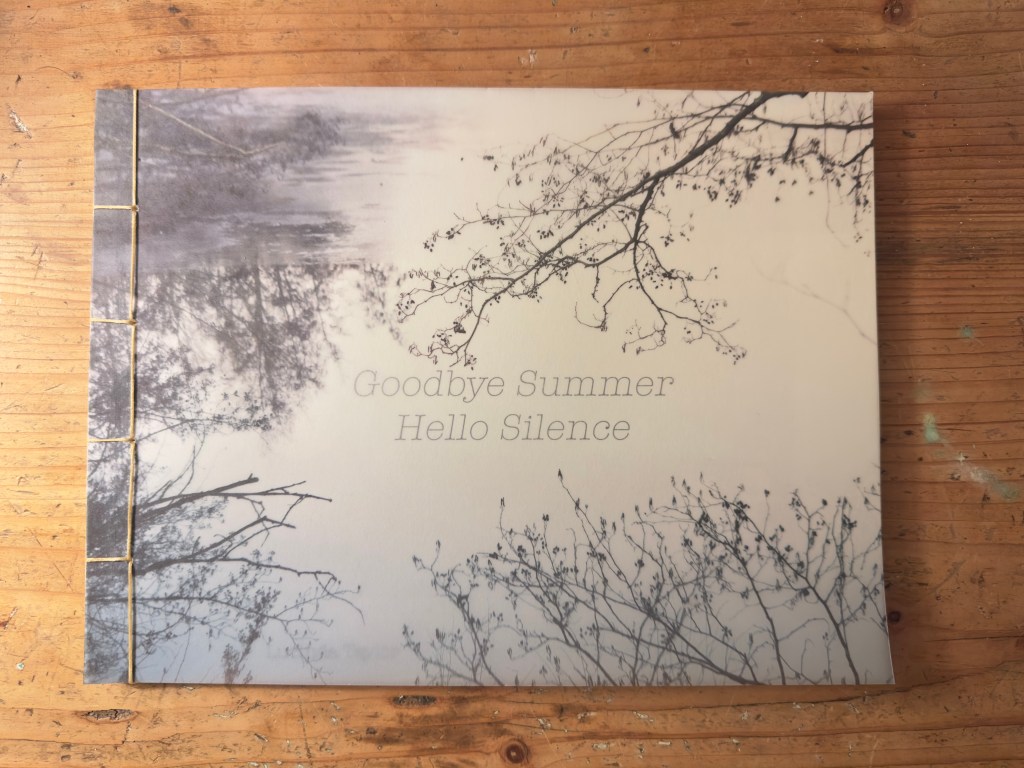
I am a prolific book collector. I find them to be objects in their own right and feature as such in my home. I love the way they feel, touch look and I am always intrigued by artist creators endless ideas for their artist books. For my final project I will produce a handmade book, possibly two; the project calls for a sort of ‘visual diary’ due to the volume of digital images that I have, it seems a shame to keep them out of sight for this and so I hope to create a simple tied book for viewers to see the extend of the ‘journey’ I’ve been on for this project. For my main submission, I will hand in an artist book, japanese bound (I like the visibility of this and it removes the need to fold pages)
Book examples & resources
John Gossage – The Pond – ‘the ordinariness of pursuit’ (quoted in interview with Tim Carpenter online) :
TC: Right. So tell me more about straining versus inhabiting.
JG: In the book, the closest I came to straining was picture of shopping center parking lot with the light of God. That was the over-reaching picture. Can you ask more from the literature of the picture than you actually can support? That’s what Romanticism is, by definition.
TC: That makes me think of a similar idea that prose is descriptive of an experience, whereas a poem embodies the experience.
JG: Yes, and the trap of poetry is to overreach, which happens all the time.
TC: Perhaps that’s a nice note to end on. Let’s not overreach.
From what I’ve read on Gossage he steers clear of romanticism and overreach (as above) – his approach to making work is less pressured in that he doesn’t insist of ideas of perfection and instead tends to work on instinct – he isn’t ‘career’ centred and so this could be quite freeing in his approach? he doesn’t worry if his books are well received or not. He discusses how in The Pond, the narrative is about the pathways to the place and the different directions taken, the journey and the discovery, not necessarily perfect or ideal.
In Robert Adams essay on Gossage’s The Pond, he suggests the work is more about presenting us with natures reassuring simplicity – this is how I feel too, much of what I do is about its gentleness, peacefulness, calming qualities. The photos I take are about a feeling, a melancholy but also there is something like a dreamstate. His photographs also show litter as other elemewnts of chaos, to demonstrate a general disregard for the natural environment, although by no one in particular and he doesn’t appear to blame, but he wants it shown that there is a collective responsibilty here – I wonder about my own work and how I try hard to not interfere, leave untouched, the place I am in.
In a world of unresolved tragedy we thus cast about, and it is the visual arts, it seems to me, that best offer a place of quiet as they remind us of a mystery in the Creation, one that implies coherence but that does not make its way plain. (Robert Adams)
In ‘Photographers Sketchbooks’ (McLaren and Formhals, 2014: p254) Alec Soth discusses his book ‘Broken Manual’ which he describes as a non linear book – no beginning, middle or end. Fragmentary pictures – some are grainy, black and white, others very detailed and colour – intentional and meant to show a personality falling apart. He describes how he would put the images on a wall, much like a serial killer might! Could my own book be a challenge of my own rigidity when it comes to being uniform, perfect? He says that he could have literally thrown the photos in the air and seen which order they landed in, to create his sequence. This is of course entirely dependent on the themes of the work as this might not work with something intended to be formal.
Process of sequencing
The decision to use or discard is challenging. I have looked at examples of artist books (of note, are those listed below) to see how best to proceed with this. As previously noted, photographers like Alec Soth and Ray Meeks have a fairly relaxed approach, in so far as they wait to see what they have before thinking about sequence.. ie its not a consideration when making the work.
Decisions on output
Which images to use – decision to make a digital ‘journal’ and then a more fine art, refined book as the accompaniment to the exhibited work.
Analogue only?
I have decided to print everything and see how the images might work together. Using the guidance I’ve had before, I know that this is often the best way to determine the ‘winners and losers’ as viewing only on screen can be so misleading. I think that ultimately I will end up with analogue sitting separately to digital images and I have decided that the submitted work will be analogue. Time permitting, I would like the digital work sitting alongside as a sort of diary / journal of this process. However, I am limited with my time availability so will need to organise this carefully to have a realistic chance.
My own experiments:
I made a couple of initial books up just to practice using indesign and see how I might sequence my work. I found the sequencing aspect to be quite daunting as I had so many to look at. Before I had made the decision to use my analogue images only, I split my work into categories and tried to mix the sequences between these.
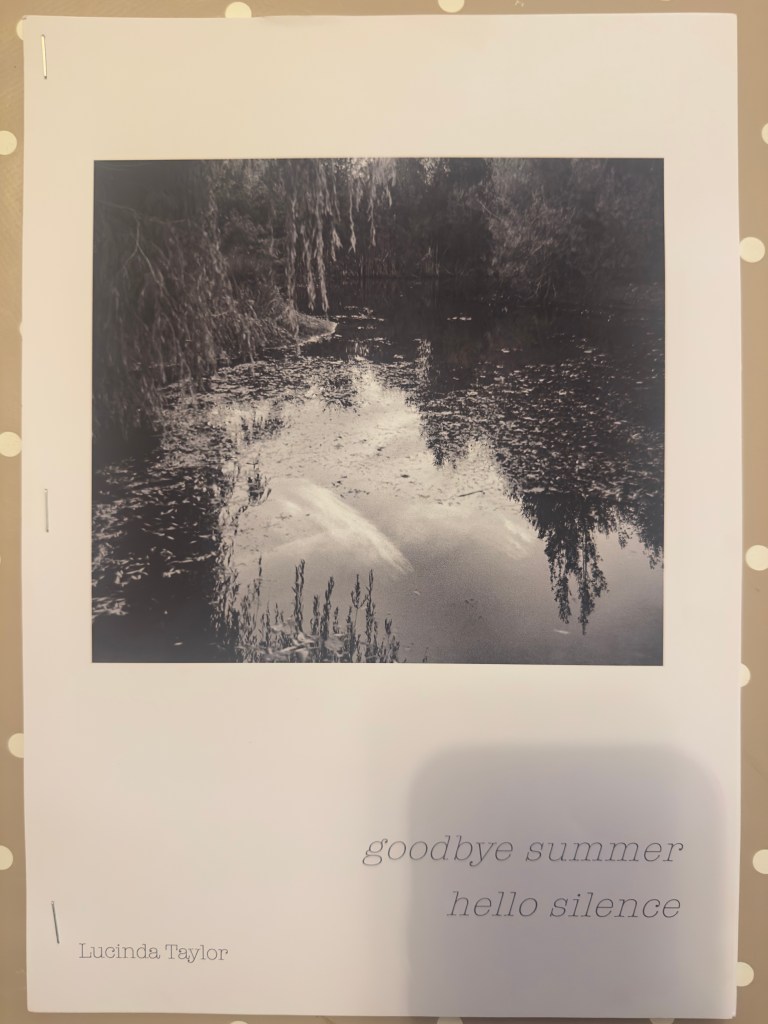
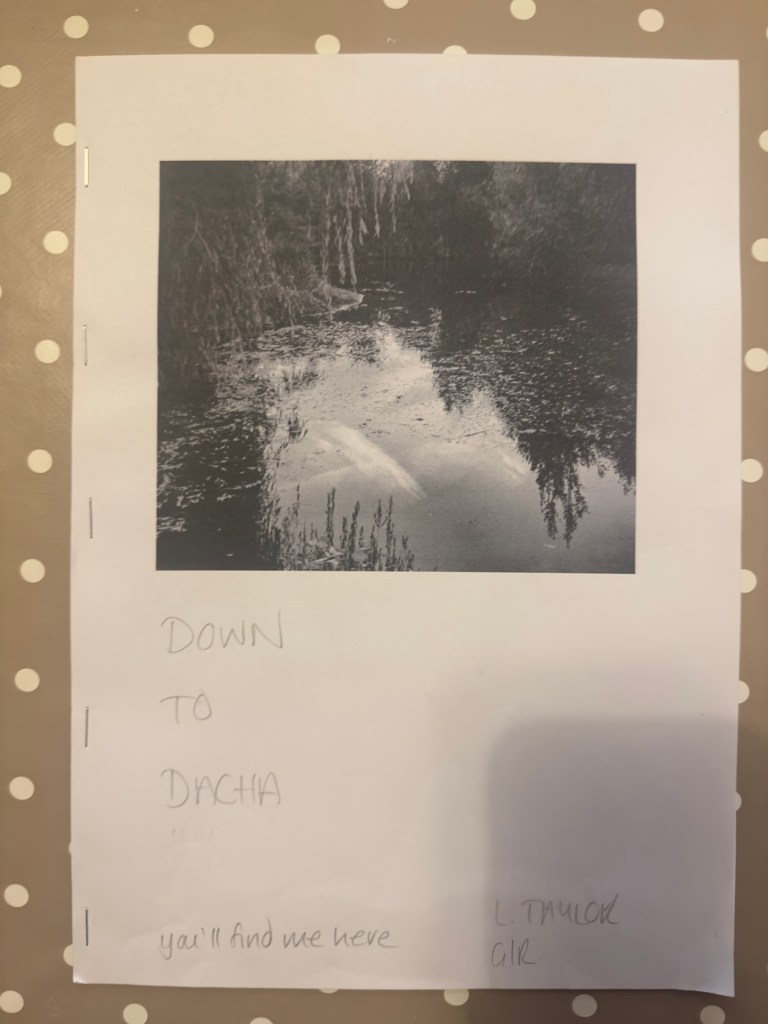
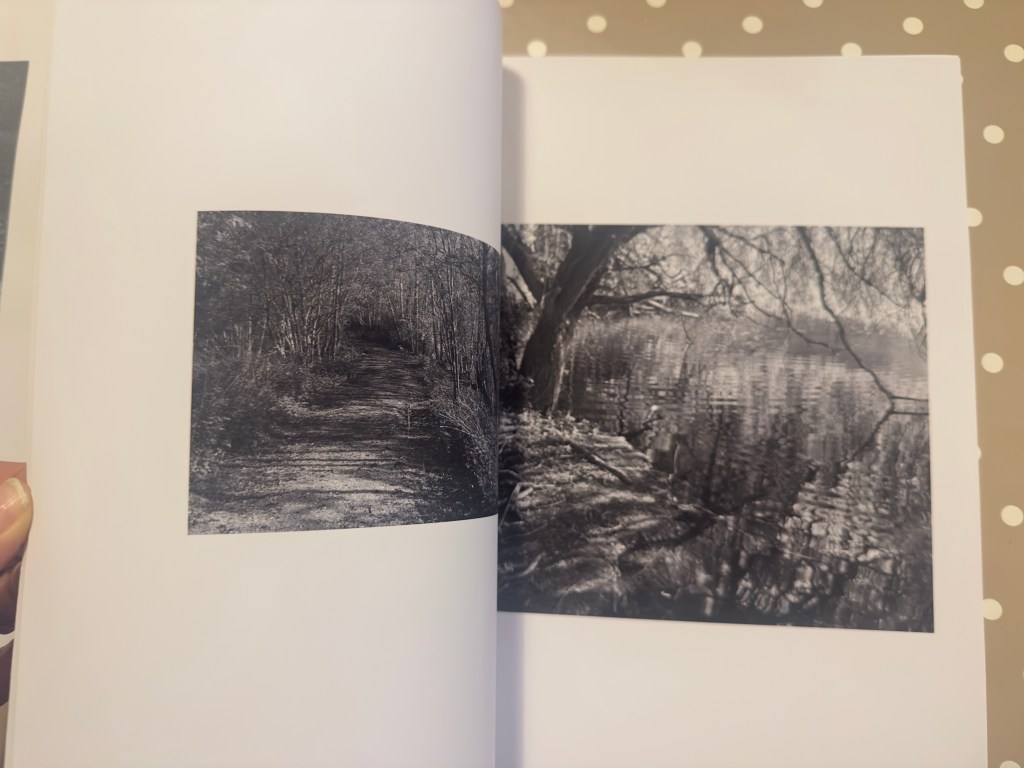
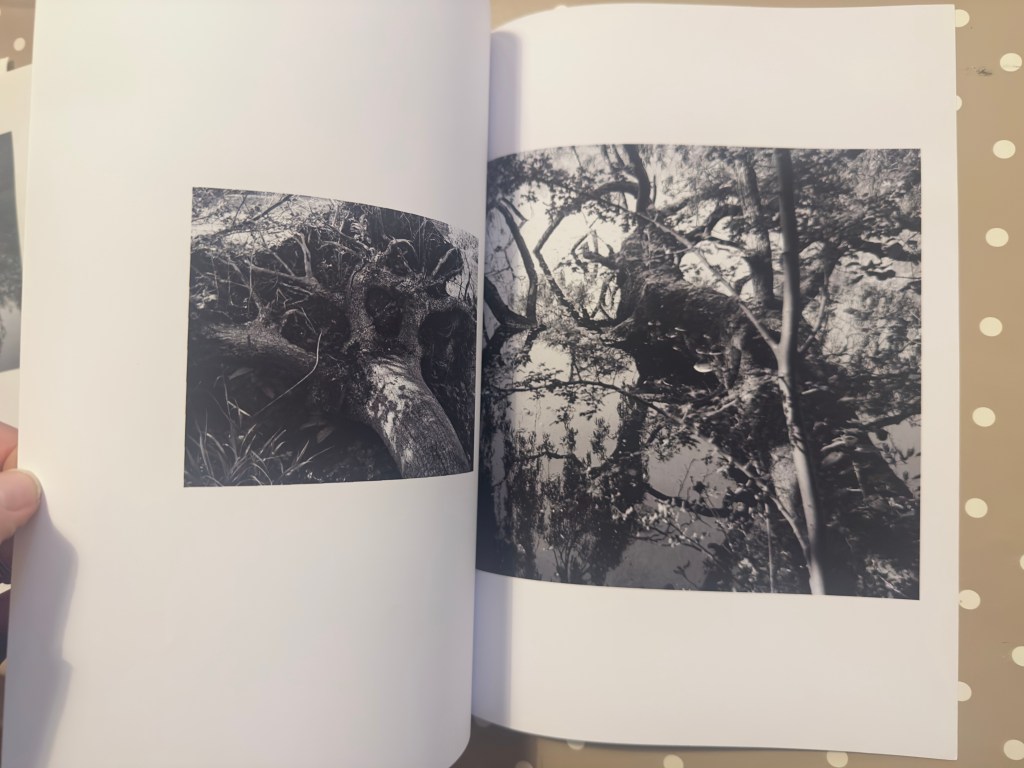
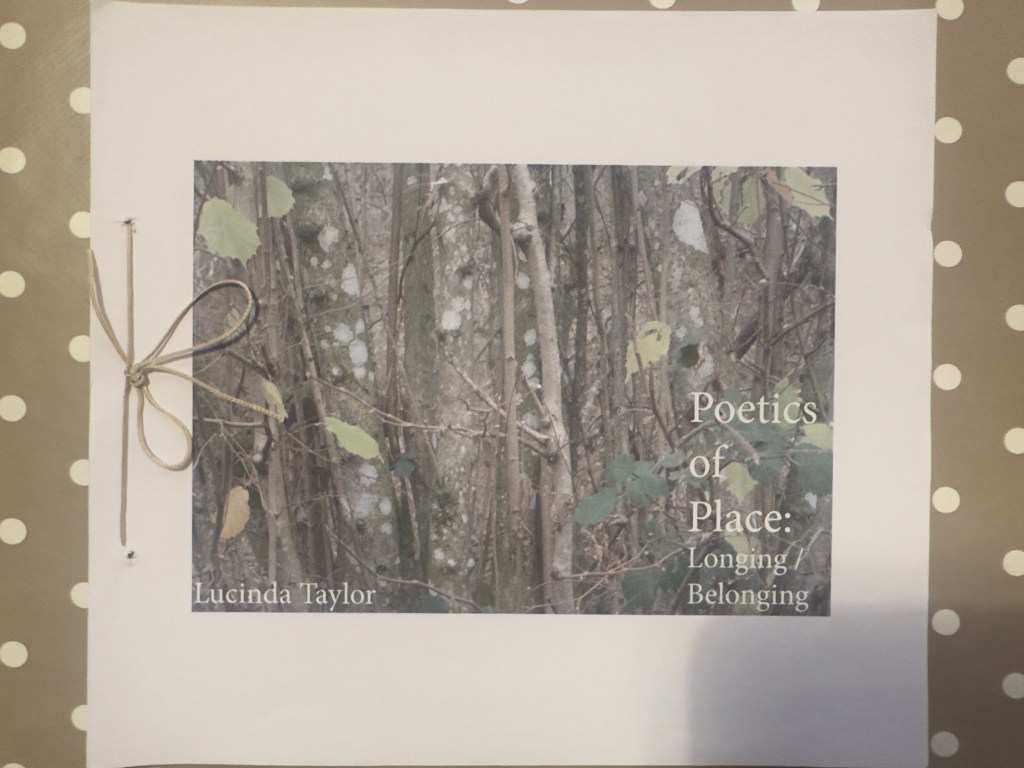
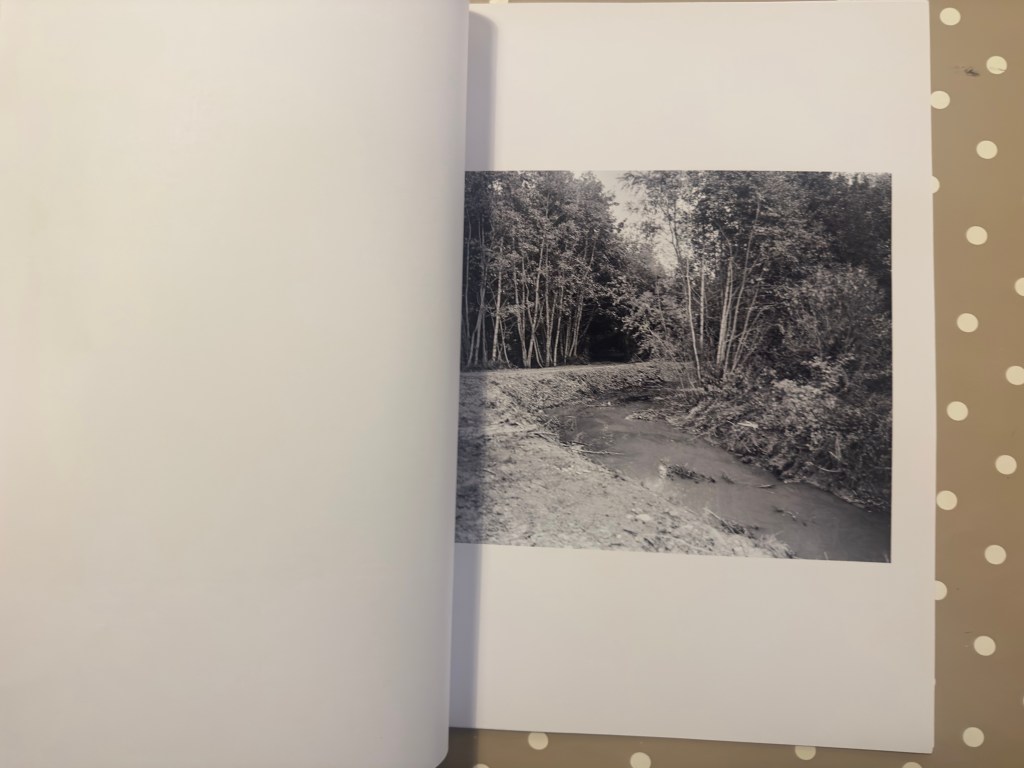
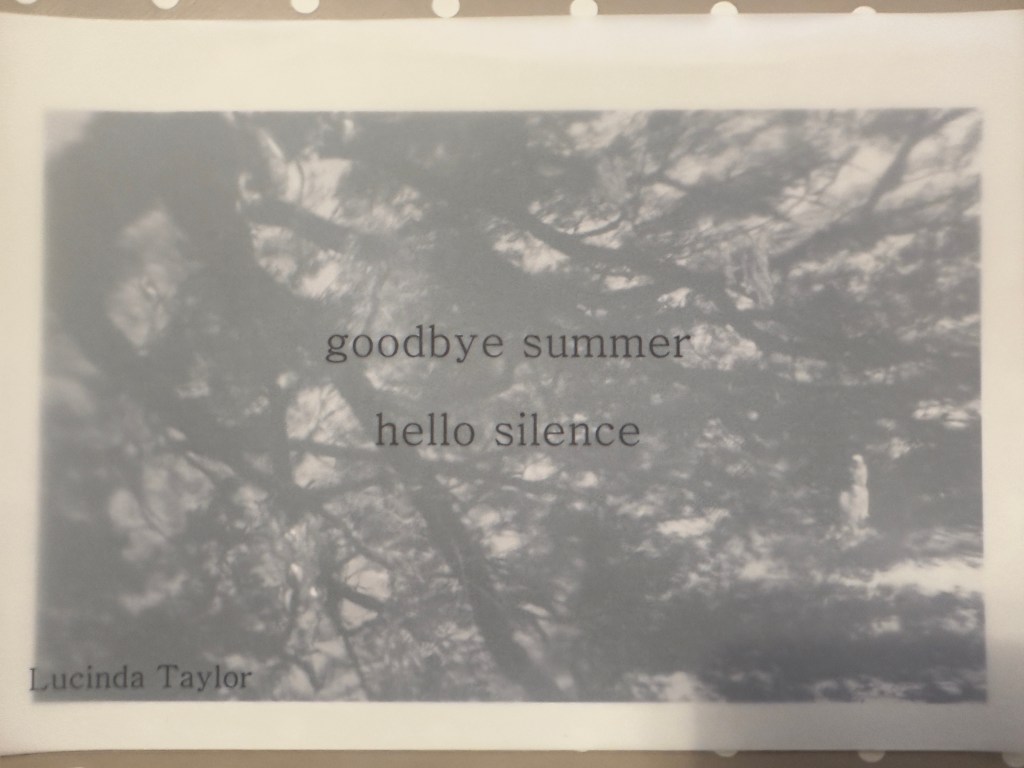
At one of my contact sessions at university we laid out the selection to that point (I continued shooting after this as didn’t feel I had exactly what I wanted image wise) and did a quick edit of work. This was helpful in so far as I could make instinctive decisions and not overthink this initial edit process too much.
Once my decision to use analogue images was made and to use a combination of colour and black and white, I created a mock up book. I originally intended to have images on some of the facing pages but on further discussion with our technician, we agree that the paper I wanted to use wouldn’t be suitable for this (it is one sided for printing) I would instead keep the facing page blank and have images printed in various aspect ratios, on the right hand page.
I have taken inspiration from a number of online sources for book making. In particular, I like the work of Lev Ladzyga. His work focuses a lot on a ‘zine’ type of book, which allows for a deconstructed, informal style. His bindings are sometimes made from wood or metal, more often than not, he binds traditional papers with Japanese style stitching. It is this which I like the most and will use for my own book. I feel it connects with a natural space, it feels more crafted and I don’t want the book to look as though it could have been made by a manufacturer. I am keen to ensure that it appears personal and cherished.
Here are examples of his work, from his website:
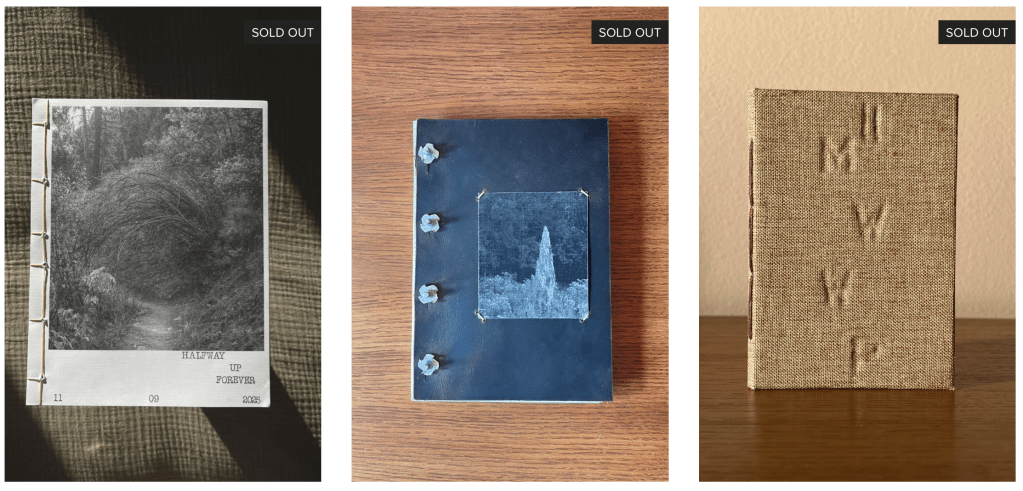
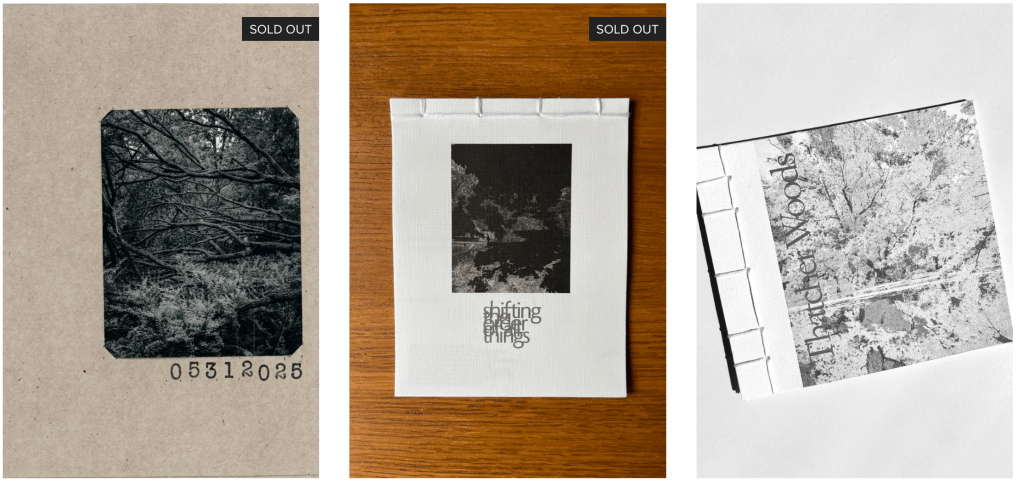
To finish the book, the technican pressed two pages of parchment together to create a thicker back and then once I’d cut it in the guillotine, I carefully lined all the pages up before marking out the holes on a template. I drilled the holes as it was too thick to use an awl:
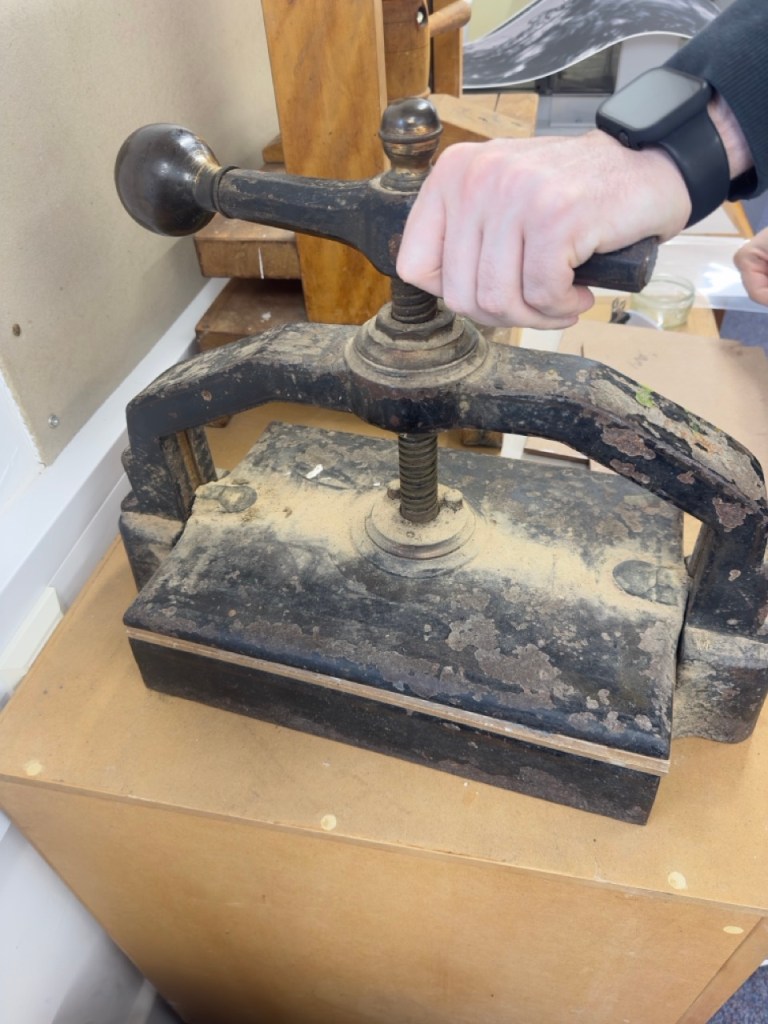
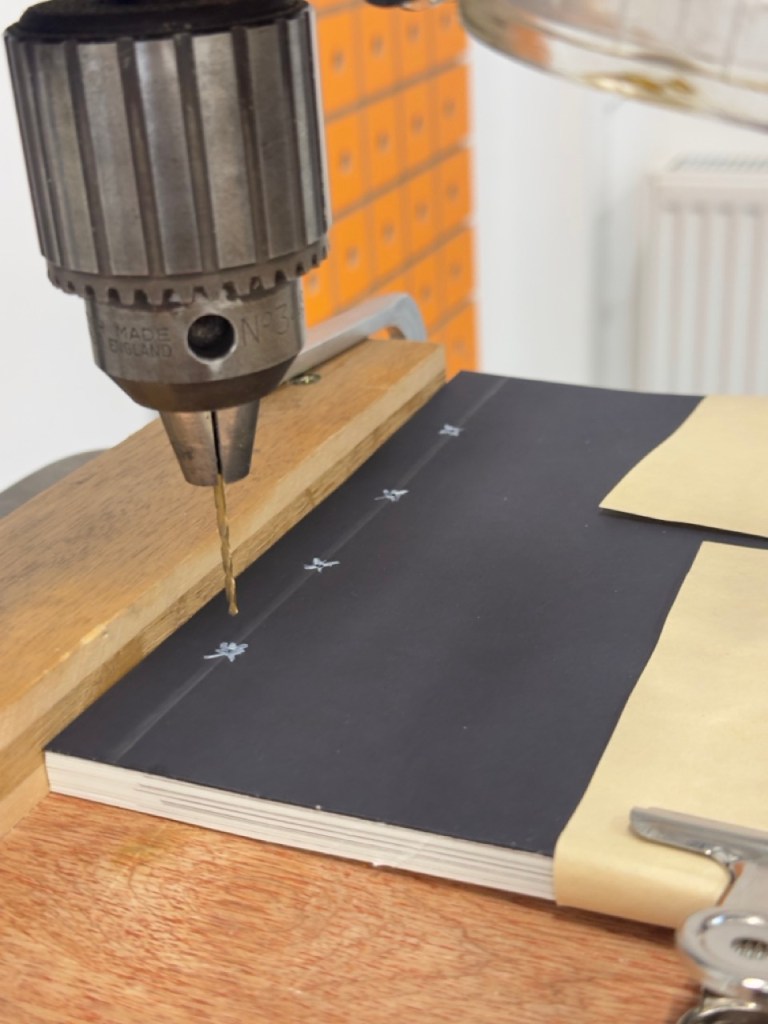
My finished book below: (I tried to upload a video but WP won’t allow this without a paid subscription!)
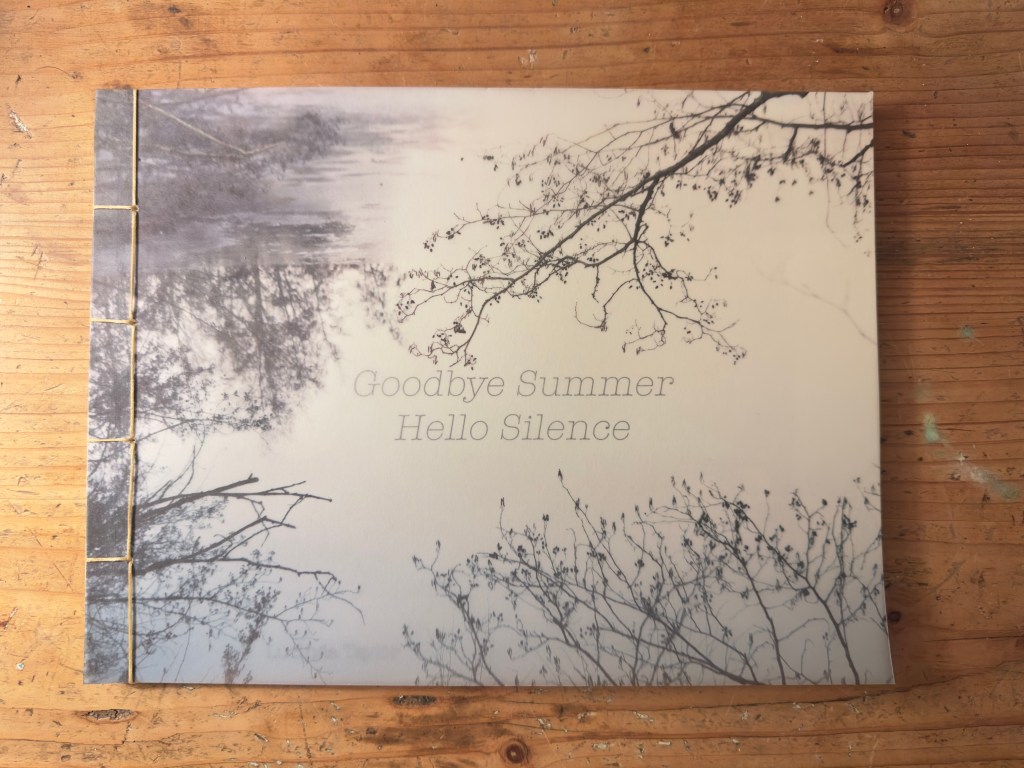

10th January 2026
I now have to make decisions on whether to use only analogue or only digital in my book and / or display. Additionally whether a combination of black and white and colour I could ultimately use both but I think the wall work could be good with a combination as this illustrates both of my methods and represents the FMP journey. The book feels a little different, for reasons I am not yet to be able to articulate but I think I want to keep it to my analogue images only. As discussed elsewhere in my blog, my sense that an analogue image contains something of the subject in the emulsion itself suggests it has more value as a cherished object, as described by Albarran and Cabrerra. ‘Their description of photographs as cherished objects highlights the importance of physical work as it is something to hold dear and have some connection to. That isn’t to dismiss the value of the digital photographs I’ve taken, I just feel differently about them and wish to separate them, when looking at showing my work in book form.
Unfortunately, I haven’t been able to create a ‘journal’ style book with my digital images as I had intended. I have had to make the decision to prioritise and focus on my main submission as I felt that was under threat of compromise with my time pressures. This is something I will use im future as a physical sketchbook. I have found a lot of time has been spent in trying to overcome technical frustrations with wordpress and this has cost me in time. A physical sketchbook, perhaps uploaded later in a project would add something more personal.
22 January 2026
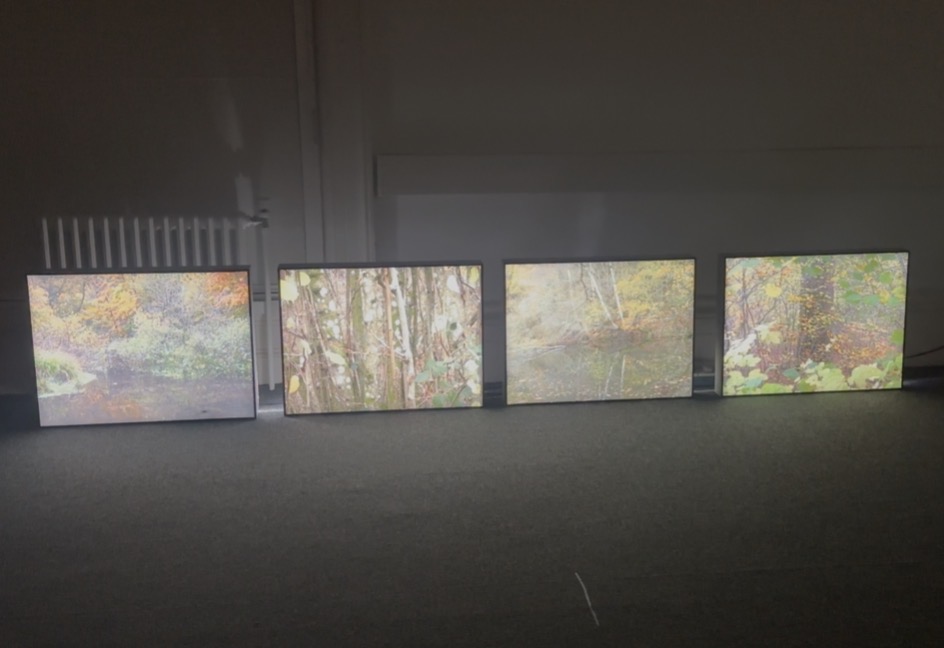
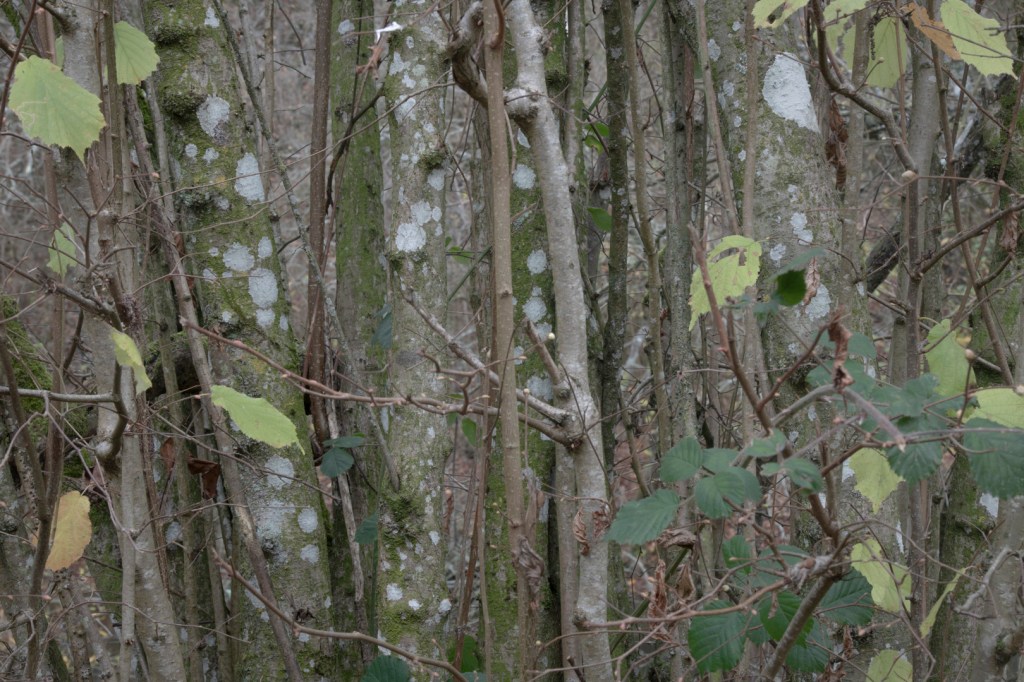
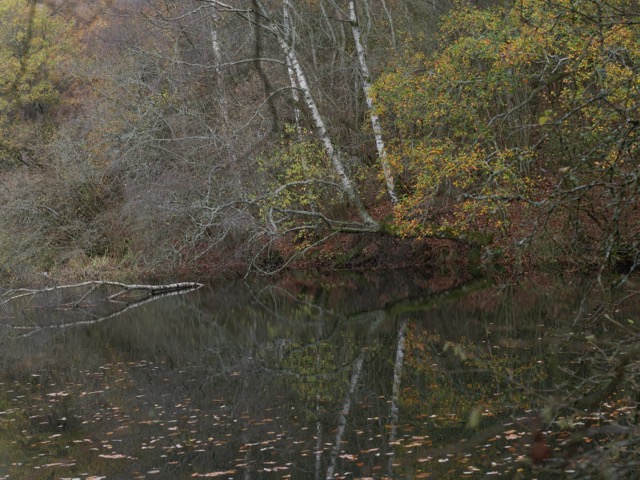
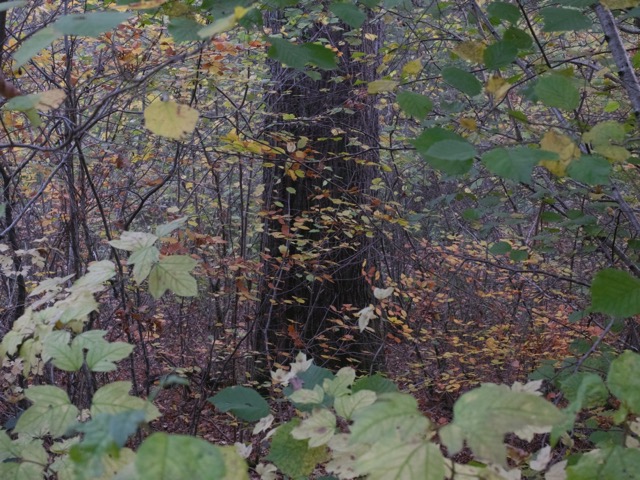
Having spent some time with our technician, I have been able to narrow down my thoughts on how to present my work. I’ve seen the lightboxes that I can use and have decided that I have some strong digital images that will work well, printed on ‘Duratrans’ translucent paper. I have opted for images with strong colours and textures, with two being closer shots and the other two wider landscapes, depicting the area. All 4 of these are from Guiting Wood, the place of my childhood.
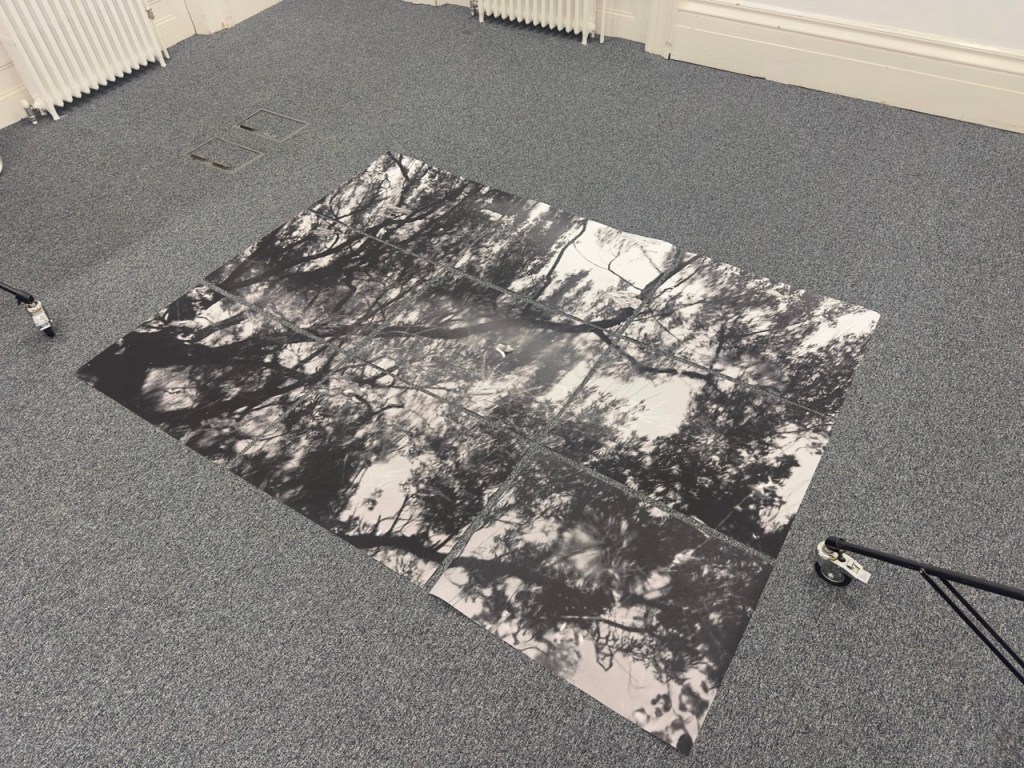
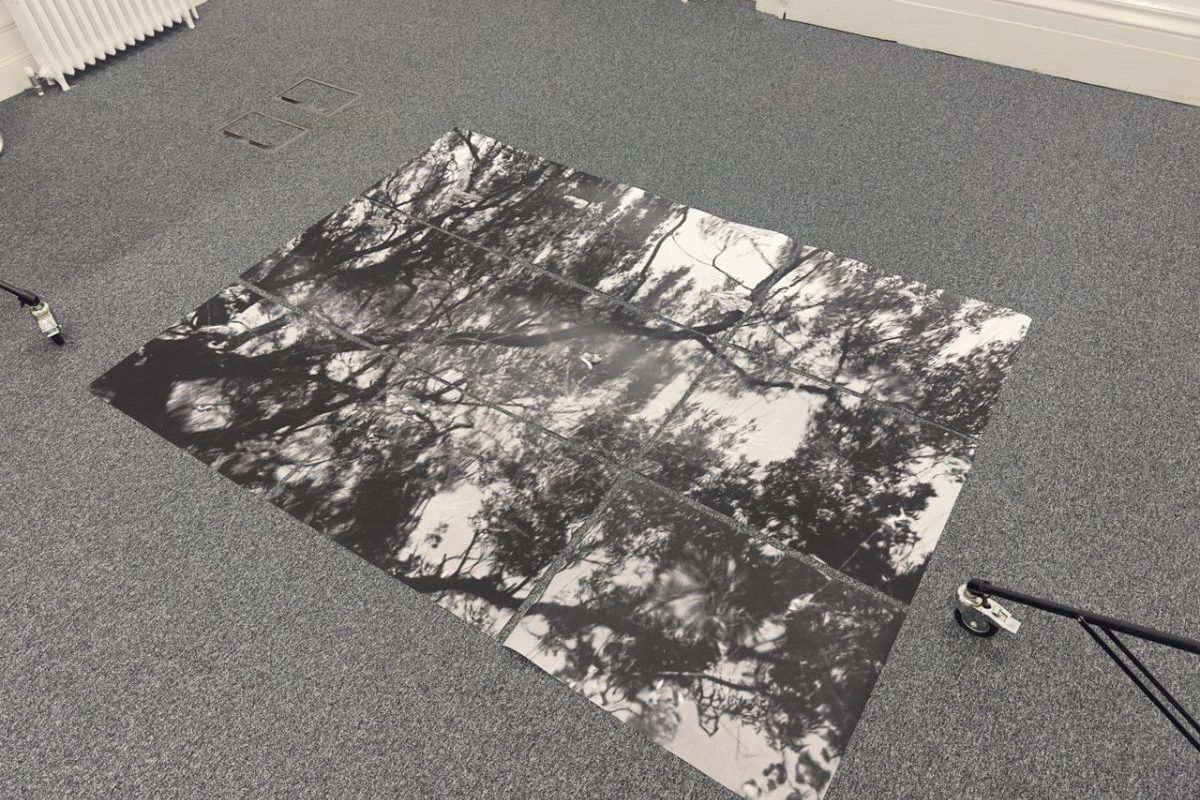
The other exhibition piece that I will be creating is a large 3 x 3 ‘ composite printed on matte paper, the scale of each of the images will match the size of the lightbox panels (800mm x 600mm) so creating a final piece of 2400 x 1800. The chosen image is an abstract analogue photograph, that I took early on in the project. It was one of the first rolls of film I used to photograph the lake at Dacha and I had no idea what to expect when I developed the film. I loved its ambiguity and it represents my theme well. I think that in having, almost opposing image styles next to each other on a wall is ambitious but represents the breadth of experimentation in terms of establishing my photographic style and attempts at translating my dual theme of connection to place and mindfulness in photographic practice.
We also establish that a book would work well on matte paper, printed at uni. I had considered a hard cover but I am not wedded to that idea and given the timescales available to me (an ongoing problem!) I don’t feel its a terrible compromise to have a soft cover. I will print at uni and then bind at home, using a Japanese binding technique. This will be the first attempt at this, but I am not chasing perfection, just authenticity.
29th January 2026
After a fraught few days gathering my work together, sequencing and organising them through lightroom, photoshop and indesign (neither are strengths!) I have work ready to take and print at university with the help of Lukasz, our technician.
These are the selected images for the lightboxes:
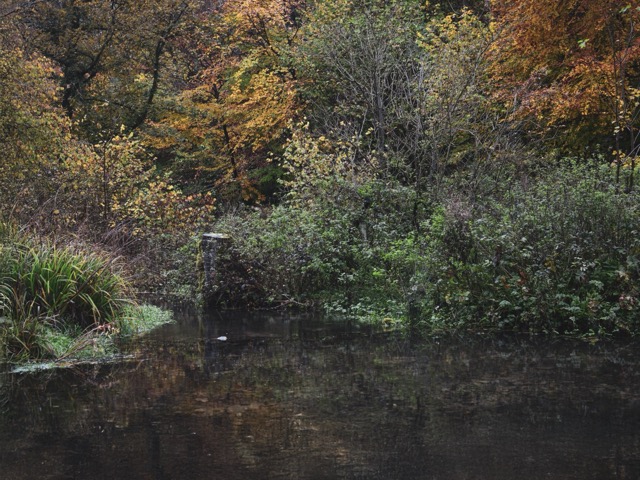
The image I am using for the large scale piece:
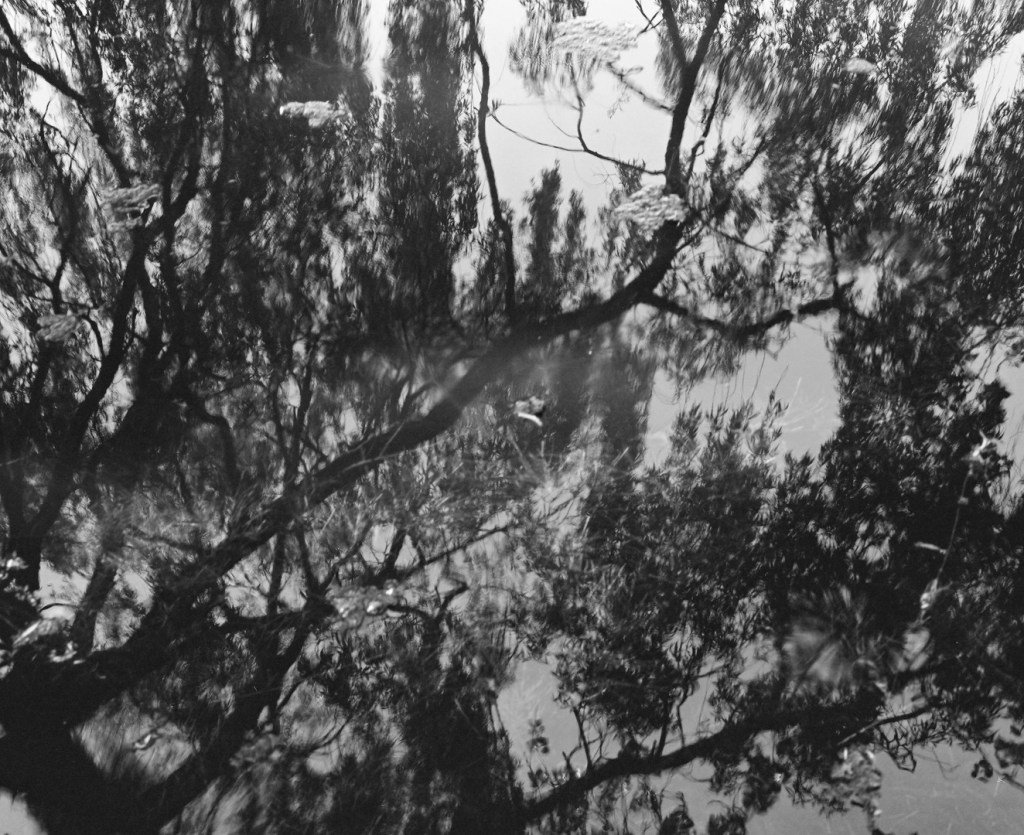
We spent the day testing and experimenting with the prints, for the lightbox we soon learned that the paper needed time to dry out and for the image to ‘flatten’ into its respective layers of colour. Otherwise, the resulting print was washed out and lacked detail. Through a process of trial and error, we printed the images and then carefully installed them into the lightboxes. This needed to be done very carefully as the duratrans paper has no absorbency so it was easy to flake off the ink. Fortunately, we didn’t have any major issues.
Frustratingly, we ran out of the paper we were using for the large scale print, so after printing 7 images, we had to pause and await a delivery. However, up to this point, the image seemed to have scaled up well (we pushed the resolution to 240, as 300 wasn’t possible) Once I have the final images, I intend to trim so that no border remains and then pin to the wall simply.
For my book, I have printed my selection of images and plan to interleave with translucent paper from GF Services (fine art paper supplier) which I will print poems onto. I discuss my bookmaking thoughts further on my other blog post: https://lucindataylorphotography.co.uk/2026/02/03/bookmaking/

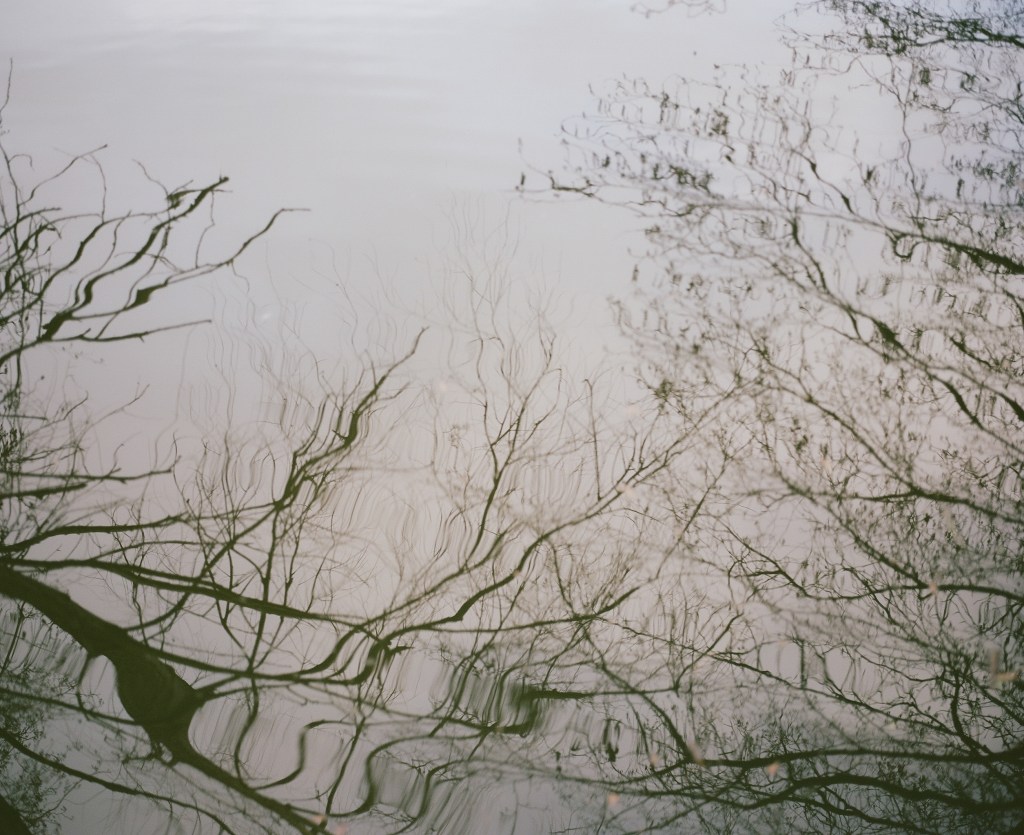
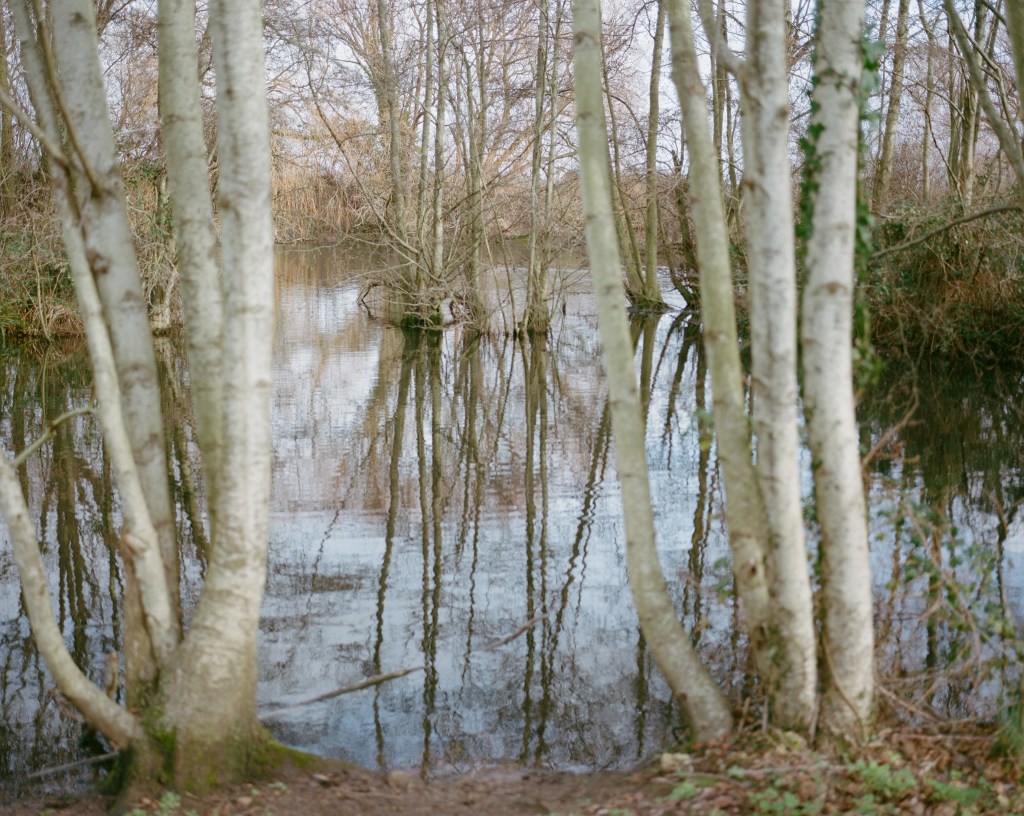
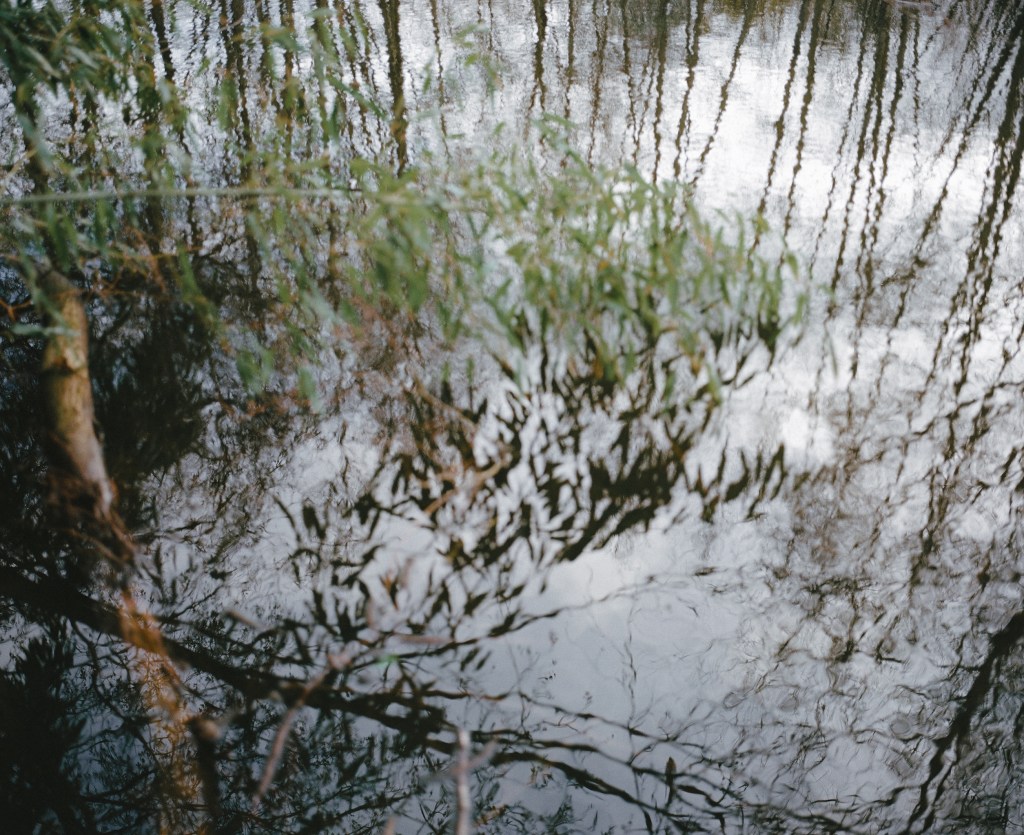
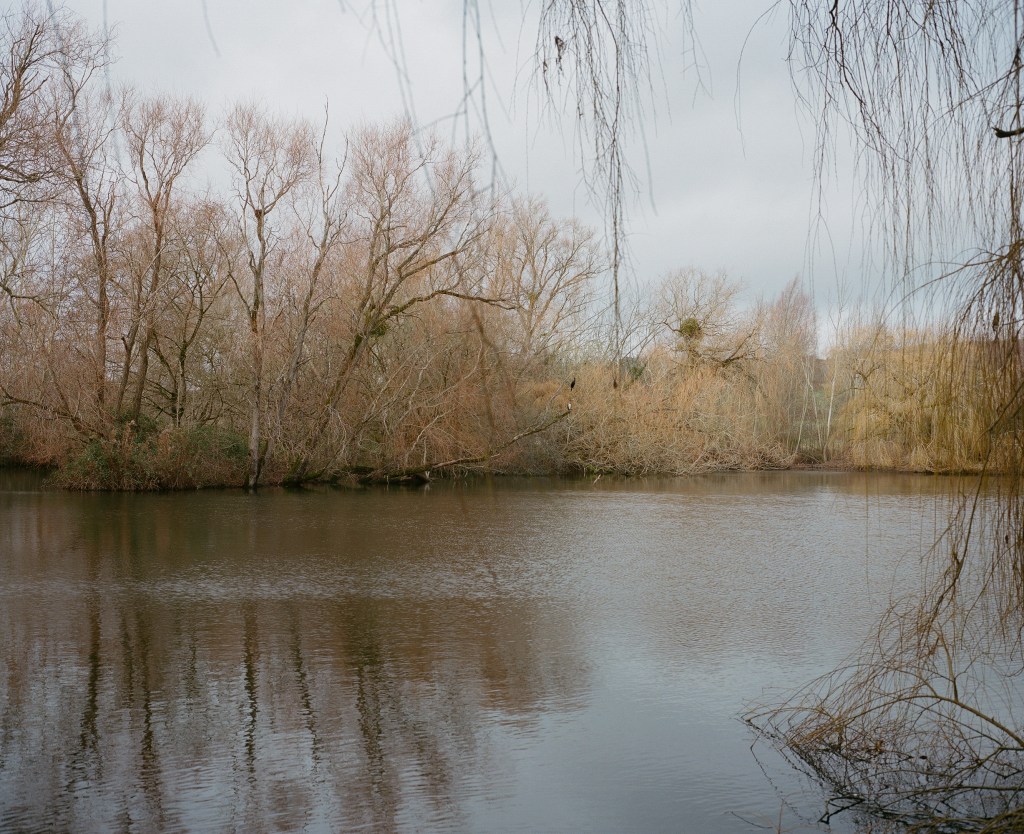
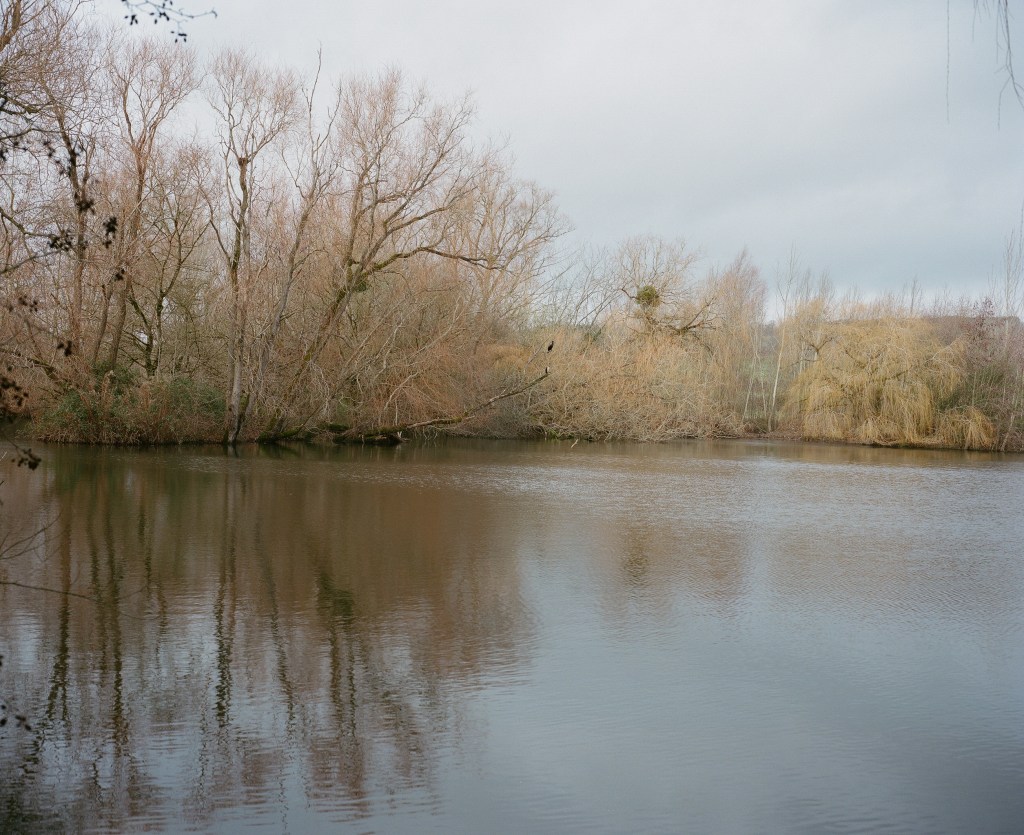
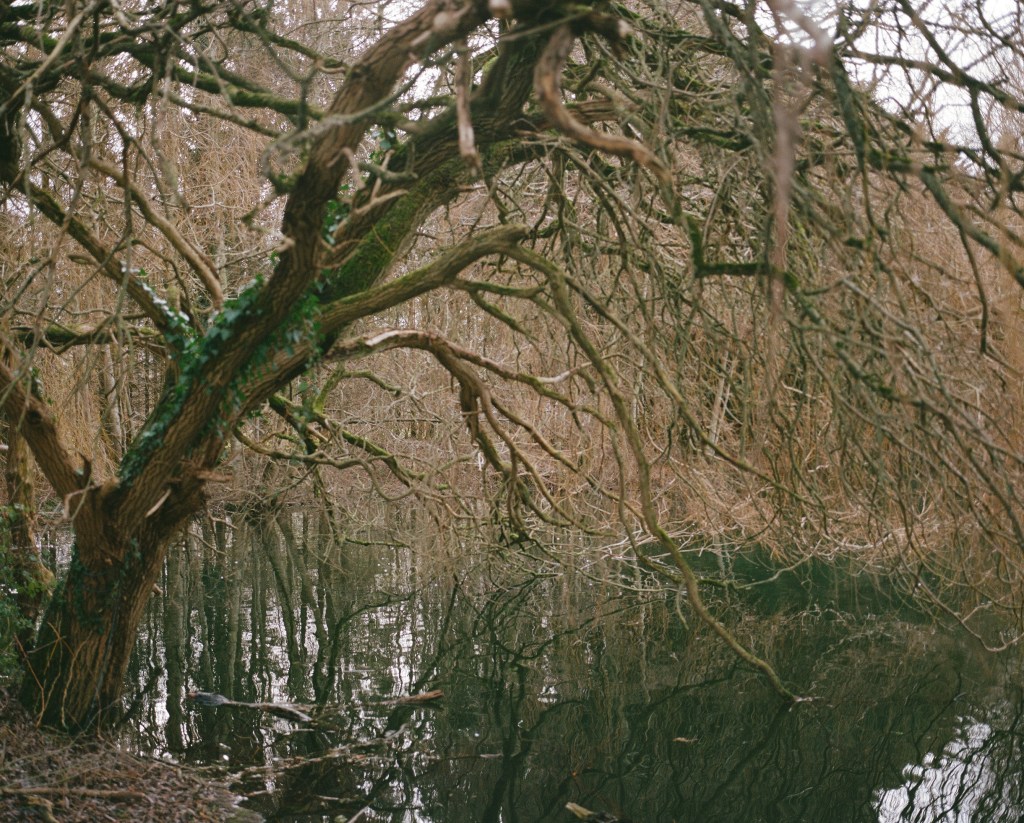
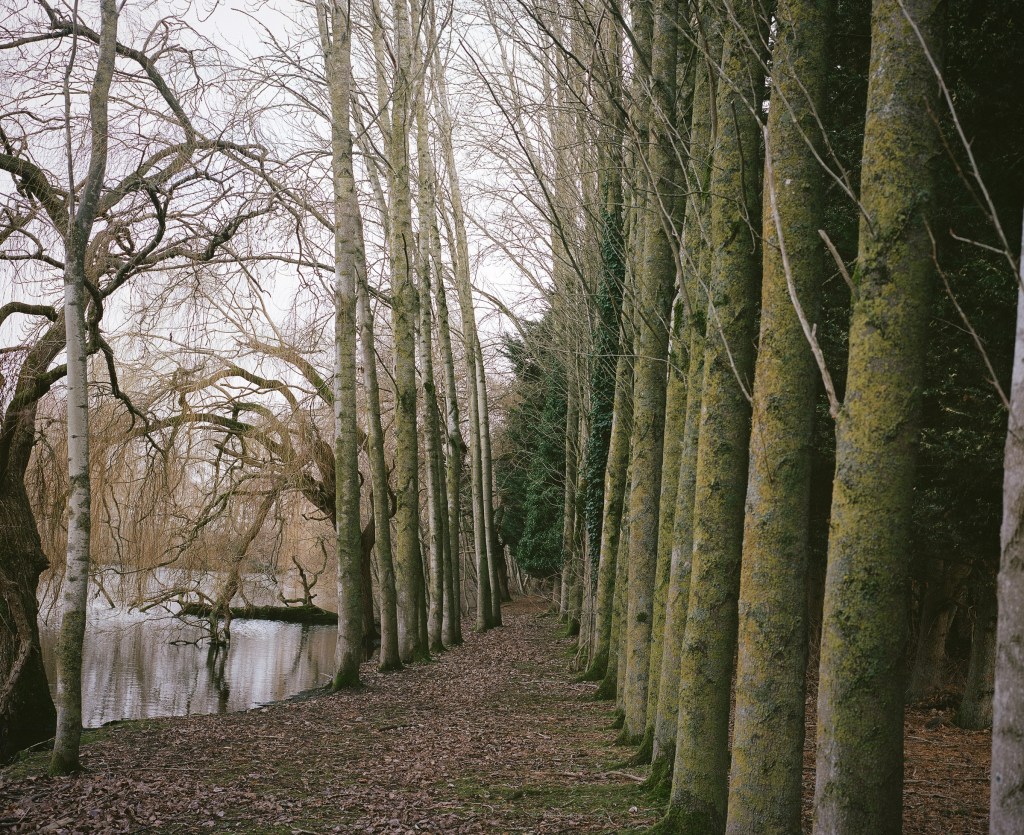
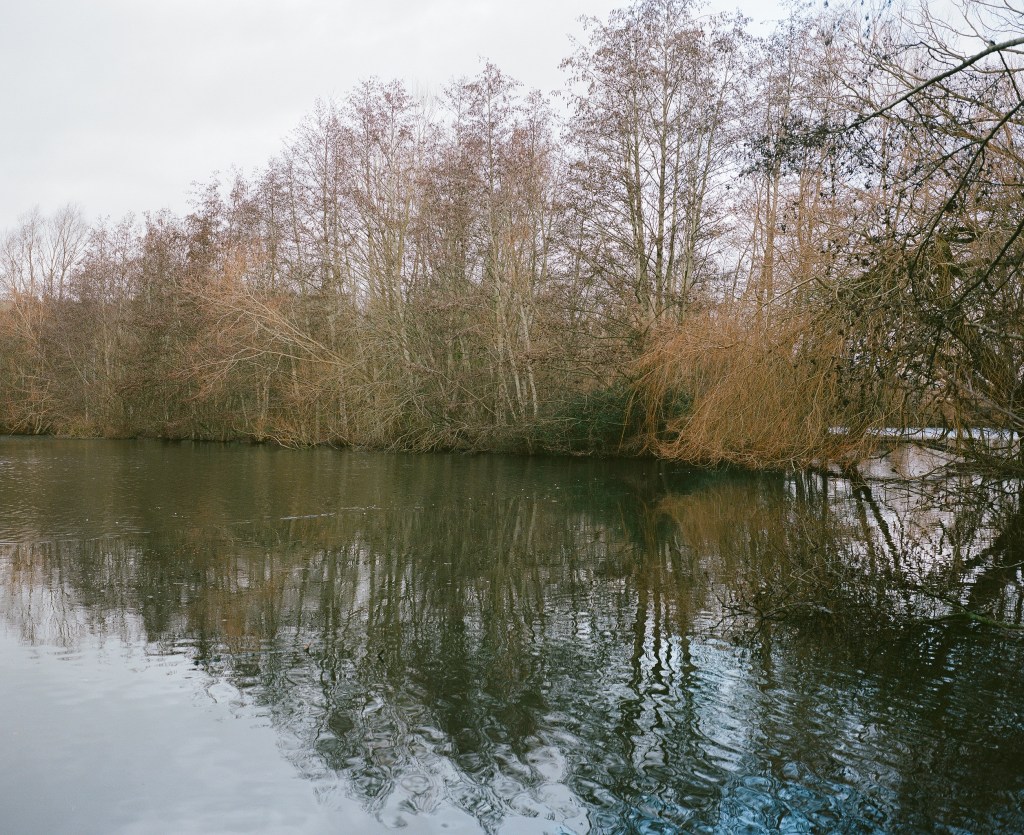
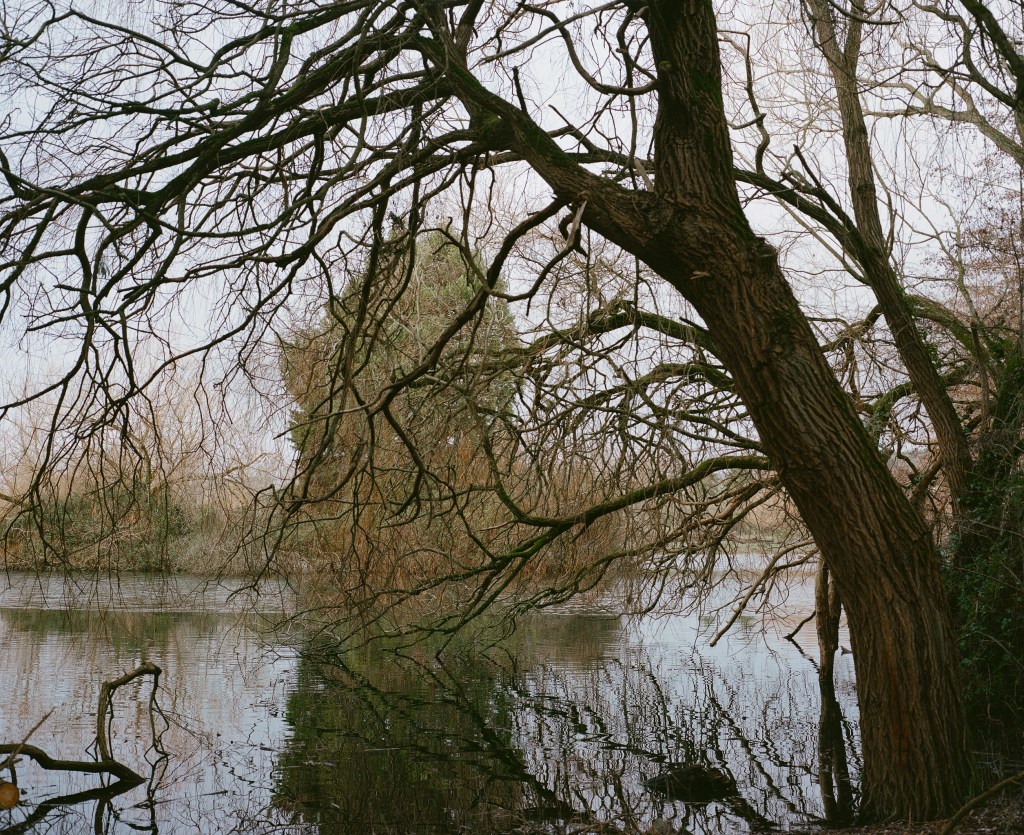
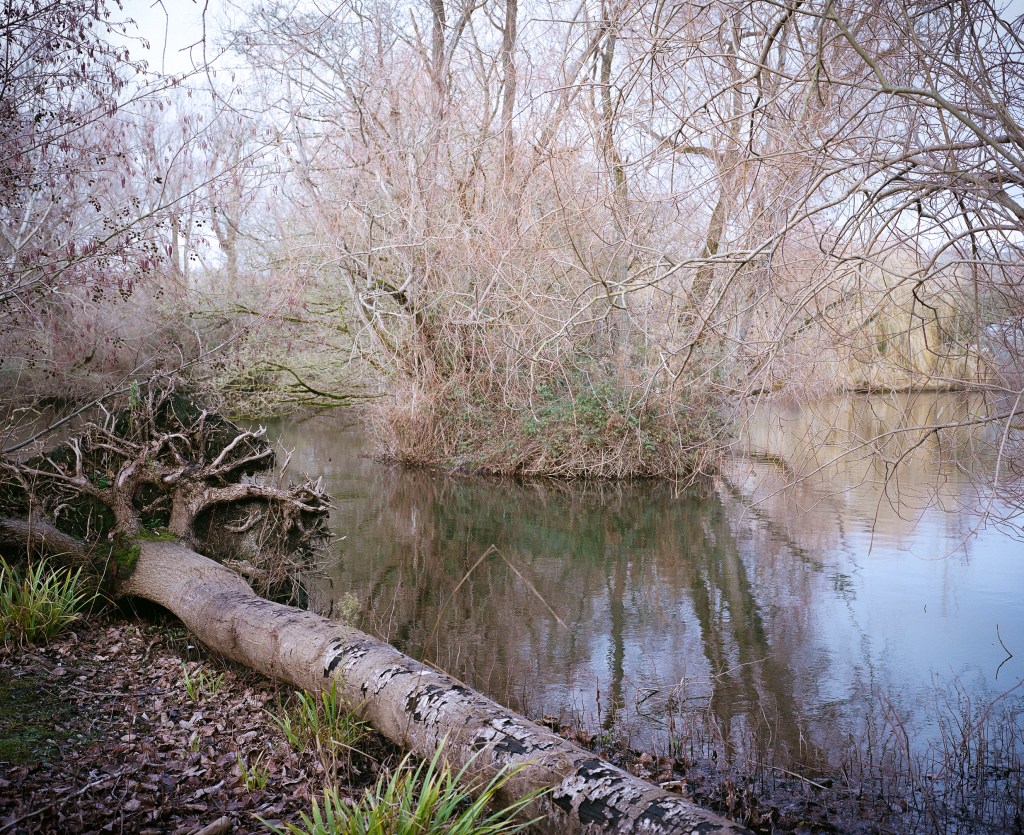
I photographed an area of the lake with 120 kodak portra 400 film, a few days into January just after the ice had thawed. Having decided to focus on using analogue images for my book, I wanted to have a wider selection of images to see whether I could have a balance of colour and black/white photographs to choose from. By this point, I had identified several areas of the lake that I was drawn to, so although I engaged in a walk, I had a preconceived idea about where I was going. I attempted to note down a few words as a sort of poetry. Having been influenced by Mary Oliver’s nature poetry, especially her ability to say as she see’s, I wanted to practice this. I am not sure I want to use words alongside my work, I will most likely make a late decision on this!
These photographs will be included in my book. The first & third photographs (reading top left to right) are particular favourites, I like their abstract nature as this fits with my theme and at the time, I was instinctive in my shooting. I didn’t think too much about framing or outcomes, I just spotted something that appealed to me, somehow carried some meaning for me and took a photograph.
The film itself is ideal for my subject. The colours are soft, a little too green in places but I think there is a good balance of tones throughout. The shoot was earlier in the day, compared to much of my work and it was a flat, dense cloud overhead. The film choice is quite forgiving I think. These could print well, I am excited to see how they will sit alongside my black and white photographs.
My first attempt at a short poem is below. I have added all of my poems on to my blog post: Exploring my theme in more detail
The leaves fall, dancing down into the depths, floating, descending
light flickers on the surface in perfect rhythm
as if to applaud their final show
Original images can be found here: 7800 IMAGES

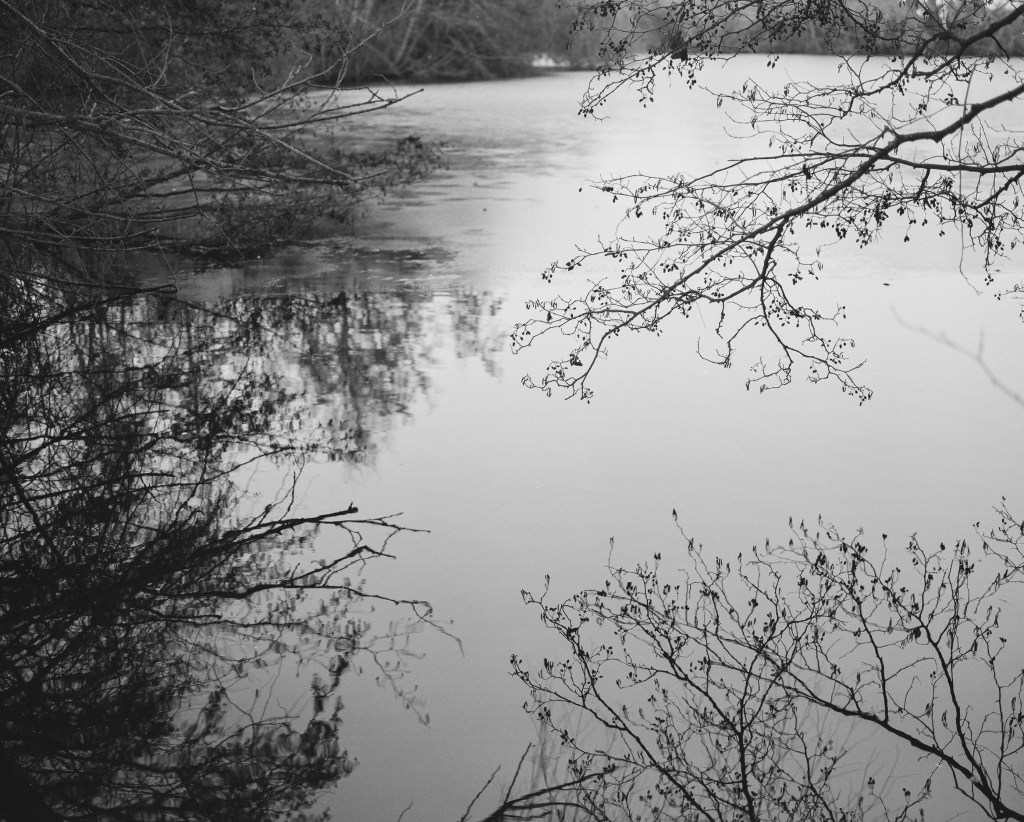
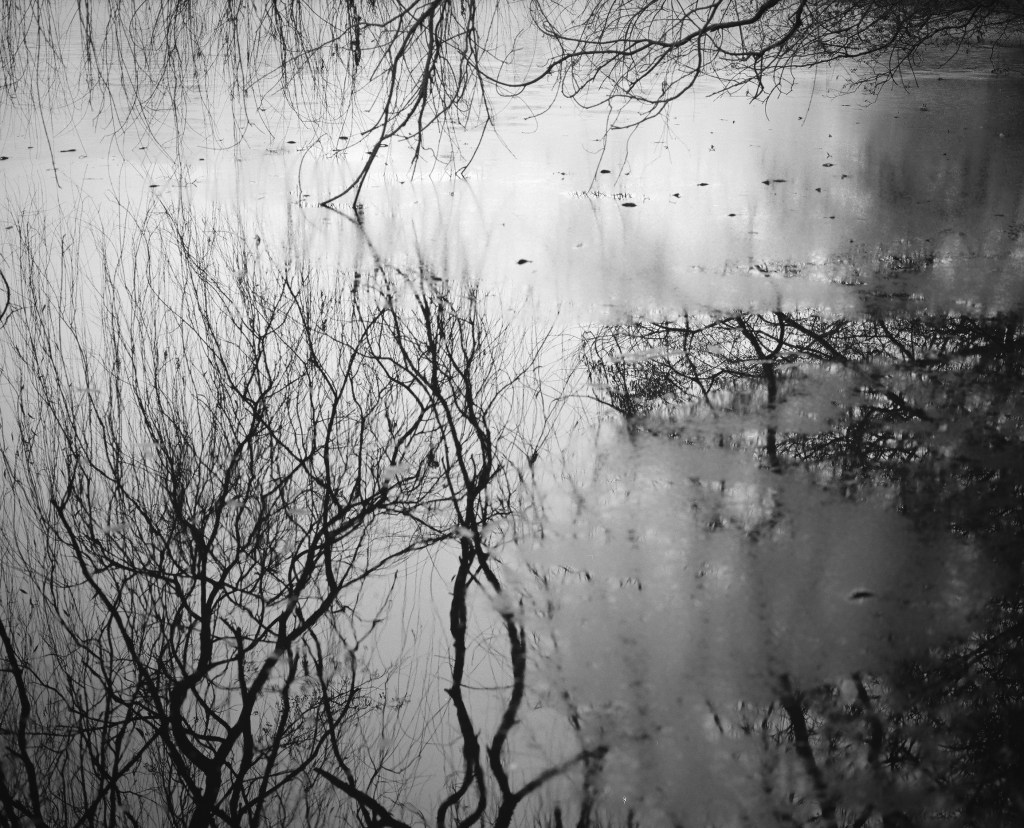
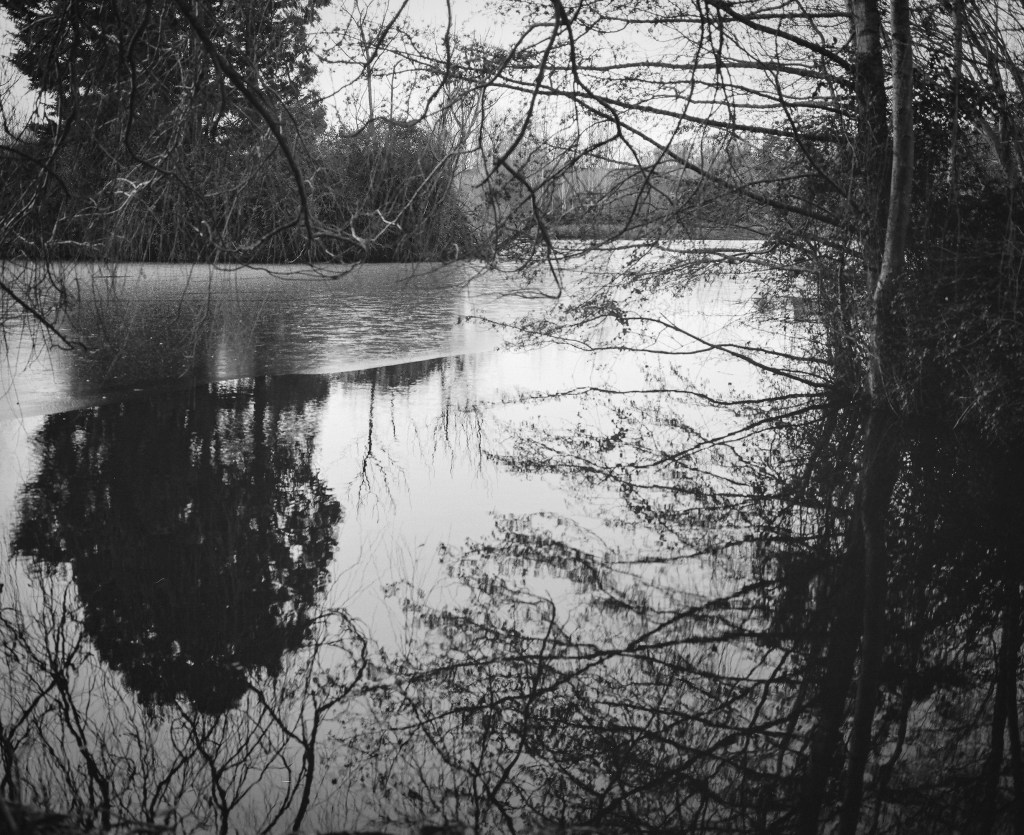
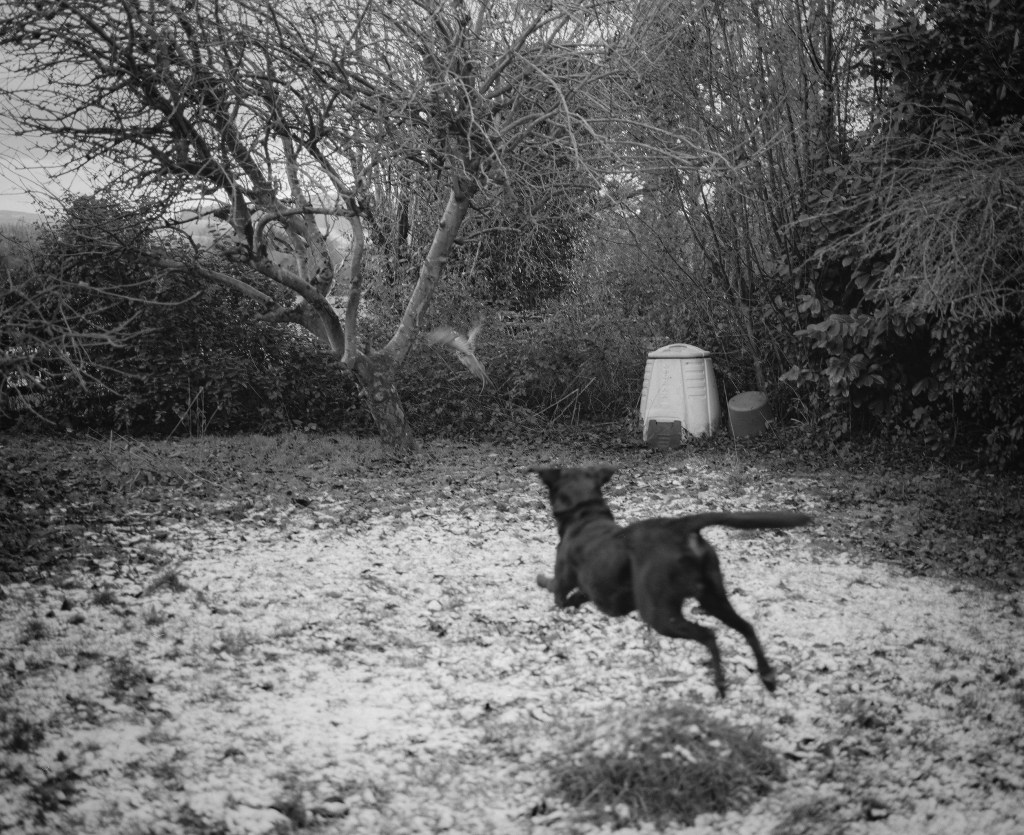
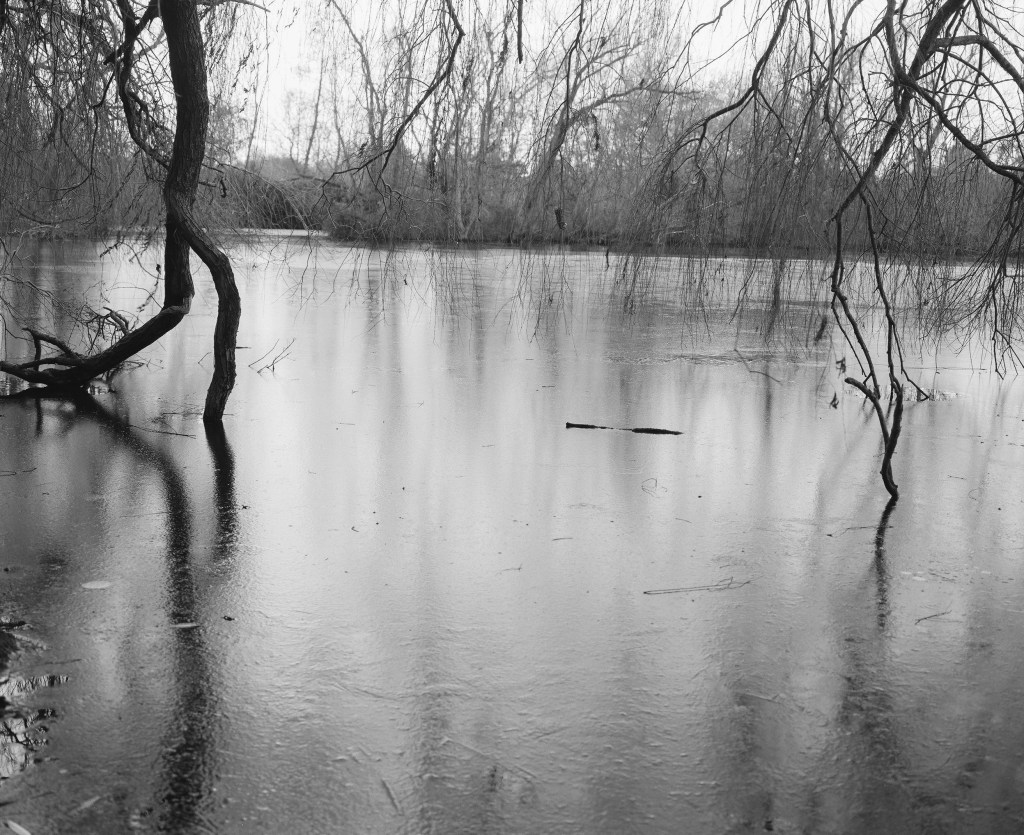
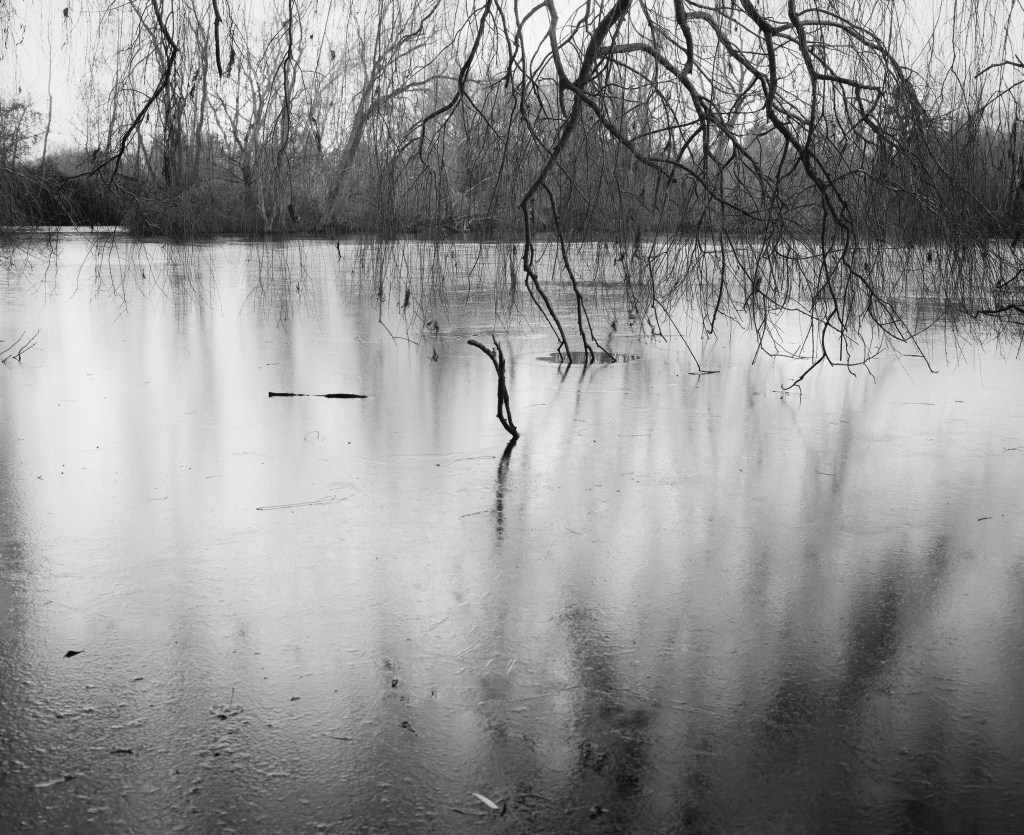
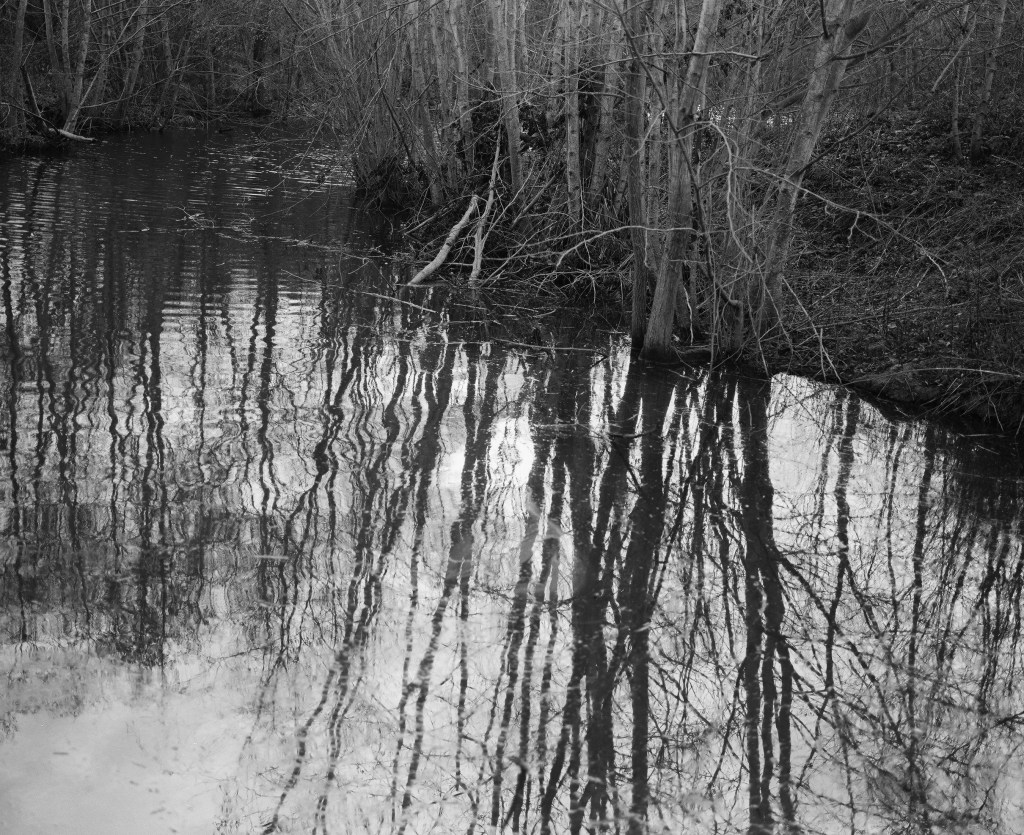
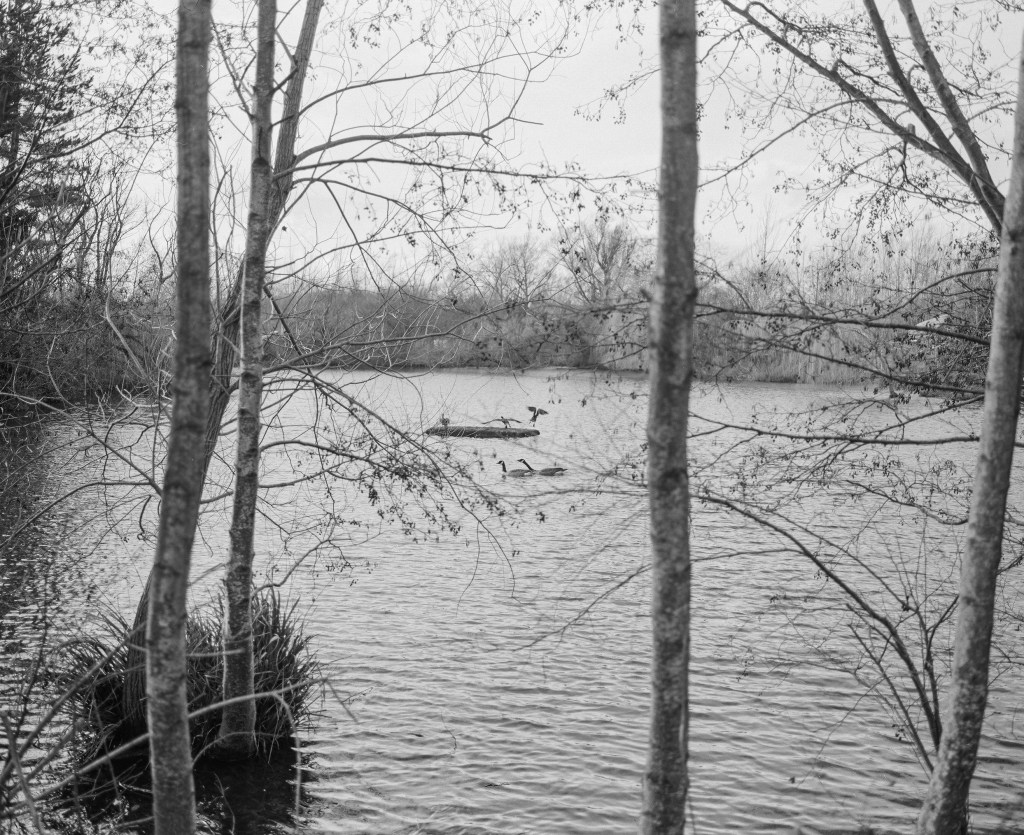
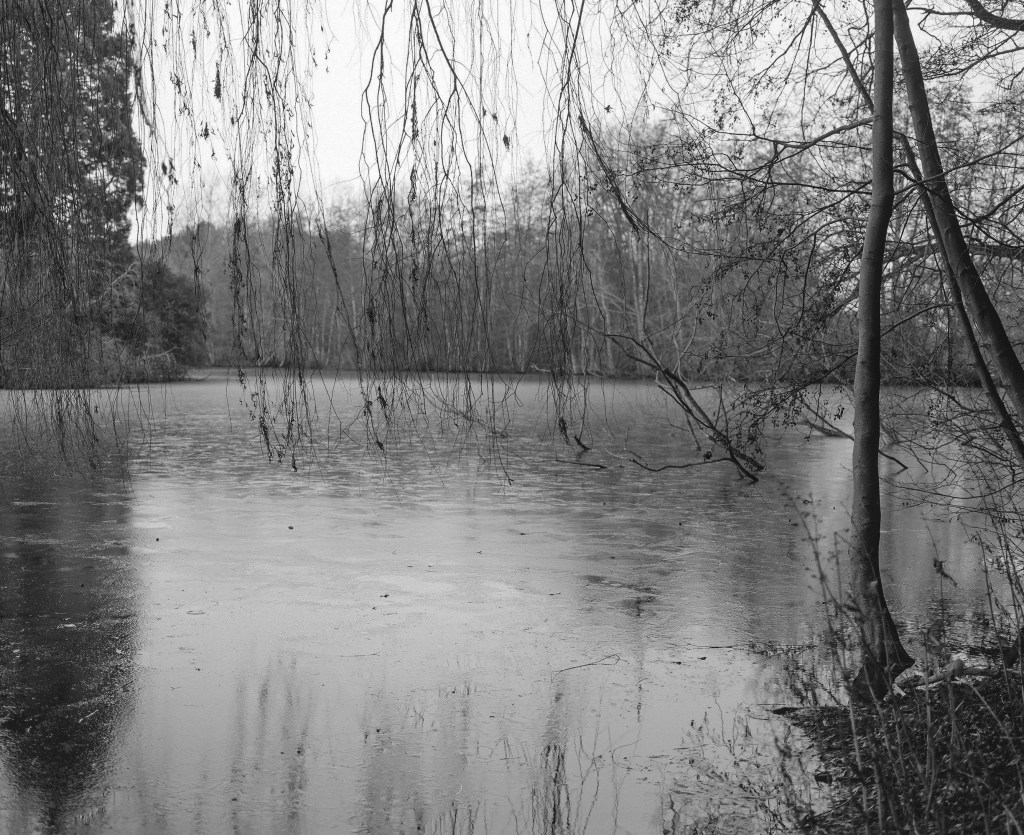
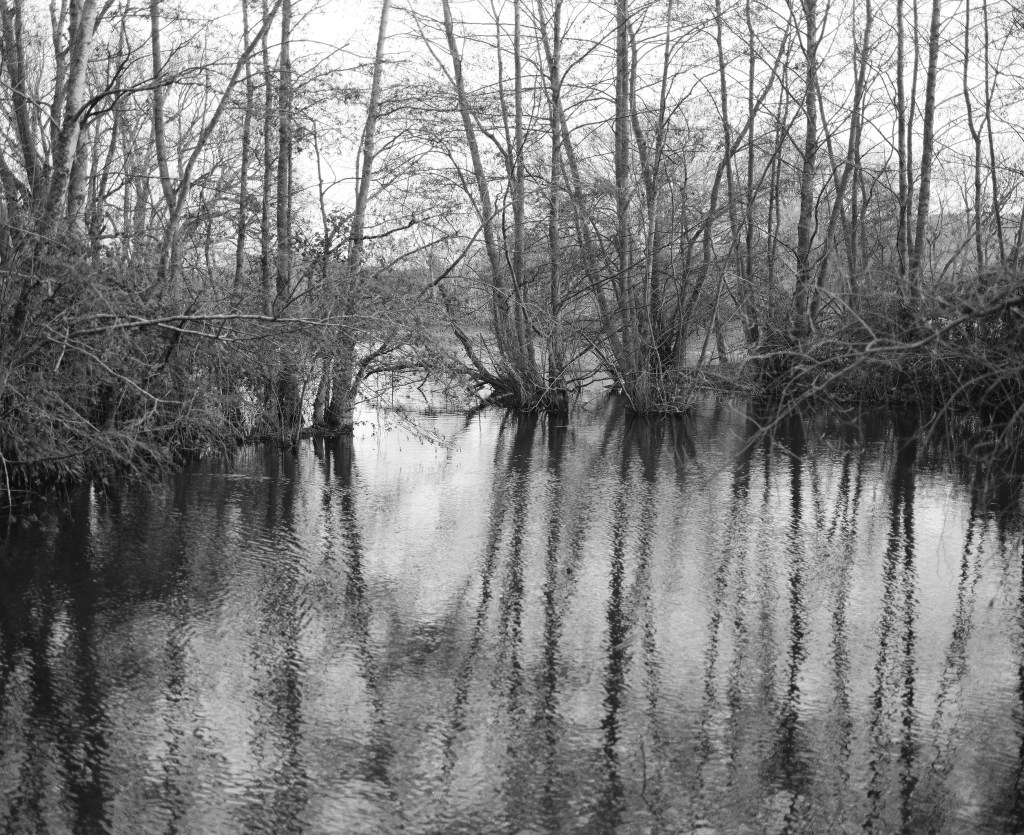
This is the analogue shoot I did alongside the digital one on the same day. I used Ilford 400 film, which has been reliable and forgiving in a broad range of conditions. I had loaded the film before heading to the lake, I wanted to photograph without having to think too much.. however, this did become tricky at times when I couldn’t feel my hands! I moved slowly around the lake, listening and feeling the environment. I studied the places I have walked many times before but noted how they were almost unrecognisable in this new, icy world. An entiurely different atmosphere exists, it was both eerie and intriguing. My curiosity meant I stayed much longer than planned, fascinated by the images frozen on the lake surface. I literally couldn’t stop watching. Nothing moved. It was silent and as the sun went down, a pink, orange, winter sky cast its image across the ice. It was so beautiful. I wrote a short poem in response:
winter spreads its cloak across the lake
frozen images, as though printed on satin, hold soft light
silence reigns, I just hear myself, living, breathing in place.
Trees are looking down at me,
their branches hiding the tiny spies
who watch my every move.
I plan to use several images from this shoot in my final book. I love the texture in the images and the light, I keep reflecting on how easily I could have stayed at home in the warm! I would have missed out on an experience, let alone th opportunity for some photographs.
Selected images: 1, 4, 6, 8, 9 & 10
Original images are here: 7800 IMAGES

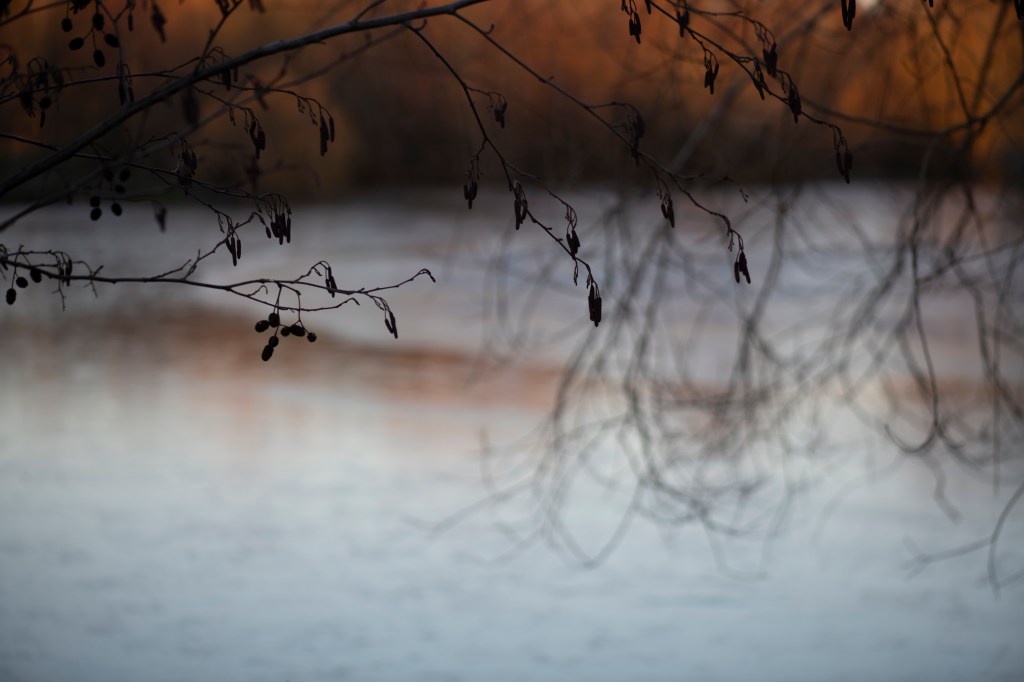
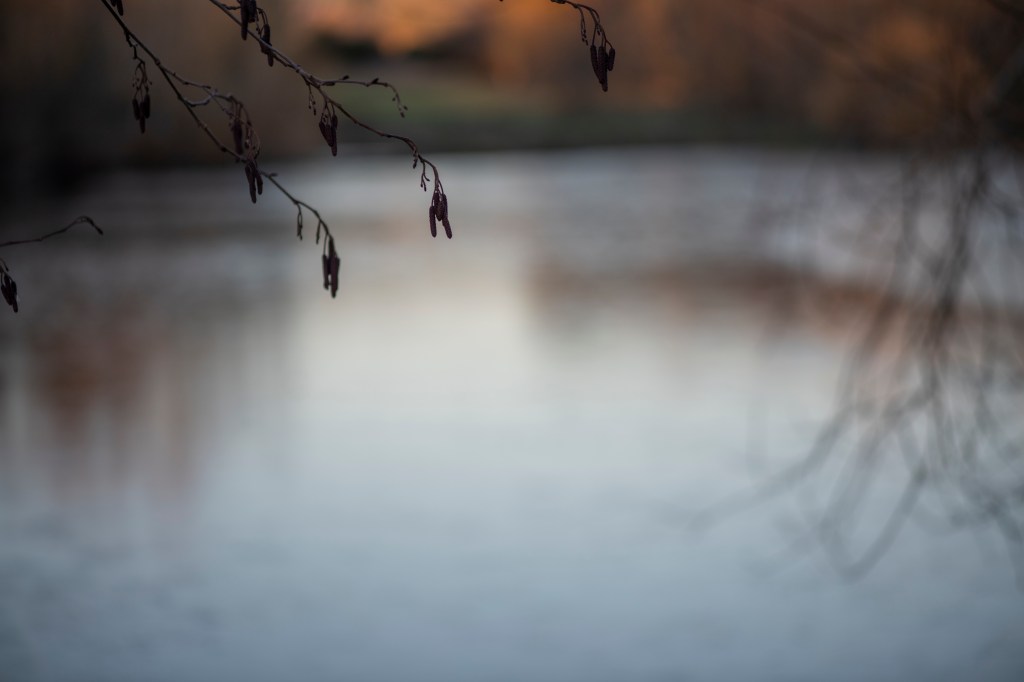
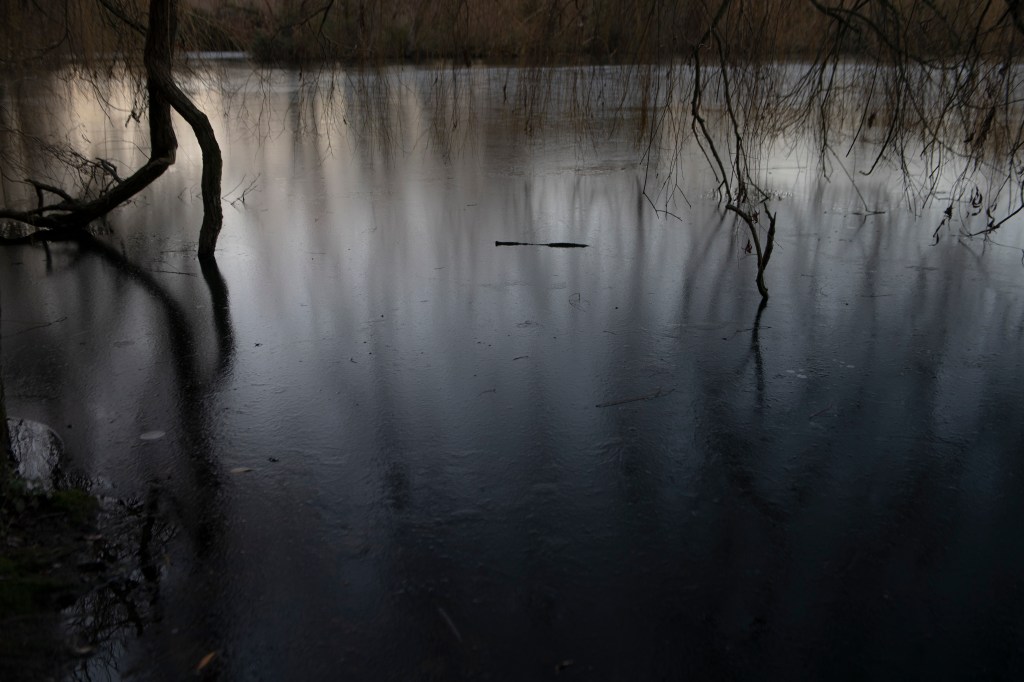
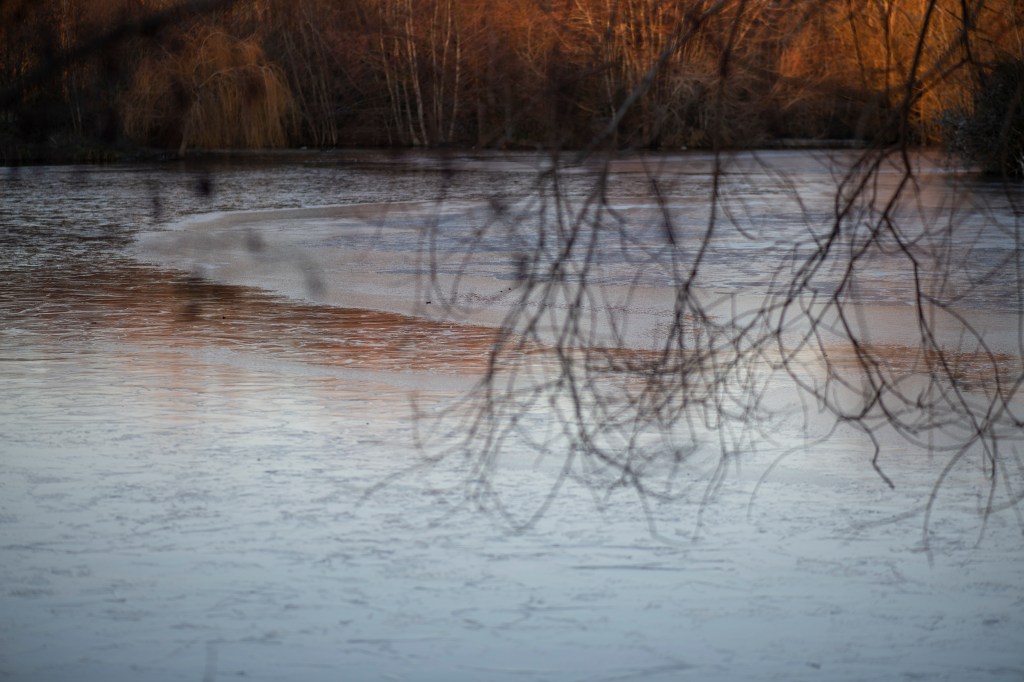
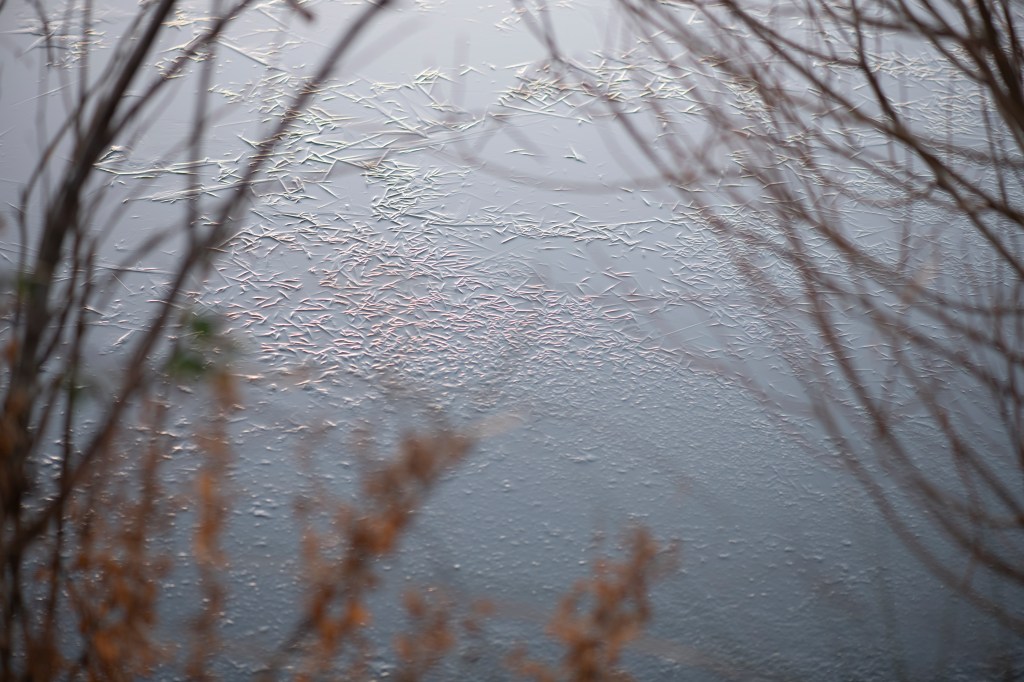
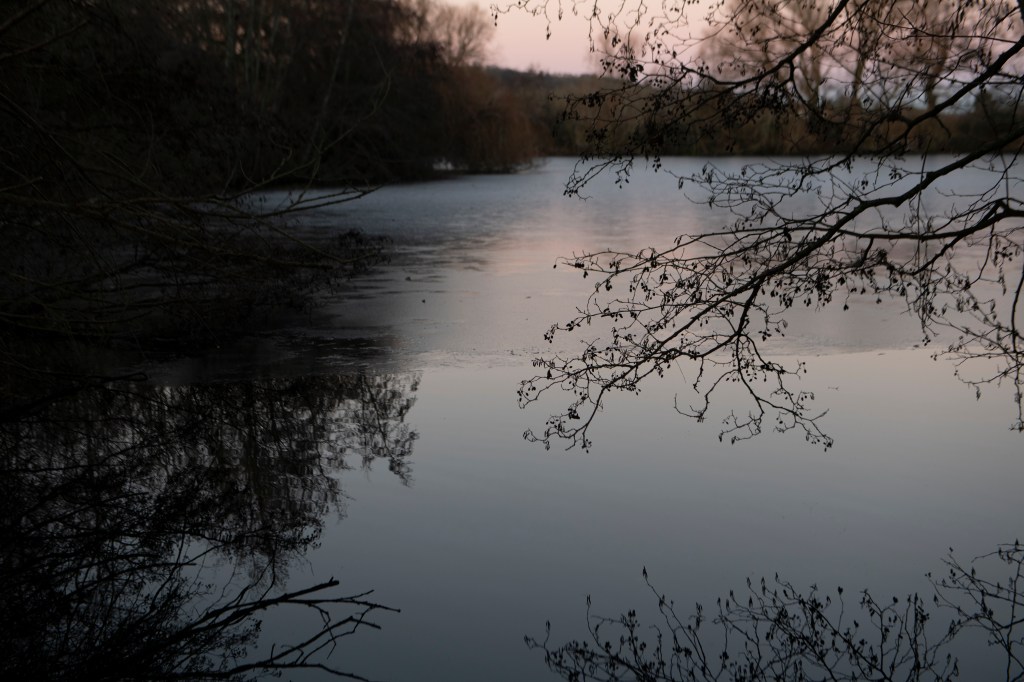
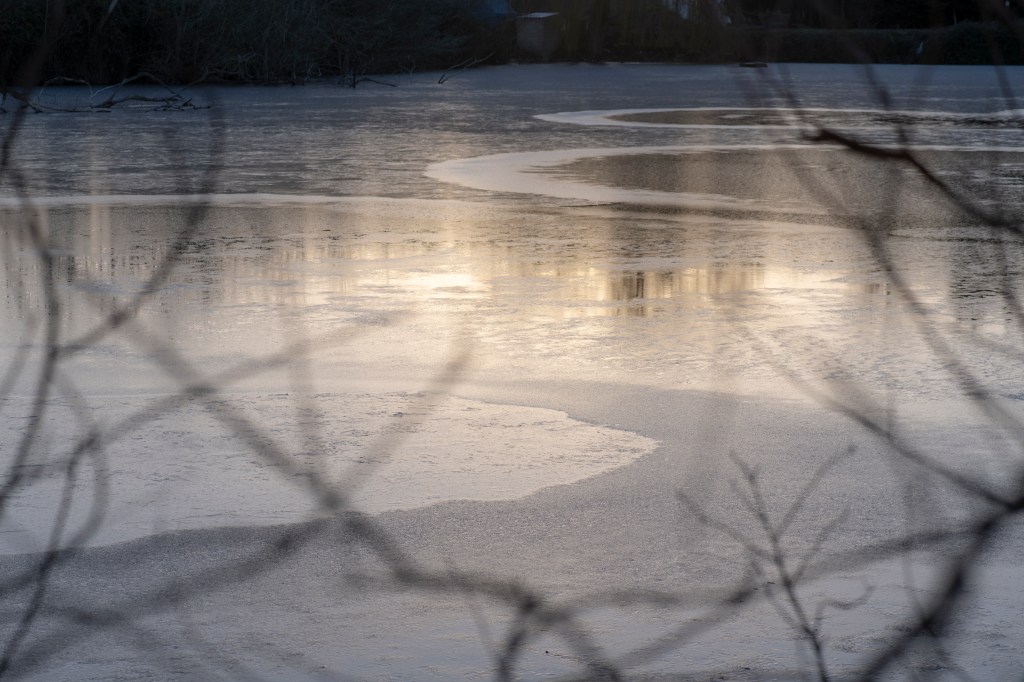
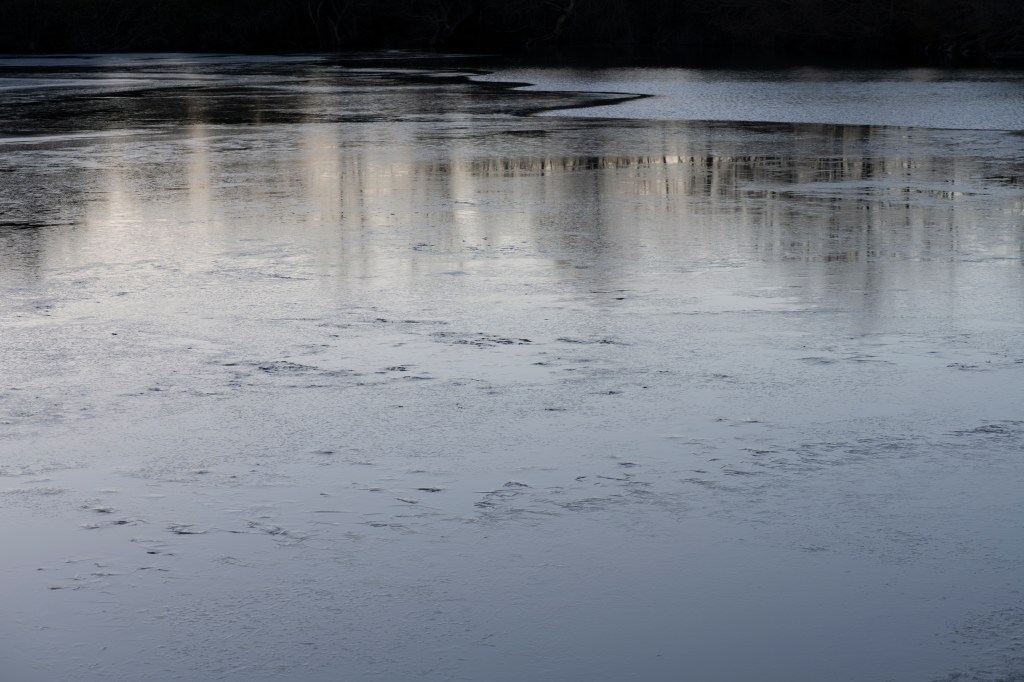
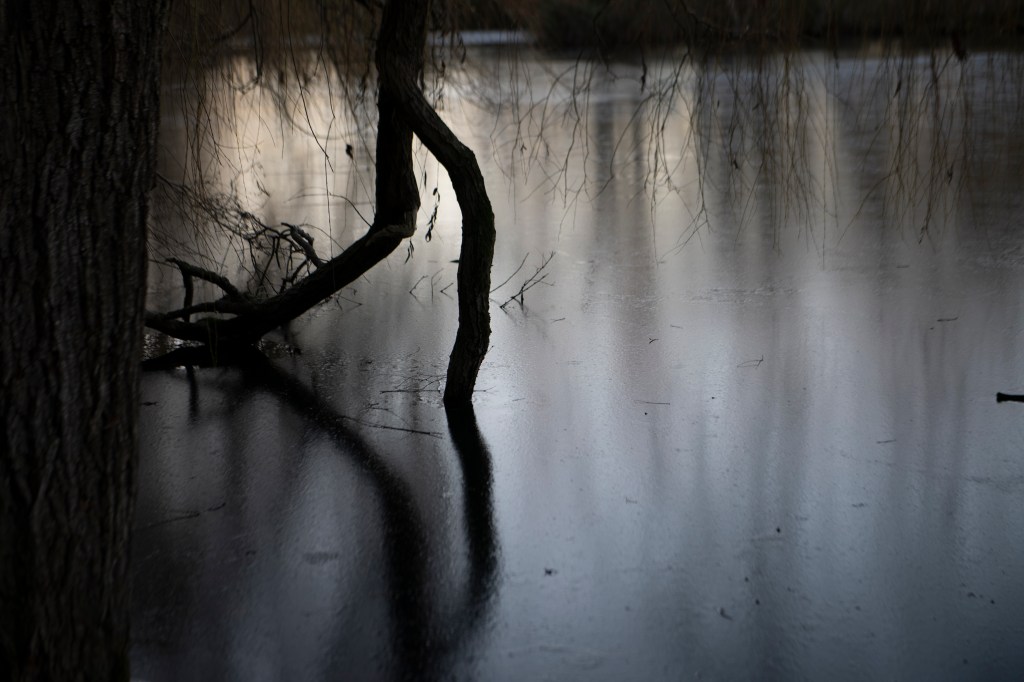
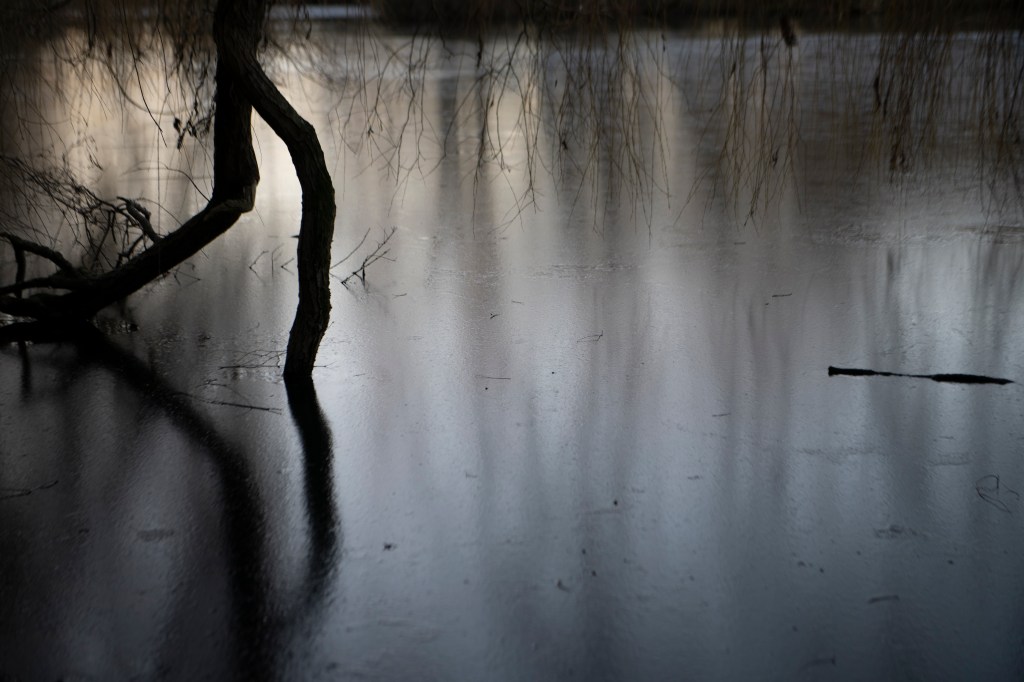
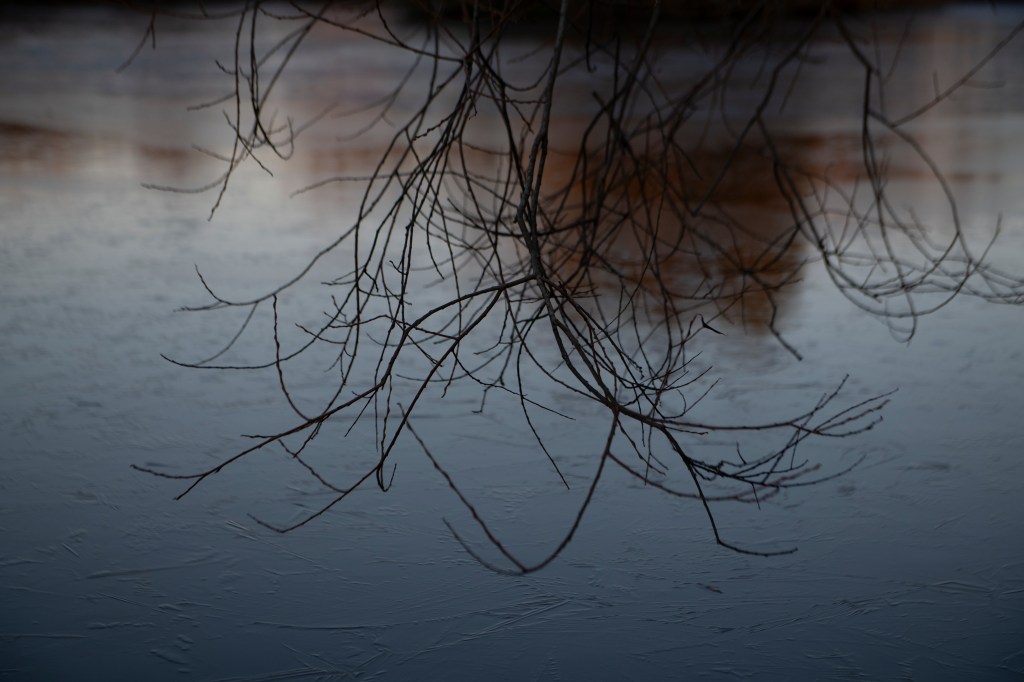
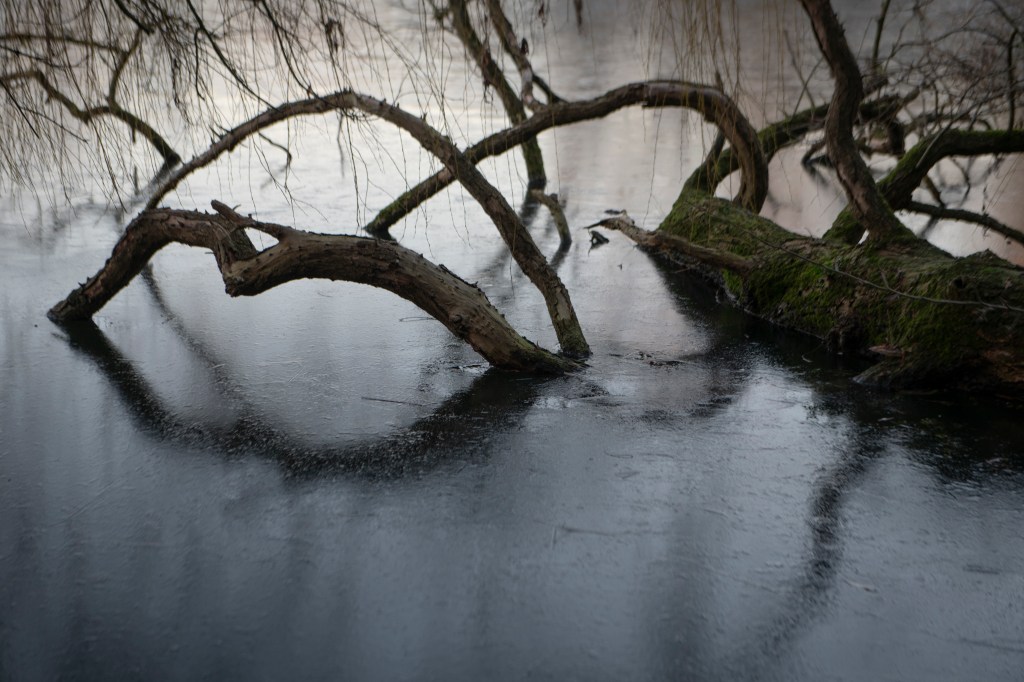
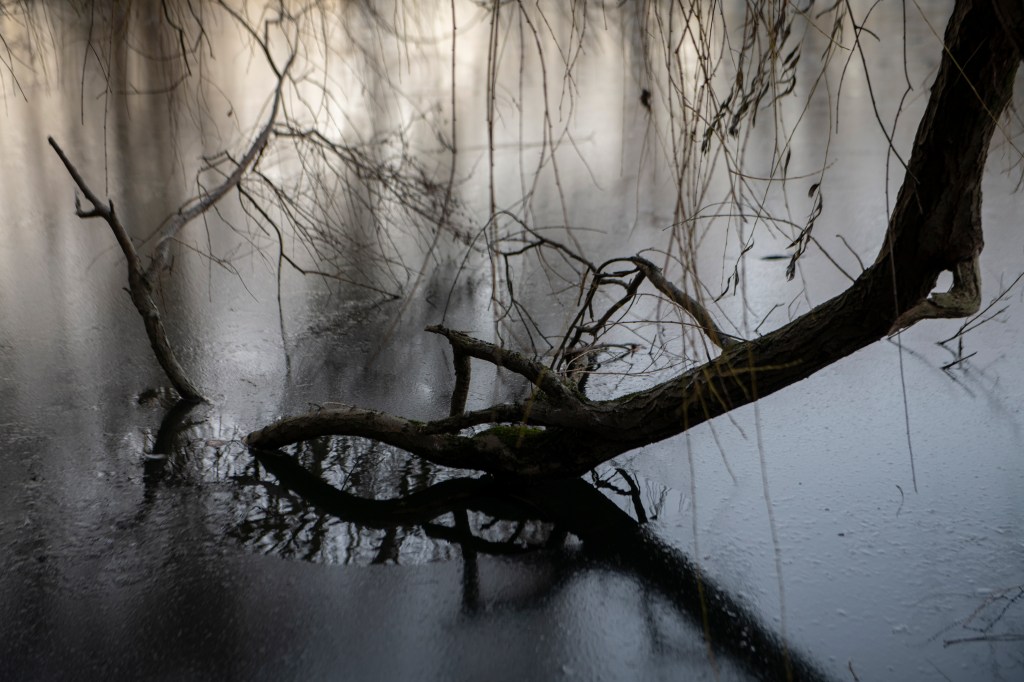
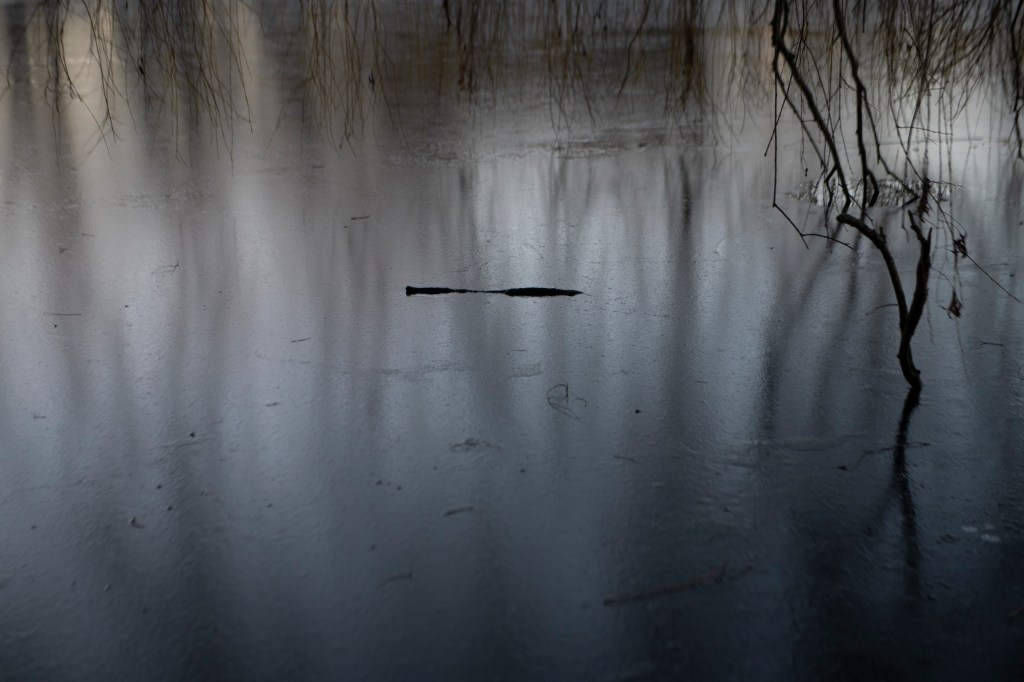
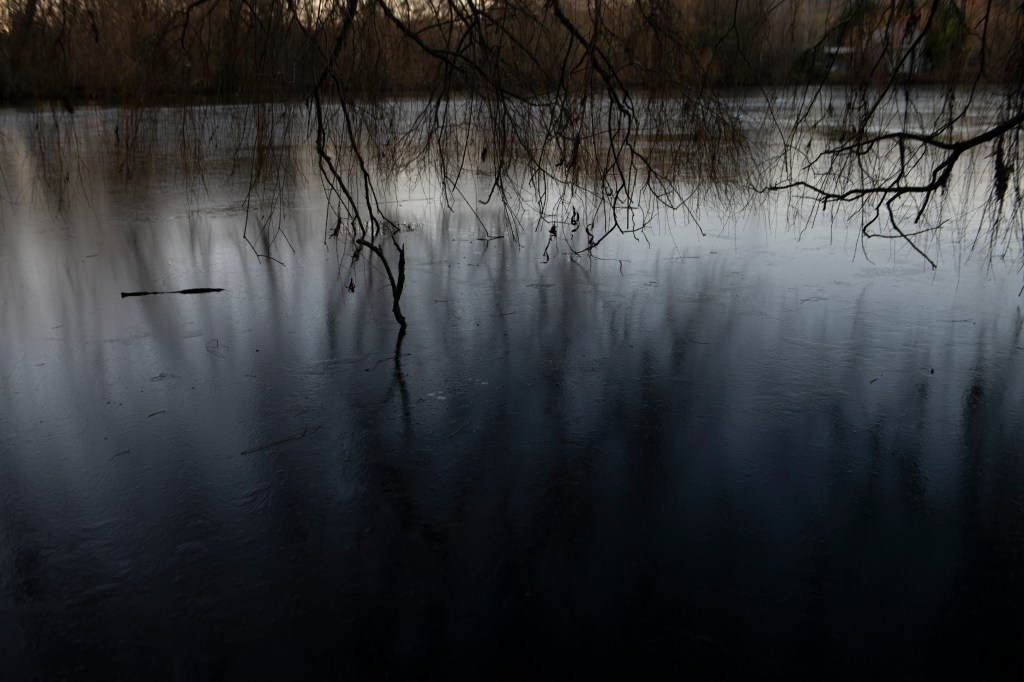
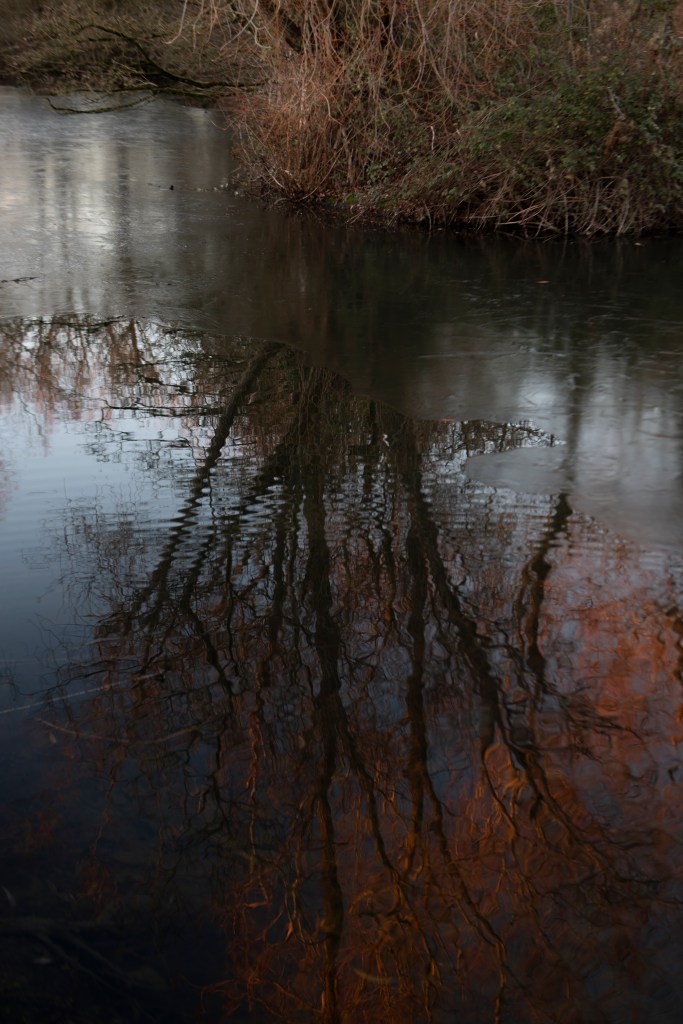
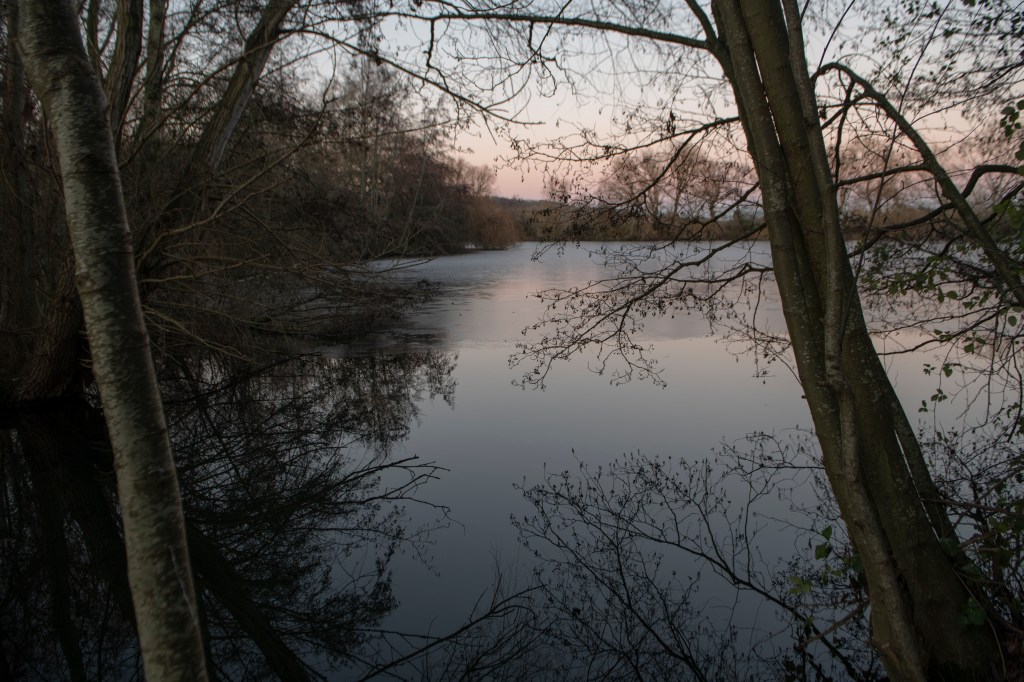
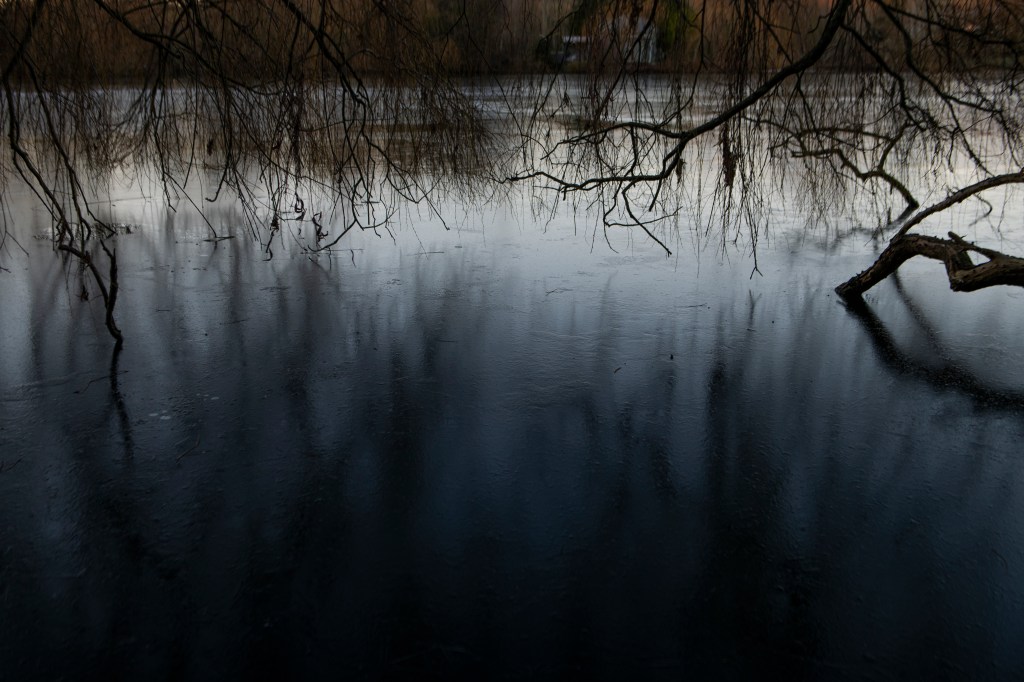
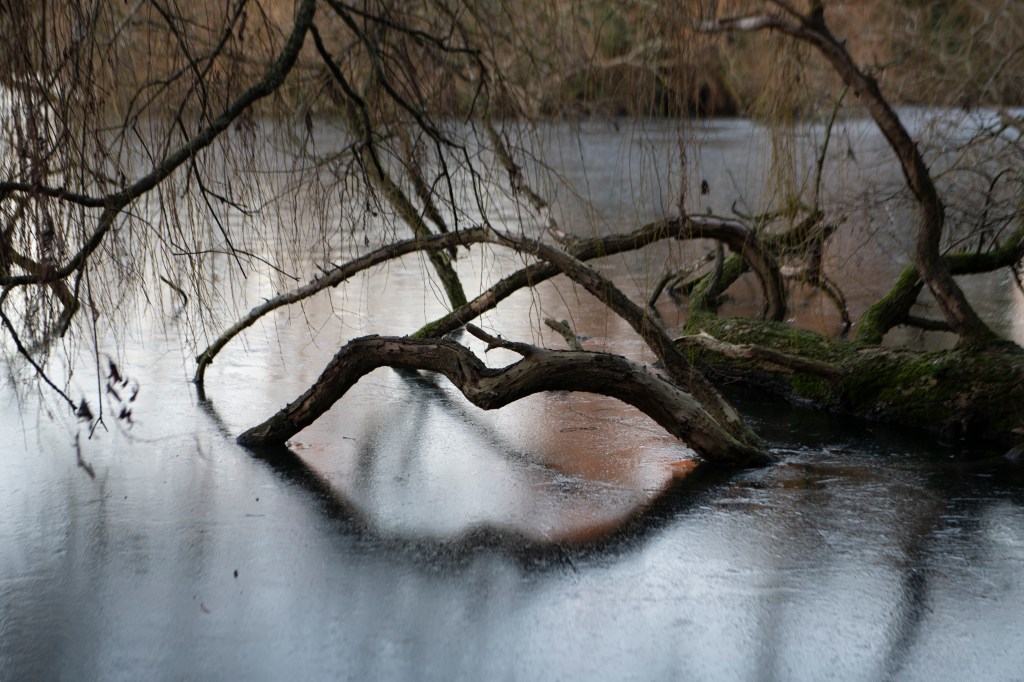
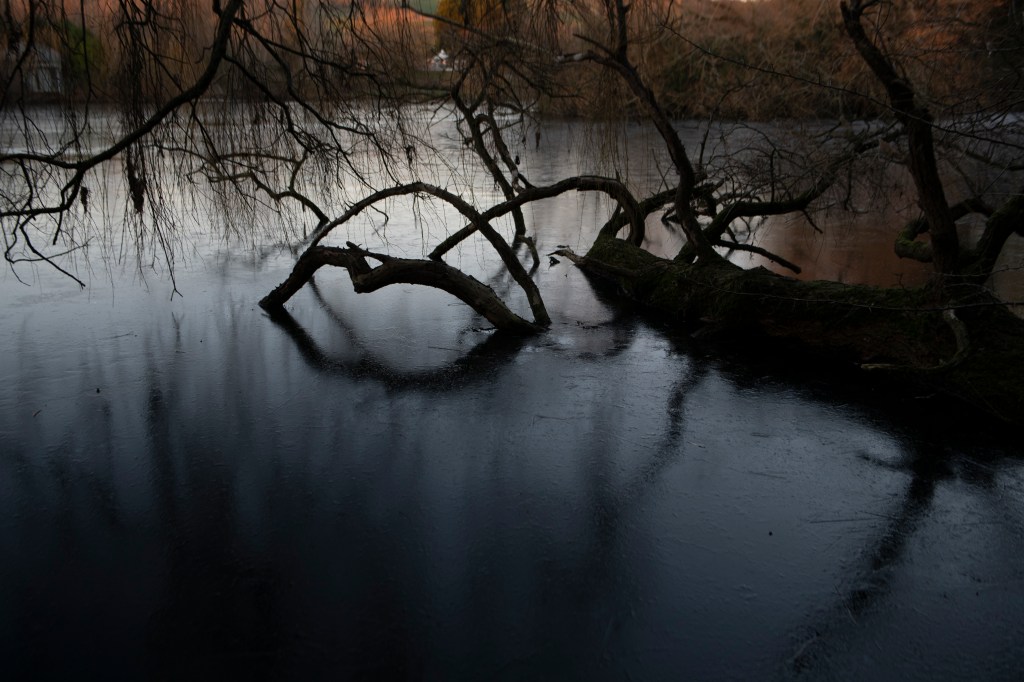
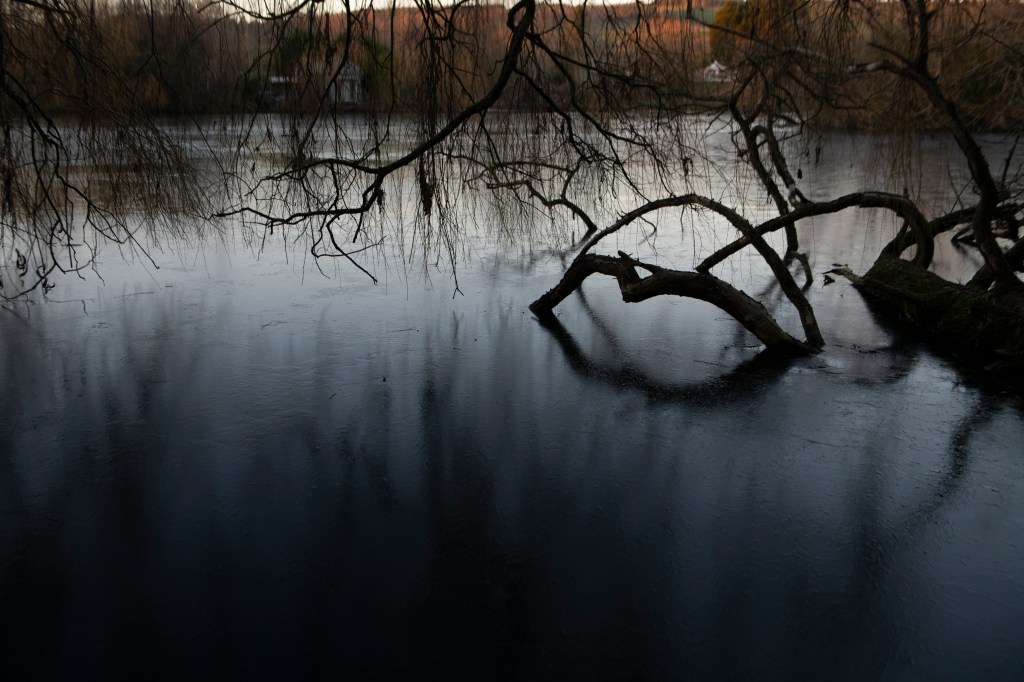
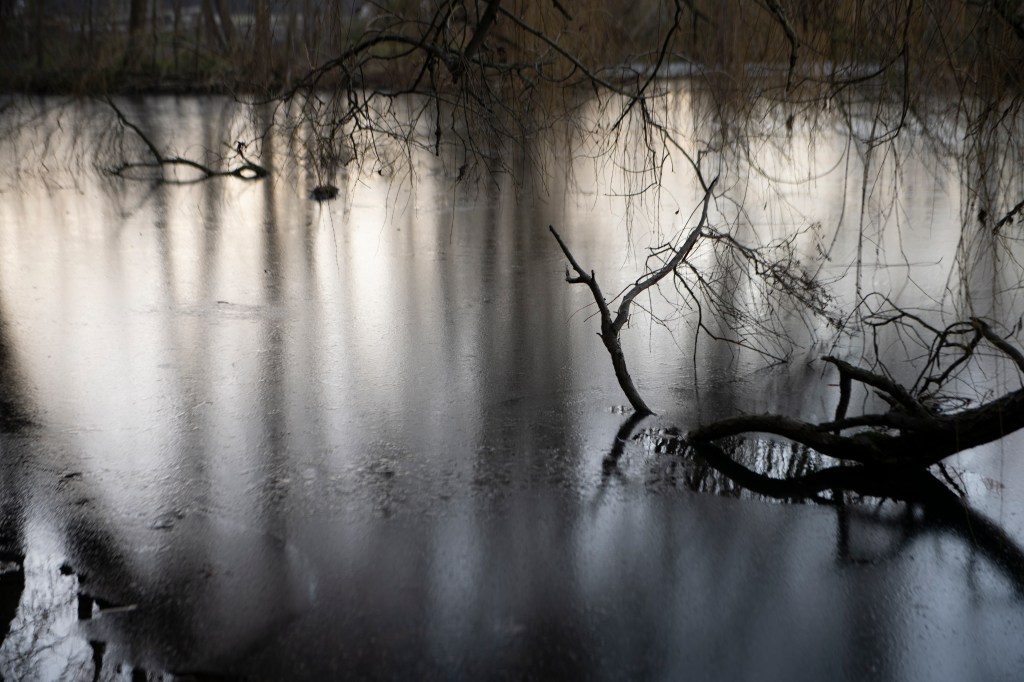
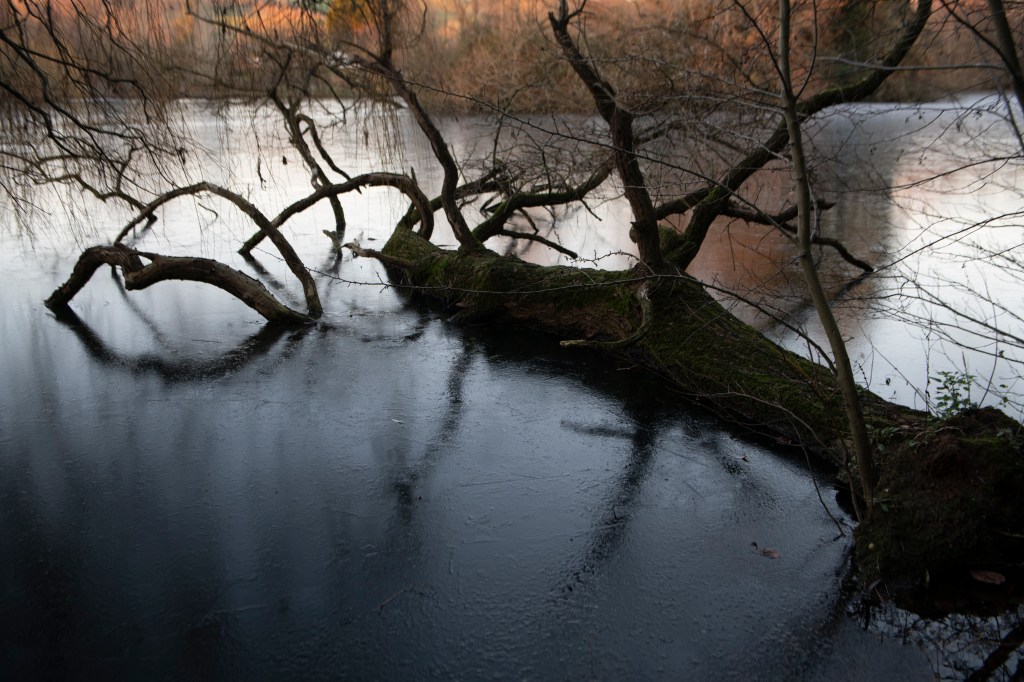
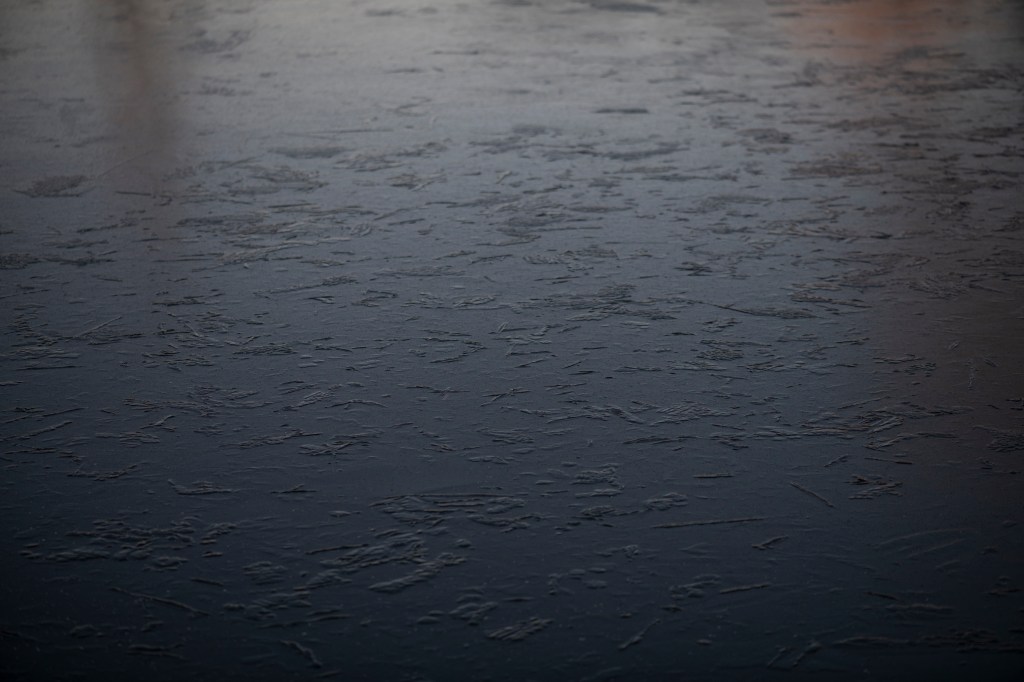
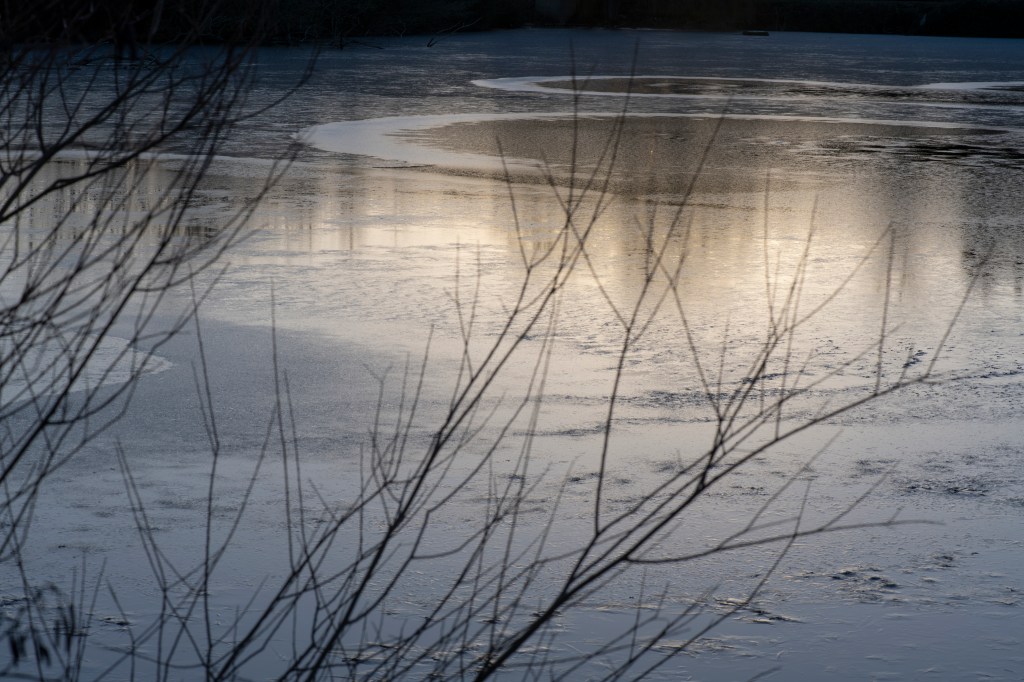
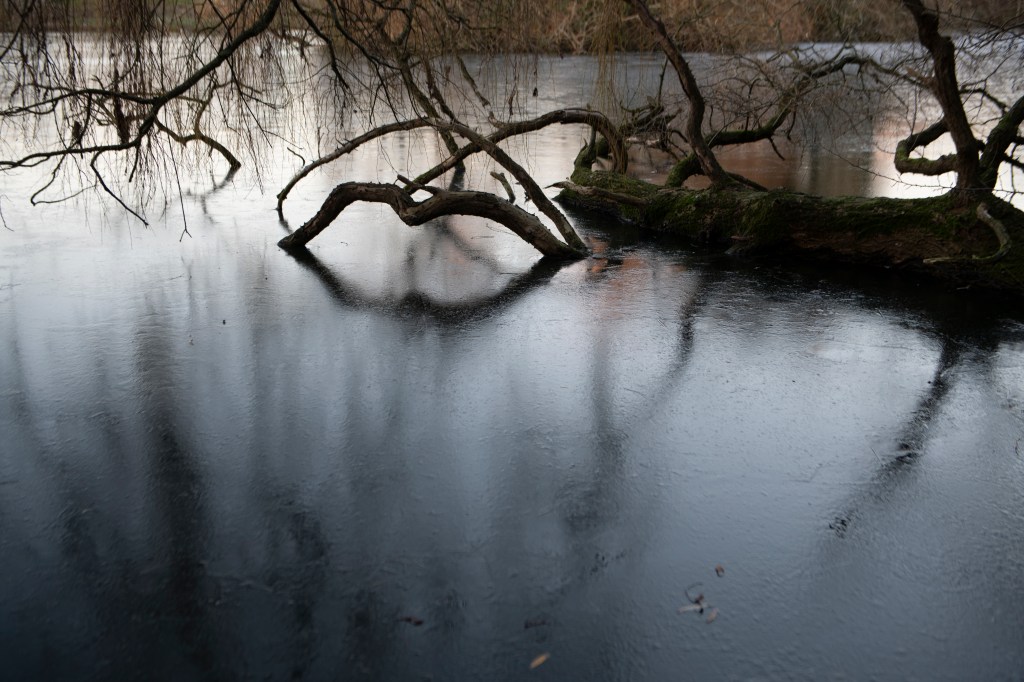
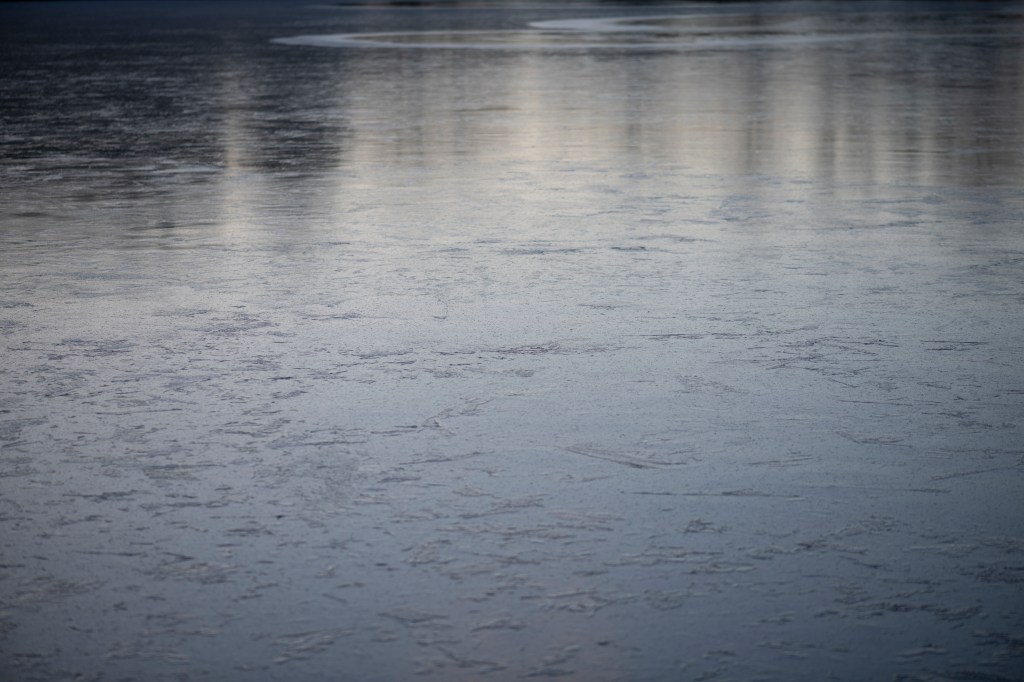
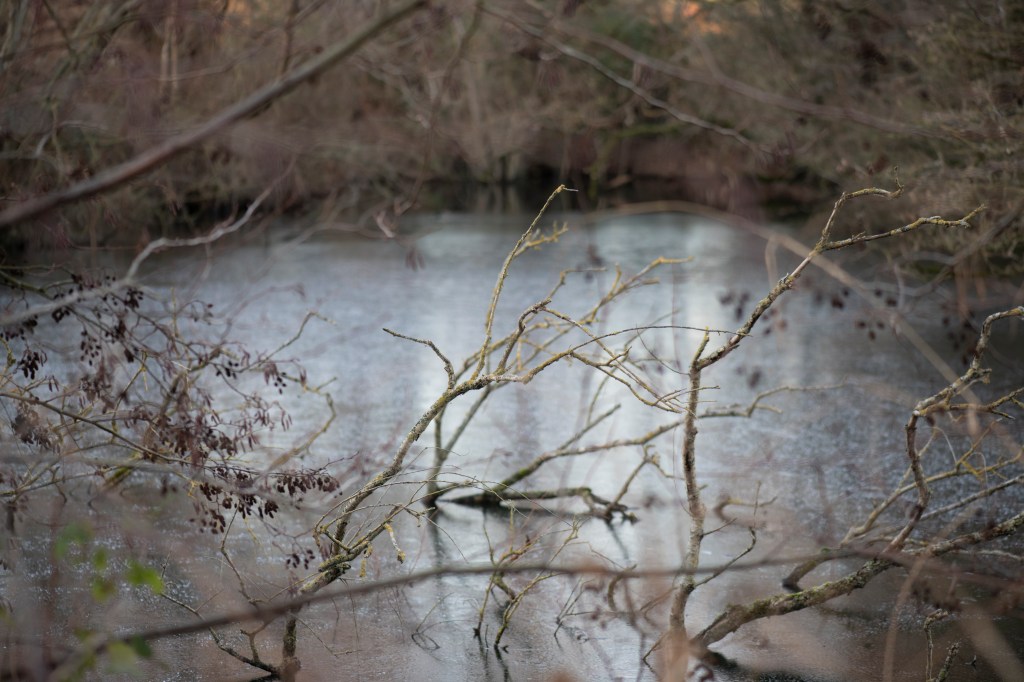
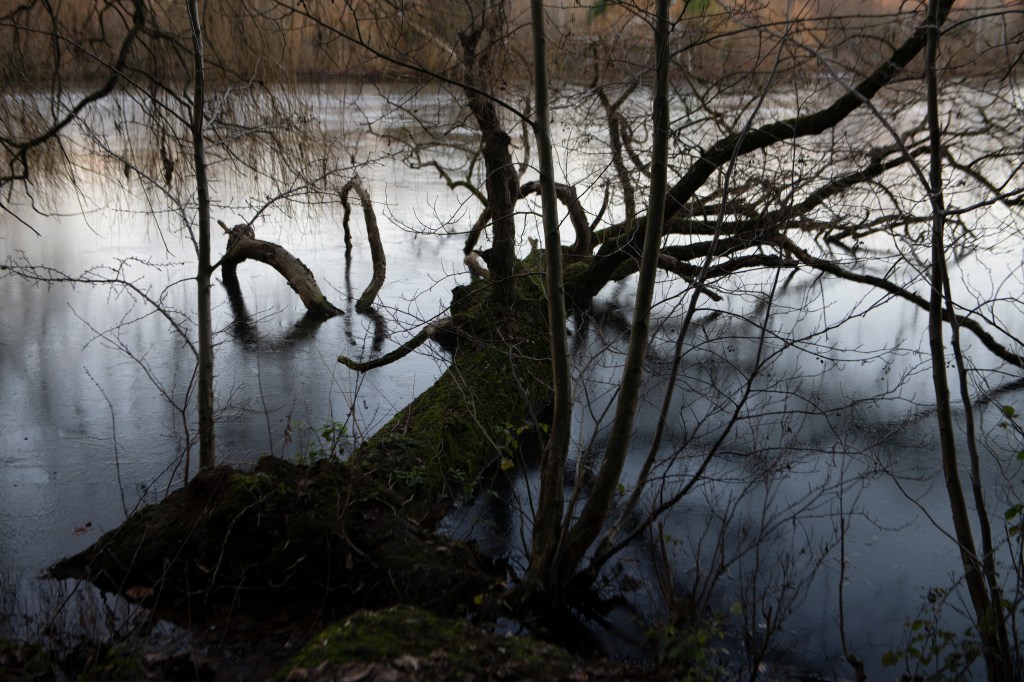
This is a slide show of my most recent shoot, this was during a frozen spell at the turn of the year, this turned the lake at Dacha into a whole other world. I spent a few late afternoons walking through here as the light faded, it had a completely different feel to it. There was no wind and it was eerily still you can see from several of the images that even with a slow shutter, there is little movement in the trees branches. There is a satin effect on the surface of the middle lake, I love how the fading light makes it shine silver, and the tree branches frozen in time poking out from the ice. There is a stillness to the photographs that signifies a sort of solitude and silence, which is as I have been trying to portray in my subject.
Link to original images: 03 7800 IMAGES
I was quite excited at the results of this shoot, Being able to view them immediately once I returned home, I could easily identify those which I would like to add to my list of potential images for my submission. I had also taken photographs in tandem, with my analogue camera. I was hopeful I might have some images from this that I could use in my book or for my final exhibition piece. I am still undecided on how I will separate my images from analogue / digital and colour / black and white. Or even, whether its necessary to have this as a concern at all.

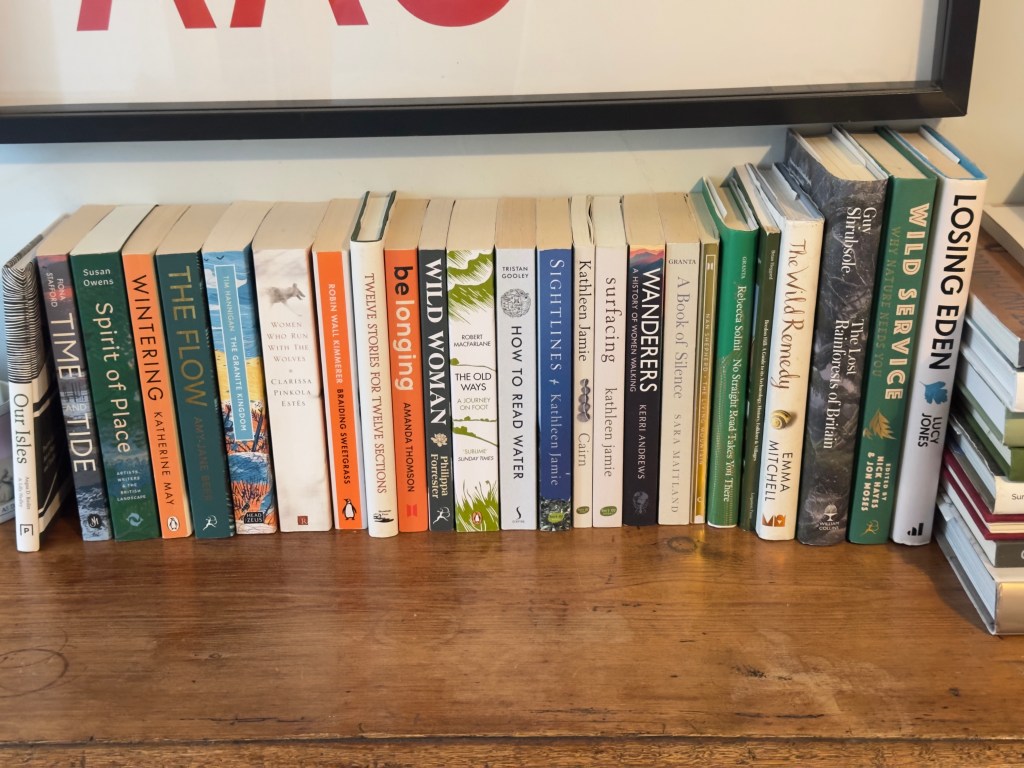
A significant part of my project, is how I execute the plan for creating a mindful situation. The research I have found discusses the physical act of mindfulness, in so far as learning how to focus and concentrate on immediate surroundings, using my senses to notice everything in real time, trying not to let my mind wander off into usual thought spaces. Whilst I have identified some key peer reviewed research which examines these themes, a significant part of my knowledge comes from my passion for reading nature writing. I listen to audiobooks & podcasts on the subject and also have paper books that I read and re-read. From the essayists (Jamie) to the adventurer / scientists (Macfarlane) and lifestyle writers, there is the common thread of an appreciation of the natural world and a slowness to their writing which indicates a deeper, more mindful understanding of our world. The photo above shows just a few that I have and which have contributed to my love of nature. I feel very fortunate to live in an area where there is an abundance of inspiration on my own doorstep. To understand my own subject, this immersion and commitment to my environment, must be practiced. Using quiet observation, contemplation and patience I have faith that I can create meaningful work.
I was pleased to find this very recent study, ‘Creating Wellbeing’ (Lemon, N et al, 2025) is a collection of essays which aims to show how creative practices “can revolutionise wellbeing and resilience in higher education, this groundbreaking collection brings together 25 academics who reveal how engaging with creative processes – from visual arts and crafts to performance and digital media – can serve as powerful tools for self-care and professional flourishing” (p1) within this is an essay by lecturer Alyson Agar, senior lecturer in Art and Design at The Northern School of Art. “Embodied Connections‘ (p75) is an essay derived from a study for her PHD. Alyson’s research explores the relationship between photography and film and the landscape, looking at how these activities can inspire connections to nature. This specific study is a result of her concerns, when during Covid-19 she considered how engaging with nature, through physical activity, e.g. nature walks, could have benefits to students and colleagues alike. She outlines her project here: “In 2024, I developed Embodied Connections Conversation Series: Women’s Conversations in Landscape and Climate through Collaborative Nature-based Photographic Practices, a year-long art-based research project based in Hartlepool, a coastal town in the northeast of England. The study consists of 12 walking and moving conversations with women and women-identifying artists, photographers and creative practitioners focused on creating participatory nature-based photographic imagery within the Hartlepool landscape” (p76) The key principle of the project was for groups of women artist participants to engage with the landscape as a group, walking through it in a sort of ‘tag team’ approach, as each person met up with the next, they would gift something from the natural environment, as a way to acknowledge the place and its ‘gifts’ this could be anything from a stone to a leaf, but this act likely instilled a sense of gratitude and appreciation for the place. Along the way participants would engage with their environment by creating art using natural materials (often anthotypes) in place. In her conclusion, Agar says “at the heart of the project is the formalised orbital structure, which encourages participation, reflection, and connection by creating nature-based photographic practice within the natural landscape as a mindful practice to improve wellbeing” (p85)
This study has been published at a perfect time for me. I have an ongoing interest in how women engage with the land and combined with creative practices, this seems to be a full circle event. It is an area of study or work that I would like to explore beyond university, as I strongly believe that mindfully engaging with landscape utilising creative practices, has significant potential in wellbeing.
There are several examples given by Wells of the differences between a women’s approach to landscape photography and the approach from men. I have focussed on her chapter ”Women, Land and The Gaze’ (Wells, 2011: p185:203) She discusses how women tend to focus on relation between people and place rather than the land as vista. Also, rather than looking at the vast, sublime landscape, women have a tendency to explore more natural forms, looking closely and the scale of imaging would be more of a close up scrutiny, such as in botanical illustration. In other words, tending to look at the details. This is particularly relevant when I consider what I am drawn to in my own landscapes. I think about how I approach a shoot (I note here that the term shoot sounds too prescribed, I think it is more a walking, immersive experience that might provide an opportunity to take a photograph) and I consider whether the last 17 years as a parent has been the instigator of my foray into landscape photography. I think it probably has, although I focus a lot on history, I don’t know if I would have had the same instinctive response had I continued on a different path. Wells offers some explanation here, suggesting that women’s landscape photography is often ecological (a term she notes is unlikely to have been used 20 years ago, with climate having not been so central to landscape debates) although she asserts that this is most likely historically, socially, and culturally situated, rather than any biological trait; their work often foregrounds care, memory, connection and lived experience. It will be interesting to see how this changes over time, as men and women’s cultural experiences hopefully become less divided. Nowadays, there are more men taking on caregiving roles in Western society and I would like to see research on the impact of this in creative practices in the future. I personally believe that there are some biological influences, but I would rather avoid being too essentialist, instead considering that perhaps this would be too insignificant to make any obvious difference.
Wells writing links into the work of various nature writers that I have had an interest in for many years. I am drawn to the works of these writers, because of the richly detailed descriptions of their surroundings, the natural environments that they walk in and immerse themselves in. The evocative descriptions are phenomenological and akin to mindful practice in that they describe in great sensory detail. Although those listed here are women, I have also read essays by nature journalist Robert MacFarlane & Right to Roam activists like Guy Shrubshole.
Arguably, the best known example of women’s nature writing in the UK is The Living Mountain, by Nan Shepherd (2014). Her ability to describe her surroundings in such infinite detail means the reader is transported to a seemingly magical place, with the promise of an overwhelming, sensory experience which I feel could pin you down. It is a short book but the joy for me in this, is that I can read and reread it when ever I feel I need a ‘Living Mountain tonic’ There are many paragraphs and quotes which I could show as examples that inspire me, one that comes to mind though is this one, because it is predominantly about using her hearing sense over sound and sight: In reference to the moving water on the mountain, she says “One hears it without listening as one breathes without thinking. But to a listening ear the sound disintegrates into many different notes – the slow slap of a loch, the high clear trill of a rivulet, the roar of spate. On one short stretch of burn the ear may distinguish a dozen different notes at once” (p26) Shepherds writing reiterates for me that understanding place means to have embodied attention and authentic lived experience. Her walking was the vehicle for a way of thinking and feeling, as she transforms the Cairngorms into a living, breathing thing.
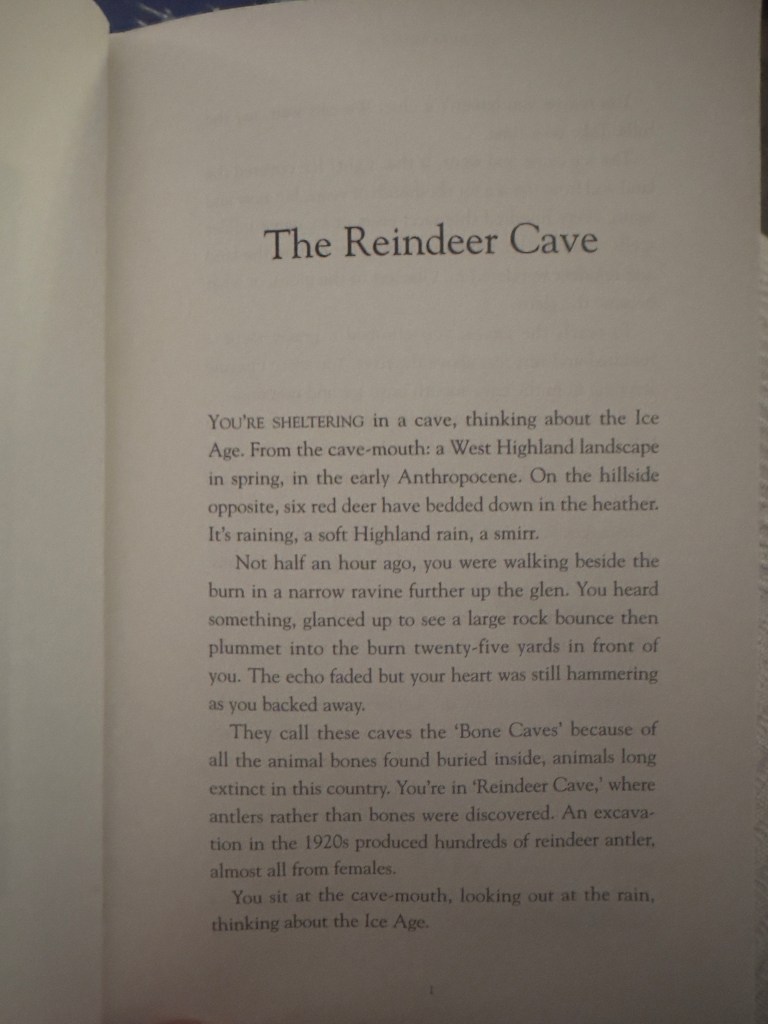
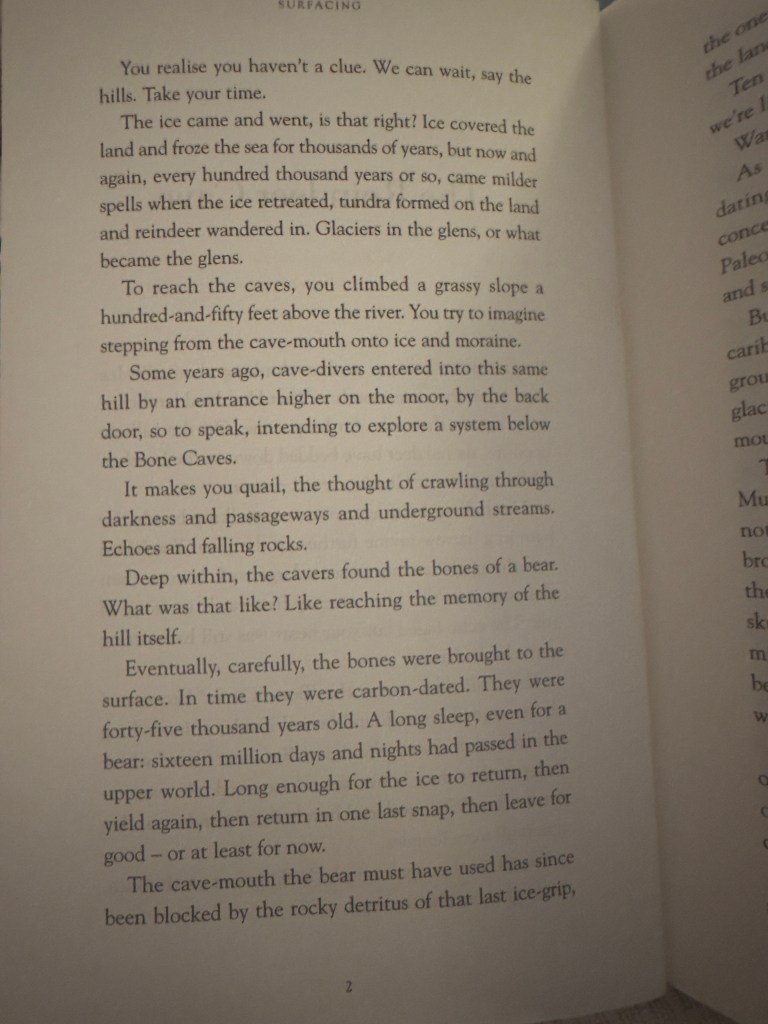
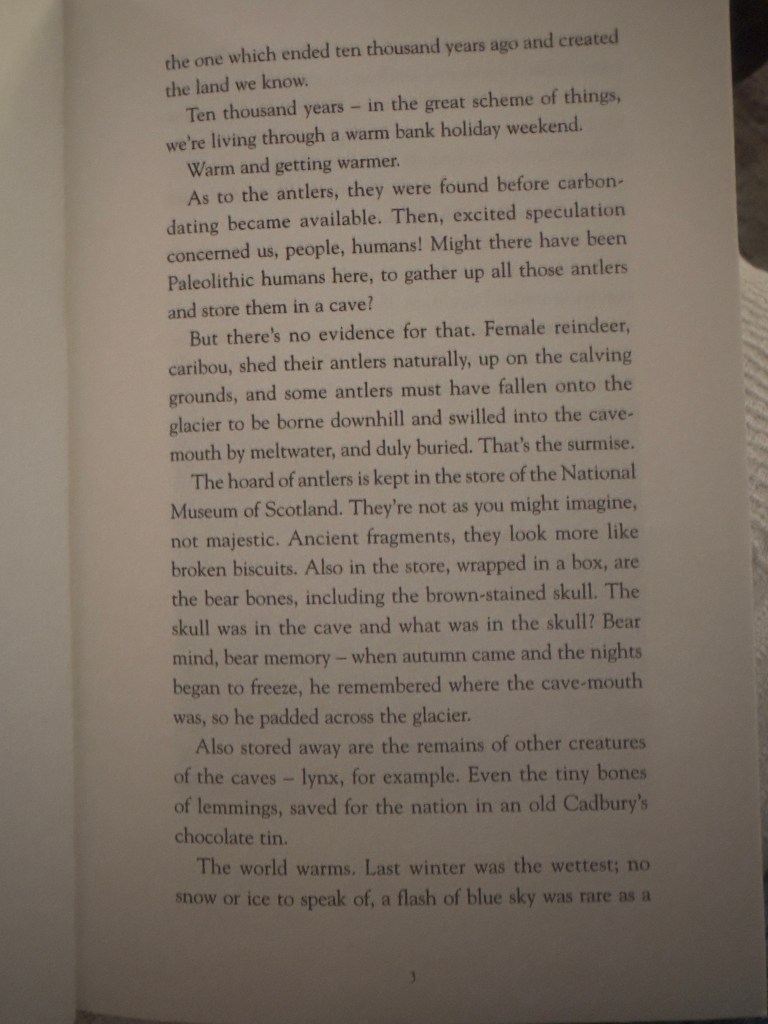
I have several books by Kathleen Jamie. I find her essays are perfect to calm a busy mind and as it intersects with phenomenology and topophilia, which I briefly discuss elsewhere, her writing has influenced my thinking around landscapes and attention to the environment. She addresses issues of place, culture and belonging as well as highlighting broader issues, relatying to land use and community. Her writing is almost like a sort of mindful recording. Landscape and nature are woven into human life as an embodied experience. and she reflects on the human experience. One of the most memorable essays for me was in her book ‘Surfacing’ (2022, p1) when she describes having walked up to sit at the mouth of a cave, the ‘bone caves’ so called because of the discovery of some 40,000 year old bones of a bear. She narrates as second person, the perceived view from the ‘cave mouth’ in the early Anthropocene, whilst foregrounding it against the Ice Age. Its an interesting way of perceiving the landscape and it carries the themes of temporality and dwelling, in a more lyrical narrative than the academic theory that I’ve read a lot of over the last few years. The text is below:
Wanderers: A history of women walking (2020) is a brilliant collection of essays by Kerri Andrews. Spanning over 300 years, the essays are focussed on the following women: Elizabeth Carter, Dorothy Wordsworth, Ellen Weeton, Sarah Hoddart Hazlitt, Harriet Martineau, Virginia Woolf, Nan Shepherd, Cheryl Strayed and Linda Cracknell. Each chapter details the experiences and writings of these women as they’ve engaged with their chosen pass time, in different areas of the UK and abroad.
Dorothy Wordsworth walked a huge number of miles every day, from her cottage in Grasmere, which she shared with her brother William. She was orphaned at 12 after her mothers death and separated from her brothers as they were sent to boarding school and she was sent to live with relatives, never staying in any one place for too long. They were reunited as adults and had an incredibly close bond, especially after their brother Johns death. Although William is most well known for his writing, Dorothy’s diary’s and notes are full of incredible detail and are a arguably a tribute to the act of sensing ones surroundings. She would frequently walk huge distances, from dawn until dusk, as if unable to be still and at ease. As she retrod the same paths over and over, “memories began to accumulate along the way, lending new and powerful meaning to her favourite walks” (p62) Similarly, Linda Cracknell says “By virtue of walking a path that endures beyond the limits of human lifespans, we can inhabit the same space that our selves-that-were, and keep the path oepn for the selves-to-come” (p249) For Cracknell, the act of walking the same route over and over is to reconnect with a past version of herself, as well as to connect with those before her and to leave an impression as guide, for those of the future. She can see “a clear pathway between that 17 year old who was learning to draw and paint and the woman who writes in 2008” (p250). For Dorothy Wordsworth, these memories would prove to be hugely comforting, when after 30 plus years of walking her beloved Lake District, she developed a debilitating illness which prevented her from leaving home. For her, walking had been the stabilising factor in her emotional wellbeing, so when she also developed what we’d now assume was a dementia, it came as an extra blow. Although her short term memory was affected, the earlier events of her life persisted and so she could tap into her mind and recall the walks she had been on. This is one of the last poems she wrote (p84):
“No prisoner in this lonely room,
I saw the green Banks of the Wye,
Recalling thy Prophetic words,
Bard, Brother, Friend from infancy!
No need of motion, or of strength,
Or even the breathing air;
-I thought of Nature’s loveliest scenes;
And with memory I was there”
The idea of recalling memory and connecting through landscape reminds me of a walk I’ve made several times, from Ford near Temple Guiting, to Bourton on the Water. The route leads through several trails’ The Diamond Way, Windrush Way and Wardens Way. My grandmother used to walk daily along the section near Bourton from Lower Slaughter, when she was 14, to get to work. I always think of this when I am covering that particular section and sense her footsteps, realising how much of the same view we would be looking at. Andrews says that “for…women walkers, the pedestrian body becomes a conduit through which past, present and future are connected” (p251) which really does resonate for me. My reasons to walk and absorb myself in the landscapes I am most connected to are because I feel a great sense of comfort and reassurance there, I feel close to my ancestors and to my own childhood.
These are just a few examples of the inspirational women that have contributed to inform my practice, it is difficult to identify exact moments or passages in their writing as they’ve almost become part of some subconscious knowledge now but I know that collectively these works have seen my work change and become more meaningful as a result.
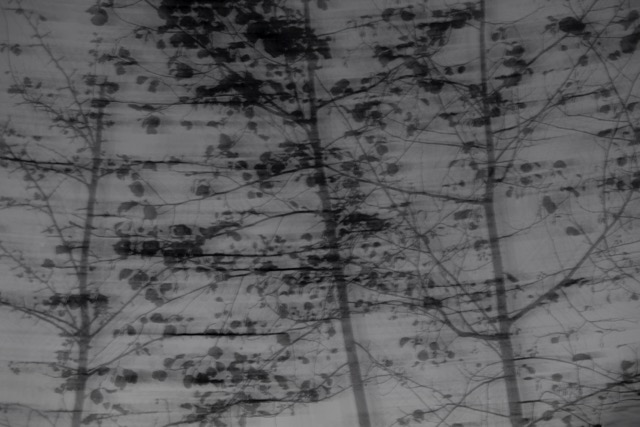
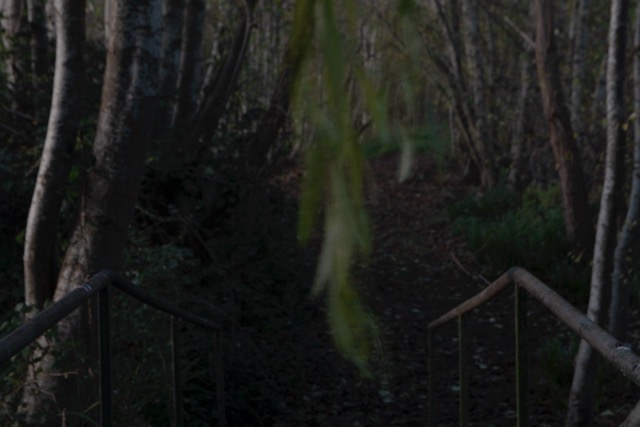
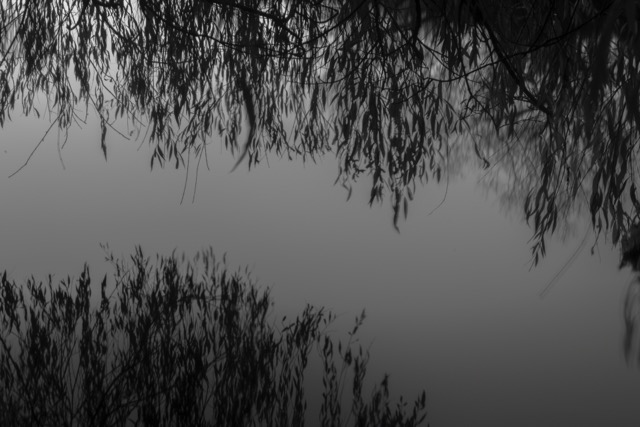
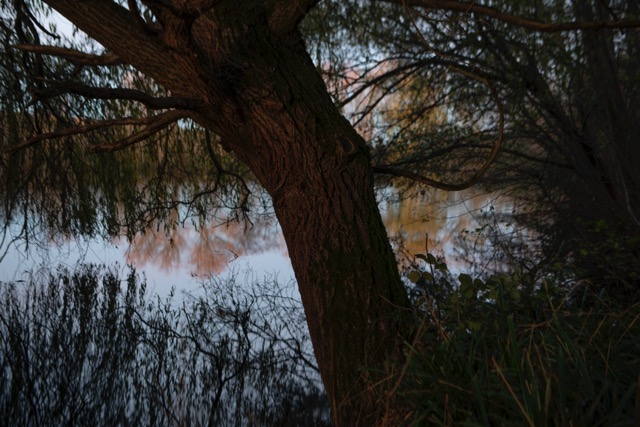
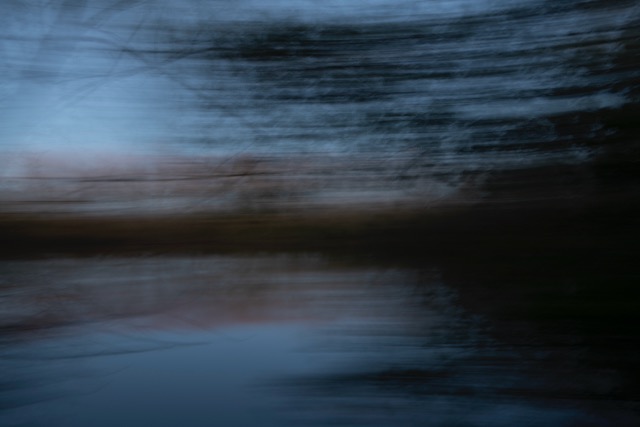
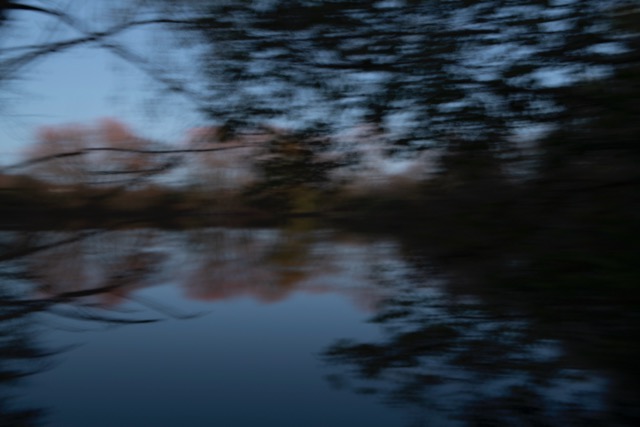
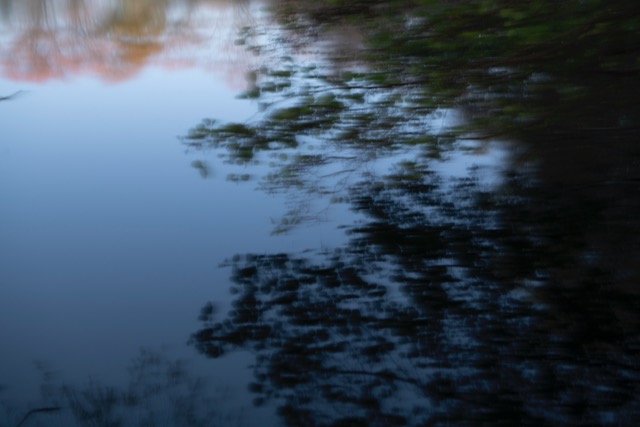
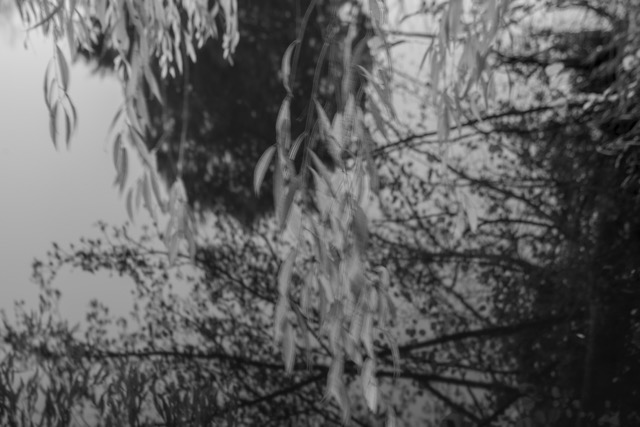
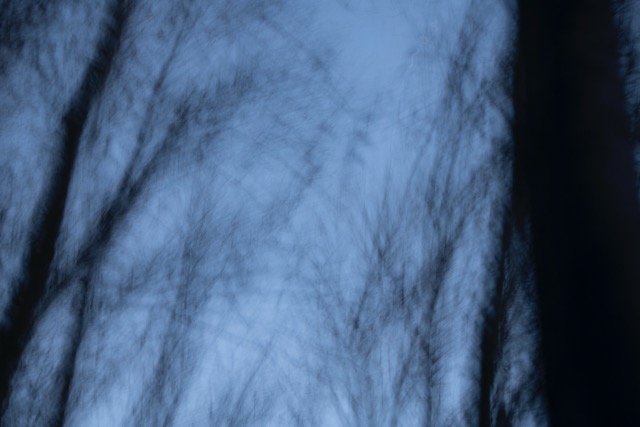
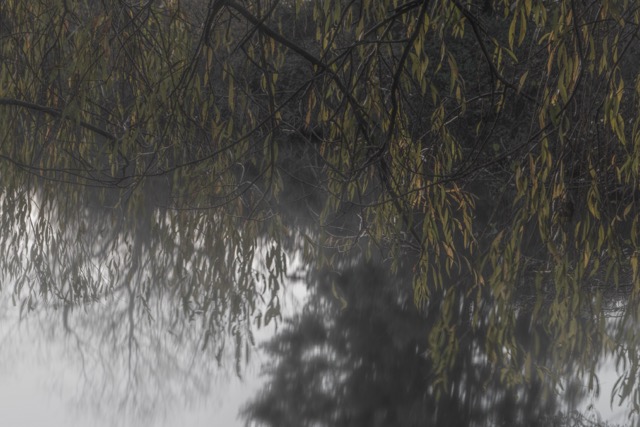
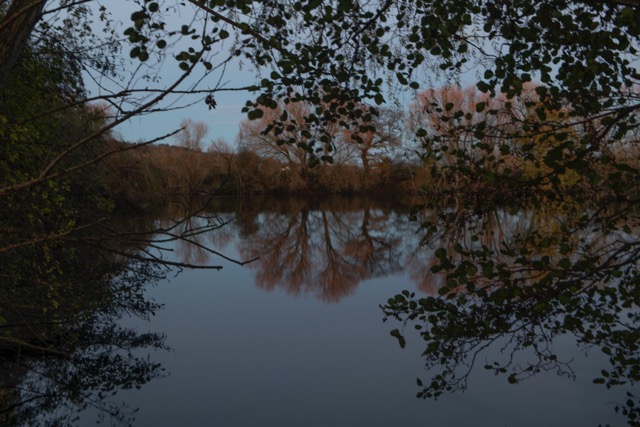
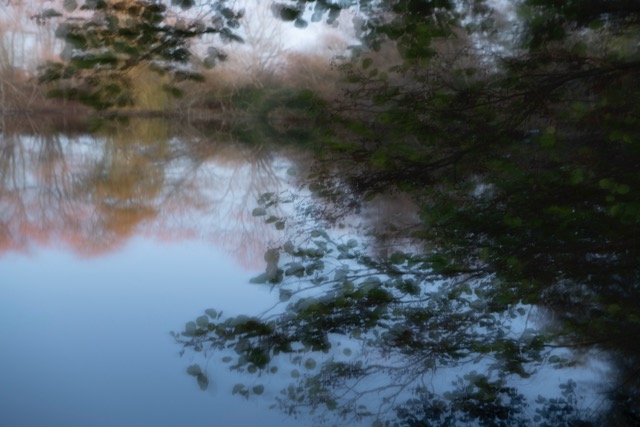
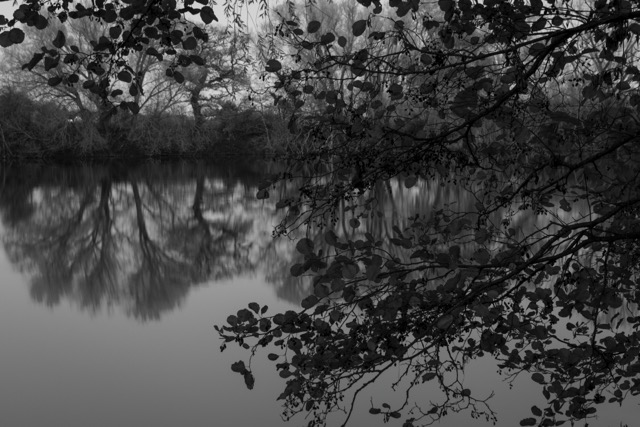
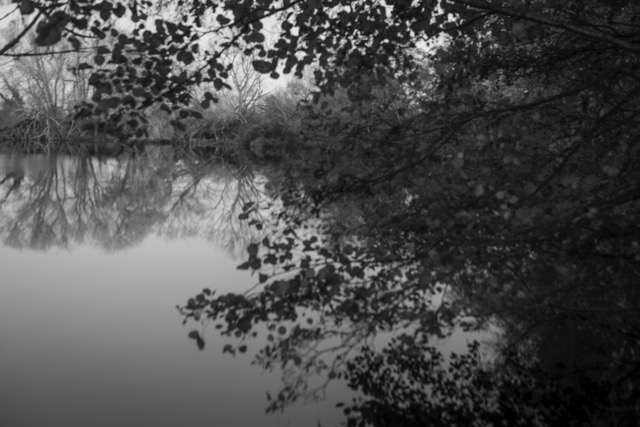
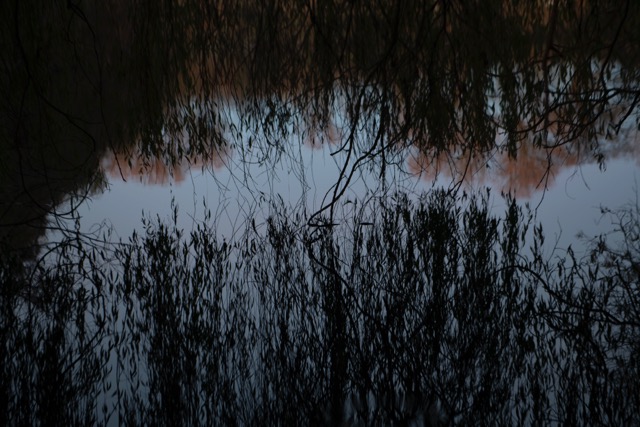
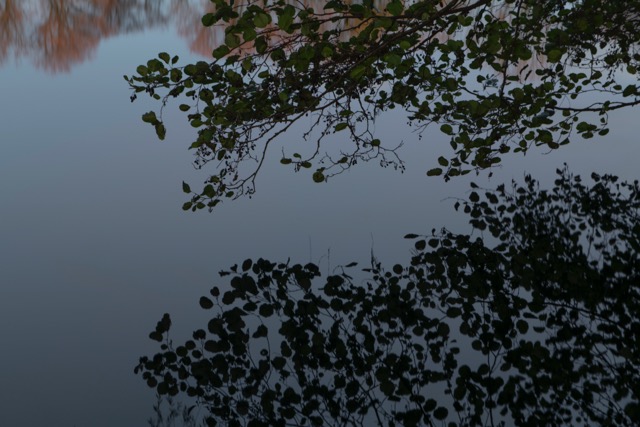
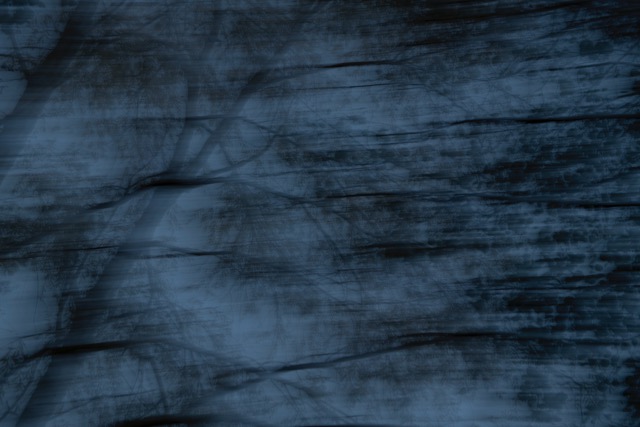
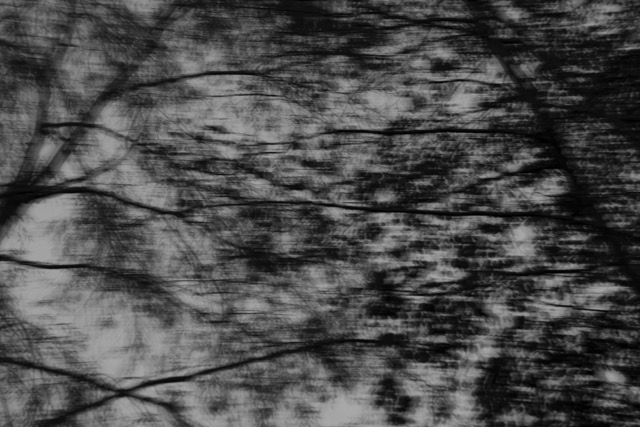
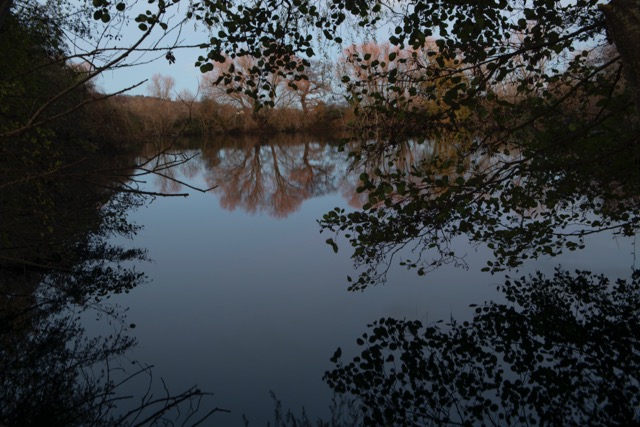
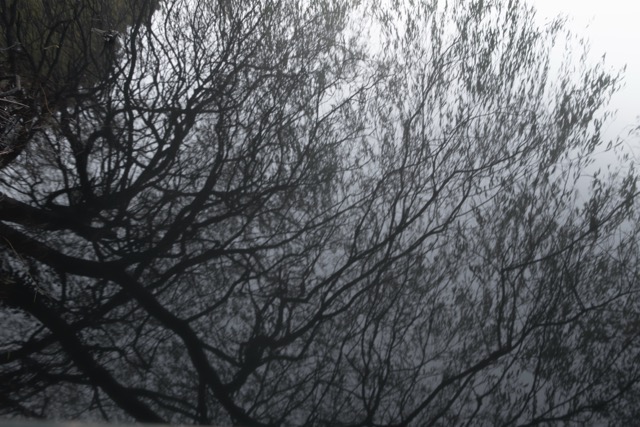
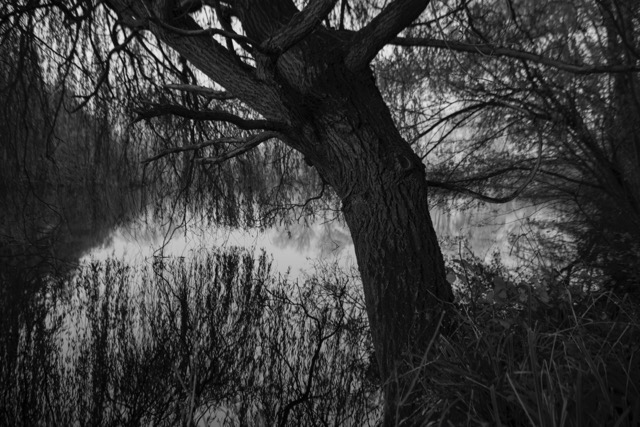
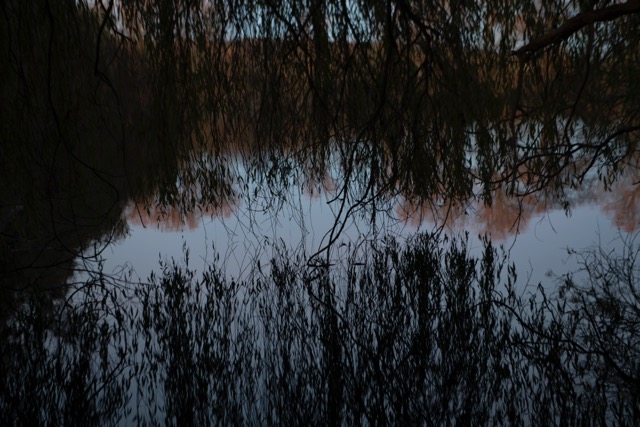
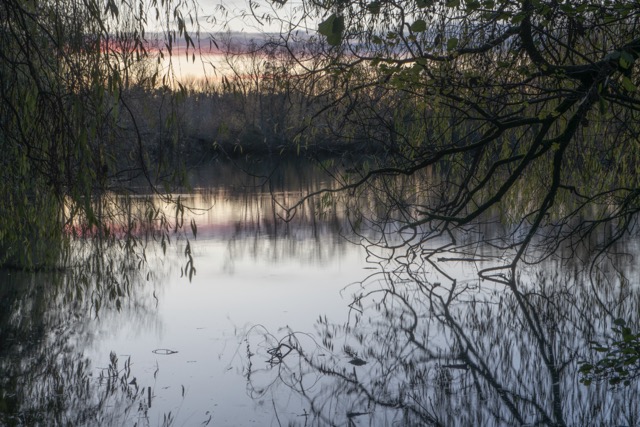
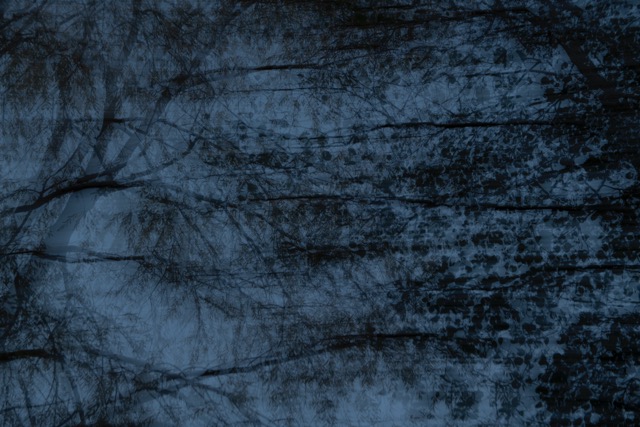
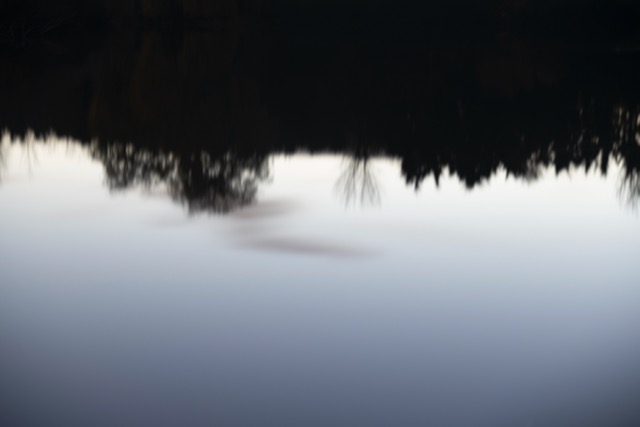
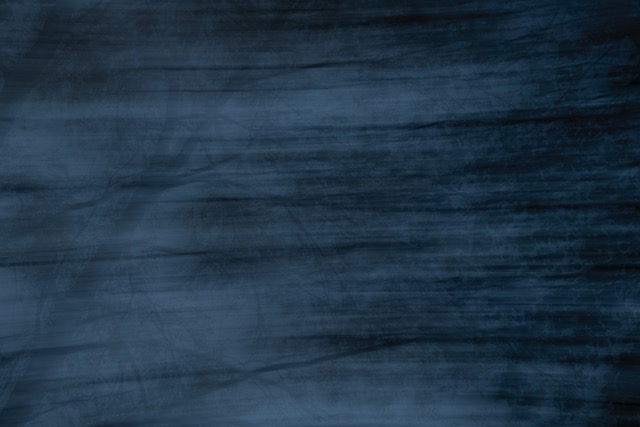
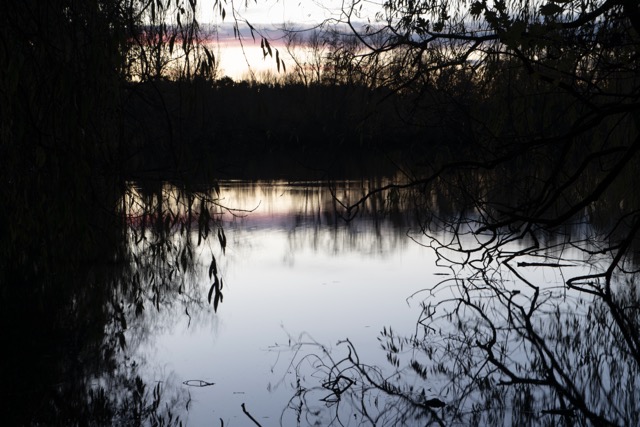
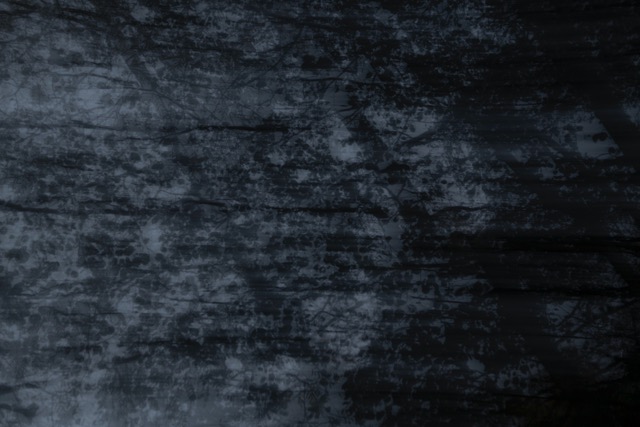
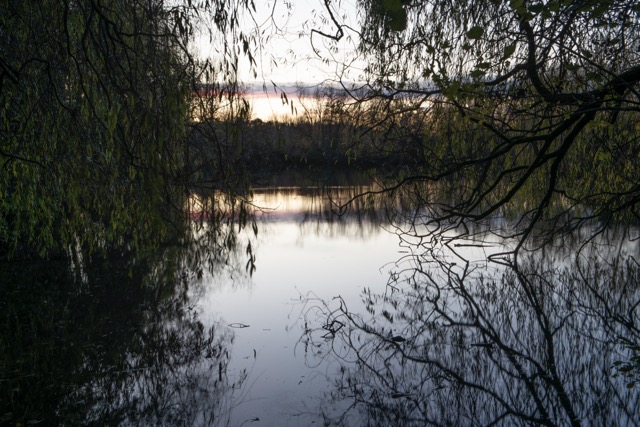
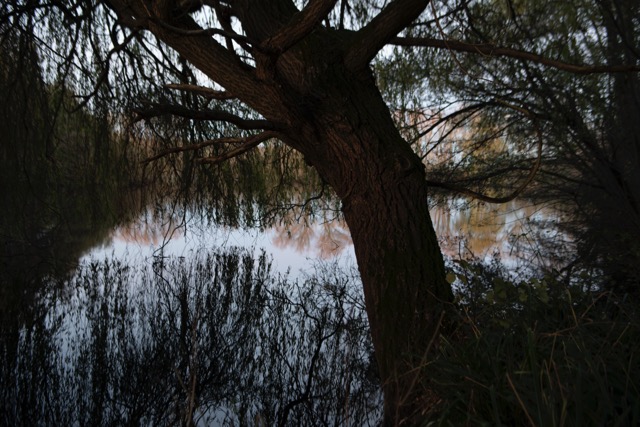
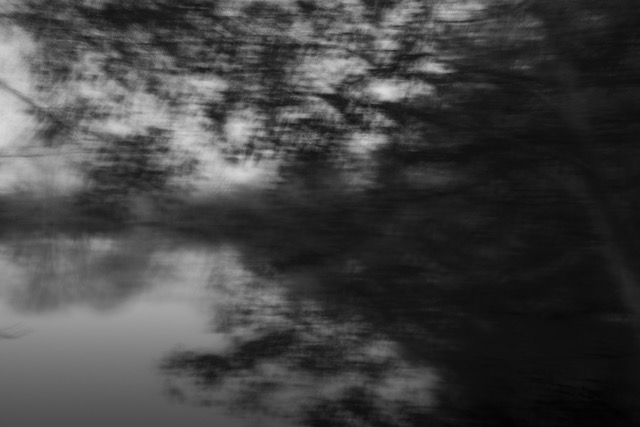
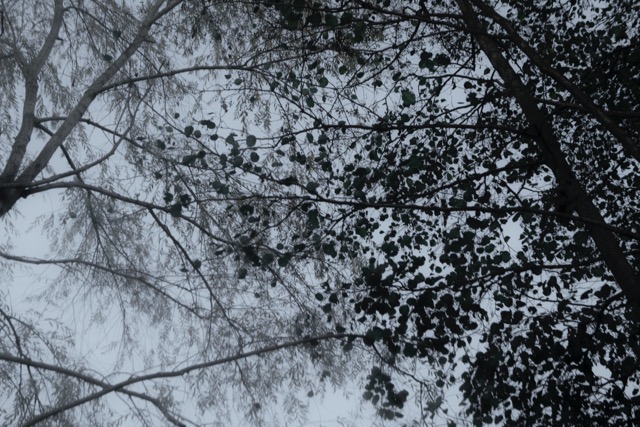
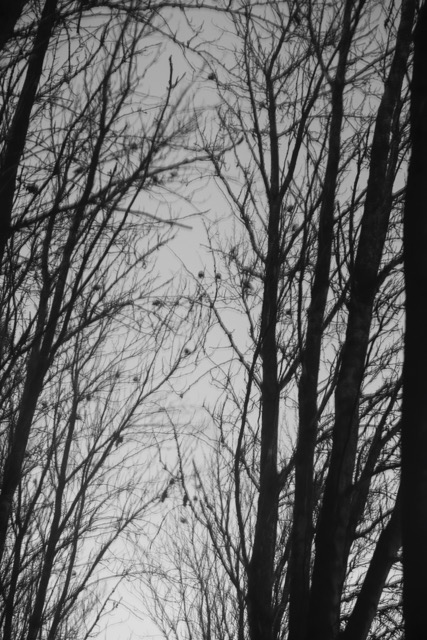
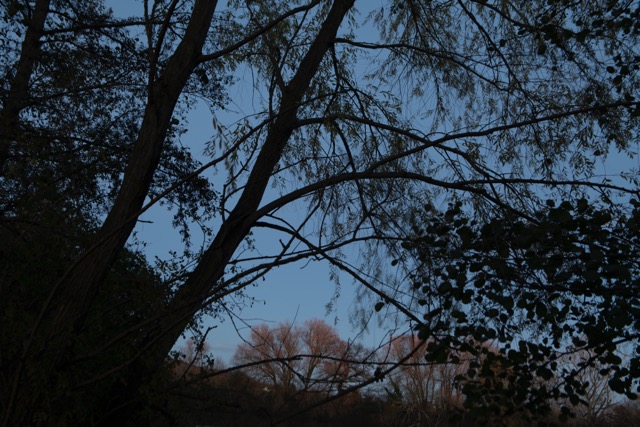
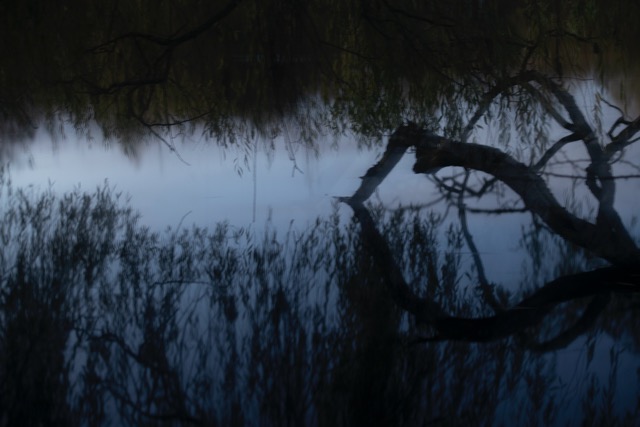
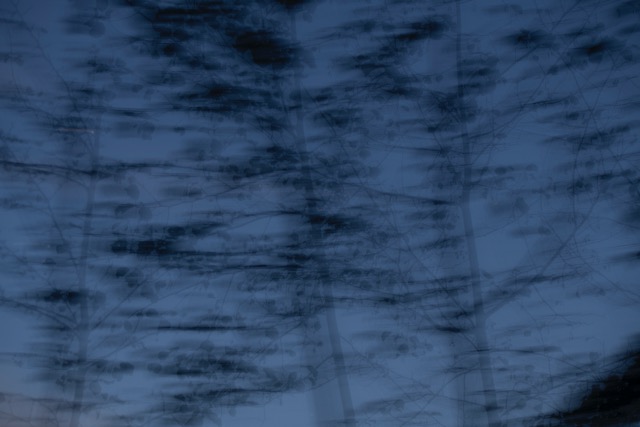
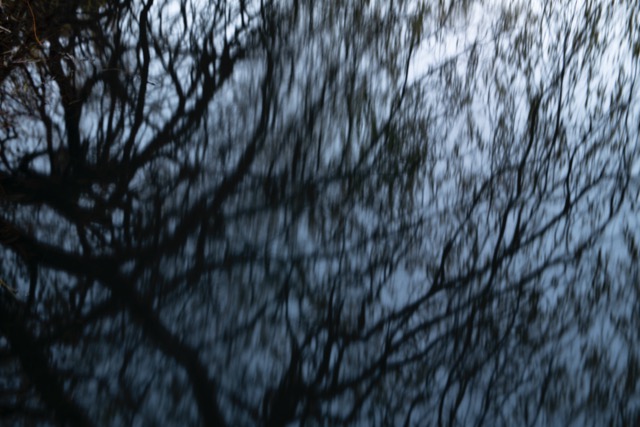
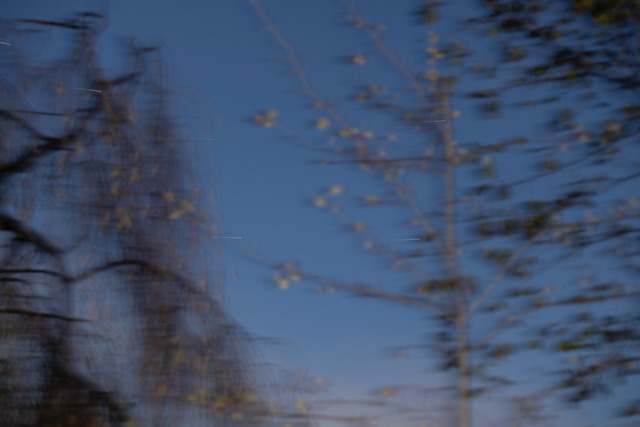
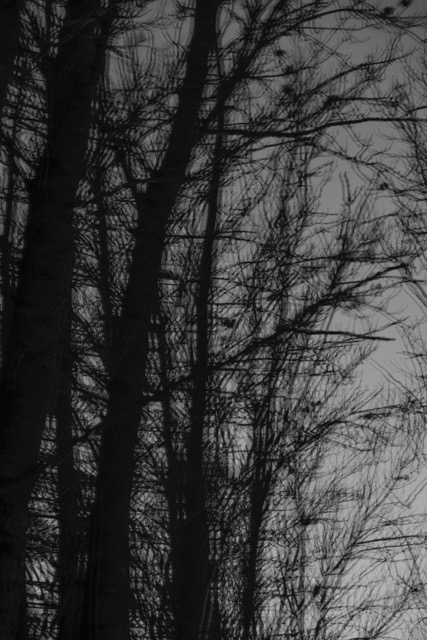
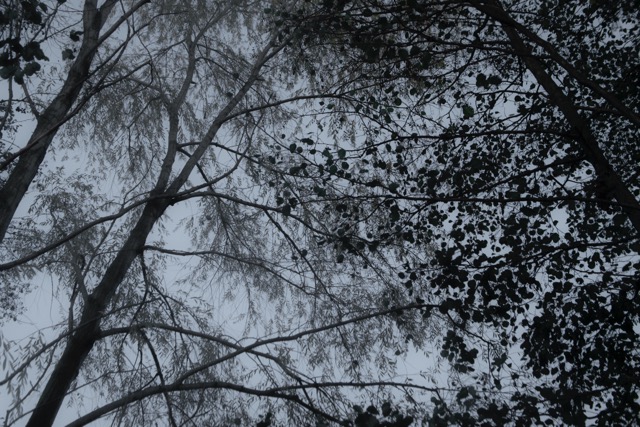
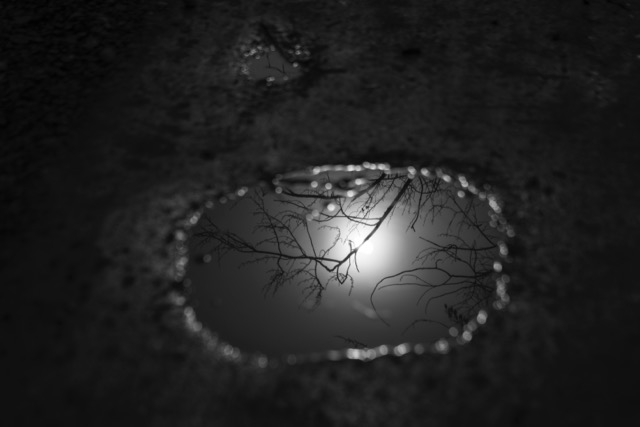
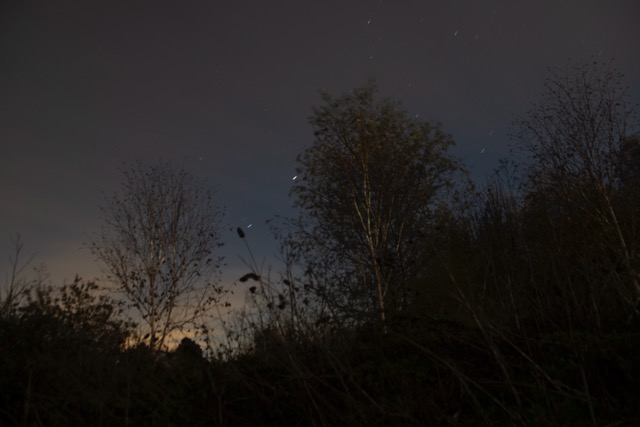
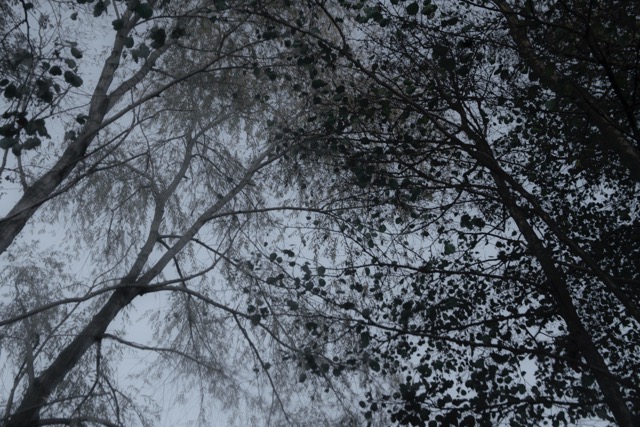
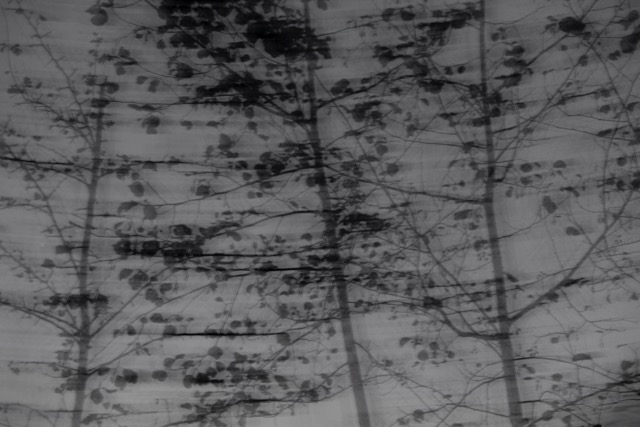
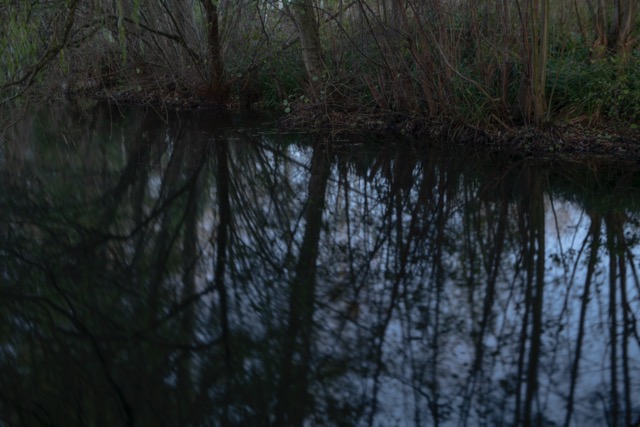
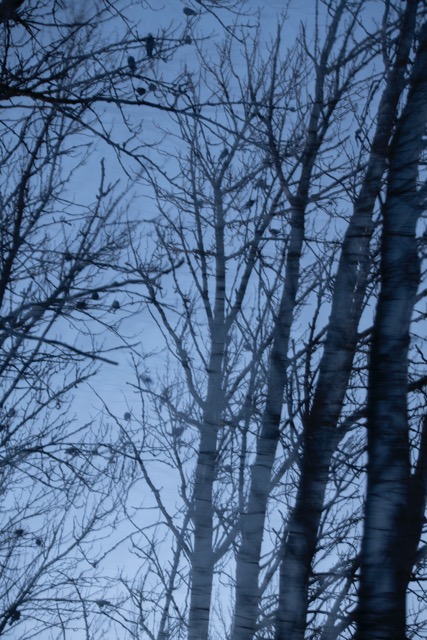
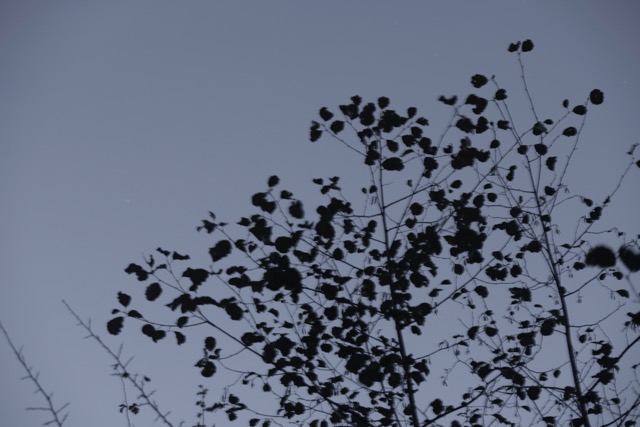

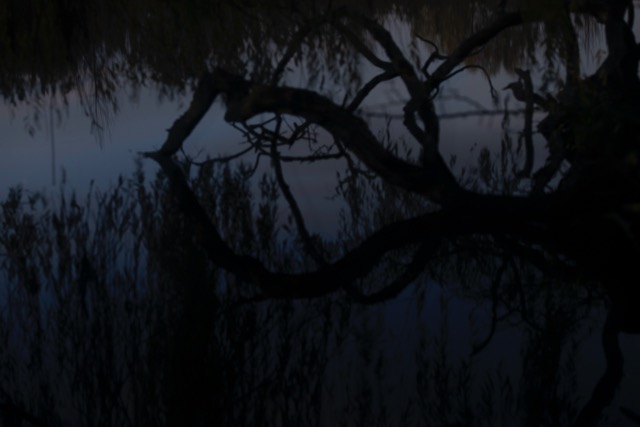
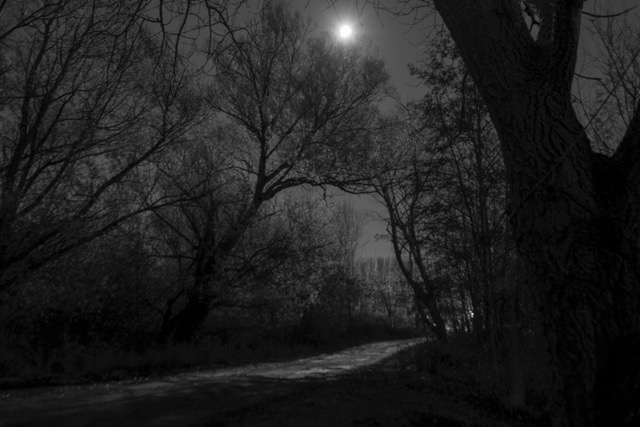
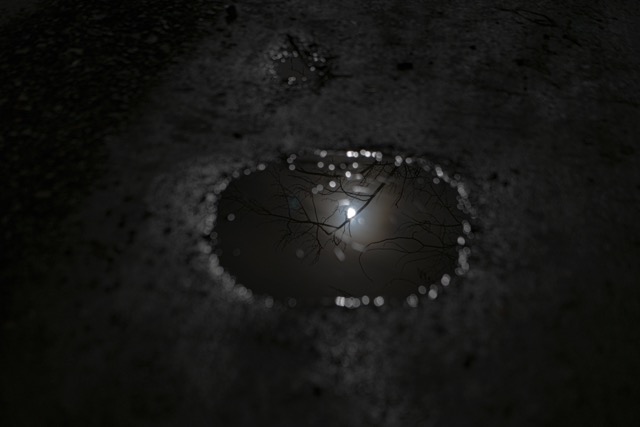
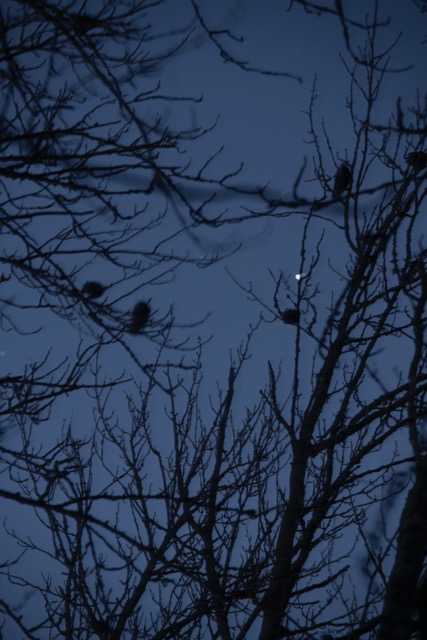
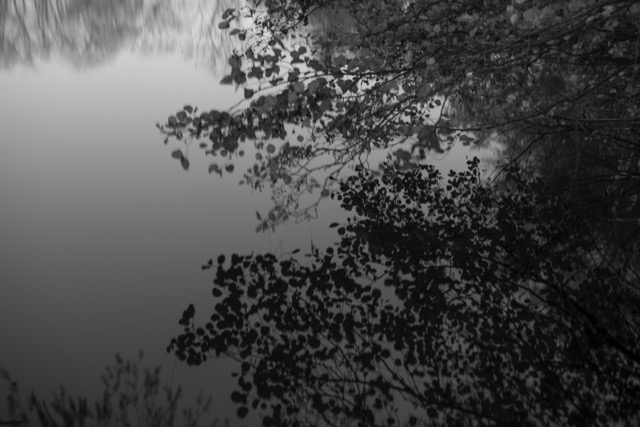
This was a shoot which really helped me to pin down what I was trying to do. I loved most of the photographs from this session, it was chilly, getting dark and by the time I finished it the moon was climbing high in the sky. I used long exposures with my digital camera on a tripod. Sometimes as long as 5 minutes. I hadn’t done much night work up to this point and wanted to see what results I might achieve.
I have converted a few of the images to black and white as I think this added to a sense of timelessness The jackdaws in the trees were very vocal, as were the pheasants! As it was their time of day to set up roost in the trees. This was tricky to capture on camera but I rather like the movement in the treetops whilst also revealing the silhouette of the birds settling there for the night. The canopy of the trees was especially dramatic because of the clear sky and full moon that night. They cast their silhouette on the lake and so with the longer exposure I had the effect of smoth mirror like surface of the water and the reflection of light cloud, branches and leaves which had slight blur to them.
This work was a joy to make and the focus on just a few small areas of the lake meant again that I just surrounded myself with the landscape and really felt a part of it.
As I was about to leave, I turned around and saw the perfect reflection of the moon in a puddle. I got the camera back out and photographed it, also the scene of the driveway down to the area of the property where the rented sheds are.
The work here really doesn’t quite fit visually with my narrative though. I am being less concerned about that when actually shooting because thats my aim but when it comes to sequencing a book or selecting work for the gallery wall, I think it sits alone. It is likely I will create a separate body of work for another project having been inspired by this shoot.
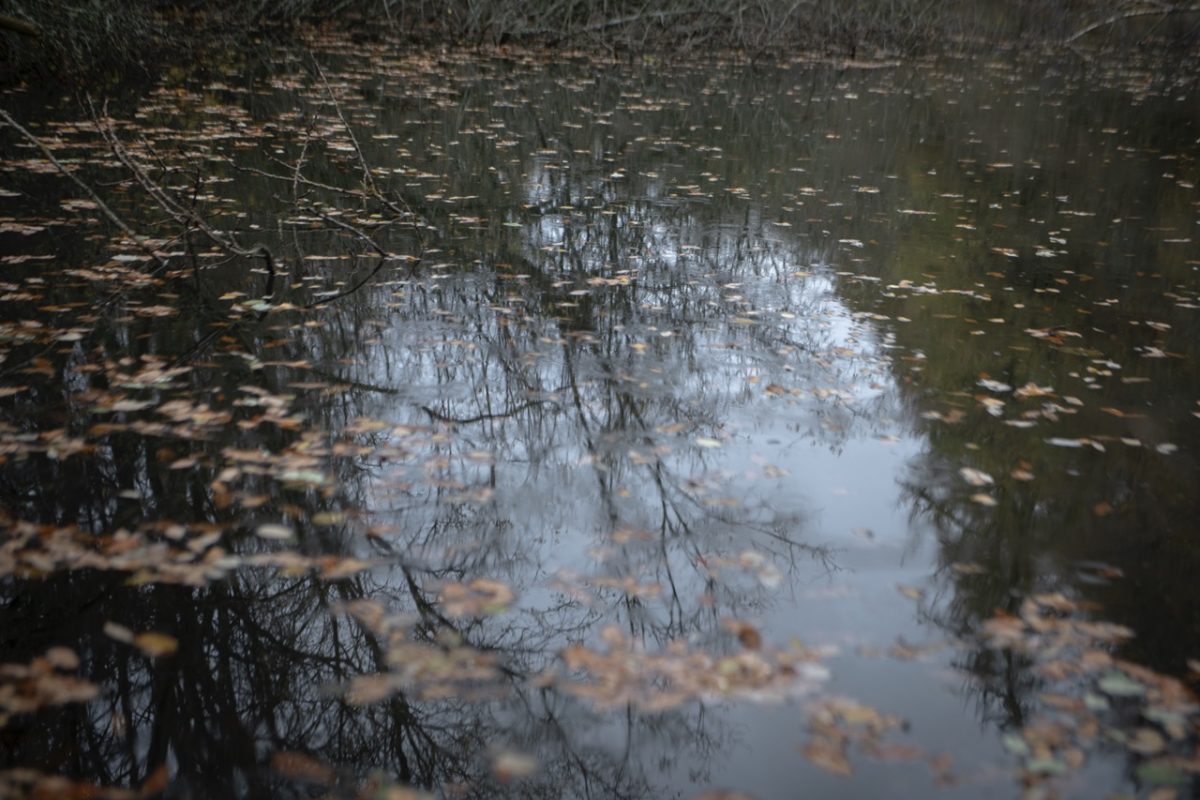
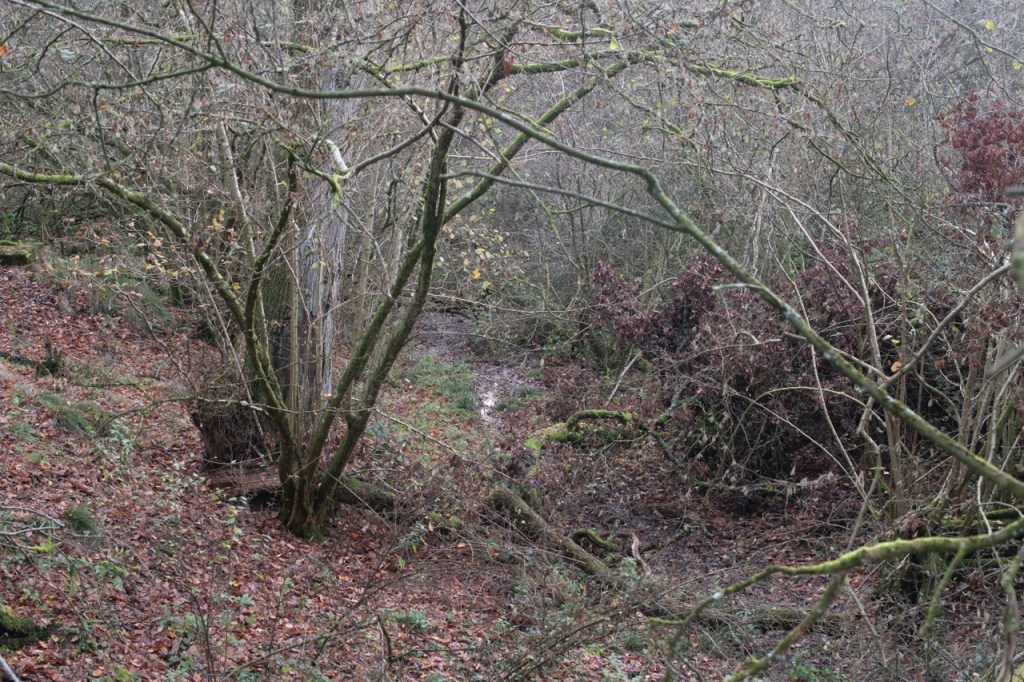
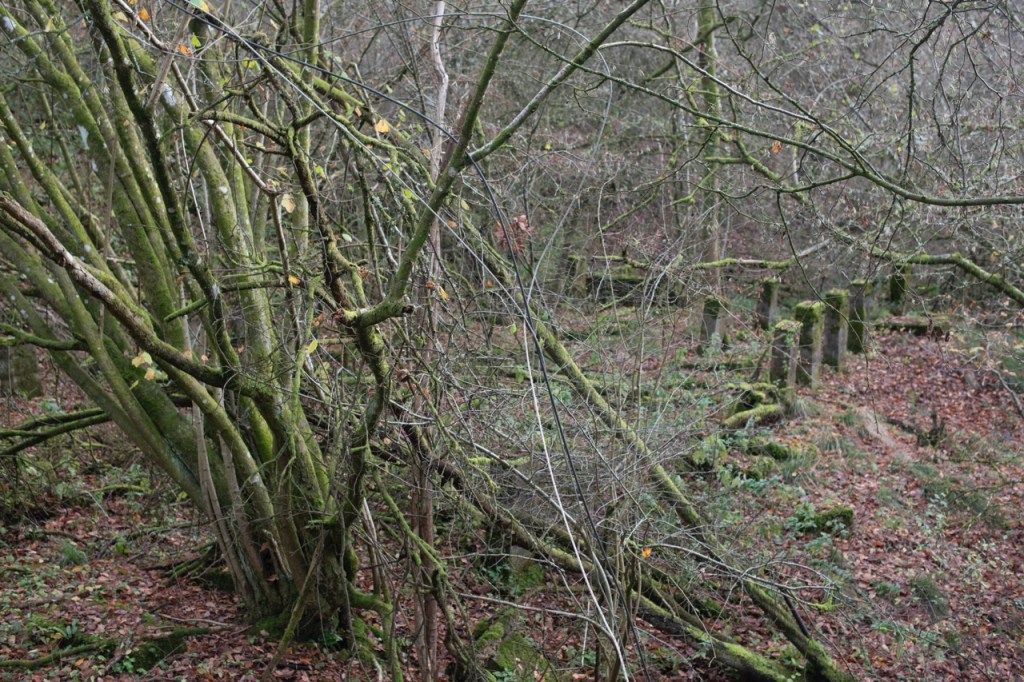
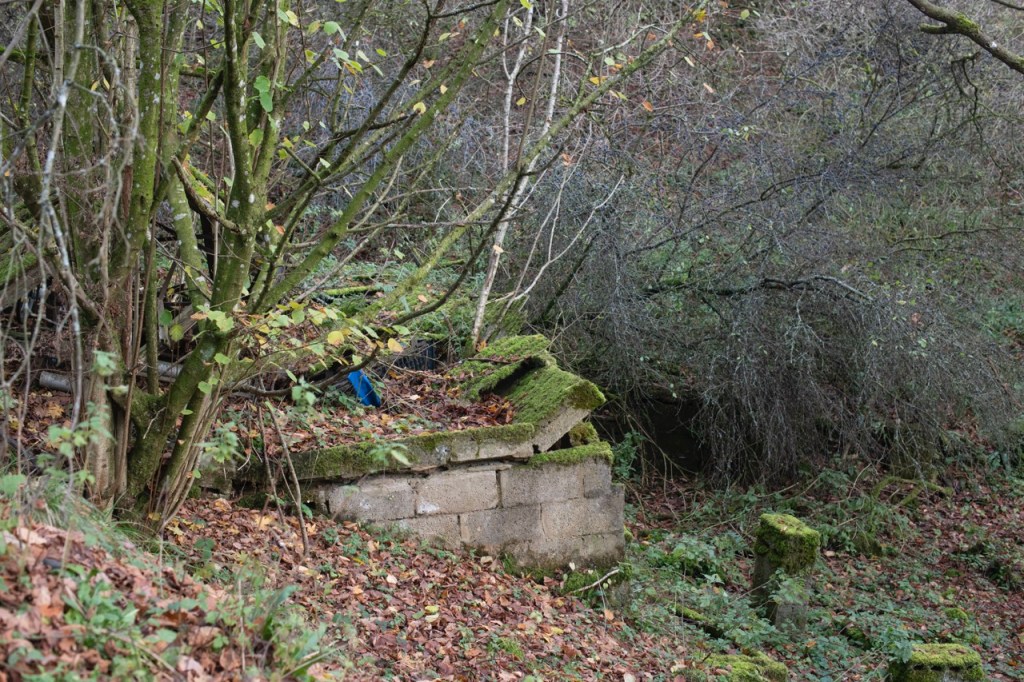
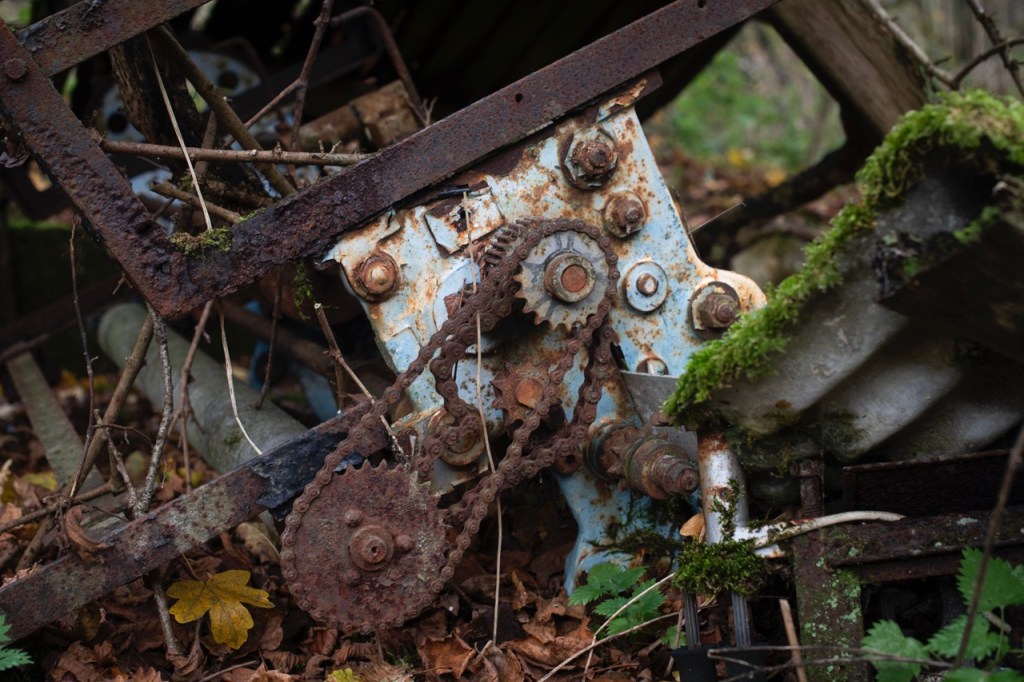
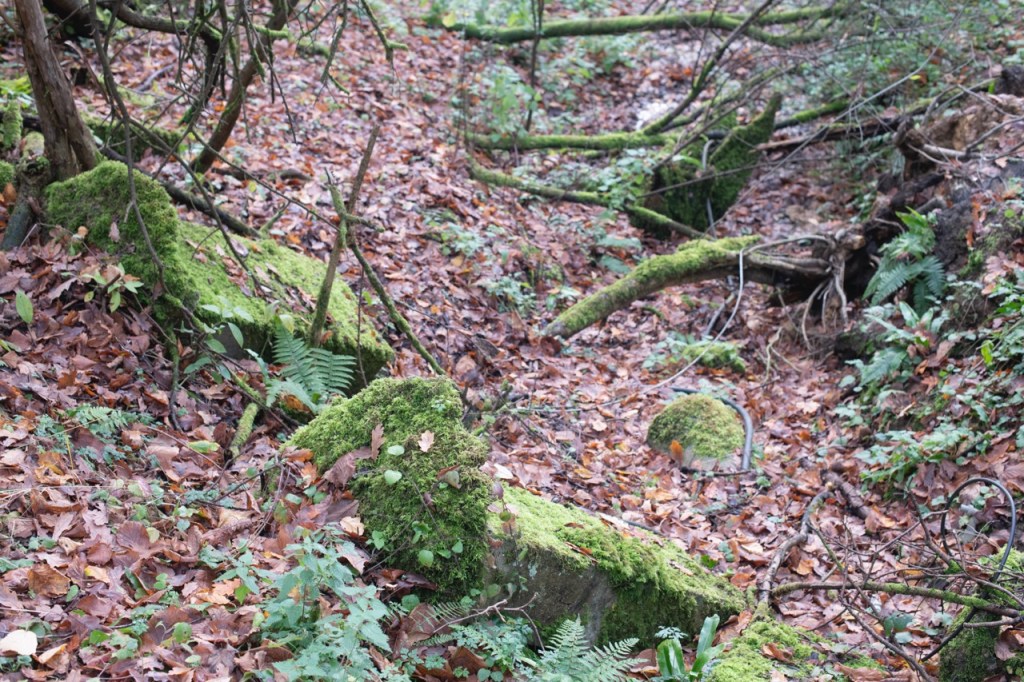
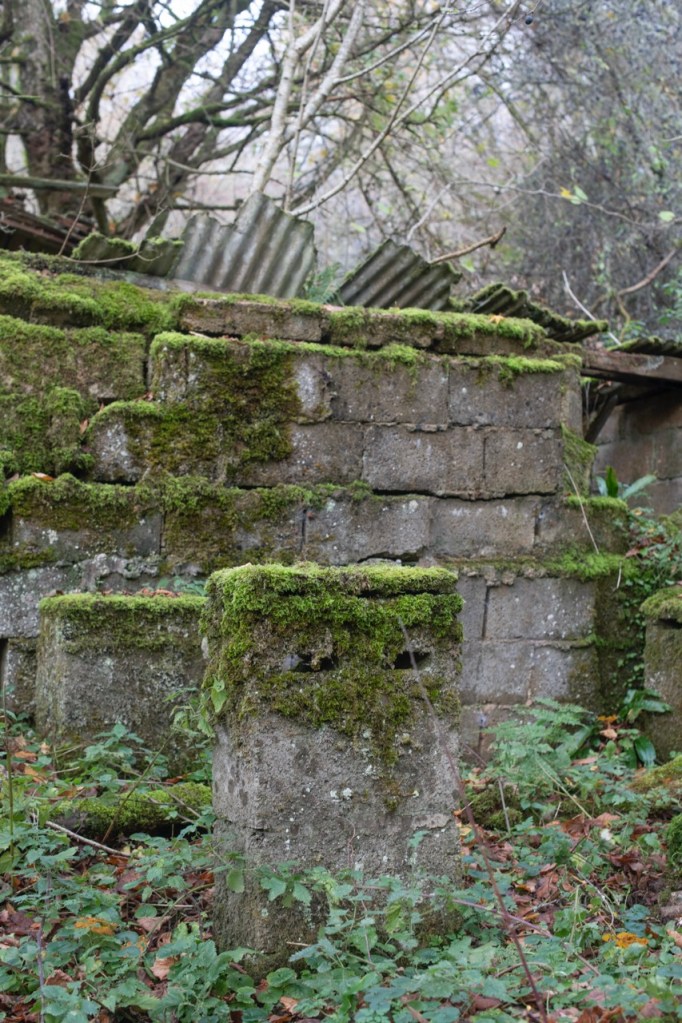
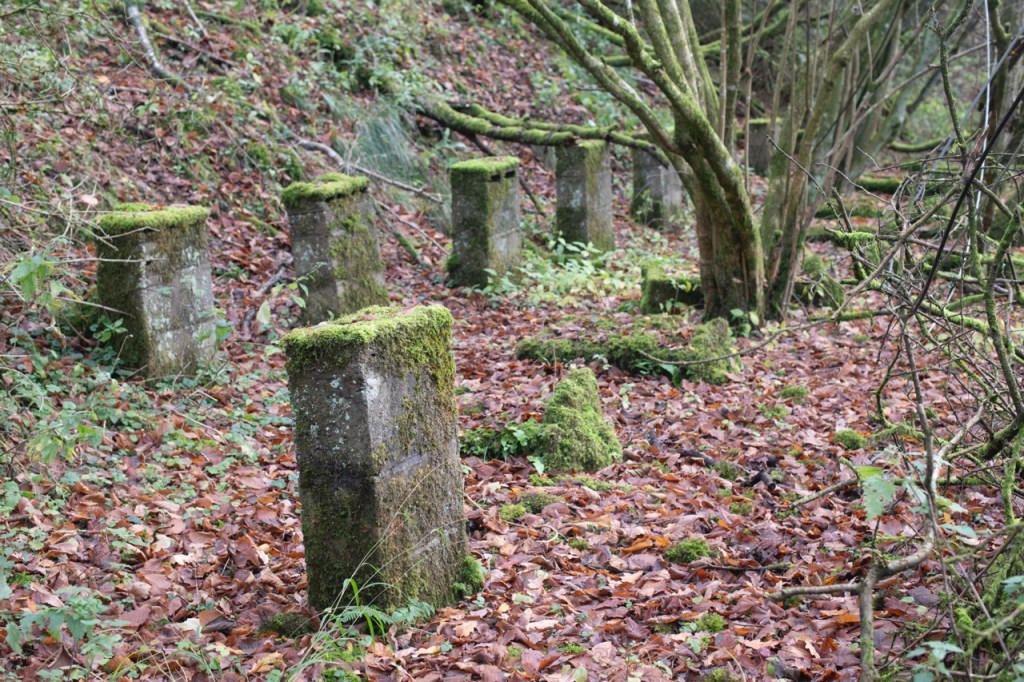
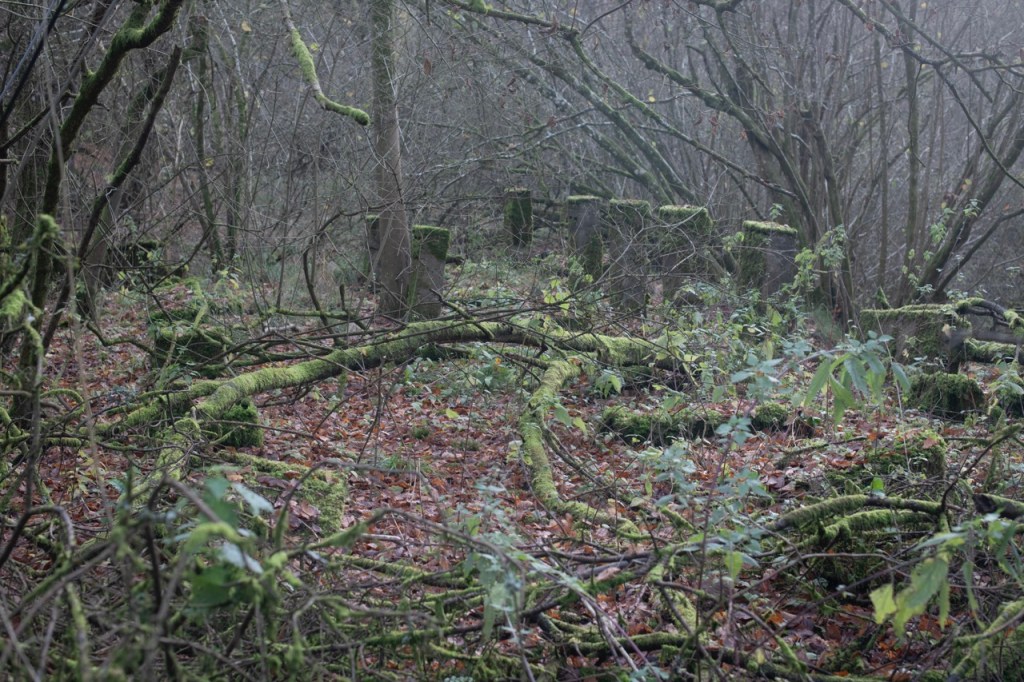
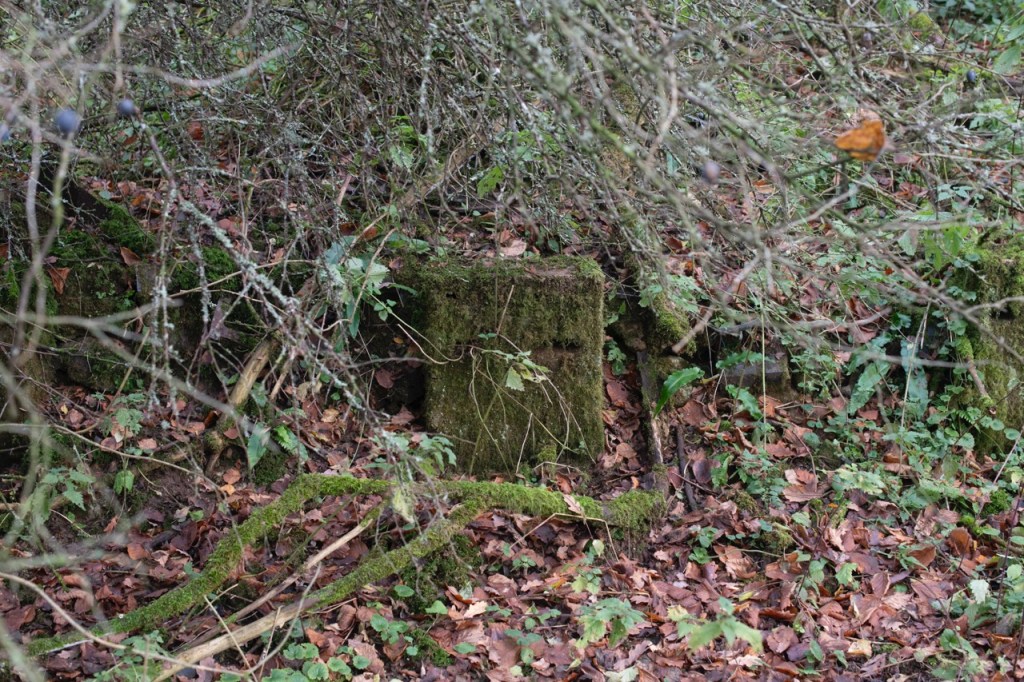
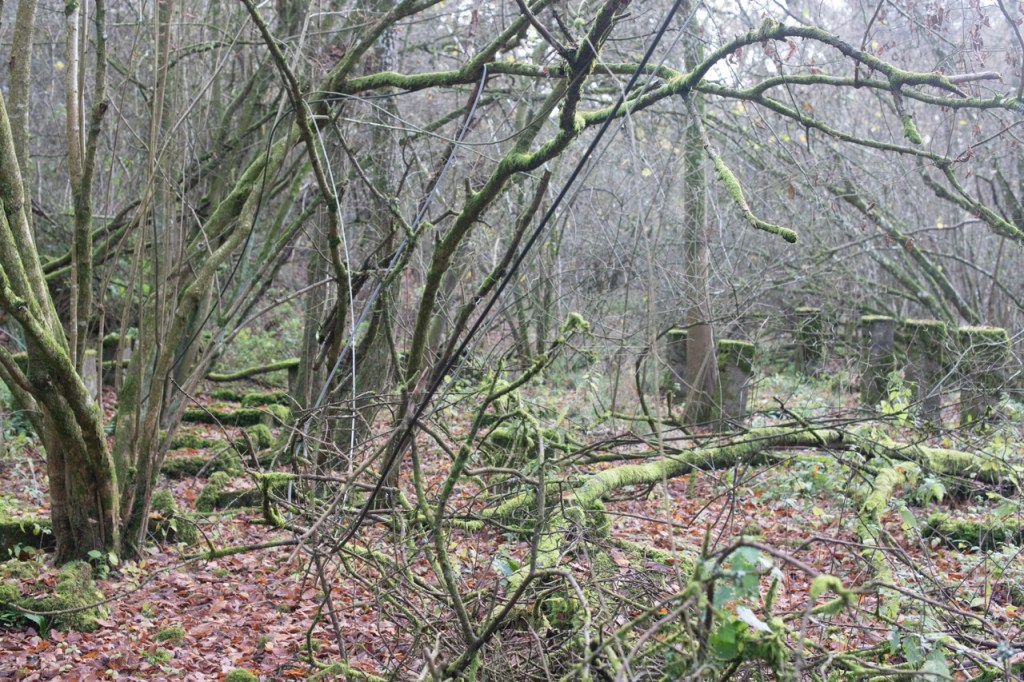
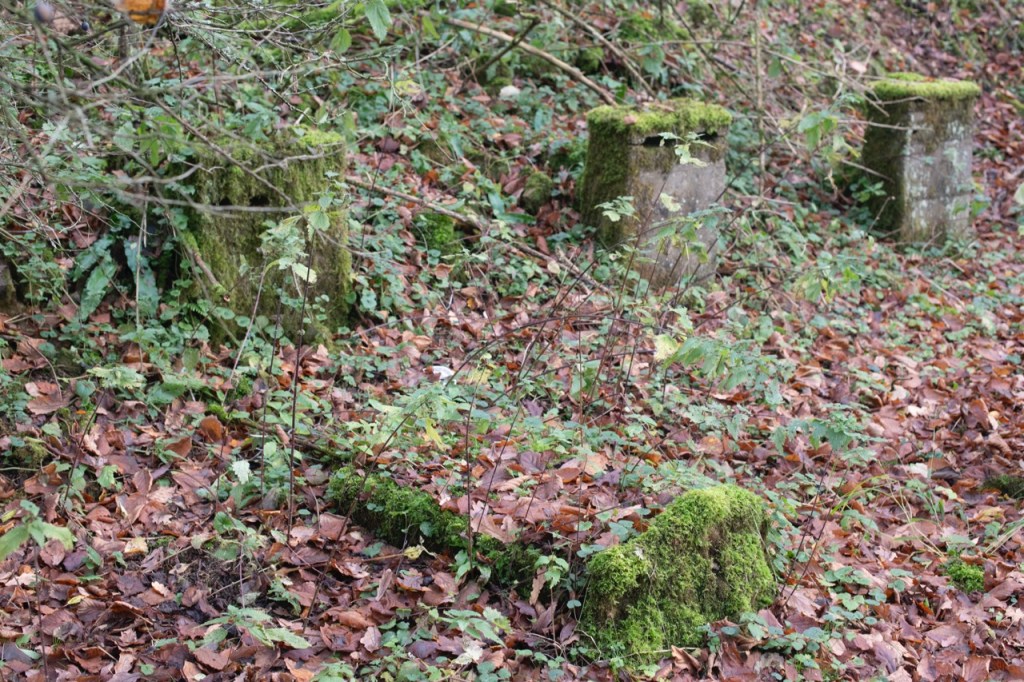
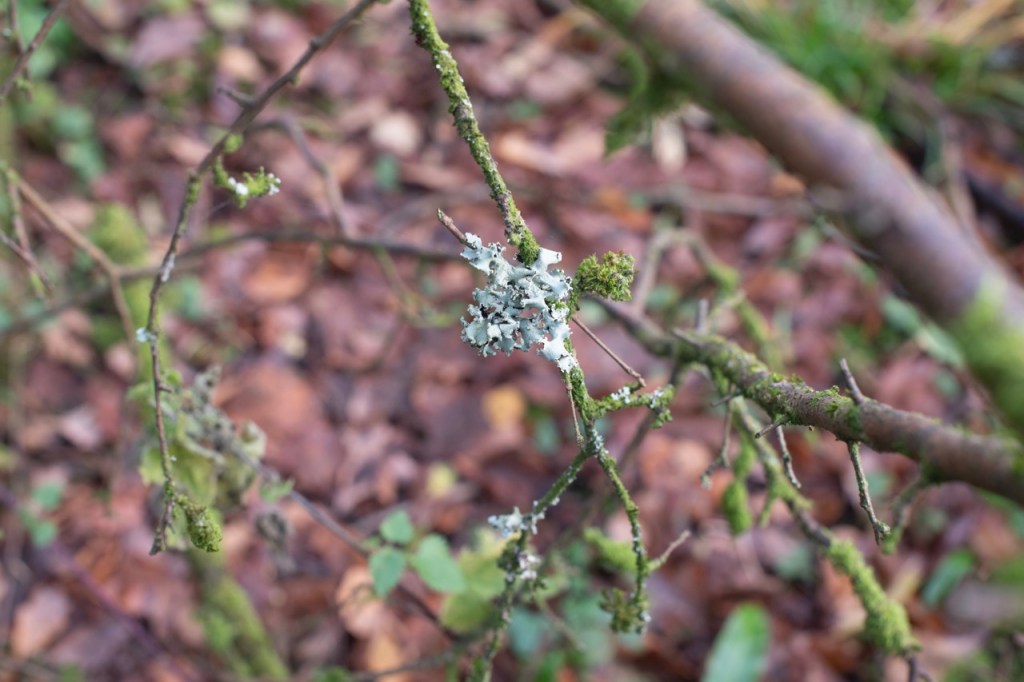
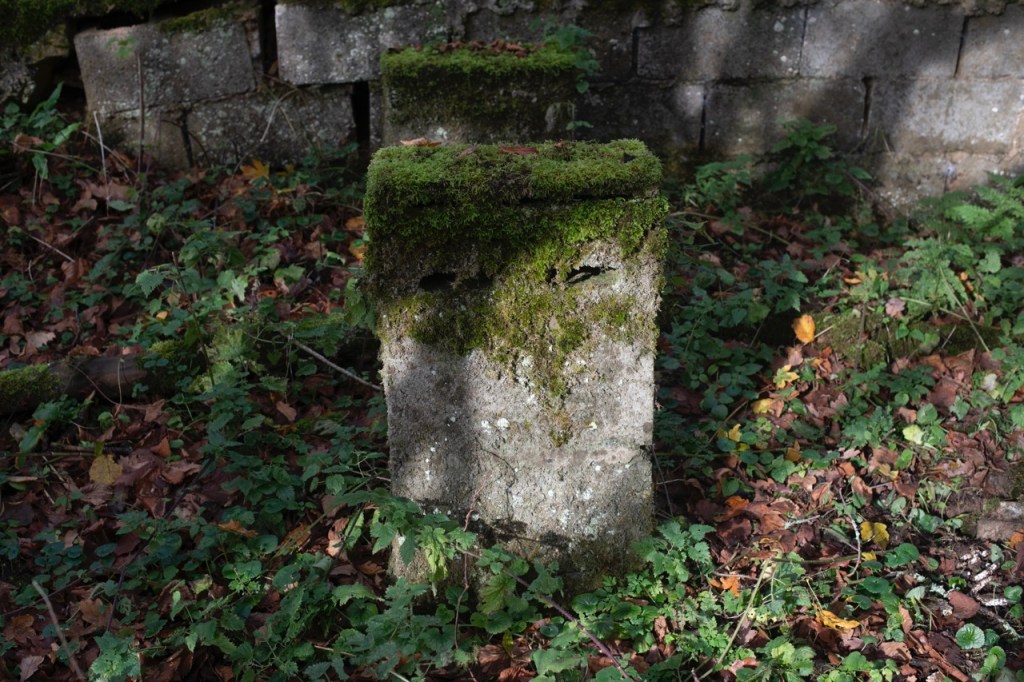
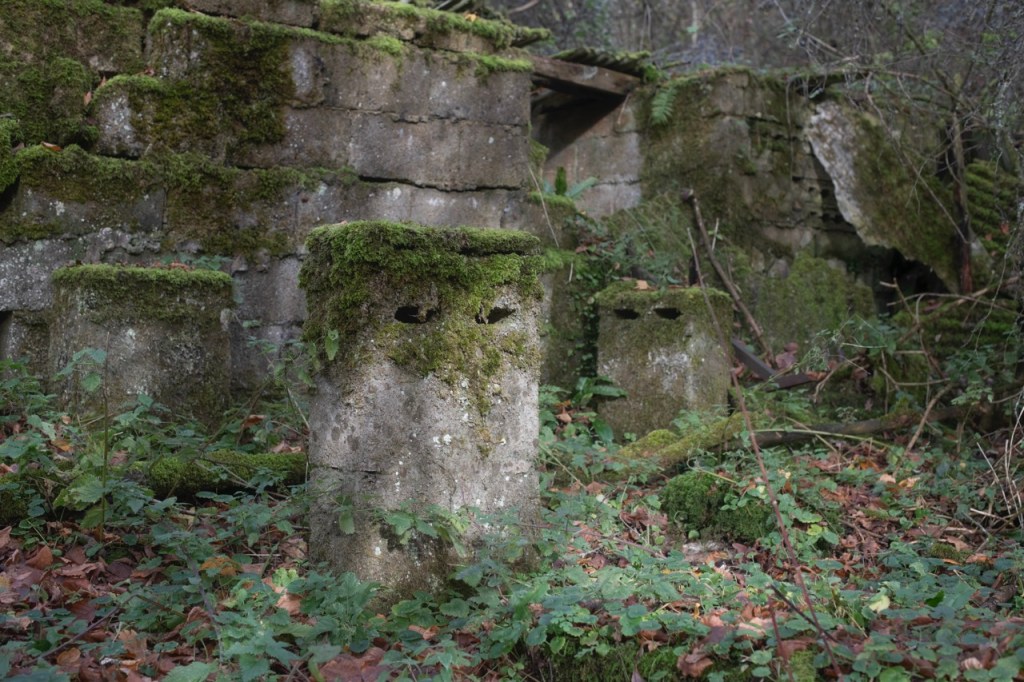
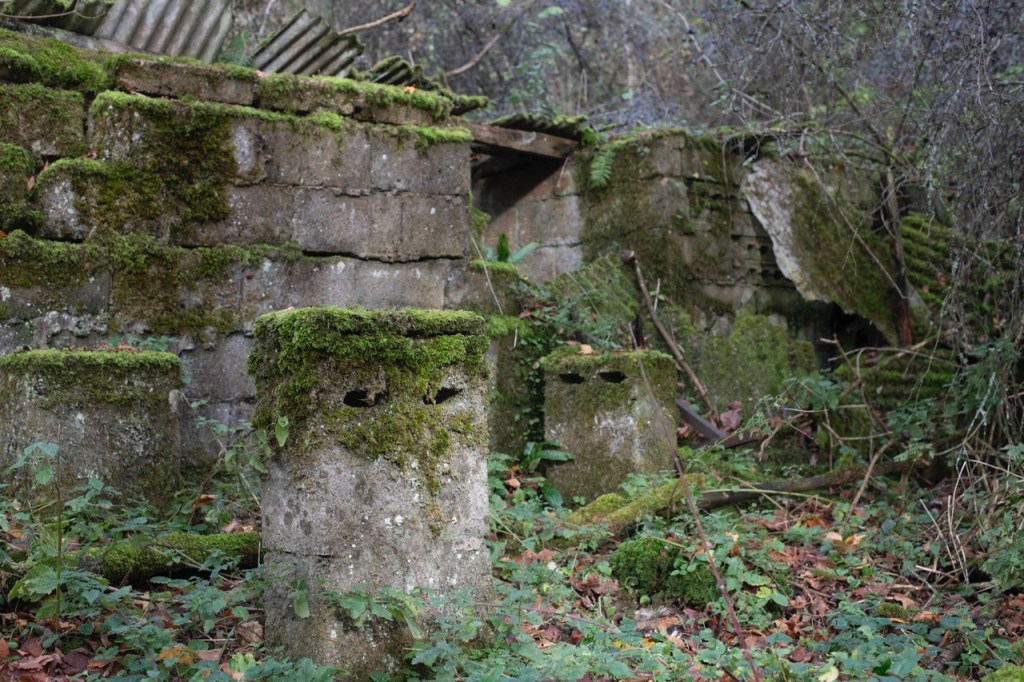
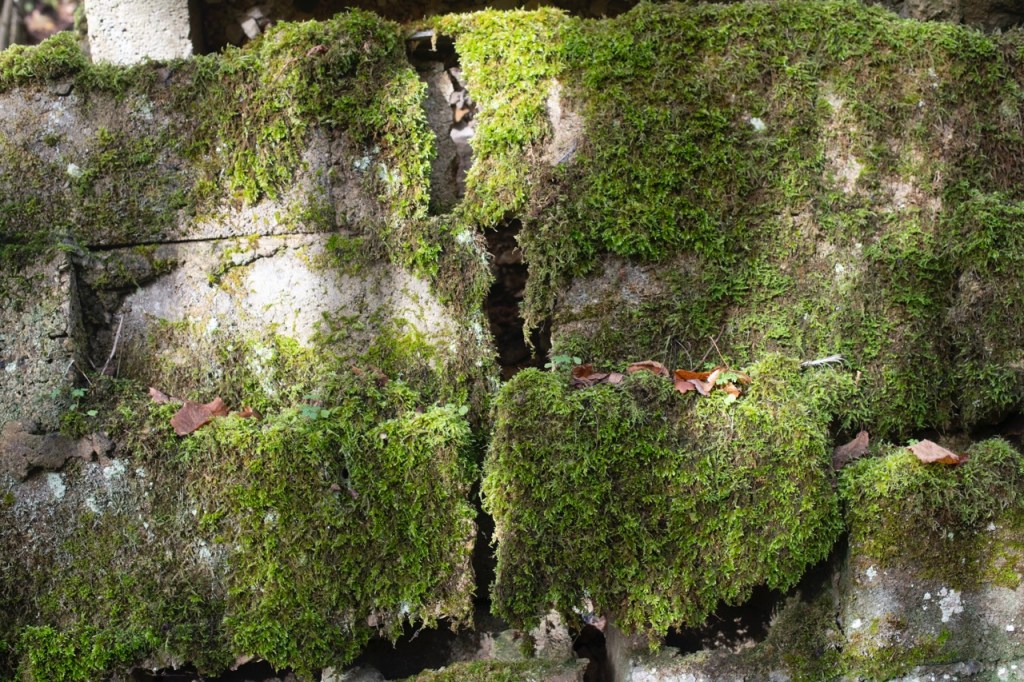
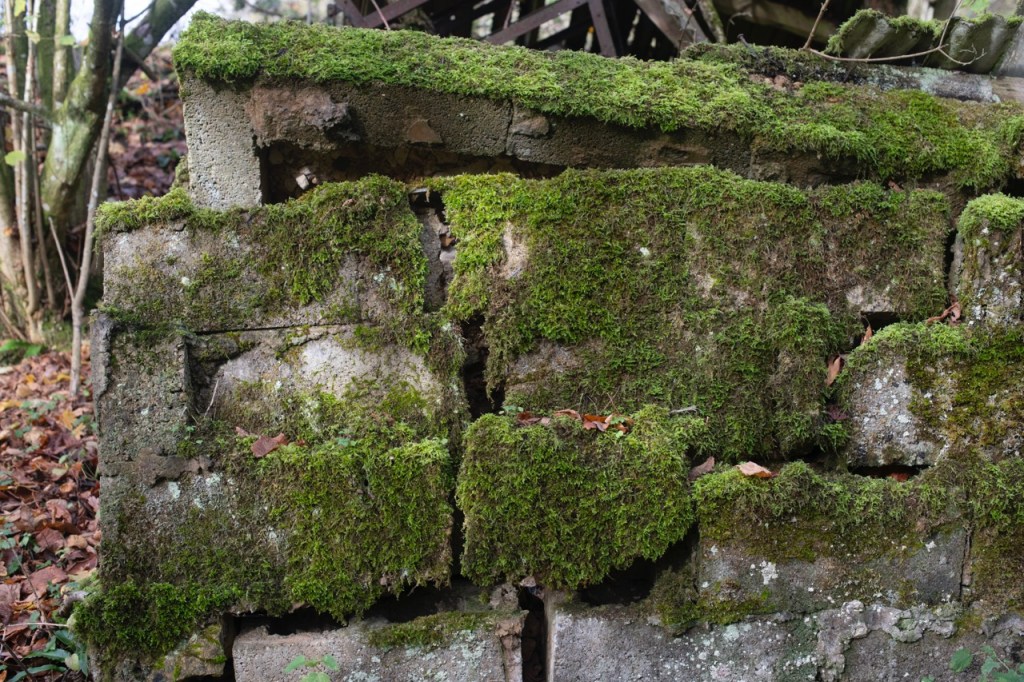
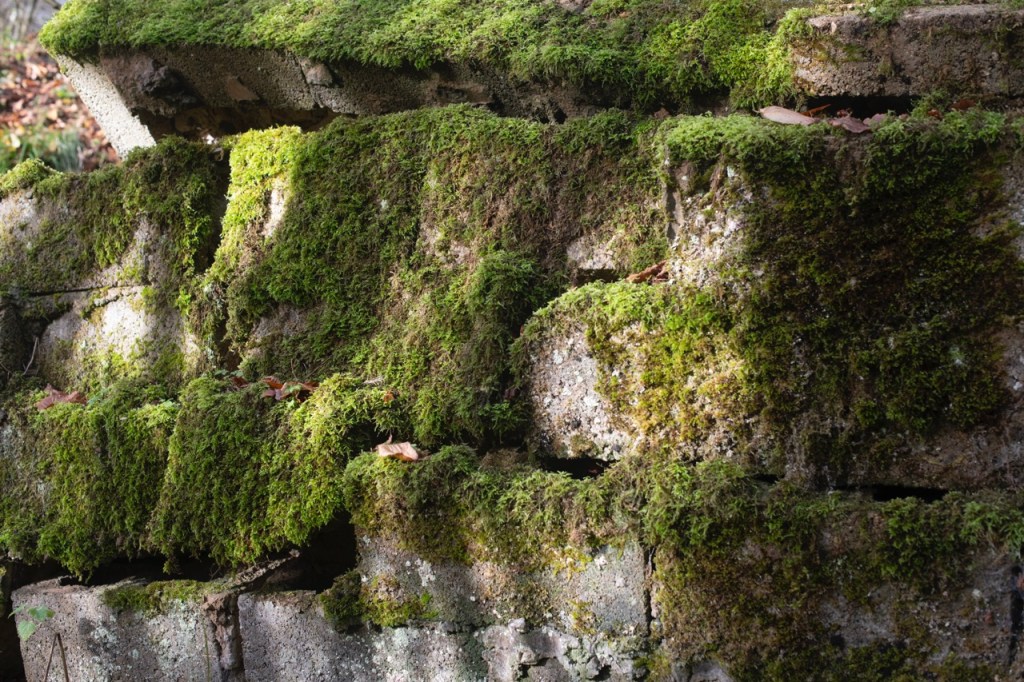
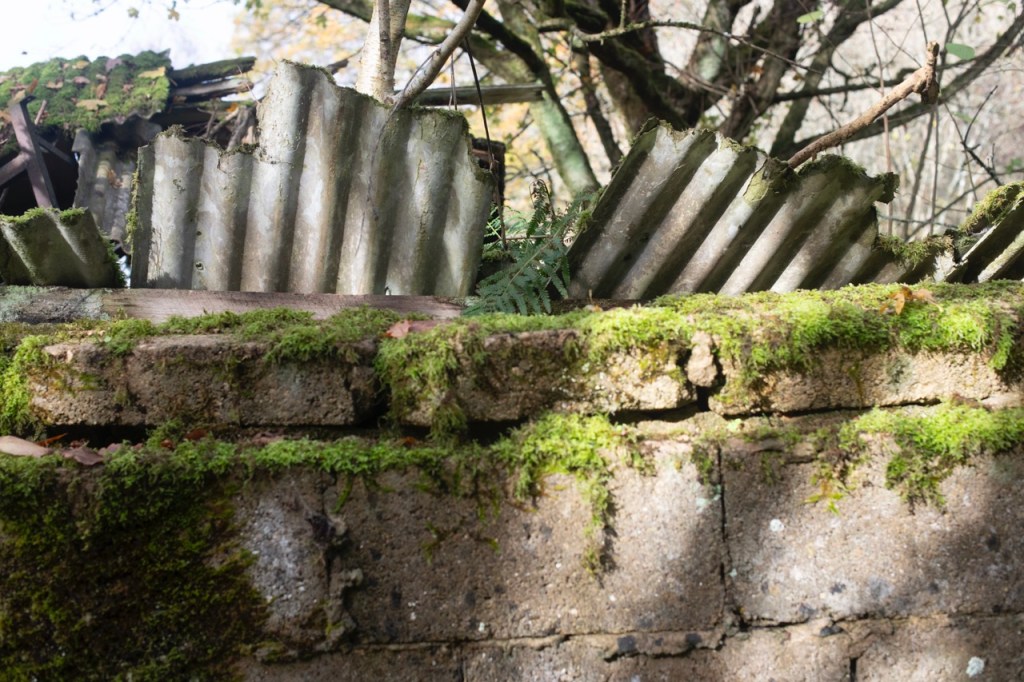
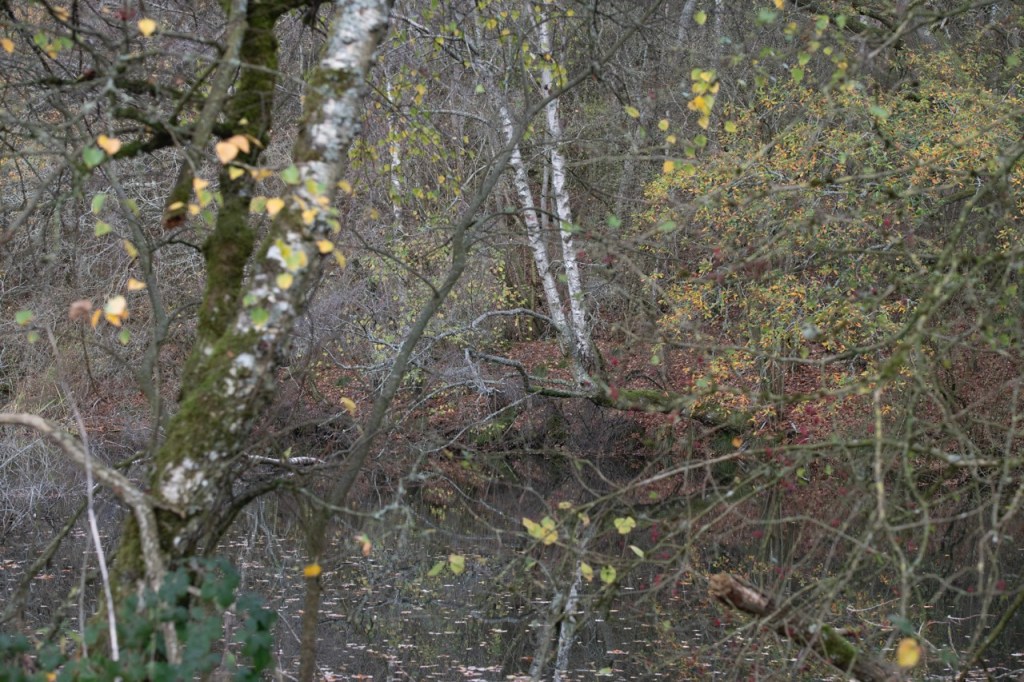
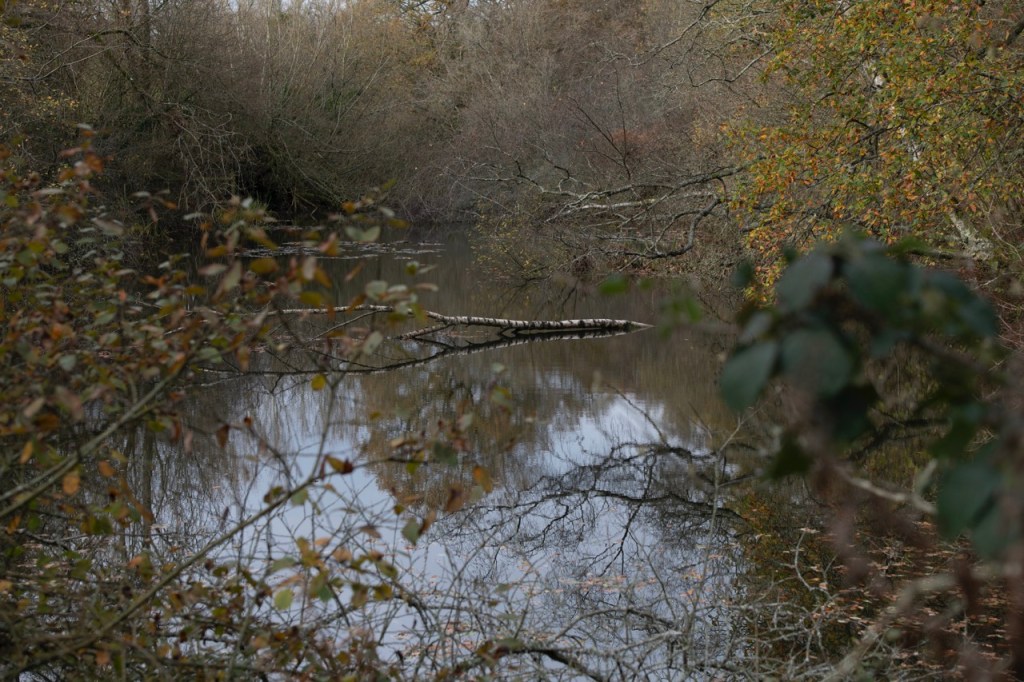
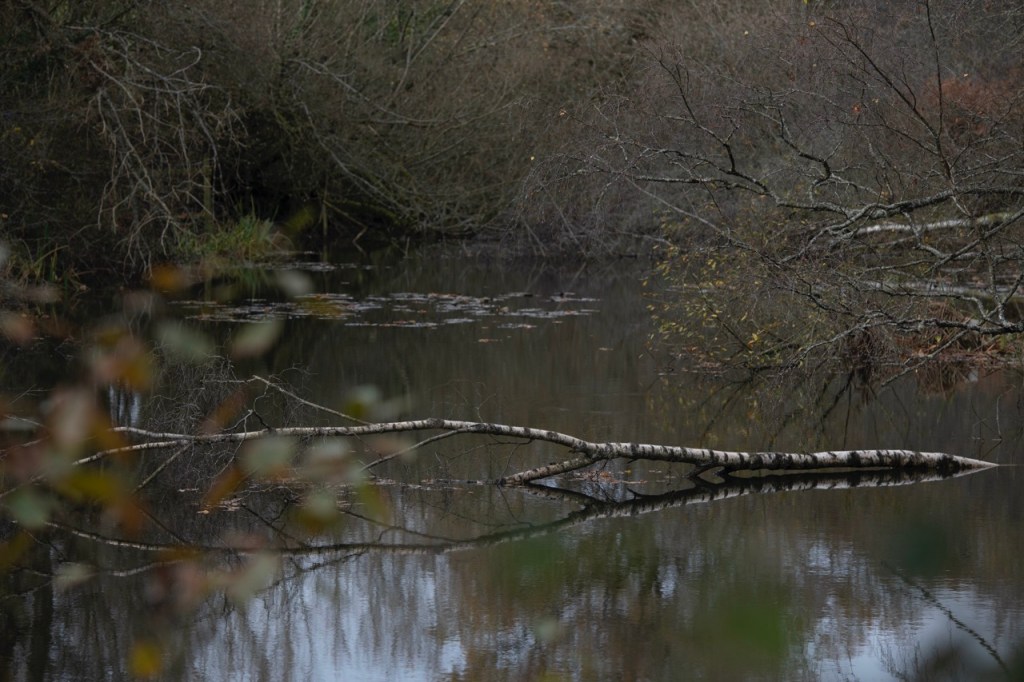
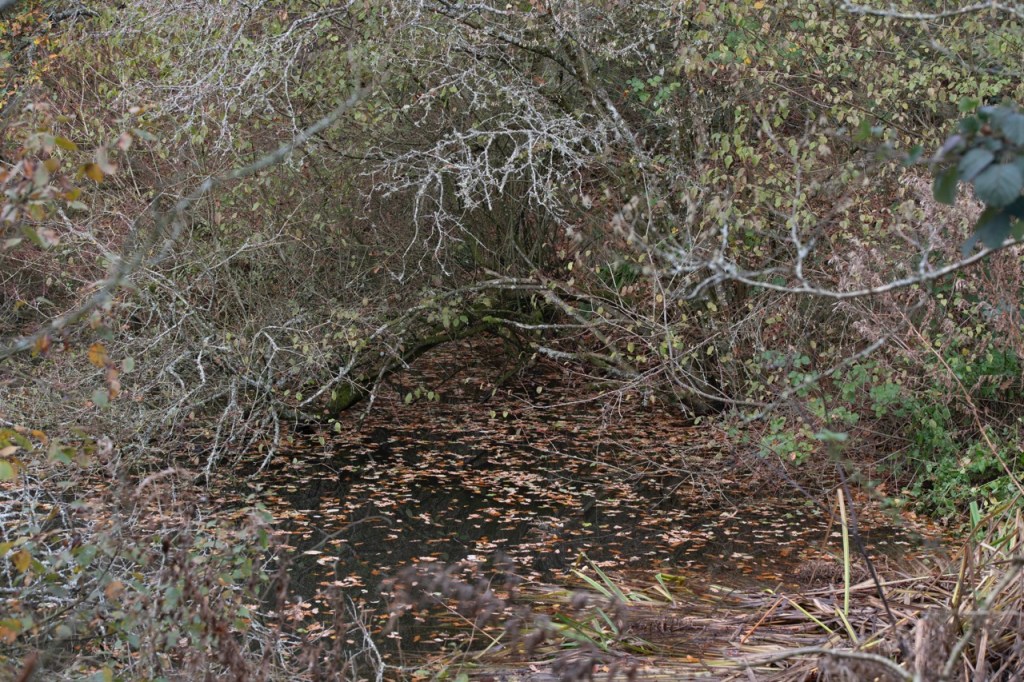
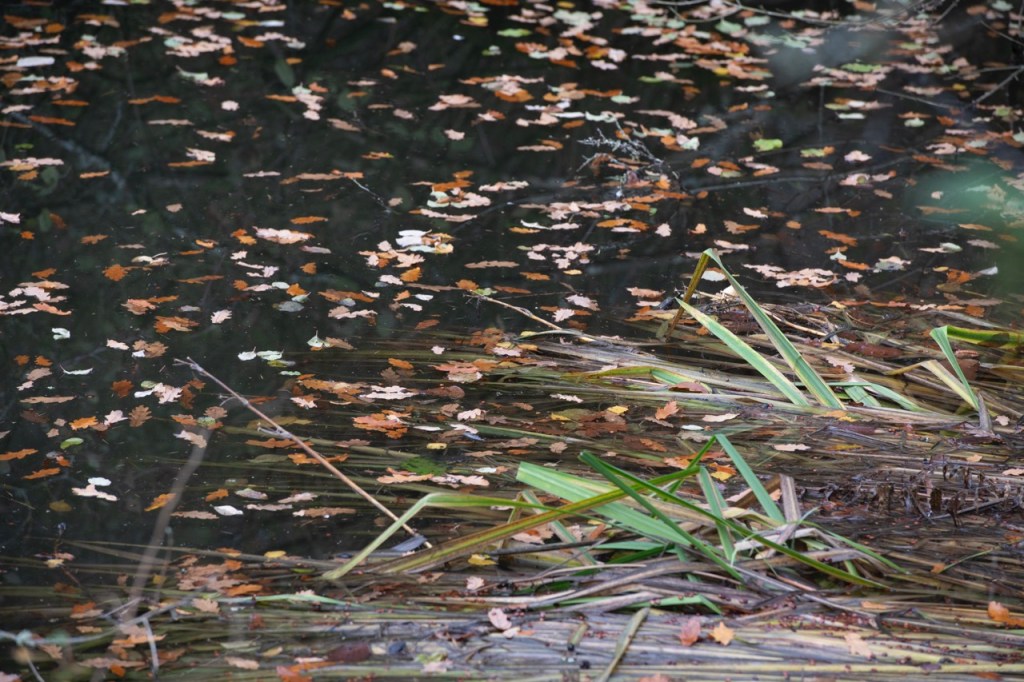
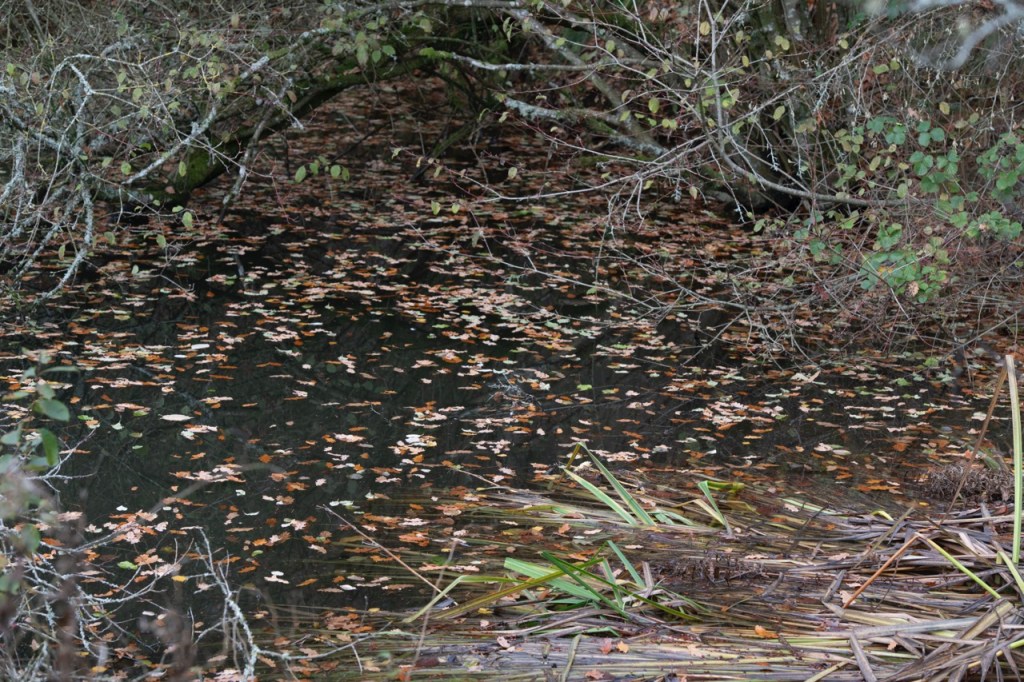
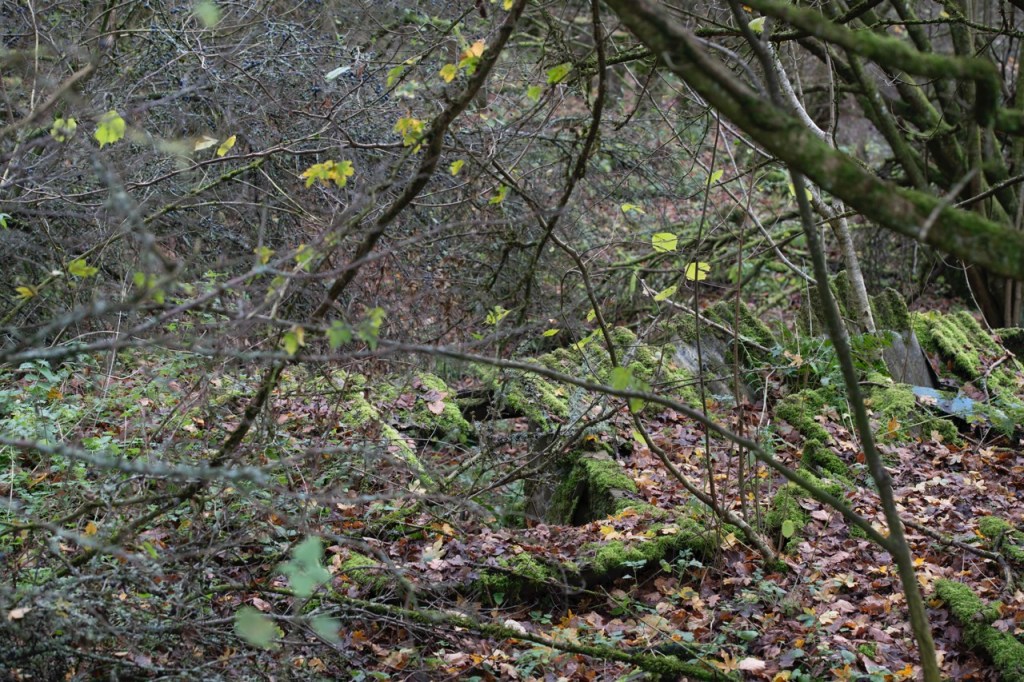
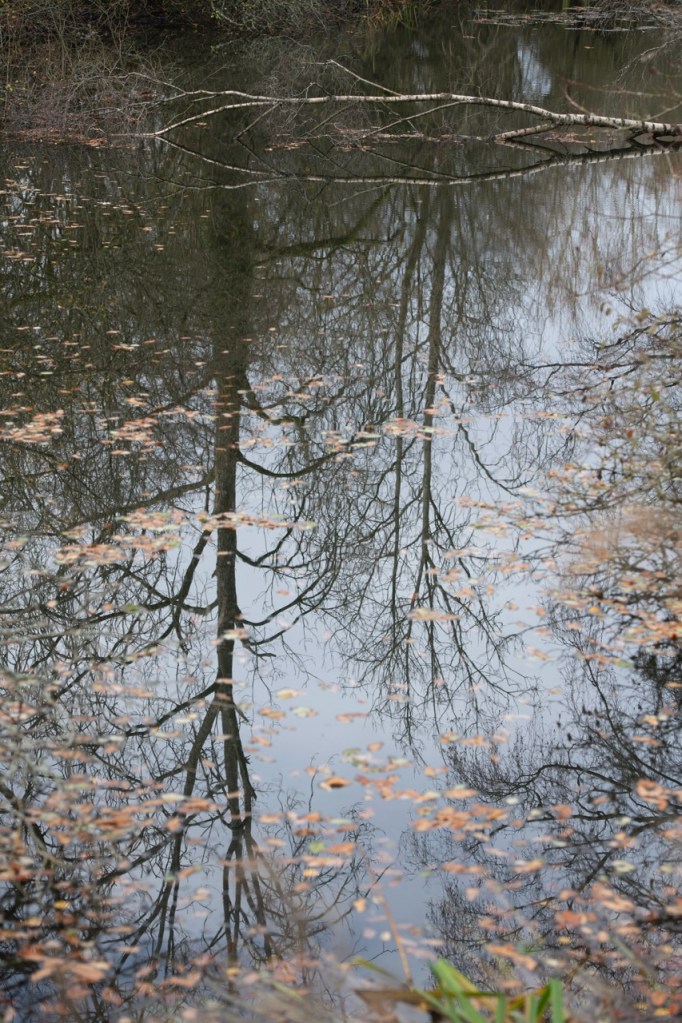
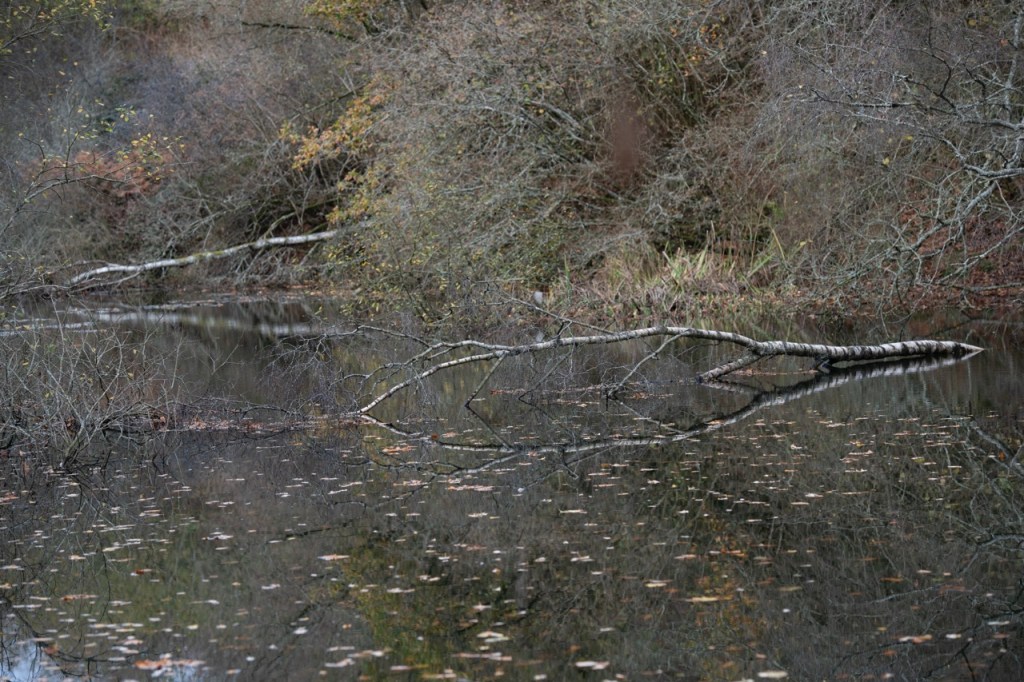
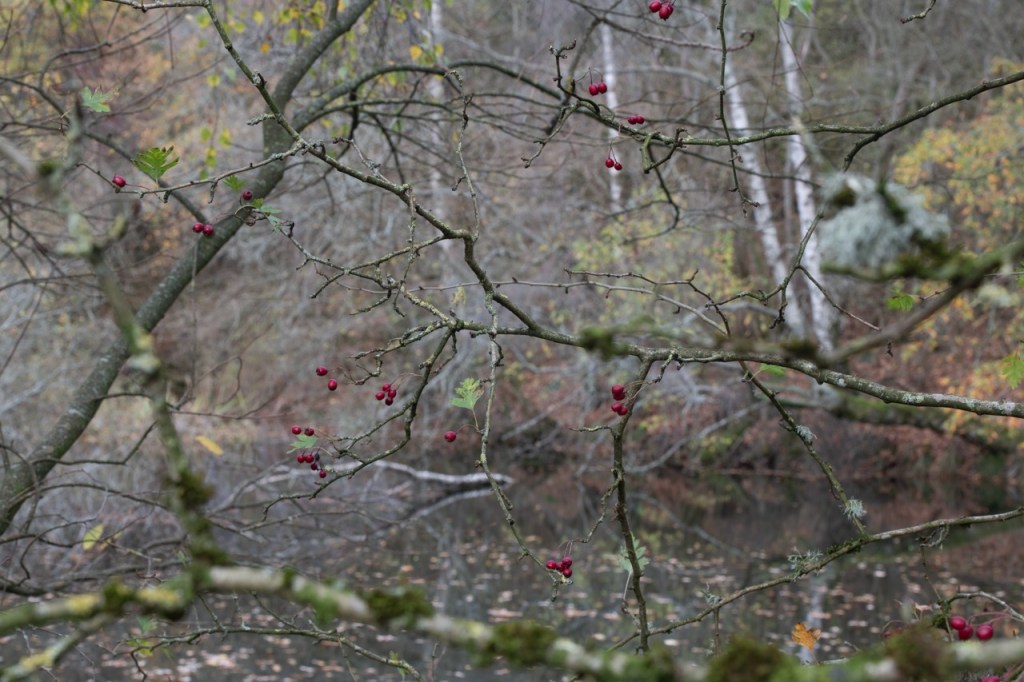
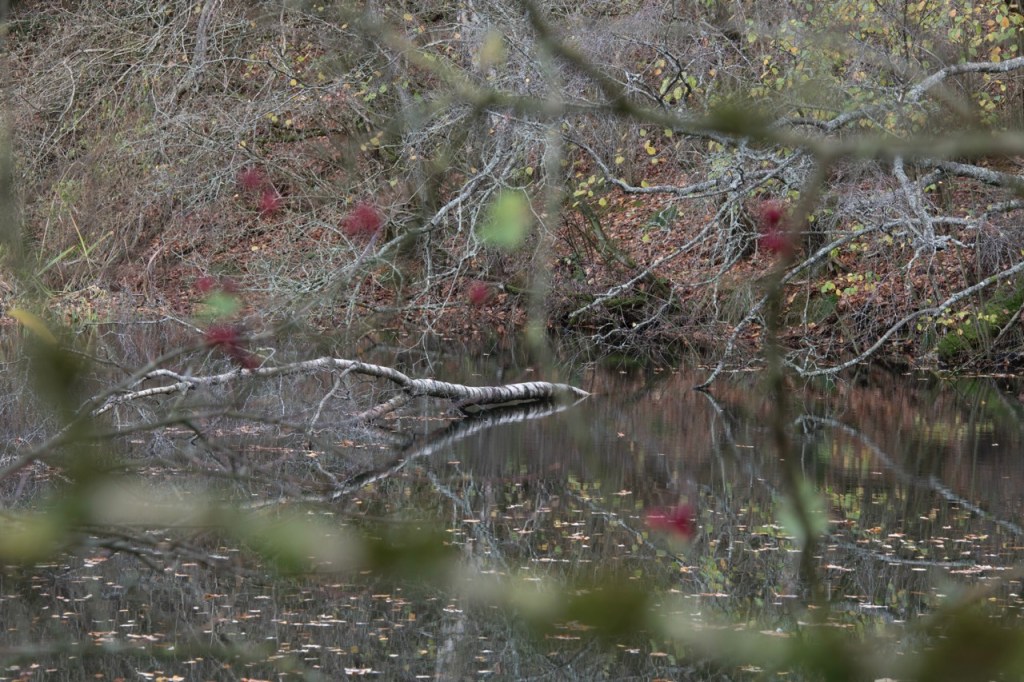
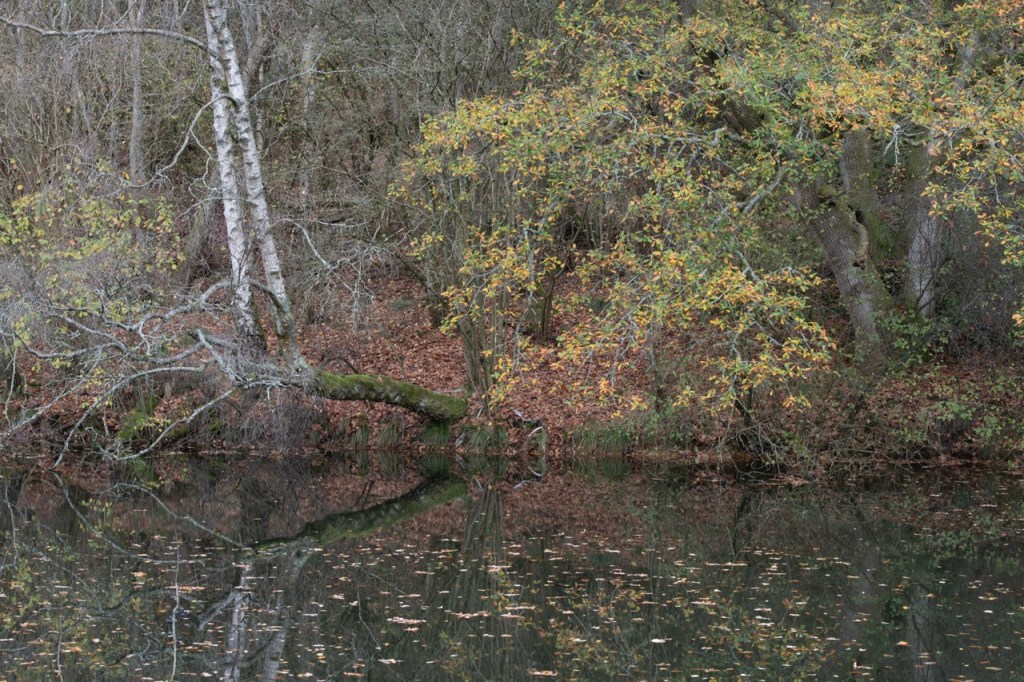
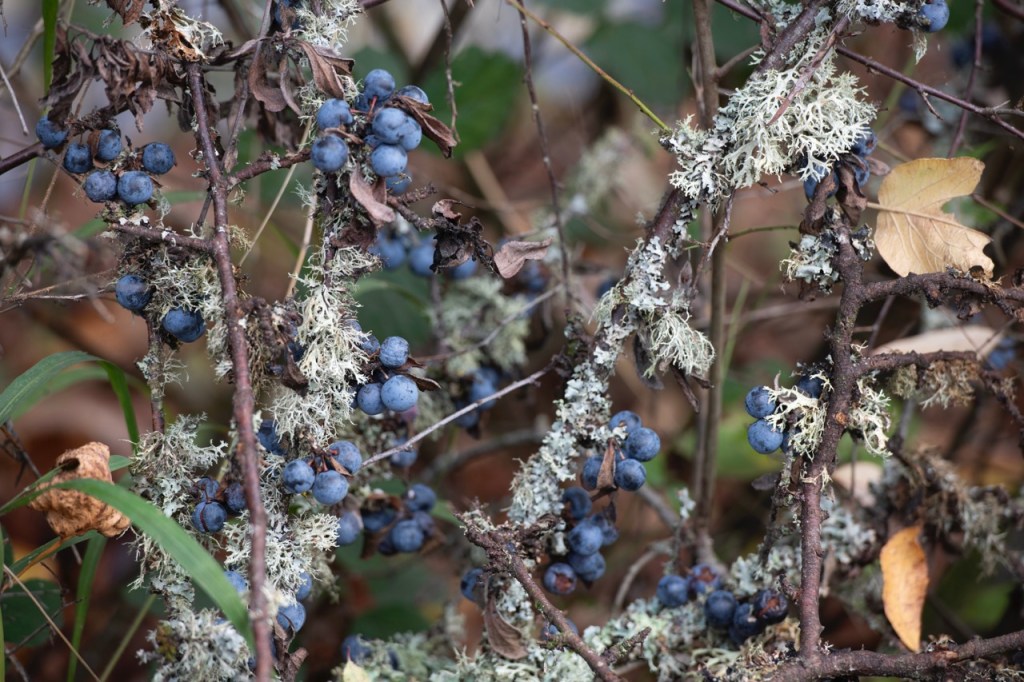
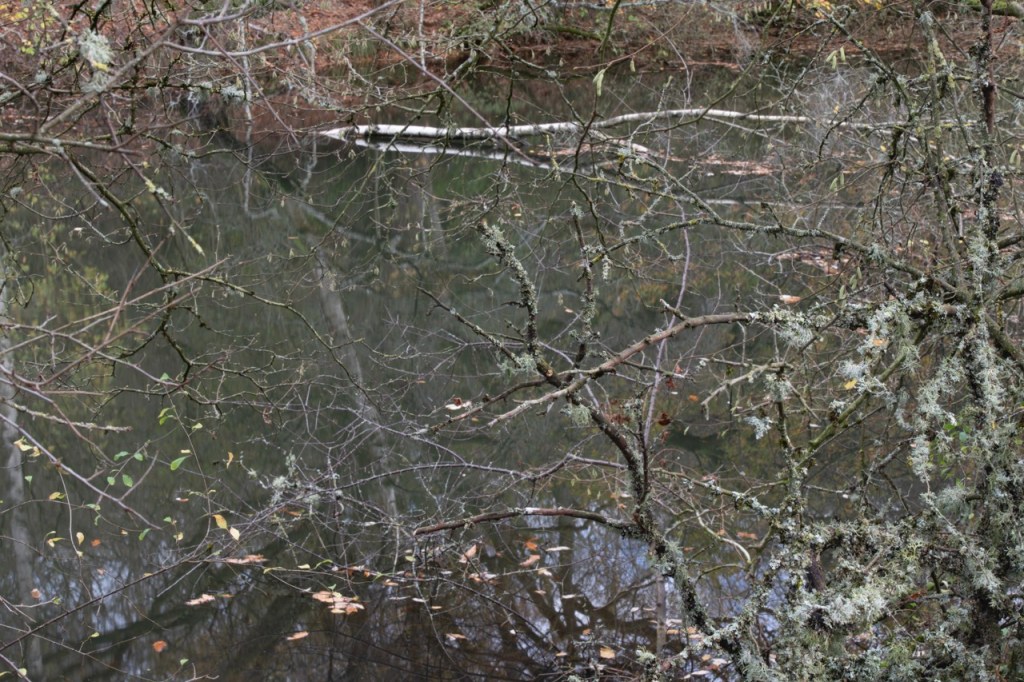
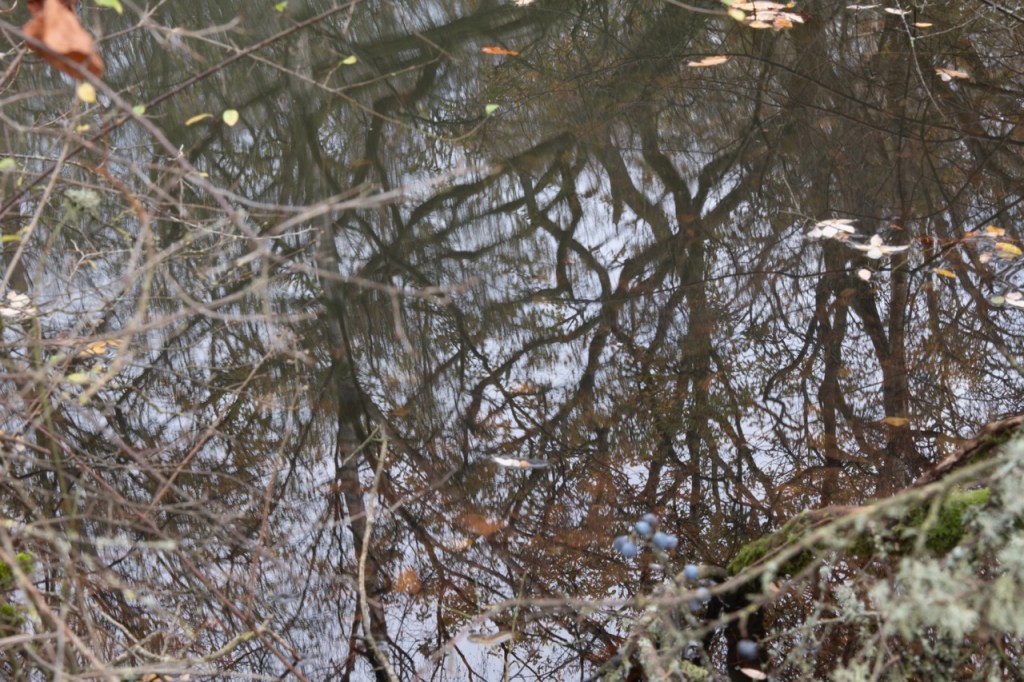
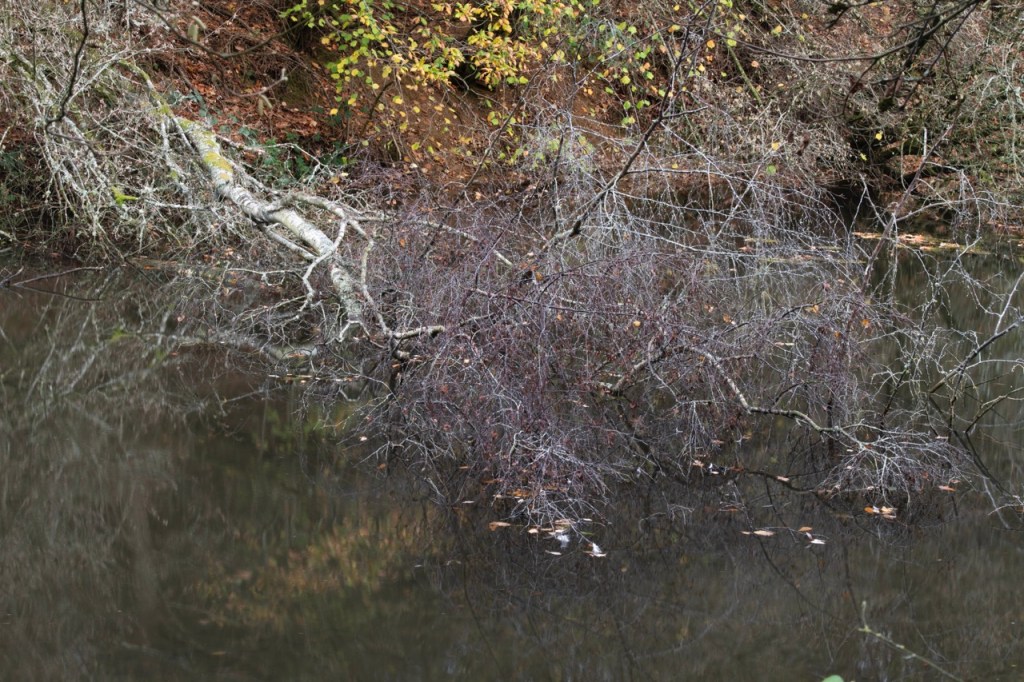
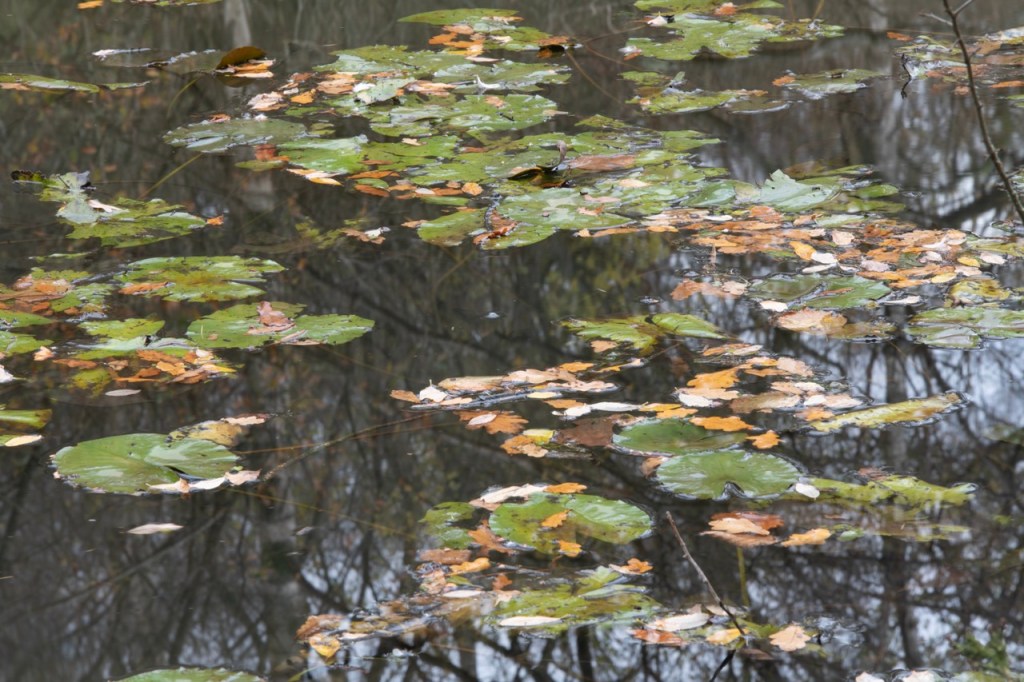
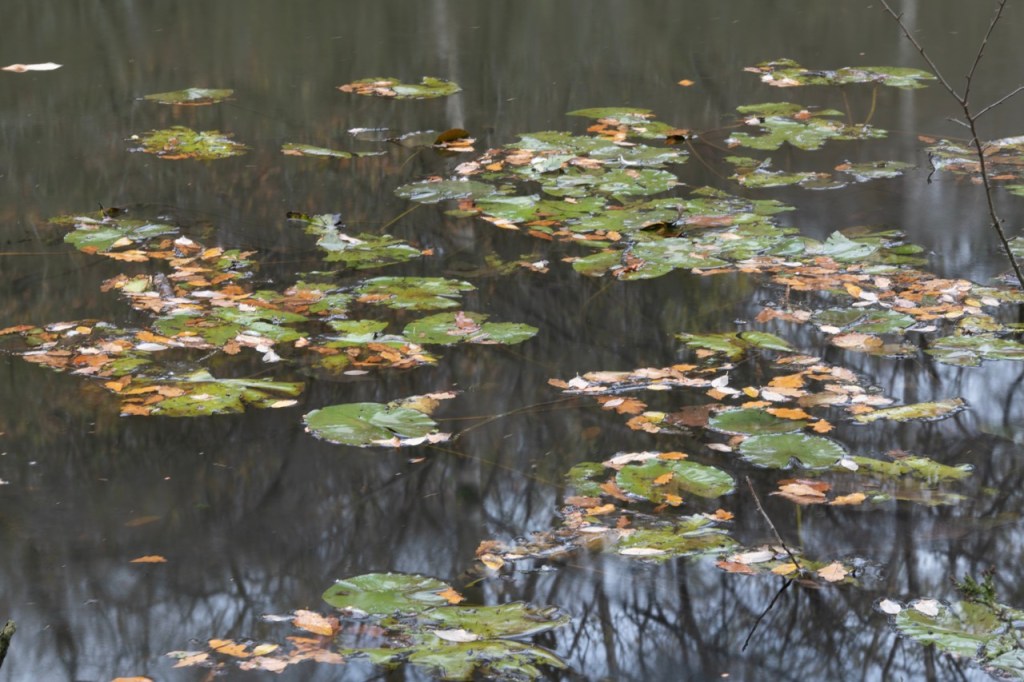
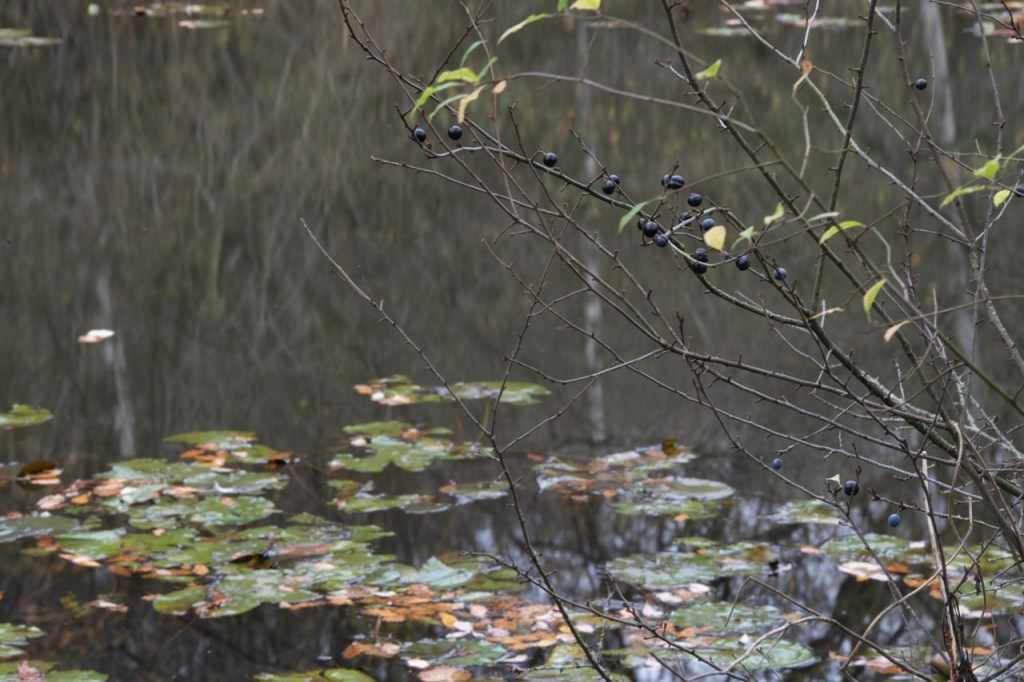
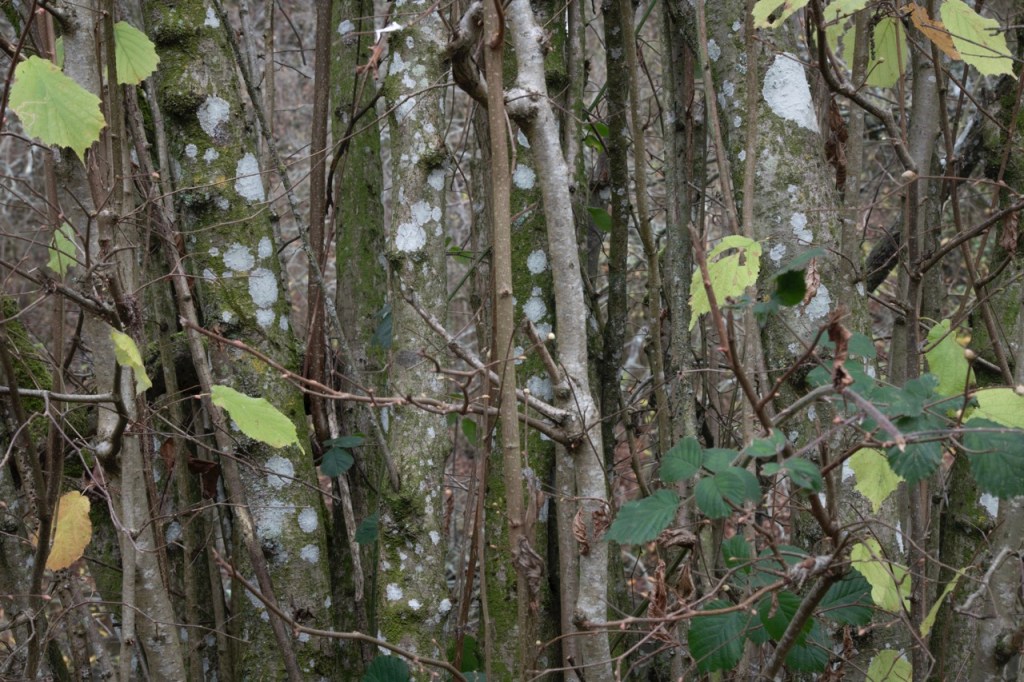
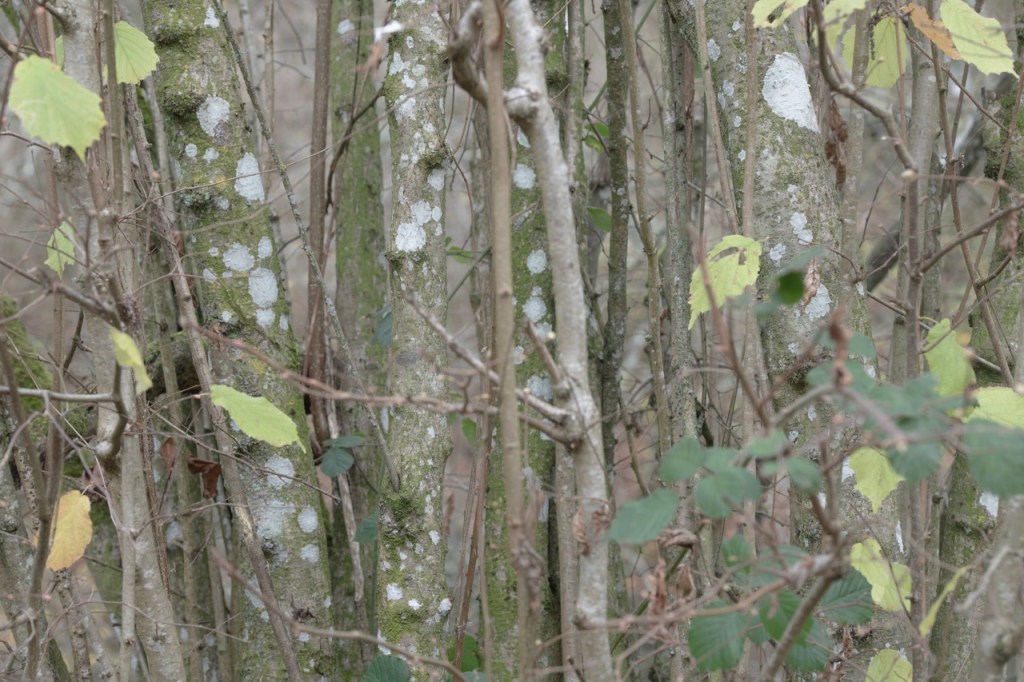
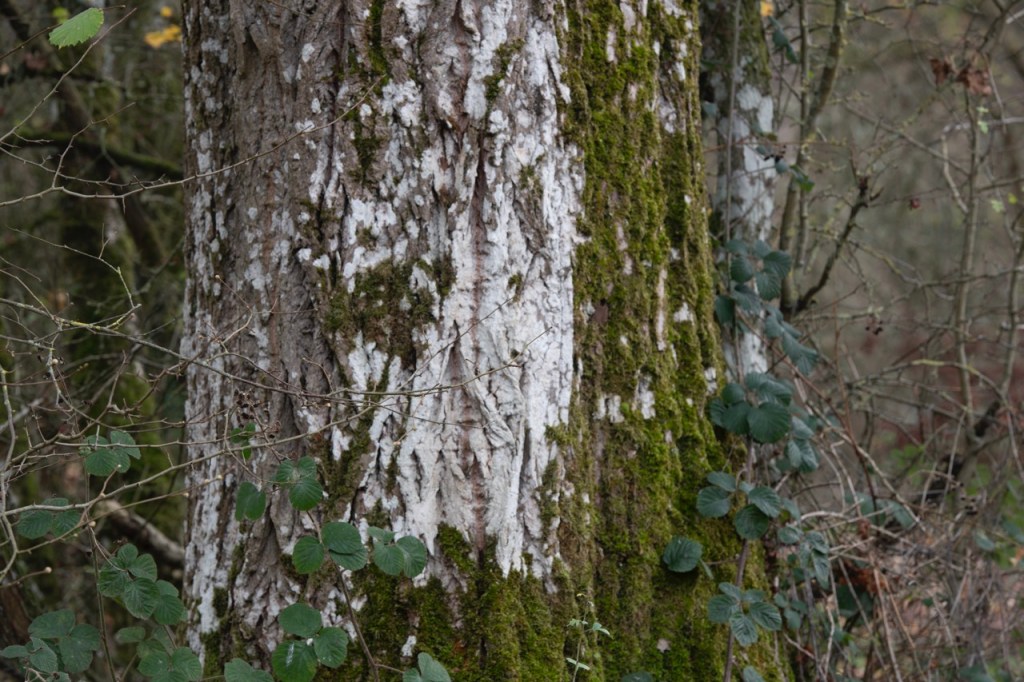
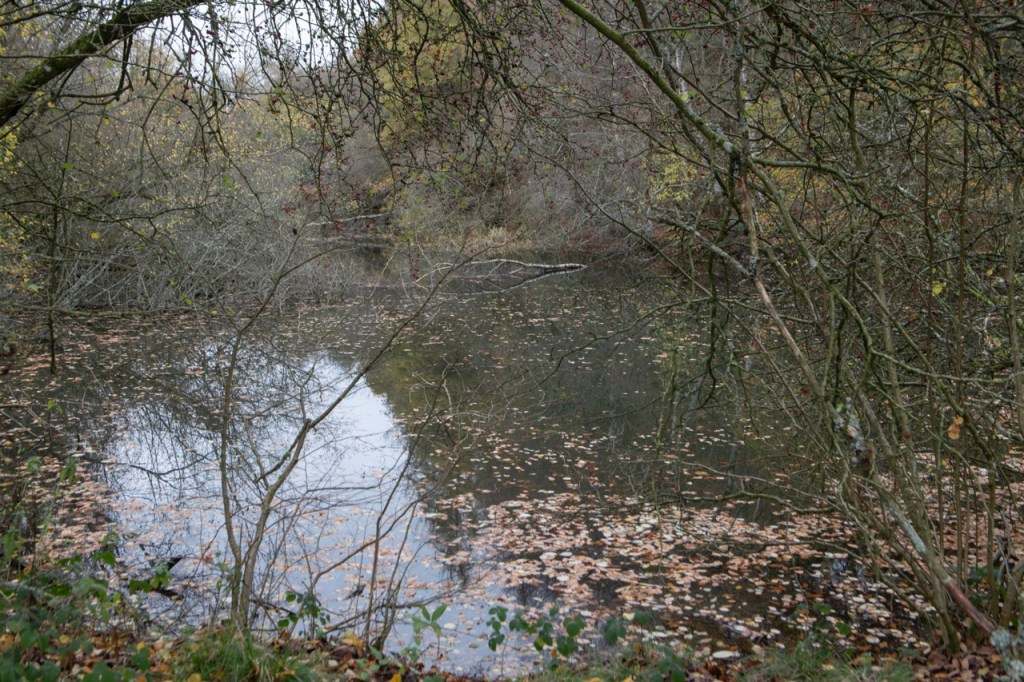
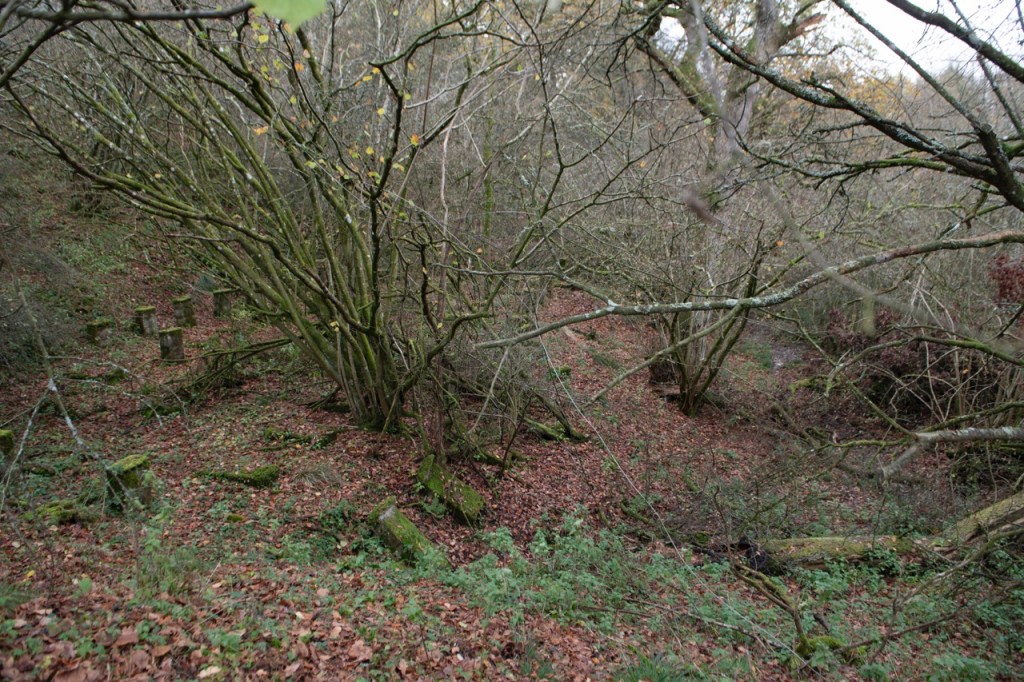
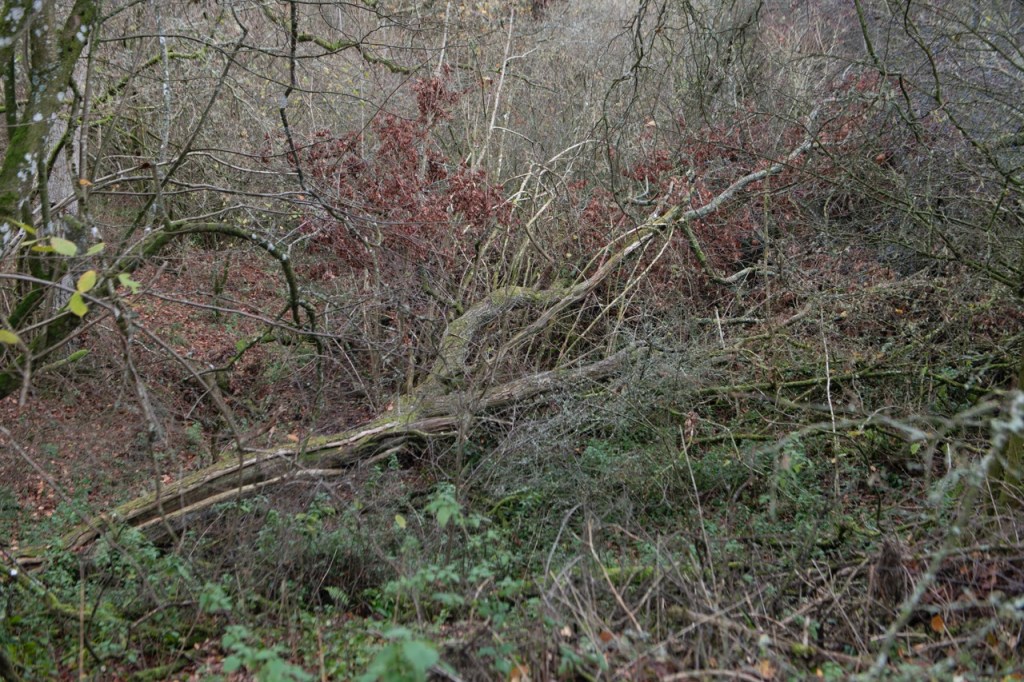
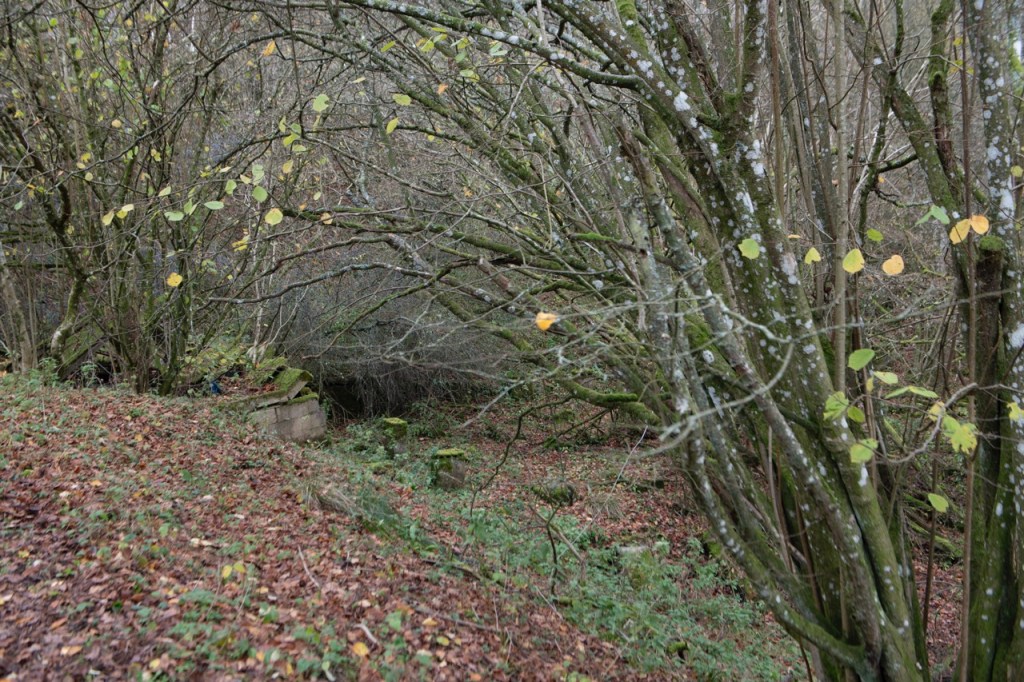
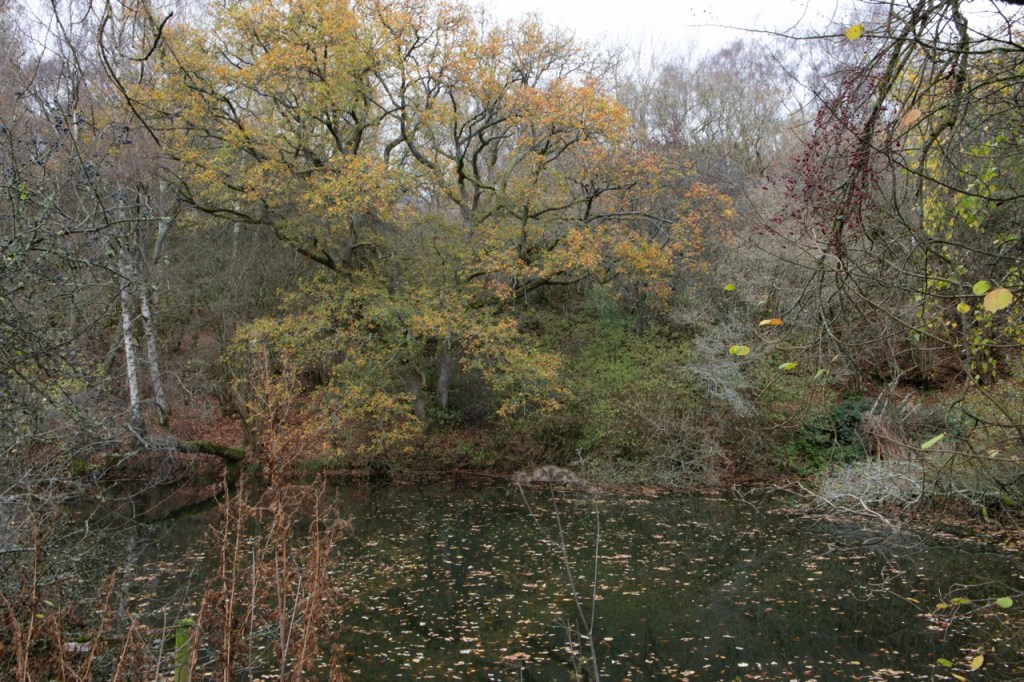
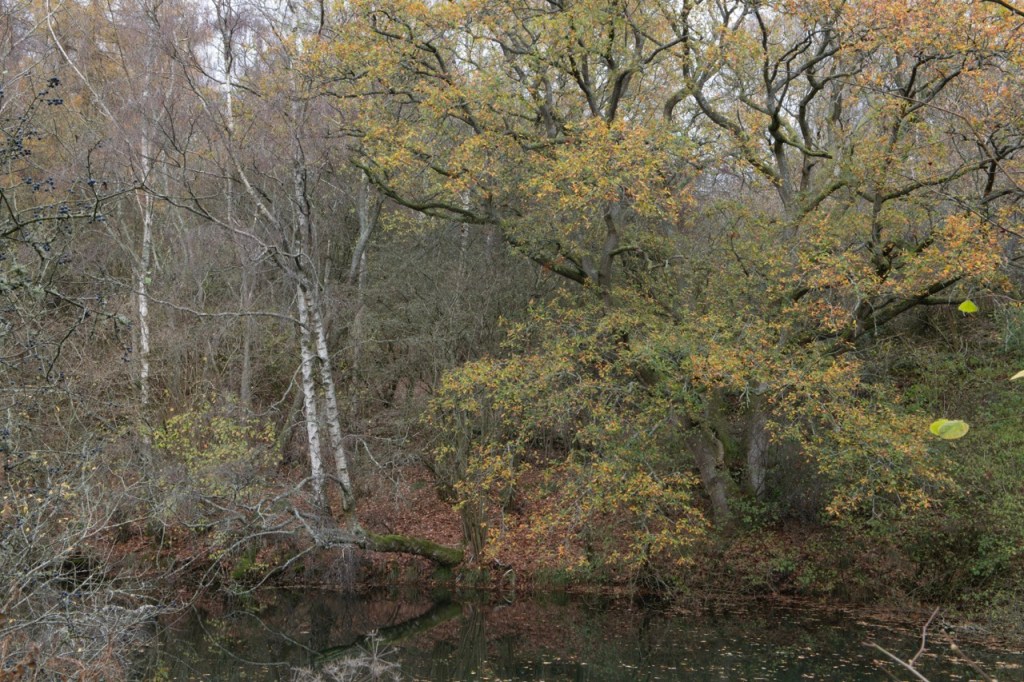
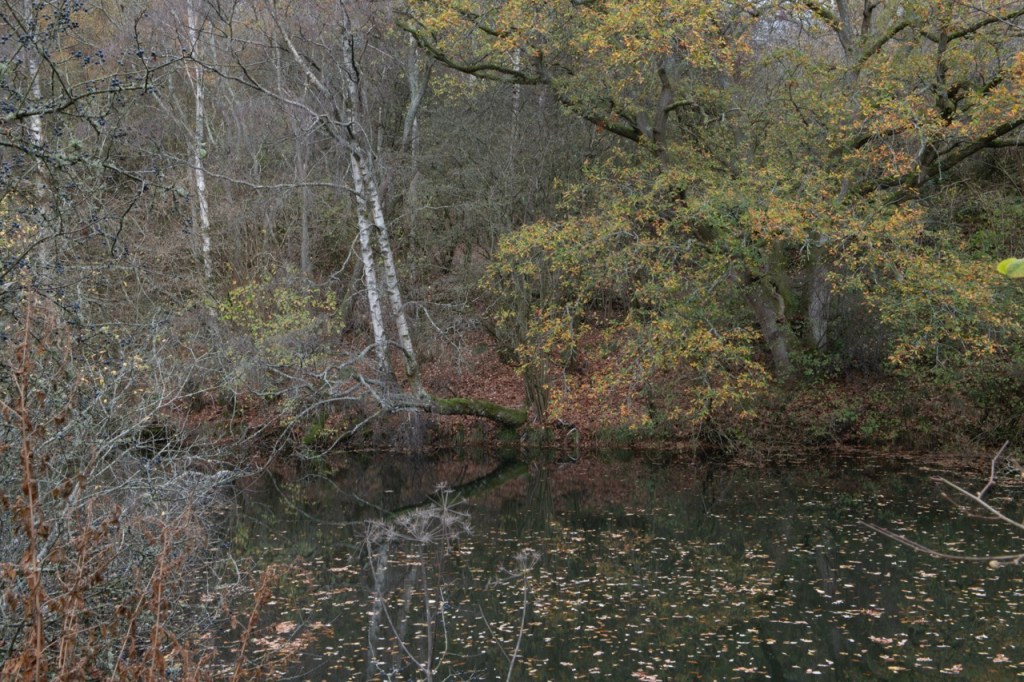
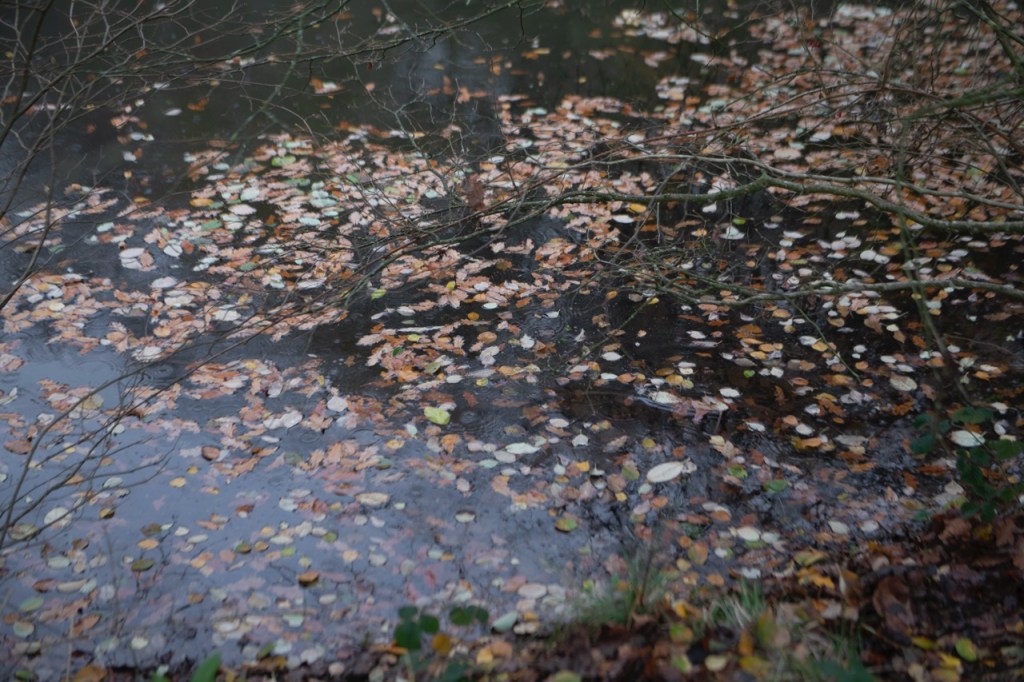
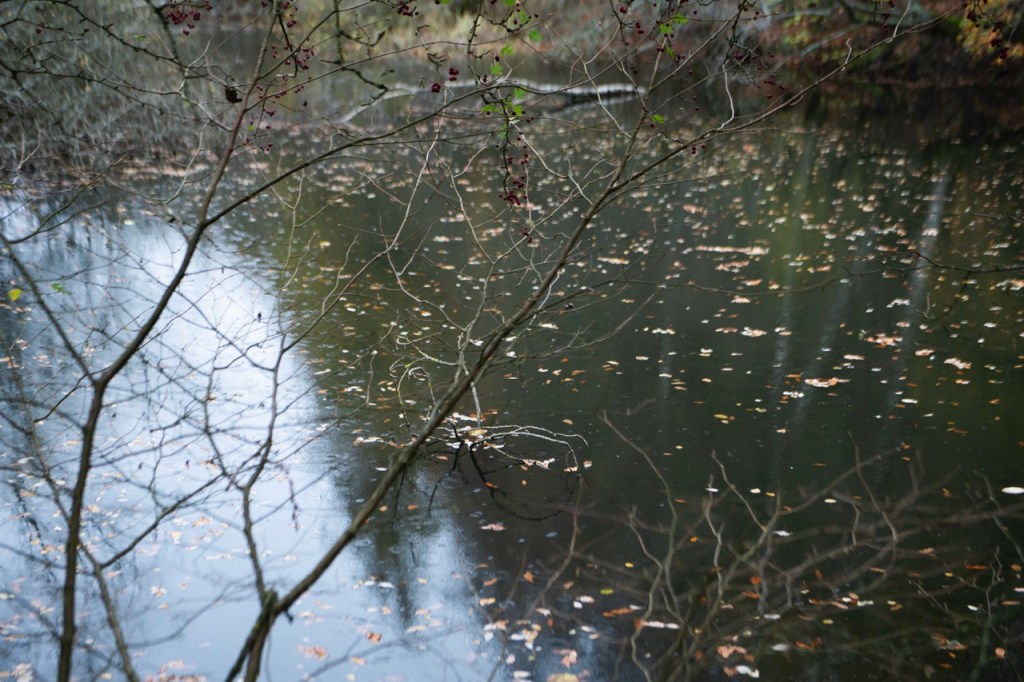
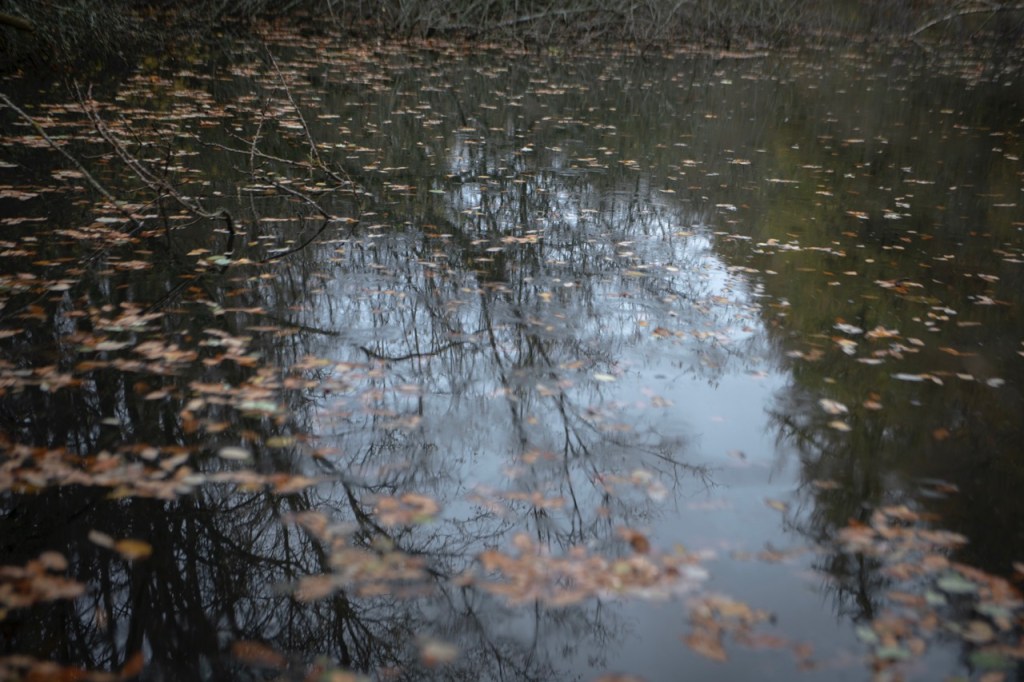
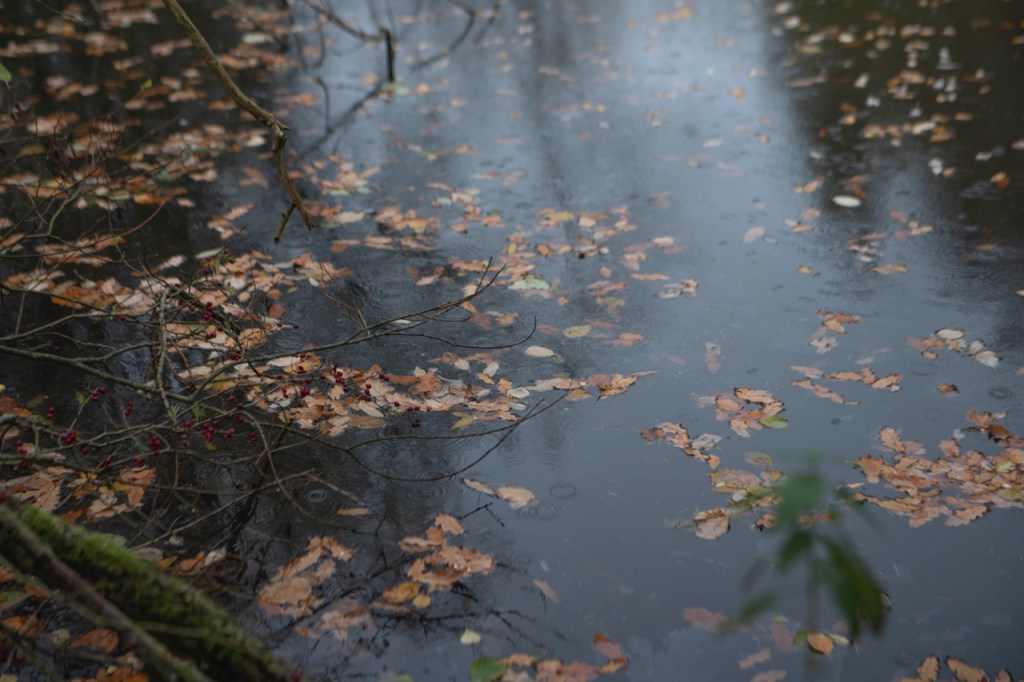
See blog post Guiting Wood shoot (analogue) for the black and white images with my Mamiya camera, taken at the same time.
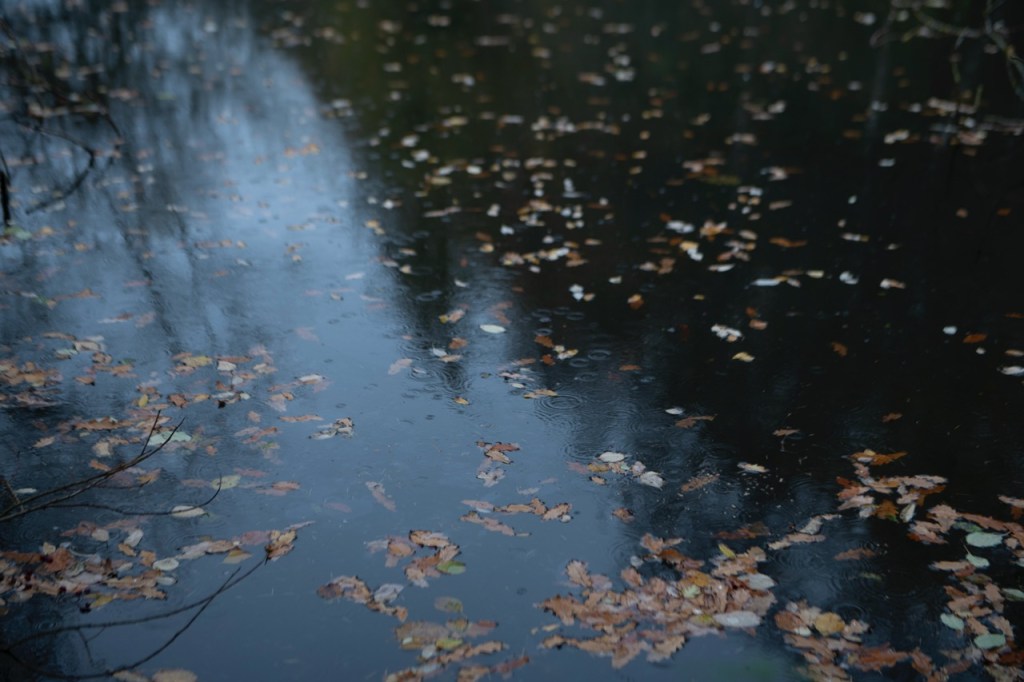
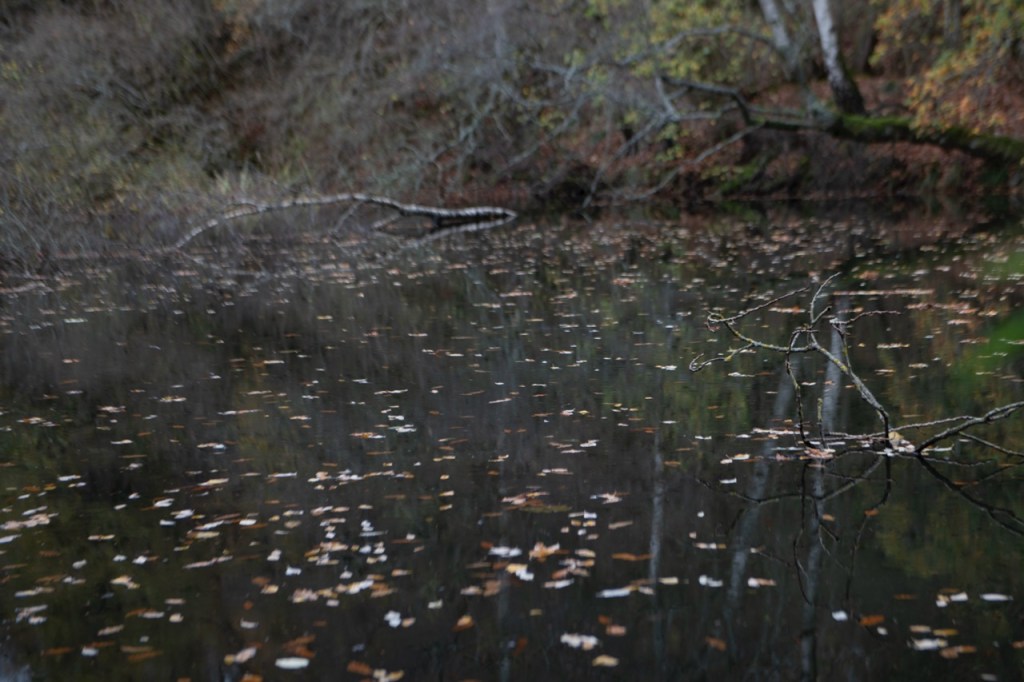
I was very pleased at the results of the shoot this time. I think there was a lot of interesting space to move around and immerse myself in, it was extremely quiet and I could easily lose myself in my thoughts. The memories triggered here were clear and vivid. I was here for several hours as I lost track of time, being fully immersed in the landscape. The colour of the lake was onyx like in areas underneath the tree canopy and it was a scene that I stared into for some time, trying to make out whether or not I could see the bottom of the pond. I had some polarising sunglasses with me to try and see beyond the surface, I could just make out a bit of debris as it settled on the bottom.
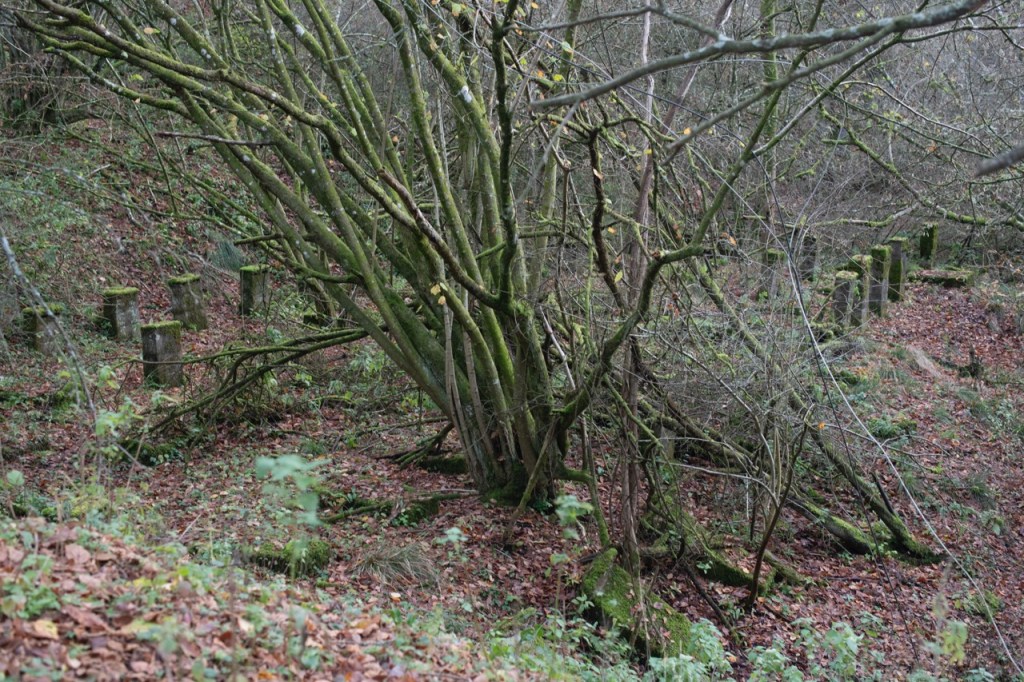
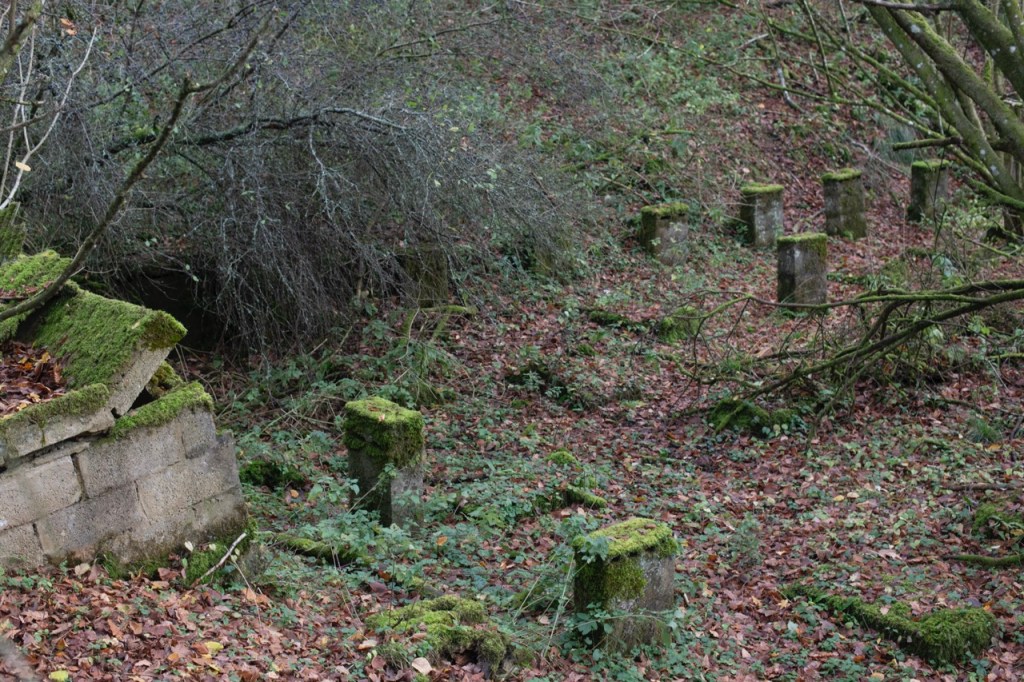
The various colours were vivid and strong and I found it to be a comfortable palette. I particularly loved the silver birch in amongst the greys and greens, they stood out and I wanted to study them for a while, before photographing. I discuss in the analogue blog post the gravestone like appearance of the old building foundations in the wooded basin. There are signs of agriculture everywhere in this small section, I’ve included several of images from this part of my shoot as I wonder if they could form part of another project for another time.
The close shots of moss, berries and lichen indicate the time of year and are intended to be a closer study of the environment and can be a way for knowledgable viewers to read the place, understanding what thrives and where, what sort of woodland this is, how old it might be etc. The woodland trust has a useful guide for ‘indicator species’ of lichen, for this purpose: https://www.woodlandtrust.org.uk/blog/2019/04/what-is-lichen-seven-types-of-lichen-found-on-trees/
There are many photographs in this set that I like. This is my favourite:
Link to images: 7800 IMAGES
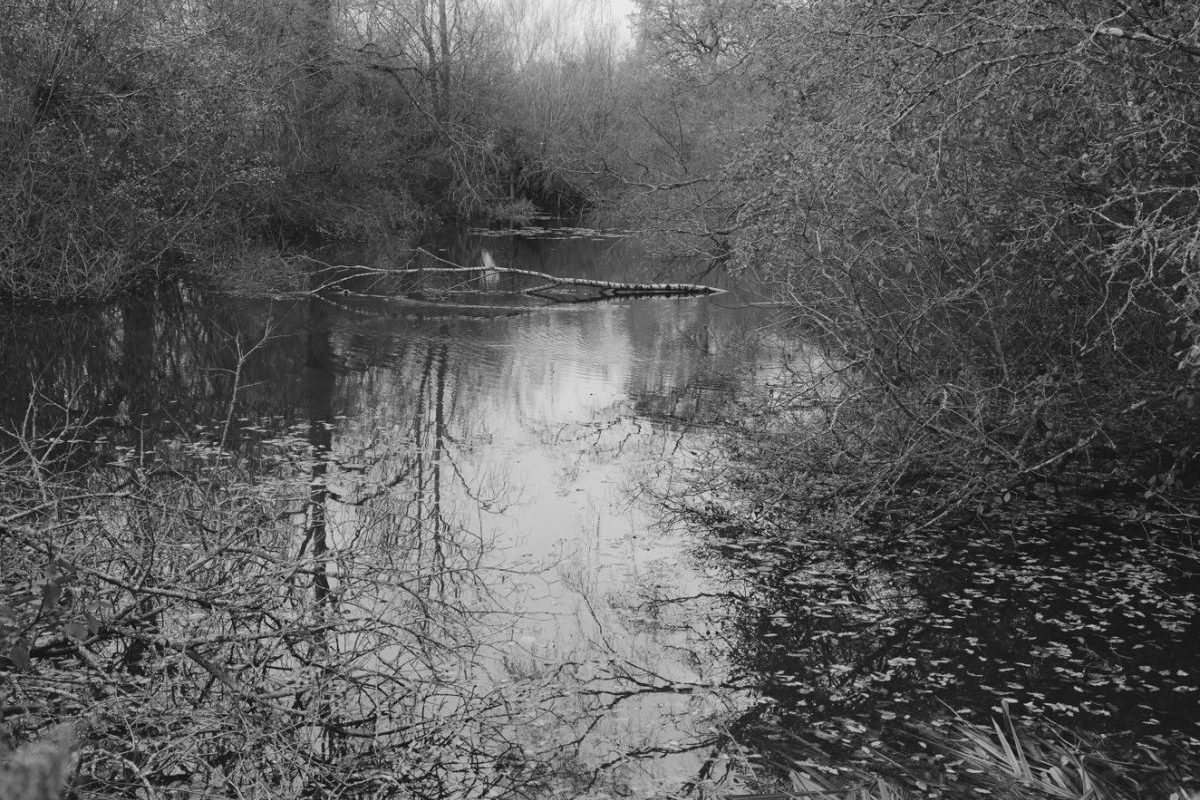
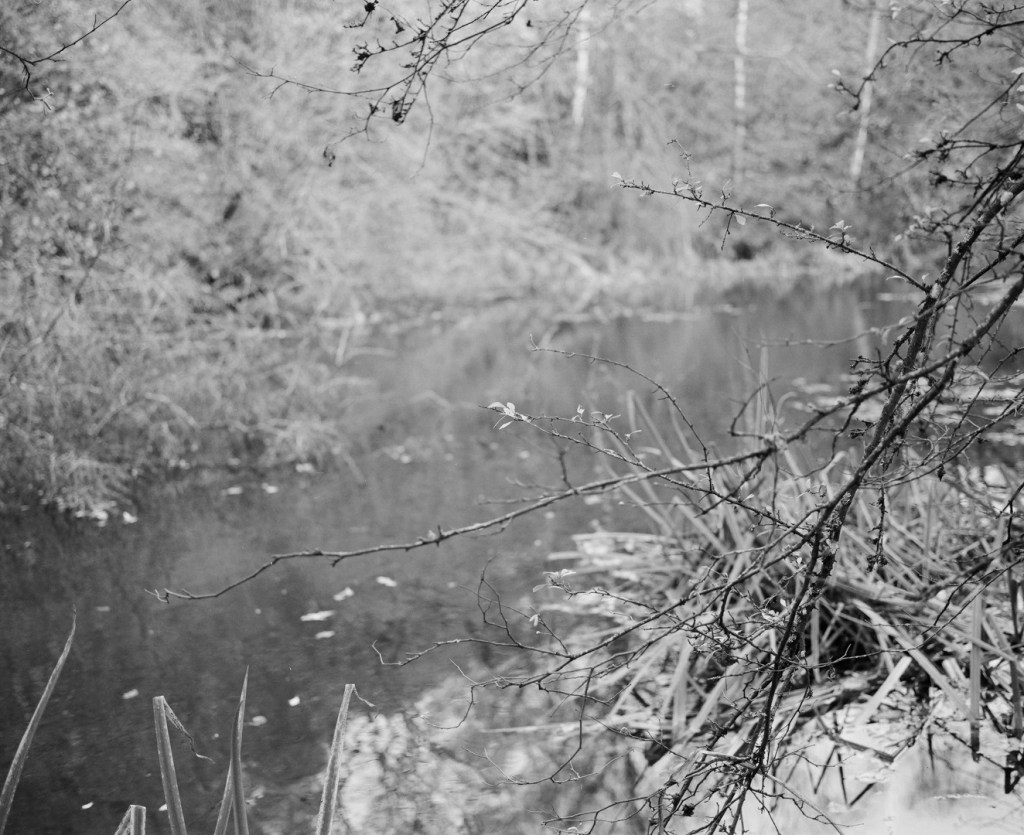
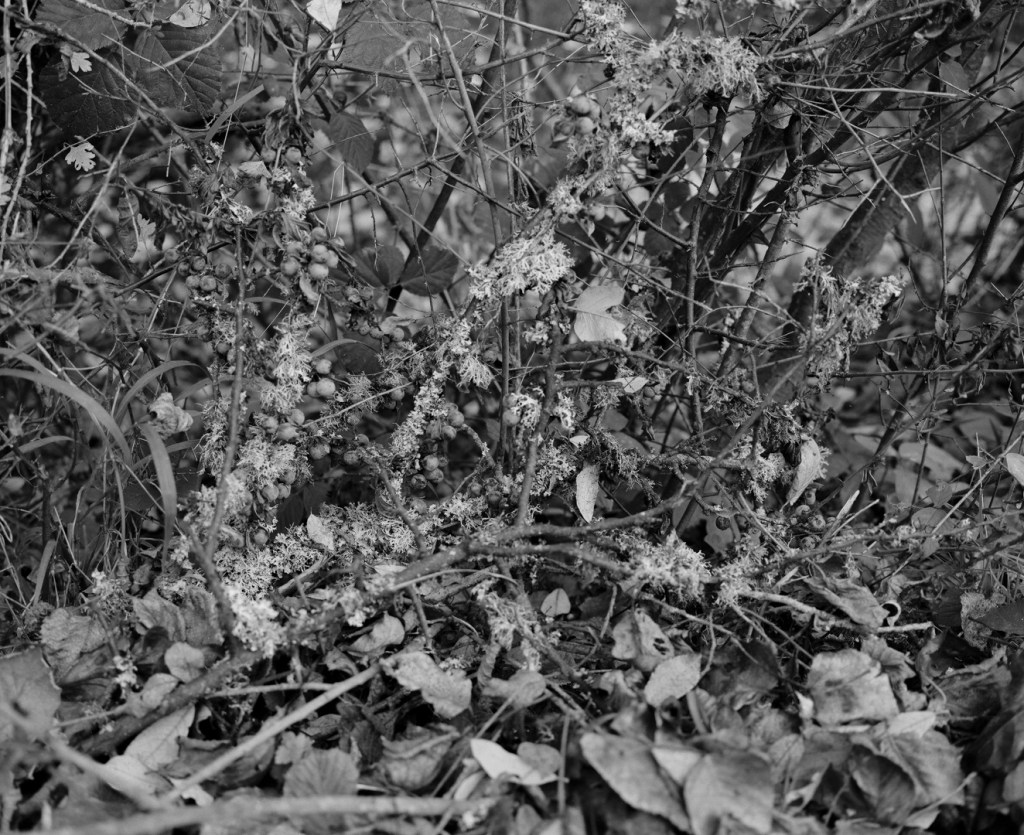
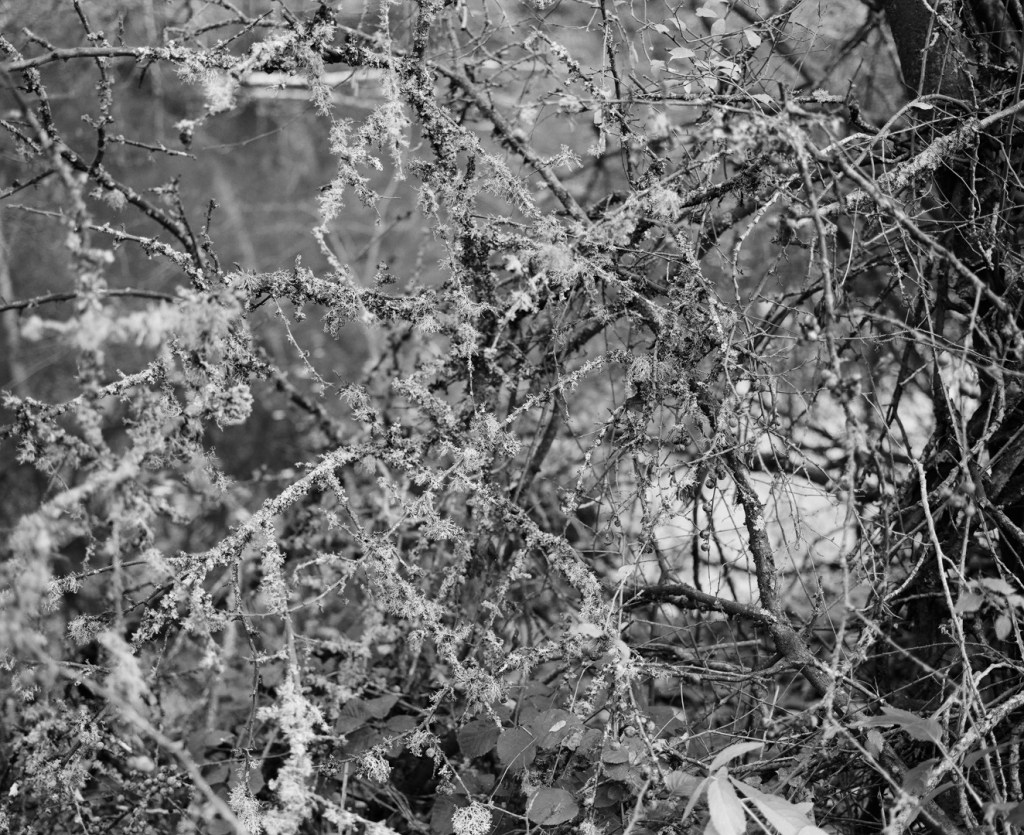
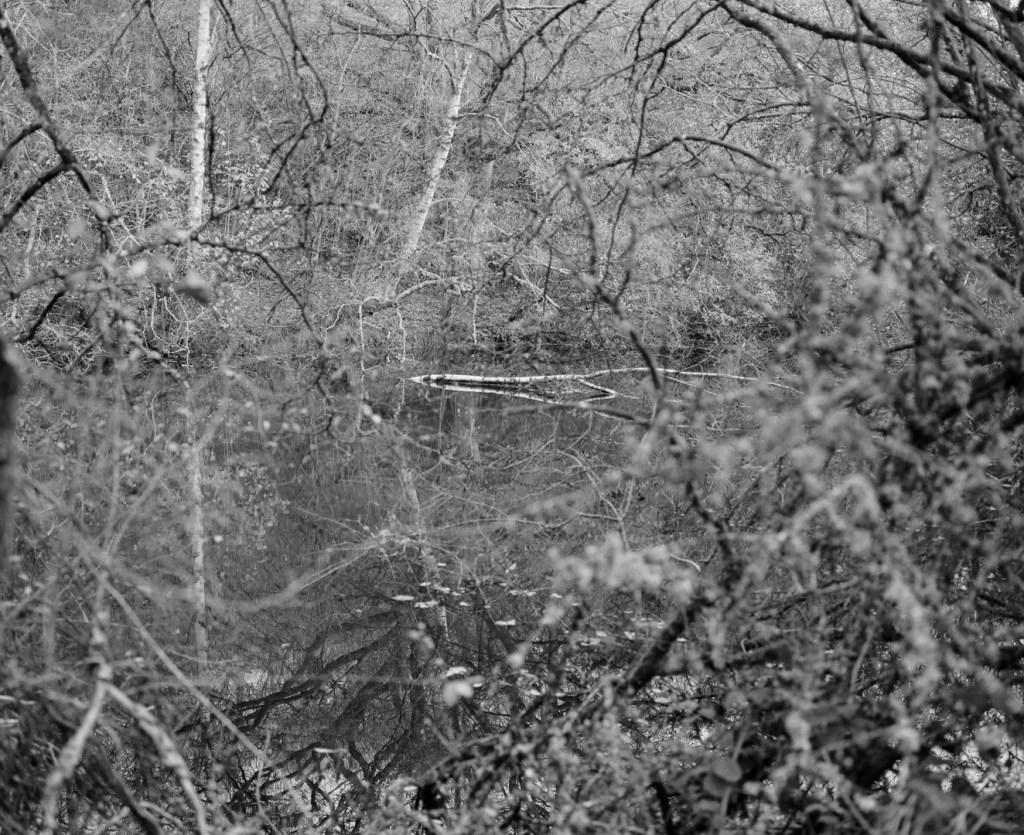
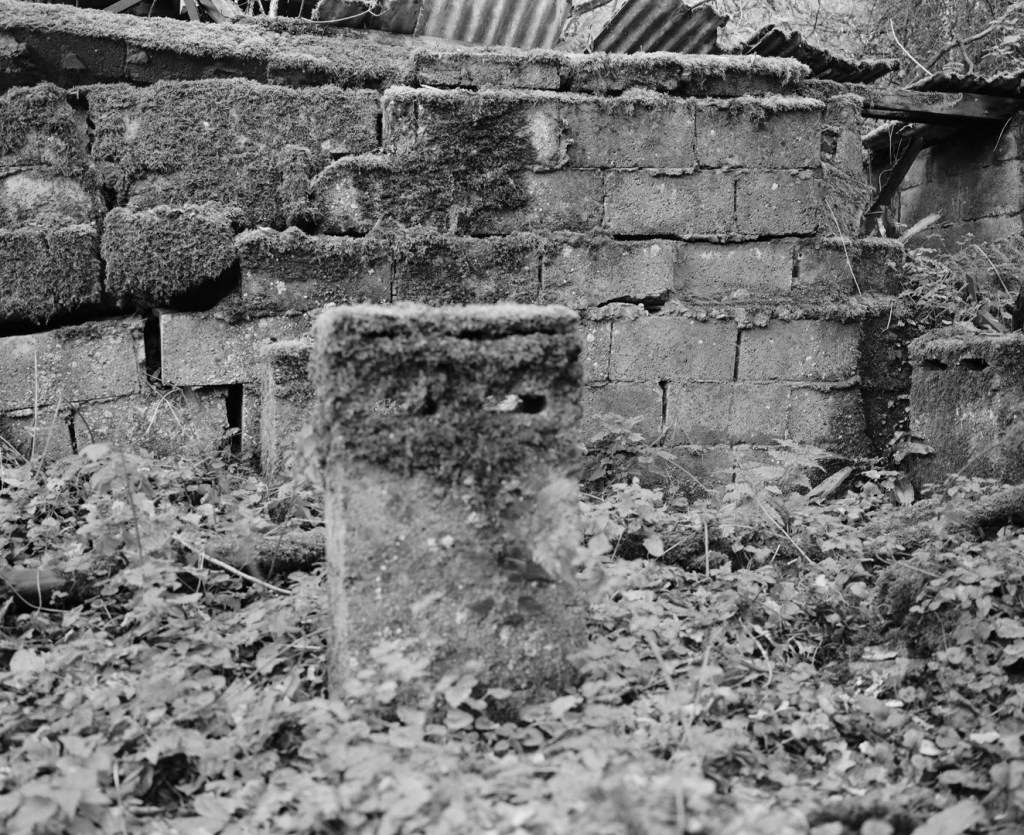
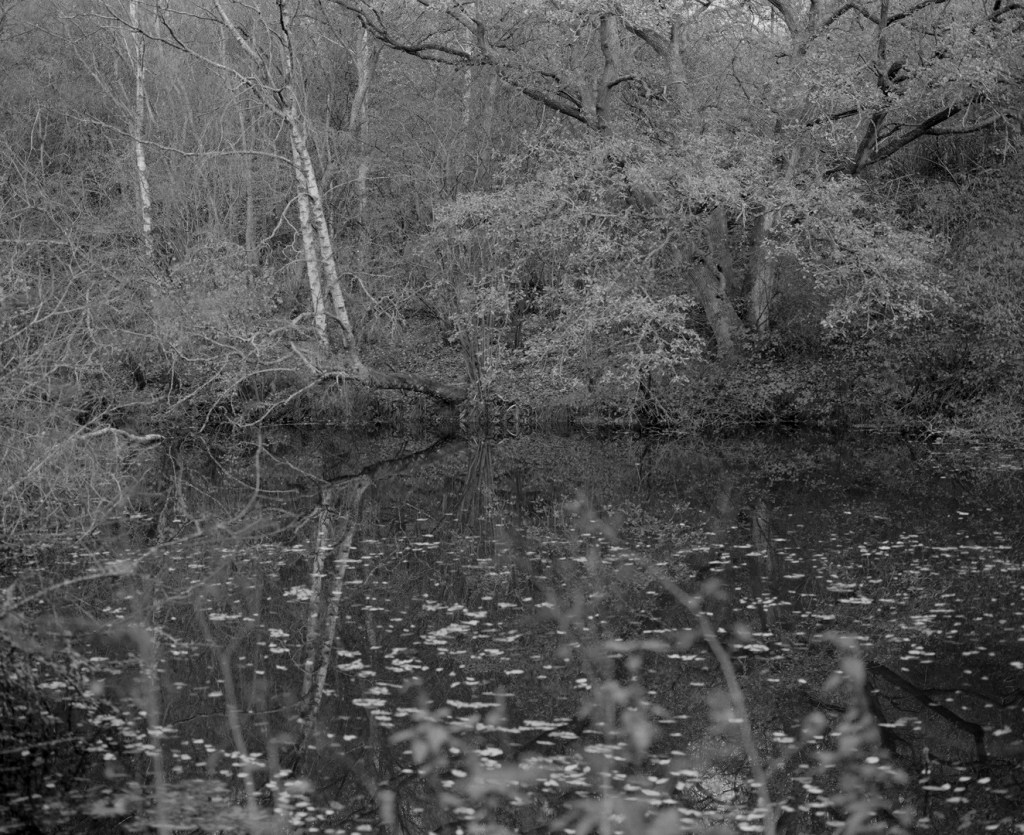

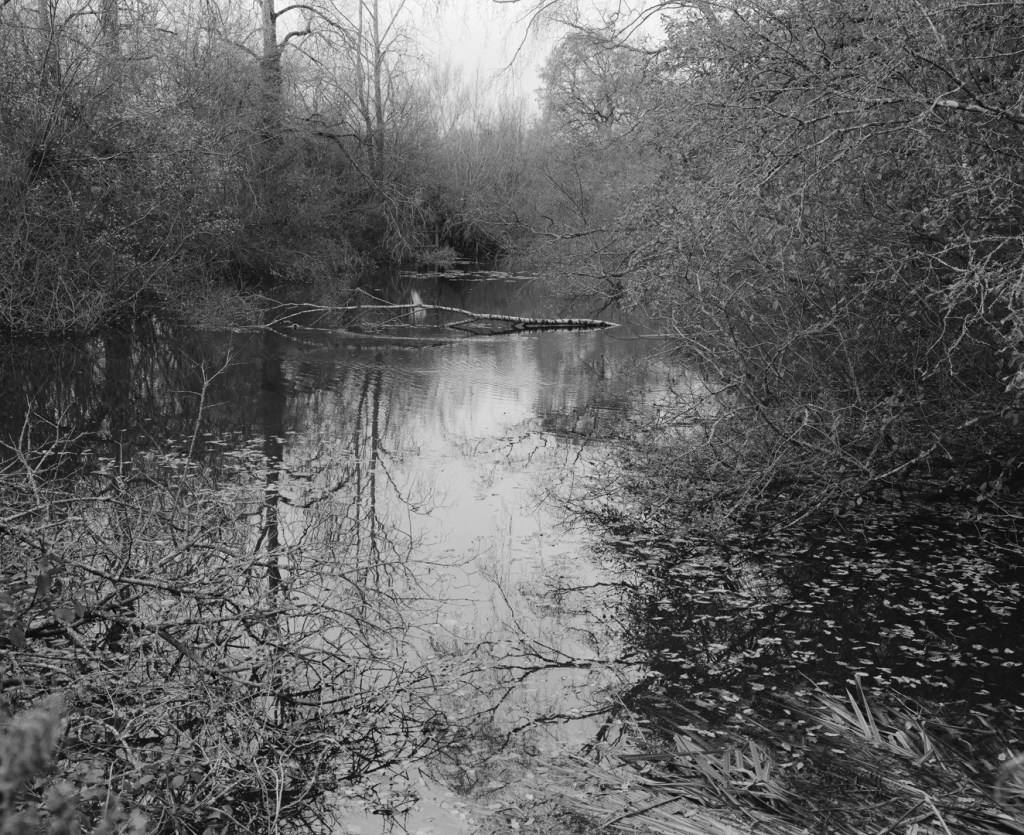
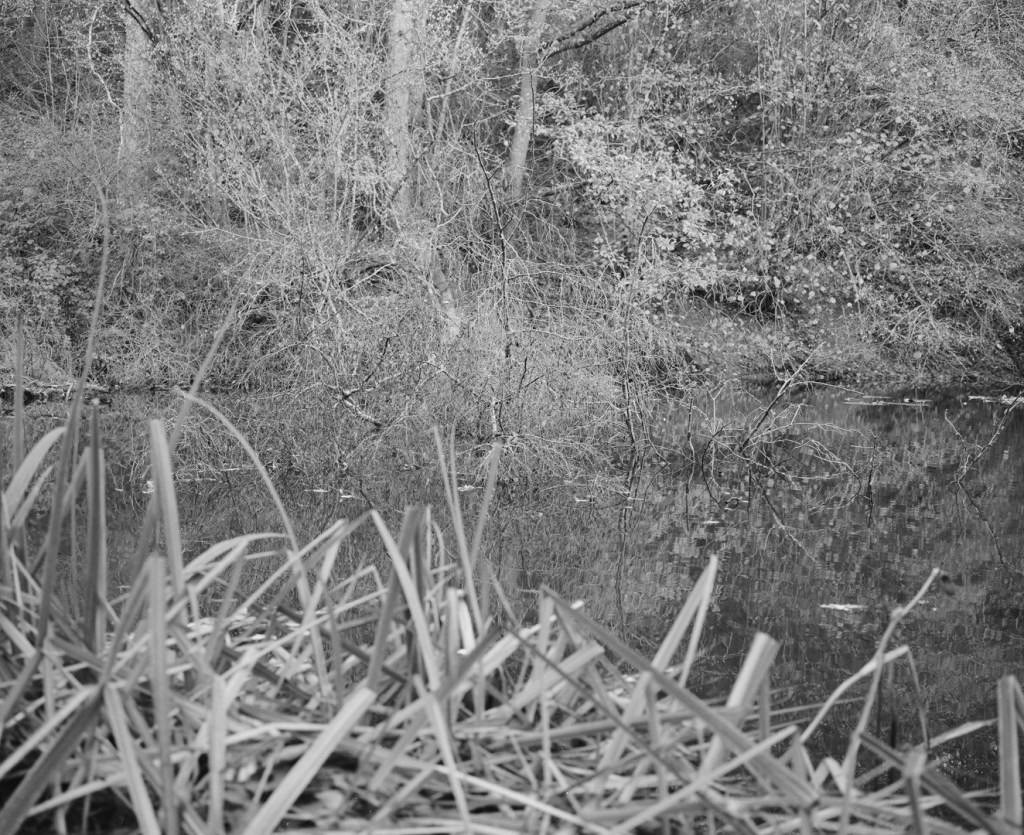
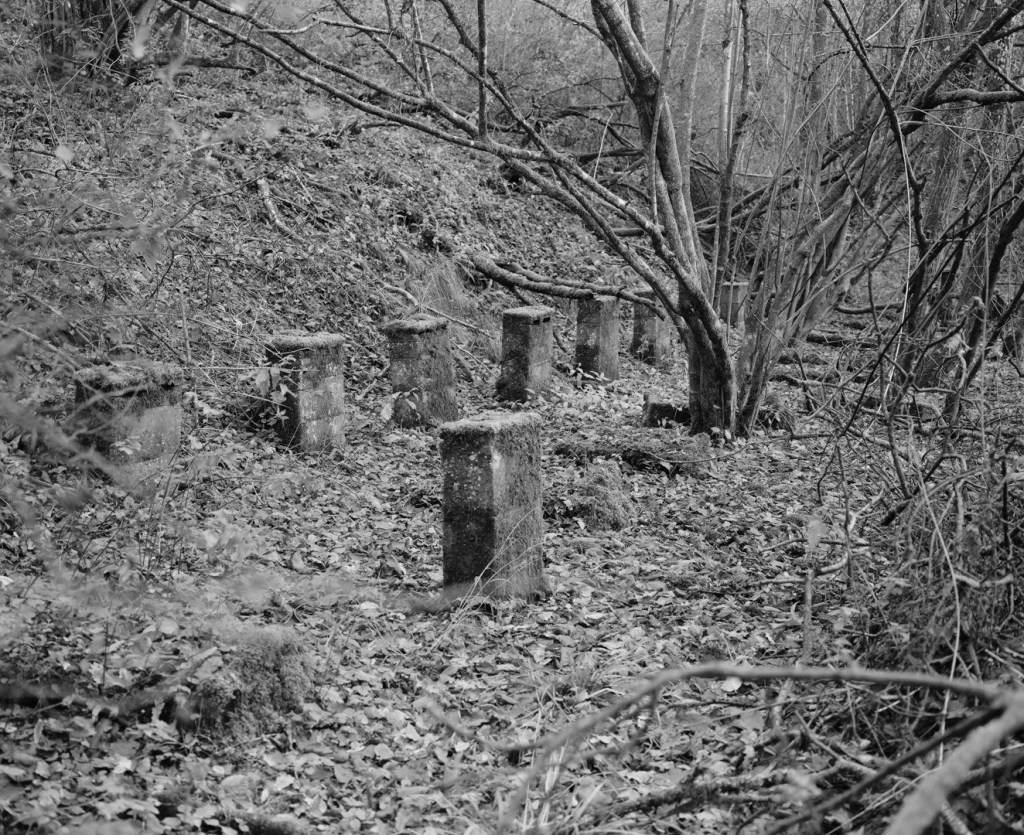
These photographs were shot on Ilford 400 film on a grey, overcast afternoon. Although fairly late in the day, it is on occasion I bit flat for photography! However, I decide that as I am not focussing on representation of the landscape but being in it, that is less of a concern.
This time for my practice in this area of woodland, I decided to use both cameras (digital and analogue) For the digital photographs, see blog post Guiting Wood (digital) 25.11.25 I wanted to go straight from the ‘settling in’ period with my digital camera and into my more immersive practice with the Mamiya. (this shouldn’t necessarily suggest I don’t operate mindfully with my digital, but that I am more so when I get to use my analogue, having familiarised myself with the environment)
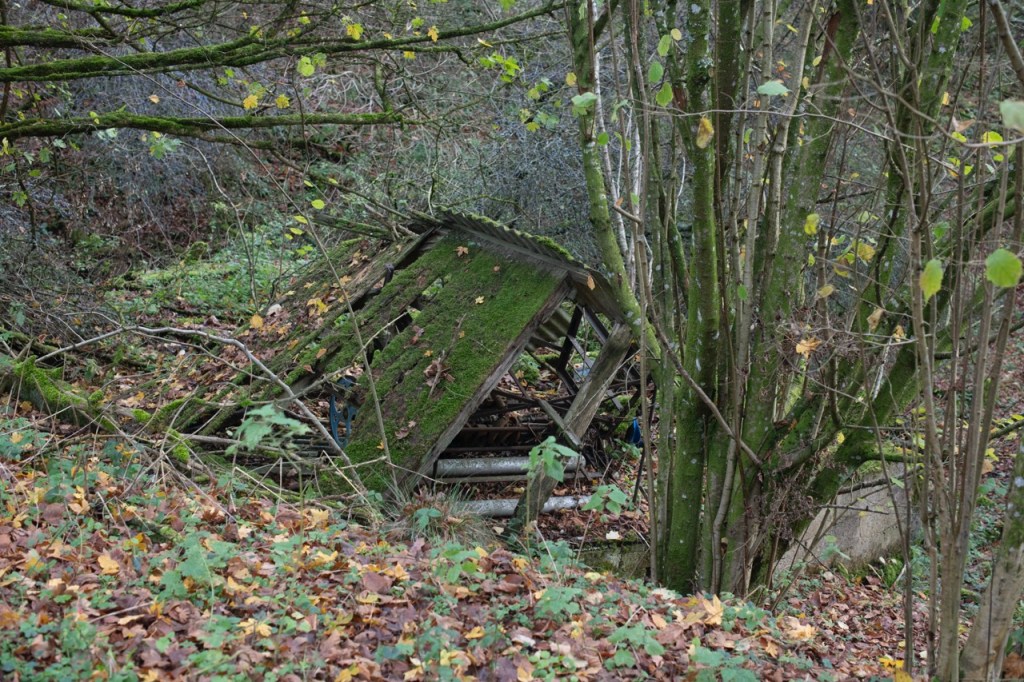
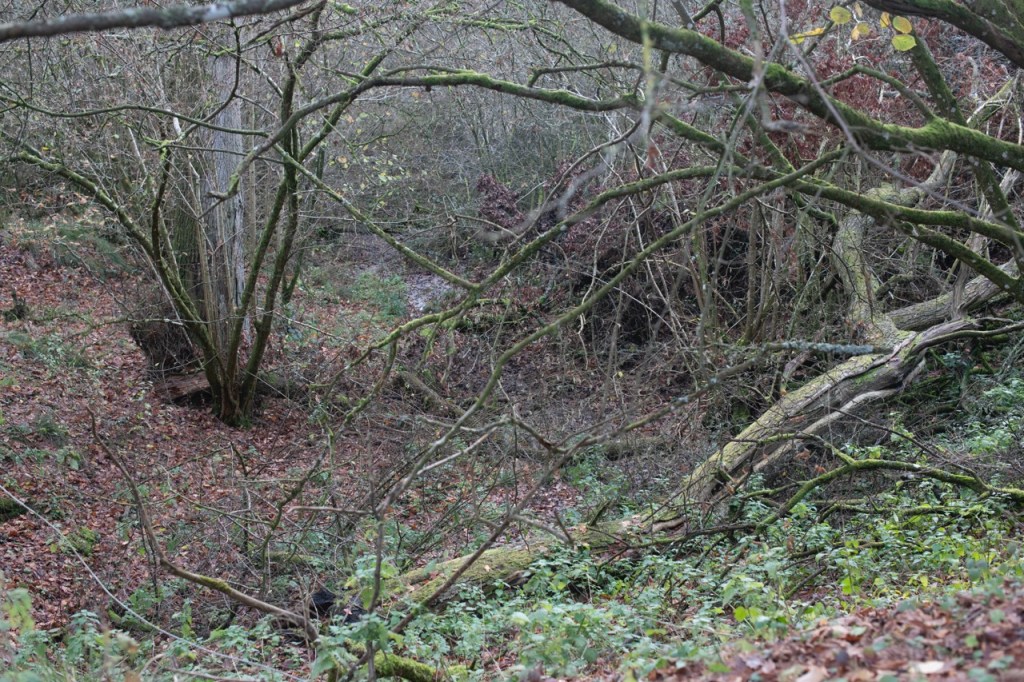
This area of the wood is very quiet. There is an old collapsing building with the remnants of agricultural machinery gradually being consumed by the landscape. There are some eerie looking foundation stones from what I assume would have been an old agricultural barn, although I can’t find any reference to it to confirm. They really resemble gravestones in the way they all face the same way and lean as the ground gives way to them. Given their position, I wonder how long the trees have been there and which came first. I remember coming here many times as a child and I remember it being almost exactly as it is now.
Having already photographed the area with my other camera, I moved from location to location (all within 50 metres) with my camera on a tripod and positioned it for a while before taking a photograph. I spent time in the space, thinking and feeling my surroundings. Many times I didn’t take a photo, instead choosing to relocate.
My most successful photograph is the one shown below. I felt as though I was part of the landscape at this point, I was surrounded by it as I nestled in to the bank of the pond and just sat there a while. The corvids above were raucous but befitting. The moment was only broken by the sound of a small plane going over me above. I like that there is so much going on in this photograph, the scene is framed by the trees and the fallen branch in the water in the distance helps to anchor the image. The reflections in the water create some ambiguity which I always favour.
 Lucinda Taylor