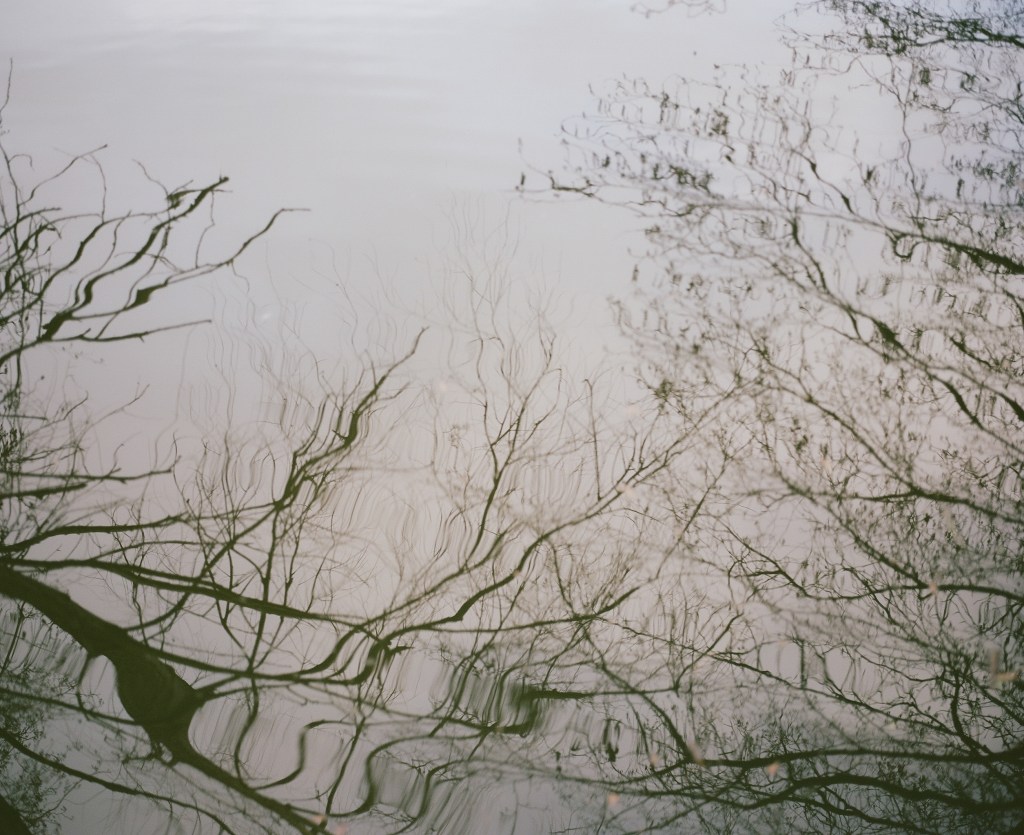
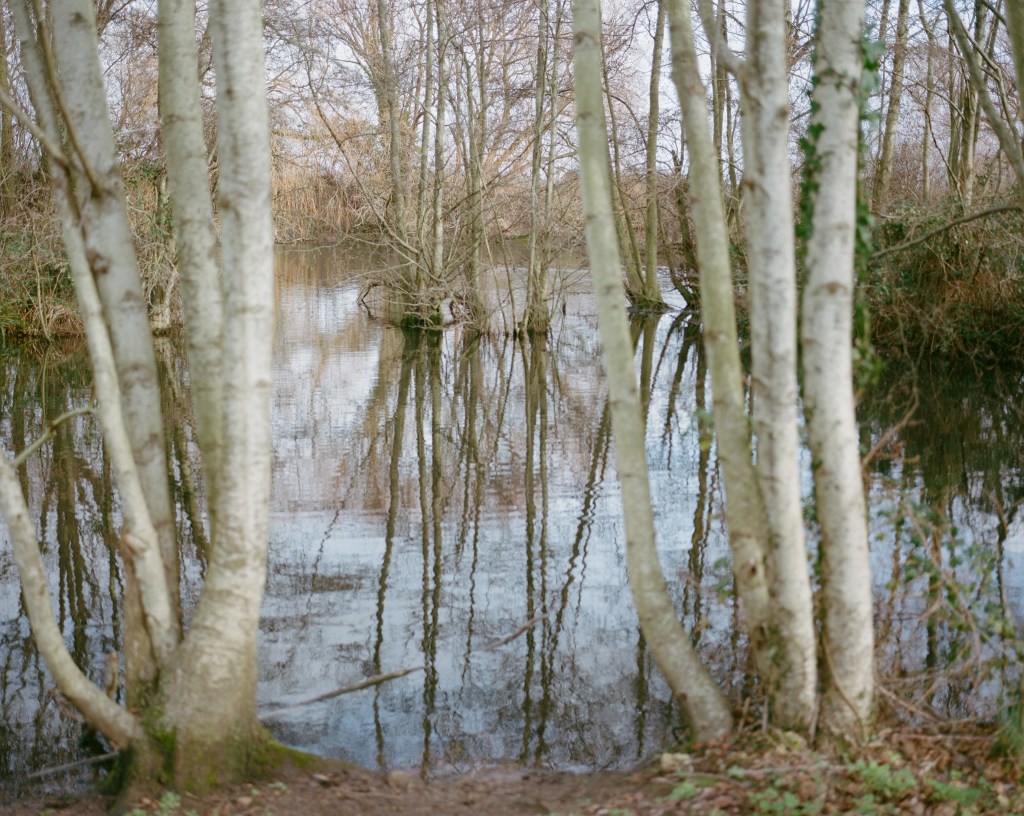
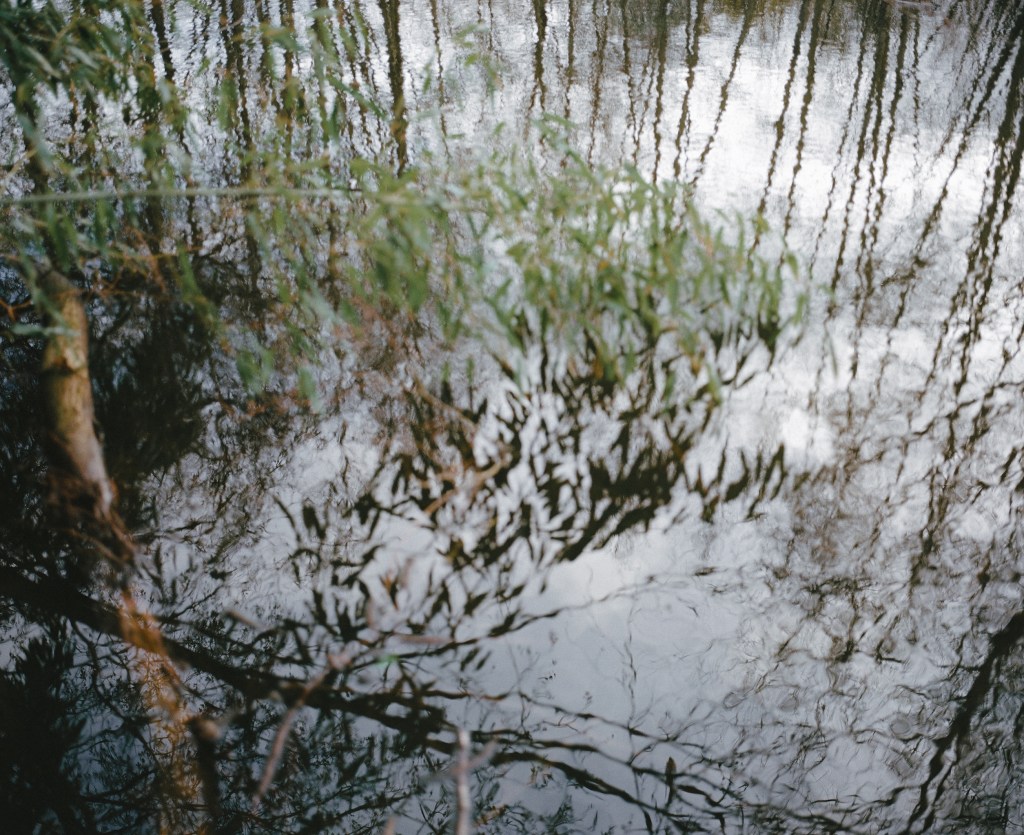
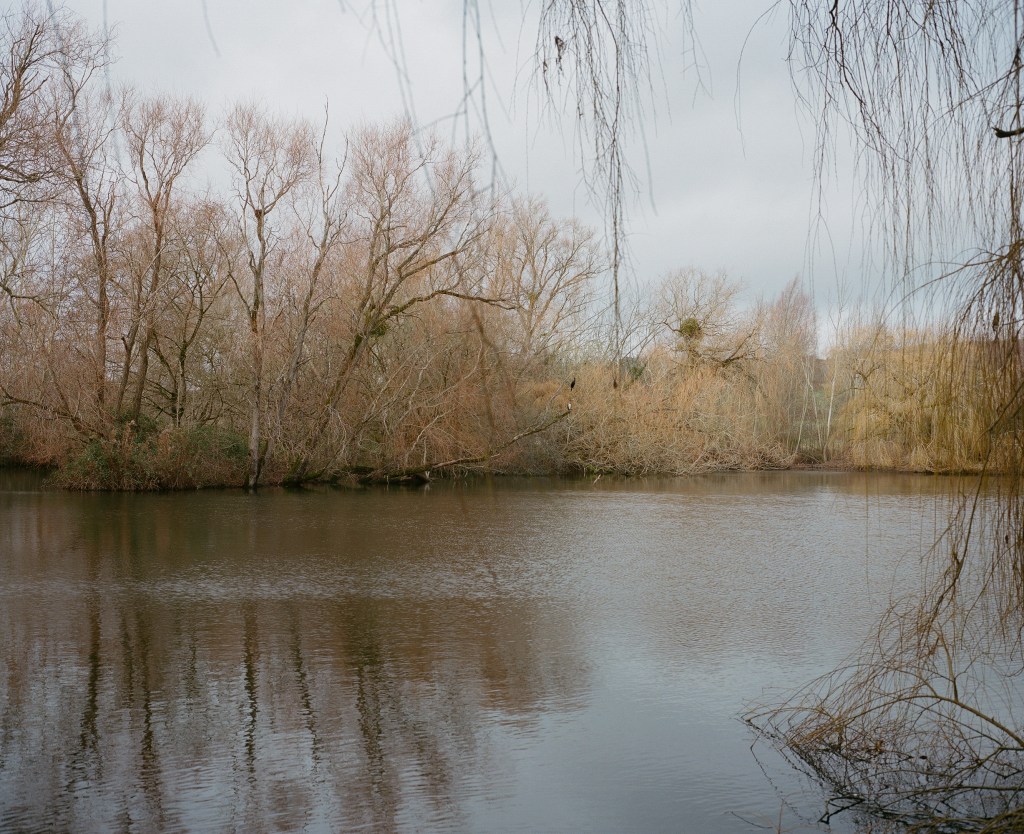
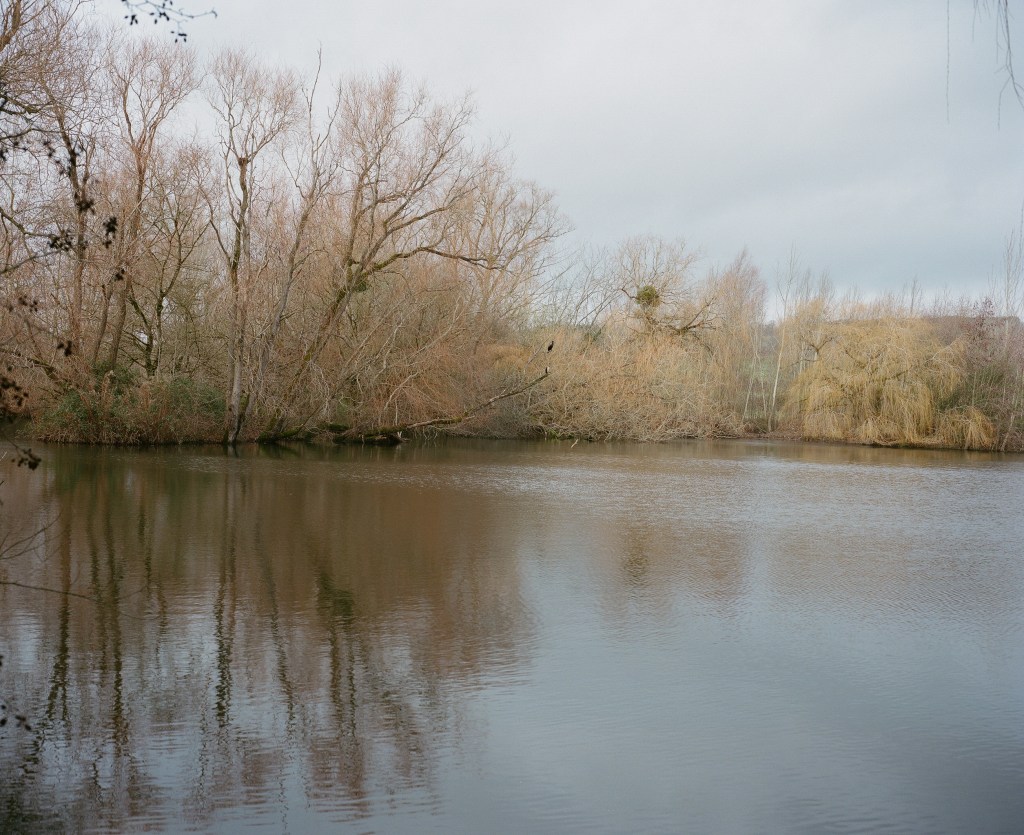
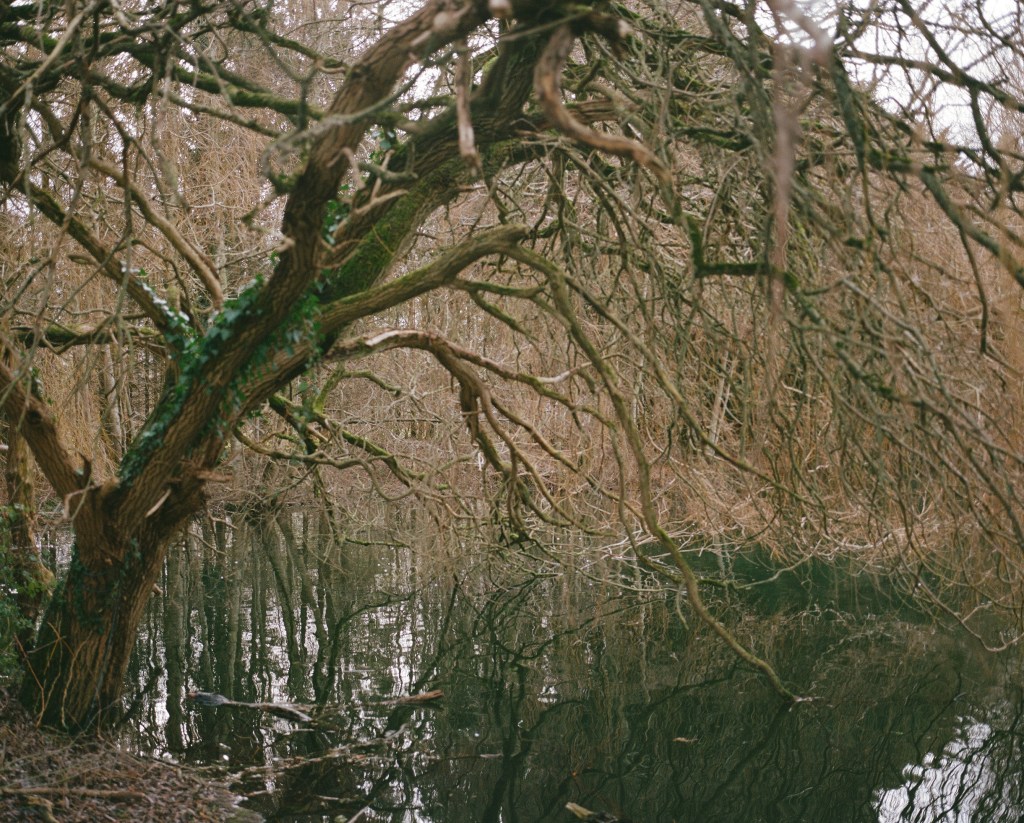
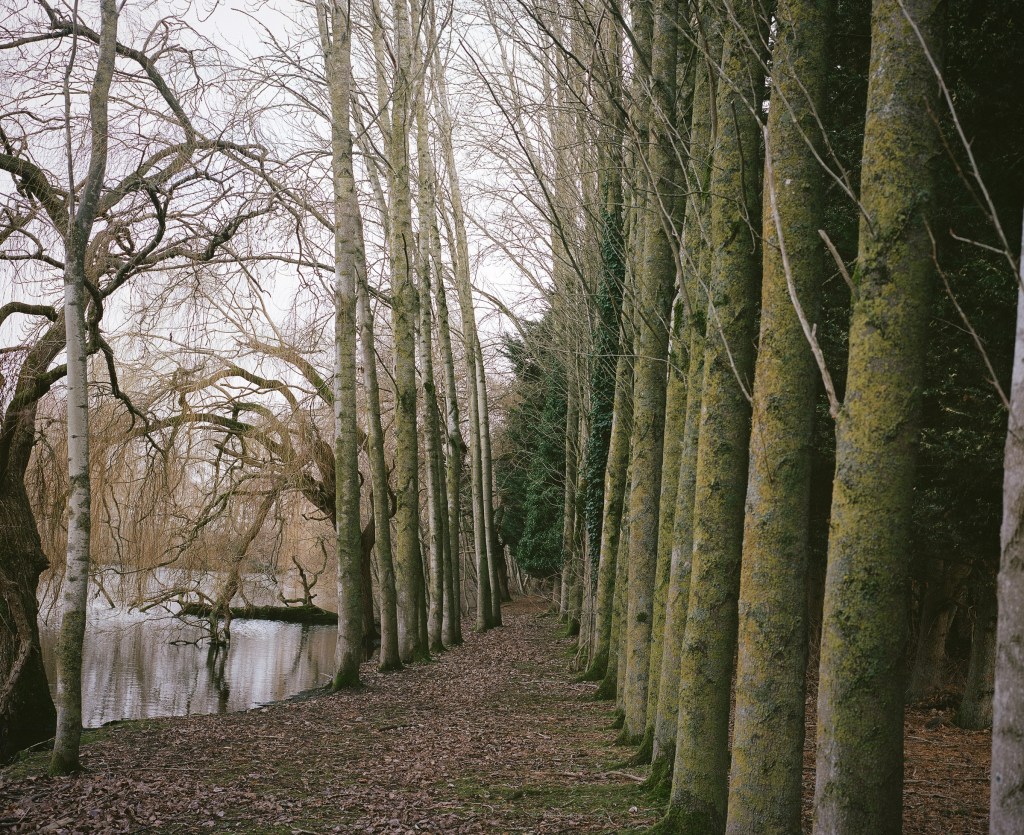
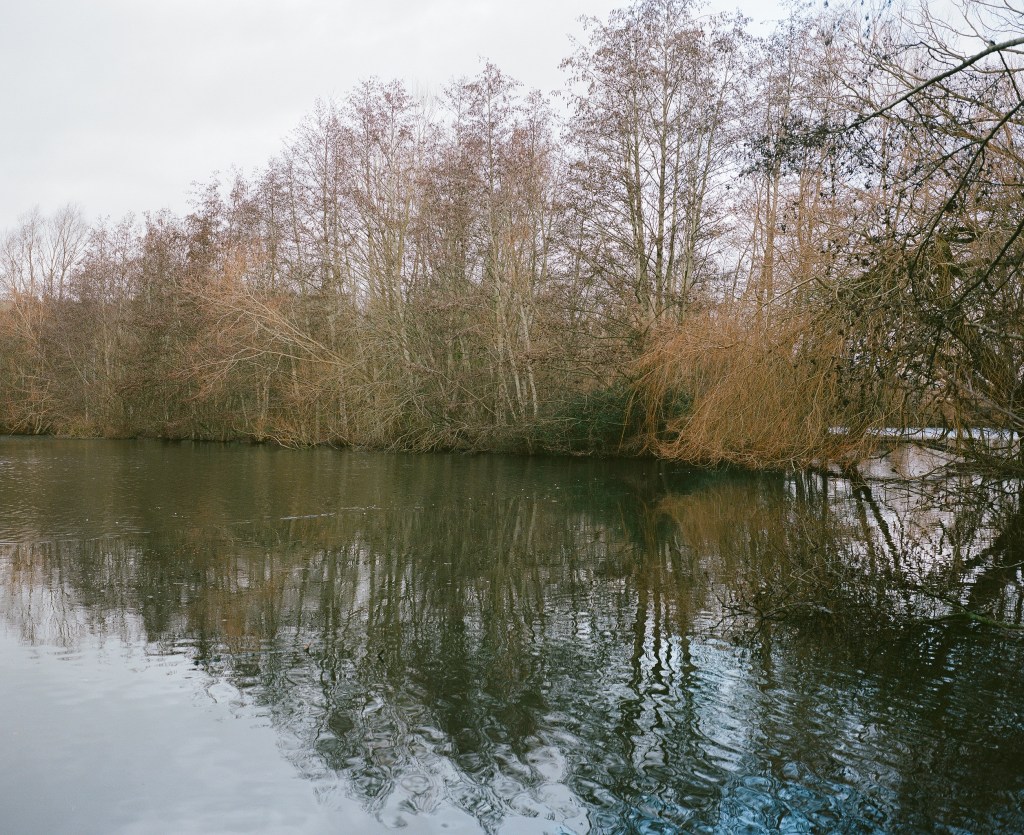
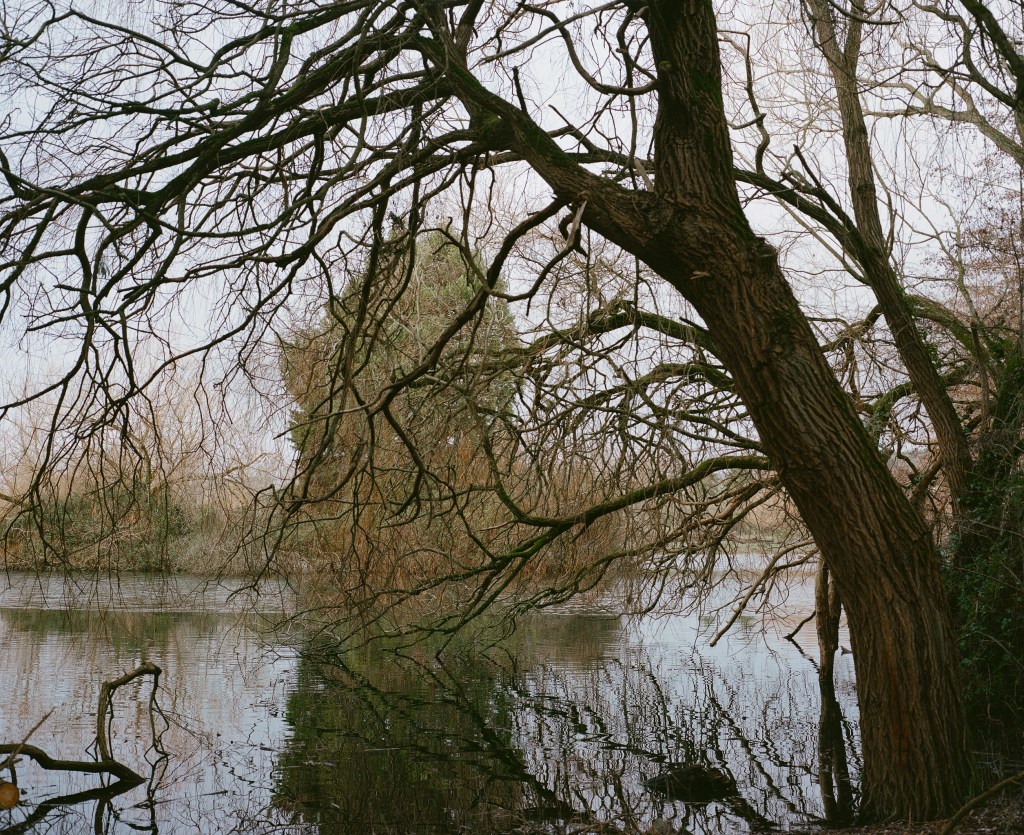
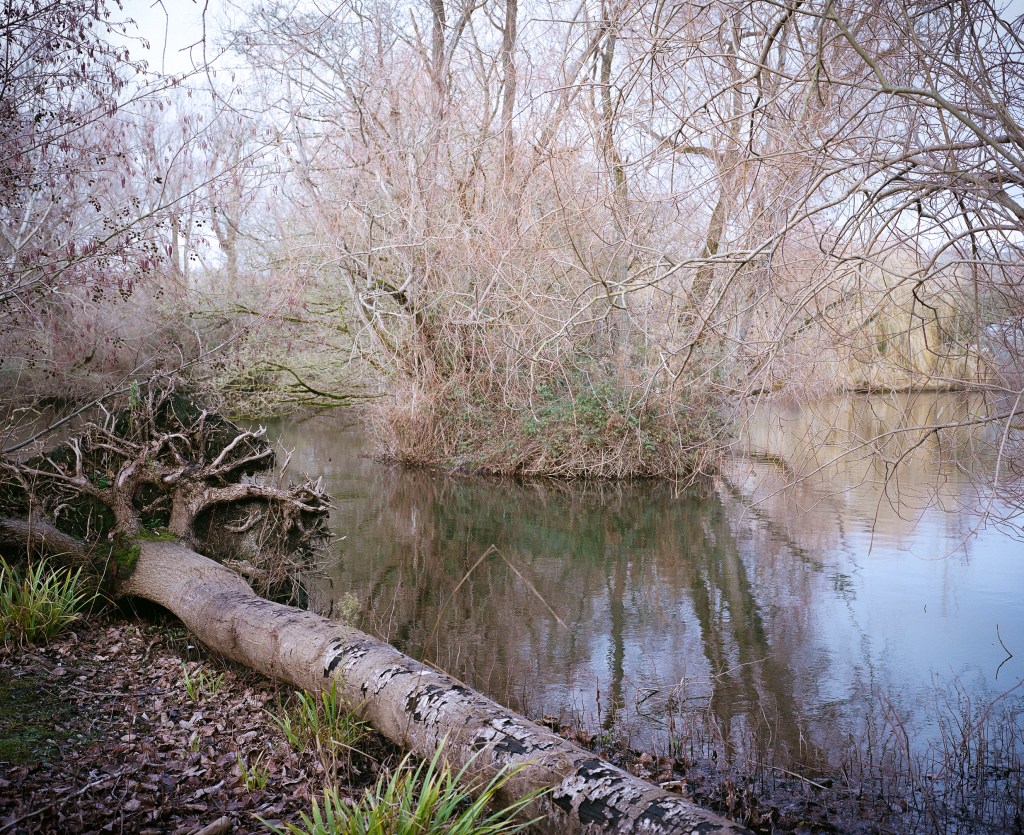
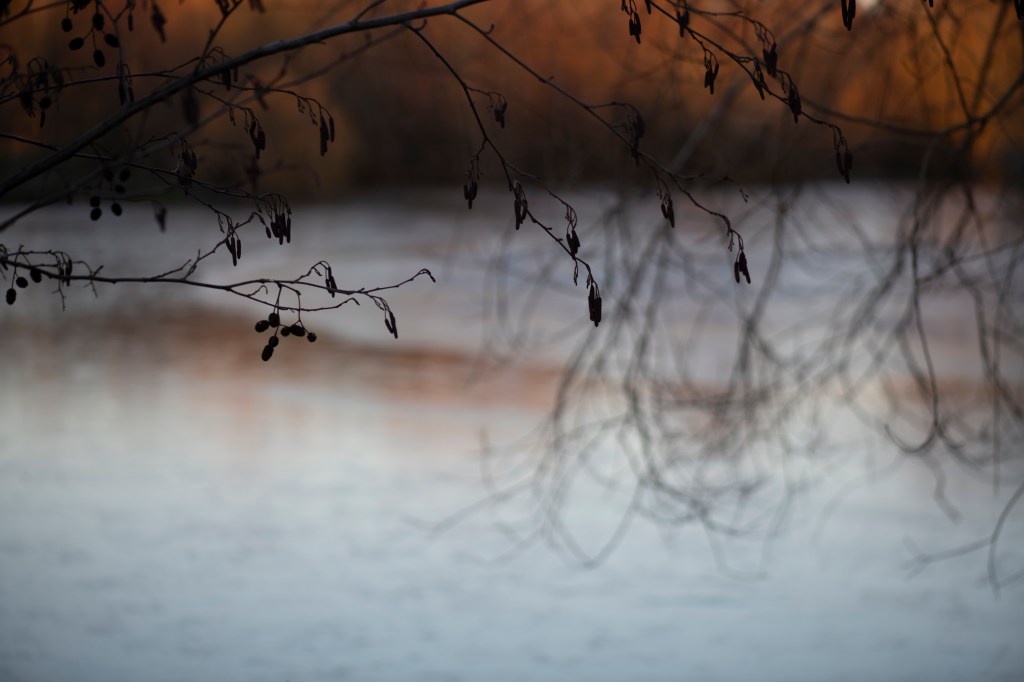
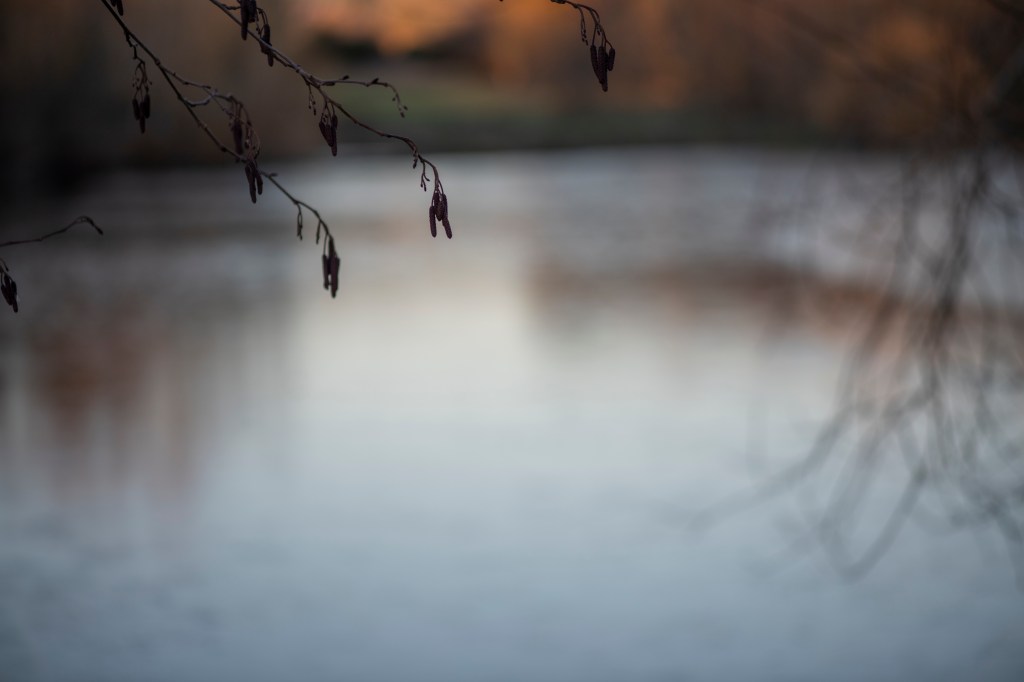
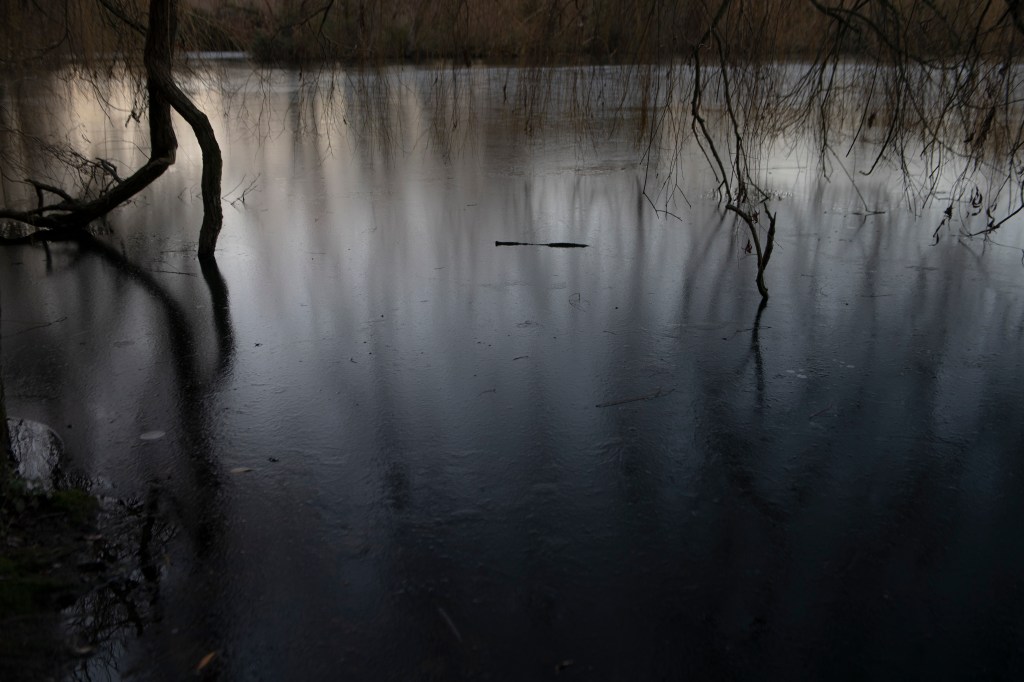
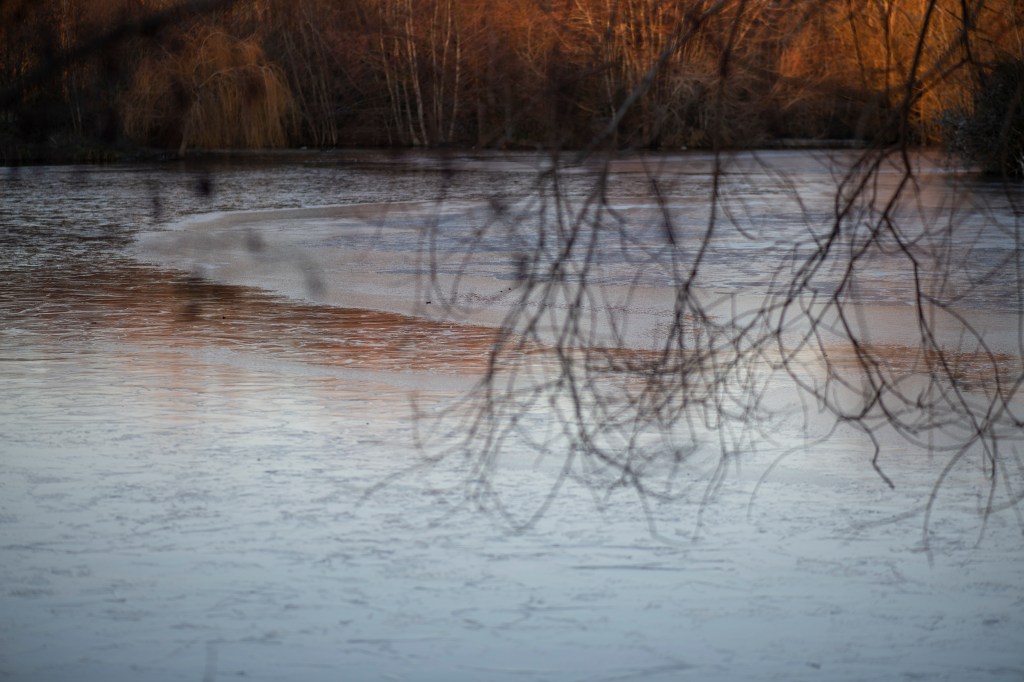
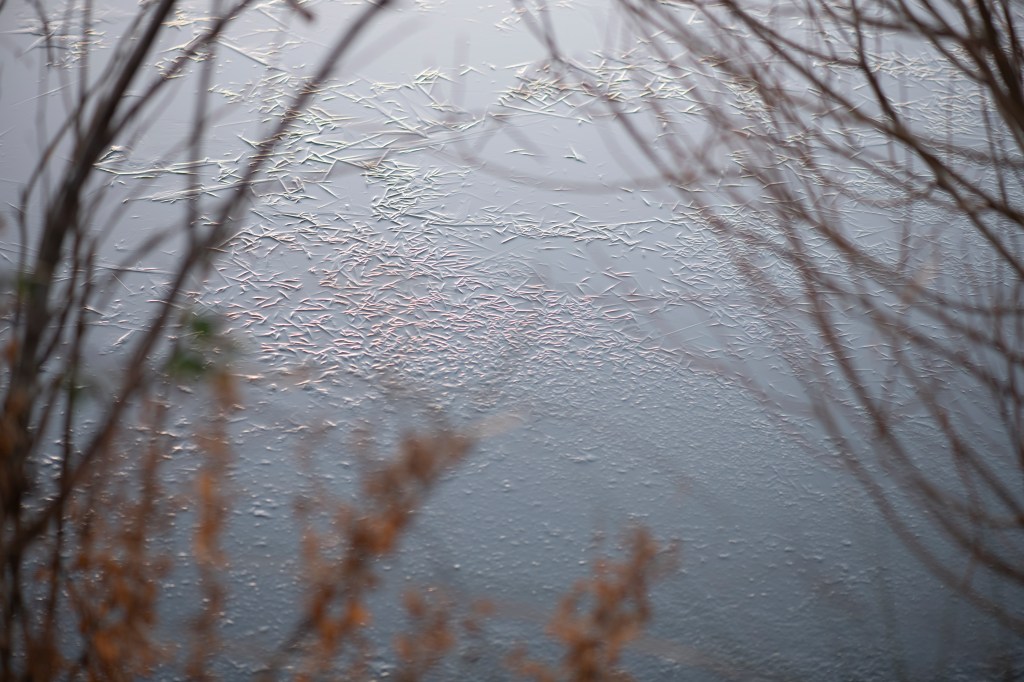
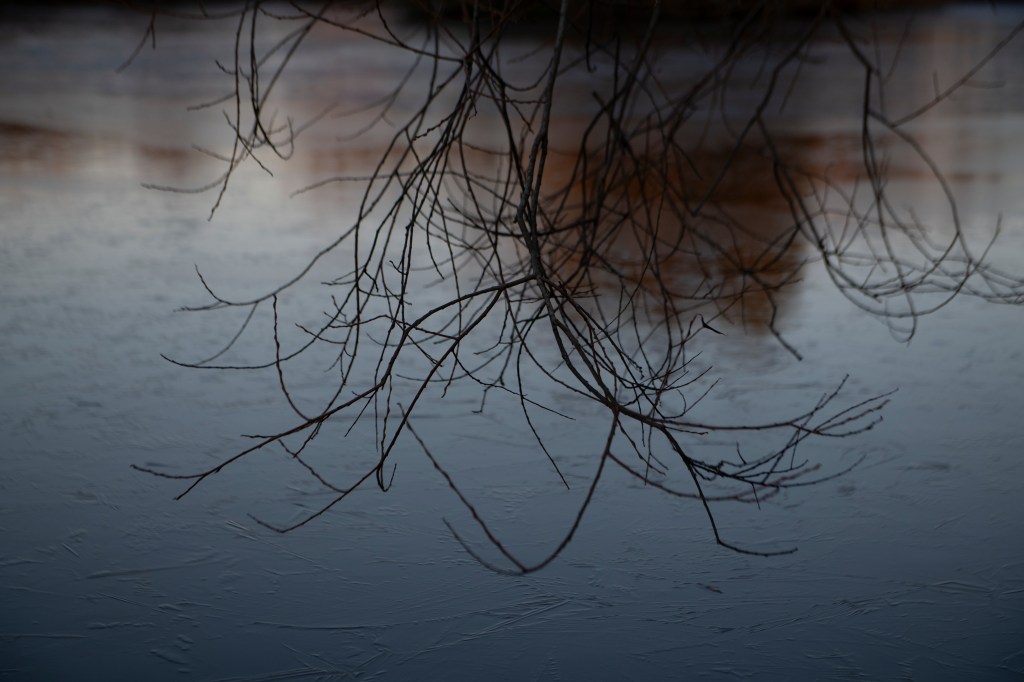
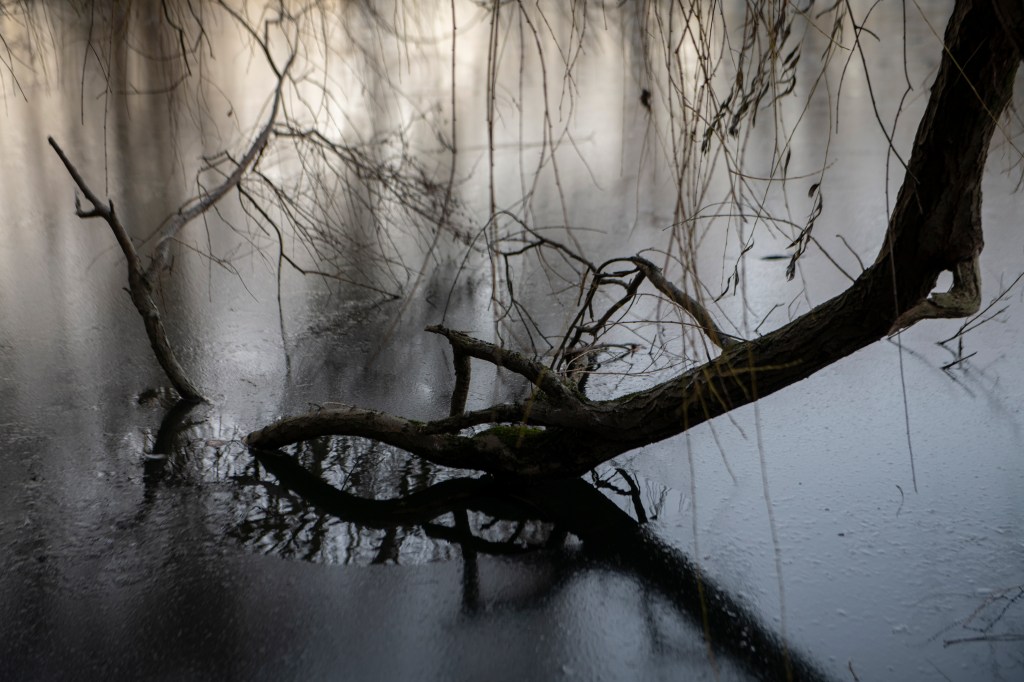
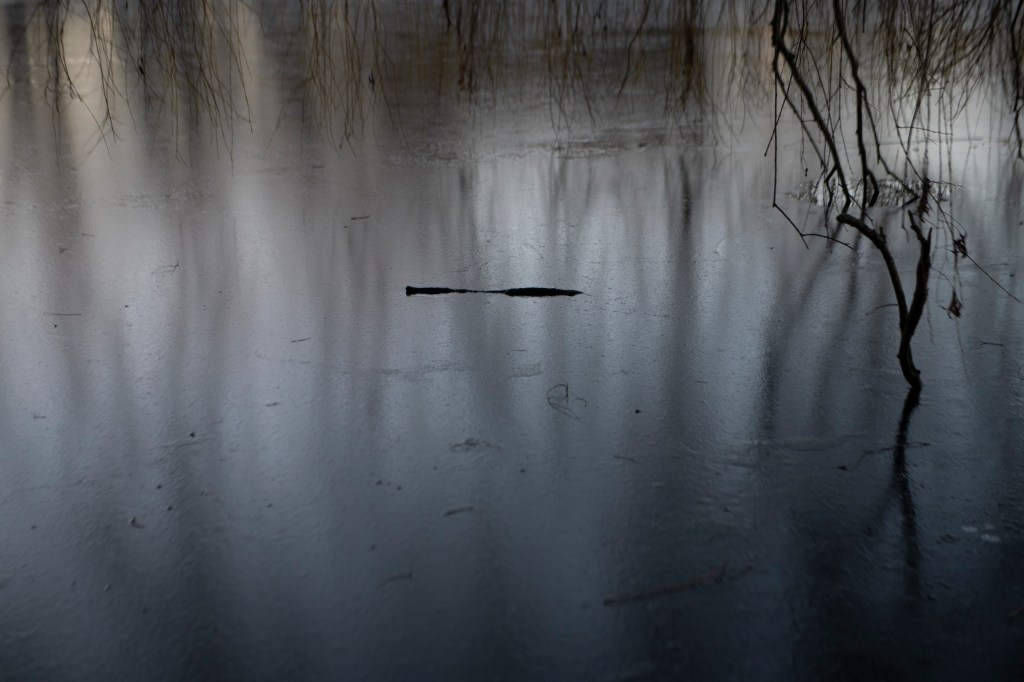
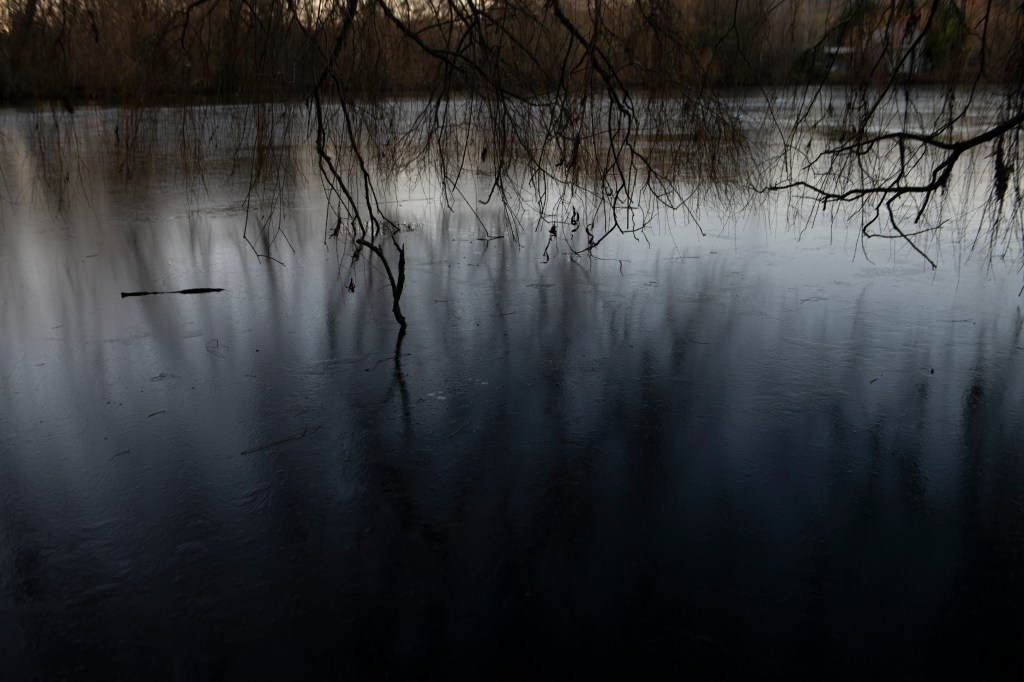
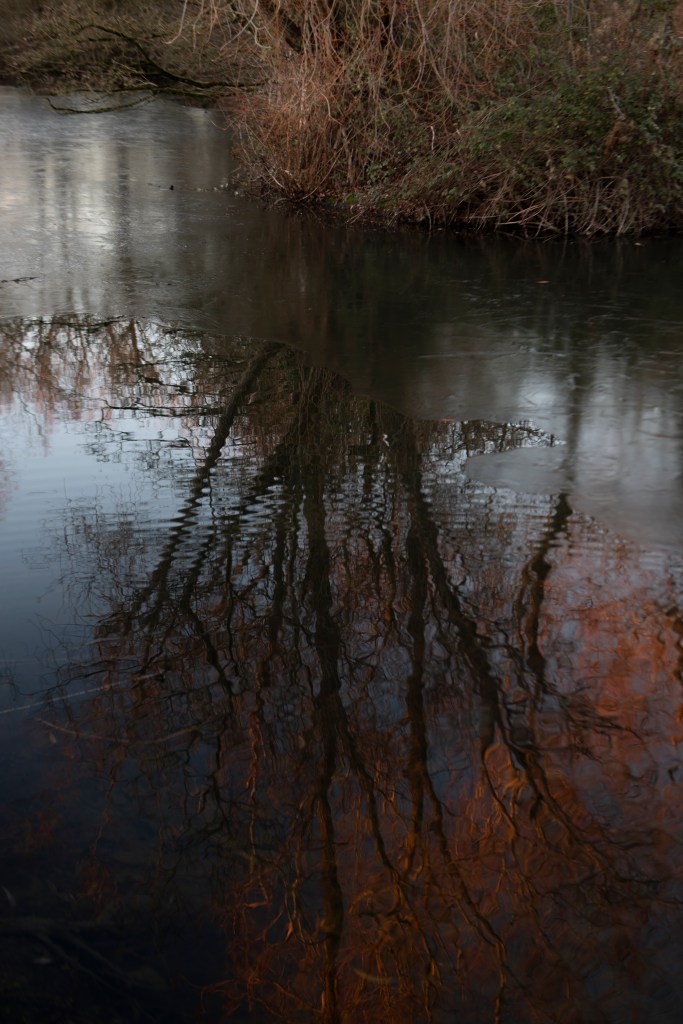
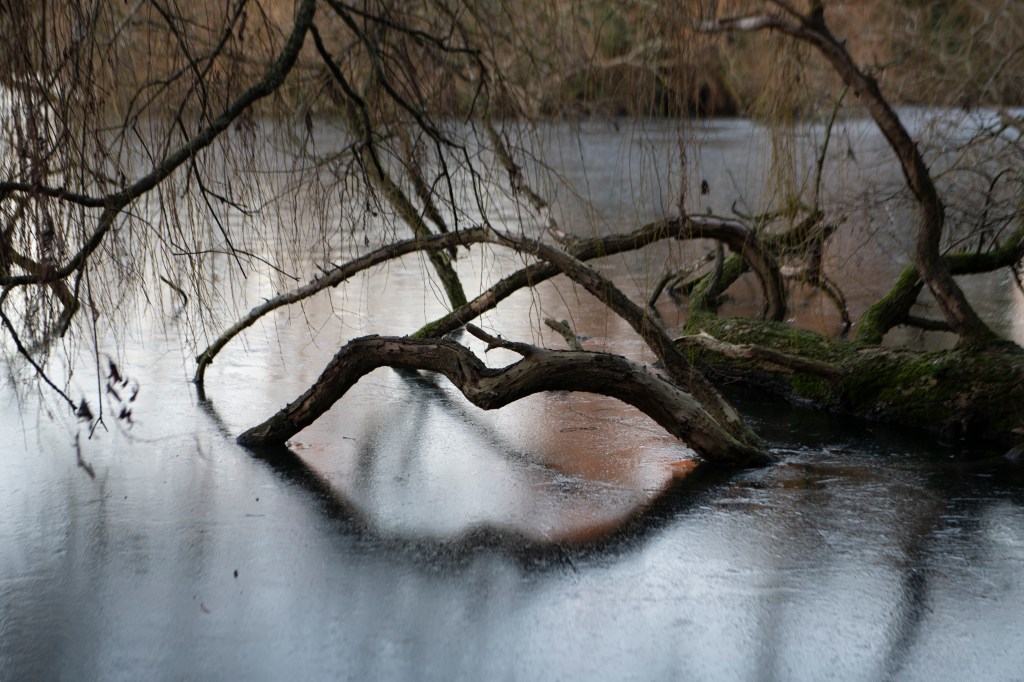
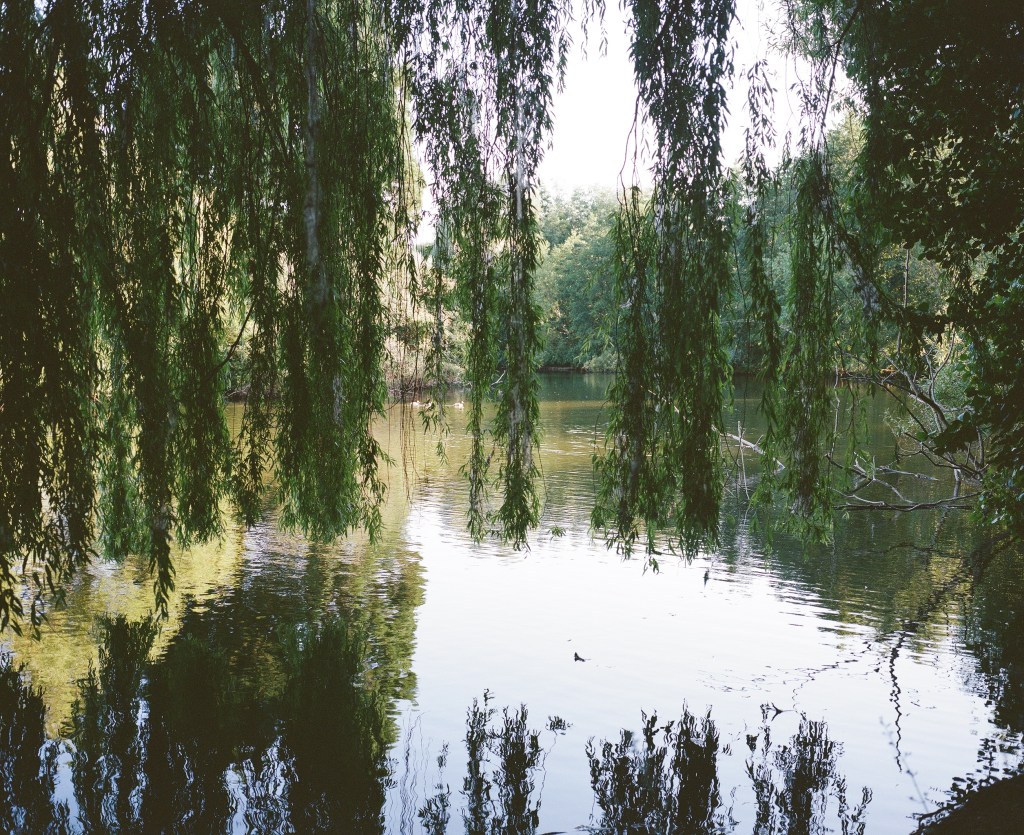
I photographed an area of the lake with 120 kodak portra 400 film, a few days into January just after the ice had thawed. Having decided to focus on using analogue images for my book, I wanted to have a wider selection of images to see whether I could have a balance of colour and black/white photographs to choose from. By this point, I had identified several areas of the lake that I was drawn to, so although I engaged in a walk, I had a preconceived idea about where I was going. I attempted to note down a few words as a sort of poetry. Having been influenced by Mary Oliver’s nature poetry, especially her ability to say as she see’s, I wanted to practice this. I am not sure I want to use words alongside my work, I will most likely make a late decision on this!
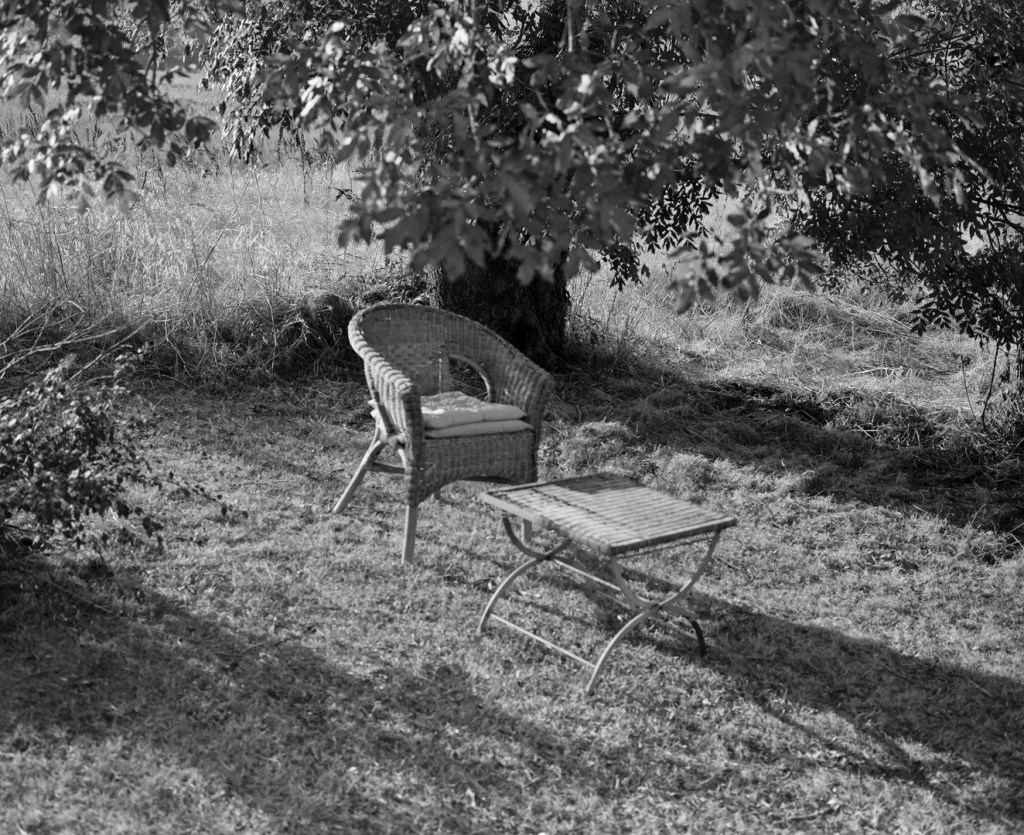
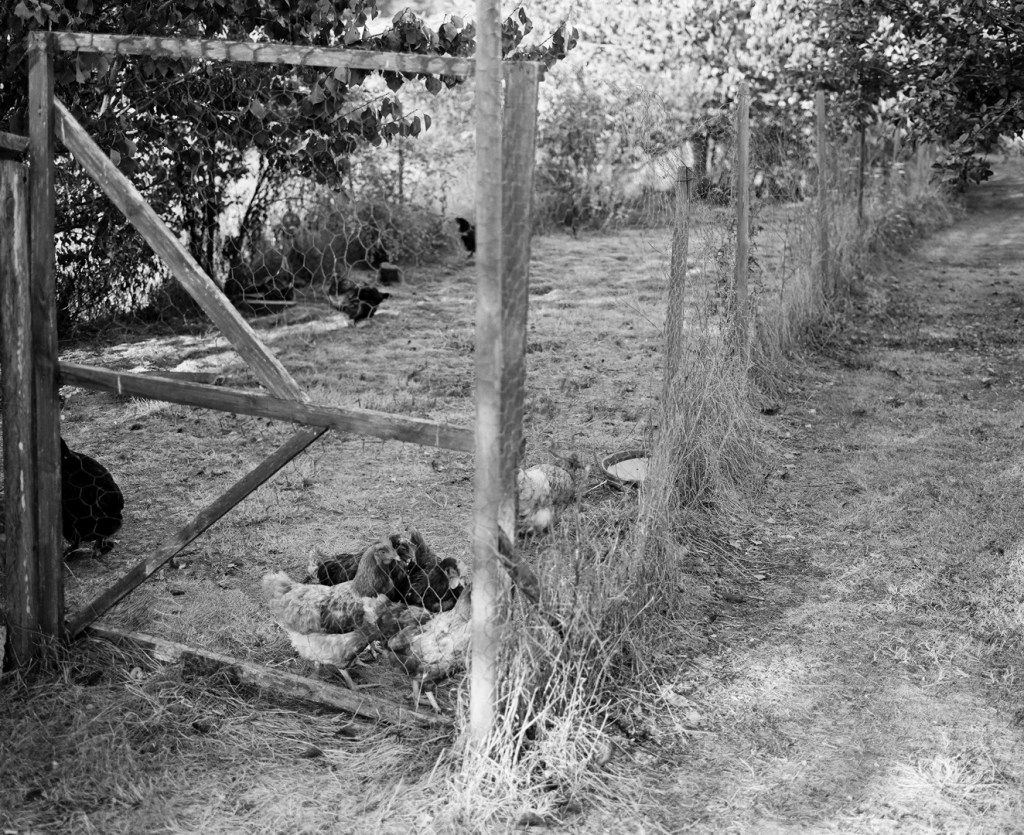
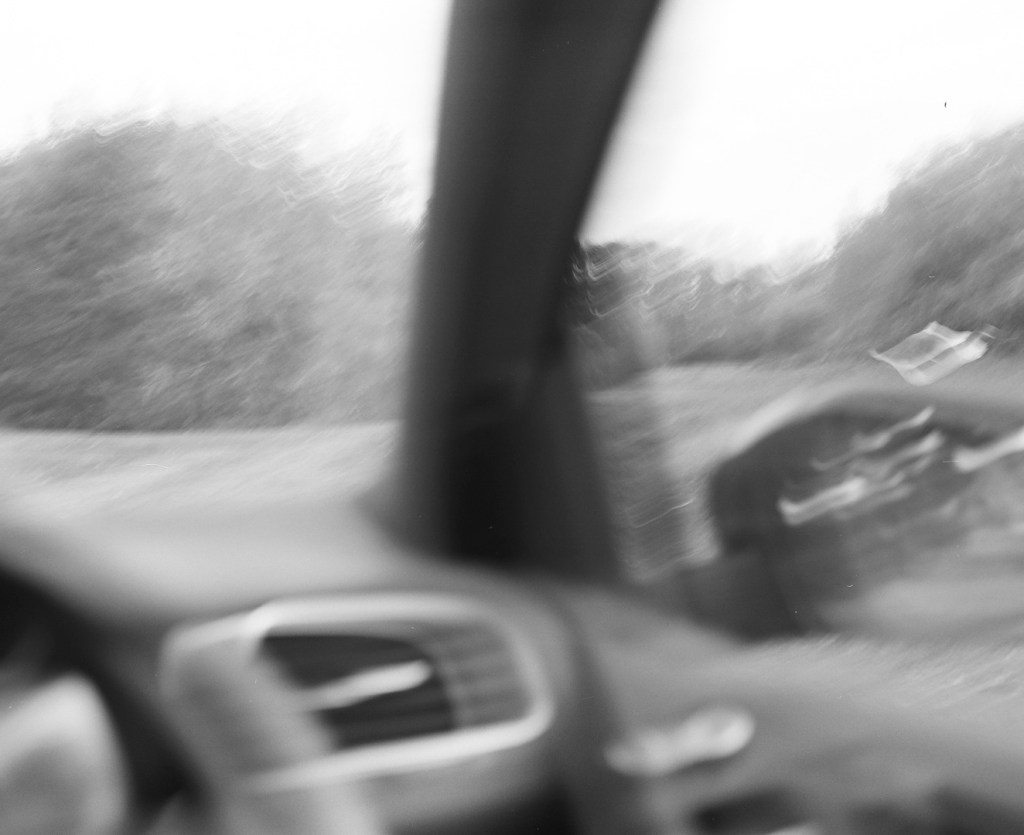
These photographs will be included in my book. The first & third photographs (reading top left to right) are particular favourites, I like their abstract nature as this fits with my theme and at the time, I was instinctive in my shooting. I didn’t think too much about framing or outcomes, I just spotted something that appealed to me, somehow carried some meaning for me and took a photograph.
The film itself is ideal for my subject. The colours are soft, a little too green in places but I think there is a good balance of tones throughout. The shoot was earlier in the day, compared to much of my work and it was a flat, dense cloud overhead. The film choice is quite forgiving I think. These could print well, I am excited to see how they will sit alongside my black and white photographs.
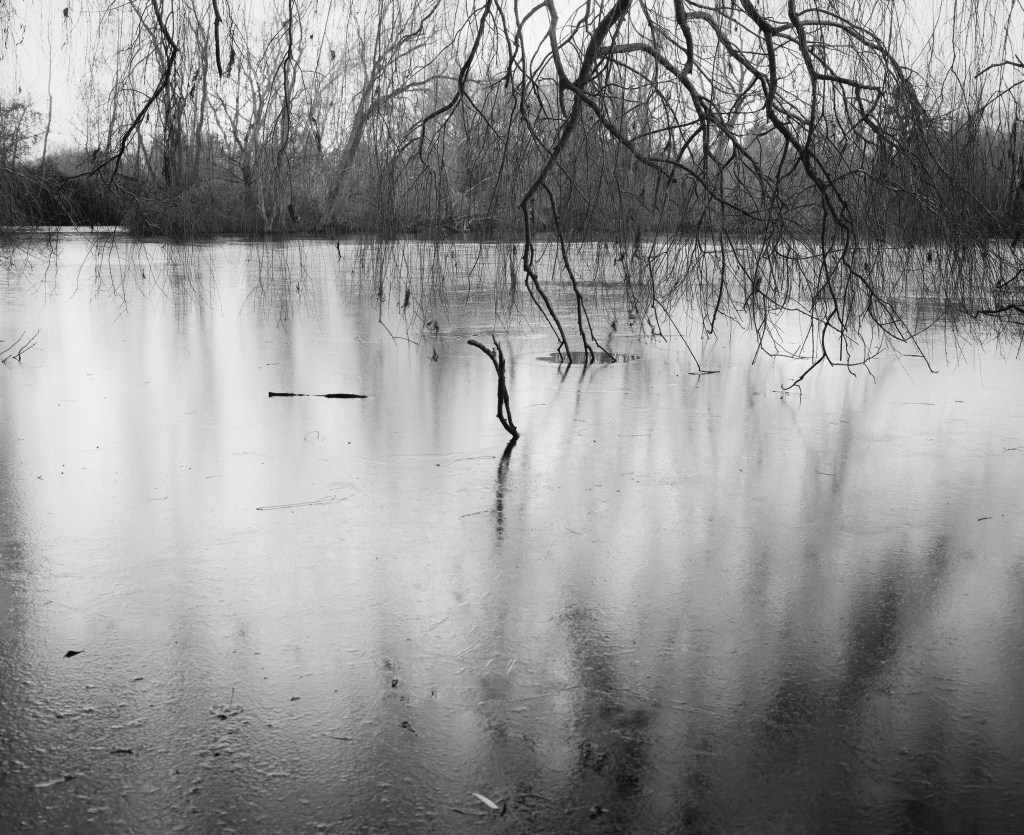
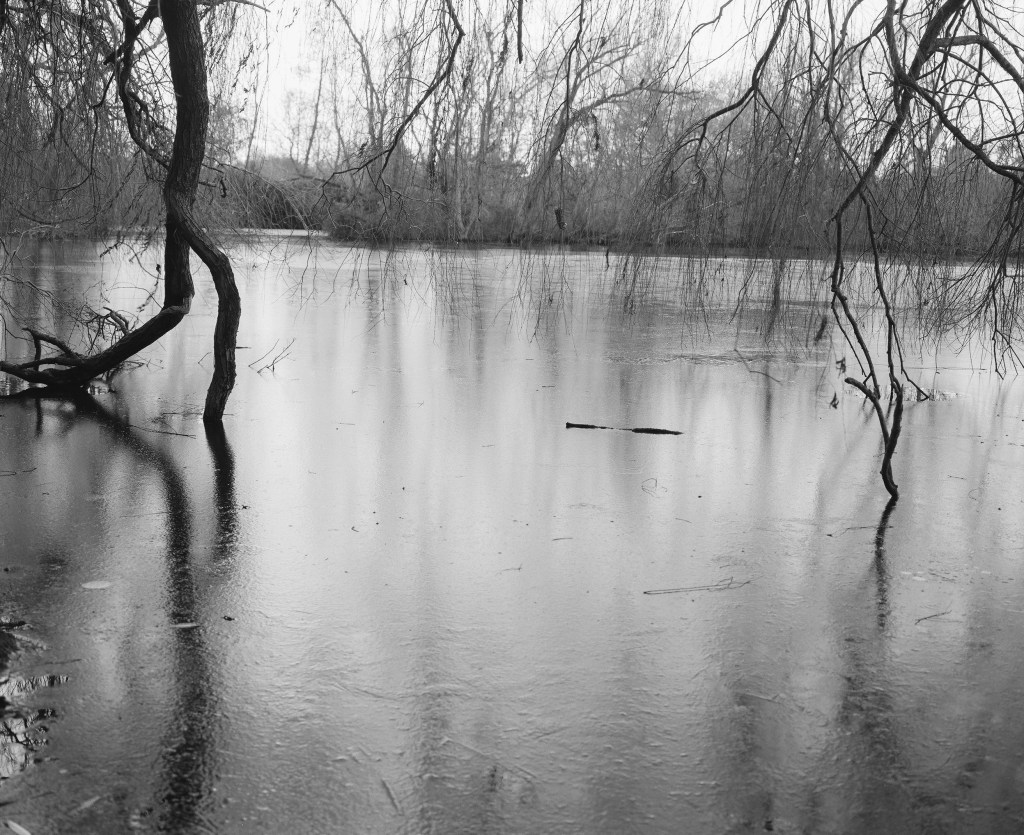
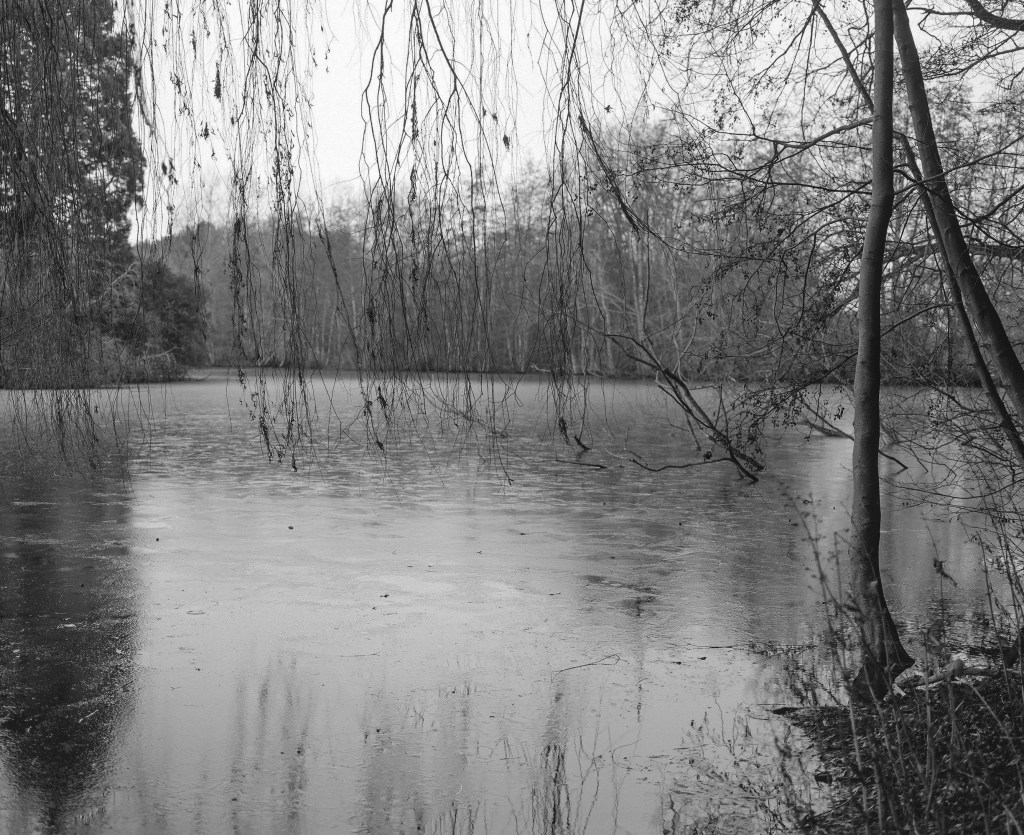
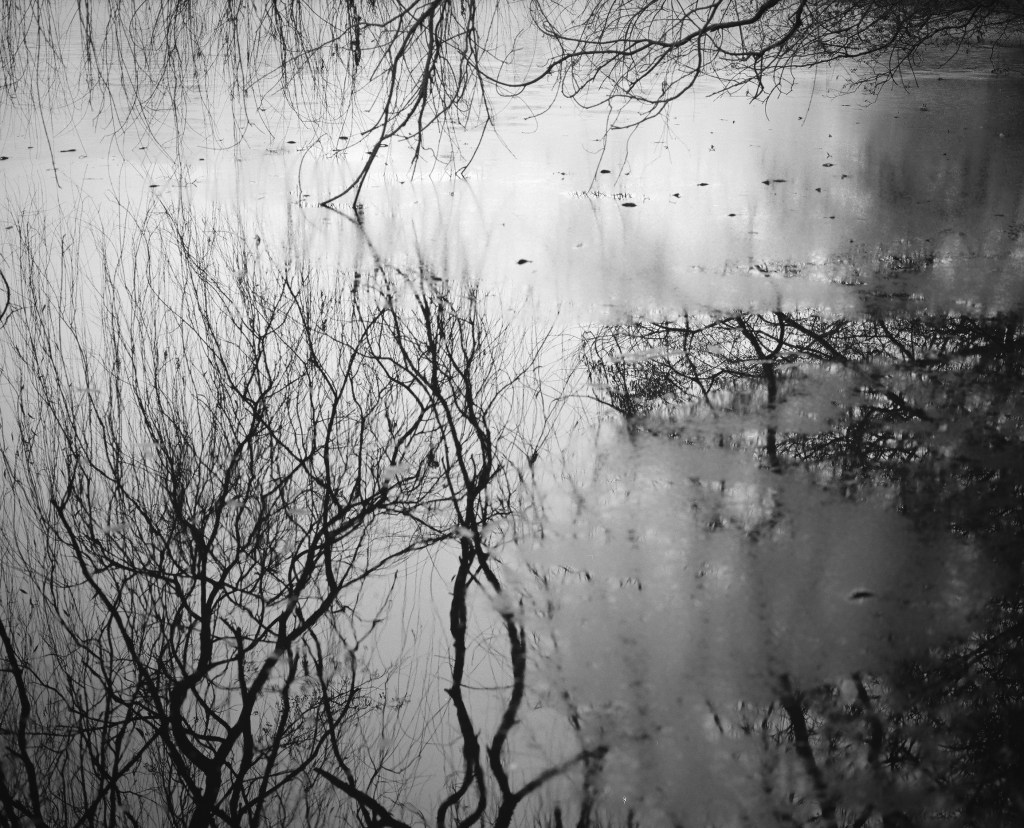
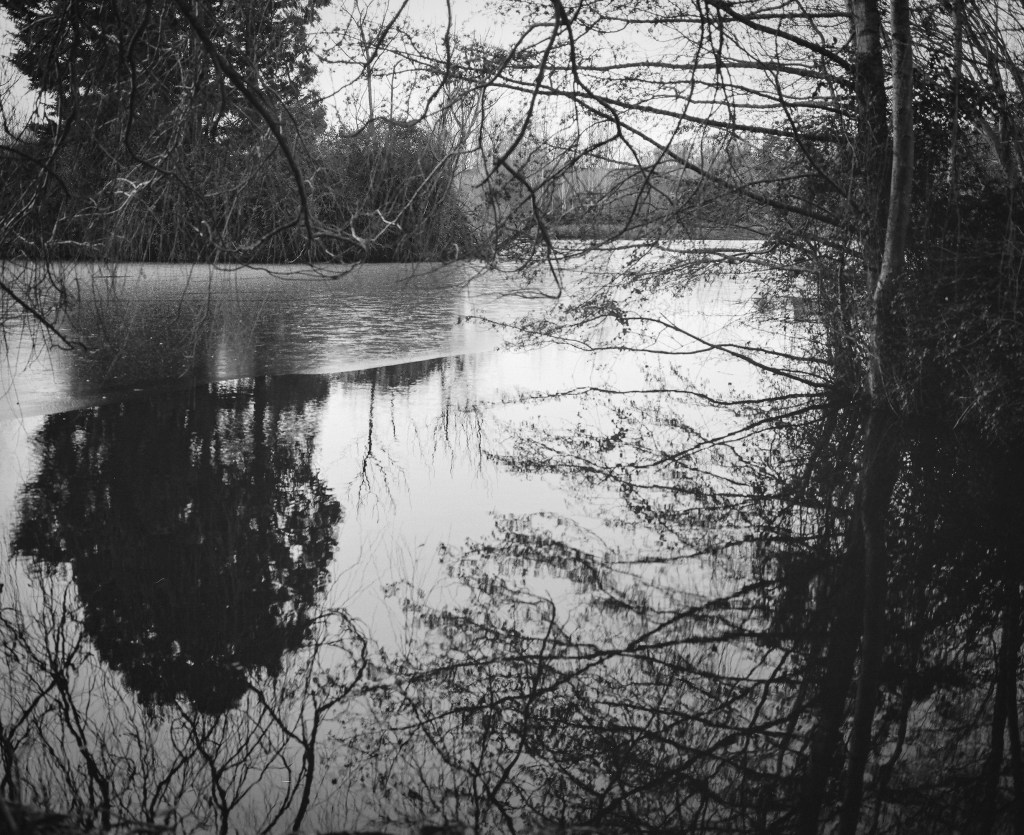
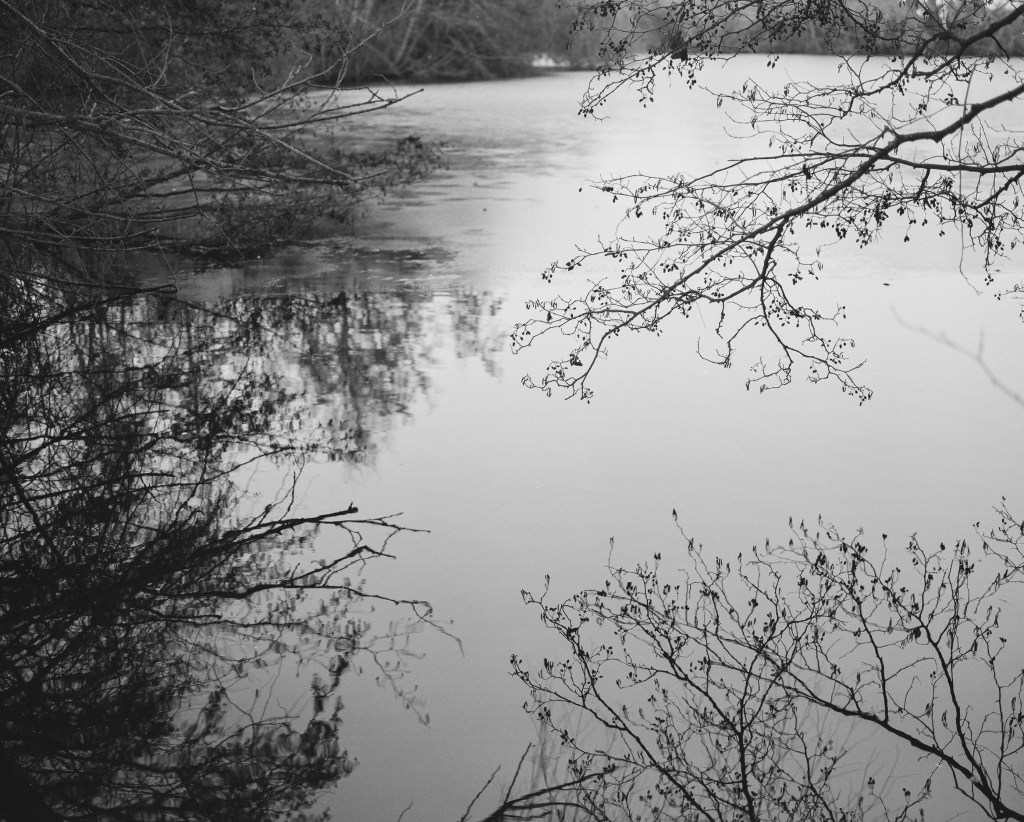
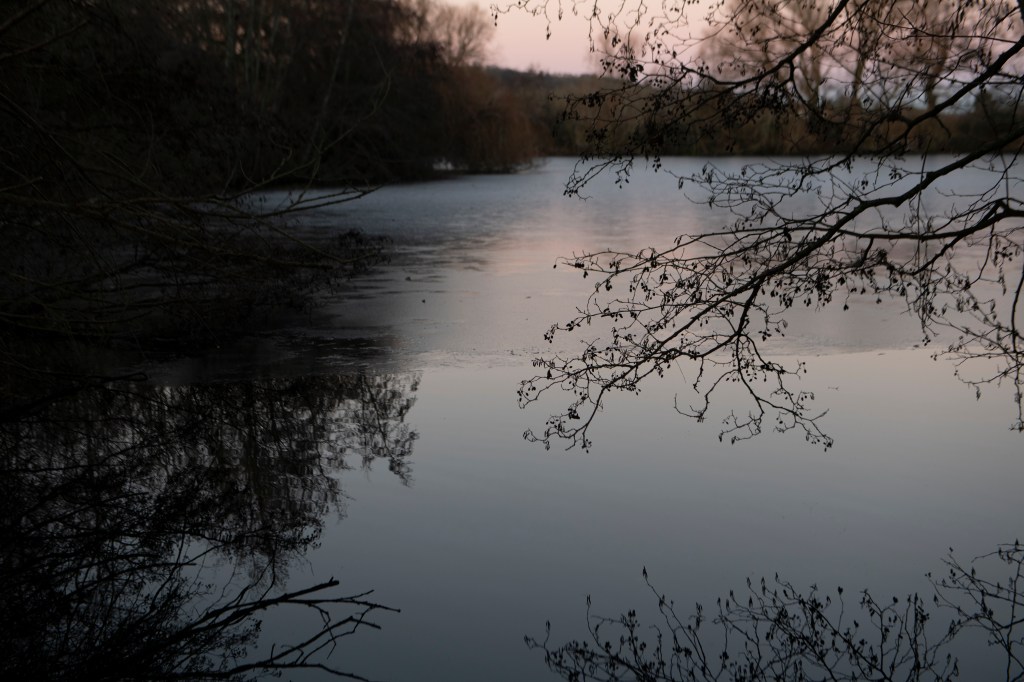
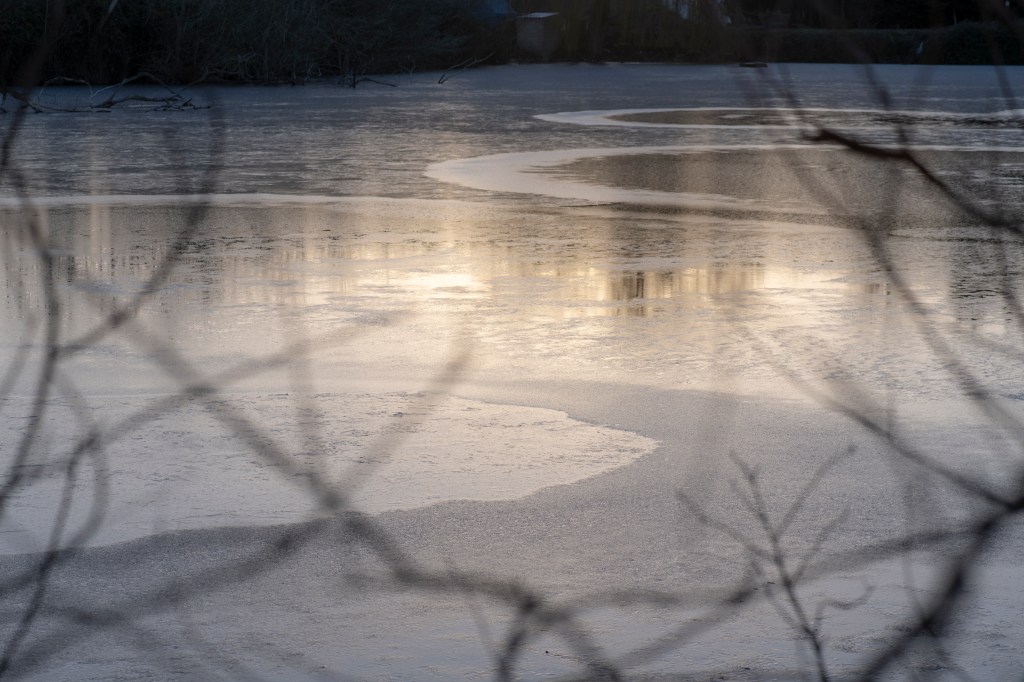
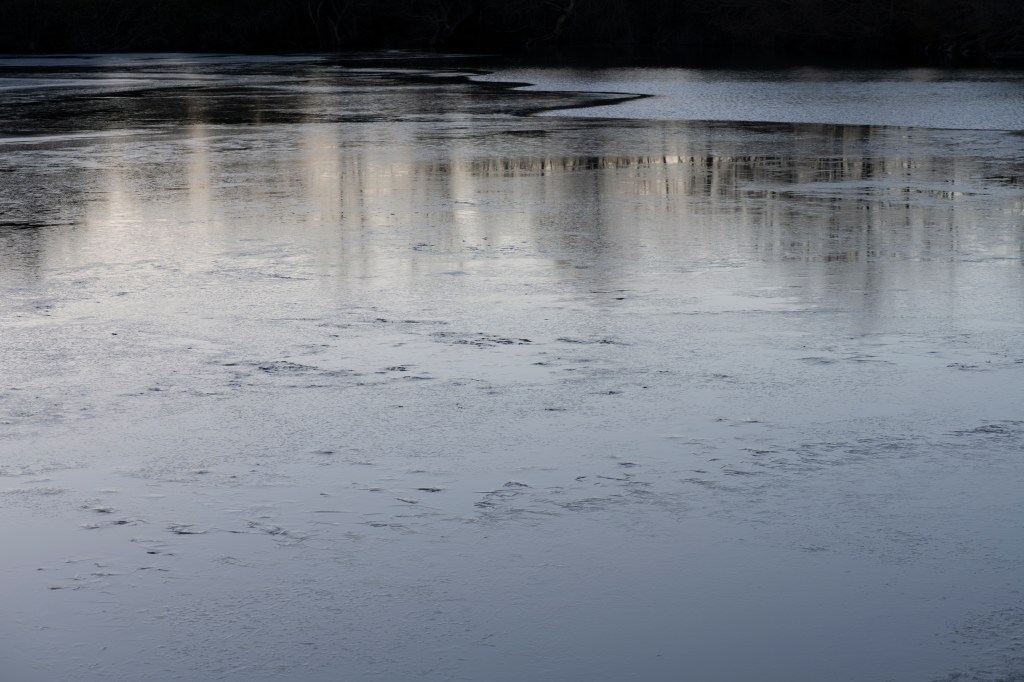
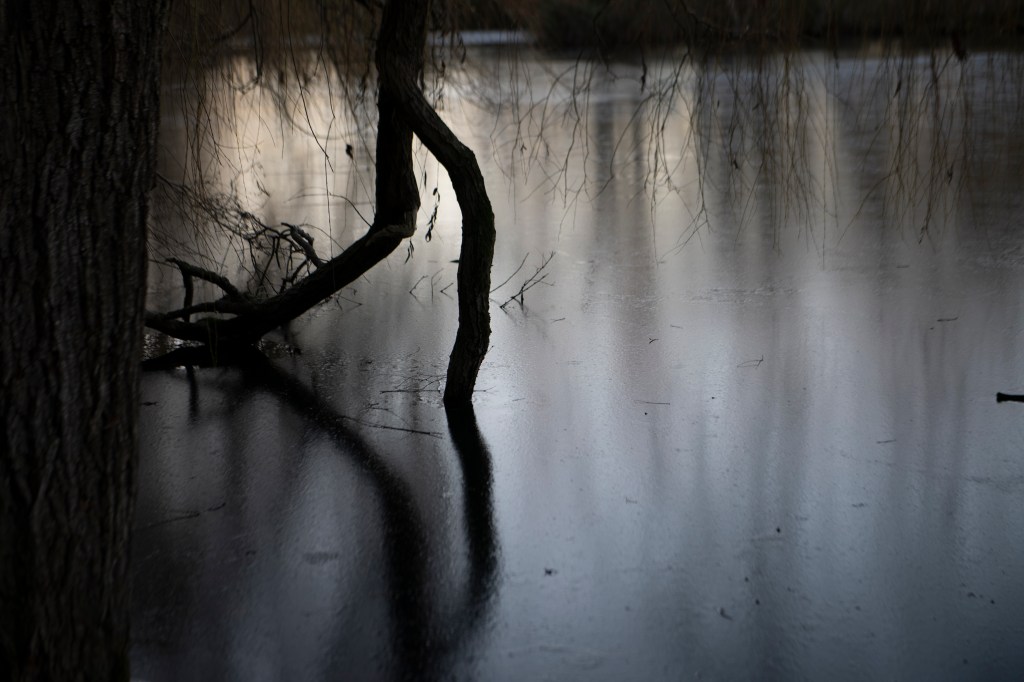
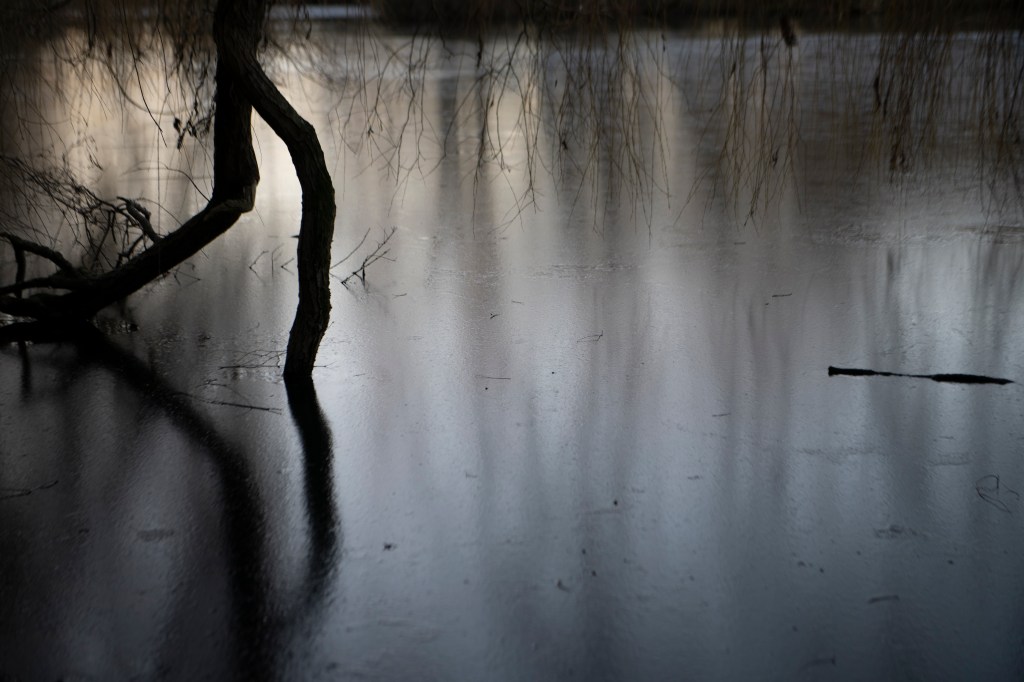
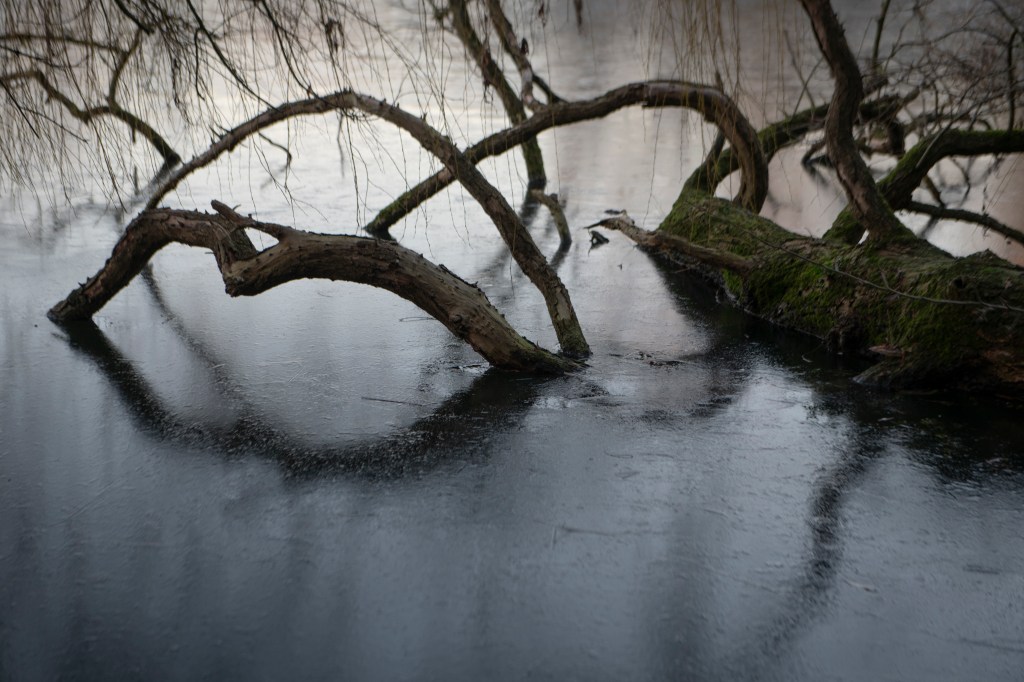
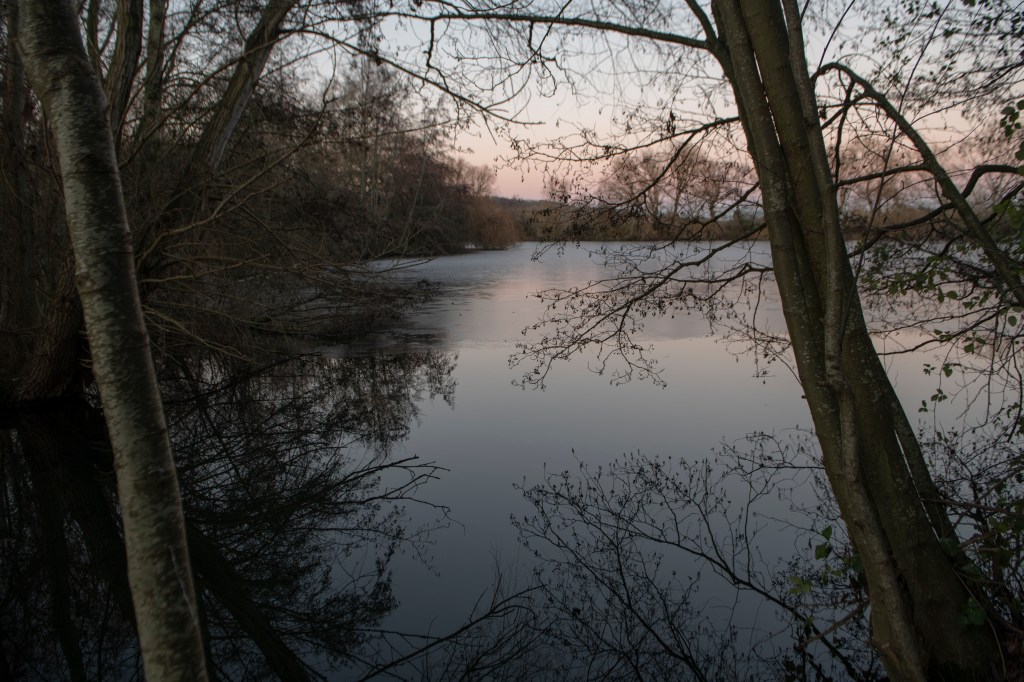
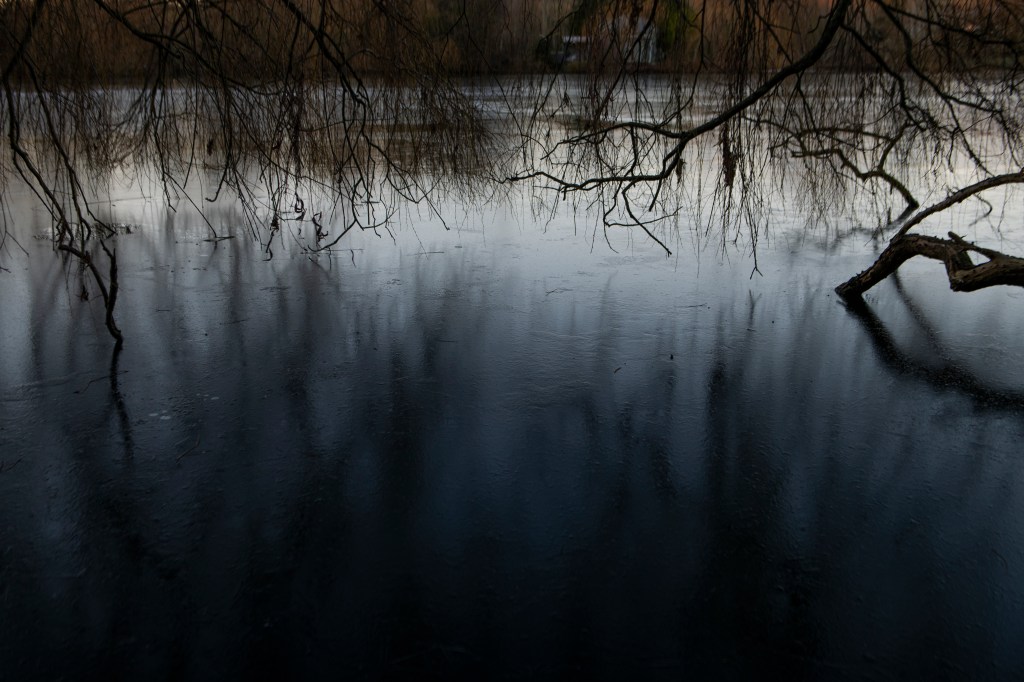
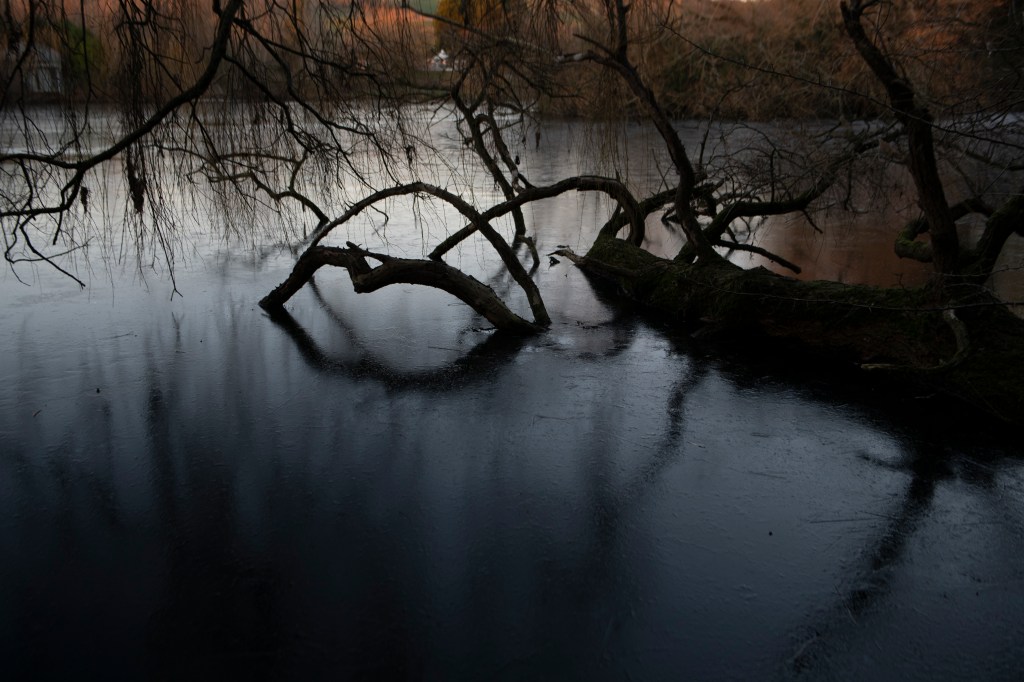
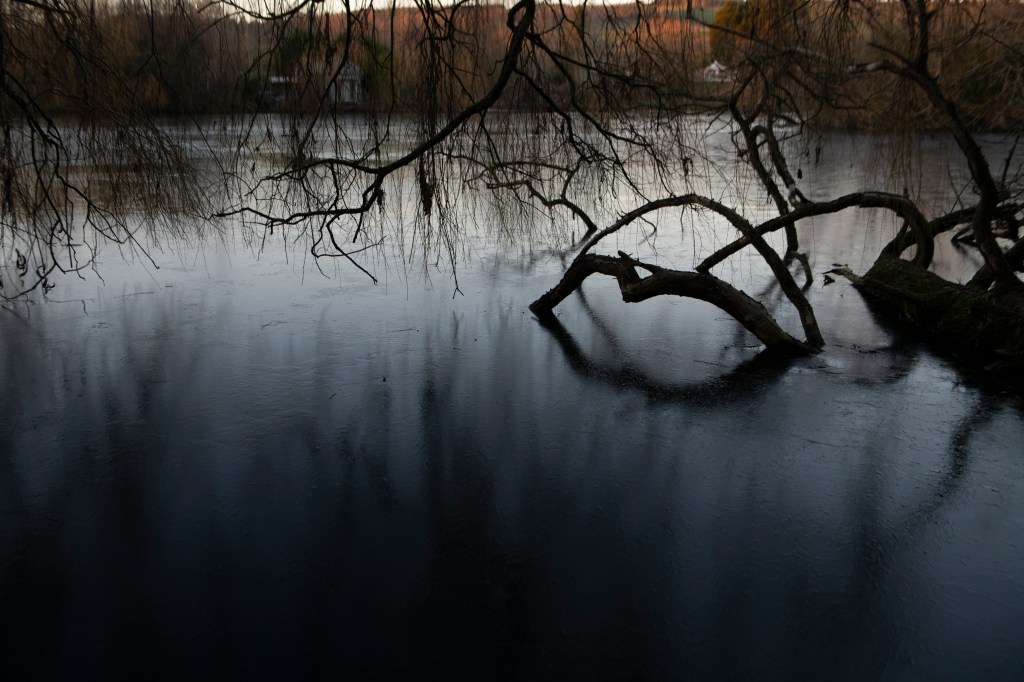
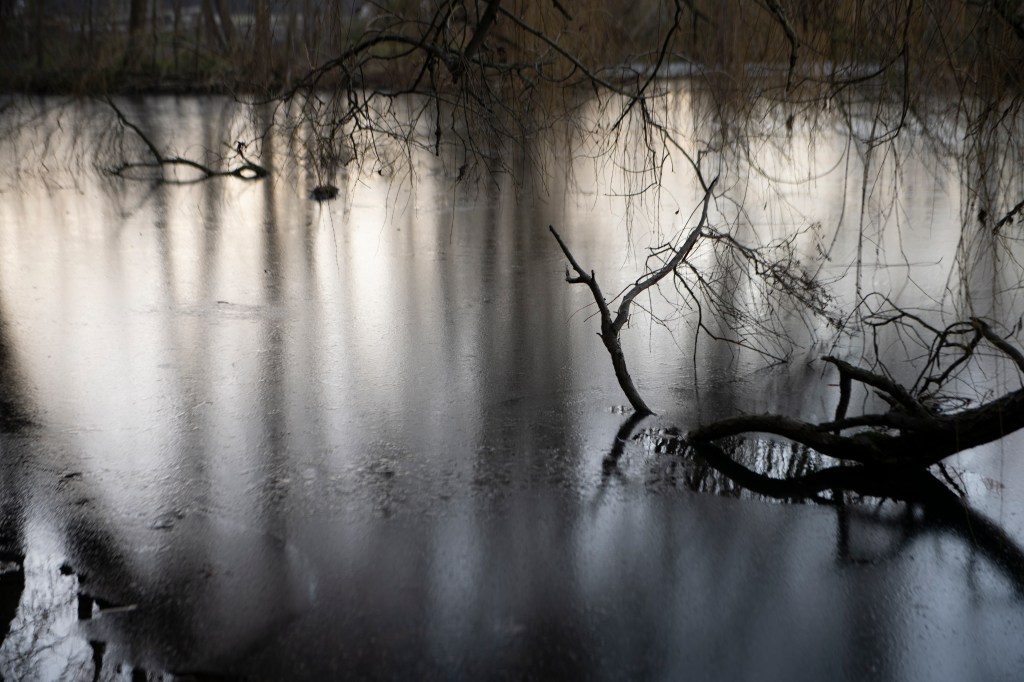
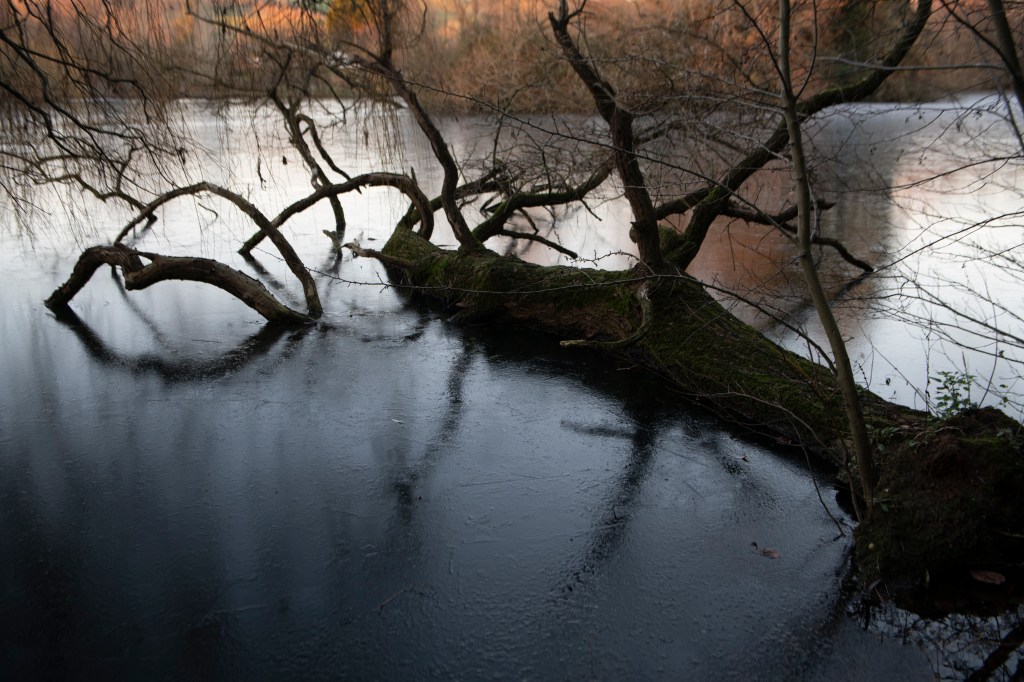
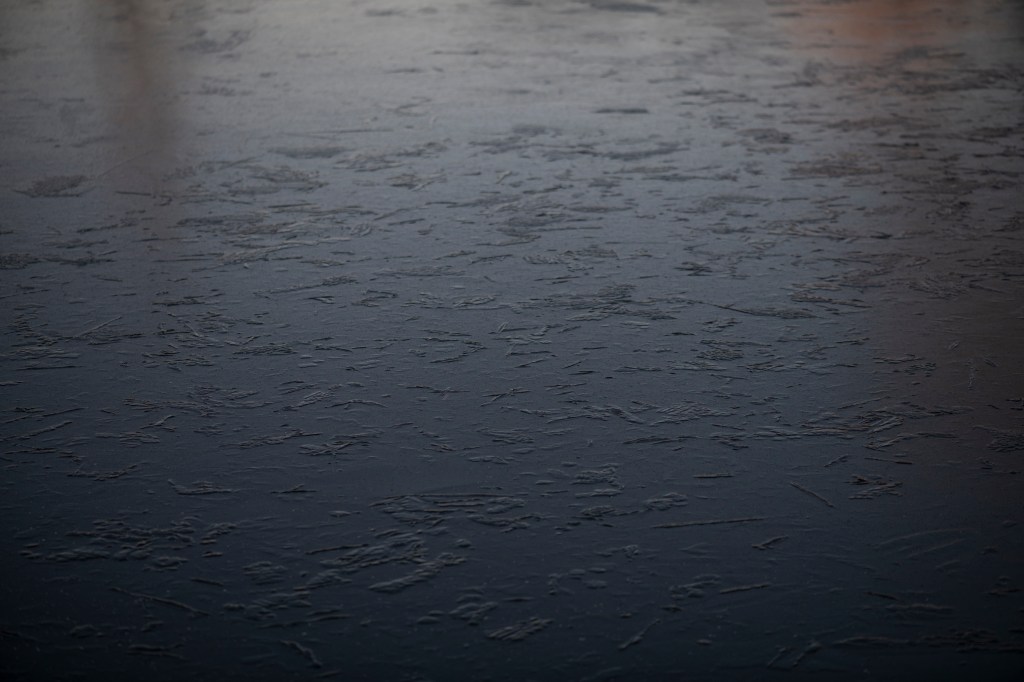
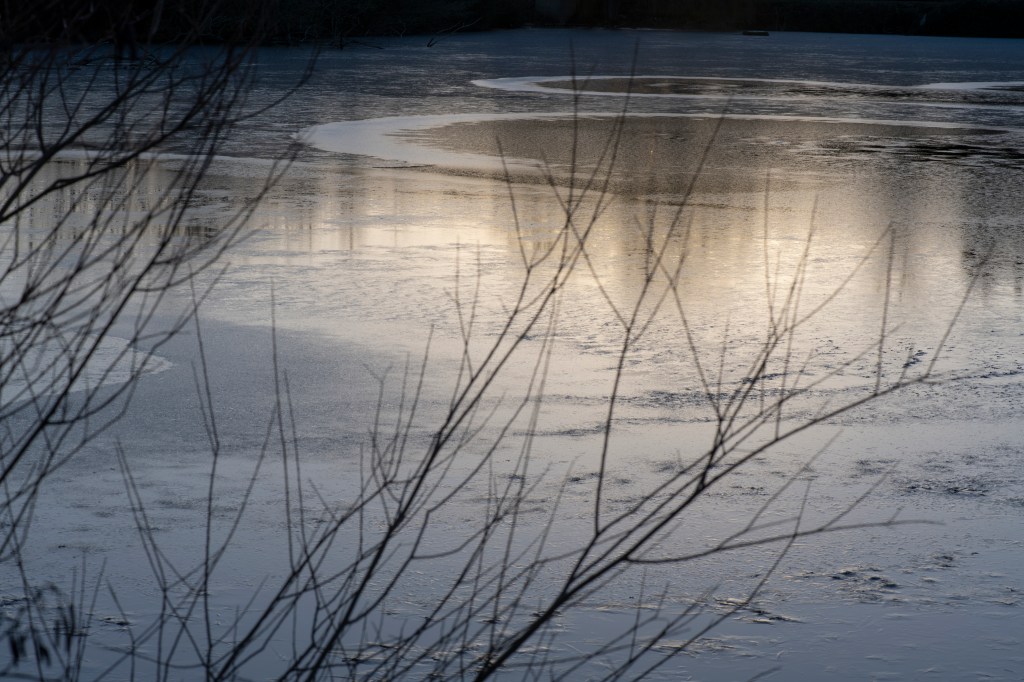
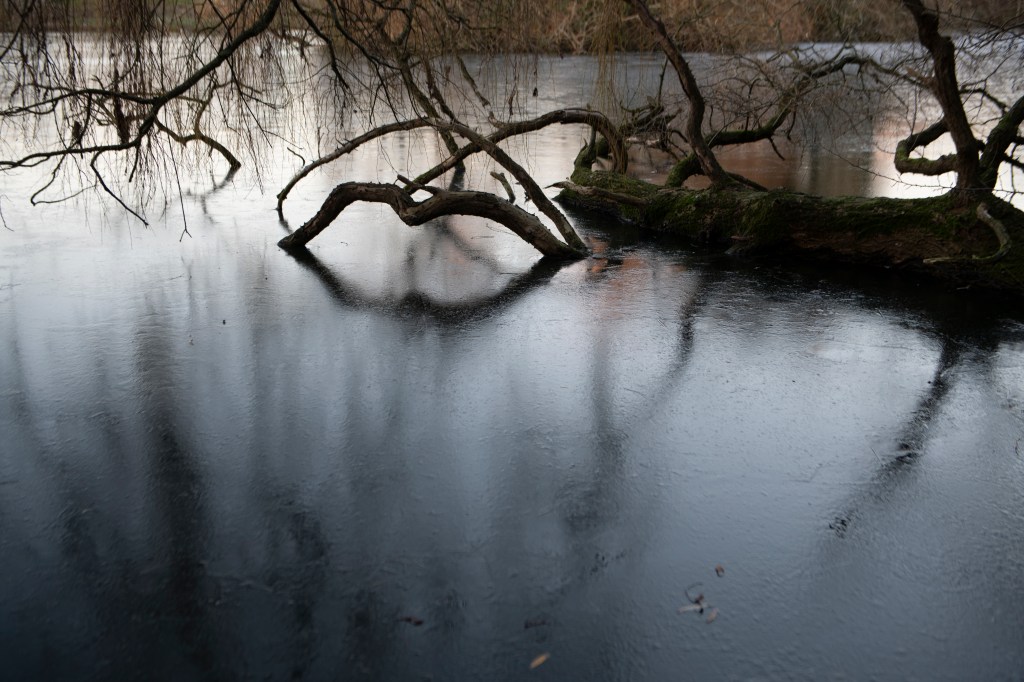
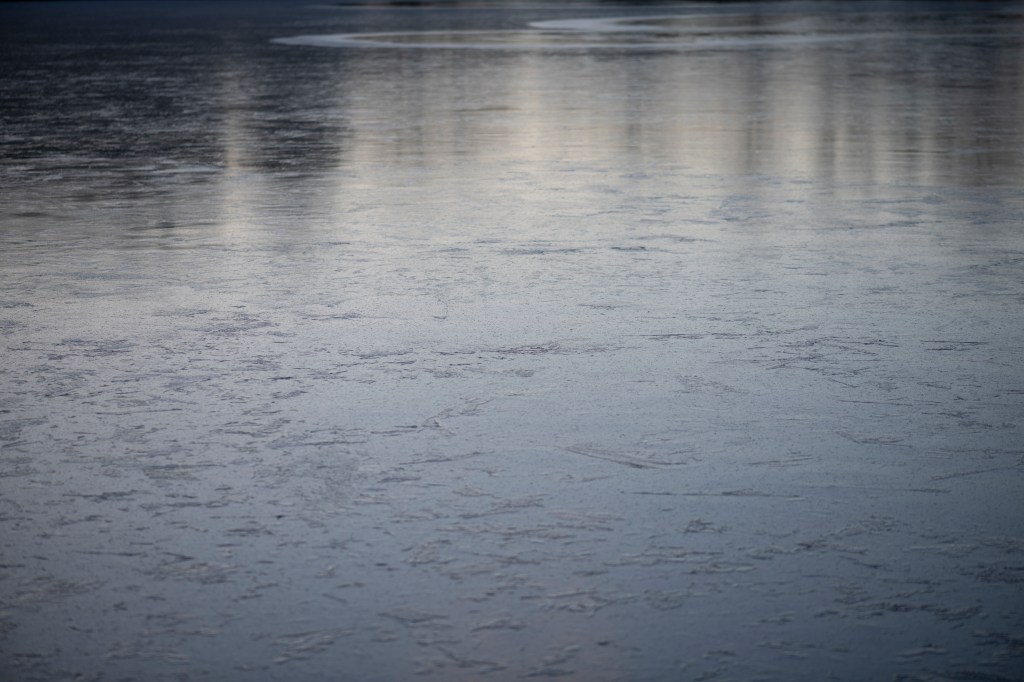
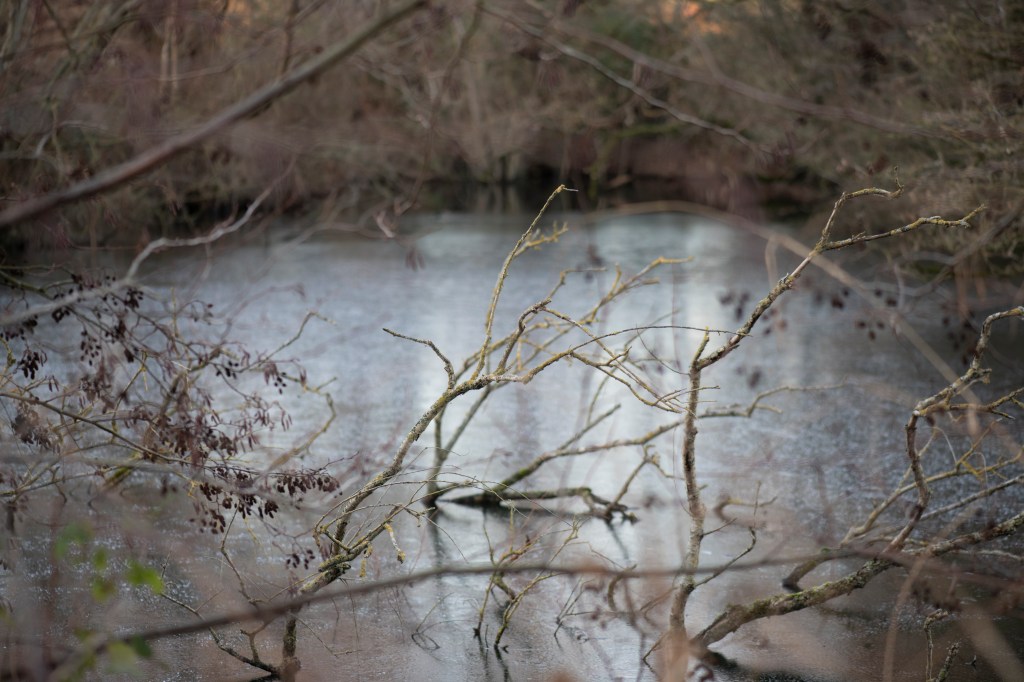
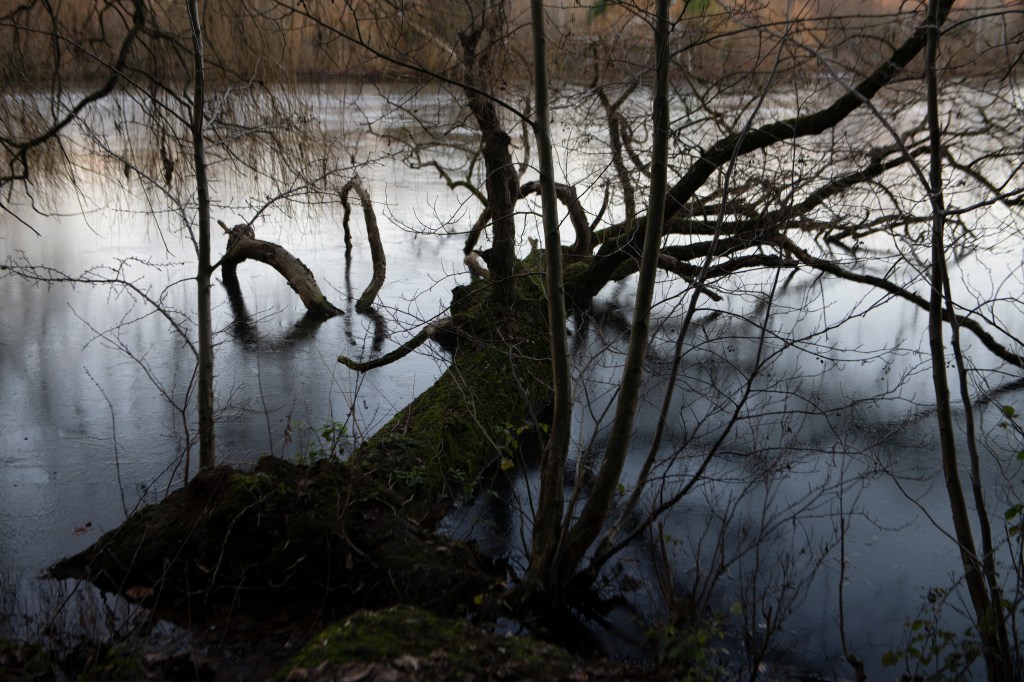
This is the analogue shoot I did alongside the digital one on the same day. I used Ilford 400 film, which has been reliable and forgiving in a broad range of conditions. I had loaded the film before heading to the lake, I wanted to photograph without having to think too much.. however, this did become tricky at times when I couldn’t feel my hands! I moved slowly around the lake, listening and feeling the environment. I studied the places I have walked many times before but noted how they were almost unrecognisable in this new, icy world. An entiurely different atmosphere exists, it was both eerie and intriguing. My curiosity meant I stayed much longer than planned, fascinated by the images frozen on the lake surface. I literally couldn’t stop watching. Nothing moved. It was silent and as the sun went down, a pink, orange, winter sky cast its image across the ice. It was so beautiful. I wrote a short poem in response:
winter spreads its cloak across the lake frozen images, as though printed on satin, hold soft light silence reigns, I just hear myself, living, breathing in place. Trees are looking down at me, their branches hiding the tiny spies who watch my every move.
I plan to use several images from this shoot in my final book. I love the texture in the images and the light, I keep reflecting on how easily I could have stayed at home in the warm! I would have missed out on an experience, let alone th opportunity for some photographs.
This is a slide show of my most recent shoot, this was during a frozen spell at the turn of the year, this turned the lake at Dacha into a whole other world. I spent a few late afternoons walking through here as the light faded, it had a completely different feel to it. There was no wind and it was eerily still you can see from several of the images that even with a slow shutter, there is little movement in the trees branches. There is a satin effect on the surface of the middle lake, I love how the fading light makes it shine silver, and the tree branches frozen in time poking out from the ice. There is a stillness to the photographs that signifies a sort of solitude and silence, which is as I have been trying to portray in my subject.
I was quite excited at the results of this shoot, Being able to view them immediately once I returned home, I could easily identify those which I would like to add to my list of potential images for my submission. I had also taken photographs in tandem, with my analogue camera. I was hopeful I might have some images from this that I could use in my book or for my final exhibition piece. I am still undecided on how I will separate my images from analogue / digital and colour / black and white. Or even, whether its necessary to have this as a concern at all.
Here I give more information about the key texts I have read during my MA, those which have had the most influence and given me the change of direction I needed, with which to help me identify my true interests in my practice. Although there is a lot of critical theory that I have studied over the course of this MA, these contemporary writers and experts combine many of the older philosophical views that I’ve researched already, therefore, I have chosen to expand on these, rather than unnecessarily repeat myself. I have listed other key influences on my page, to demonstrate my knowledge and sources in my post titled ‘Landscape Mindfulness & Photography‘
Tim Ingold
Landscape as seen as a temporal ‘taskscape’ by Tim Ingold. Regarded as ‘the familiar domain of our dwelling…and through living in it, the landscape becomes a part of us, just as we are a part of it. His book The Perception of The Environment (Ingold, 2022) has been essential reading in helping me to understand the concepts of landscape, dwelling, space and place. Ingold adopts the dwelling perspective, having been influenced by the philosophy of Martin Heidigger (p190) Like Heidigger, Ingold argues that humans are not simply detached observers of the world but are already deeply involved in it.
This reminds me of a book I read called Braiding Sweetgrass, written by Robin Wall Kimmerer (2013) She is a member of Citizen Potawatomi Nation, an indigenous tribe, originally from the Great Lakes area of the USA, and who are well known for their cultural resilience. The book demonstrates a culture of reciprocity and of being ‘in’ nature, not separate to it. In doing so, there is no objectification, just an unquestionable sense of being part of the land, alongside all the other elements. Her work is predominantly focussed on “restoration of ecological communities and restoration of our relationships to land“. I recognise aspects of this culture running through the ideas presented by Ingold/ Heidigger. They both reject the idea that people first think about the world and then act on it, instead emphasising lived experience and practical engagement. For both, meaning comes from dwelling in the world through everyday activities rather than from abstract thinking or viewing the world from a distance. This research does emphasise how the Potawatomi relationship to land and nature is much more connected and instinctive than our own.
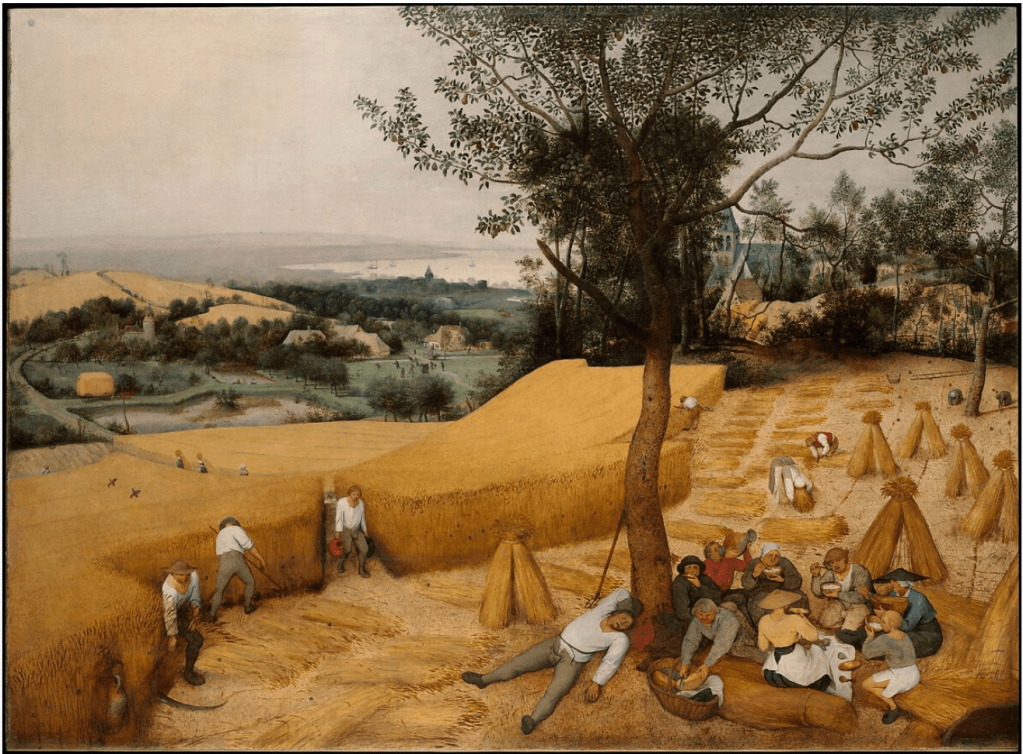
In the chapter ‘The Temporality of the Landscape’ (p234:258) Ingold uses the example of a painting, ‘The Harvesters’ by Pieter Bruegel the Elder (fig 1), to illustrate his views in the essay (p250) This was especially useful to visualise his key points. He dissects each landscape element into their individual components; the hills and valley, paths and tracks, the tree, the corn, the church and, the people. He demonstrates how each of these elements is measured by time and has been shaped by the lives present and past.
Fig 1. ‘The Harvesters’ Pieter Bruegal the Elder, 1565
Key points to be made about the painting:
The land is not an abstract surface or property but a worked ‘lived’ ground
It has evidence of historical labour – paths, hedgerows etc
shaped by repeated human engagement
Trees show a different temporal rhythm to humans and coexist, they are not background scenery but active elements of the landscapes becoming
grain represents seasonal growth and the rhythms of agriculture, they show the interdependence of labour and natural cycles
The painting shows a specific moment within the year (late summer harvest)
The church indicates long term habitation and along with other buildings signal ongoing dwelling
The harvesters are shown working, resting and eating, in different phases of carrying out their tasks, which forms the basis of the ‘taskscape’
People are not separate but part of the landscape
Ingolds book altered the way I understand my surroundings, in so far as I could validate my personal response to it. I have used his method of describing the painting below when I initially try to immerse myself in my environment, as a way to distract myself from my usual thoughts. I sense the lives before me embedded in the landscapes I document, especially related to Ingold’s concept of taskscape; my grandfathers work in Guiting and surrounding area is particular resonant here, plus the stories I’ve heard and photographs I’ve seen relating to my stepfathers ancestors and the gradual creation of their personal landscape at Dacha. In seeking to understand my visceral response to significant places, his writing is probably most significant.
Christopher Tilley
In his book ‘A Phenomenology of Landscape: places paths and monuments’ (Tilley, 1994) Tilley argues for landscape being an embodied experience – our body is the primary way that we engage with the world. Slightly differing from Ingold’s perspective, who emphasises more of a ‘doing over sensing’ approach. Tilley’s philosophy proposes we engage with it through being in it; through perception (seeing, hearing, touching), bodily actions and movements, and intentionality, emotion and awareness residing in systems of belief and decision making, remembrance and evaluation’ (p12) So, landscape then, is an experience, not just an observation, as far as Tilley is concerned. It becomes known through sequences of movement and memory with its past shaping its present and future in our minds. Tilleys arguments mirror the philosophy of Merleau-Ponty , whose emphasis is on perception, movement and being in the world.
To show my understanding of his book, I have included my entry for the annotated bibliography I completed for 7802, to view in its original context, refer to p32 in my Notions of Home Essay:
“This book by Professor of Anthropology, Christopher Tilley, combines insights from phenomenological discourse in ‘philosophy, ..anthropology, human geography and..archaeology’ (Tilley, 1994, p1) At the starting point of the book he interrogates ‘theoretical perspective on the significance of spaces, places and landscapes’(Tilley, 1994, p1) referencing well established phenomenological research (Heidegger, Merleau-Ponty) to establish the significance of the topic, then for the second half of the book Tilley examines an ancestral relationship & perception of place within landscape, using evidence from civilisations in Wales and Southern England. He illustrates with examples of Mesolithic material finds as evidence of those ancestors identifying with place in relation to its setting and conversely, the Neolithic understanding of landscape was in terms of relationship, shown with the setting of monuments. The spatial relationships and topographical aspects discussed in this book, offer rational explanation of my own interest and sense of place within the area I work. It is an area that is rich with cultural heritage and an informed understanding of these sites will provide a fundamental aspect of understanding my own practice in relation to landscape photography” (Taylor, 2024: p32)
Mamiya 7ii 80mm lens. Handheld. Shot at around 7.30pm, bright sunny day.
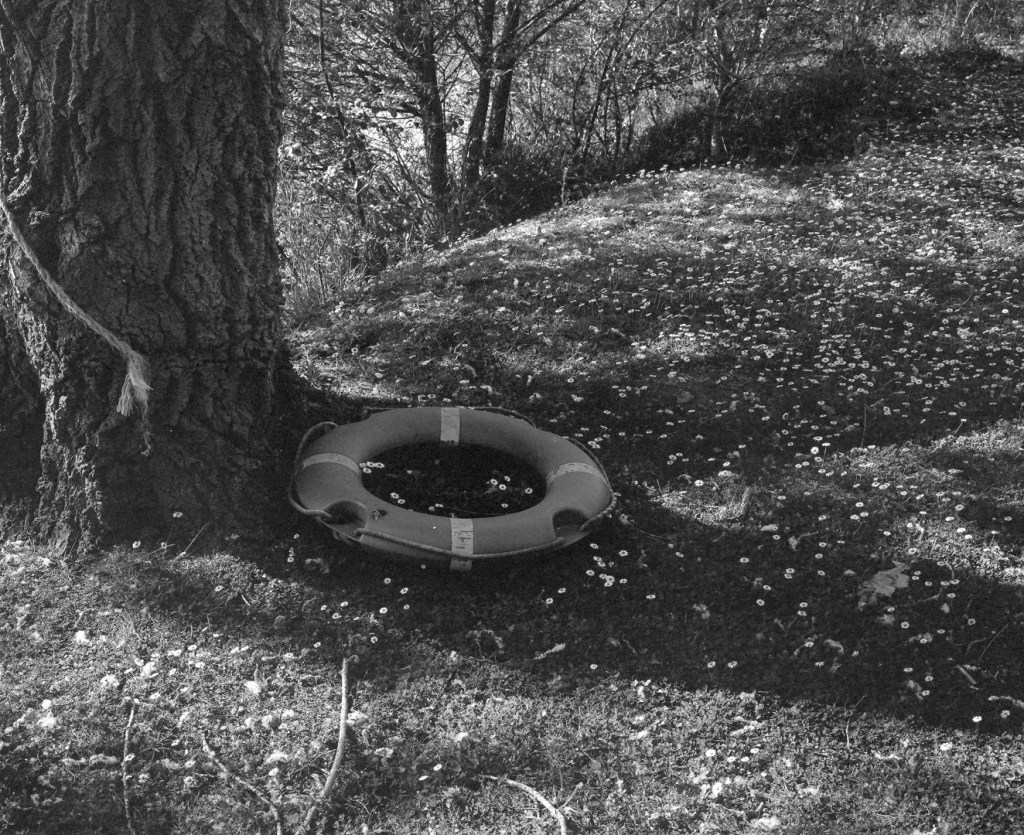
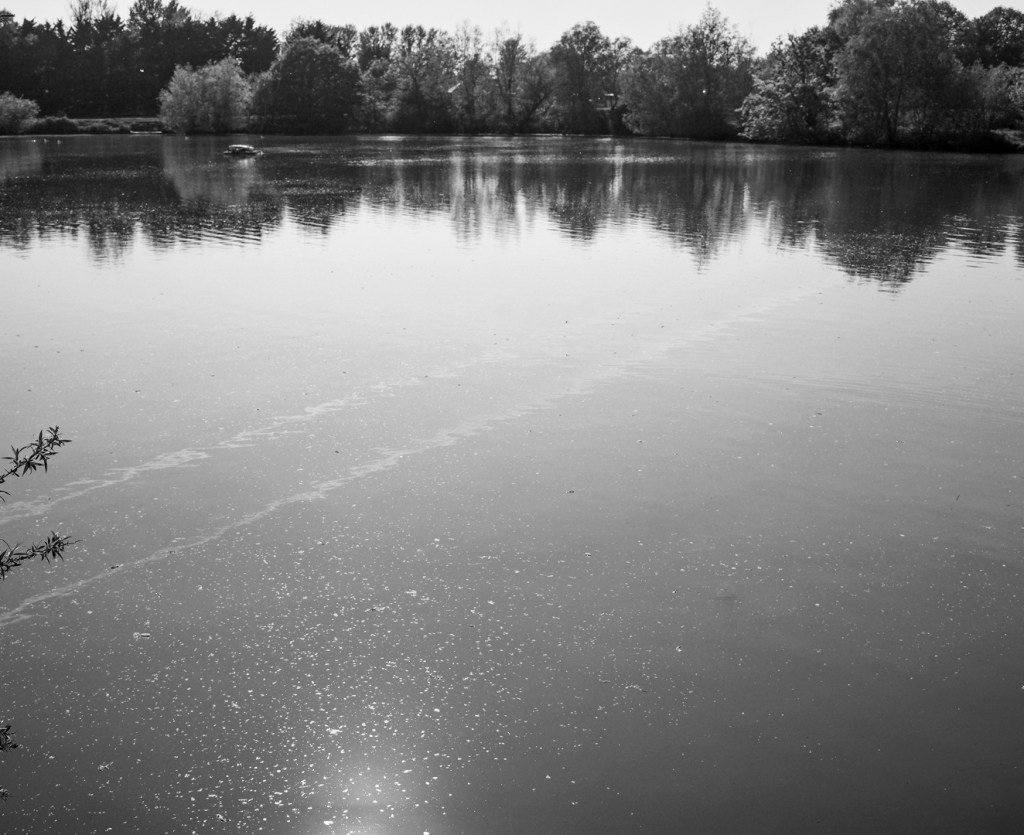
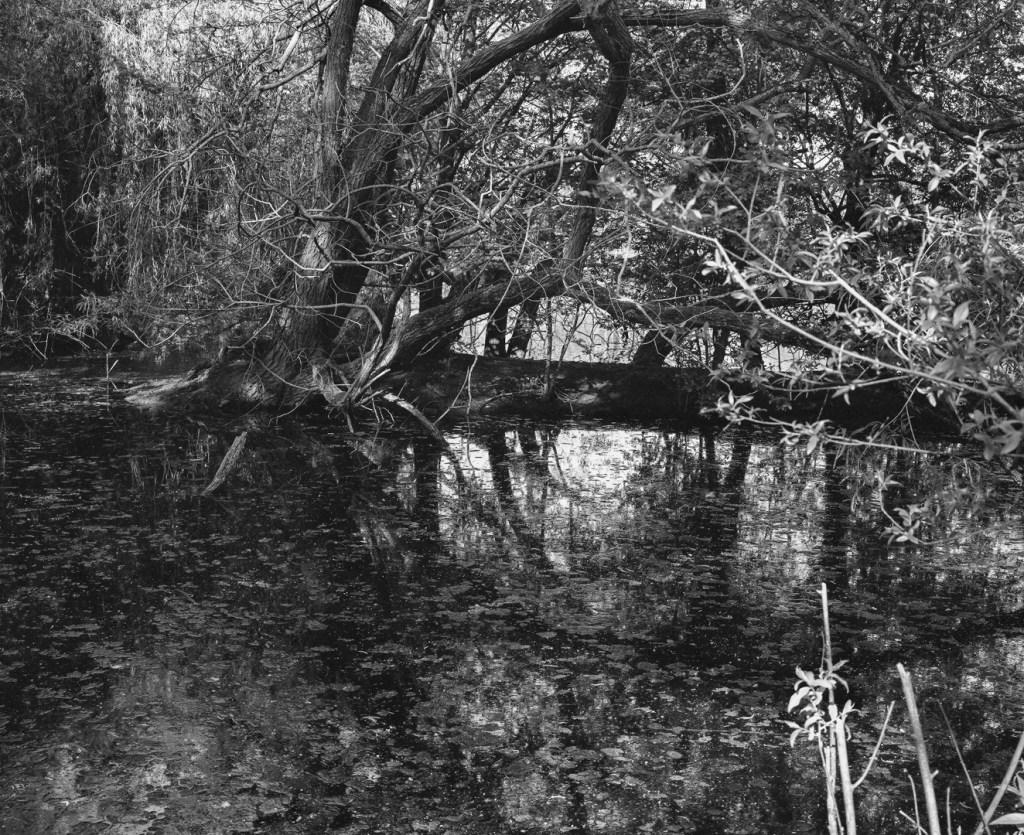
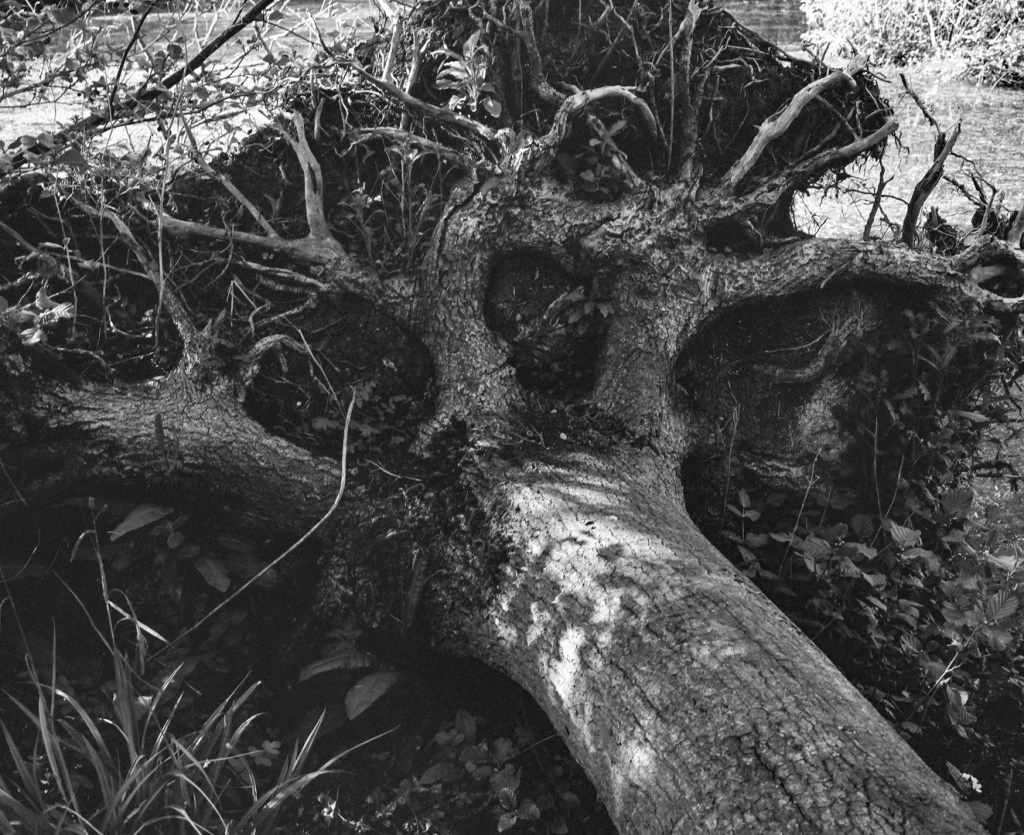
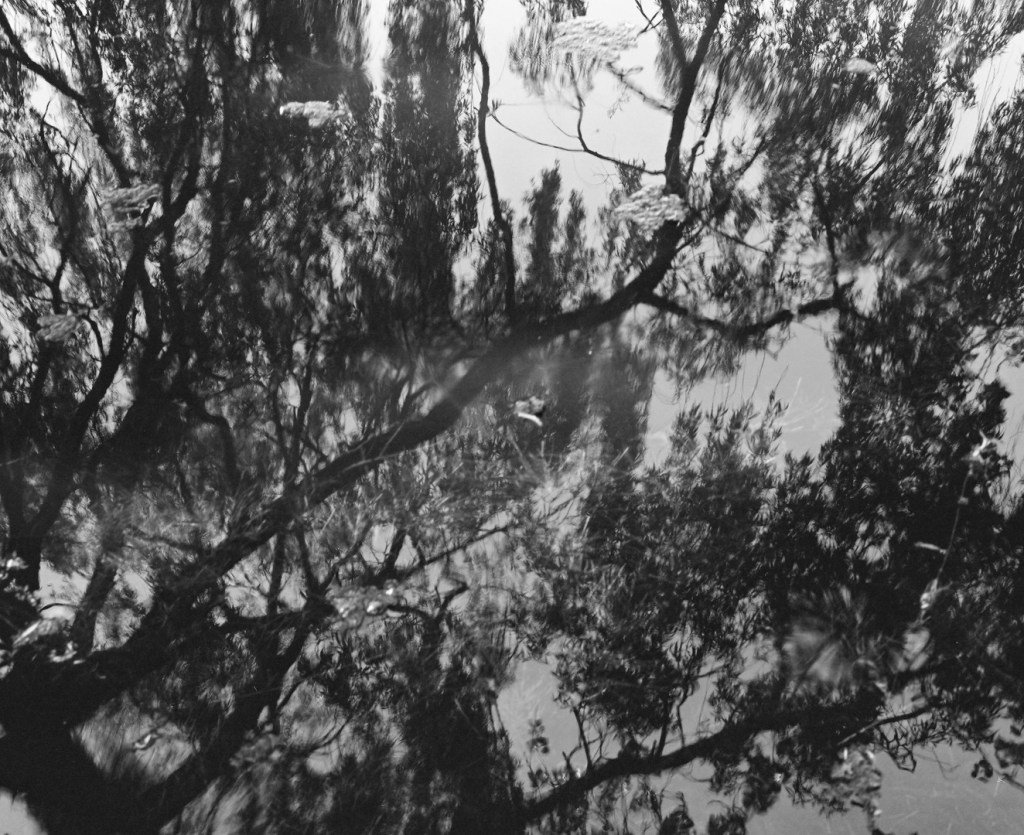
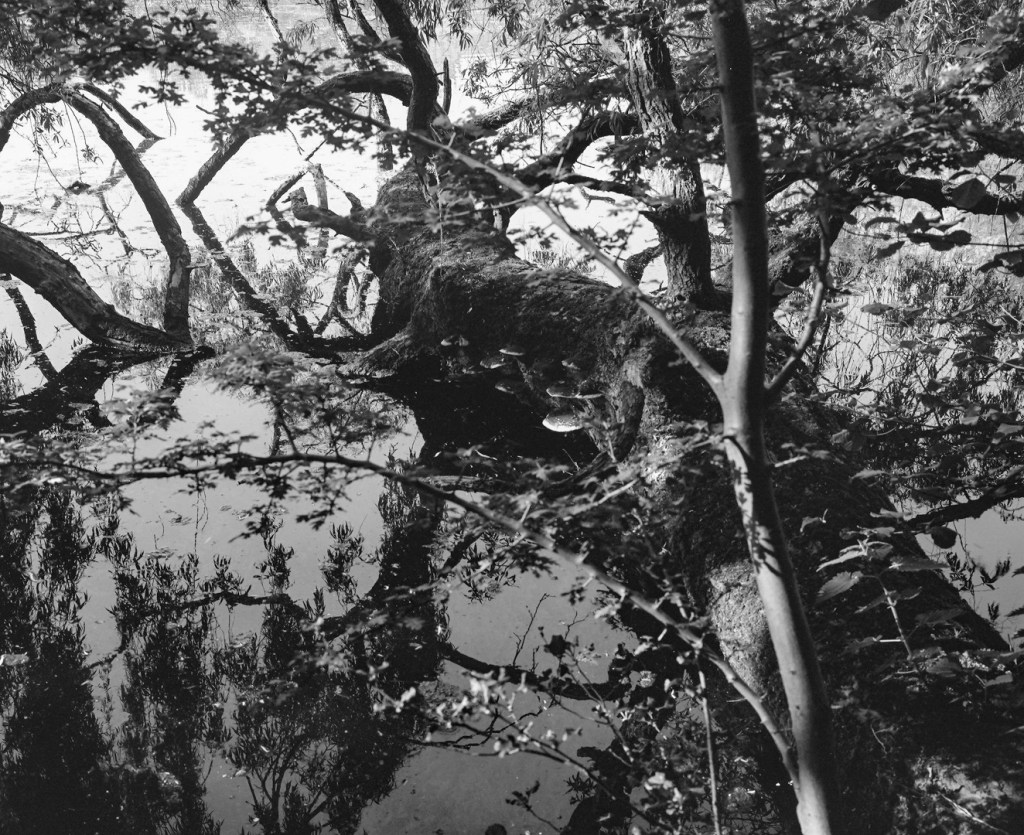
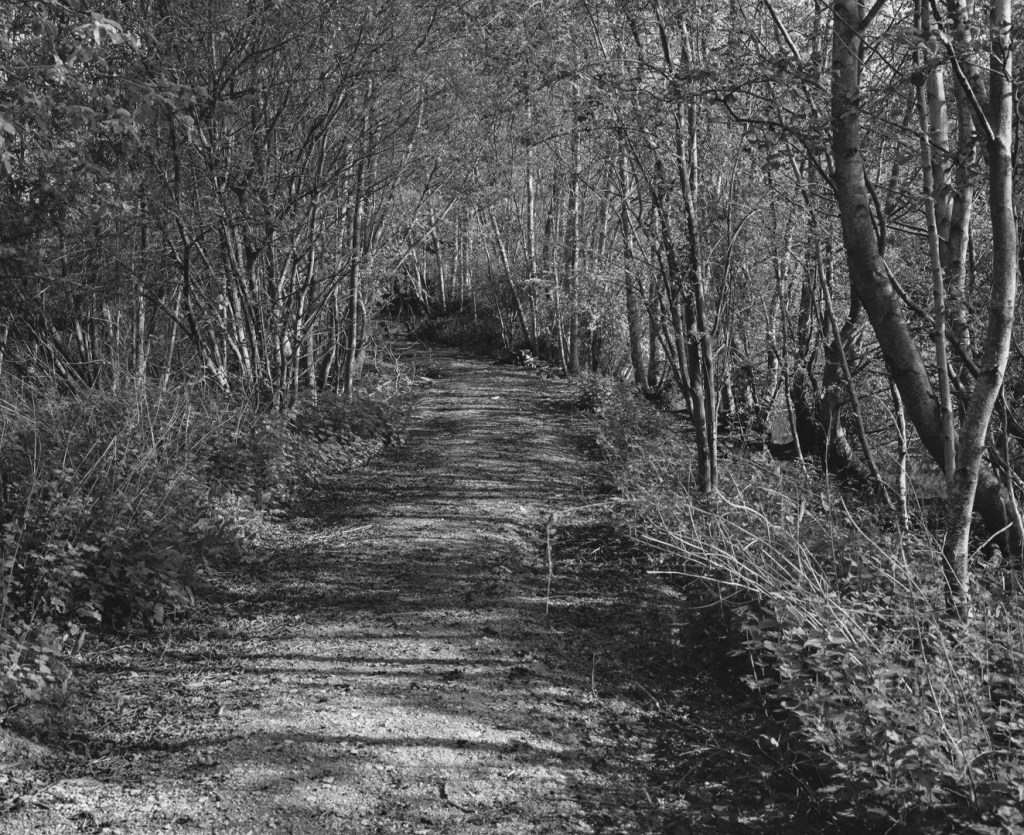
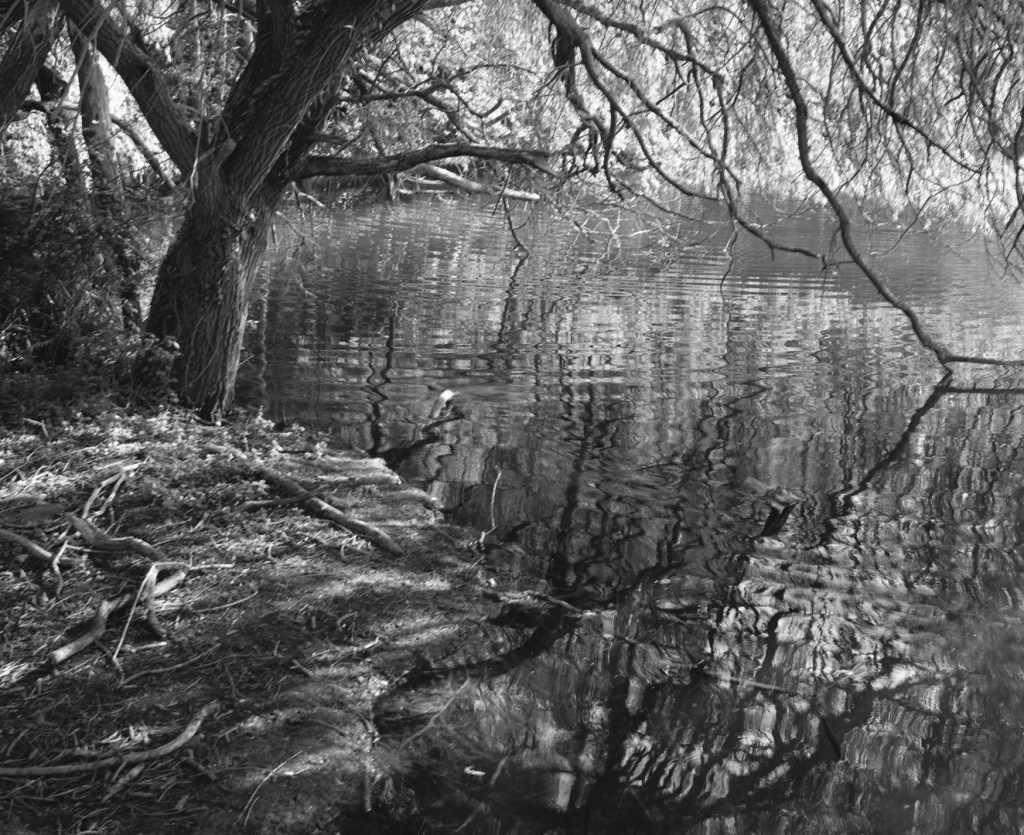
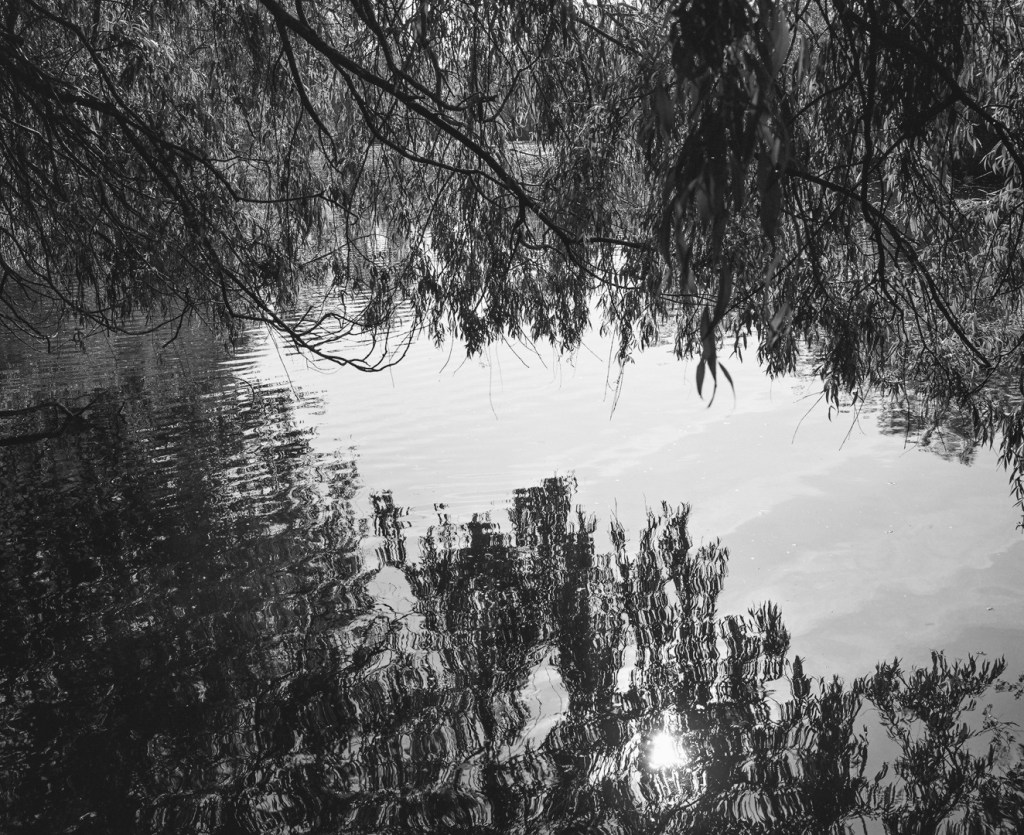
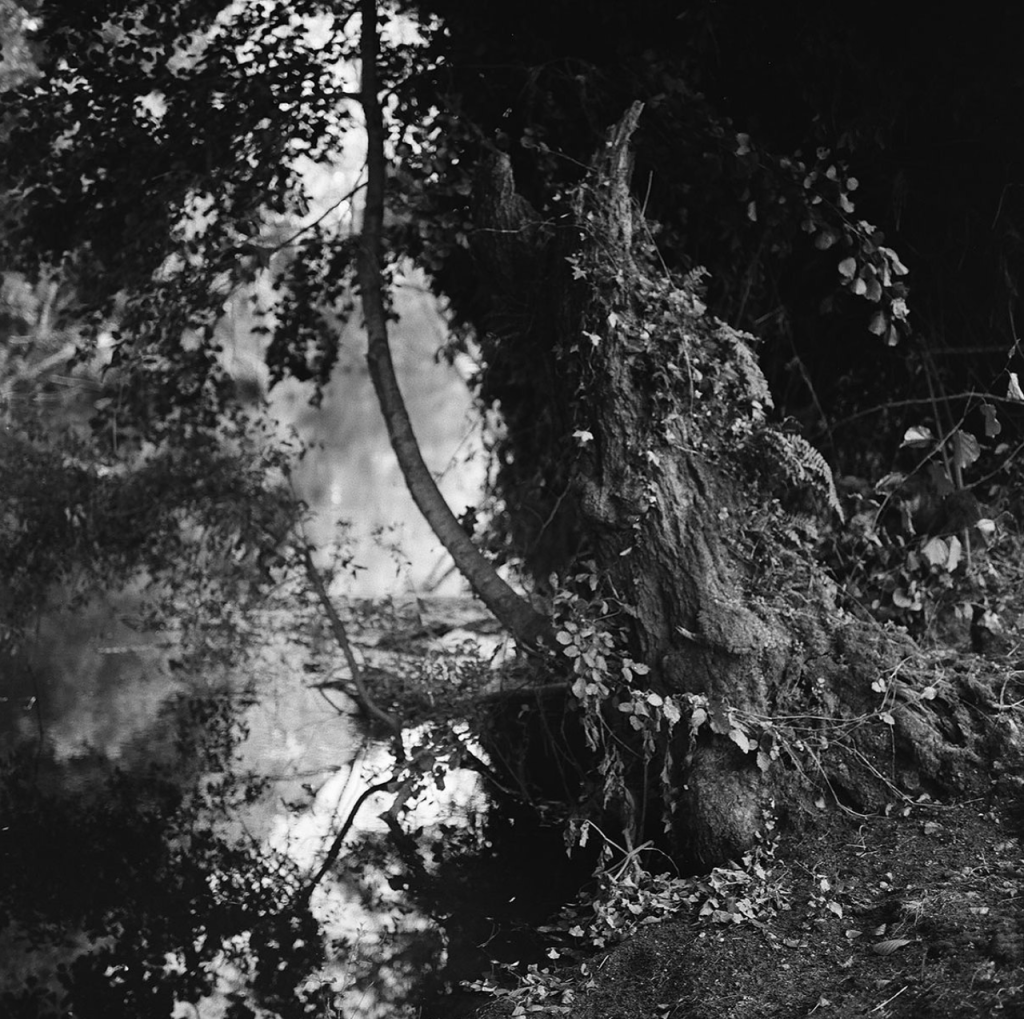
This was a particularly bright day, I had Delta 100 film in the camera, which I don’t normally use but I wanted to give it a try. Immediately it appears more metallic than the Ilford that I’m used to but that’s not to say I don’t like these, on the contrary, I can see how some ambiguity and abstract compositions might be an effective method of conveying my theme. The images remind me a little of some of the photographs from a series by Marjolein Marjolein in her series ‘Riverland’ (fig 1)
Fig1. ‘Riverland‘ Marjolein Martinot, 2022
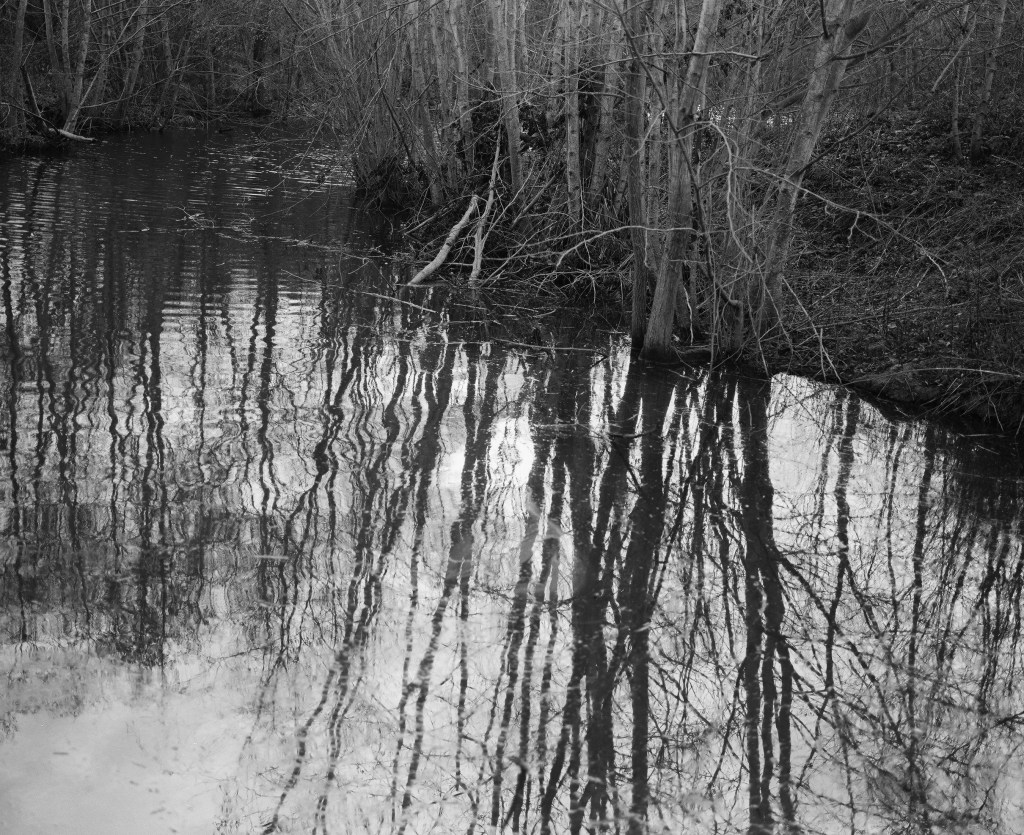
My favourite image is no 5. At first it looks as though it could be a charcoal drawing and then I noticed the reflections, you can see the bottom of the lake because the water is so clear, there is debris on the surface, reflections from the trees above, the weed and debris on the bottom makes it a possibility for a large scale print.
I had explored the lakes slowly, having already been around once with my digital camera. I tried to think about my surroundings, the heat had been quite intense and was levelling off a bit given the time of day. There was a very distinct stillness all around, insects could be seen above the water, and light bounced off every shiny surface. All in all it was a perfect summer evening. The was a a lot of algae visible on the surface of the water, in some areas make it look like solid ground. Under the shade of the woodland I photographed under the canopy of the trees, I noticed the reflections and the shapes they made, the initial investigation with the digital camera really enabled me to pause and reflect more on a second walk around. Its worth using this method of documenting and exploring again, it is as if I need to use up some mental and physical energy first.
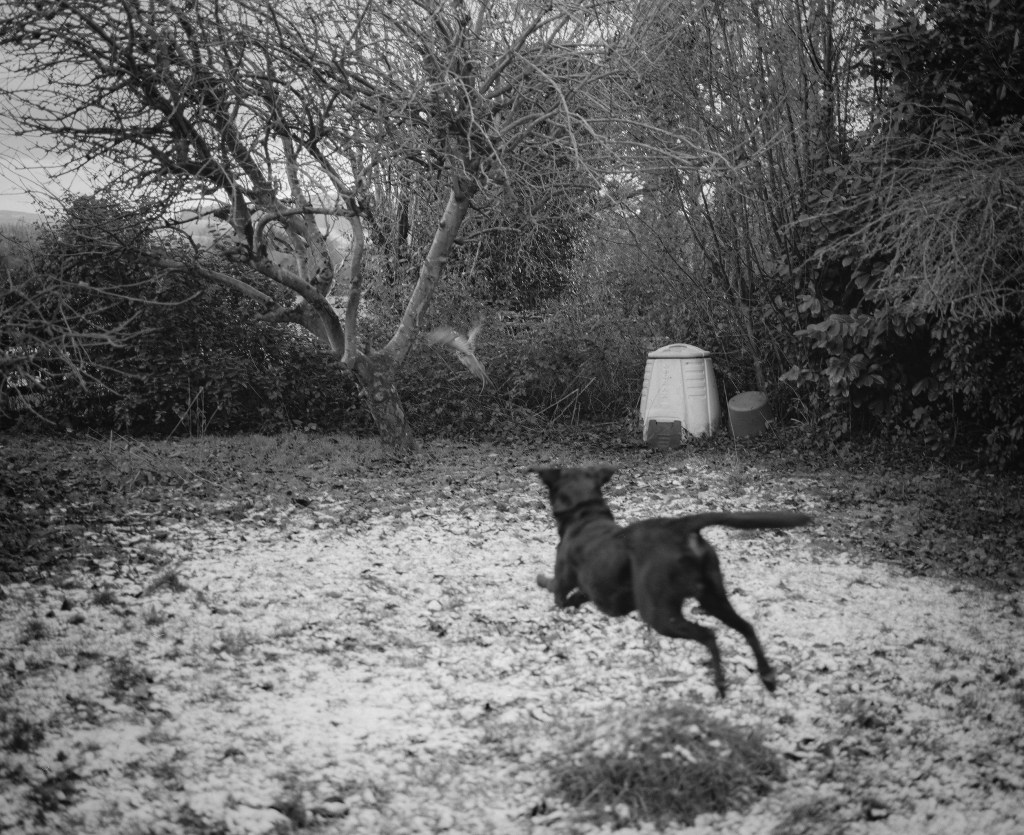
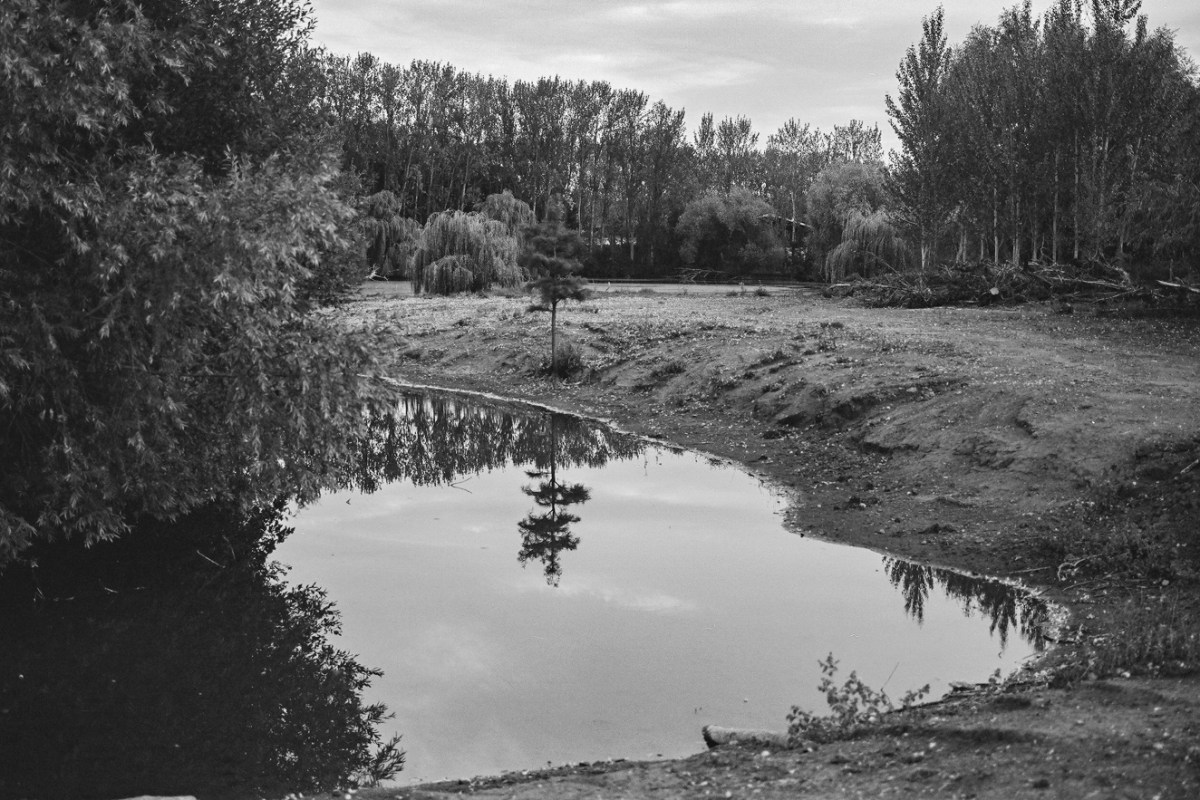
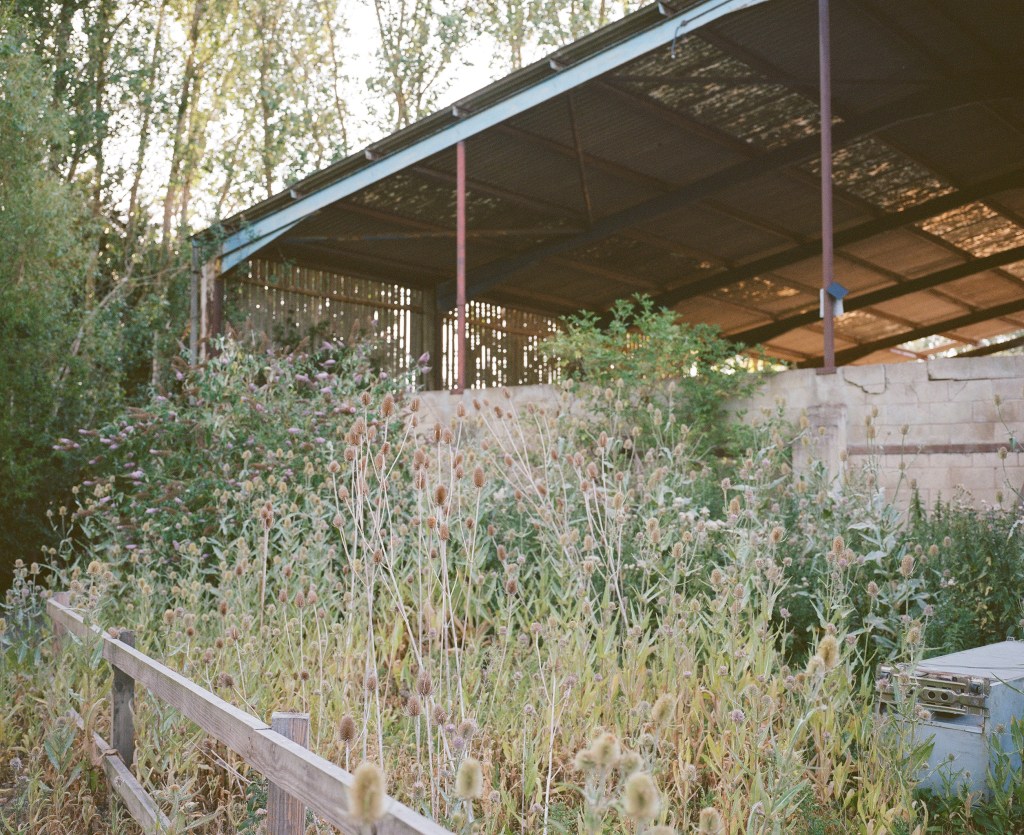
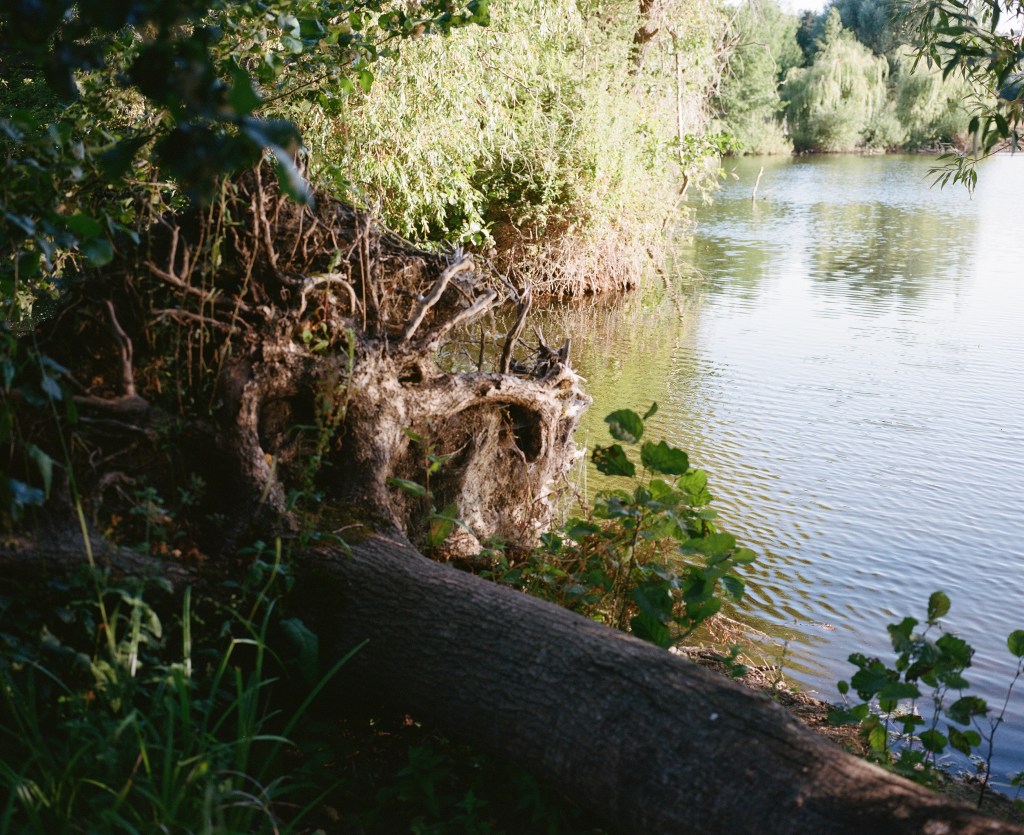
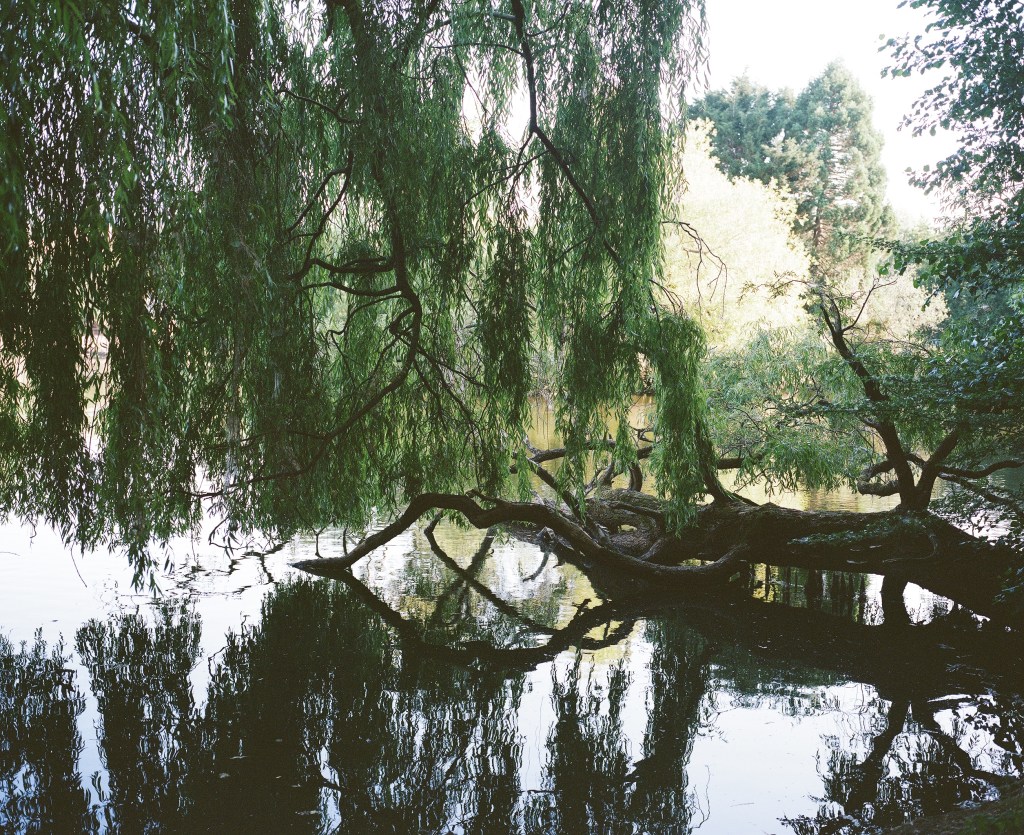
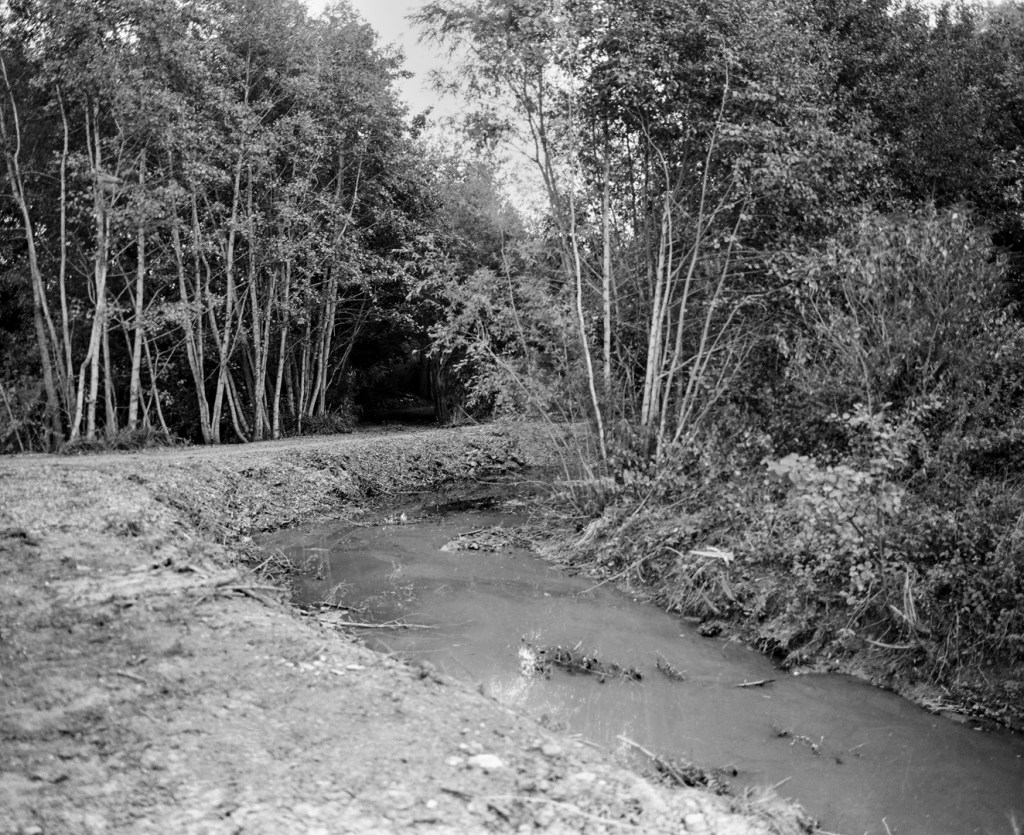
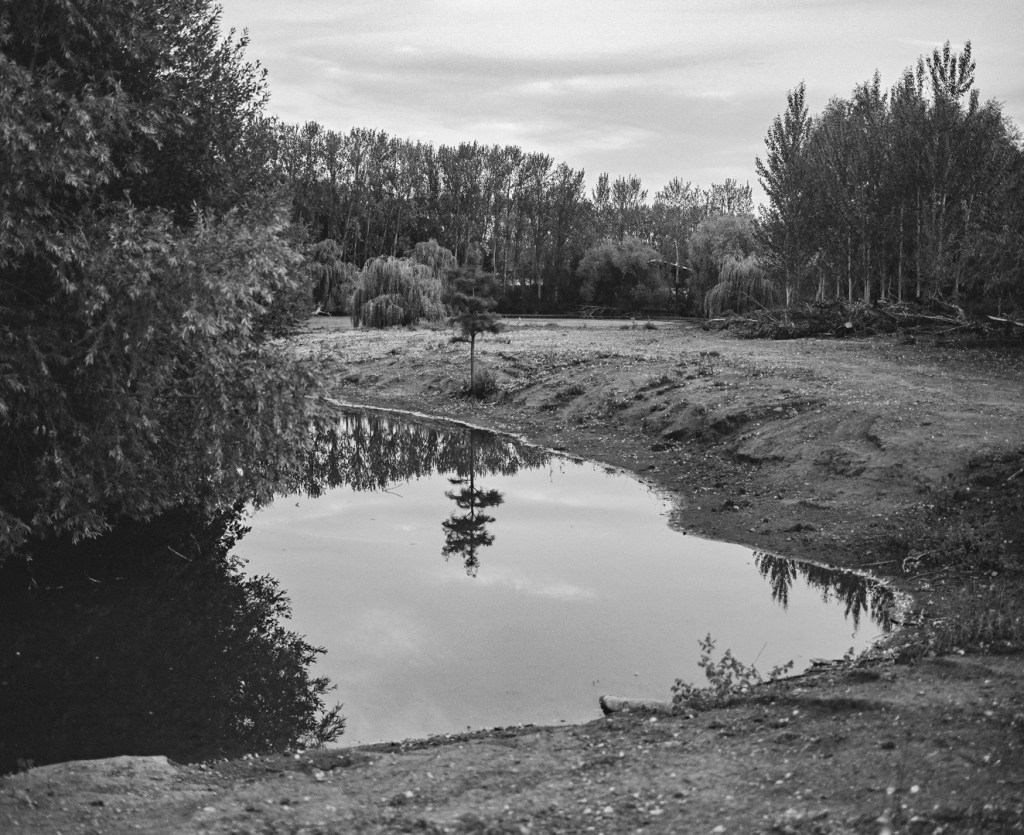
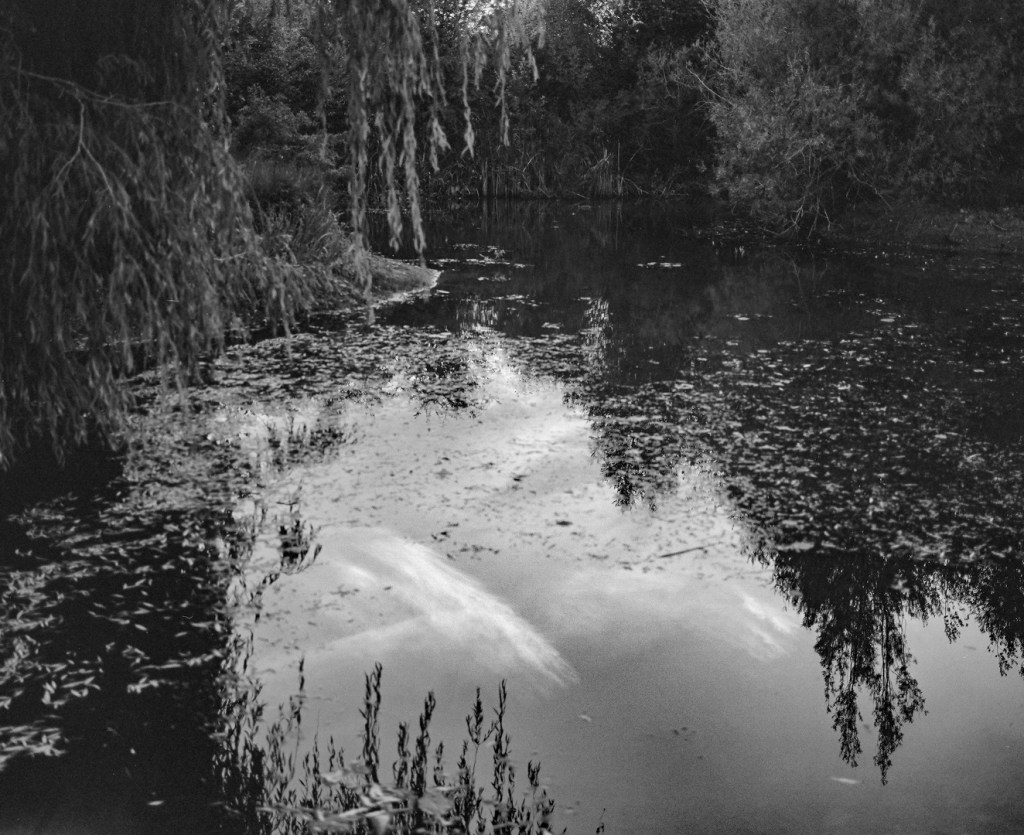
This was an early shoot with my analogue camera, I tried a few ideas out when at Dacha and also when I was away in France at my in laws. I hadn’t thought too much about these images at the time but on reflection, I decided to include several in my analogue book (images 6, 8 & 9) these were taken when we had a very hot period over summer, I shot the photographs at Dacha in bright sunshine and I think this shows in the colour photographs, the greens are not right and the overall scene looks too bright. I do like image 1 but this doesn’t fit well with what eventually will become my series. This shoot was predominantly about getting used to a new camera and to practice being present in the landscape.
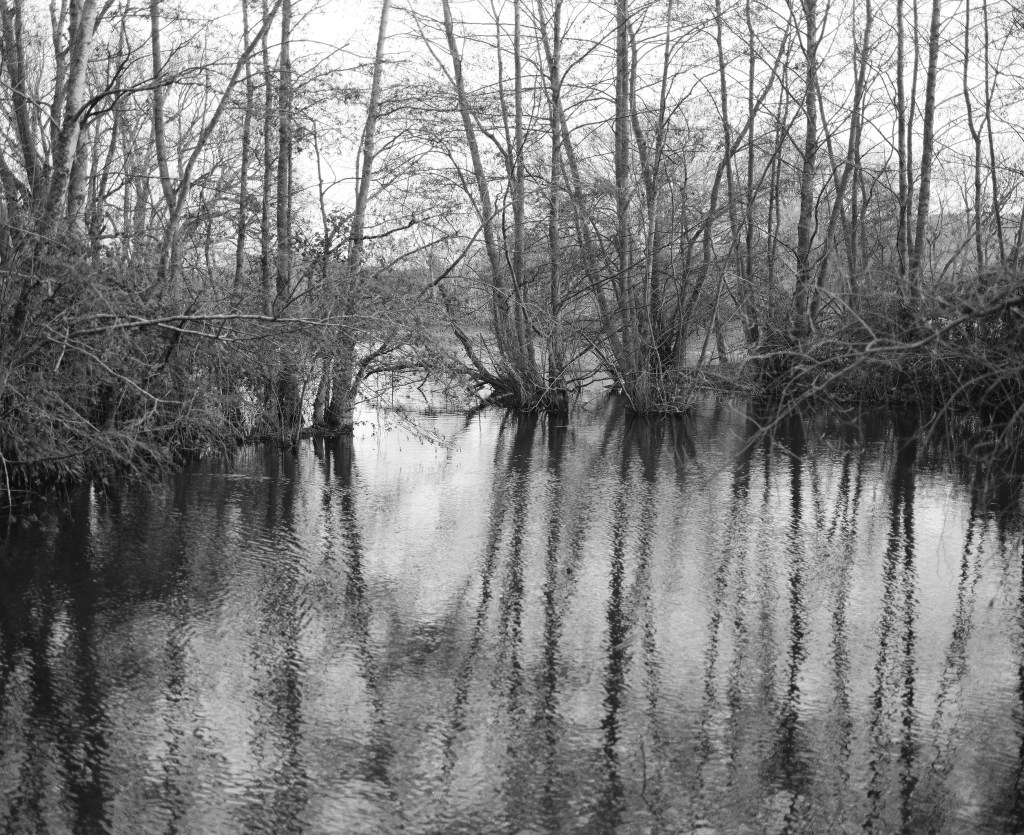
In image 9, I particularly like the reflection of the clouds in the sky. It looks as though someone has swished a paintbrush across the centre of the scene. I like the many shapes around the frame of the picture, from the trees on the bank of the lake and the leaf debris floating on the top of the water. I think there is quite a lot going on in this frame.
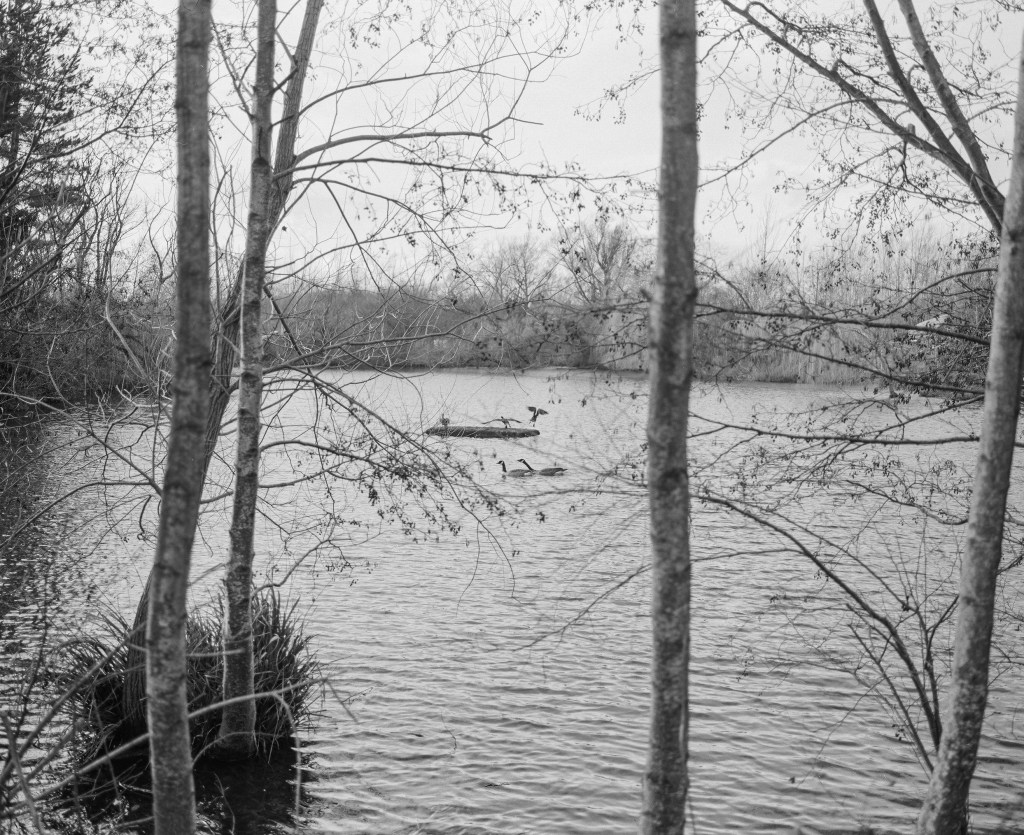
For photograph 6, this shows the extent of the dry summer on this part of the lake. The bank was bare and dry, the water level is very low. It signifies the time of year as well as aims to lead the mind to wander what is around the corner, in my direction of travel. I have included this in my final selection as it acts as a link between images.
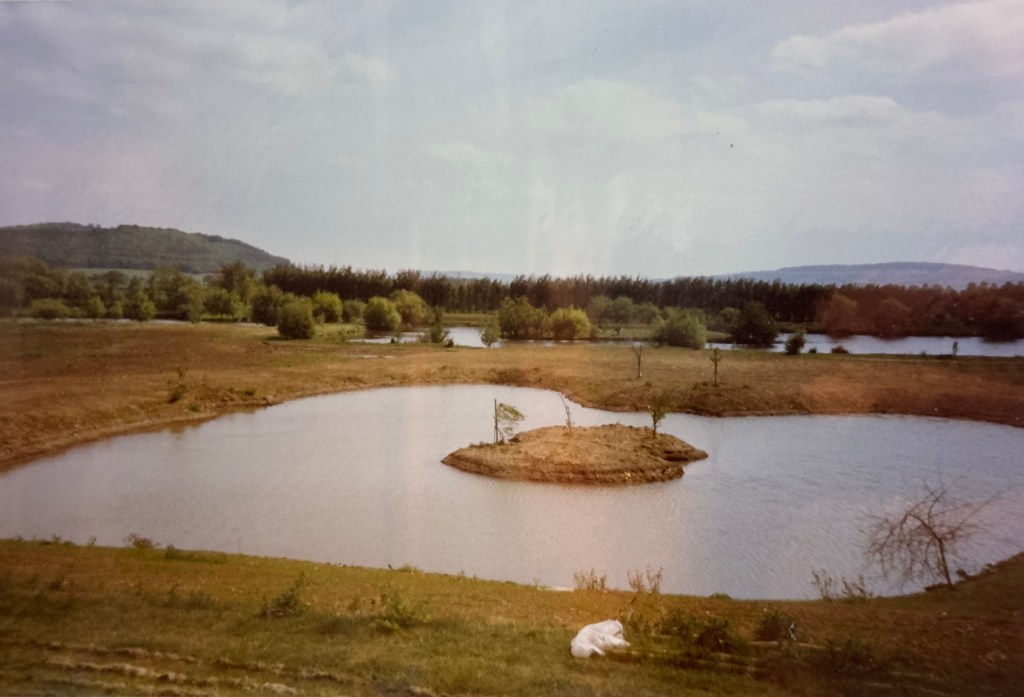
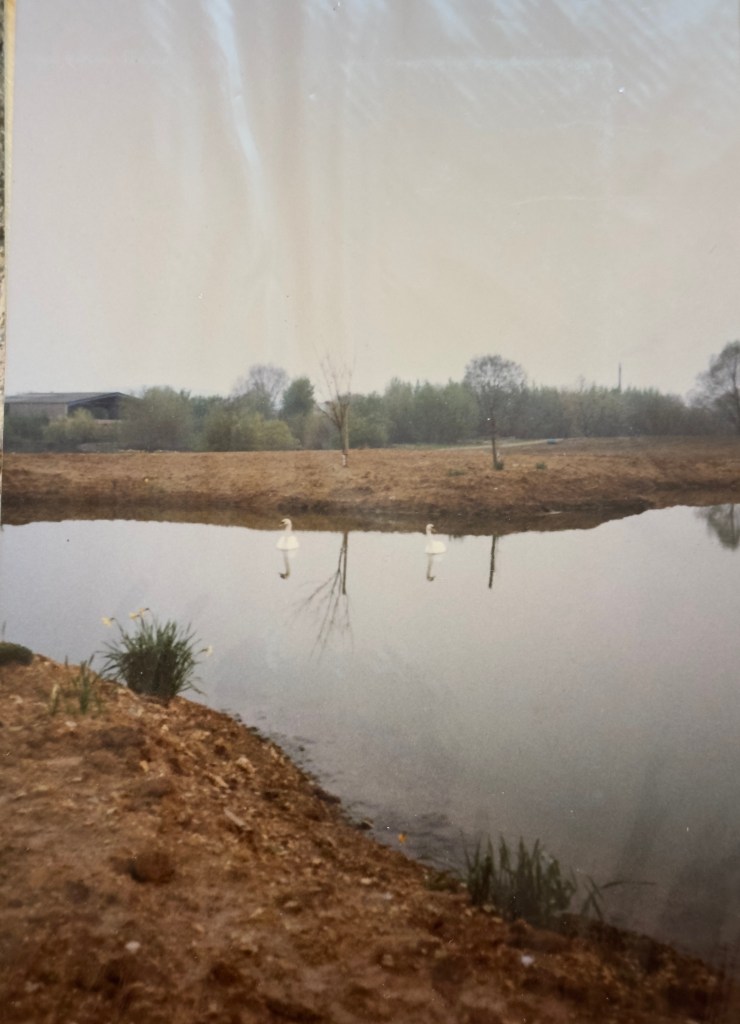
In photograph 8, I like the various shapes here, this emphasises how my stepfather alters the shape of the place. In the two photographs below you can see what was originally there when they created the lakes back in the 1990s. It is a very different place now and it has changed shape many times, almost like an ongoing large scale work of art!






 Lucinda Taylor