
Exploring the fragility of human connection with the universe and ecology
I came across Kawauchi’s work during module 7802. She is a Japanese photographer well known for making quiet, intimate images of the day to day objects that we might otherwise ignore, which aligns with ideas around mindful photography practice. Her photographs characteristically have soft light and pale colour palettes with a shallow depth of field. I find many of her photographs are quite surreal and seem to be other worldly. In 2024, she exhibited at the Arnolfini as part of Bristol Photo Festival, the organiser described her work as being ‘characterised by a poetic, dreamlike quality that imbues mundane scenes and objects with a sense of wonder and transcendence’(Arnolfini: online)
The ‘dreamlike quality’ is the first aspect of her work that I notice, I spent some time just simply looking and in an attempt to practice the mindful aspects of photography, just ‘sat with’ the images. It is interesting to experience the change from a simple visual acknowledgement to something more like a physical sensation, which feels more meaningful and immersive.
The photographs below are from Kawachi’s website and are part of her M/E series (Mother / Earth)
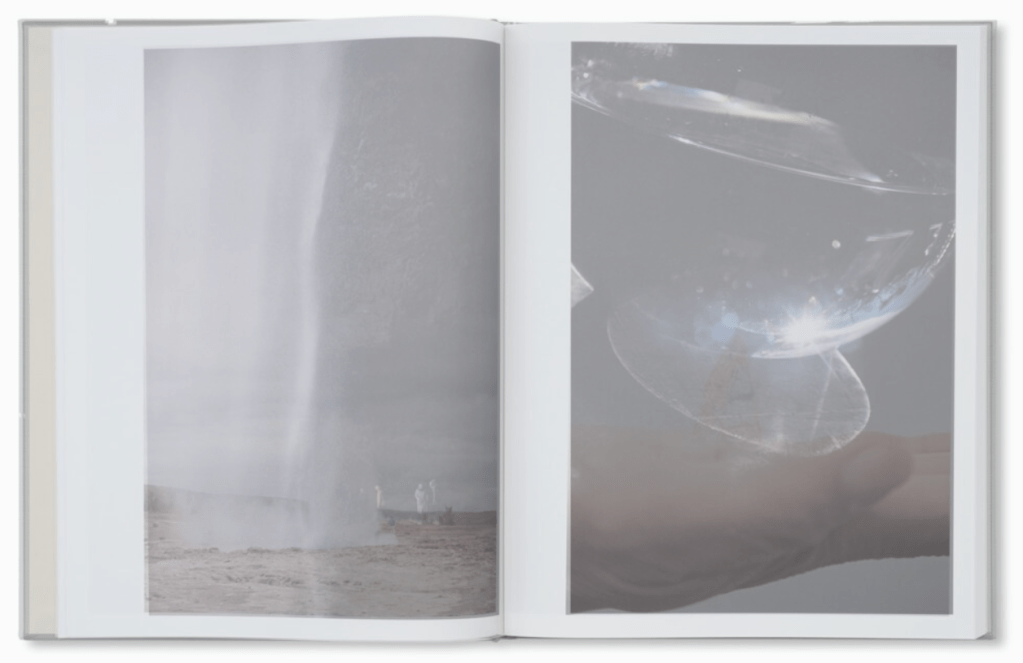
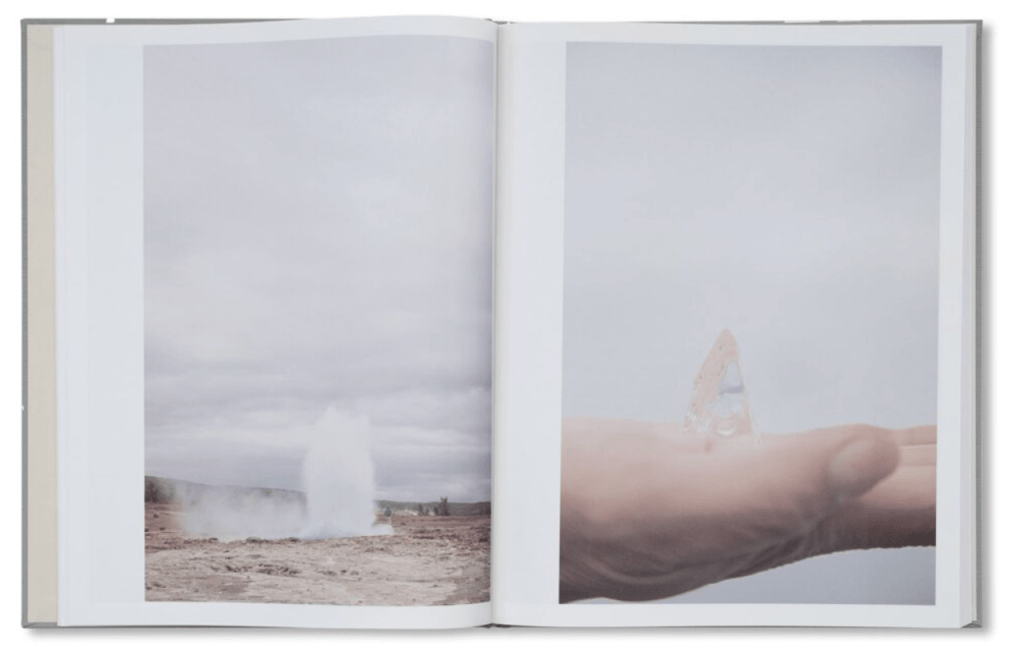
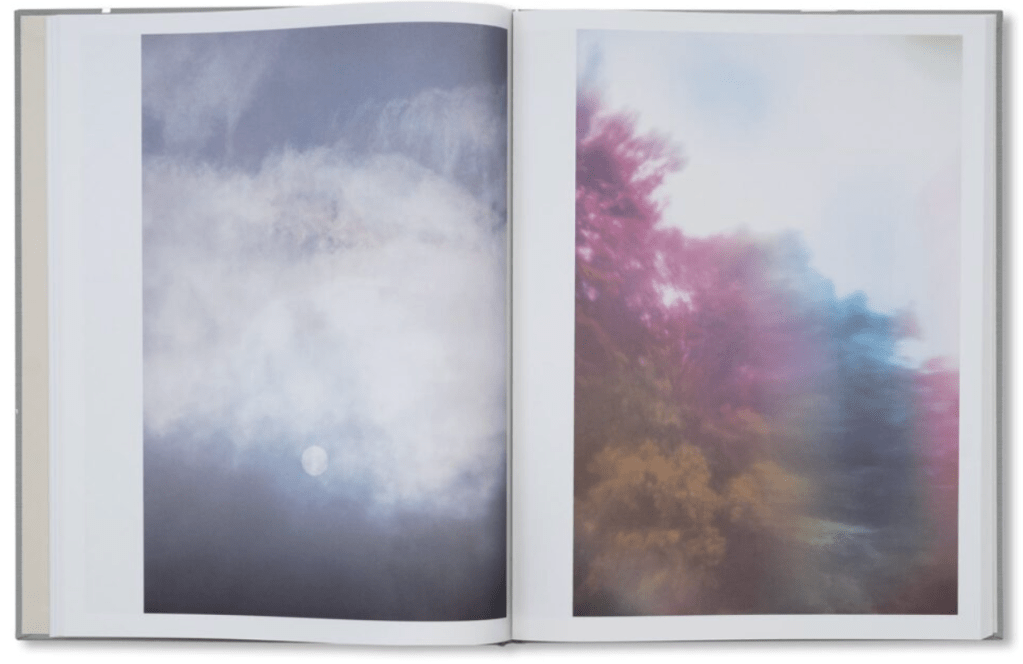
At the core of her practice is her exploration into the relationship between humans and the rest of the natural world. Her work tends to present a sympathetic view, the images are very gentle and she discusses in an interview that her books are a very important part of her work, recognising that to see work in a gallery requires a viewer to enter a prescribed space whereas a book can be picked up and put down whenever desired and without distraction.
Another compelling point she makes concerns her explanation of why her latest book, Halo, brings together subjects that initially appear unrelated. Rather than emphasising an obvious or direct relationship between them, she asks the viewer to consider their broader place in the world. Kawachi suggests that everything in the book is connected through her personal love of nature and the world around her, even if those connections are not immediately clear. This makes the work seem deeply personal as I wonder whether it is more of a representation of artists inner thoughts, as well as the subjects themselves.
This raises the question of whether conventional expectations about what is and is not considered “connected” should be challenged when assembling a book, or creative work more broadly. My own rigidity over making things uniform or having the conventional belief that there must be obvious connection in my work, perhaps should be challenged.
The article is attached below:
I note my thoughts and feelings about the image below: ‘I see what could at first glance be a person but I realise is more likely a building. A church perhaps. Obviously there is glass between the viewer and the scene, as the rain tells us that. I notice tiny dots on the raindrops which almost create comical faces in them. As though they are looking back at me saying ‘let us in’! This amuses me. It feels cold, as the image is blue, the light is low and this is synonymous with a damp and dreary English Autumn or winter day. I find it both brooding and melancholy. Were there a light somewhere on the building, this would change the sensation of the image completely, I would see this as hopeful.
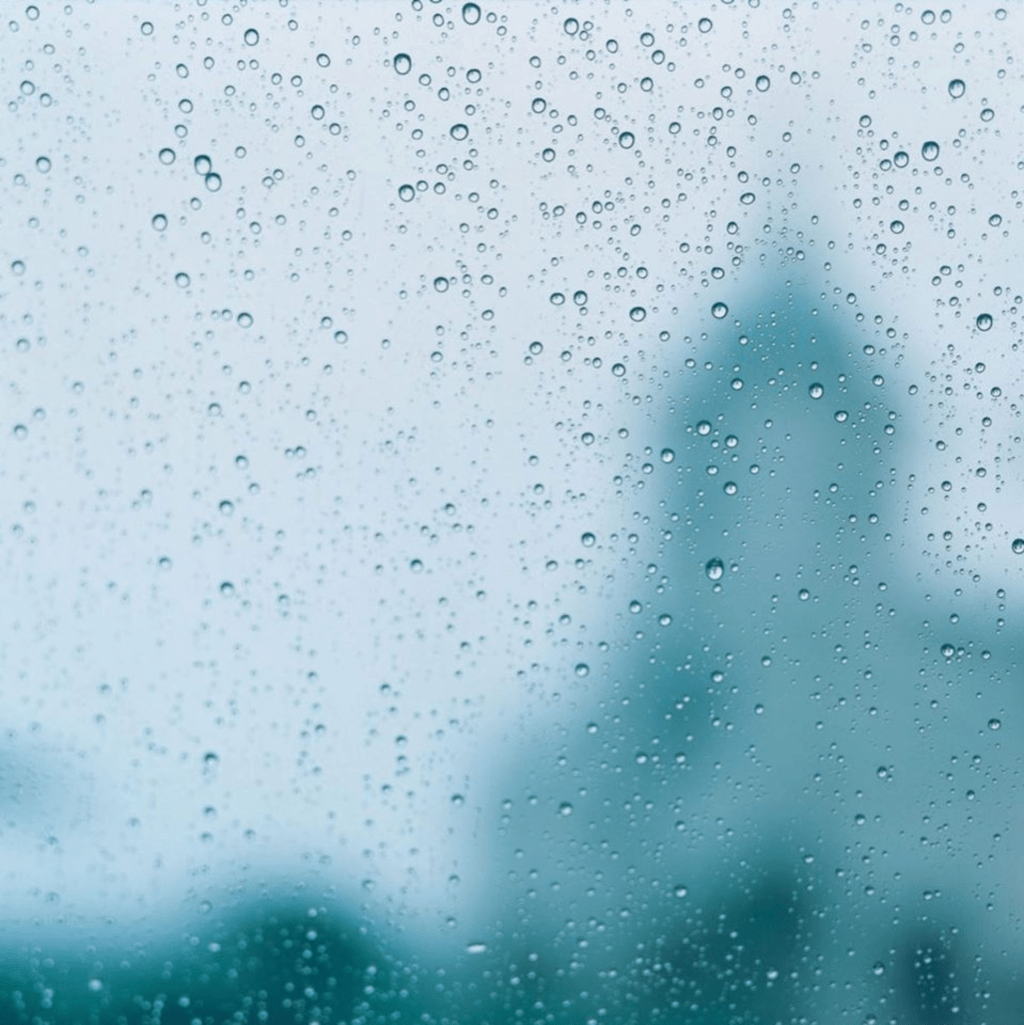
She uses photography as meditation. Her approach being to sit with her surroundings for a while, noticing the various sensations that appear; this might be to do with the sound and temperature or the damp weather as in the photo above. In the rain, she would have had added distraction from the water hitting her head and body, which may have made it more difficult to ‘tune in’ to her surroundings. What is clear though is that no matter the situation, by employing some mindfulness discipline, its possible, using creativity, to extract meaning from the chosen environment regardless of ‘distractions’ in this case, rain fall.
There is much to admire about her practice and work. Although aesthetically Kawauchi’s work doesn’t align with my personal taste, her methods and subject matter are highly relevant and interesting. I would like to view her work up close and I am looking out for any exhibitions so that I can visit. I can imagine some of these works being quite thought provoking seen up close and on a different scale.
 Lucinda Taylor