Nikon D850 with 105mm fixed lens, 24-70mm wide and 50mm prime.
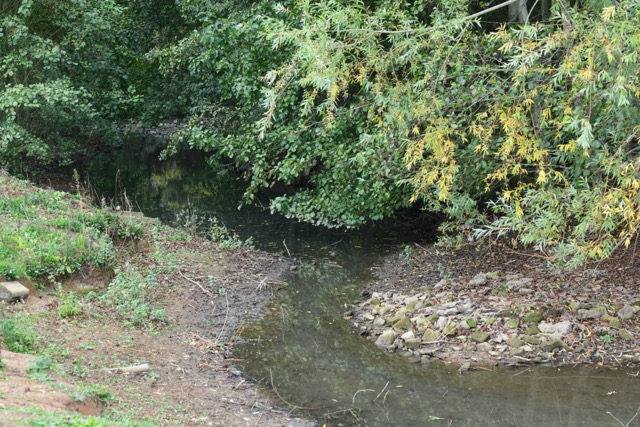
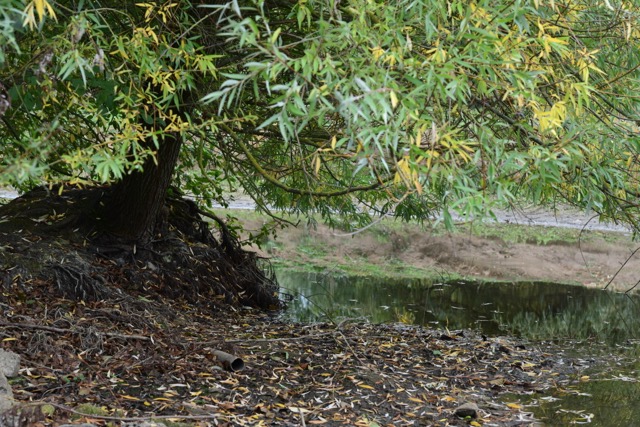
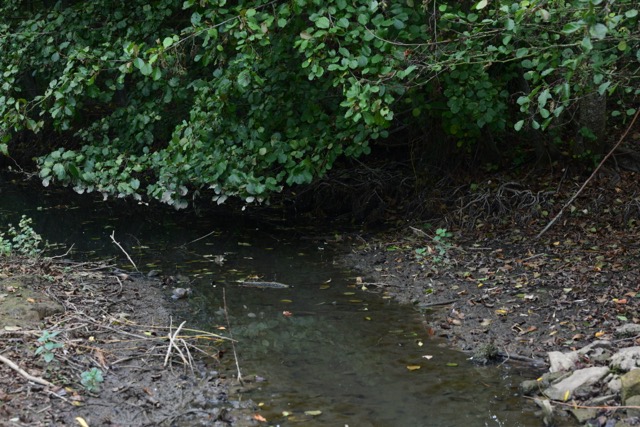
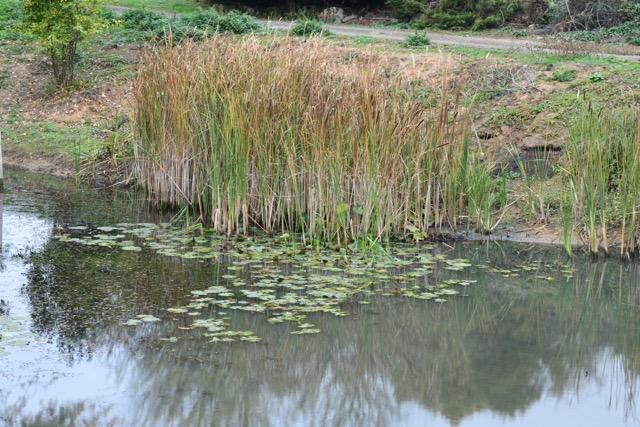
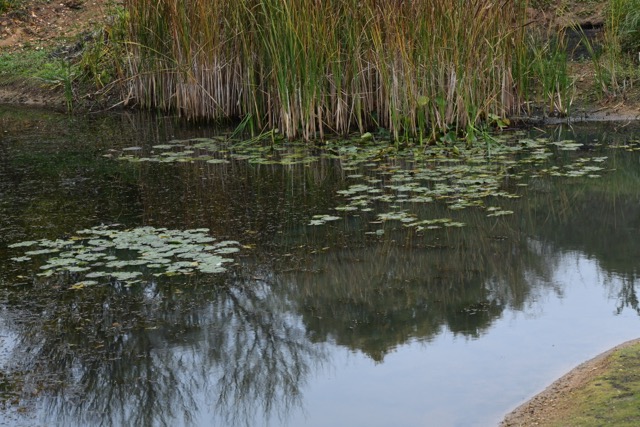
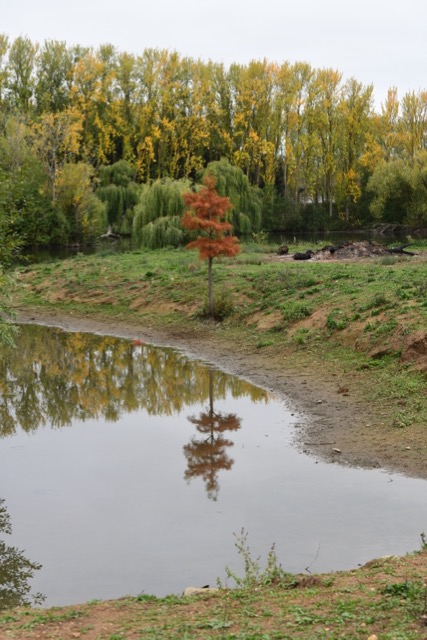
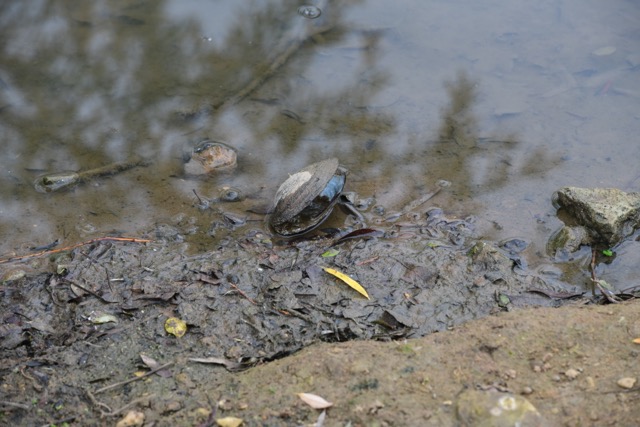
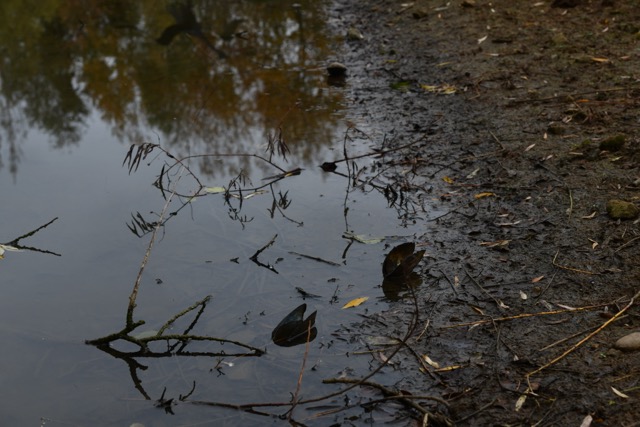
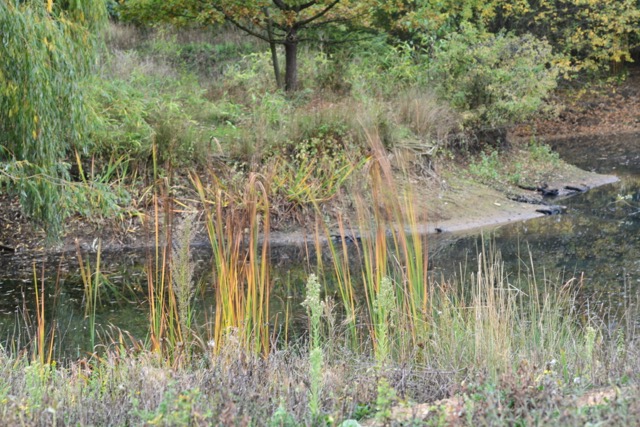
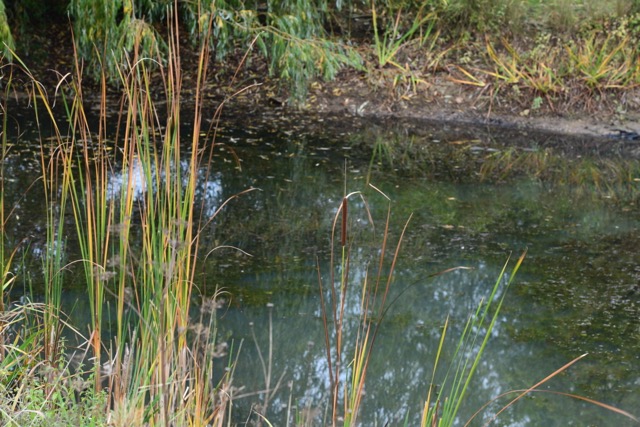
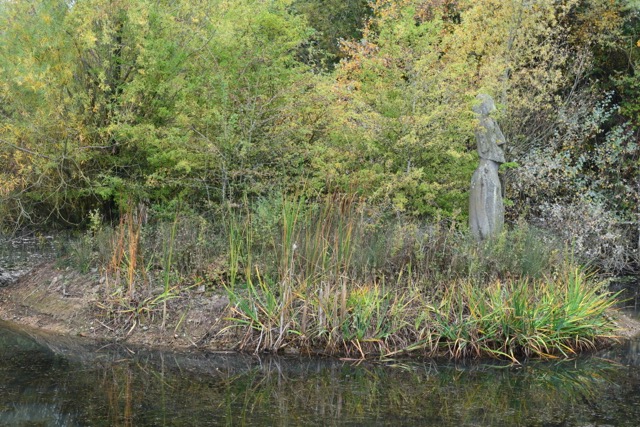
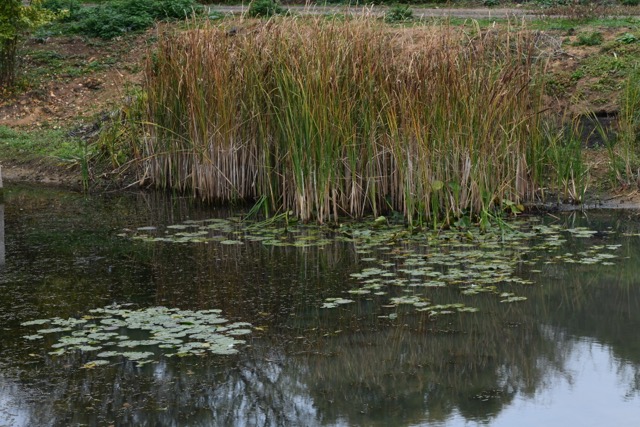
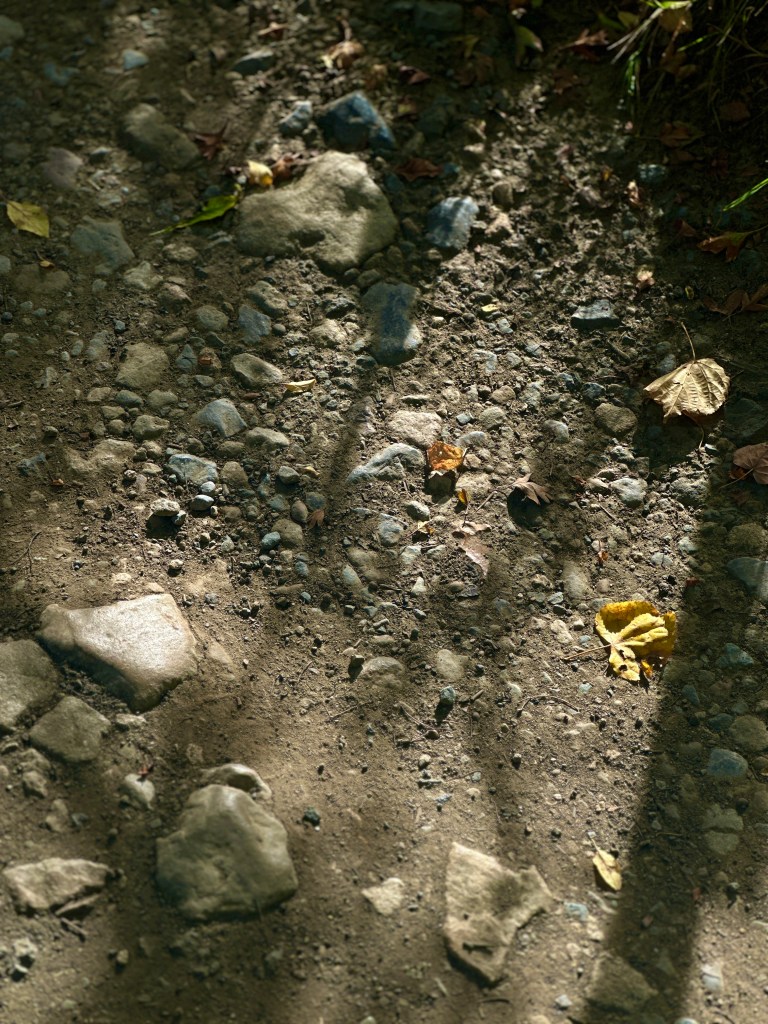
As Autumn creeps in, the landscape was beginning to change. I paid close attention to the water levels here because they had not recovered after such a long dry summer. It is the first time my step father remembers it being so low for so long. Interestingly, the swan mussels presence indicate good water quality, I would have assumed that the lack of rain might have contributed to its decline but I wonder if with there being no agricultural run off from the hill it has actually given the environment chance to recover. I admit, this is unscientific on my part but it is a passing thought as I watch the water.
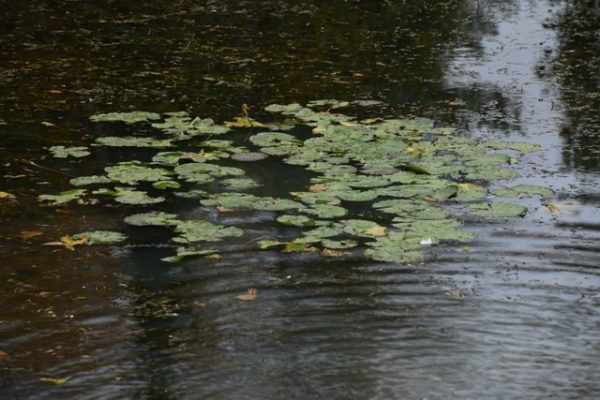
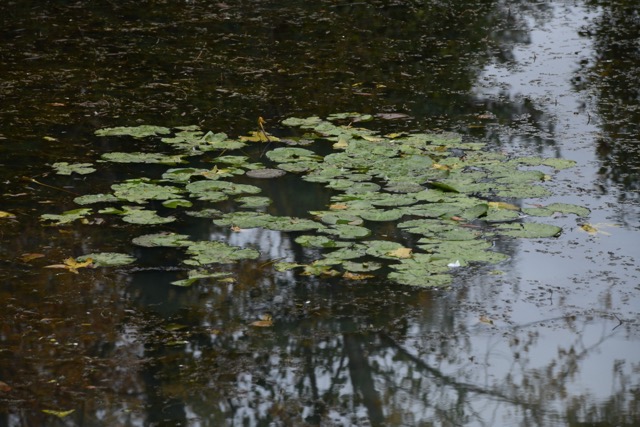
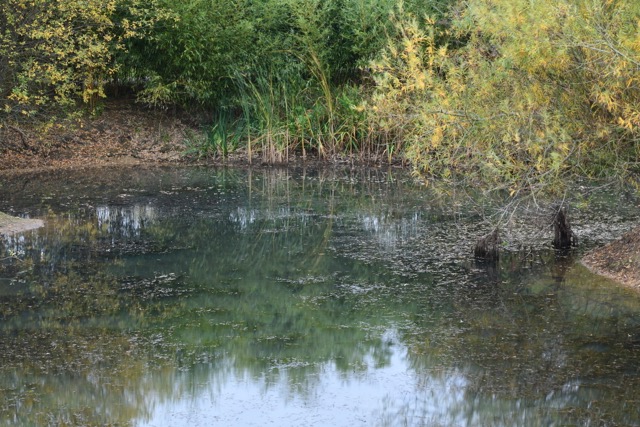
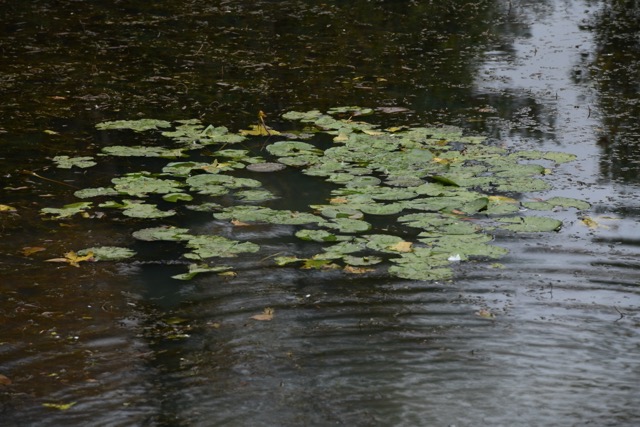
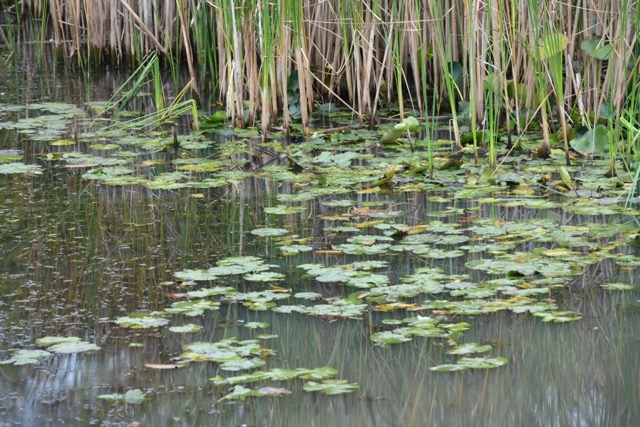
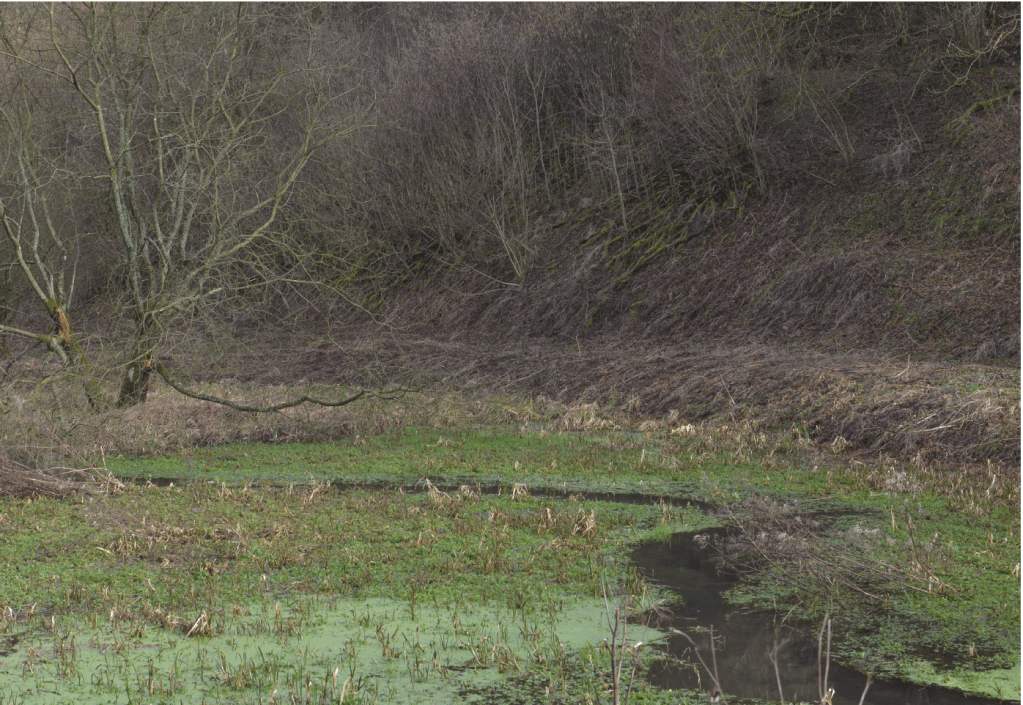
I am working in the open space today. I feel quite exposed, as ordinarily I am hidden under the tree canopy but I feel I need to invest time in the other areas of the landscape which I usually pass up. The sky feels heavy with rain and it does come but not enough. I tried to catch it in the pond with lillypads, it only just breaks the surface, seeming to almost evaporate before it arrives. Its still warm.
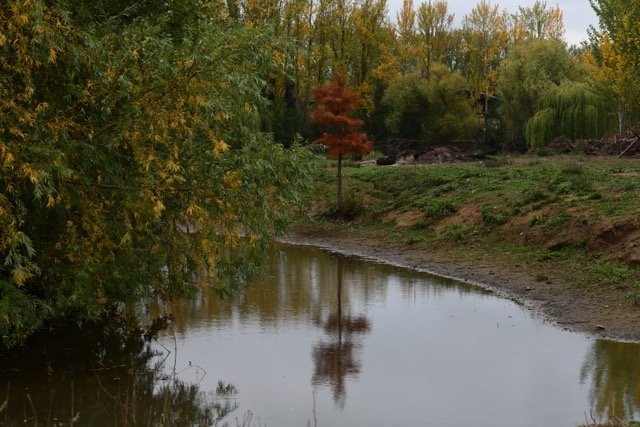
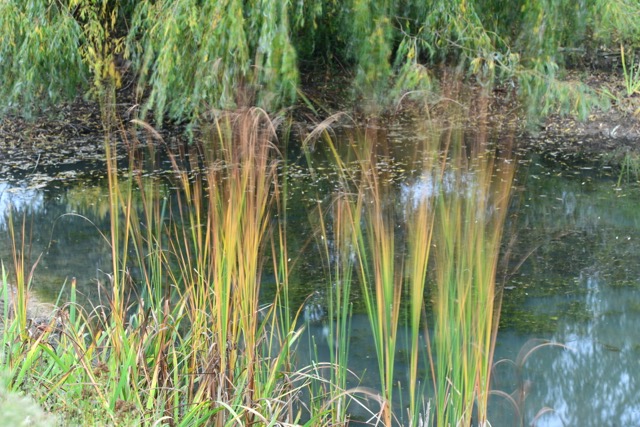
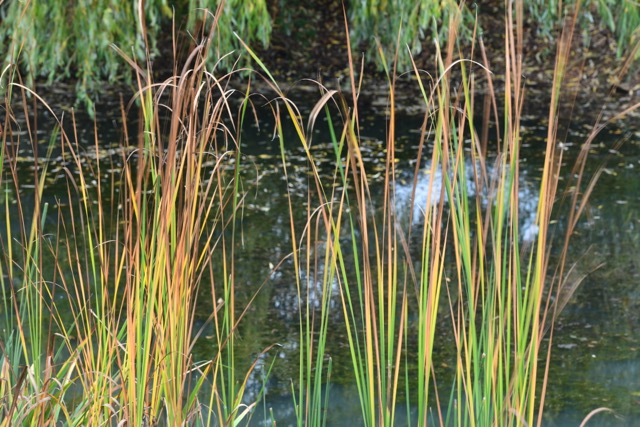
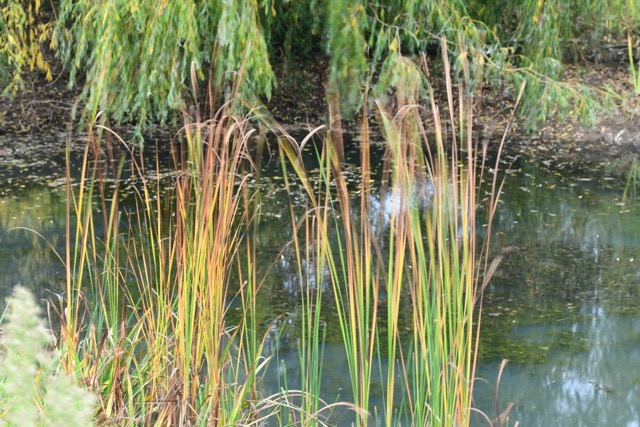
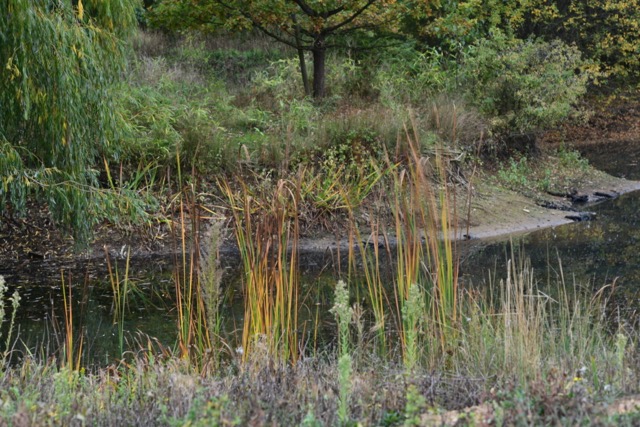
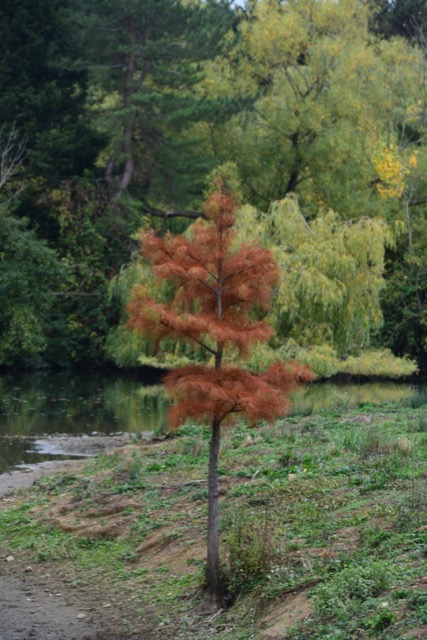
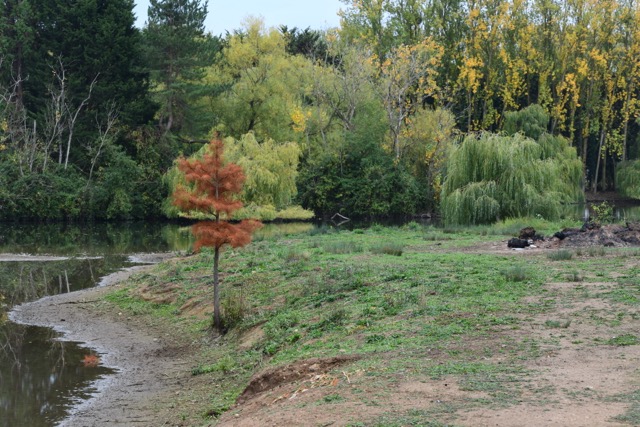
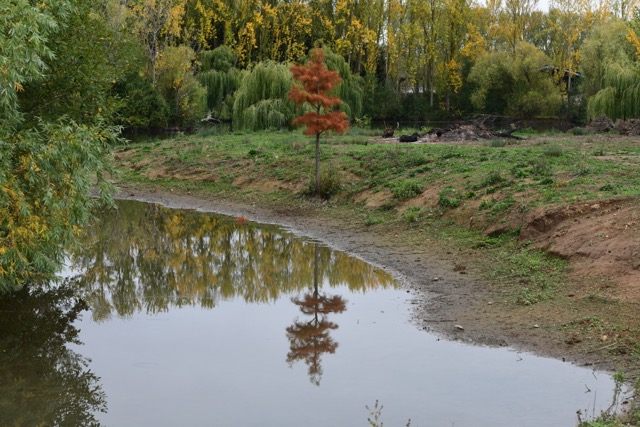
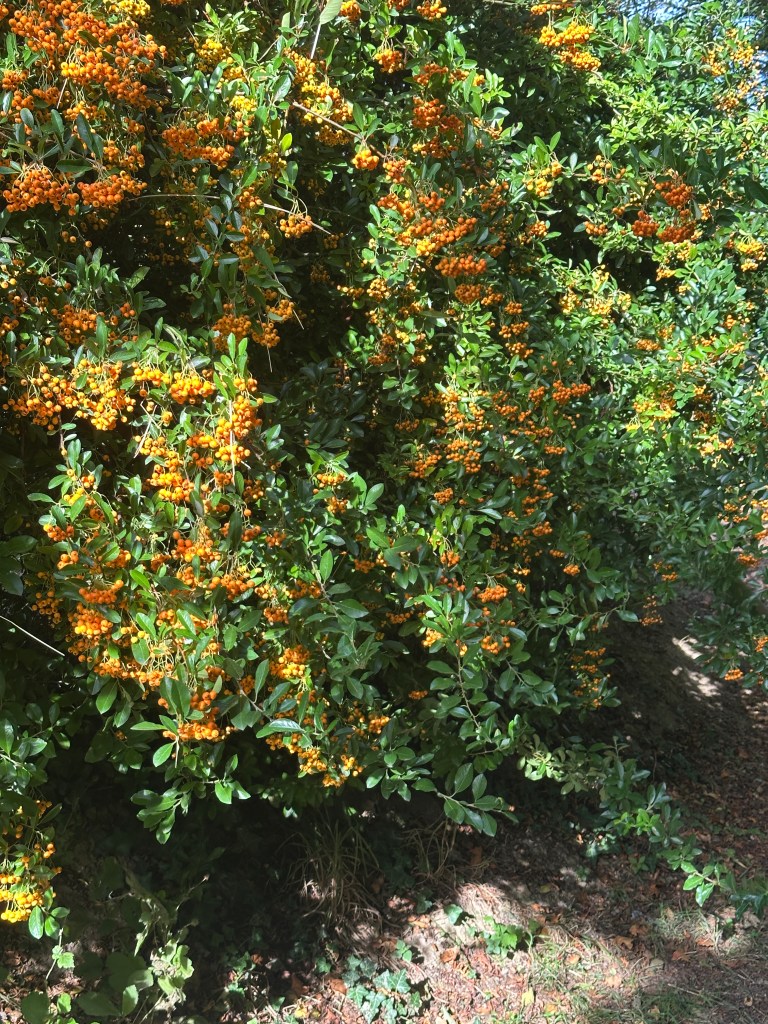
The wind has picked up a little and I notice the reeds moving back and forth in unison. The red and yellow appears flame like, they are striking against the otherwise green and brown landscape. The same is true of the orange spruce. I don’t know the story of this young tree but it stands as though watching me, its strangely comforting. Its bright colour is bold against the rest of the scene. Most of the water birds are nowhere to be seen, I did spy a small group of ducks under the canopy but they all made their escape as they heard my approach. I liked how they had found a shallow area of rock and shingle just peeking above the water line under the trees, there was also a small patch of light coming through which seemed to illuminate them as they sat. I tried to photograph them but in my clumsy attempt, I disturbed them all.
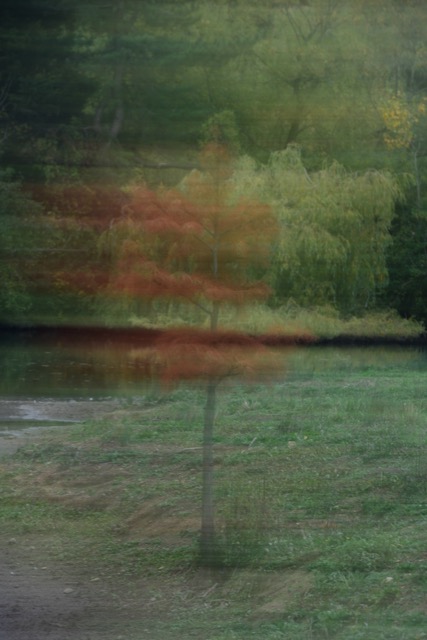
I experimented with movement, for the orange spruce, I panned the camera slightly to create a painted effect. It feels too contrived though and not in the spirit of mindful practice. I like the movement in the reeds though, they move themselves as I leave a slightly longer exposure. I did spend a good couple of hours here, absorbed in my surroundings and practicing just ‘being’. It feels odd at the moment and I hope that this will change. It is meant to be a ‘practice’ after all.
As I’ve outlined, I have consistently explored themes around family, memory, sense of place but I’ve yet to fully realise my potential in this area. I think that in employing this approach, I’d be able to manifest clearly my thoughts and feelings about ‘place’ beyond representation, providing deeper meaning around an image and in turn, creating a more emotional body of work.
The problem. With the daily busyness of life in general; the pressures and stresses of tasks and deadlines, messy calendars and unexpected changes to routines and schedules, I find it extremely difficult to sit in a space and observe, quietly and patiently, my surroundings. All too often, those places aren’t fully seen by me, as the never ending task list works its way like a ticker tape parade through my mind, I can barely tell you what I looked at, after the event. My biggest successes have tended to be the result of dedicating more time and thought to my observations. To solve this problem, I needed to learn about mindful practice and so searched for relevant materials on the subject.
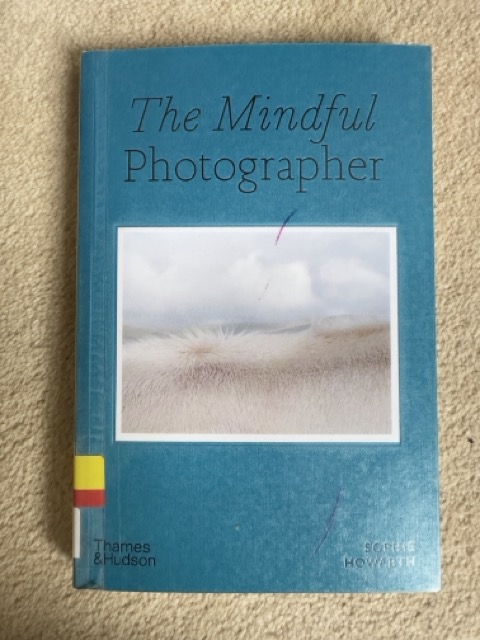
The most useful source I came across, is The Mindful Photographer by Sophie Howarth (2023) in the university library. (I have now bought myself a copy) It has been a key guide to this process, although its ideas are broad, the principles are applicable in any specific scenario and it also revealed to me how the wider uses of this therapeutic method could offer benefits beyond just my own immediate concerns. For example, Howarth refers to The New Economics Foundation, stating that “[NEF] is a think tank focussed on redesigning the economy to work better for both people and planet, they identify 5 evidence based actions that are foundational for individual health and wellbeing, Paying mindful attention to our surroundings, is one of them” (p8) She goes on to say that while improving personal wellbeing is a good reason to develop the skills of mindful practice, there is also a case for larger social value. The world and us are more distracted than ever, as I’ve stated elsewhere, there are immense challenges faced across the world and with our attention being pulled in all directions, we are rarely looking closely or attentively at anything. Many credible sources, including the mental health charity MIND , show there is a significant mental health crisis in the UK, which continues to decline and although there are many explanations as to why that might be, whatever the reason, mindful creative acts have the potential to offer some relief. “…mindfulness has gained widespread interest precisely because states of distraction, anxiety, suffering, and lack of connection are so common and detrimental. As society veers toward more chaotic, techno-centric, globally connected and distracted modes, mindfulness offers an antidote to internalised unrest —particularly for learners who face ever expanding sources of difficulty from stress and distraction”.(Henrikson et al, 2020: p2)
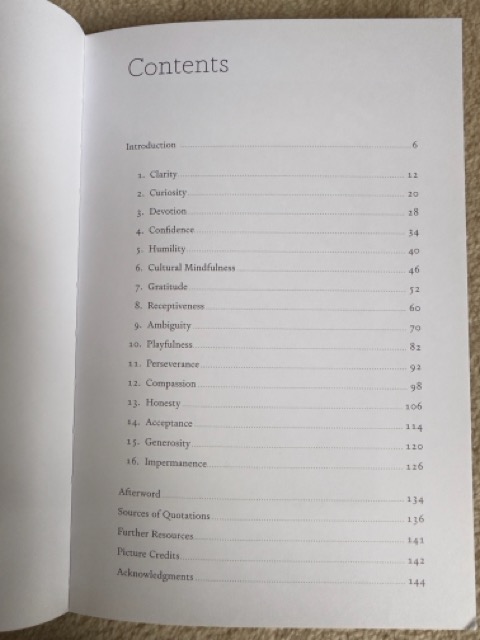
The book is split into chapters as follows:
There are practices throughout each chapter which has served to guide me in establishing mindful techniques. Small tasks are set for each chapter. My experience of the most useful of these are listed below, these form the basis of the physical aspects of my project:
Basic meditation. The foundational practice for mindfulness, where I simply found a comfortable space to just sit and be, without any interruptions, for 10 minutes. Although it is a requirement to be comfortable and relaxed, the discipline of sitting straight is at first difficult! I realise how much time I spend in terrible posture. Strangely, by reminding myself to ‘sit up straight’ my mind wonders back to my ballet classes during my earlier years and so I take this thought and literally, dance my way through the next few minutes. Its a strangely blissful moment. Then I bring my mind back to the here and now, trying to stay focussed, my thoughts keep wondering but Howarth says, not to push them away or engage. I just let them wonder through my mind. I focus on breath as much as possible, this seems to stop my mind veering off all over the place. After the allotted ten minutes, I do feel centred and relaxed, I am less anxious and my mind seems to be calmer.
Being Like Water. “the mind that is too full of effort, desire and expectation leaves little space for creative response“(p78) explains the barriers to mindful creativity very well I think. I am absolutely guilty of overthinking my practical work and outcomes. I think this is why learning a more mindful approach will ultimately revolutionise my practice. Practicing feeling, thinking and seeing over doing can only serve to bring about a more authentic body of work. I accept that I will make judgements on composition and will even choose favourable conditions but I believe there can be a balance. The ‘being like water’ comes from Taoism ‘wu-wei’ which is translated as ‘effortless action’ or ‘going with the flow’ and was a term made popular in Western cultures by Bruce Lee, when he says to a fictional character “Empty your mind, be formless. Shapeless, like water. If you put water into a cup, it becomes the cup. You put water into a bottle and it becomes the bottle. You put it in a teapot, it becomes the teapot. Now, water can flow or it can crash. Be water, my friend.” (online) I found the practices I tried for AD7803 to be useful in this, by allowing nature to guide instead of being controlled by me.. for example, in making cyanotypes and photograms I am giving up control to the elements to a great extent. Moving around the pathways and following the shape of the land, all come into play here. I think about this a lot now when I am walking and immersing myself in the landscape.
The Beginners Eye. Howarth uses the ‘childs eye’ to break habitual ways of viewing. She talks about games such as ‘I Spy’ except with variations, rather than something beginning with a letter, use ‘things in pairs, broken things, two circles together… etc’ where you need to ask questions and look at everything around you in much more detail. It gives new perspectives on familiar things. Using different perspectives is another aspect to adopting a beginners eye, looking from the ground up: ‘How many colours are there in a field of grass to the crawling baby unaware of green”? Stan Brakhage so to imagine things without labels, although challenging when we can’t help but name everything, is a start to seeing without preconceptions. Without a camera, I practiced by looking closely at a plant, I stared for a while (I notice that after a while I stop labelling it) and then looked at it from table level, then upside down. I let my vision blur (awkward with contact lenses!) and tried to think of how else this ‘object’ might be presented, other than the conventional. To reset from each time I kept judging or thinking, I used my eyes like a slow shutter and blinked.
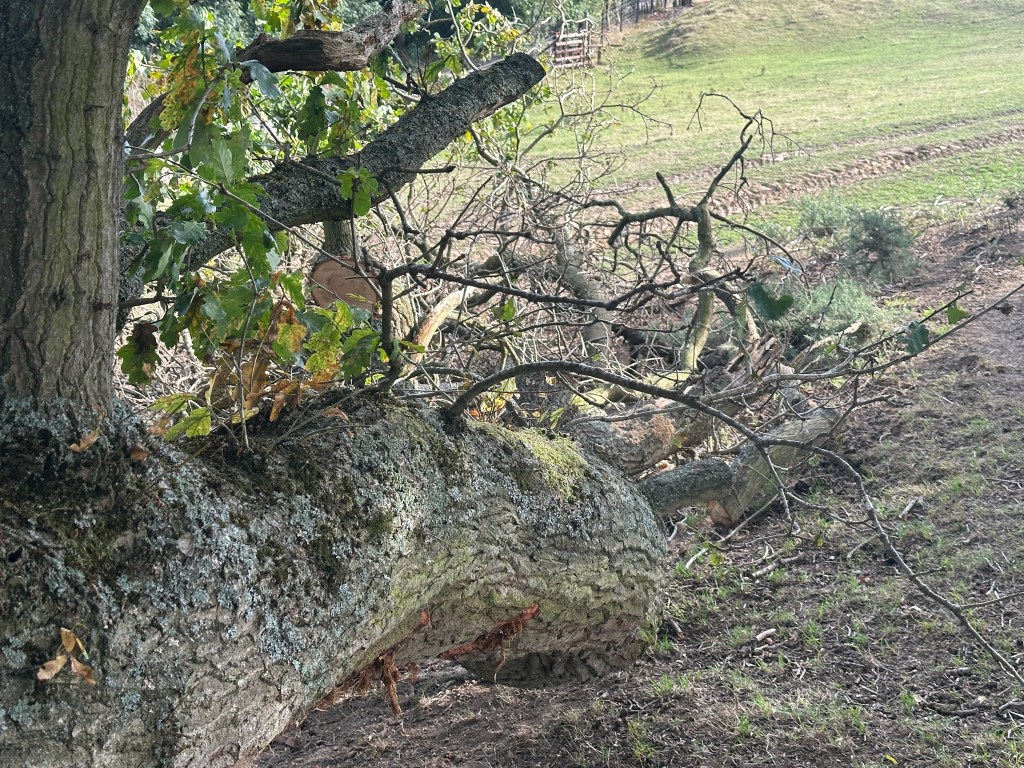
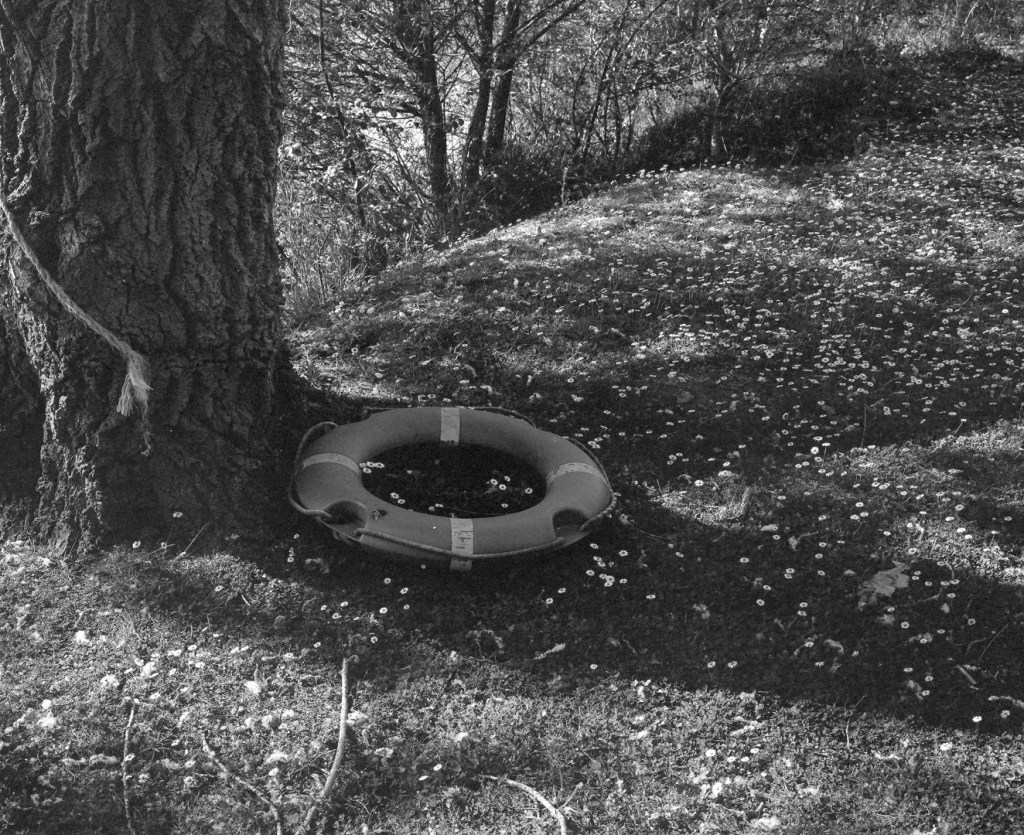
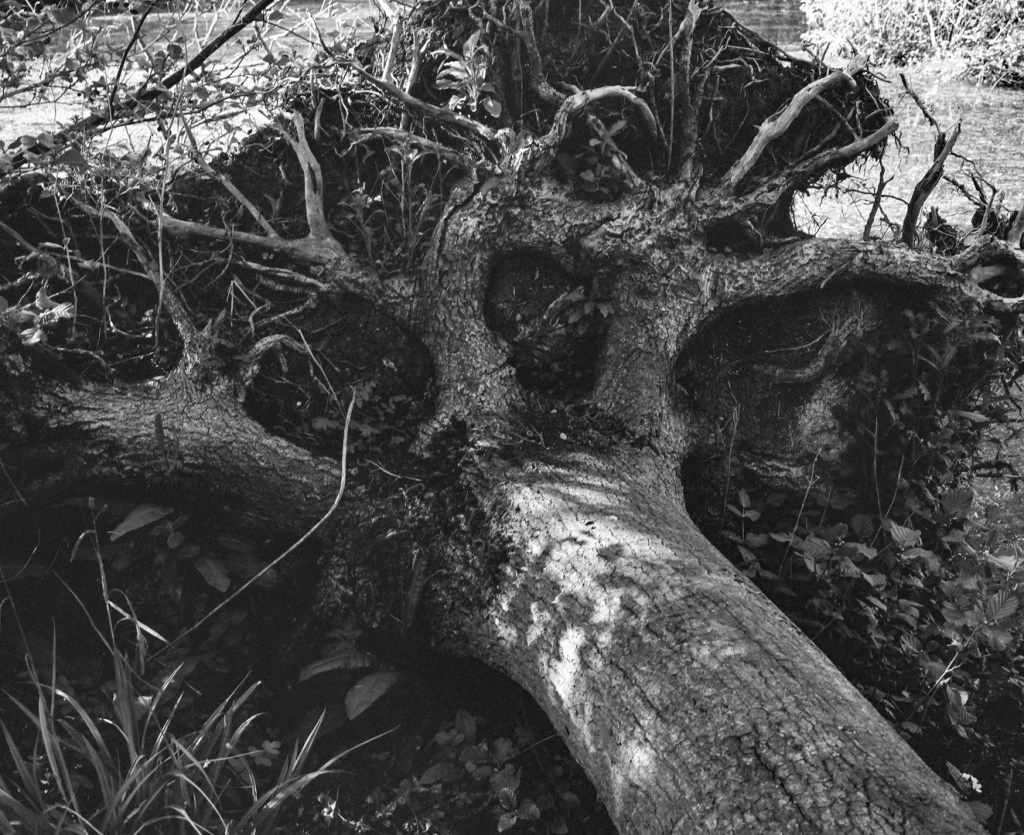
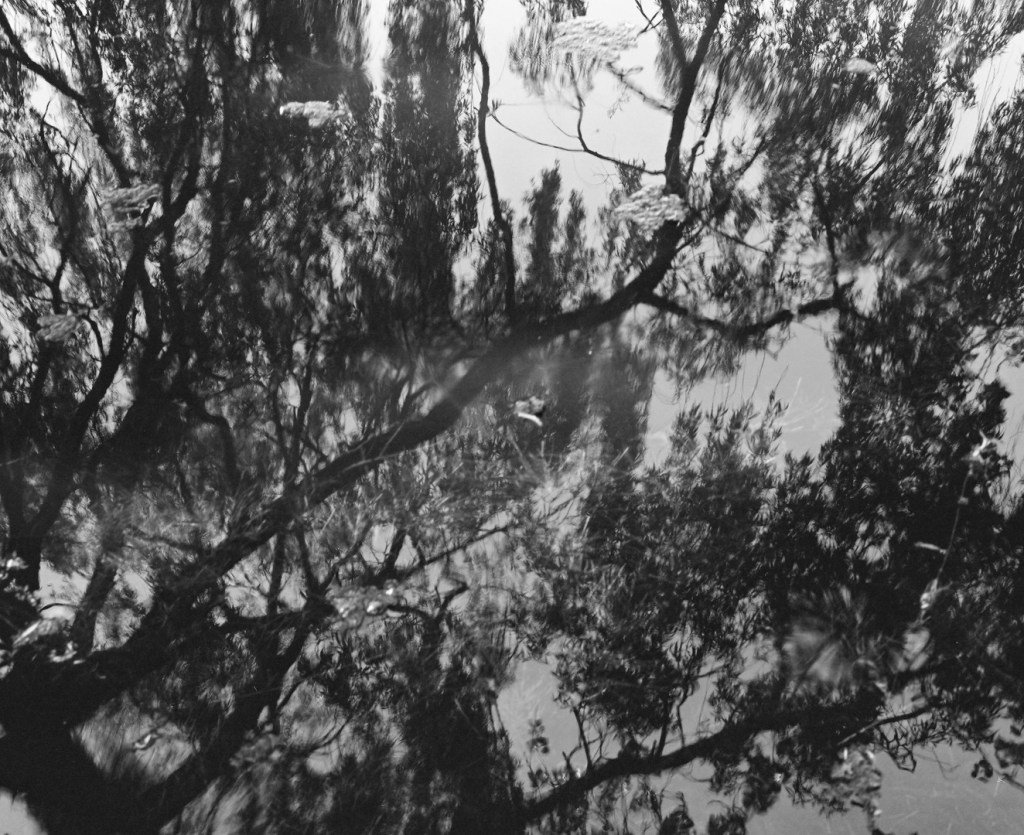
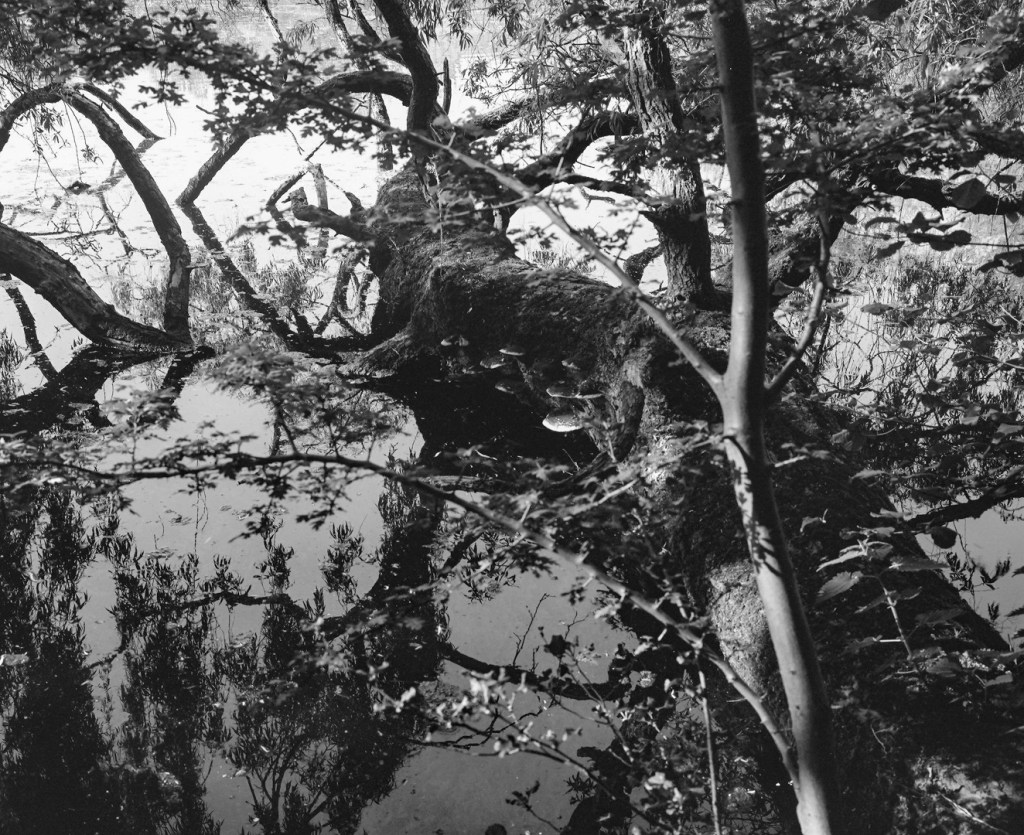
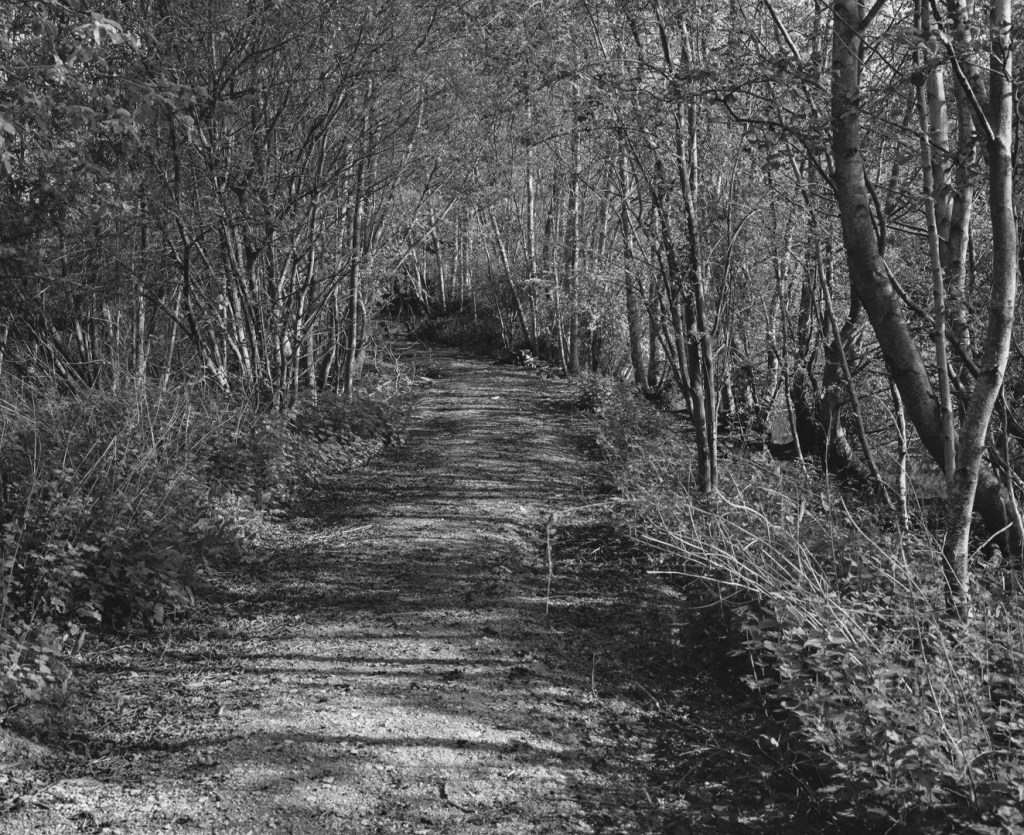
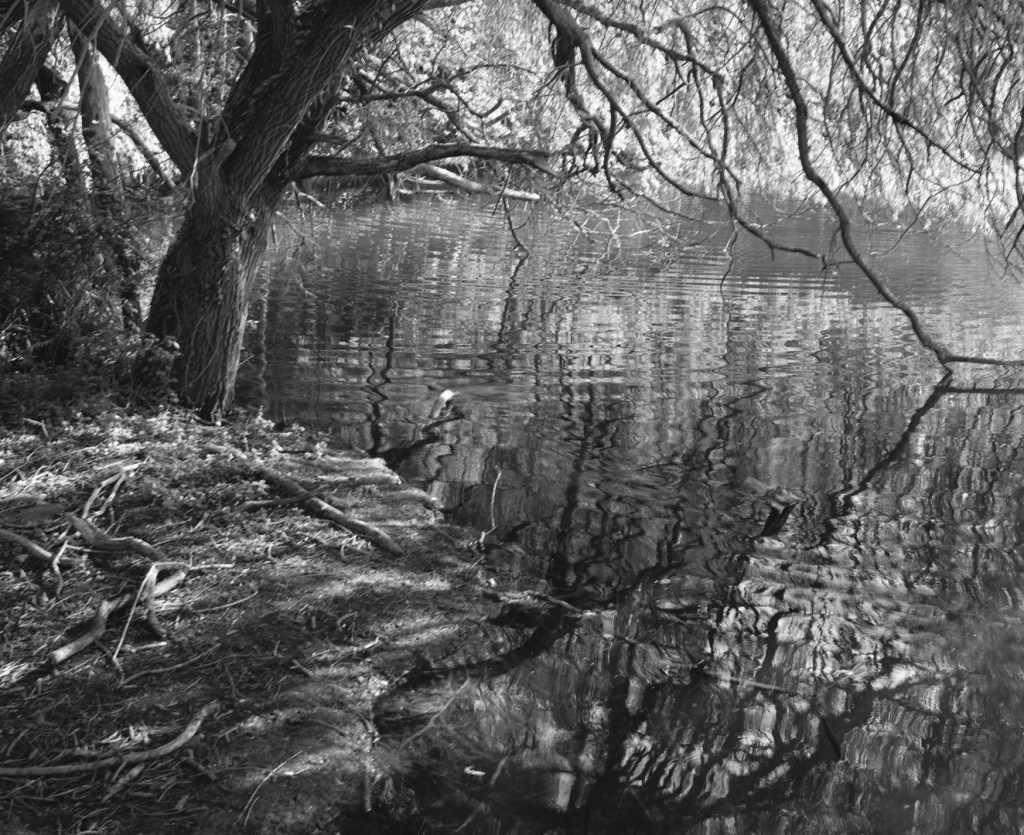
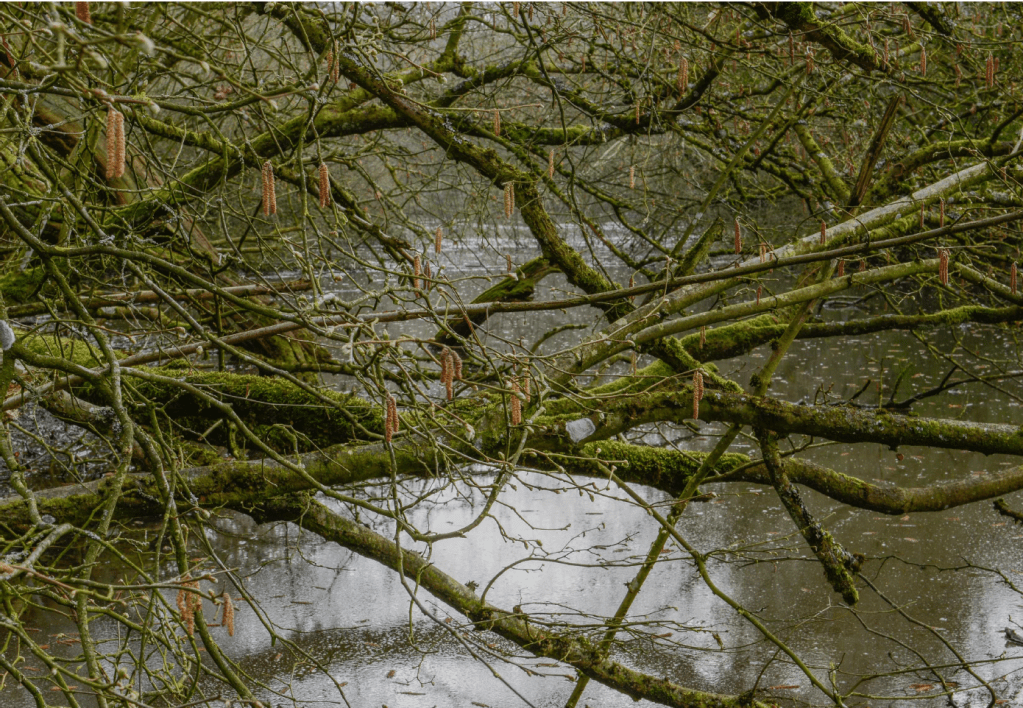
Photo ‘fishing‘. The purpose of this exercise as far as I can tell, is to take photographs almost at random, so removing any preconceived ideas about compostion, edit, end result etc. Letting go of the idea of perfection and simply recording what I see. I had come to a spot where a very large branch from a tree had fallen, so I just decided to spend a few moments there and would photograph based on an intuitive response to the newly created shape. I spent a few minutes at first, closing my eyes and feeling the sunshine on my face. I tried not to overthink and actually distracted my mind by humming a tune! These are 4 images from that walk. Each spot I would take a moment to try and empty my mind a little and reject the concerns over final results. It was a helpful exercise in learning to let go of perfection and end results and in doing so, being able to become more present in the moment.
Written word. I had planned to practice this by noting down the words, sensations and sounds, in place; Japanese Haiku poetry is one way I could do this, although I am not practiced in it at all, it is a useful way to record what I see and sense, in a way they are like verbal snapshots of a place and whilst traditionally they were often humorous and use in games of oneupmanship, the principles of ‘say what you see’ are useful in mindfulness practice. 17th century poet Basho, arguably the most famous of Haiku poets, is used as inspiration here:
“The old pond— a frog jumps in, sound of water.” —Basho
A very literal description of a moment / experience. Our own experiences tell us that the frog has created the sound of the water and so we draw on our own memories. This is a useful way to engage with audience, to help them to see what might be heard, seen and felt at the time. These are the poems I have written when reflecting on my shoots. Not typically done ‘in place’ but they are a summary of the things I notice when immersed in the environment.
Rocks and stones, algae marking their age, indigo water patient, enduring, unbound time settles here.
The leaves fall, dancing down into the depths, floating, descending light flickers on the surface in perfect rhythm as if to applaud their final show
lichen clings to nature, decorating rocks, branches and tree trunks deep emerald greens, soft grey blues and ochre yellows, serving as colourful timestamps, reminding me to embrace it all.
winter coats the lake frozen images, as though printed on satin, hold soft light silence reigns, I hear myself, Just living, breathing in place. Trees are looking down at me, their branches hiding the tiny spies who watch my every move.
Seeing. In Edward Husserl’s ‘Epoché’ theory, he says that things are not as we see them, we are bogged down in language and our own judgement. Similarly, John Berger discusses in ‘Ways of Seeing’ how our own personal history shapes what and how we see, which can make it difficult to truly ‘see’ something for what it is. In order to change my preconceived ideas and knowledge about an object then, I would need to ‘train my gaze’, which is where mindfulness techniques will come in. I hope that in adopting a beginners mind, I can better reveal an essence of a place or ‘thing’.
Uta Barth offers a unique visual experience, inviting viewers to look at self and, in some of her works, is an exploration in to domestic absorption. I researched her work for part of my BA and used this approach to photograph some otherwise mundane objects and features within my own domestic space. The photographs I made back then are among some of my favourite images, perhaps because the way they transform from the unremarkable into something mysterious and dreamlike, which mirrors the experience of meditation.
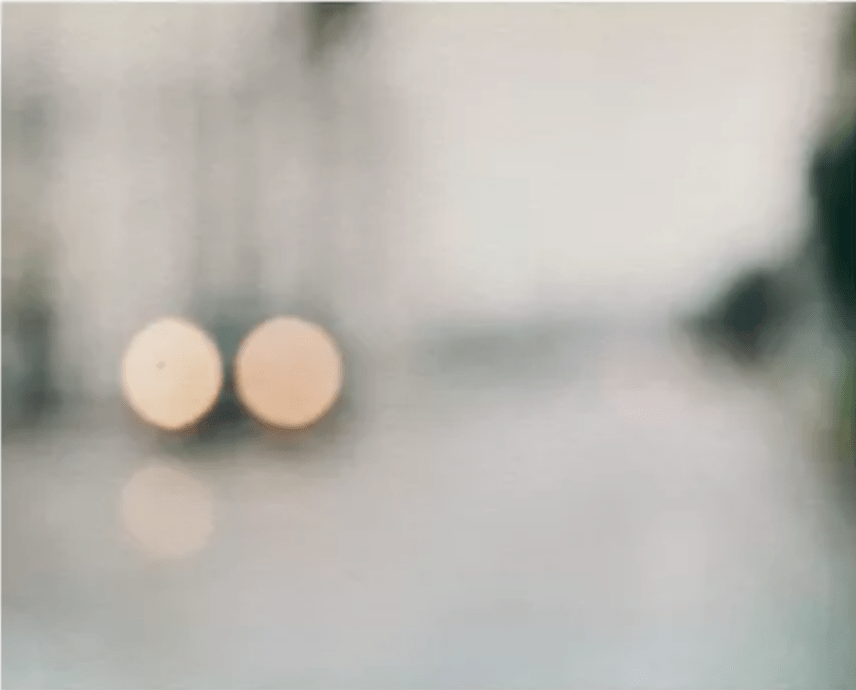
In Barth’s ‘In Between Places’ book, there are many examples of domestic spaces to street scenes and rural spaces. Her best known work is that which she refers to as the ‘space in between’ with the focus being on empty space, rather than the expected subject, reinforcing the idea of experiencing mediation. The photograph below (Fig 1) is the one which caught my attention because whilst it is ambiguous, it is also quite clear in what it actually is. A car with headlights on, driving towards the viewer (the colour of the lights can determine this) and the colour palette for rest of the scene suggests a grey, rainy afternoon, the reflection of the car headlights on the ground, tells me this. It could of course be a different time of day but my own experiences lead me immediately to afternoon / early evening.
Fig 1
The same hazy effect is created when we stare at something for too long and our focus blurs, like a visual representation of pausing in thought .
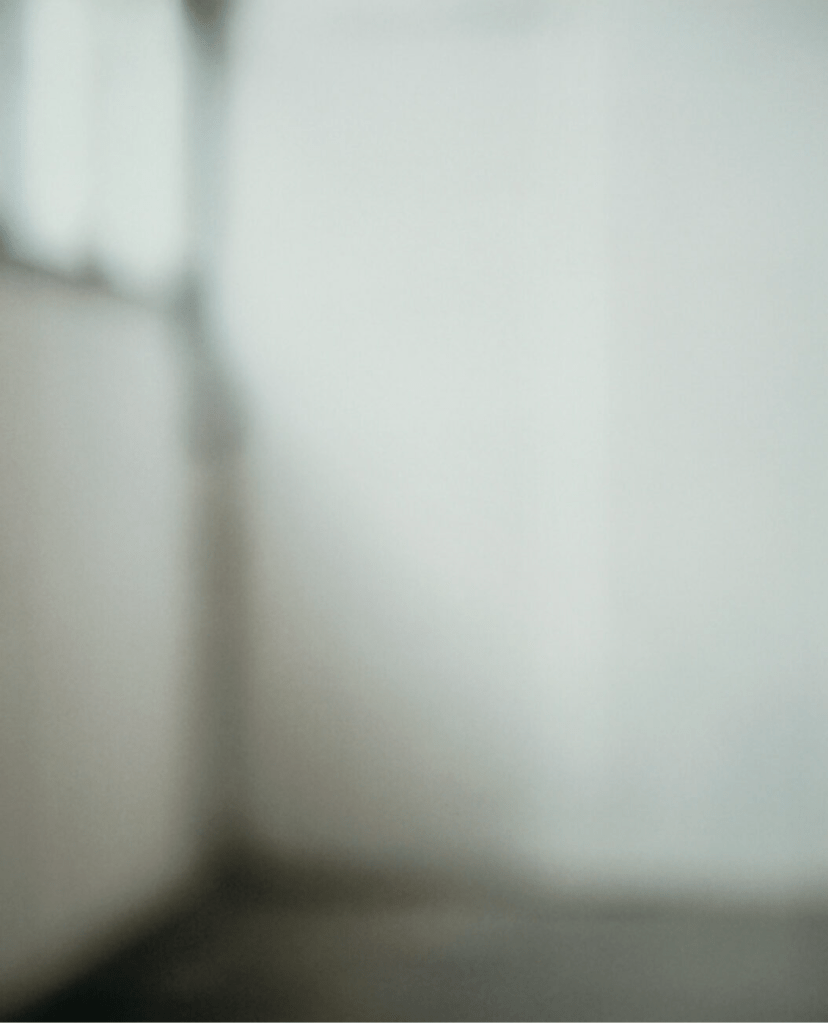
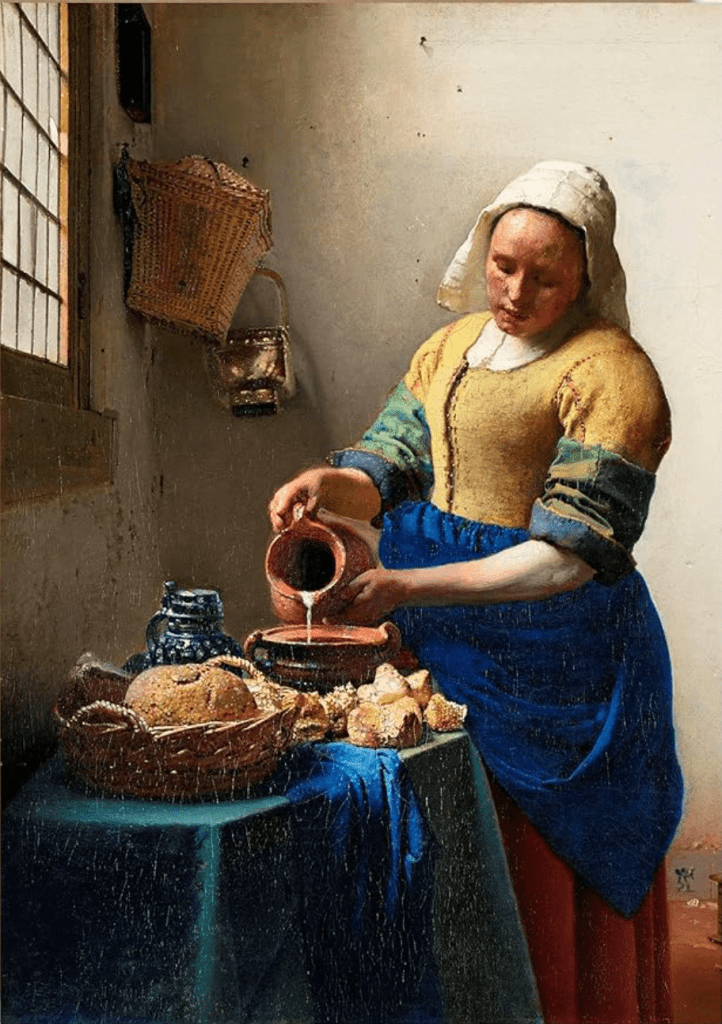
Many of Barth’s photographs have a painterly appeal. For example, the photograph below, which appeas to be a corner of a room (Fig 2 ) with a partially revealed window to the left, is reminiscent of Vermeer’s milkmaid painting (Fig 3) whether this was deliberately so, I’ve not discovered but the similarities can’t be denied with the position of the window and the corner of the room. The blurred image creates a chalky, soft texture which only adds to the idea of it being inspired by such a painting. Intentional or not, it shows that creativity is rooted in past experiences. Through moments of pause, deep breaths, and mindful awareness, we can reconnect with those inner resources and shape them into our own masterpieces.
Fig 2Fig 3Fig 4. Fig 5
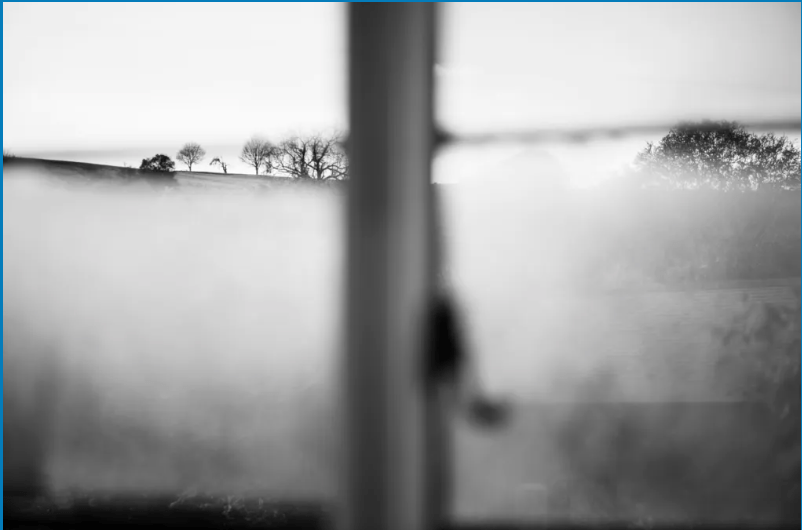
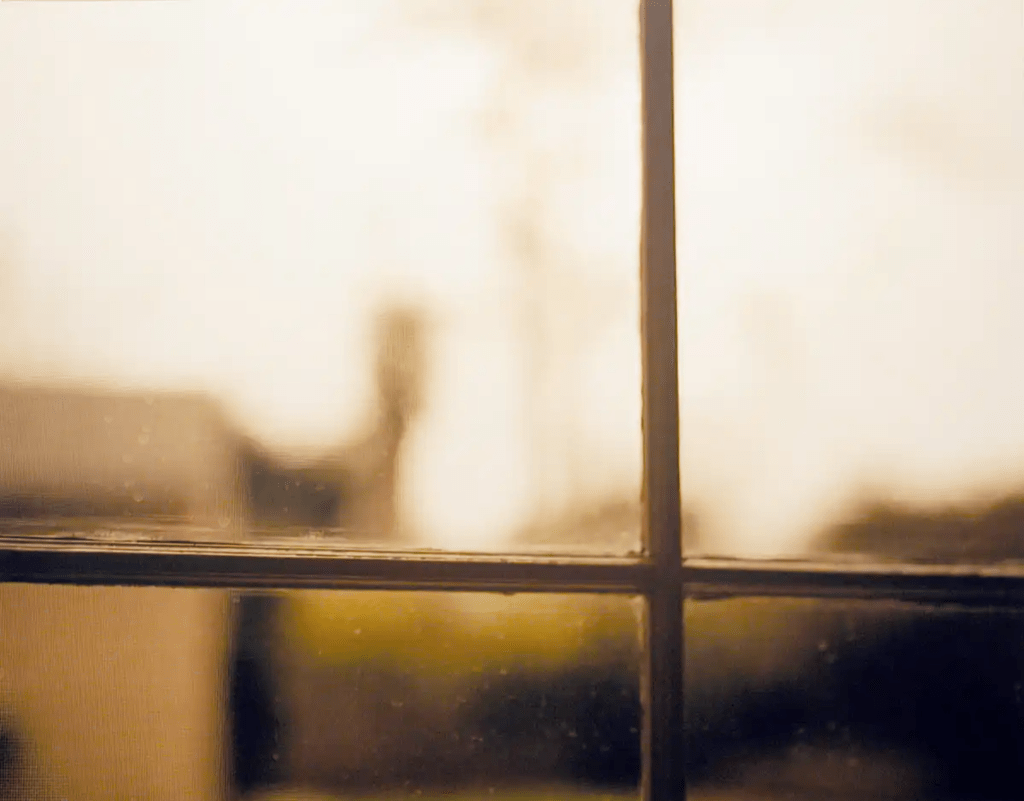
To further this, I note this photo (Fig 4) which I took for a previous module. This was inspired by, I now see, Uta Barth’s photograph in Fig 5. My photograph was taken from my bathroom window and although it appeas as though a sectin of glass is missing, its actually condensation (its a very old house!) with just enough of a clear gap in the glass to see the trees at the top of the first climb onto Bredon Hill from my village. I take this route several times a week and often look up from this window to the trees in recognition, then staring back to the house when I reach them.
Uta Barth’s photographs had an impact on my work from the earliest point in my creative studies. I reflect on this often and I am grateful that I discovered her images, this was a point where I could see how I could creative metaphor in my photography to add potency and dimension to my images.
I came across Dutch photographer Marjolein Martinot’s Riverland project via an interview with Ben Smith, A Small Voice podcast and when I searched for her online, I immediately felt as though she visually ‘spoke my language’. Her latest book “Riverland’ is highly evocative of the time spent at the waters edge for me and my family. Not only for the photographs that I have taken for this final project but in countless other examples, from sea and mountain holidays abroad, visiting family in France spending time in wild spaces. The themes are so closely aligned, the difference lies in skill or at least, stage of career. I believe I can create work at the same meaningful, awe inspiring scale.
Martinot is great friends with Vanessa Winship and credits her with being a significant inspiration. I can see the similarities especially from Winships project ‘she dances on jackson‘. However, I think that Winships photography is more journalistic in style, Martinot’s is more personal and poetic. I don’t think its overly sentimental as there is a depth to her images beyond this. I also see a Sally Mann influence in her broader body of work and she discusses this influence in in the Smith interview. She reflects on her creative practice as a mother of 6, she explains the difficulty with balancing her time and energy and that she has to take herself off to be creative, I find this relatable. If I am home, I find that the other jobs seem to win my attention. It is a discipline to gather equipment up and head out, its certainly something I need to do much more.
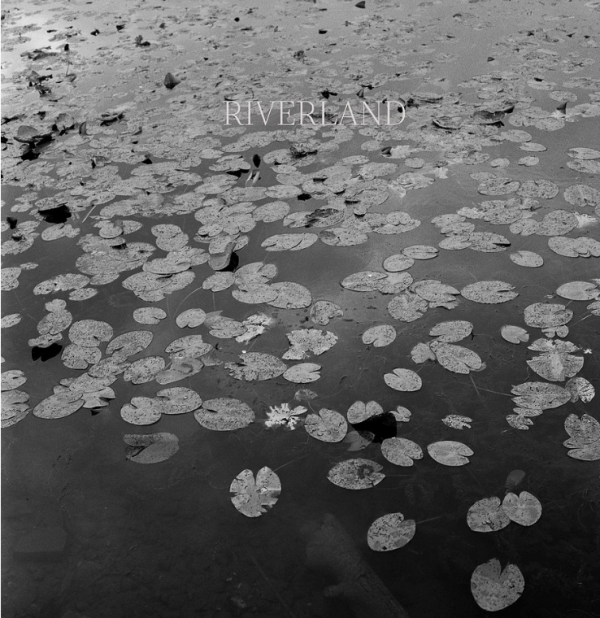
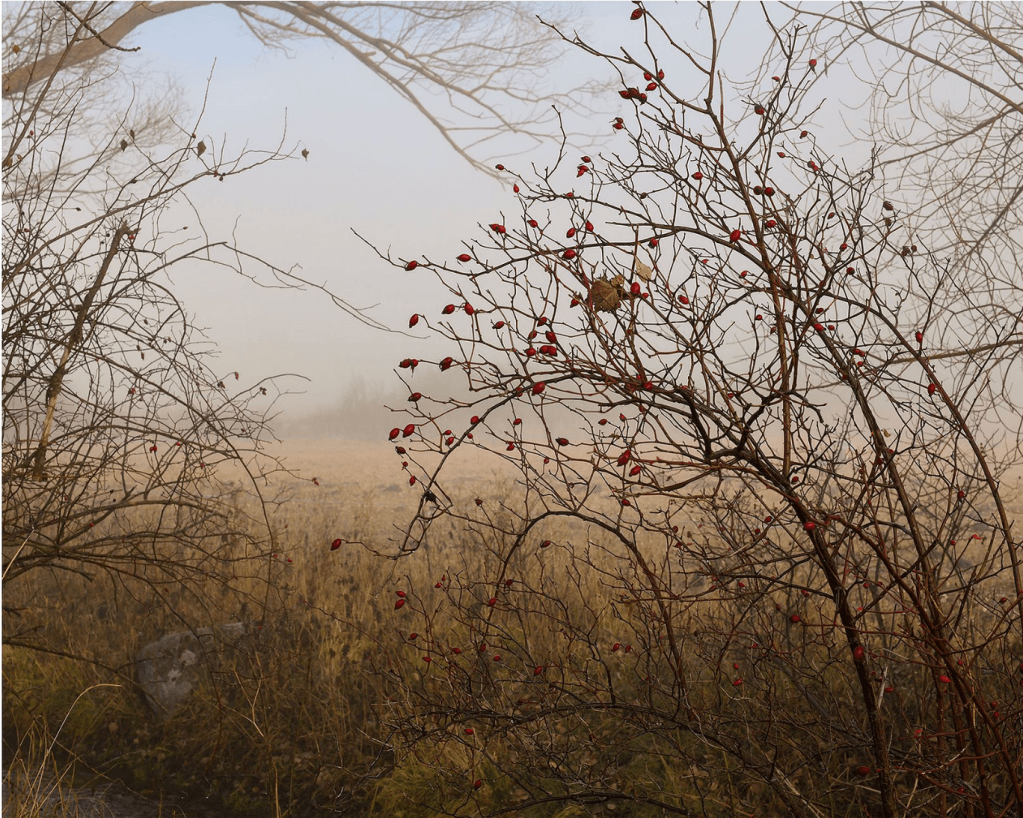
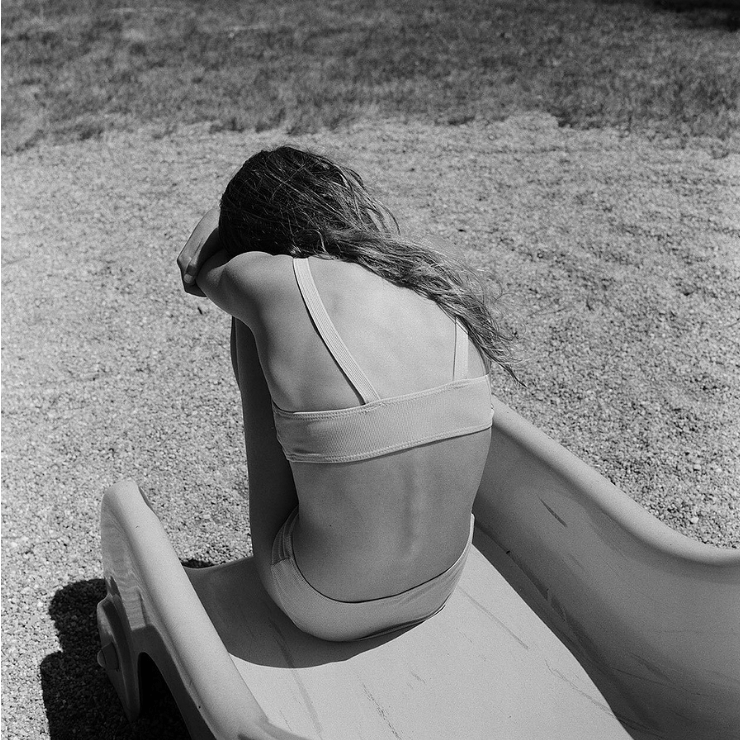
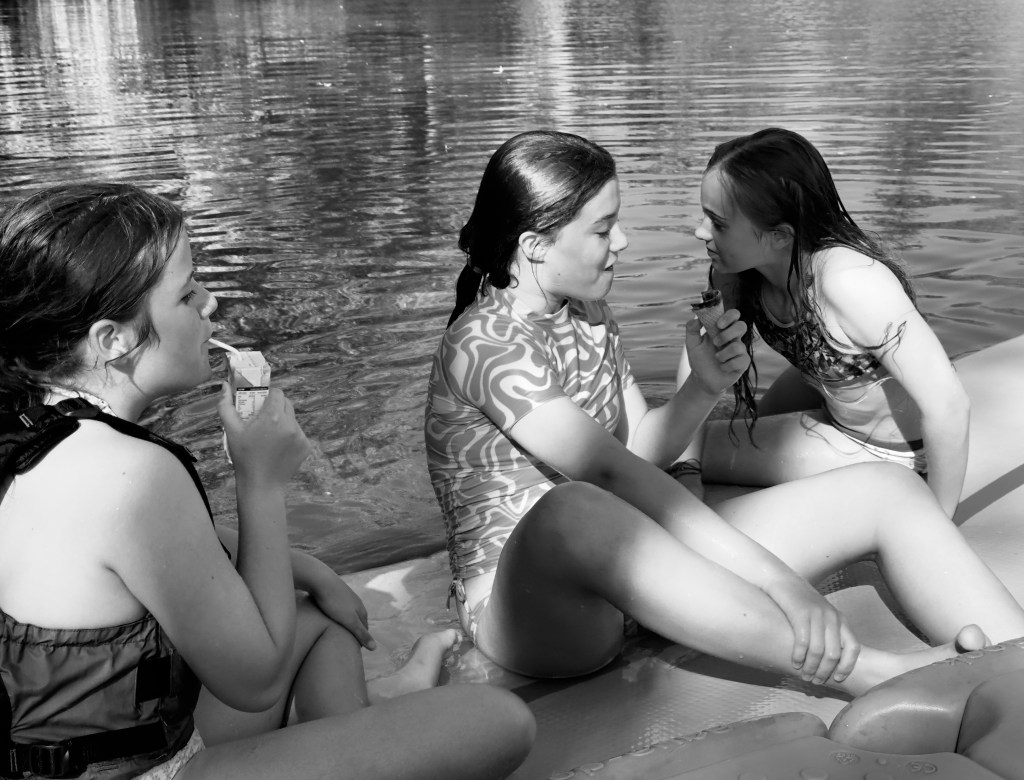
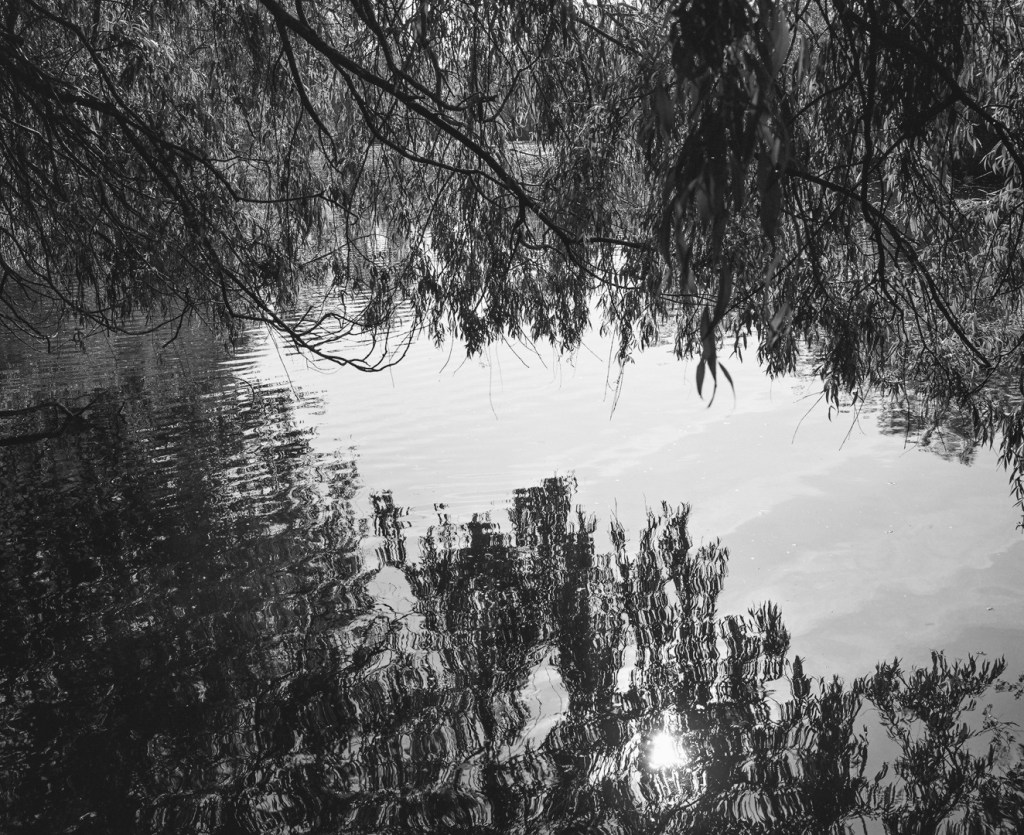
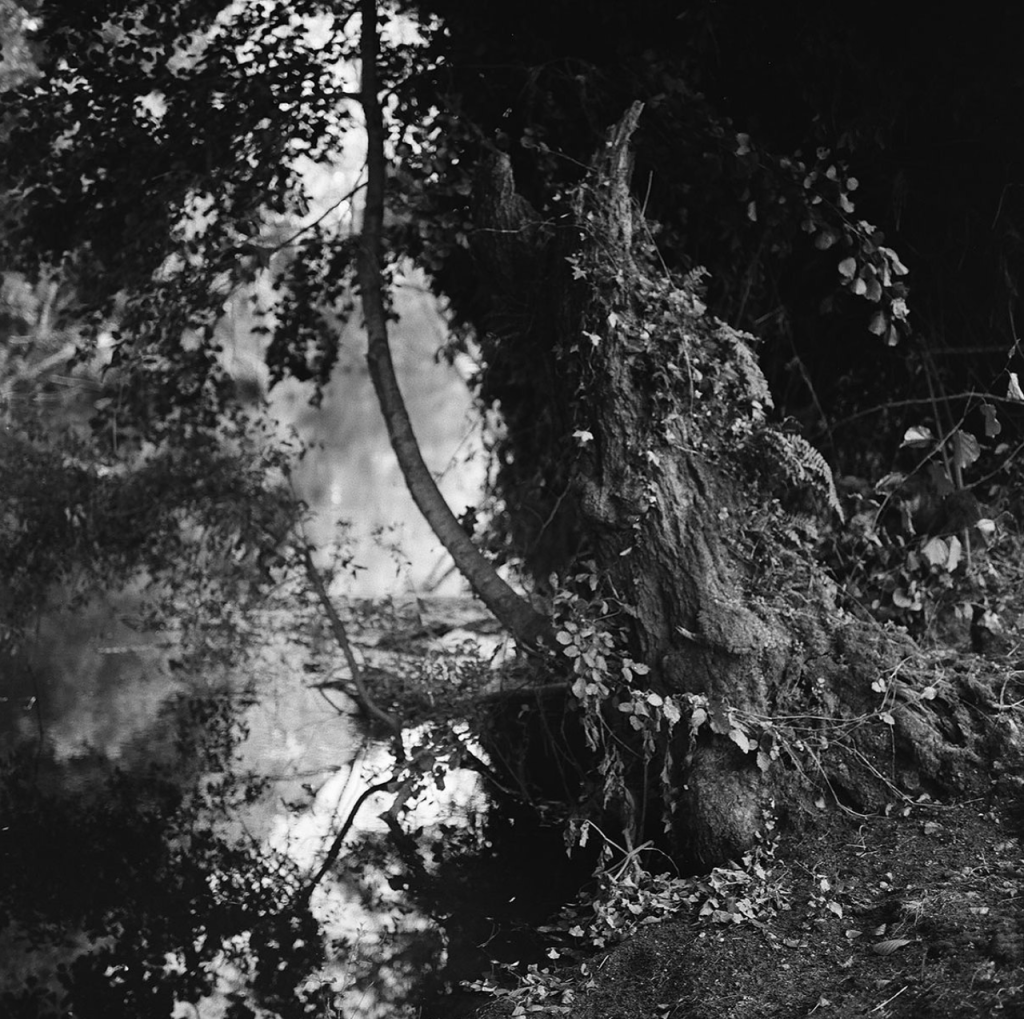
The black and white images I show above are from Riverland. The colour images are from a different projects and I have included them to illustrate the aesthetic quality that I admire. Riverland is an analogue project, using a Rolleiflex camera, that she started in 2020, when much of the world was in some sort of lockdown. The body of work consists of portraits and landscapes from rivers and waterways in France, where she lives. She regarded the river as a metaphor for life in the way it meanders and flows along.
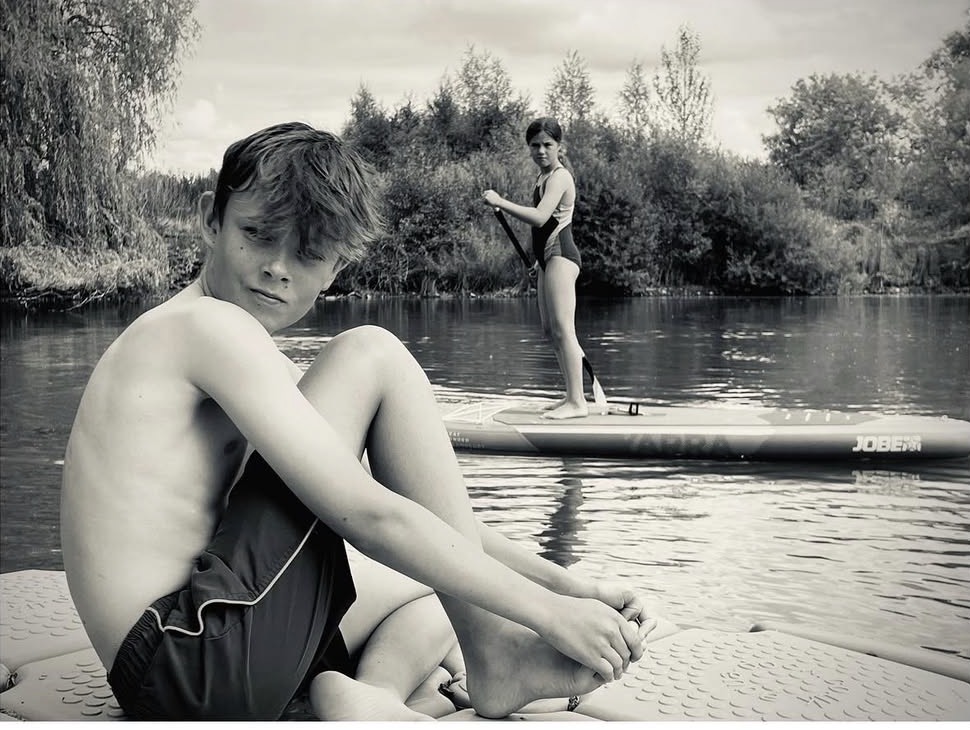
The portraits above are reminiscent of some of the photographs I’ve taken myself, these below at the lake in summer, technically there are of course vast differences but I’ve shown my photographs below to illustrate my point in terms of theme.
It is of course a different experience to take a photo of a stranger. She discusses this saying that she finds that aspect very difficult. This surprises me because she has so many beautiful examples of portraits in her catalogue and I would assume this would be something to avoid if its not a process you enjoy, however, I realise that the point here is to overcome this, to prevent it being a barrier to her own development. This is quite a realisation as I consider the ways in which I restrict my own development because of fear. Martinot talks about how she feels like she needs to rush because she has a sense of imposing on people, this is what I feel too but she explains that by talking to people as she works this removes that fear and it is becoming easier. I am mindful of this and I feel determined to challenge myself in the future when potentially creating photograph
As I keep in mind that this final major project can be a springboard into a more fully realised body of work, I am looking at how other practitioners work to help me to be less constrained by conventional thinking. I’ve discussed before, in previous modules, how I have to let go of the notion that I need a realised idea in mind. This is something I find hard, to do when I have a project to complete, a need to control all aspects can be a hindrance! In this scenario, I look towards other practitioners and how they approach their work.
As I intend to create an accompanying book, it is interesting to read how many of the practitioners whose work I am drawn to, often use the construction of an artist book as a tool for organising their photographs and to ultimately to link their images together into a coherent theme.
On Todd Hido’s work ‘A Road Divided’ he explains to writer Katya Tylevich how he uses book making as a way to present his work coherently, stating that“Without the book-making process . . . I wouldn’t know where to start.” This is a relatable comment as I often look at an image that I particularly like but struggle to understand where it might fit with my theme, if at all. Hido says that a book or show often “comes together much later in his process” having thoroughly sifted through his photographs to identify the connections and threads that run through them, describing this process as “constructing maps from large bodies of photographs.” In regarding the process in this way, I see how it would be a useful method in helping me make decisions on whether to retain, or eliminate a photograph perhaps for consideration in another project.
On a slightly seperate note, I like this quote given by Hido in an interview for Ahorn Magazine with Daniel Augschoell and Anya Jasbar“I believe that all those signs from your past and all those feelings and memories certainly come together, often subconsciously, and form some kind of a fragmented narrative. Often, you’re telling your own story, but you may not even know it.” I think that this accurately describes the mental process of creating a particular body of work, especially in my case for this FMP. It highlights how we are heavily influenced by our own stories and experiences, whether we know it or not, affirming that we are individually capable of creating our own authentic, unique work.
Similarly, Alec Soth discusses how he will often photograph the subjects he wants and then collate everything into a large ‘mess’ before seeking out a series to form a story. Raymond Meeks is another photographer who prefers to be driven by a need to photograph rather than have a preconceived idea.
Meeks is well known for his artist books, I was fascinated by them during an earlier module as he uses repurposed paper, often from old books. In a conversation with Stanley Wolukau-Wanambwa he describes how he tends to look for his narrative once he has reached a natural end of photographing a subject. “It’s a process of looking at a current archive; contact sheets and digital files–and trying to understand the common thread that underlies and unites my interests” (hcponline, 2016) He says he uses bookmaking as a ‘channel for formal expression’ when it comes to creating a body of work. Frequently photographing near his home, he does not always carry a camera. Instead, he observes and absorbs his immediate environment before deciding whether he might return to photograph any particular aspect, aiming to understand why he feels drawn back to a particular subject. Unfettered by his camera and using patience, this approach encourages a greater sense of presence.
John Gossage’s response to a question over whether the concept for his book ‘The Pond’ came first or the photographs themselves, reiterates this as he describes his process. The idea that the world will offer up something that you can’t preplan is certainly something that resonates for me: For me, it has always been that the world suggests far more subtle and interesting variations than I could ever come up with. At a certain point in each project, you get an idea and you investigate it. But I always take my prompting from the work being done. And back then, I had some pictures and I thought, yes. And then I filled it out. (Smithsonian: online, 2010)
Tacita Dean also refers to how she finds her way through, just by working. Similar I think to Gossage’s approach, just by doing and not to overthink.
This quote holds great resonance for me: “The lake is a landscape’s most beautiful and expressive feature.” — Henry David Thoreau. or any body of water but a lake (or pond) has a stillness and therefore more shifting features as it is either a mirror or an abstract painting, the ice will soften the sky, a still & clear night sky delivers a mystical onyx effect and a bright winter day can be so clearly reflected as to make us think we are upside down. I will never not marvel at the images in water.
I am going to try and resist confining myself to a self imposed, overly prescribed brief. Of course, I need some parameters to work with but I think my work will be better for a more relaxed and instinctive approach, such as that used by the photographers mentioned above.
Mamiya 7ii 80mm lens. Handheld. Shot at around 7.30pm, bright sunny day.
This was a particularly bright day, I had Delta 100 film in the camera, which I don’t normally use but I wanted to give it a try. Immediately it appears more metallic than the Ilford that I’m used to but that’s not to say I don’t like these, on the contrary, I can see how some ambiguity and abstract compositions might be an effective method of conveying my theme. The images remind me a little of some of the photographs from a series by Marjolein Marjolein in her series ‘Riverland’ (fig 1)
Fig1. ‘Riverland‘ Marjolein Martinot, 2022
My favourite image is no 5. At first it looks as though it could be a charcoal drawing and then I noticed the reflections, you can see the bottom of the lake because the water is so clear, there is debris on the surface, reflections from the trees above, the weed and debris on the bottom makes it a possibility for a large scale print.
I had explored the lakes slowly, having already been around once with my digital camera. I tried to think about my surroundings, the heat had been quite intense and was levelling off a bit given the time of day. There was a very distinct stillness all around, insects could be seen above the water, and light bounced off every shiny surface. All in all it was a perfect summer evening. The was a a lot of algae visible on the surface of the water, in some areas make it look like solid ground. Under the shade of the woodland I photographed under the canopy of the trees, I noticed the reflections and the shapes they made, the initial investigation with the digital camera really enabled me to pause and reflect more on a second walk around. Its worth using this method of documenting and exploring again, it is as if I need to use up some mental and physical energy first.
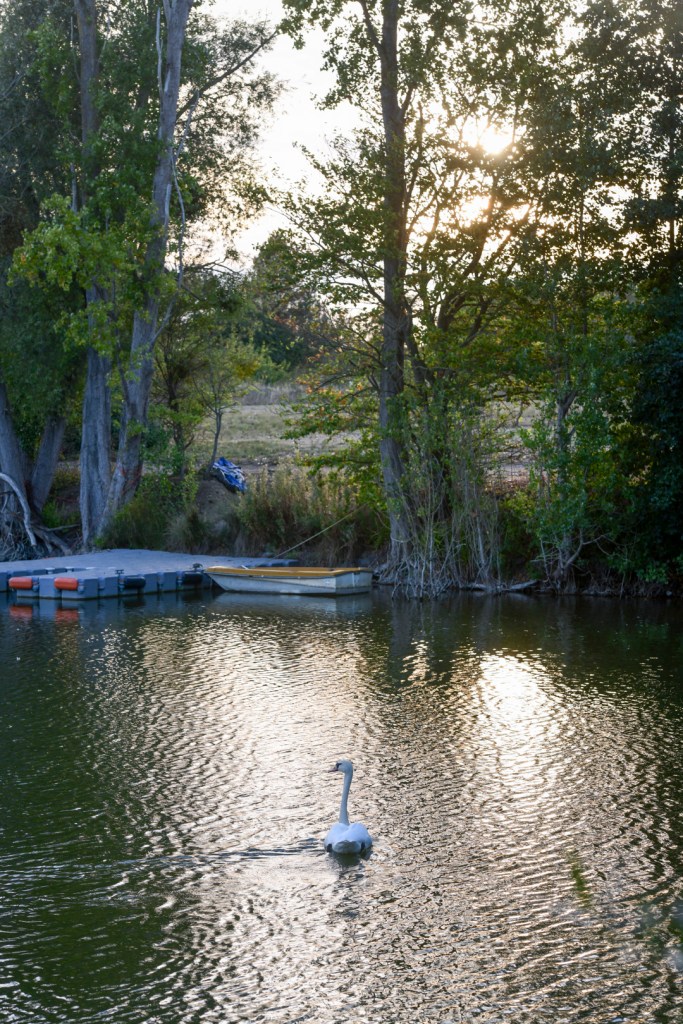
I took my Nikon out and treated the activity just as a walk rather than a photoshoot. Some of my photographs were banal but I’ve selected a few that I felt had the beginning of something more meaningful. Successes for me are the shots under the tree canopy at the waters edge. I, like many people am drawn to water and this is the place which contains the memories of mid summer when the lake is used for leisure and the teens ‘hang out’ on its banks. The swan is reclaiming its territory here, with everyone now headed home. I have ideas for other projects which centre on this lake. It centres around the summer months when it is very much in use by family and friends. Of course, thats not possible for this final project because it is being carried out over Autumn and Winter, when the landscape takes on a whole new meaning for me. A place of solitude and quiet where I get to lose myself in my own thoughts.
I shot alongside using my analogue camera, the images from that can be seen on the following post. The light was very bright even though late in the day and it was surprisingly tricky to get the balance right.
At this moment I was very much still trying to narrow down my theme and now, writing this up and having developed this further, I am not sure how these may / may not fit. I think that they do tell part of the story of the place itself.
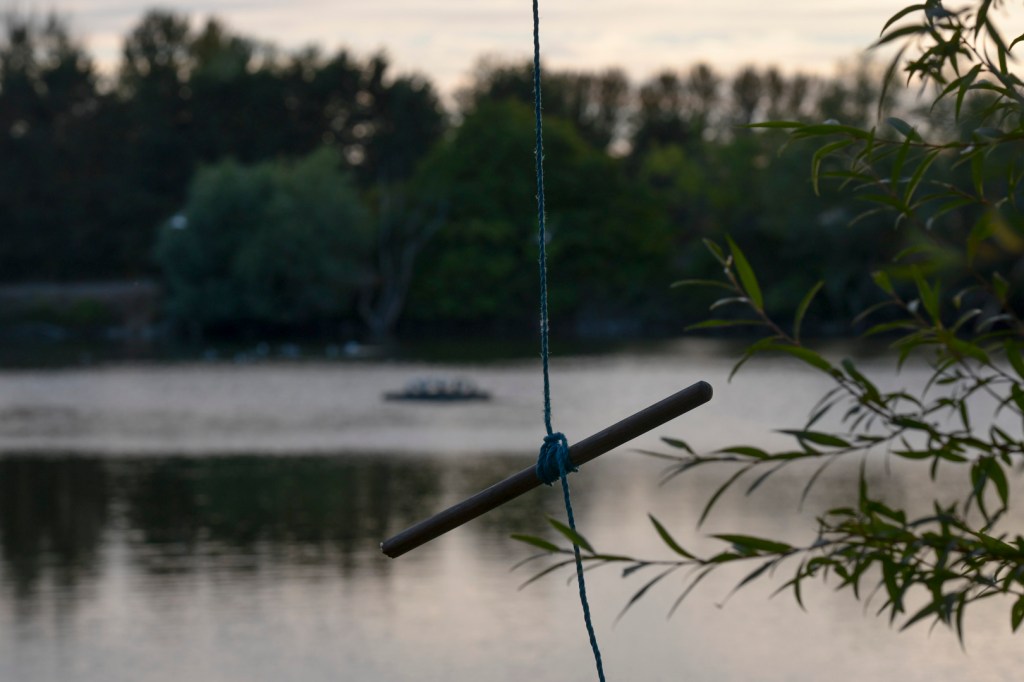
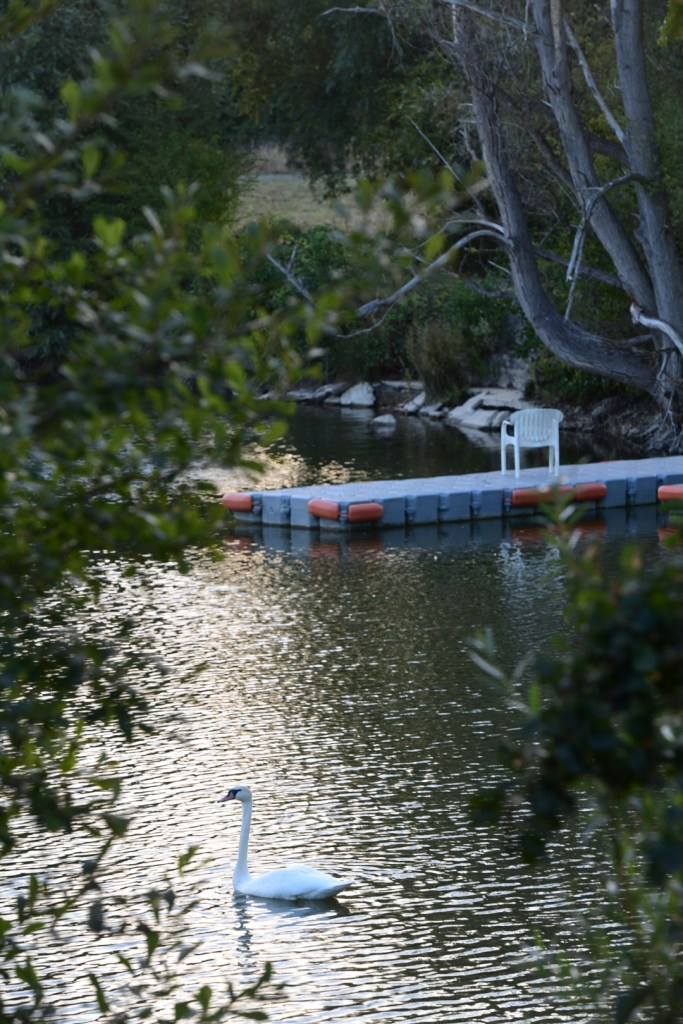
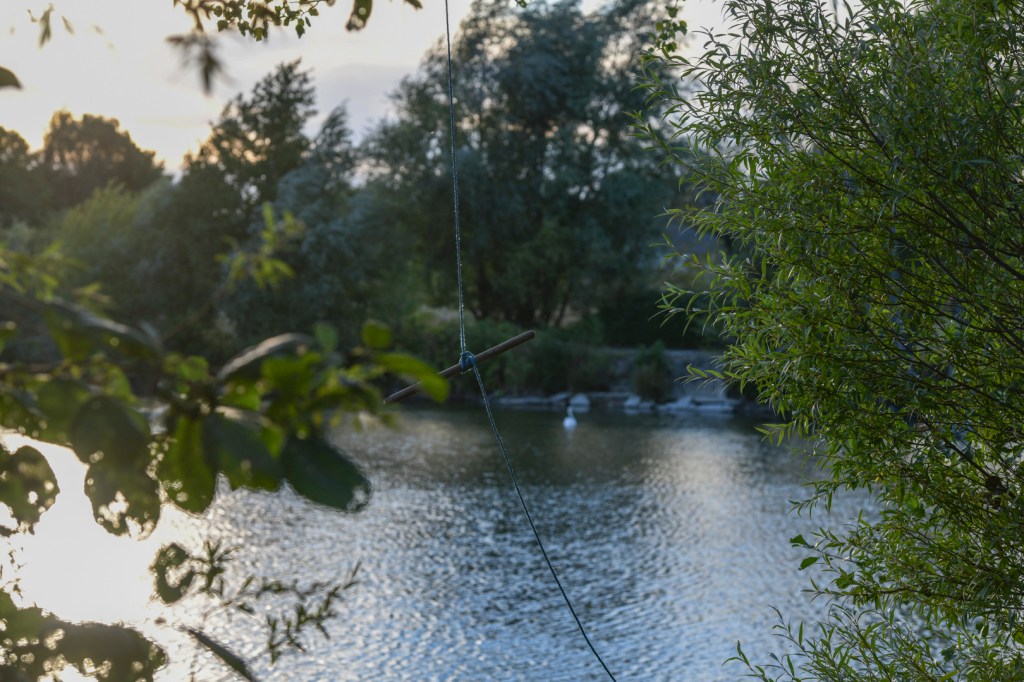
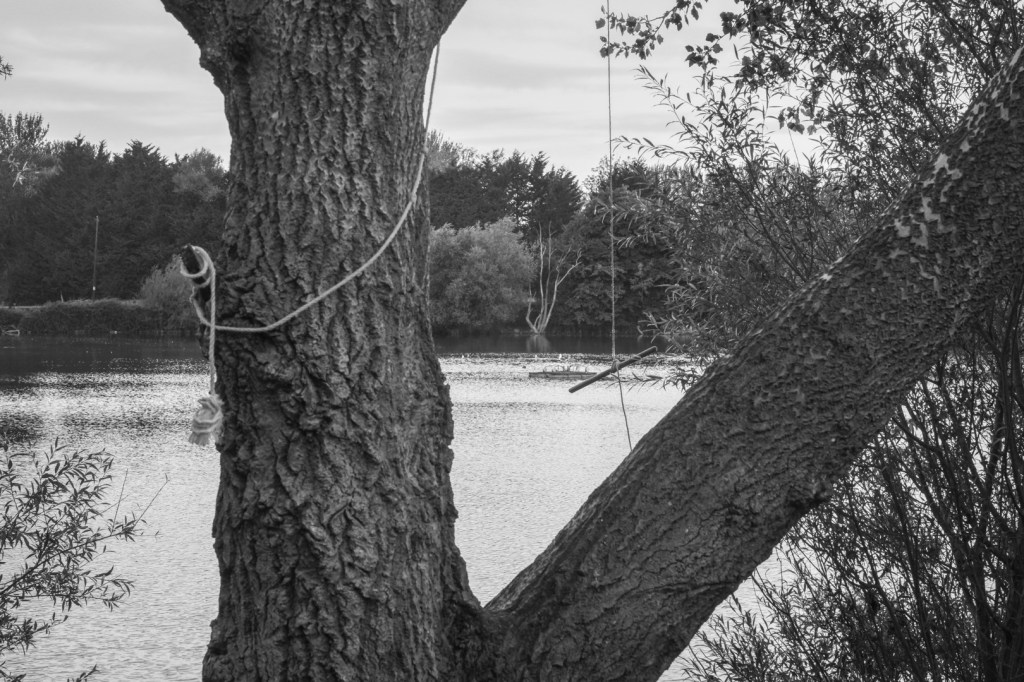
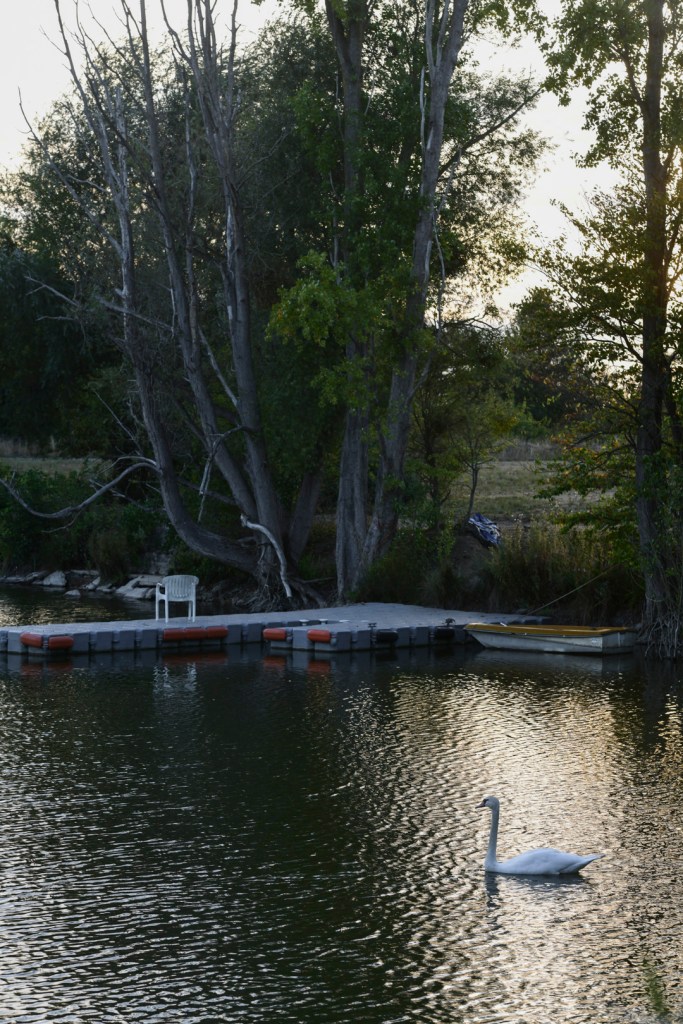
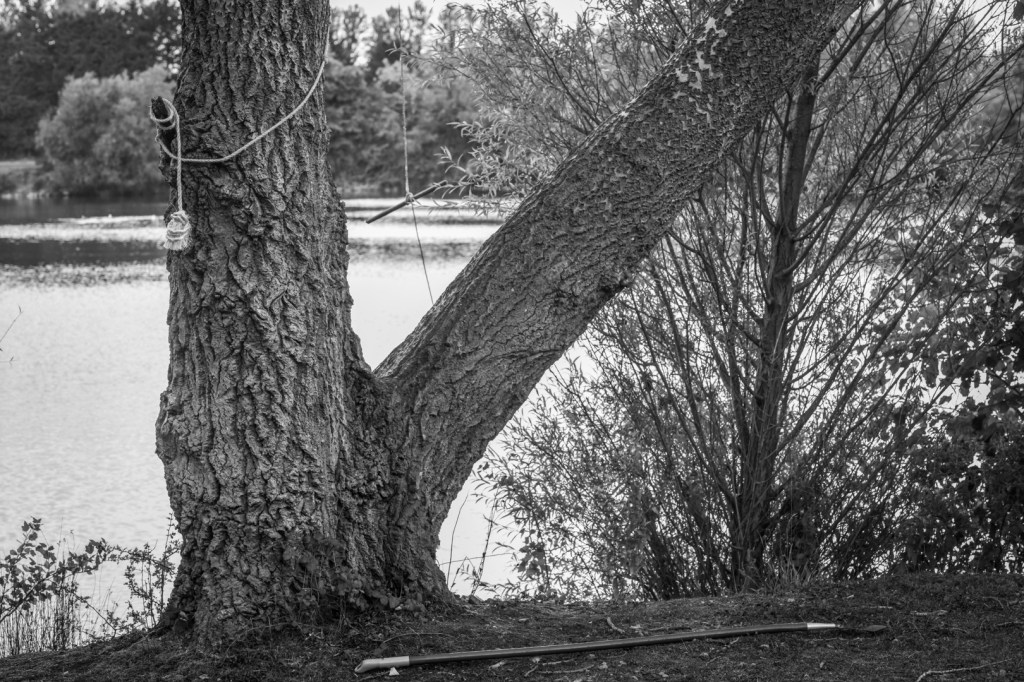
In the first few images of the ‘square lake’ I have concentrated on the aspect of the lake which we use for socialising. My children are there as soon as the temperature climbs in the spring, until the last of the summer warmth. There is a deep connection with this place, when I think about the summers spent here and some essence of each of us remaining, memories are literally contained here and the rope swing in particular symbolises that. I admit to a tinge of sadness when I photographed this, knowing that this is another year of a rapidly disappearing childhood done. I think that may be why I chose to convert the tree and rope swing images in to black and white. I didn’t want the distraction of colour to detract from the memory. The garden hoe was used by the children to ‘grab’ the handle of the rope swing to pull it back in, ready for the next launch. The presence of the swan, peacefully swimming along whilst I photographed, did make me think about how it is probably enjoying the peace and quiet now. The white chair in the background, and also of the yellow boat on the late, as well as the kayak on the shore, is further intended to show where someone once was, enjoying the surroundings.
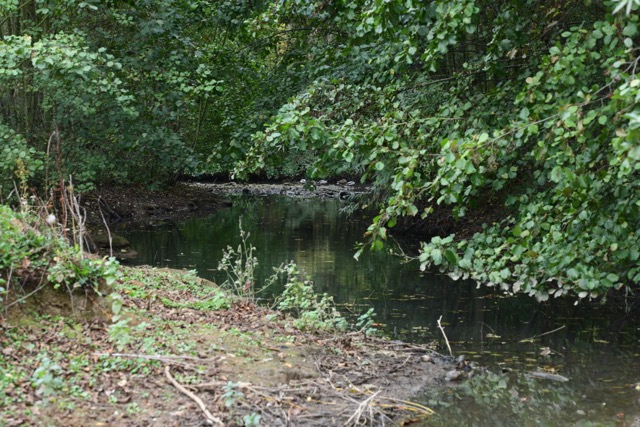
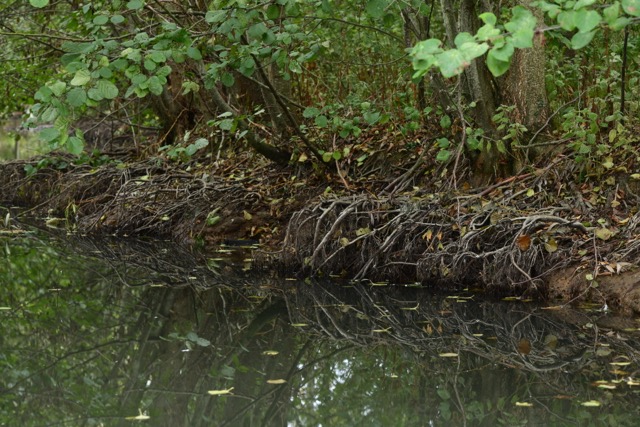
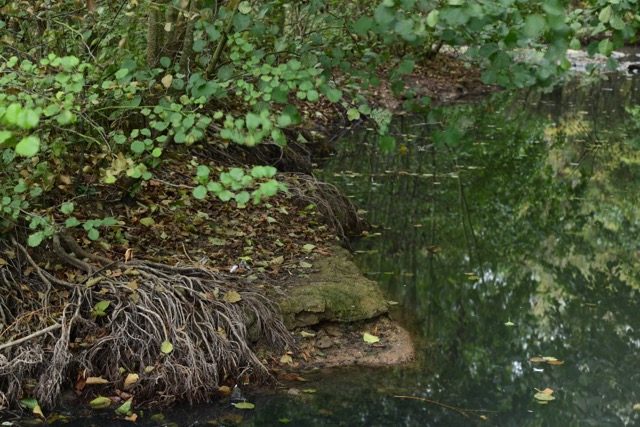
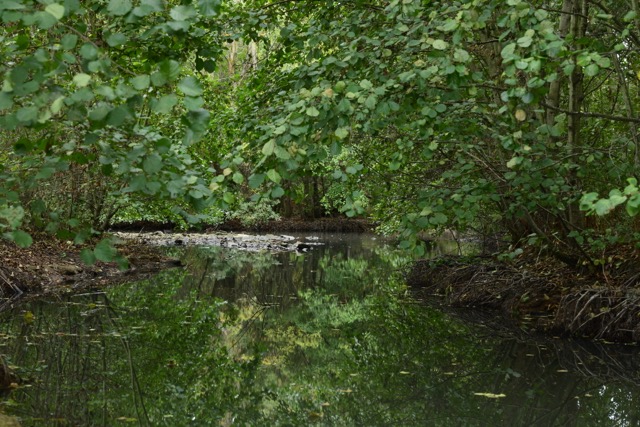
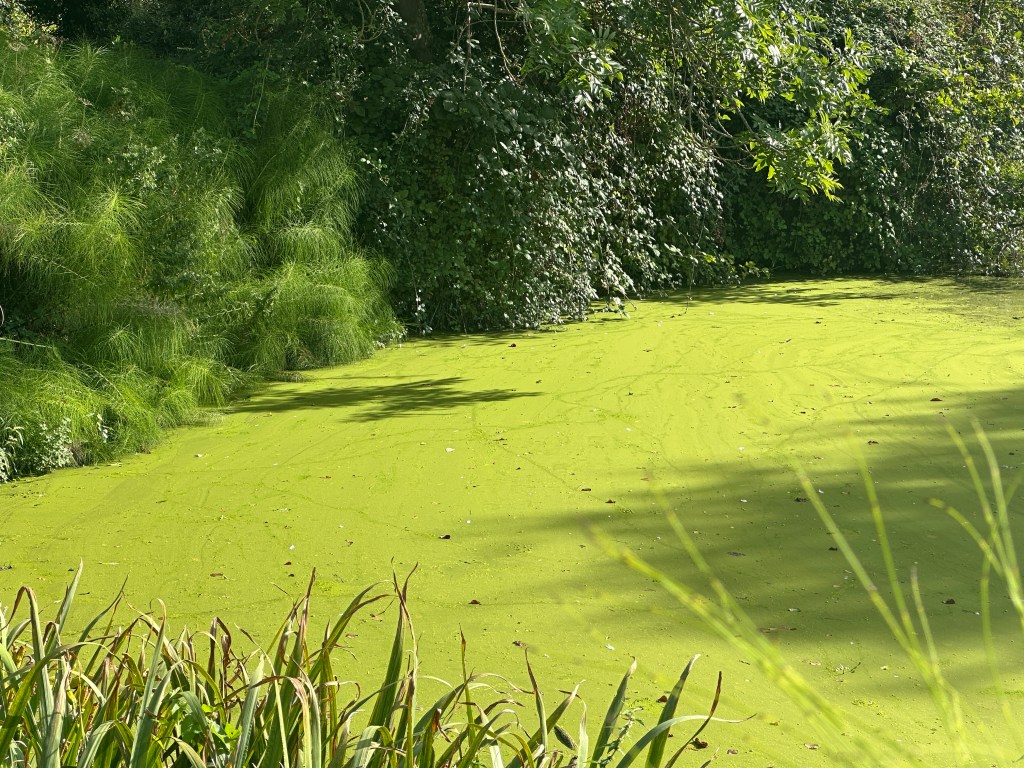
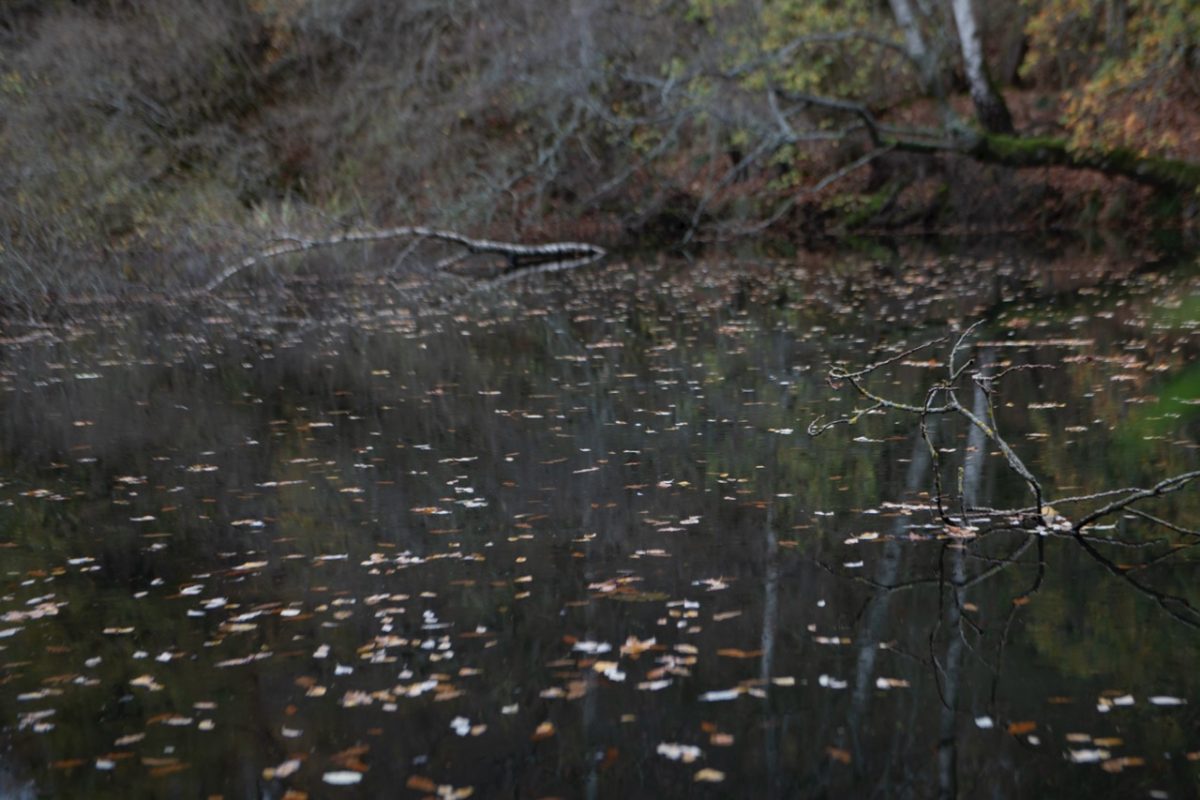
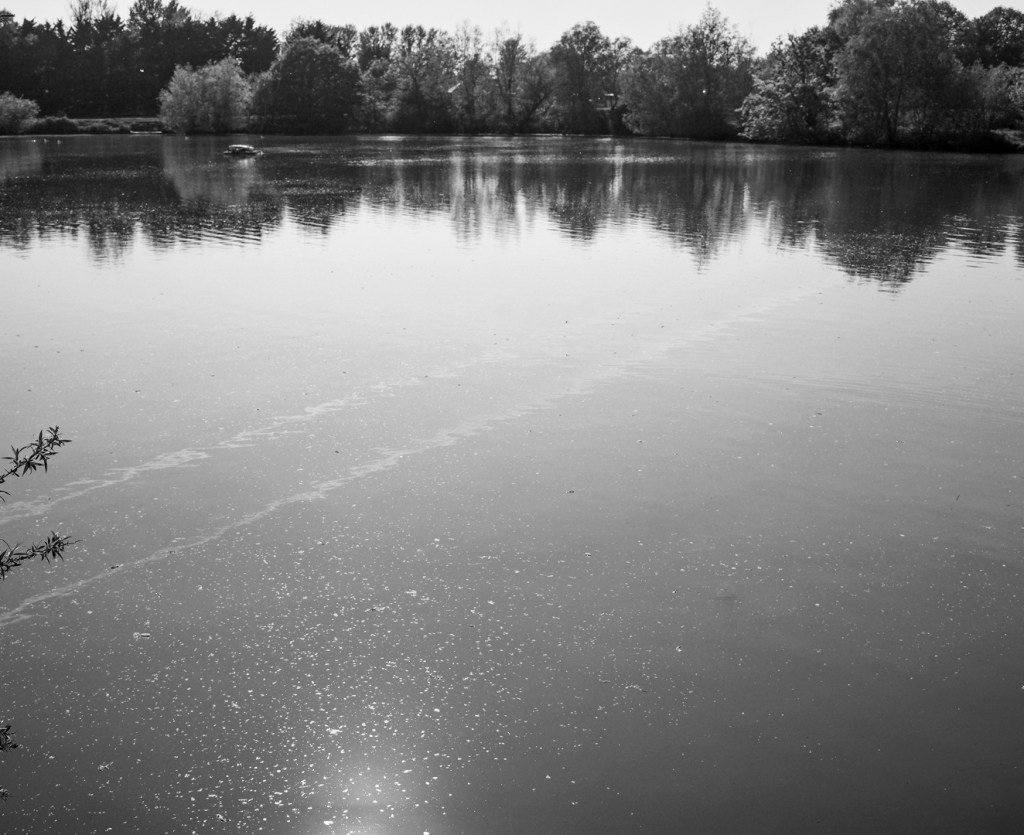
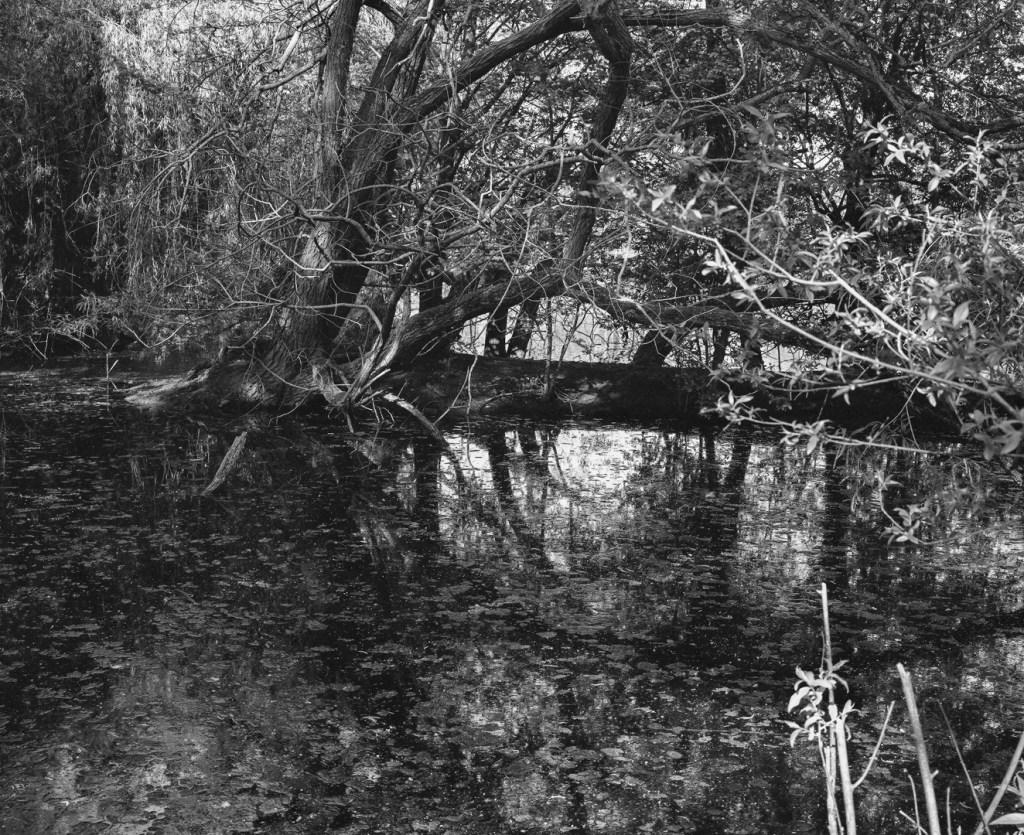
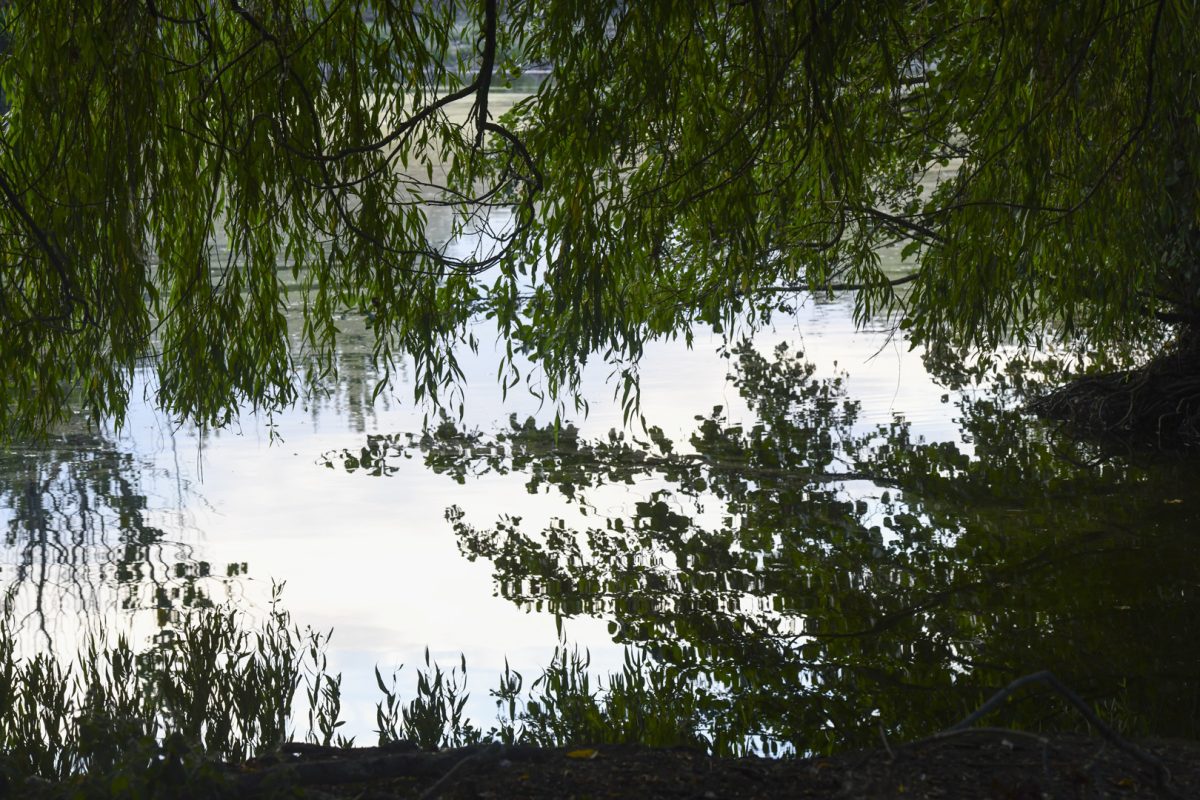
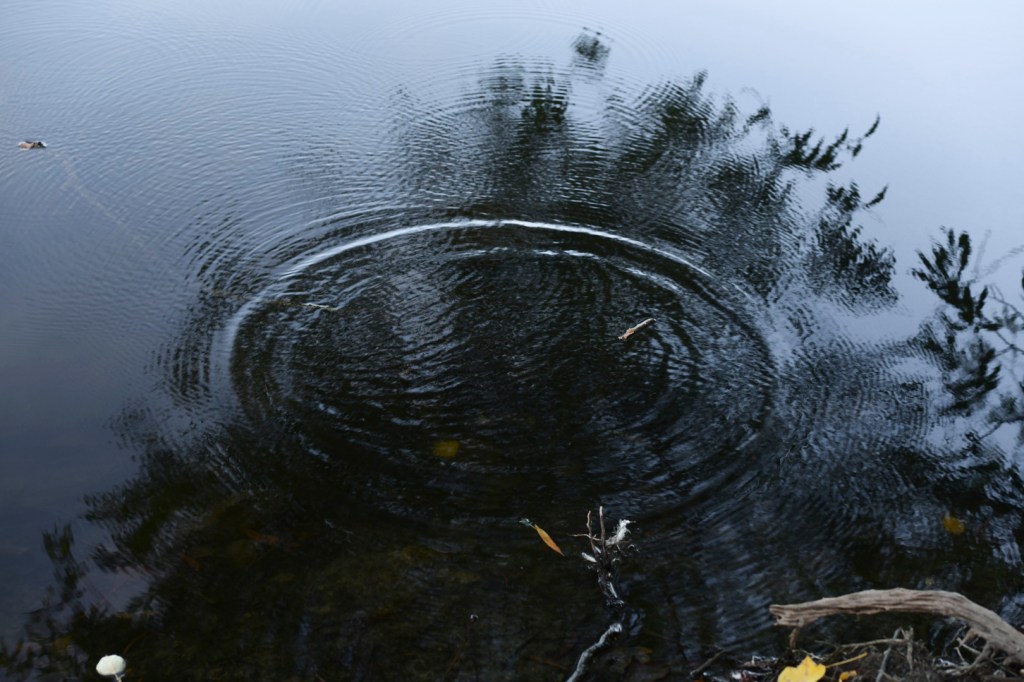
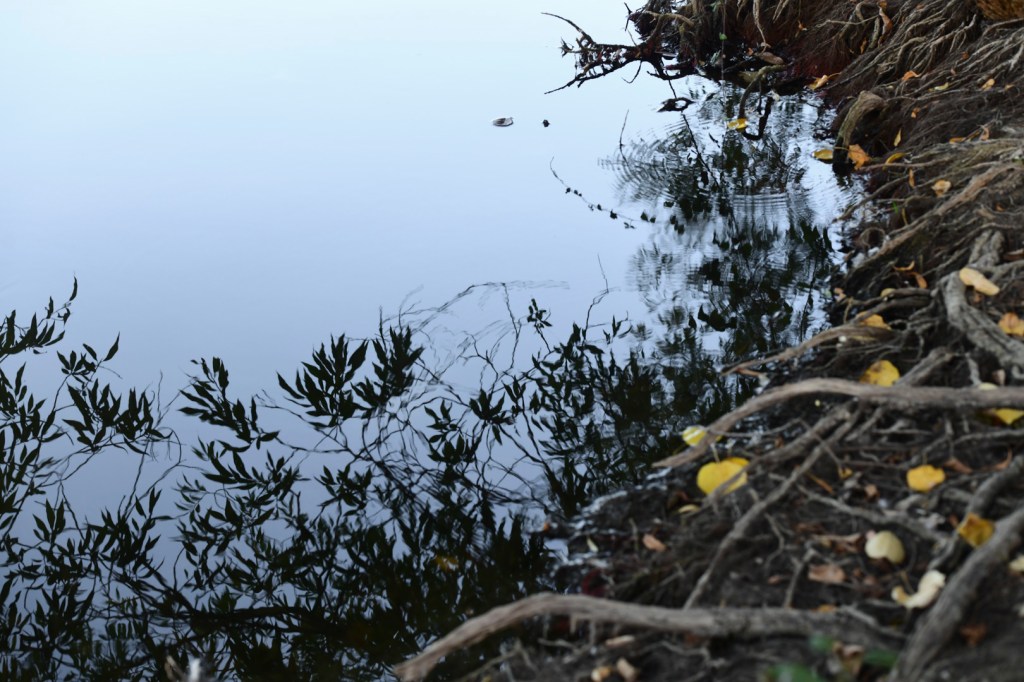
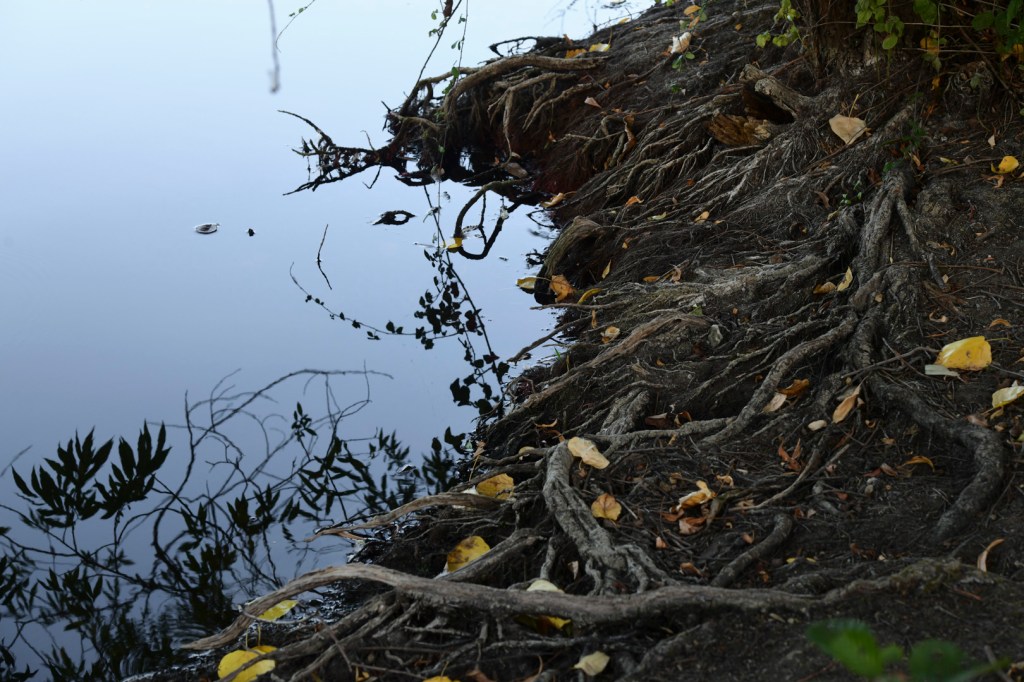
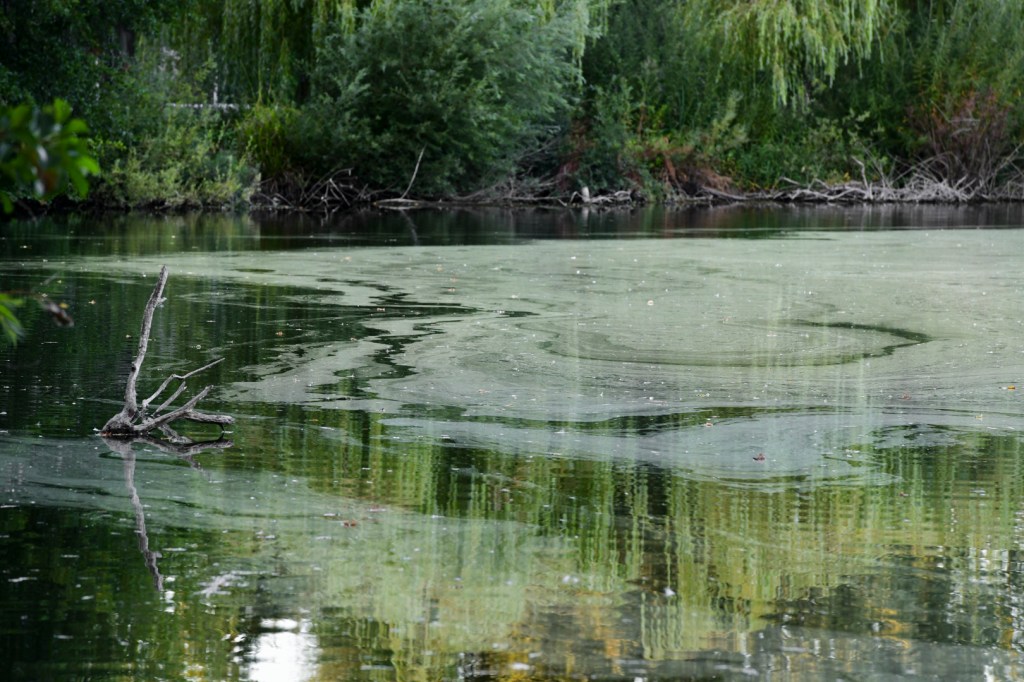
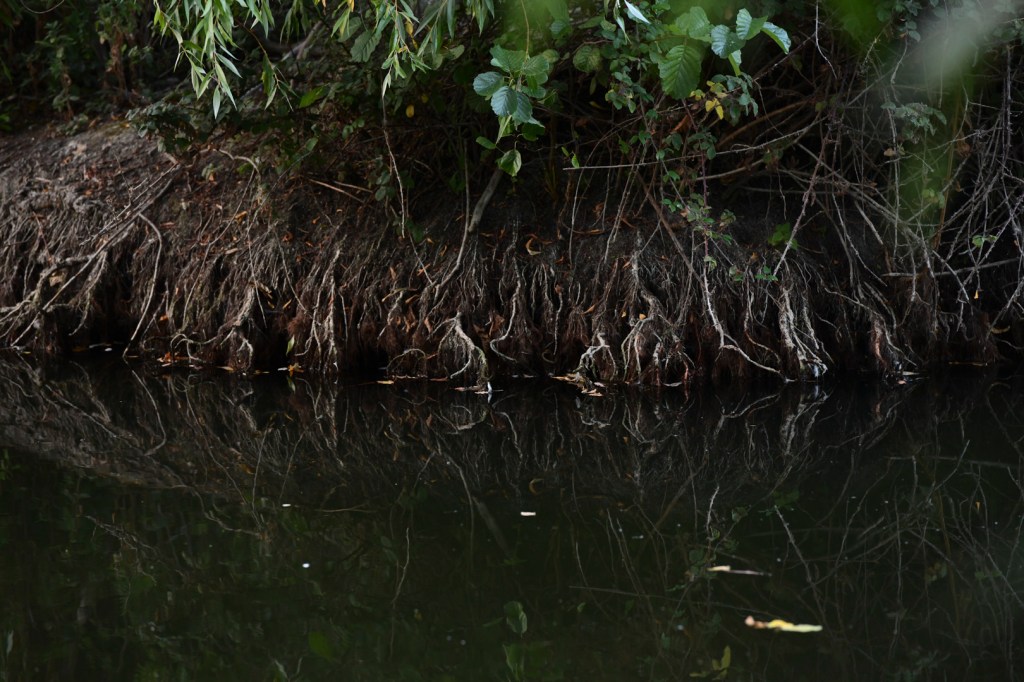
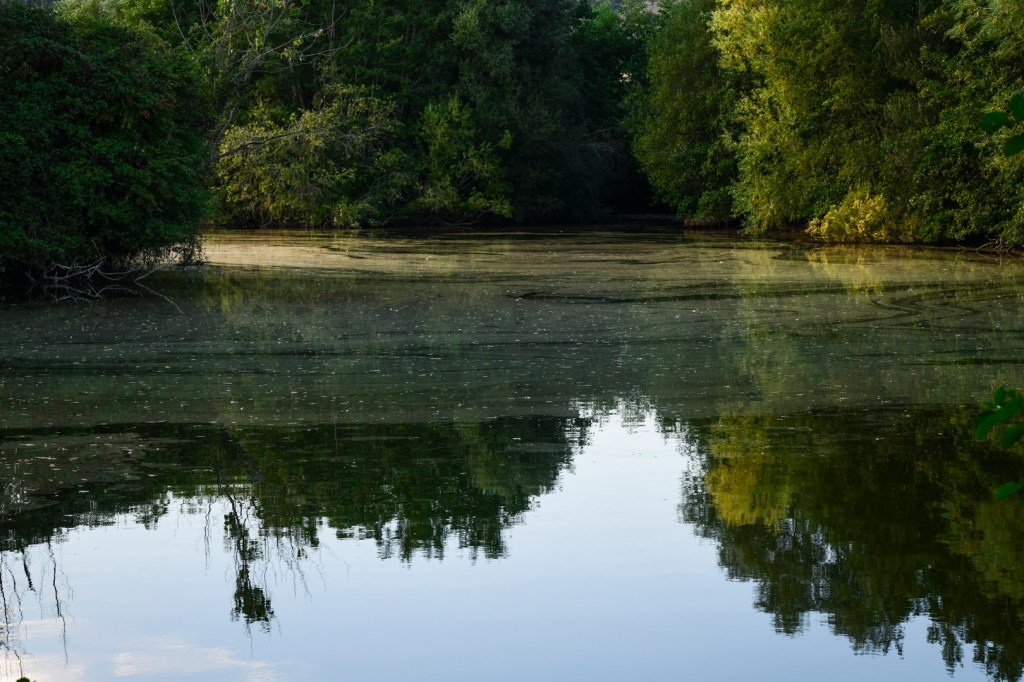
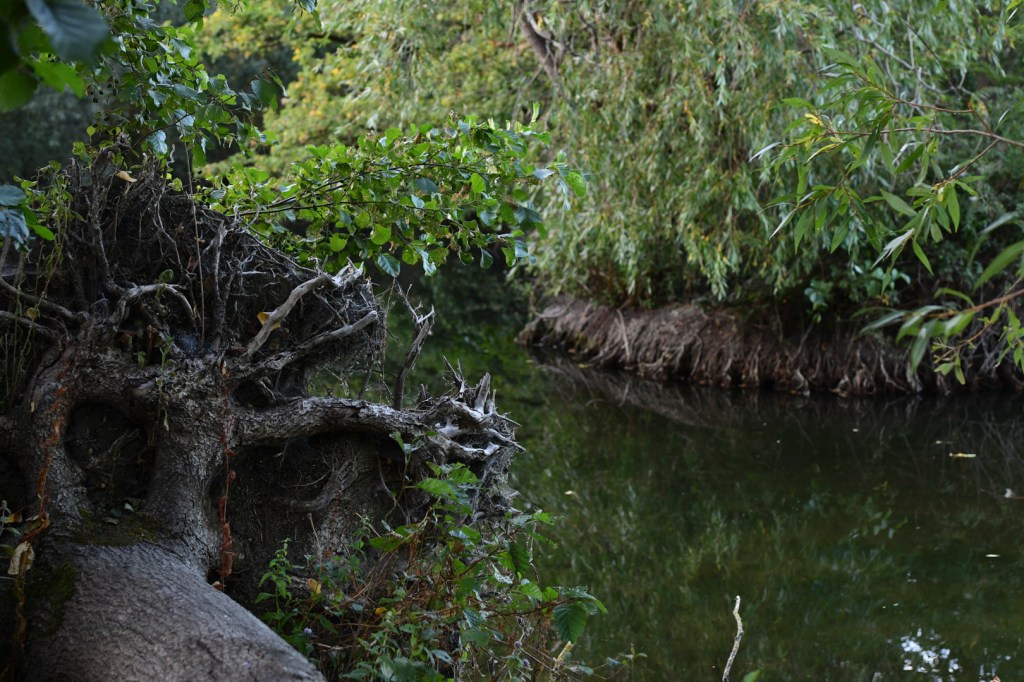
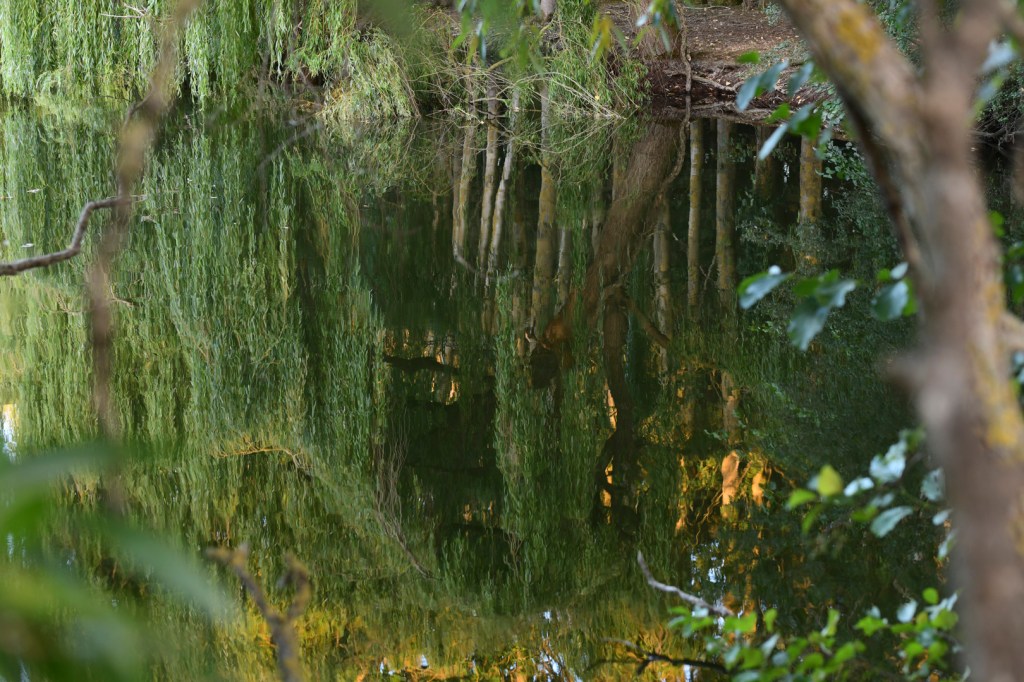
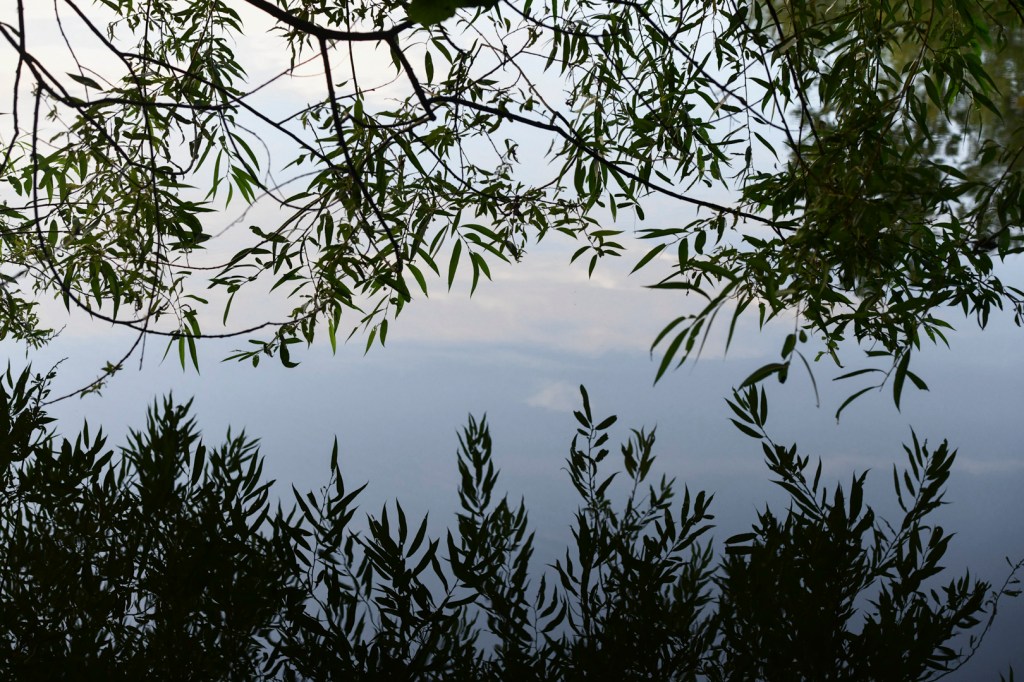
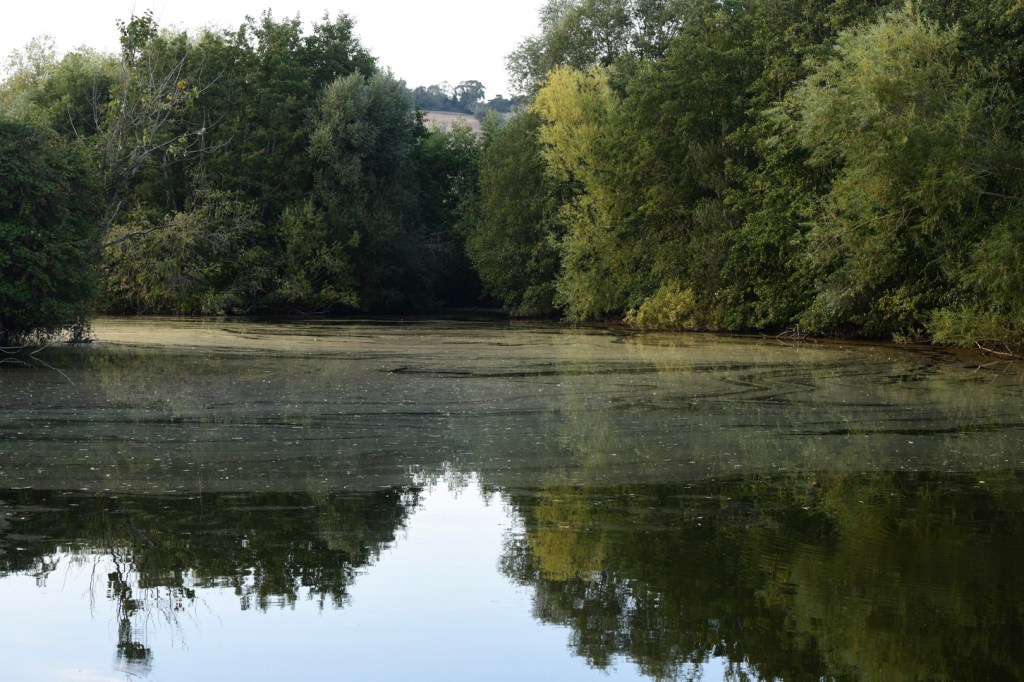
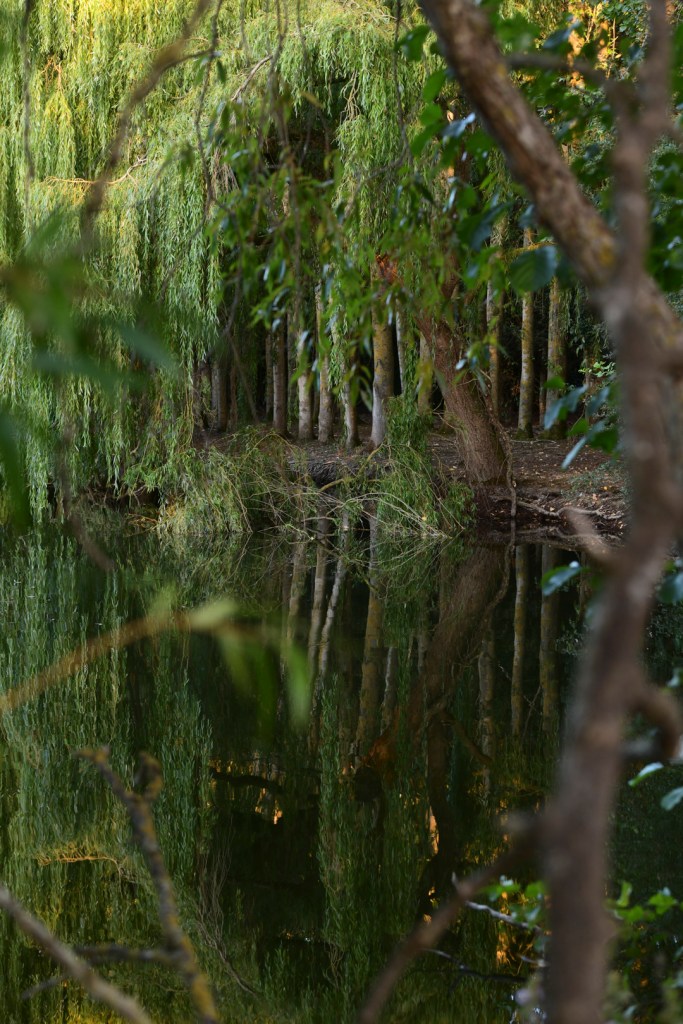
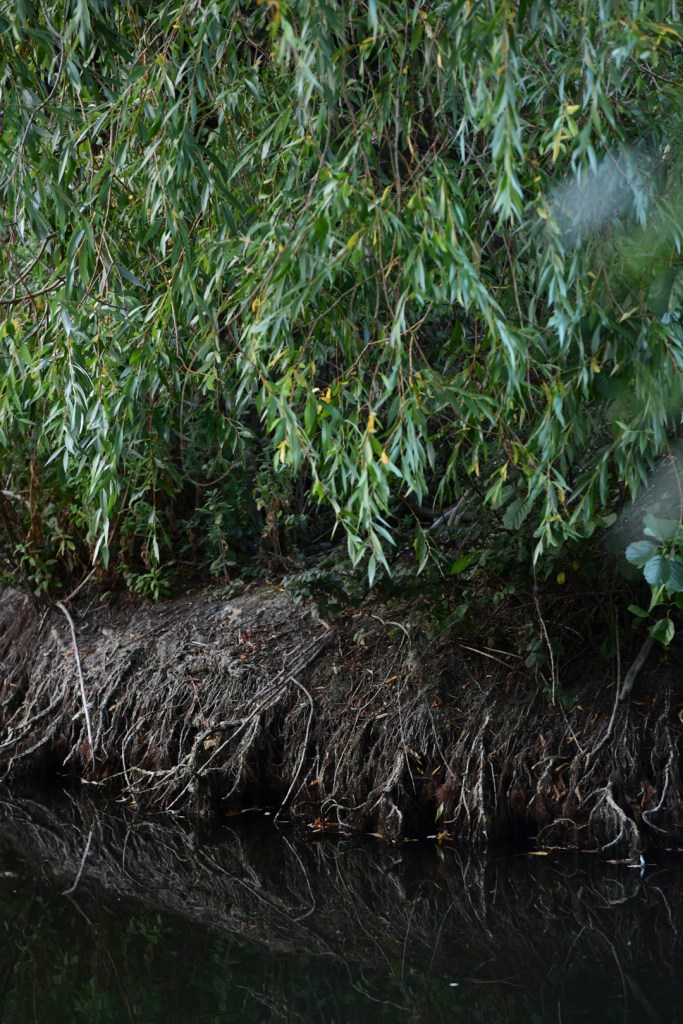
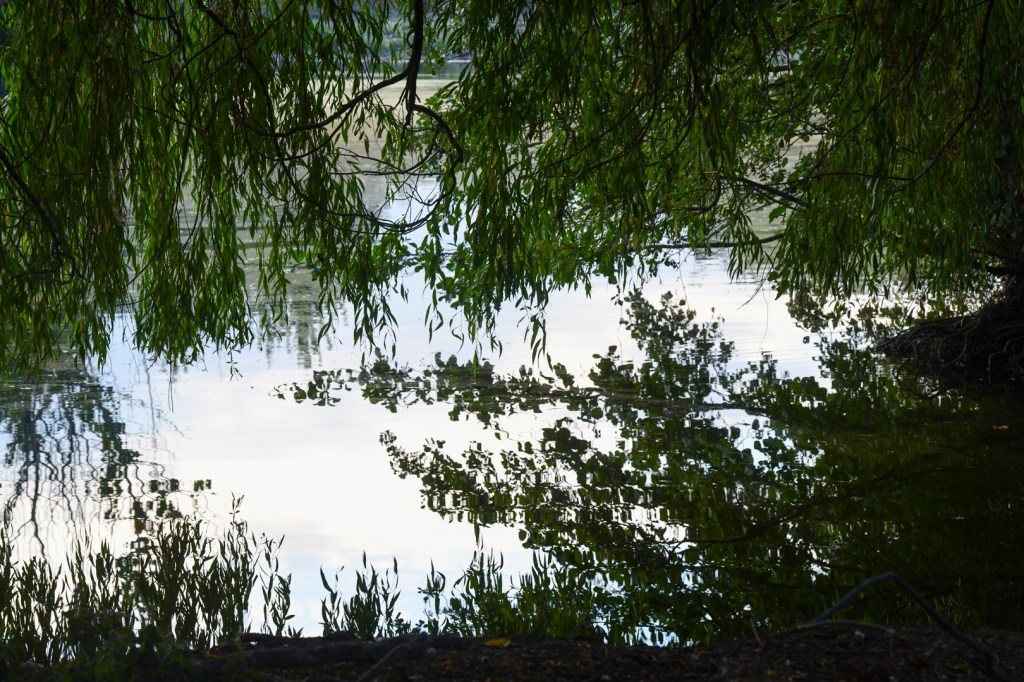
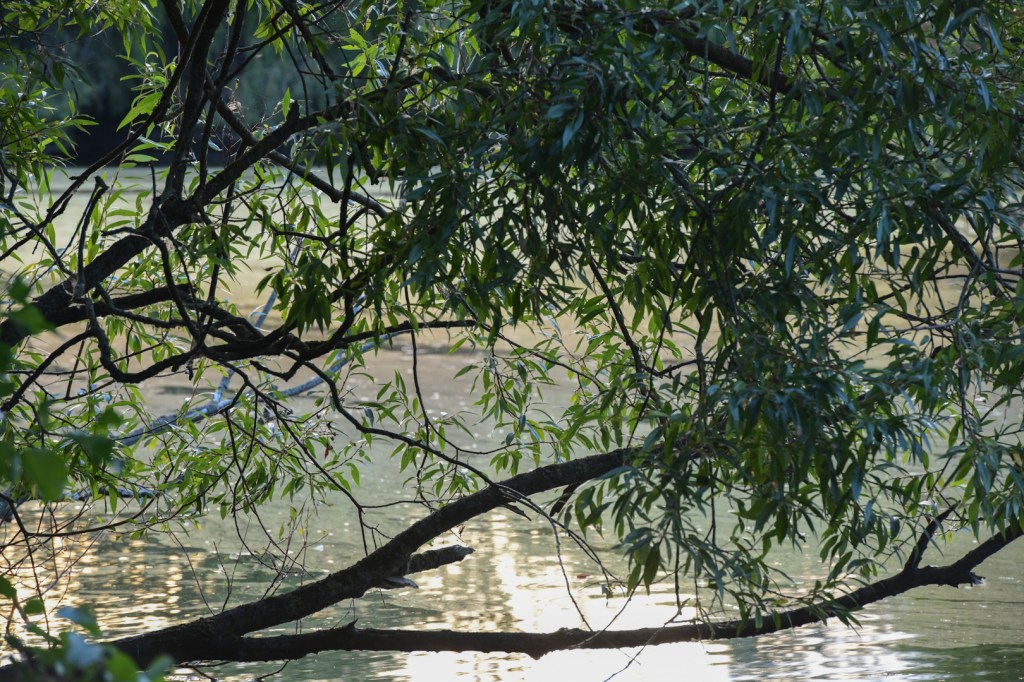
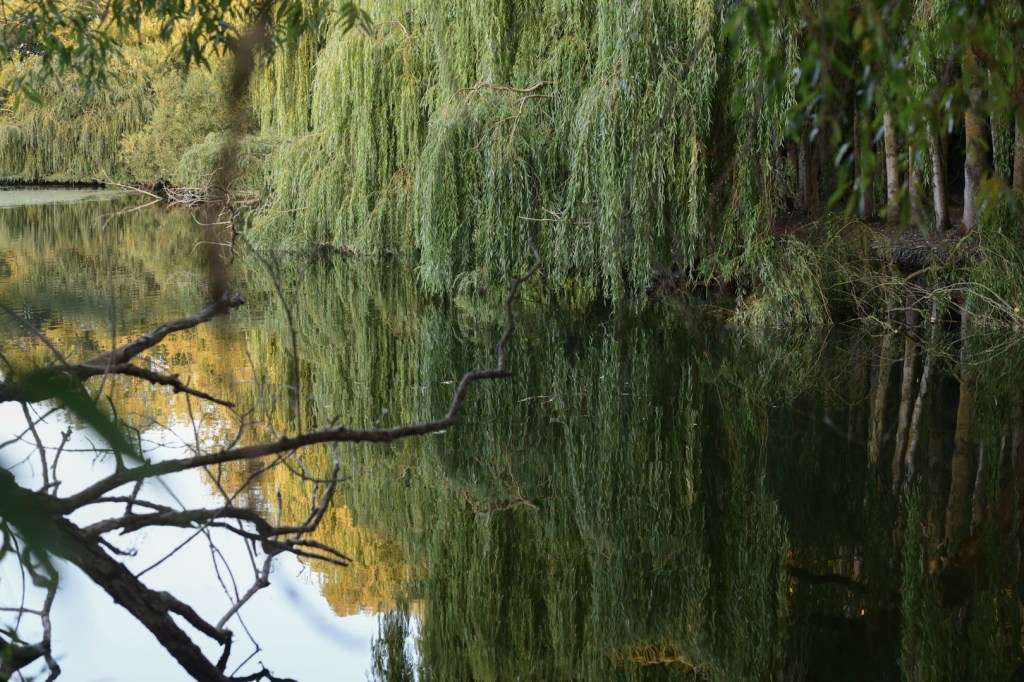
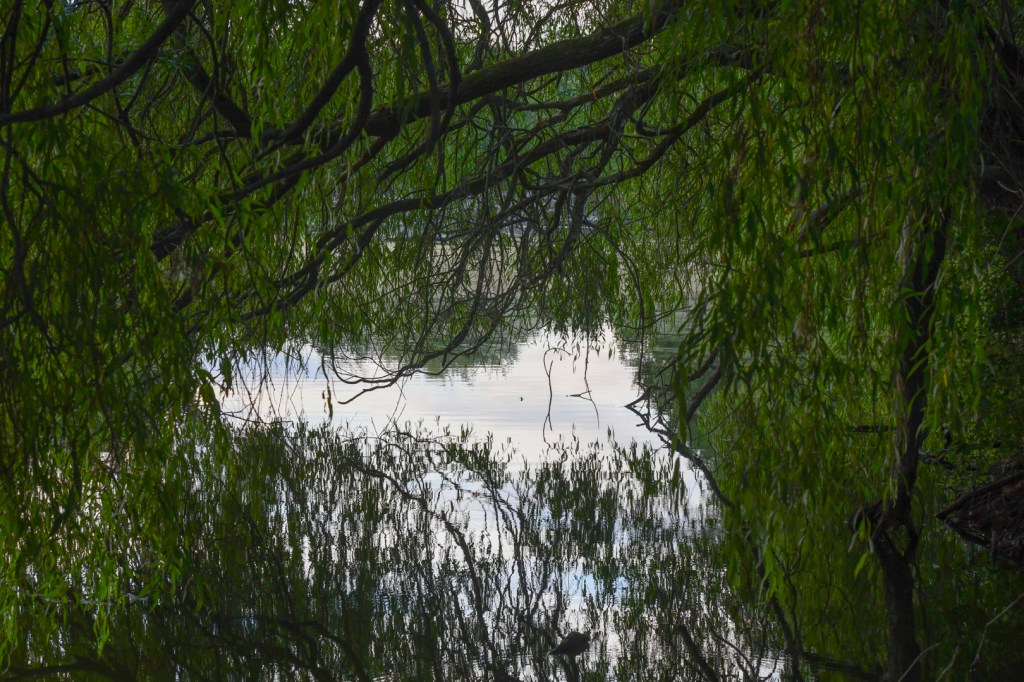
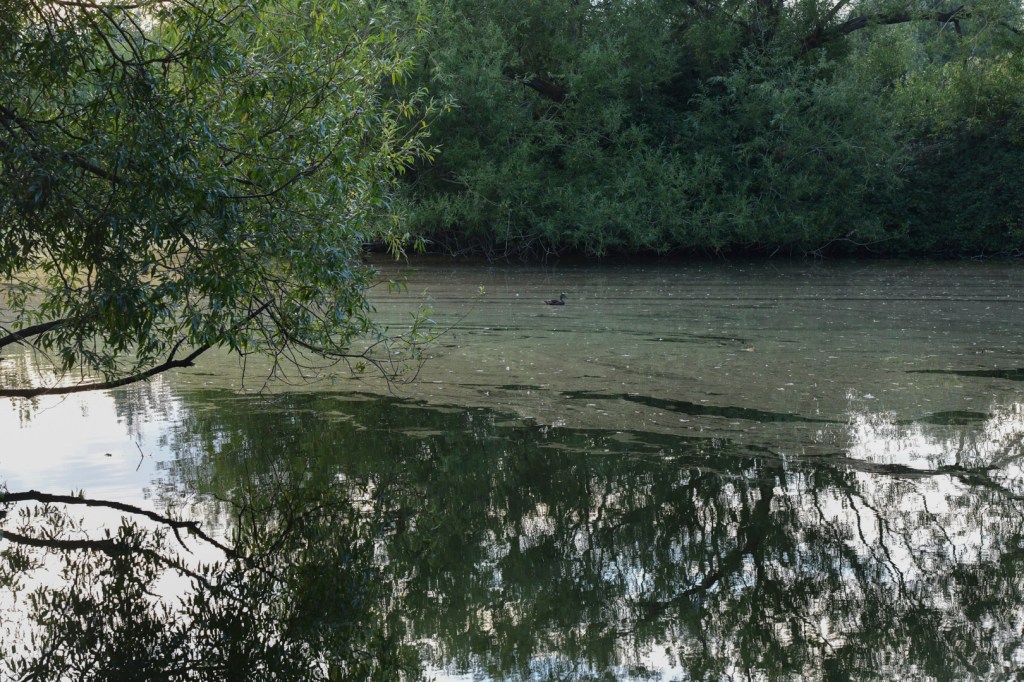
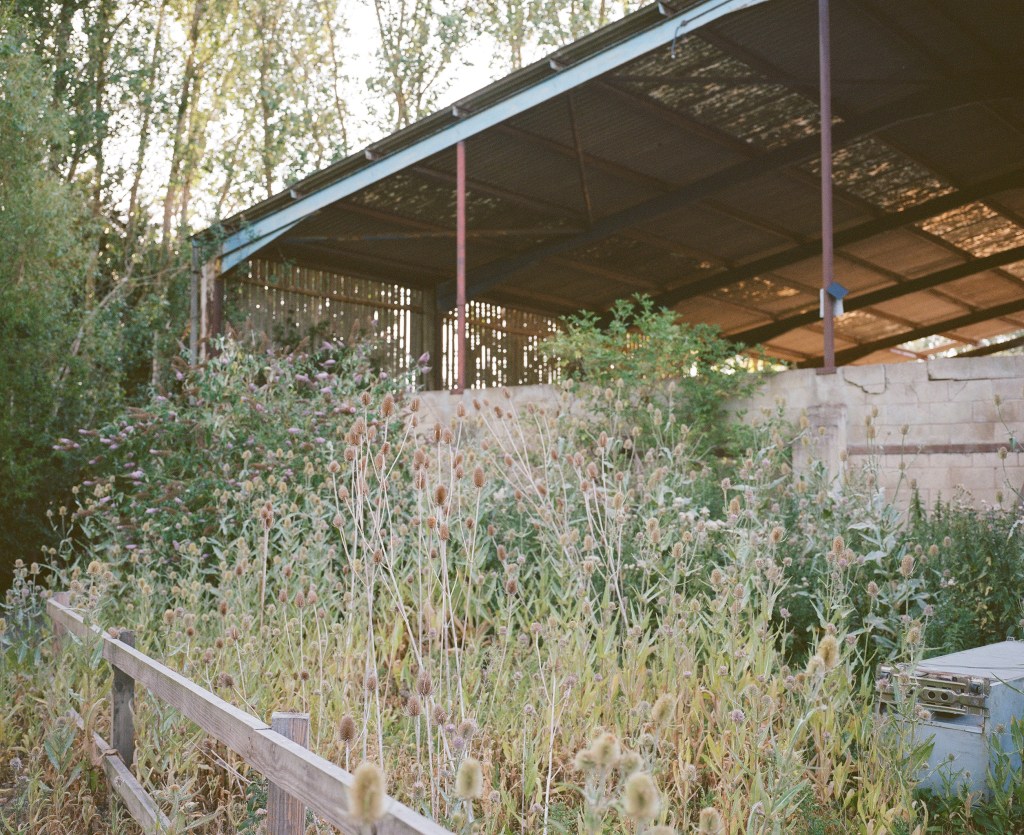
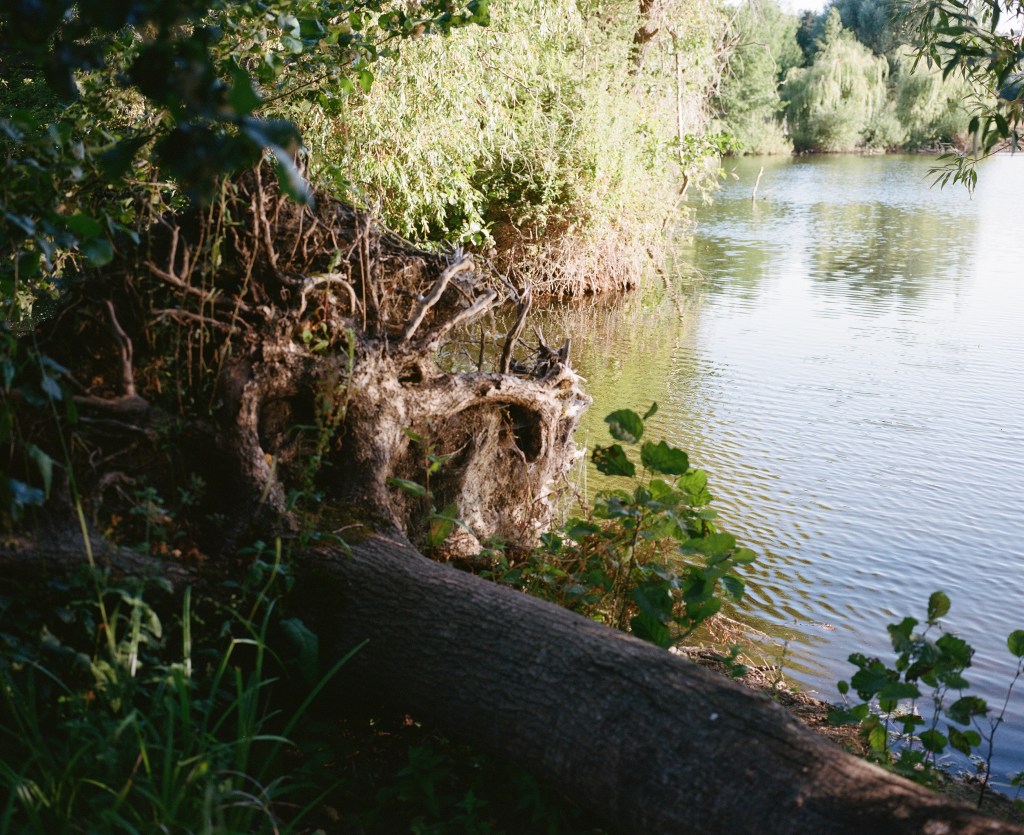
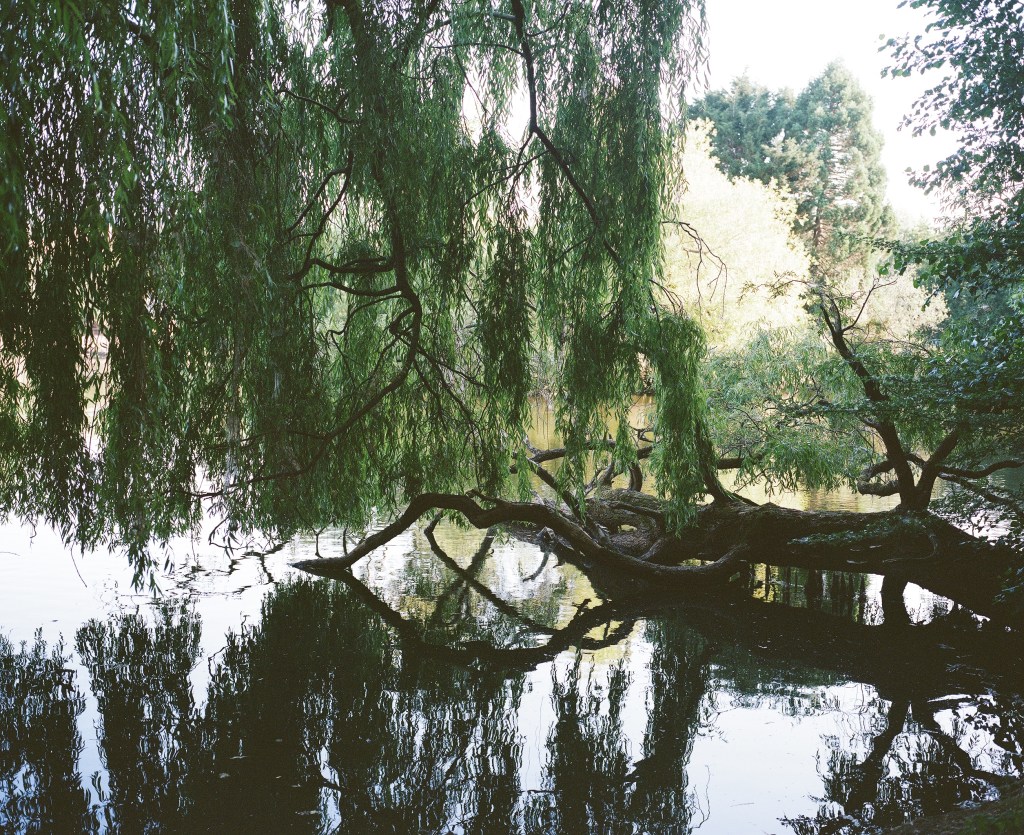
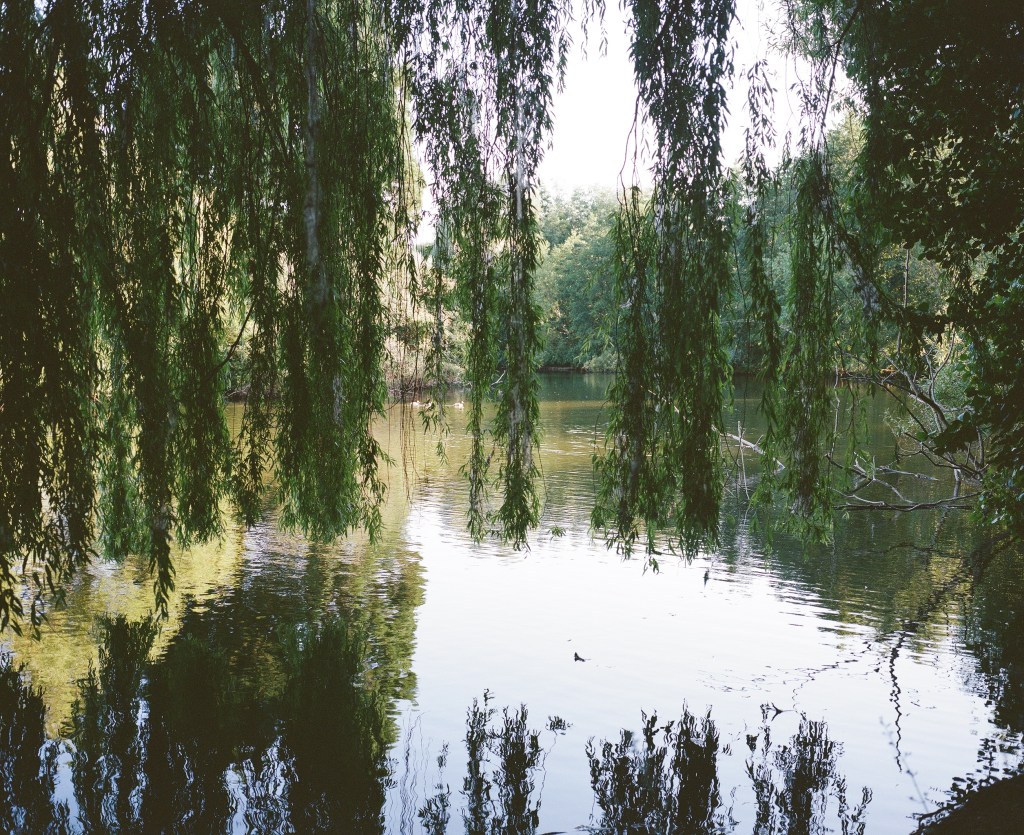
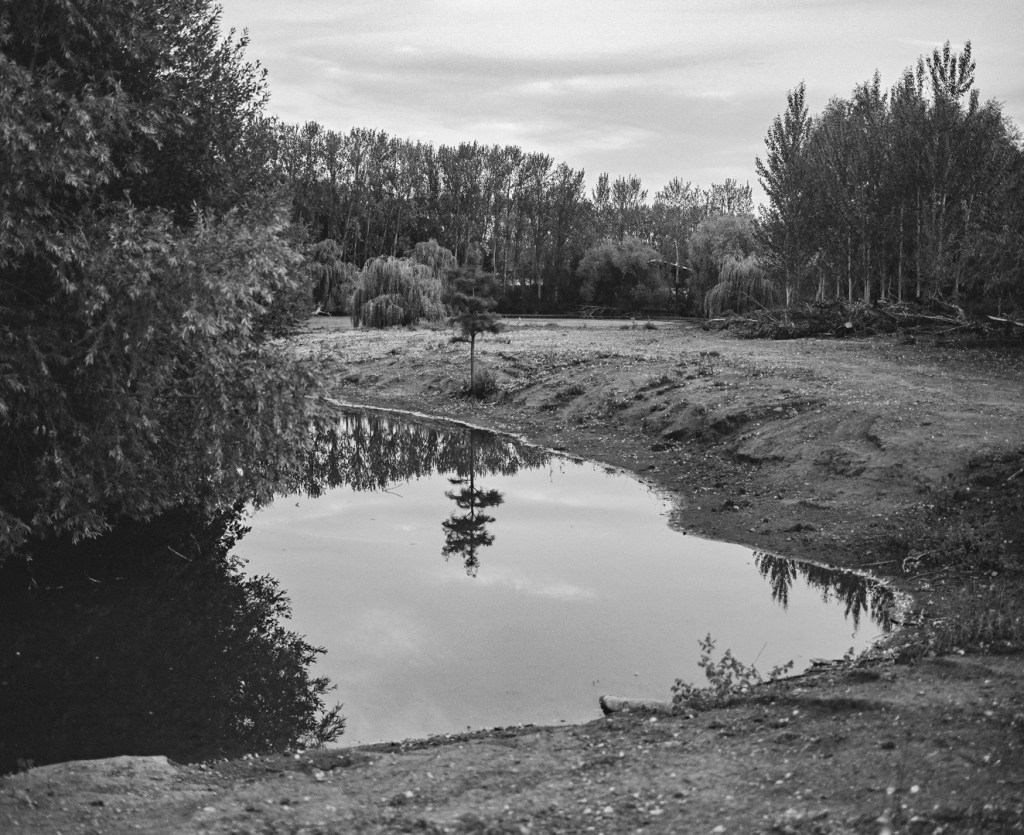
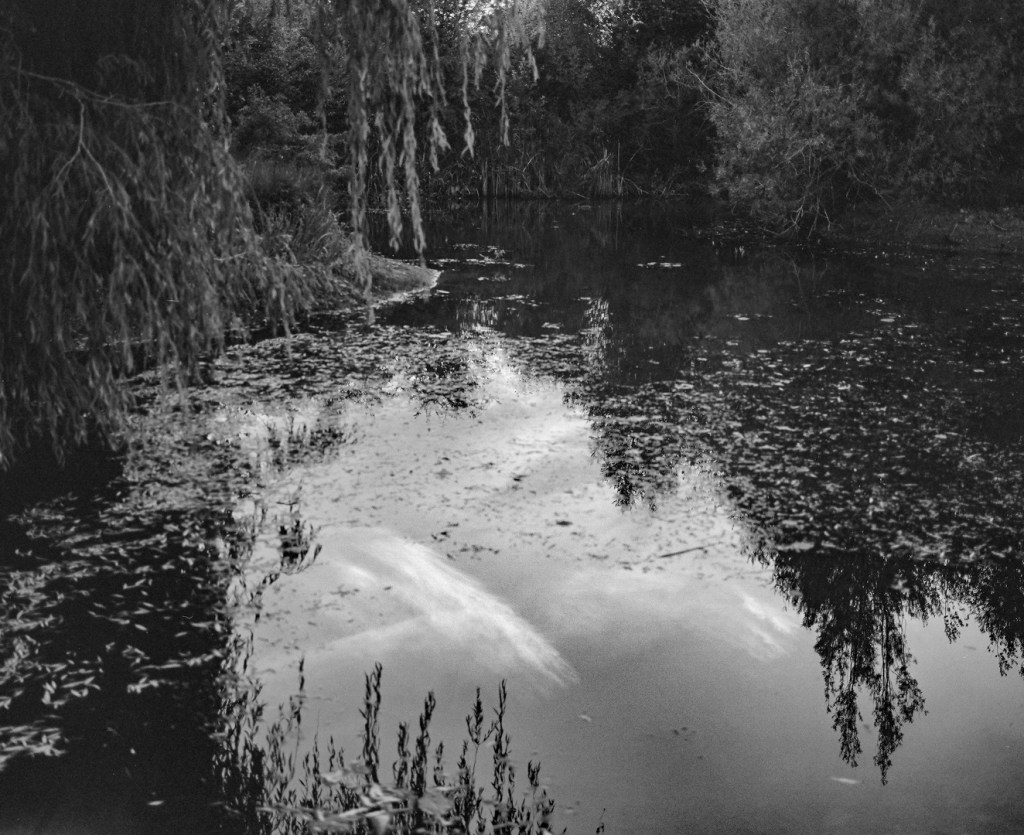
The next set of images is from the adjacent lake, this is less used as a ‘playground’ as it is close to holiday yurts that my mother and stepfather rent out. Also manmade, these have over the years changed shape as my stepfather digs out channels and creates small island areas for the wildlife. Not one to leave things be, he enjoys creating spaces for all (people, plants and animals alike) which results in an abundant landscape. For these images, I was able to concentrate on smaller details, like the reflections of the trees, plants and the exposed roots. This was taken at a time when Southern areas of the UK had no rain for 45 consecutive days. The impact of this was so clear to me when I took these photos. Areas of the lake were completely dried up and you could walk from one section to another, without getting wet! Even the algae bloom was everywhere this year which you can clearly see on the lake surface. I like the traces of the ducks etc in the water, revealing where they’ve been, which of course would be impossible without the algae.
I think I have some nice photographs but none of them really say anything about what I am trying to create. I do feel some frustration at this stage, I have also photographed using my analogue camera, I am hopeful that the film will be more rewarding as I have taken more time with it, with only 10 frames per roll of film, it commands a slower, more considered approach. I have realised I am almost using my digital camera to document this process.
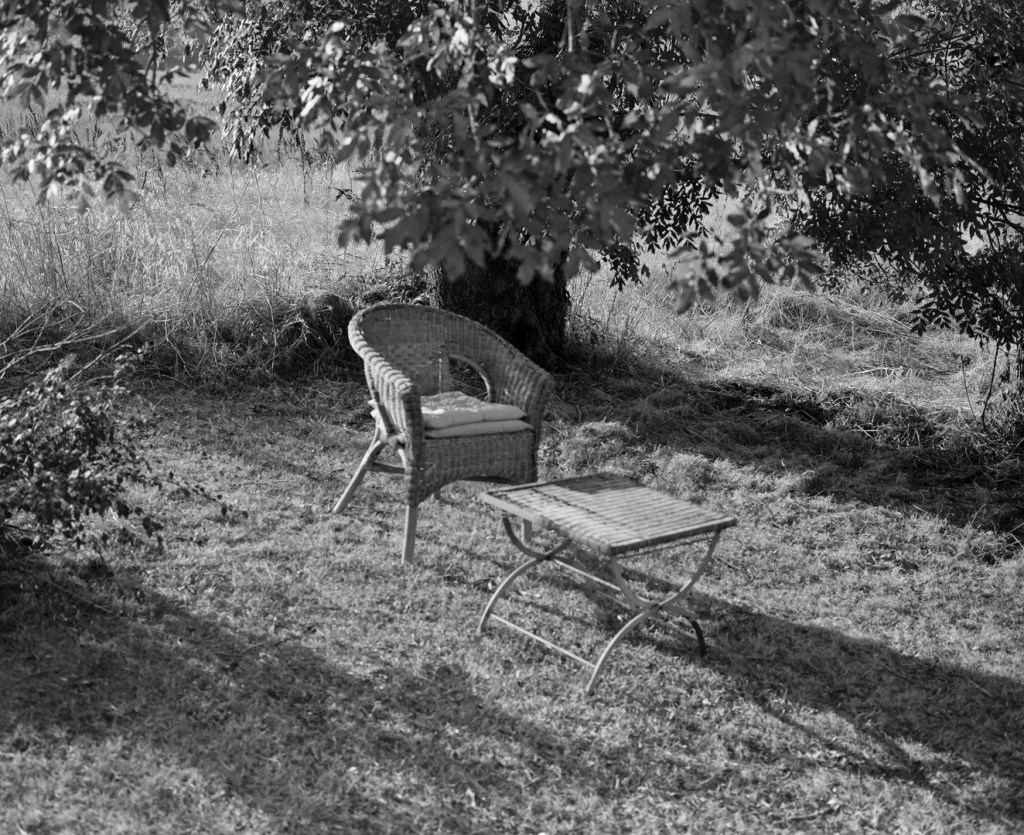
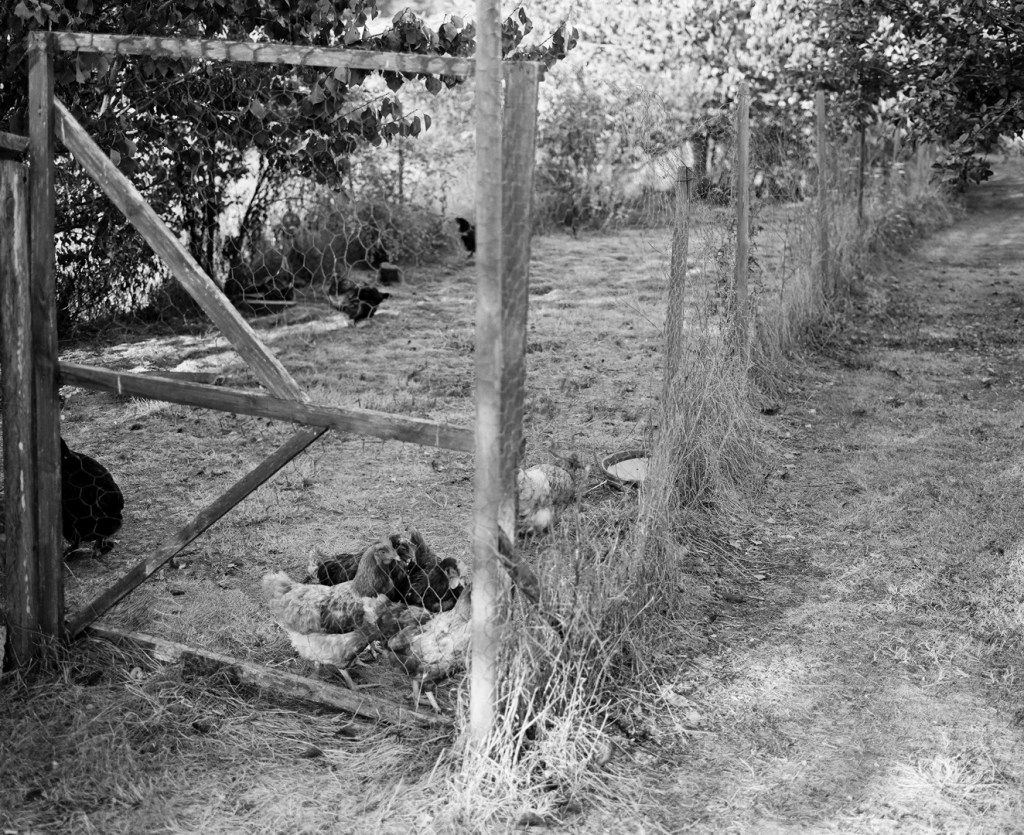
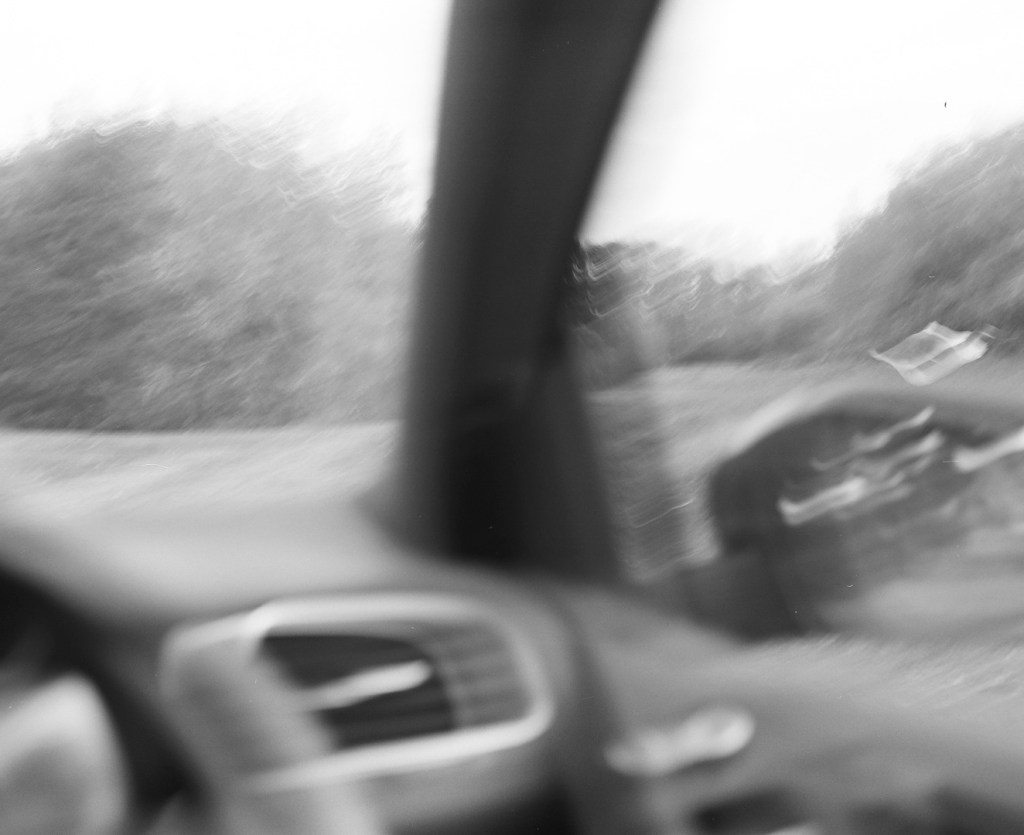
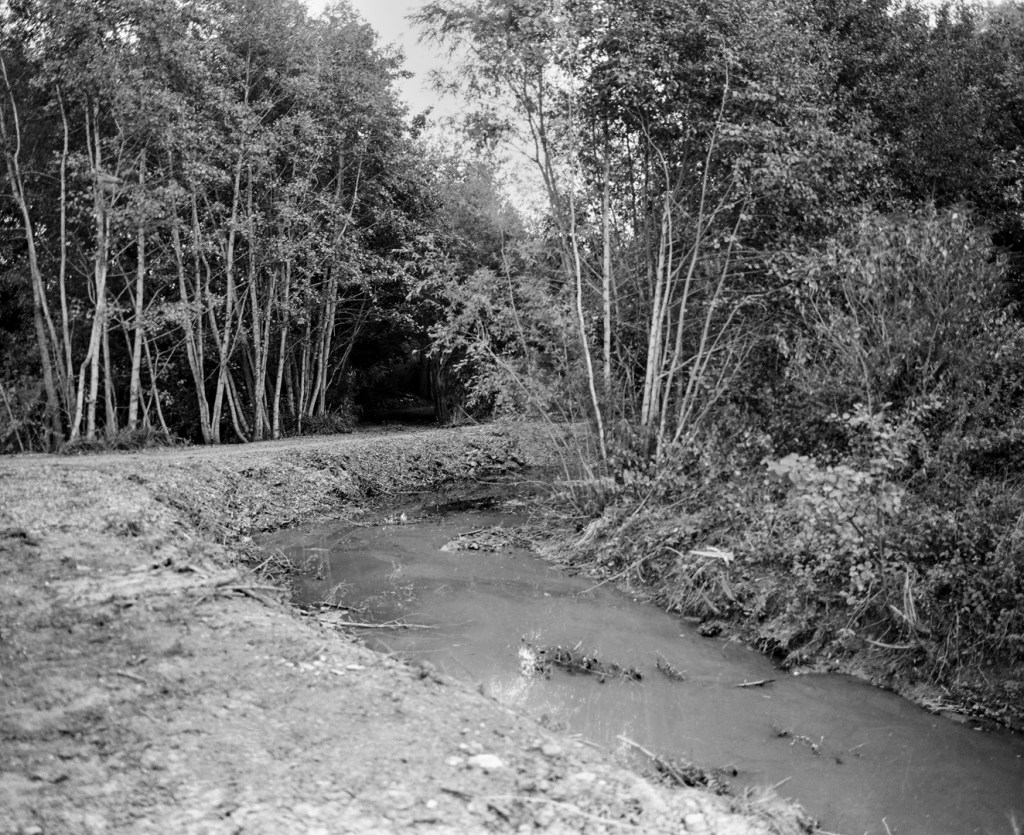
This was an early shoot with my analogue camera, I tried a few ideas out when at Dacha and also when I was away in France at my in laws. I hadn’t thought too much about these images at the time but on reflection, I decided to include several in my analogue book (images 6, 8 & 9) these were taken when we had a very hot period over summer, I shot the photographs at Dacha in bright sunshine and I think this shows in the colour photographs, the greens are not right and the overall scene looks too bright. I do like image 1 but this doesn’t fit well with what eventually will become my series. This shoot was predominantly about getting used to a new camera and to practice being present in the landscape.
In image 9, I particularly like the reflection of the clouds in the sky. It looks as though someone has swished a paintbrush across the centre of the scene. I like the many shapes around the frame of the picture, from the trees on the bank of the lake and the leaf debris floating on the top of the water. I think there is quite a lot going on in this frame.
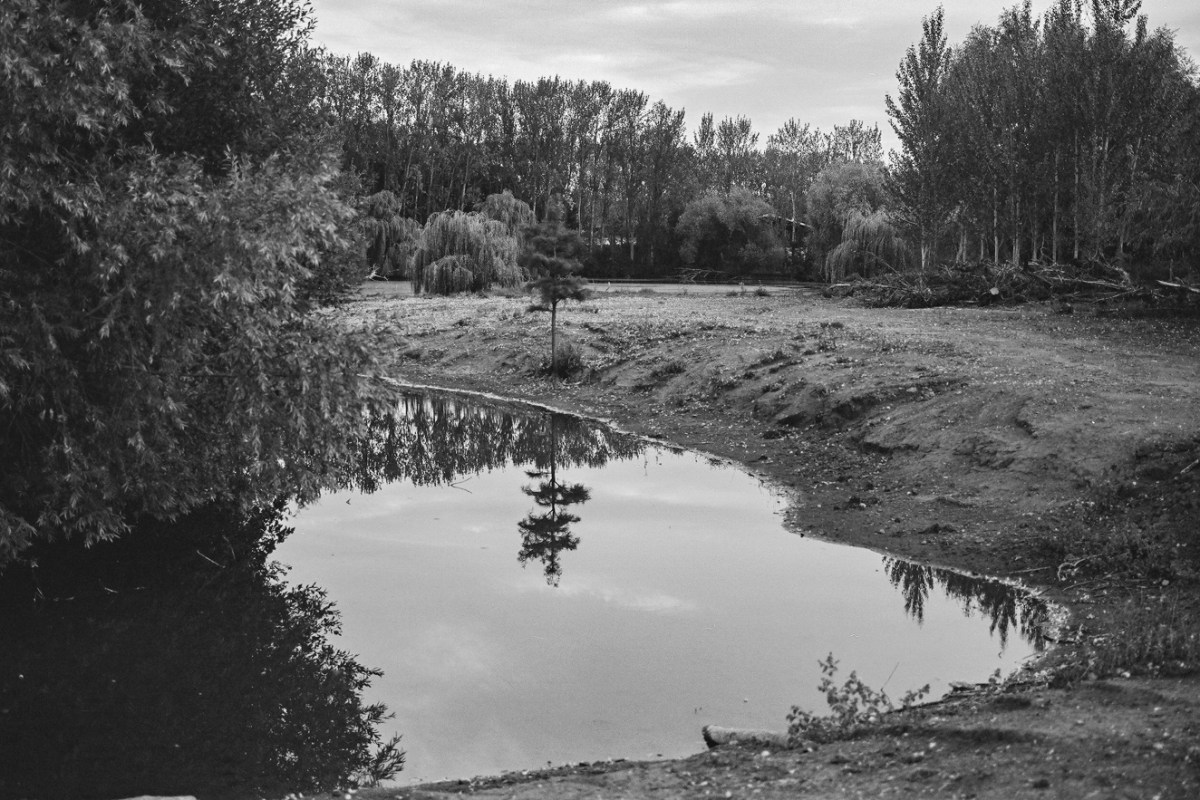
For photograph 6, this shows the extent of the dry summer on this part of the lake. The bank was bare and dry, the water level is very low. It signifies the time of year as well as aims to lead the mind to wander what is around the corner, in my direction of travel. I have included this in my final selection as it acts as a link between images.
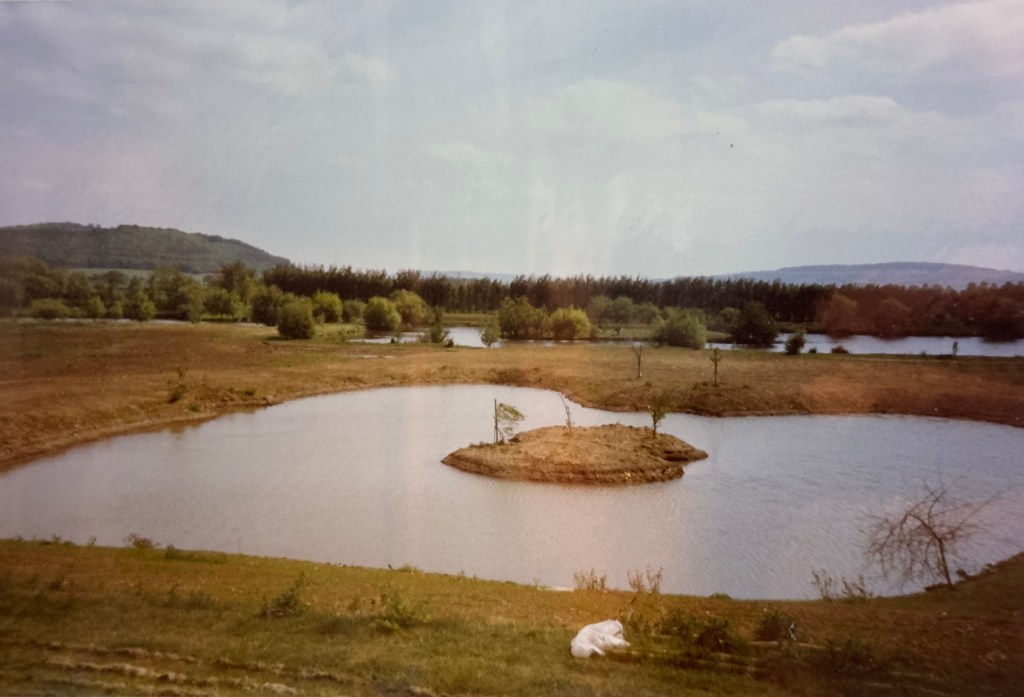
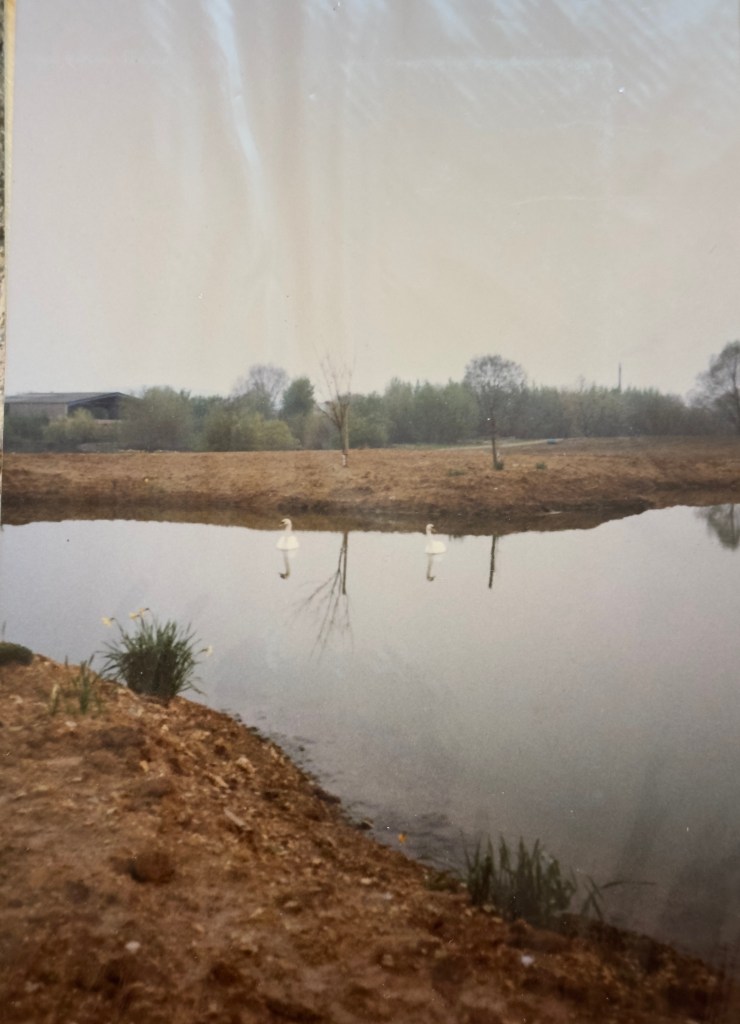
In photograph 8, I like the various shapes here, this emphasises how my stepfather alters the shape of the place. In the two photographs below you can see what was originally there when they created the lakes back in the 1990s. It is a very different place now and it has changed shape many times, almost like an ongoing large scale work of art!
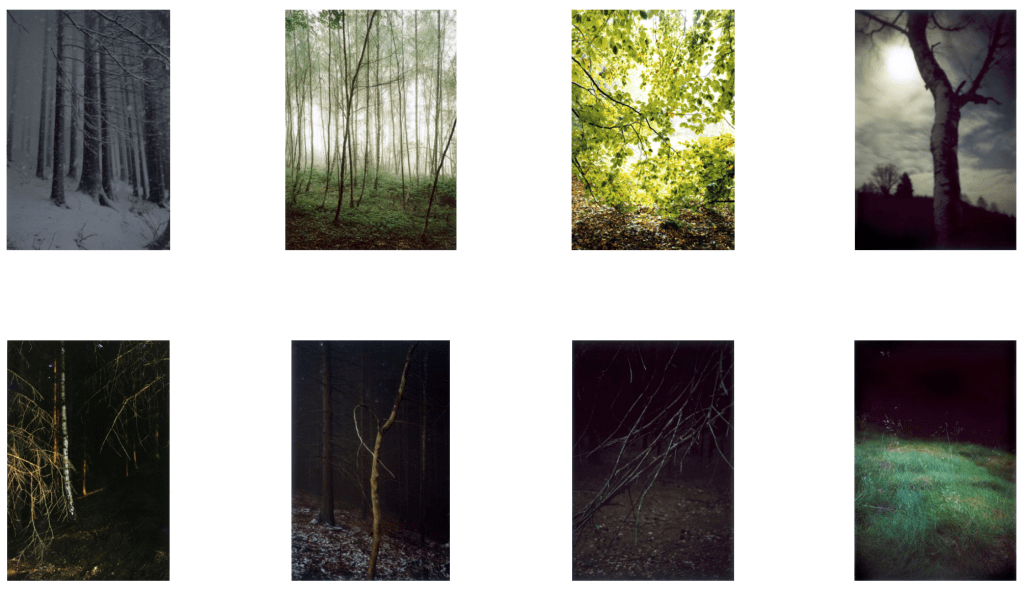
Images above, all Jitka Hanzlova from her series ‘Forest’
Tim Ingolds book ‘The Perception of the Environment’ is a book I’ve researched before, for critical research in other modules. In the chapter ‘The temporality of the landscape’ he discusses and illustrates what he terms ‘the dwelling perspective’ arguing that we are immersed in the world, shaping it through practical engagement over time; the result of memory, work and natural processes. However, the landscape is not shaped by humans alone, we are acting alongside plant growth, animal movement, weather, erosion etc. This persepctive places us as part of landscape, rather than outside masters of it. It seems to me to be this is relevant to the work of Hanzlova, in her experience of photographing for ‘Forest’
I am revisiting the work of Jitka Hanzlova for my FMP. Her practice is rooted in self reflection and exploration of personal history. I have written about her project ‘Forest’ in a previous module, there is a section in John Bergers ‘Understanding a Photograph’ in which he discusses the forward that he wrote for Hanzlova’s book. There is a highly evocative passage in which he discusses how Hanzlova found that sitting in the forest of her childhood home, she is hearing the usual sounds of birdsong, leaves and branches rustling, seeing the woodland elements moving in the wind and feeling the air on her skin, just as you might expect. After a period of time as she concentrates, the sounds disappear, the wind seems to rush out and she describes what sounds to me like entering a meditative state, almost like crossing into another realm, becoming part of the forest instead of just being in it. This becomes a much more deep sensory experience, with the surroundings being something you are suddenly a participant rather than observer. As though being invited in, by the environment itself.
In my explorations of Guiting and Dacha, I have experienced this other worldliness. It is a sensation of absolute belonging, which is a powerful and overwhelming feeling. I believe that this is where therapeutic benefit happens, a moment where it has been possible to leave behind the noise, stress and anxiety and to see with clarity & feel as though there is nothing else other than being in this place at this moment. It is fleeting but I imagine its this which is spoken about when ideas of meditation are presented. Interestingly, I have been successful in meditation in the traditional sense, I don’t like feeling out of control, it makes me feel quite vulnerable. However it is interesting that being surrounded by an environment which has positive personal historical significance (generations of family having lived and worked here) as well as my own memories and experiences makes this an easier or perhaps more likely environment to experience a meditative state.
As I outlined in my proposal, I would be exploring those ’emotional landscapes’ which hold the greatest sense of belonging, those in which my memories are contained and forever embedded in the natural landscape. I have often returned to Guiting for my creative practice as it was central stage to playing out out my childhood years, alongside my sister and our grandmother, aunts, uncles and cousins.
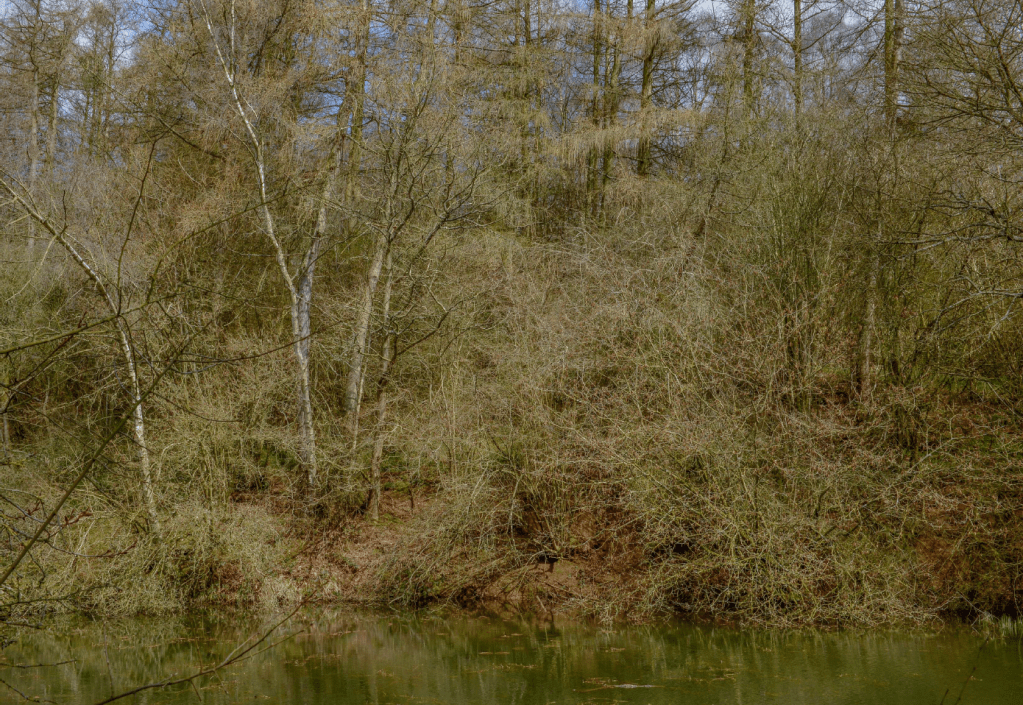
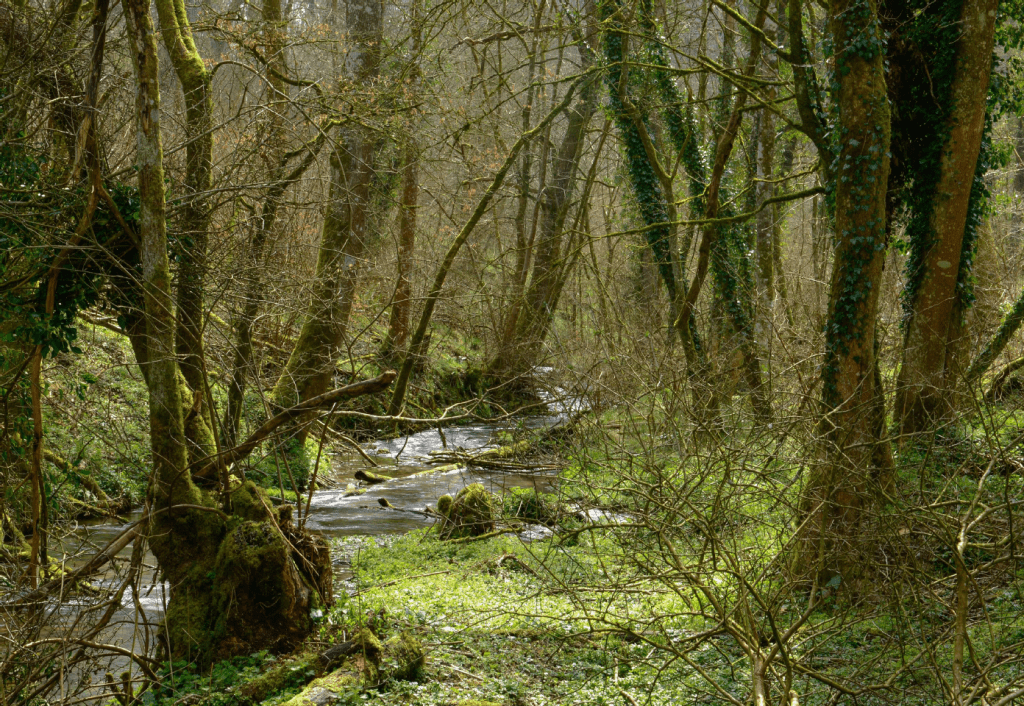
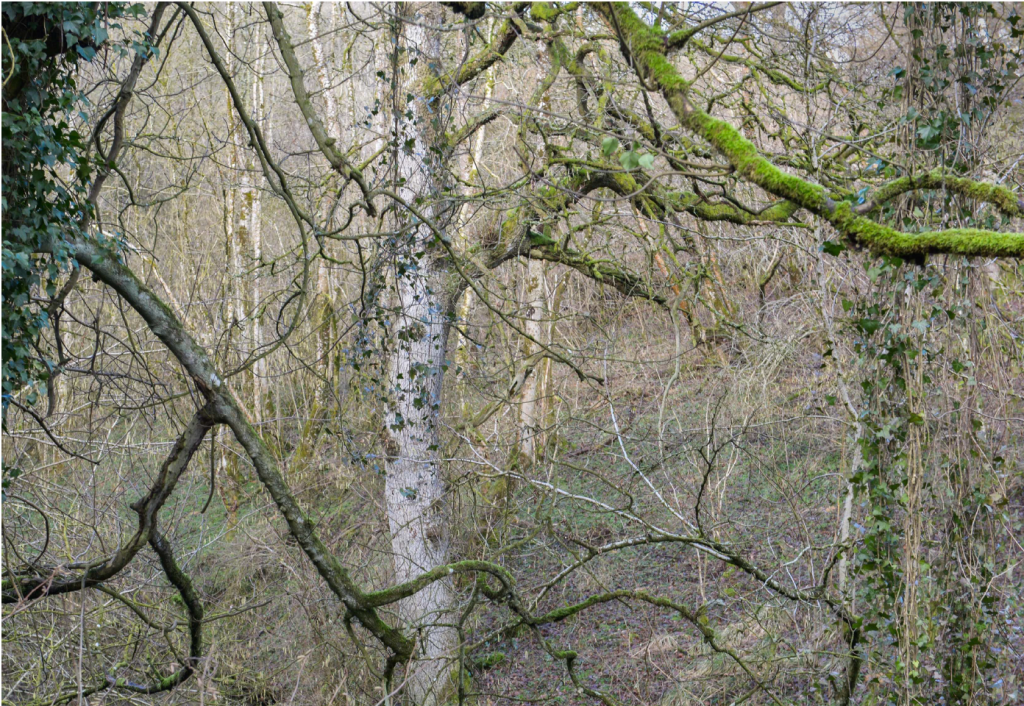
When I see the images by Fergus Heron, among others, I am reminded of a module I did for my BA, where I photographed in Guiting Wood. I called the project ‘Back To My Roots’ and produced a simple book (printed by Blurb) to sit alongside larger prints, exhibition standard prints. I am reminded of just how much emotional impact this module had on me and how this body of work was one I always intended to grow. It was work that I felt connected to on a deep level.
From the series ‘Back To My Roots’ Lucy Taylor, 2018
I visit here frequently to reconnect and still my mind, often taking a ‘silent’ walk, ie by myself and no other sounds other than the environment. I try to contemplate my surroundings, what stories can I tell about this place? This landscape is where I achieve a sense of self, through these mindful stories, evoked from memories and moments lived out here.
The landscape has changed a lot in the last 7 years. Much of what was visible before, is now hidden below new vegetation. Some of the trees have gone, either a result of the elements or from woodland management. My grandfather used to look after the pumping station here, as well as ensuring the integrity of the woodland environment. His diary contains details of trees planted and the costs involved from that time.
My earlier work centres around my family history, specifically my maternal grandmother. However, my recent discovery of my grandfather’s working diary from 1967 was an unexpected turning point for this project. With Temple Guiting and the surrounding area being those ‘landscapes of meaning’ from my childhood and the place I feel the greatest connection to. I have determined that this place contains the essence of my childhood and the lives of my close relatives and our ancestors.
‘Grampy’ worked for Corpus Christie College, employed to manage & care for their land in and around Temple Guiting. His diary is a record of daily duties and hours worked, There are mentions of water pump maintenance and taking delivery of tree species for the various plantations that he looked as well as occasional issues, e.g. ‘Landover stuck in reverse’ which gave me a chuckle. This diary is poignant as it stops in October, which was when he was diagnosed with lung cancer (a smoker since his role as a soldier in WW2). He died the following March, when my mother was just 13.
Revisiting Guiting as a place of deep connection, has helped me to refine my ideas for the FMP. I will study this landscape with Dacha and investigate its deeper significance.

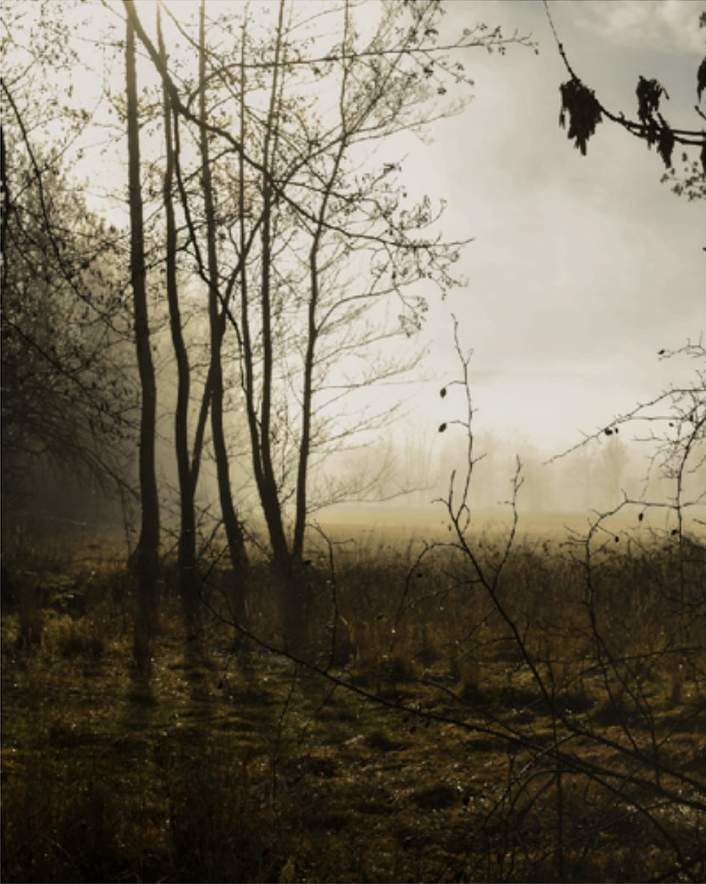
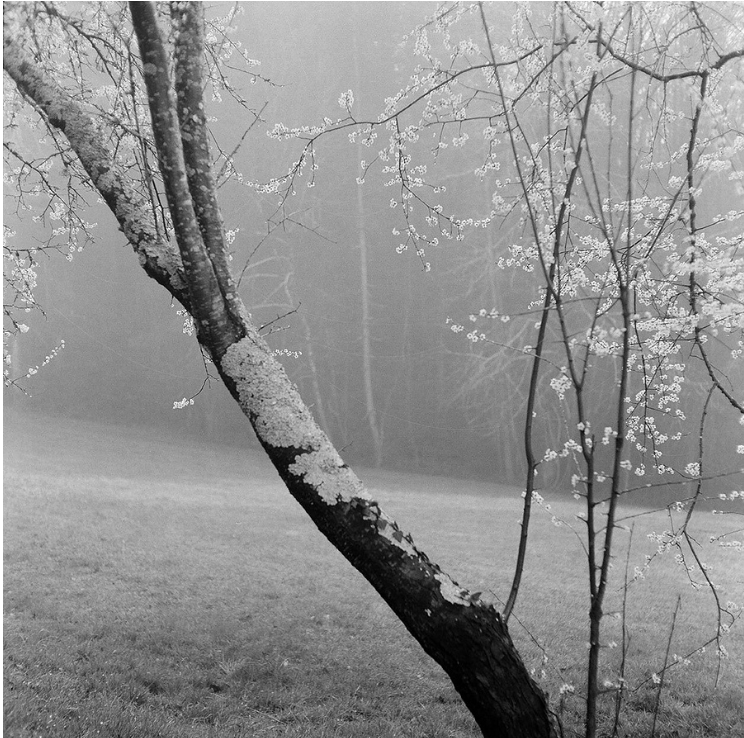
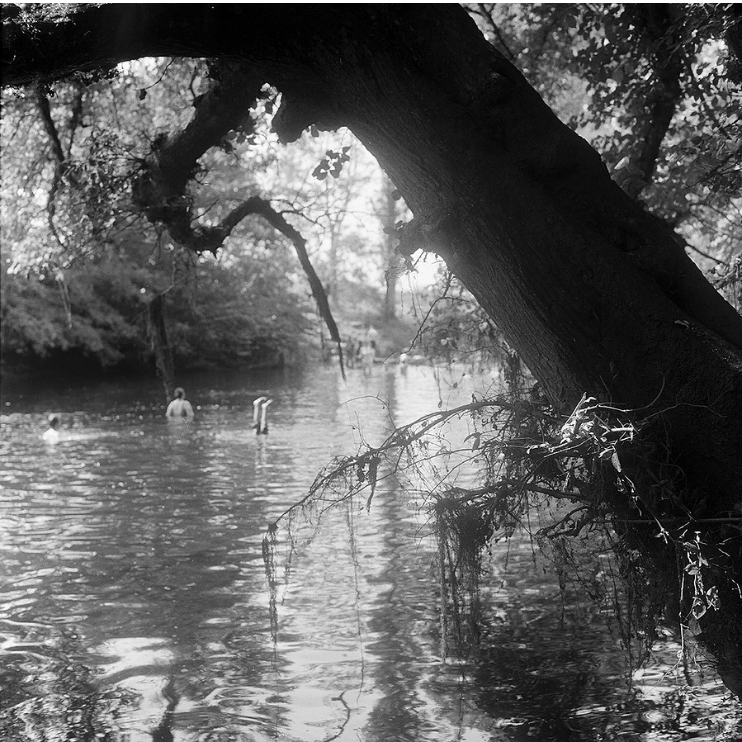
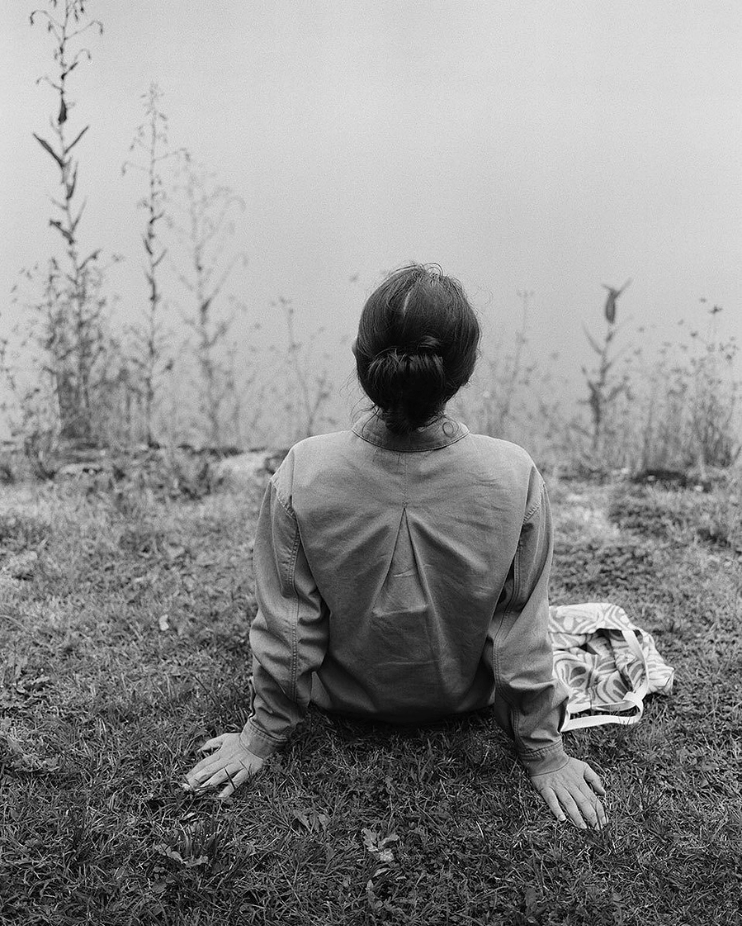







 Lucinda Taylor