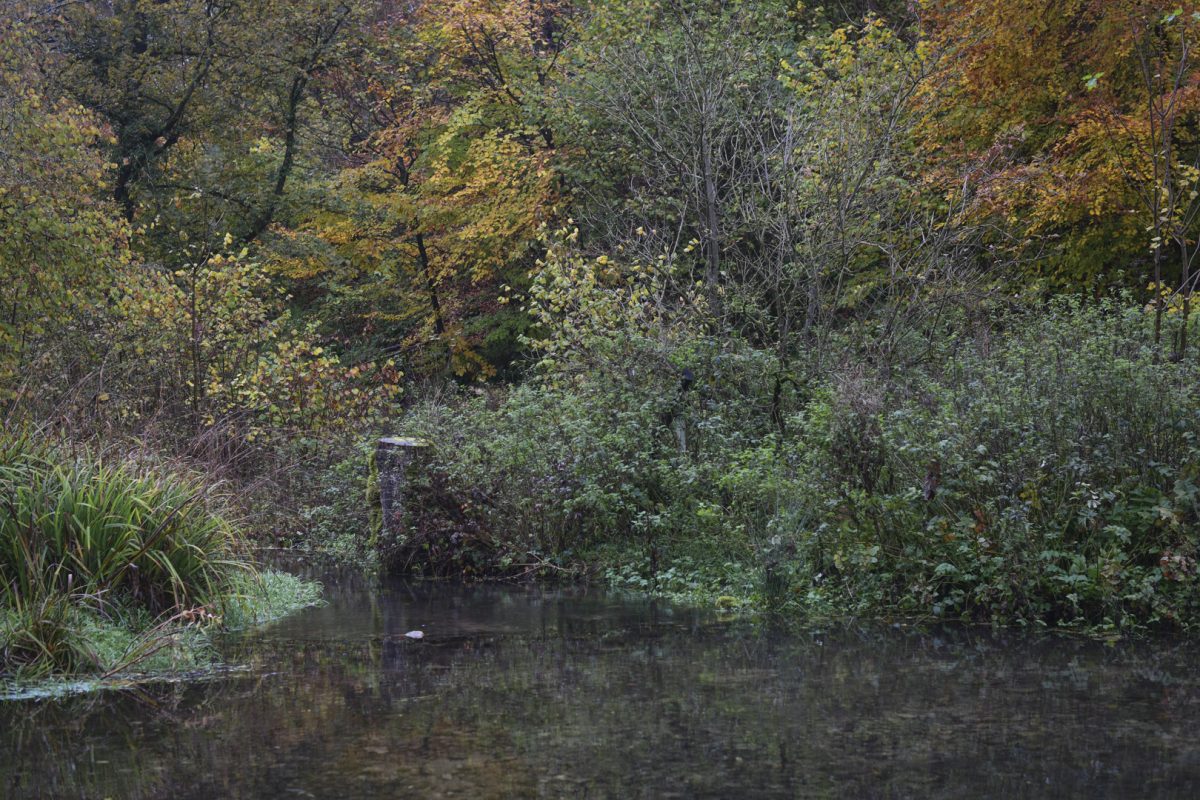
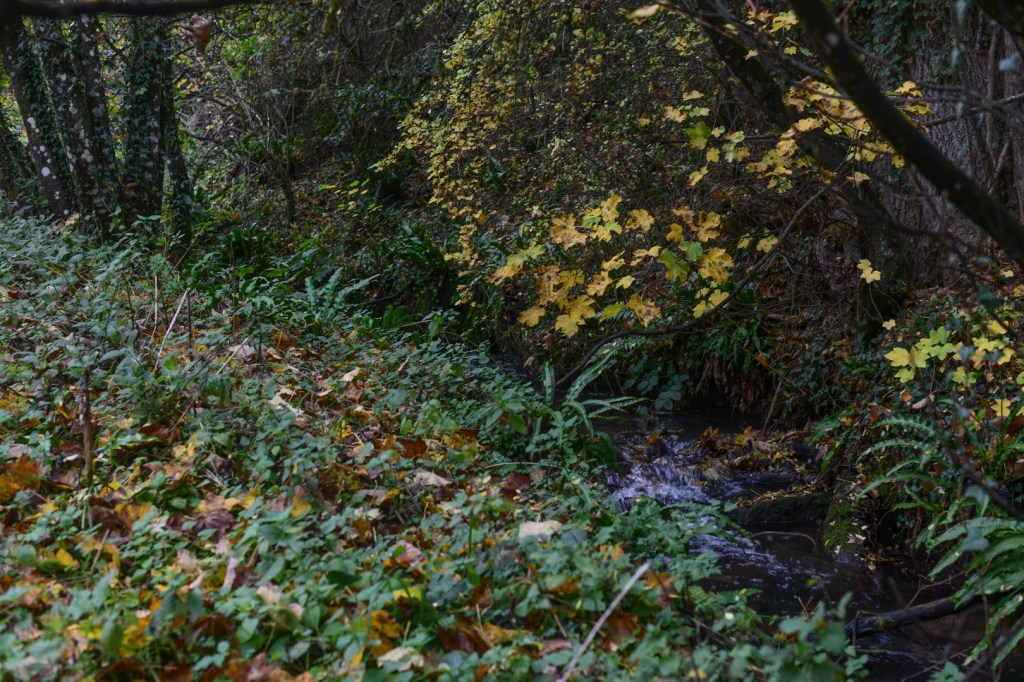
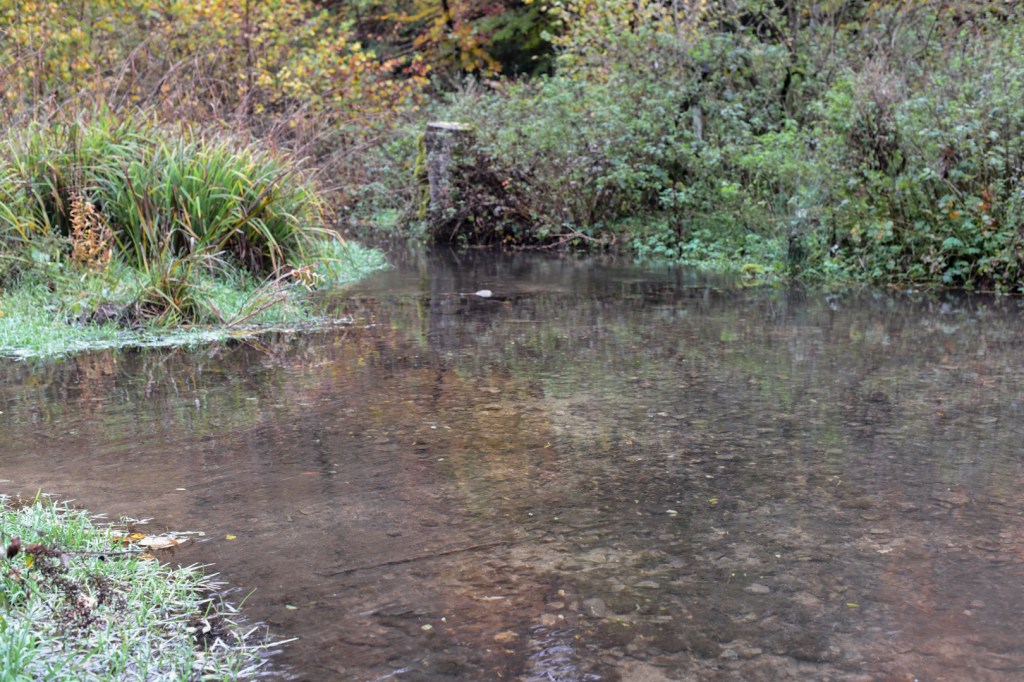
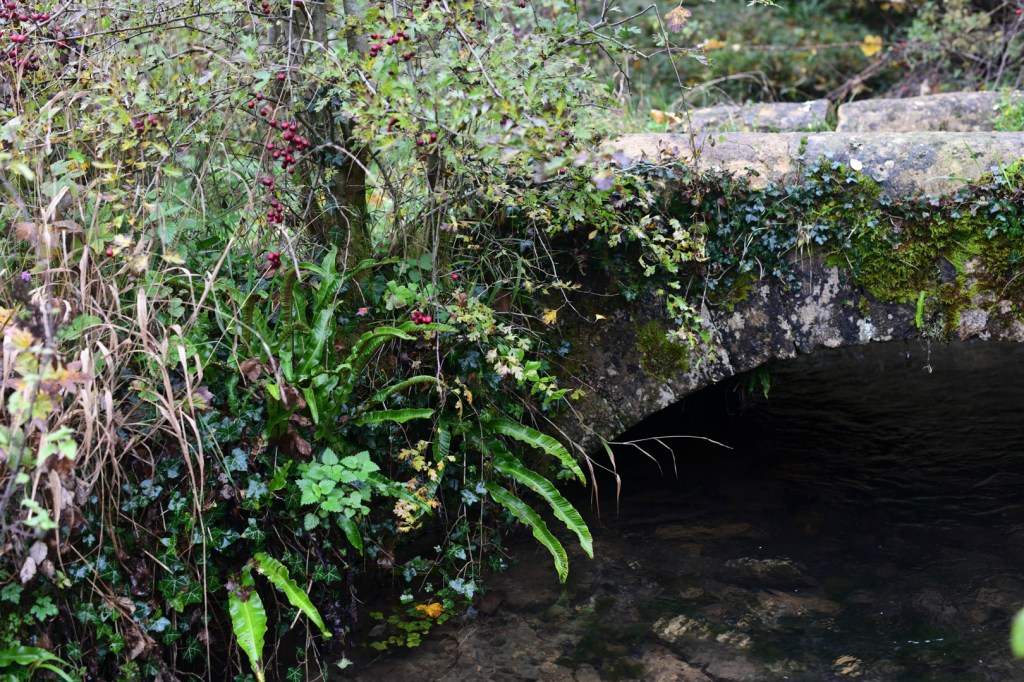
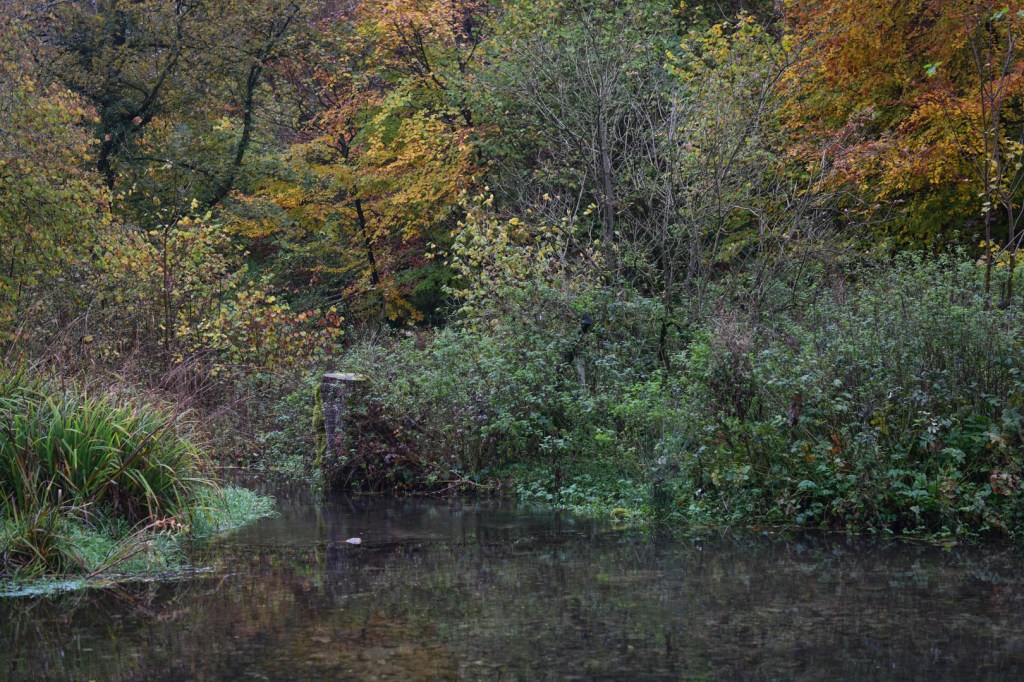
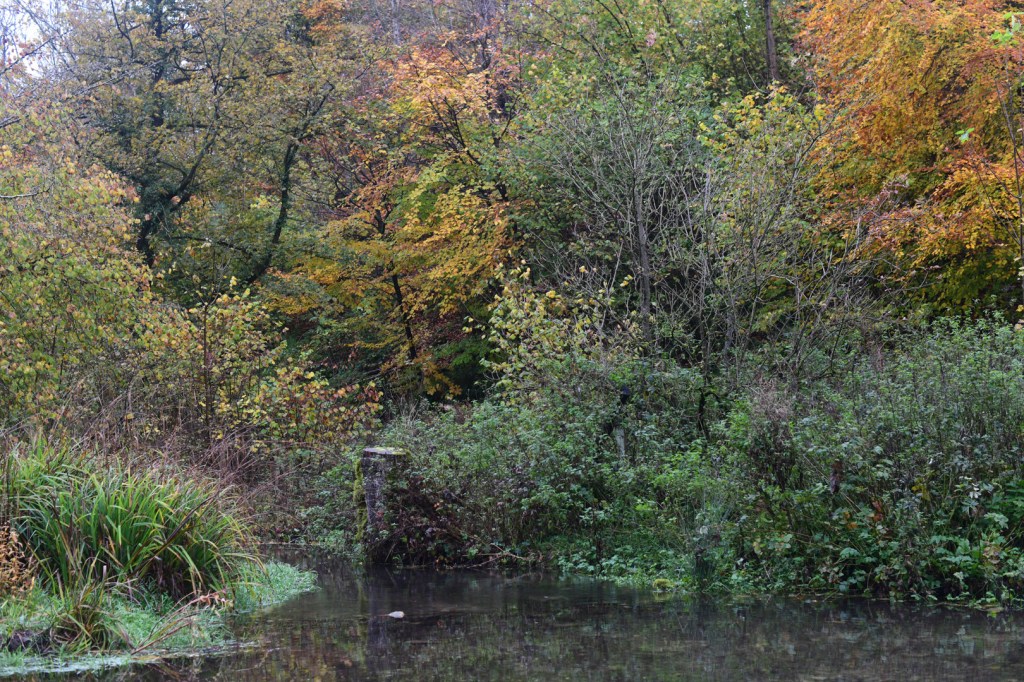
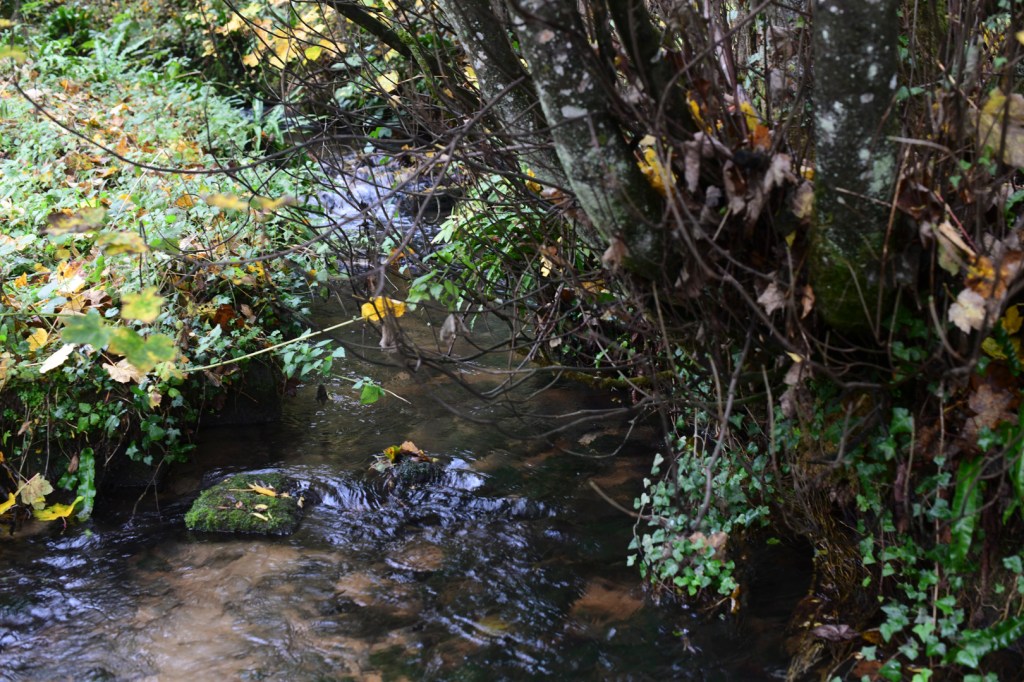
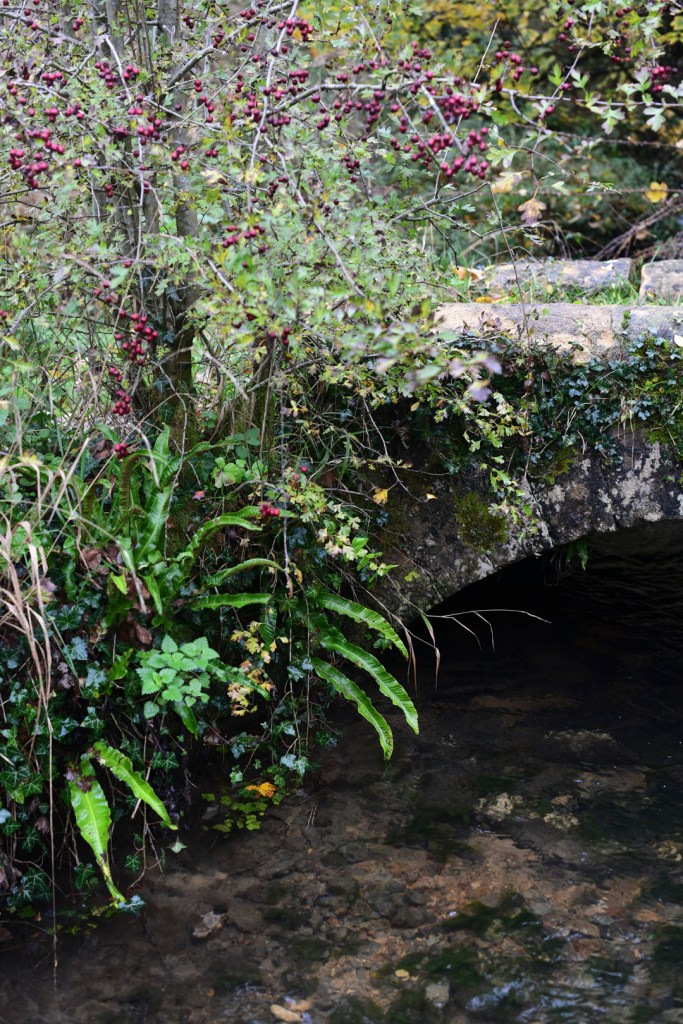
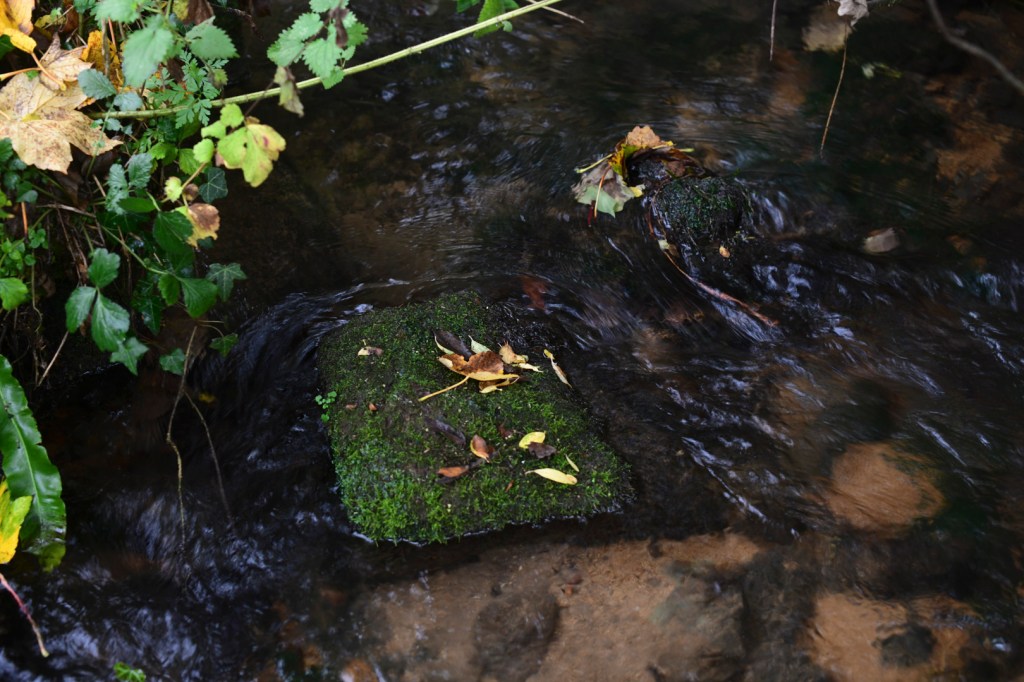
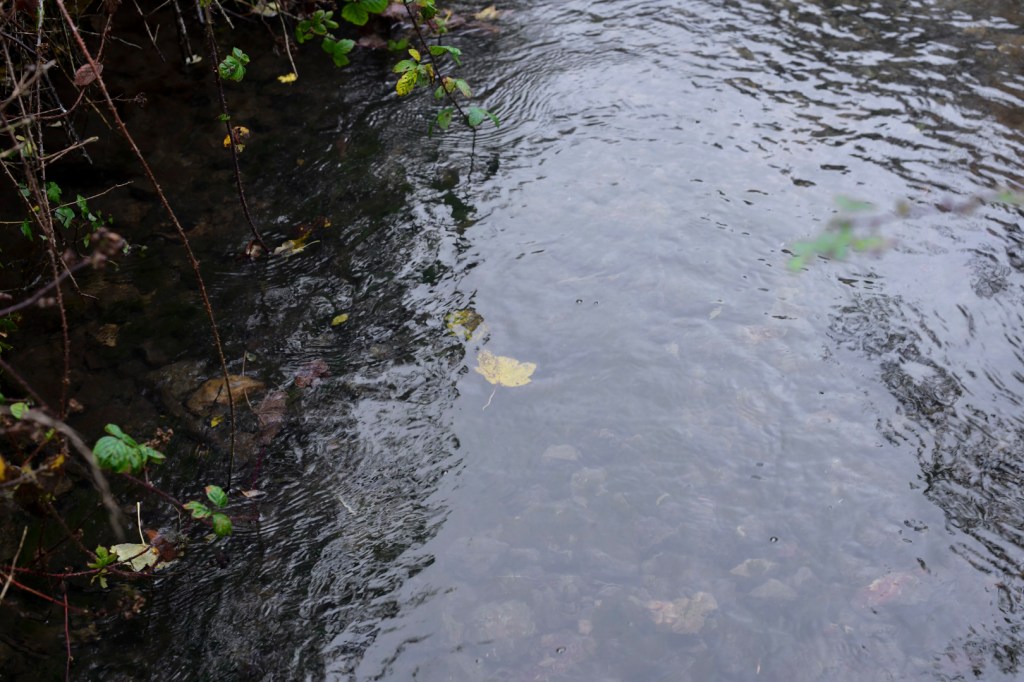
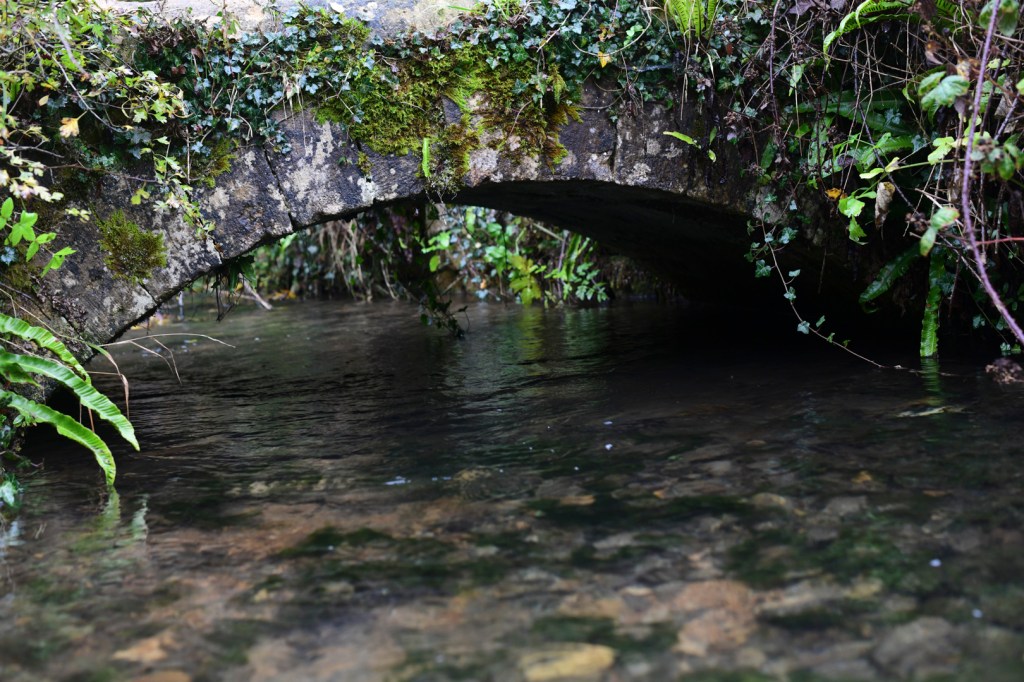
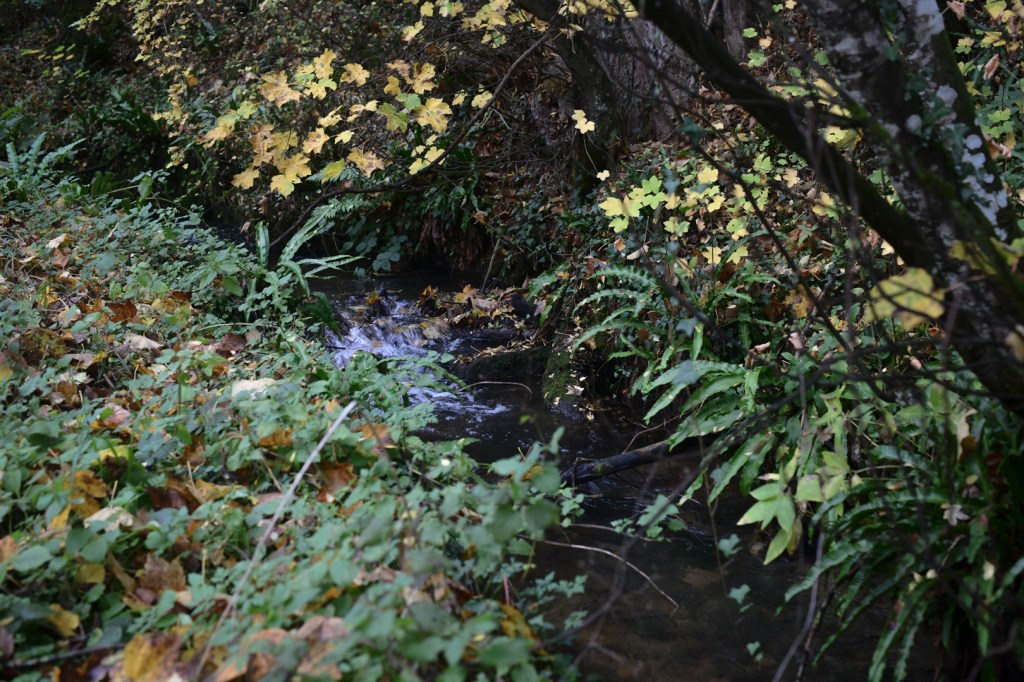
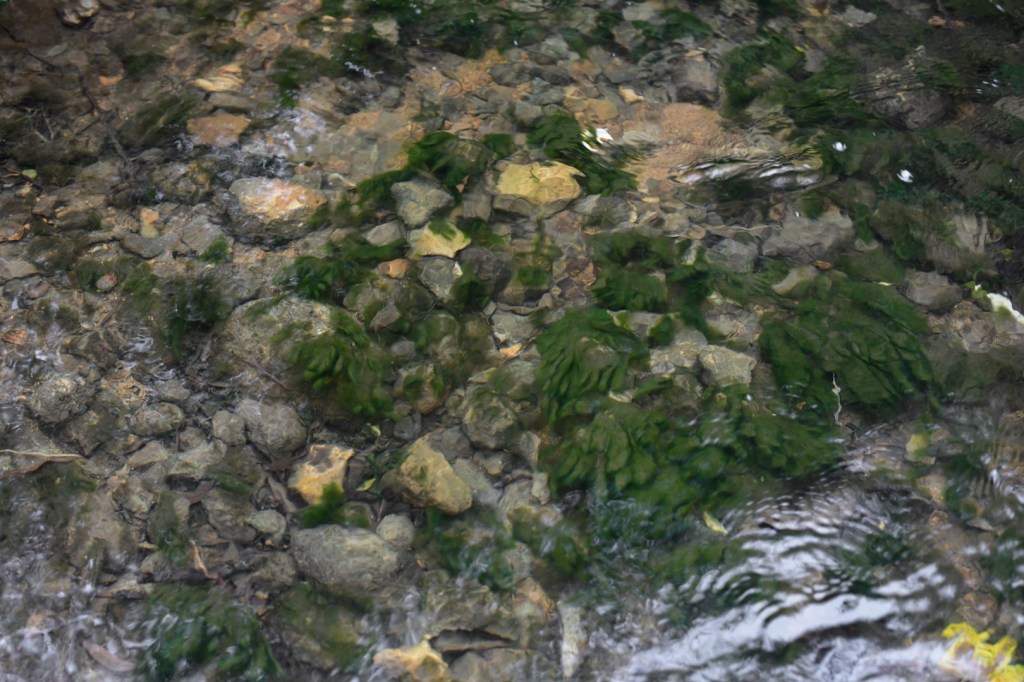
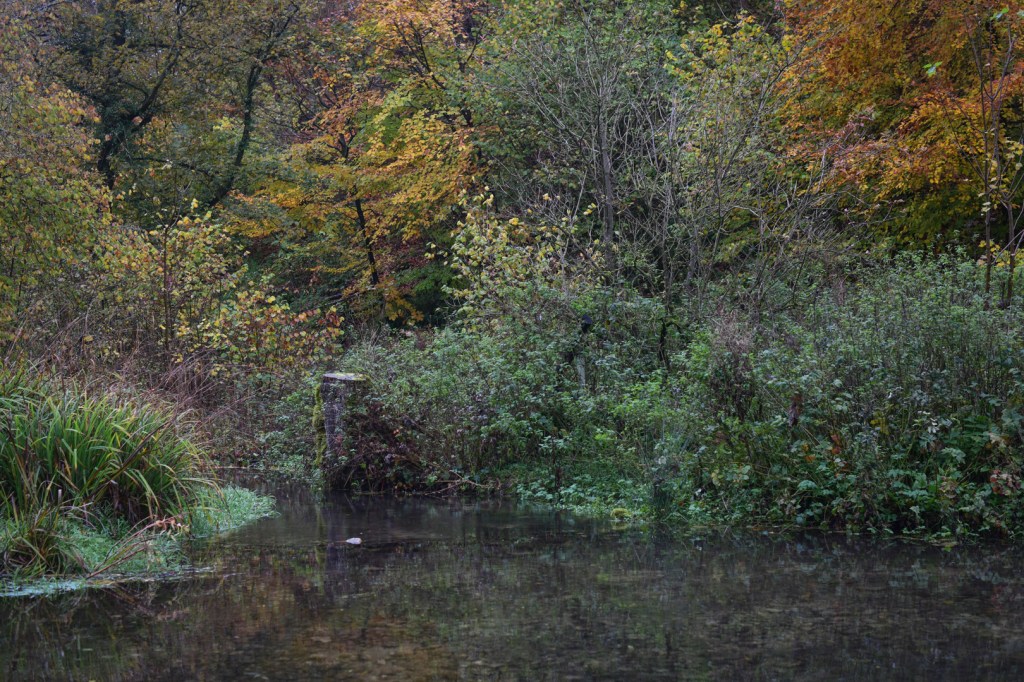
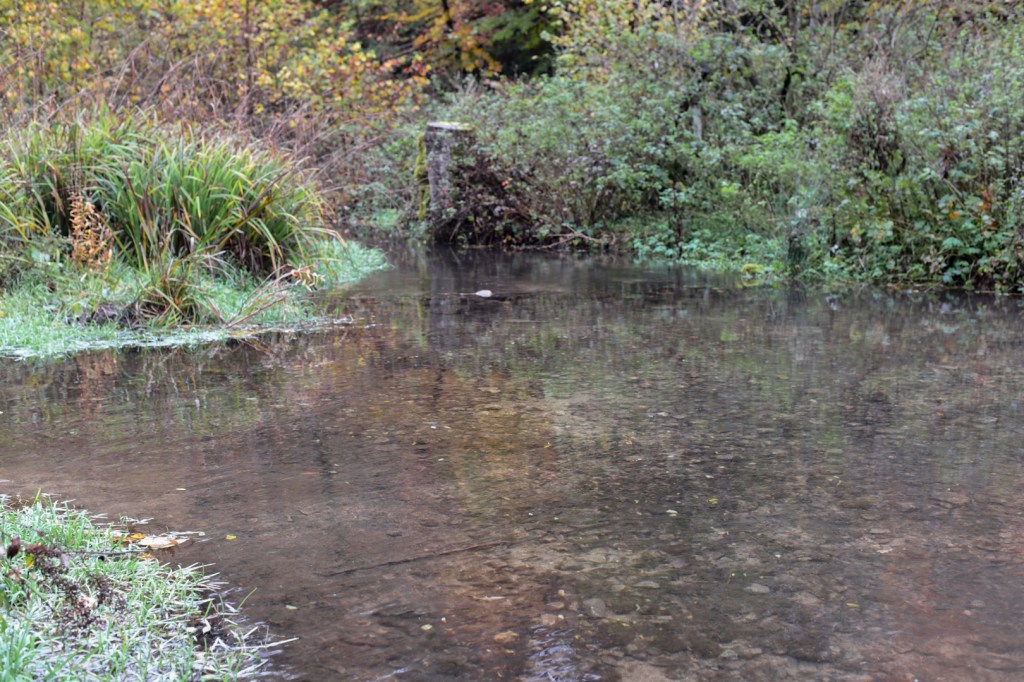
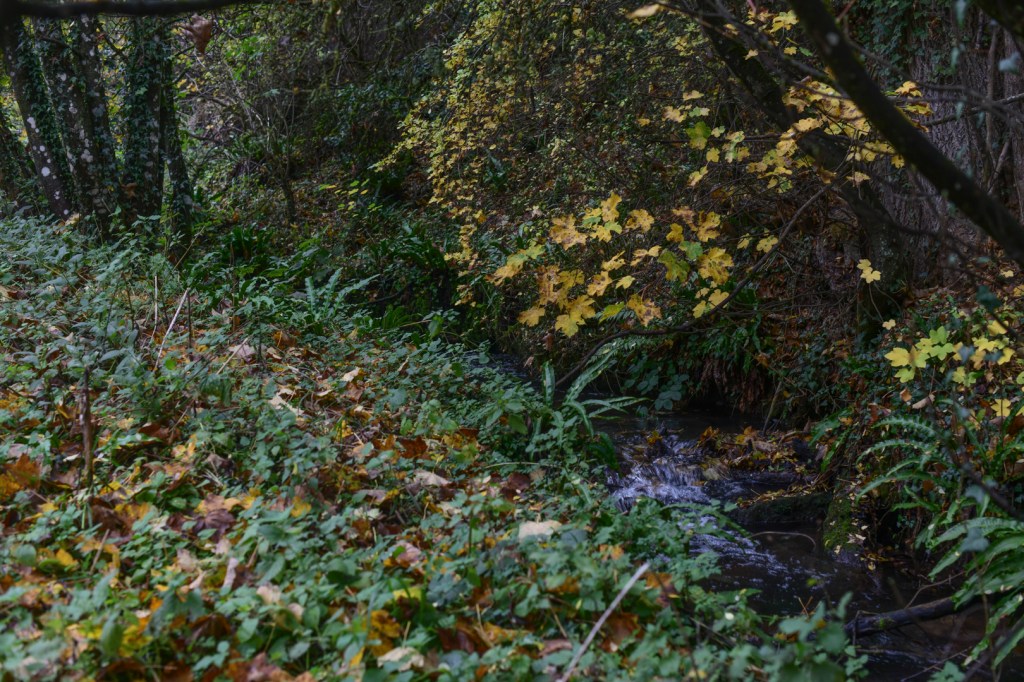
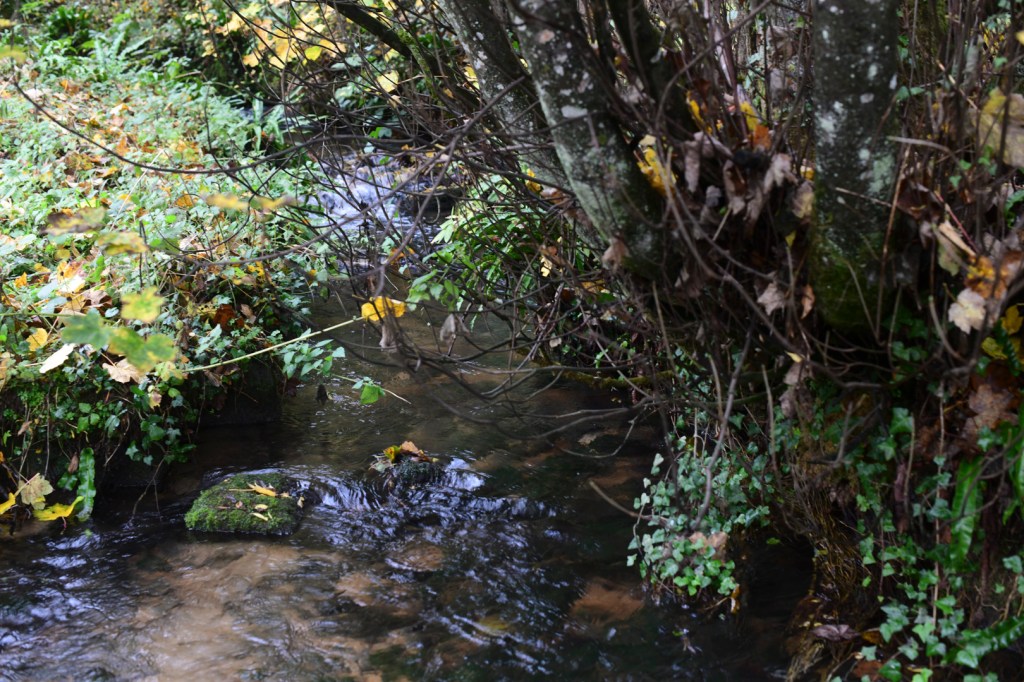
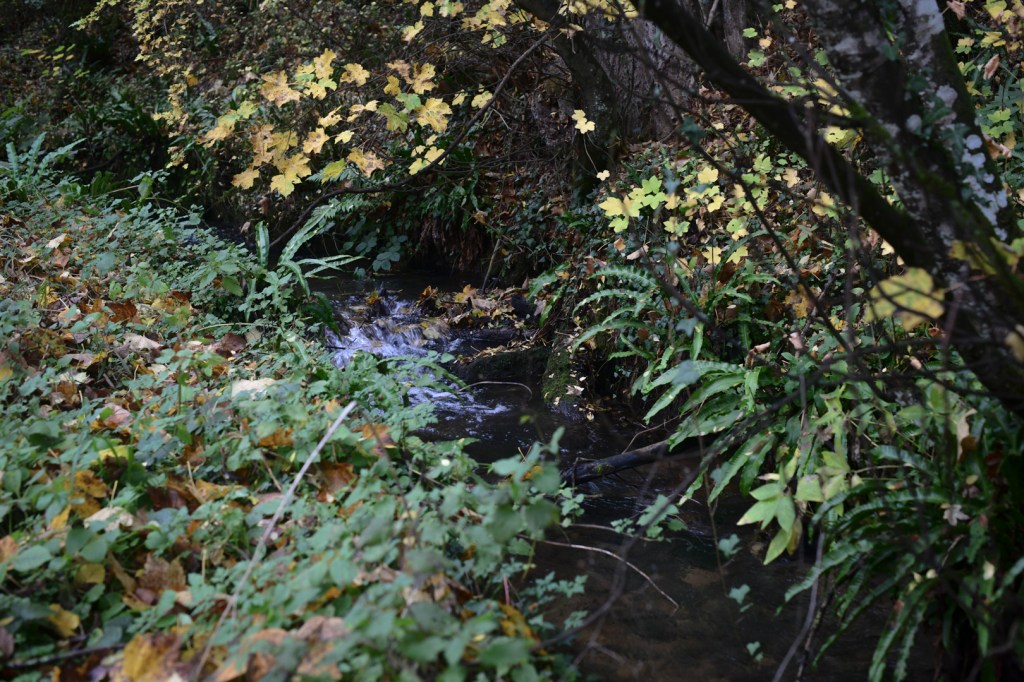
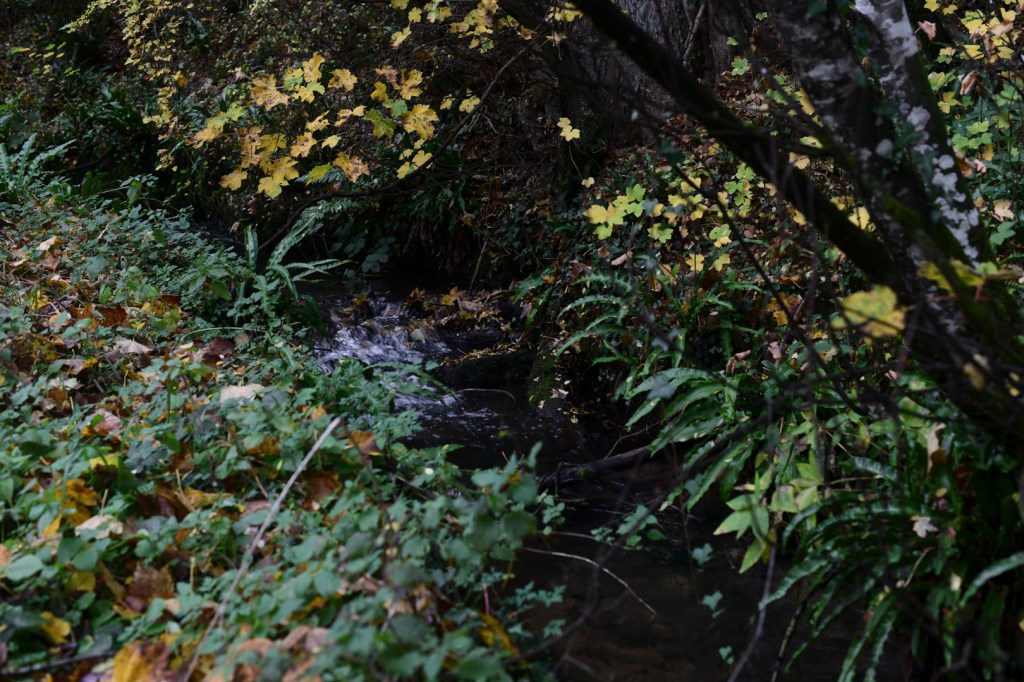
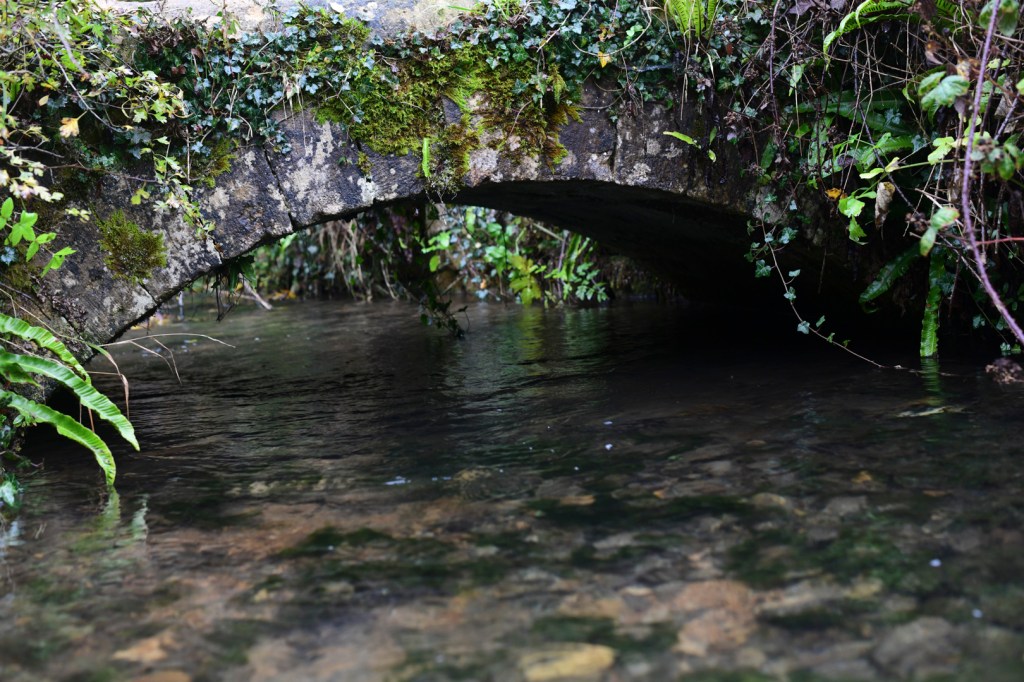
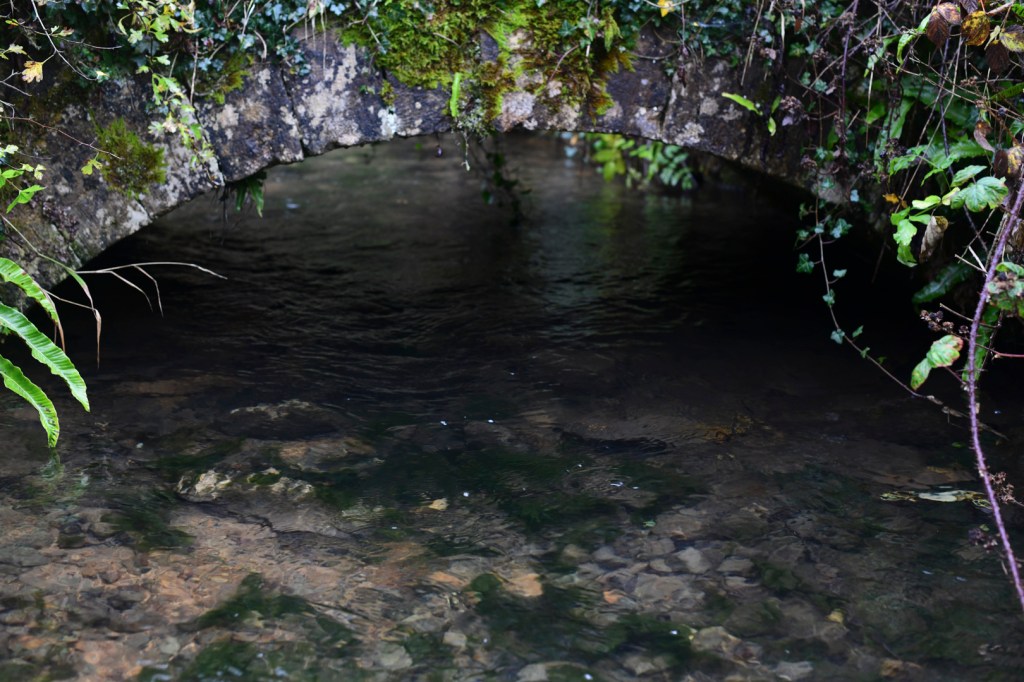
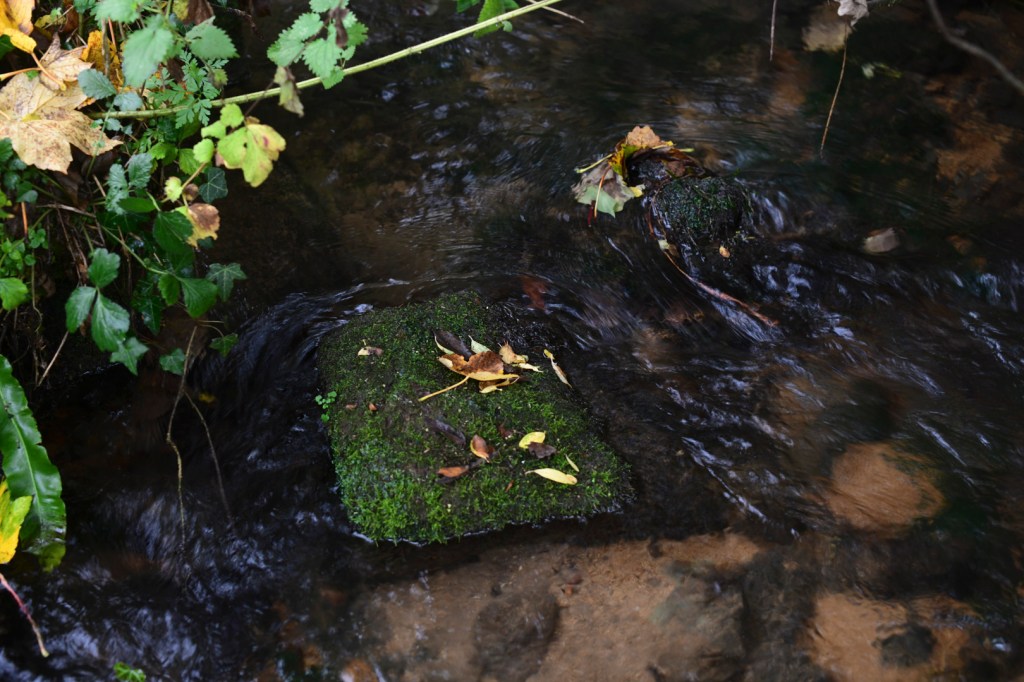
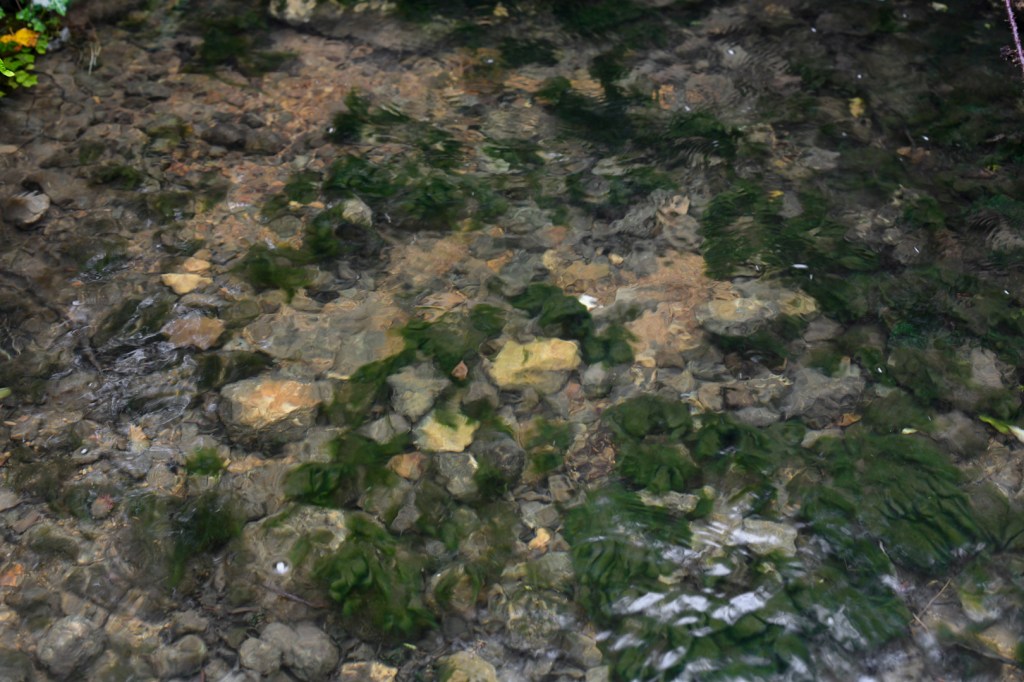
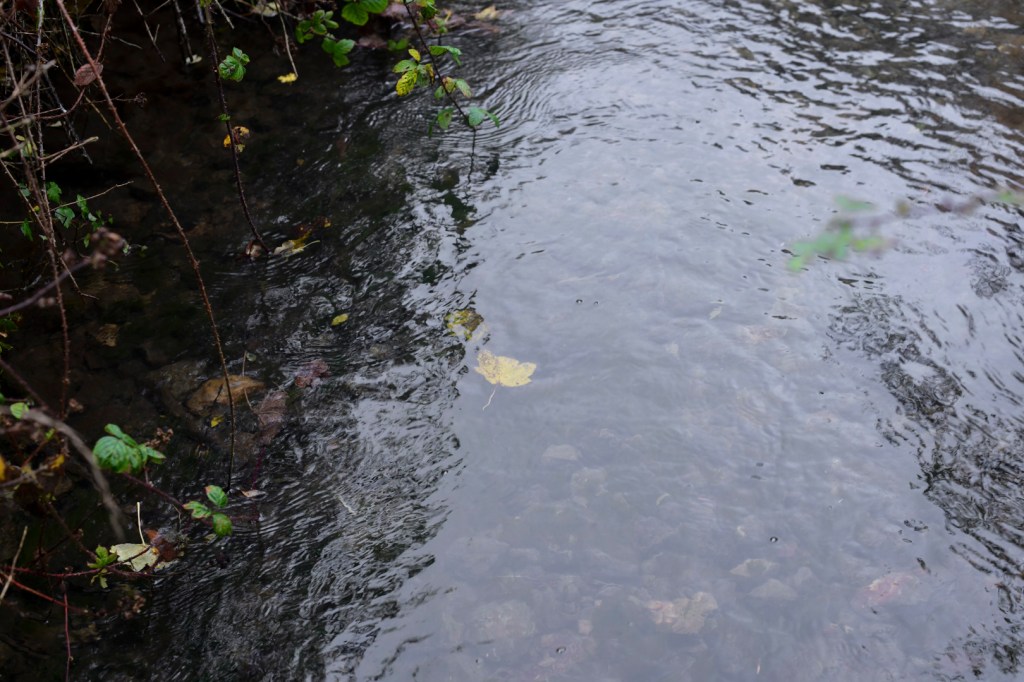
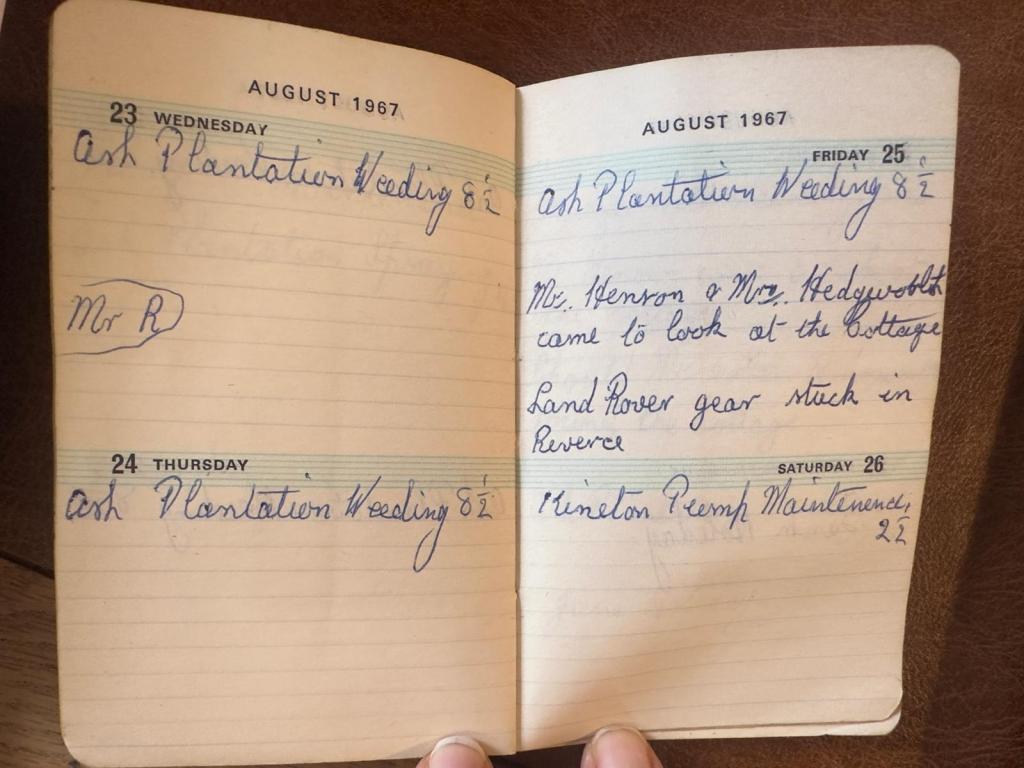
This area of Guiting Wood is of particular importance for me. This is a place, tucked away at the Southern end of the woods, where the stream comes from underground and opens up into a small pool. The water here is always freezing cold as it makes its way from under the ground and its always crystal clear. My grandfather was responsible for looking after the water pumping station, situation about three quarters of a mile away. I always think of him when I am here, wondering if we’d be looking at the same view. Here is an excerpt from his diary, which details this along with his other duties that week. I love his writing and the details of his hours spent working locally. I chuckled at the landrover note, it seemed so matter of fact, as though this was an unsurprising occurrence!
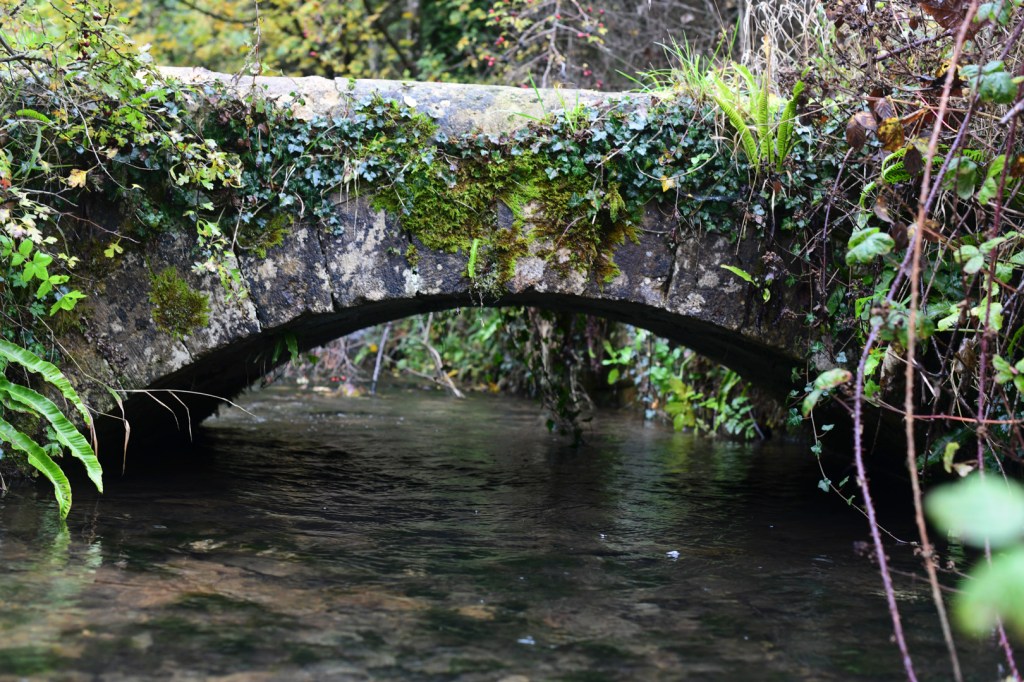
I spent some time here, just alone with my thoughts and thought about my family. As my mind settled, I thought about the bridge that we used to sit on, skimming stones throwing sticks and leaves, seeing who’s would win the race. I thought above how my cousin and I collected creatures into buckets or pre-prepared jars and studied them for a while. I am reminded of the time I was so fascinated by the huge Roman snails that can be found in this area and took several home with me to live in the garden, except (unbeknownst to me, they are protected and since 1981 it has been illegal to take them!) I accidentally left the jar in my parents car with the lid off. My father wasn’t thrilled when i went to get in his car at 5am for a long drive up North for work. Needless to say, I have taught my own children to leave things in place (thats what a camera is for, after all)
As I settle into place and tap into my memories, I can sense what I can only describe as echos of conversations past and I can feel everyone in this place. I am reminded of one of my favourite quotes that I discovered when researching 7802, by landscape architect Jacques Abelman, for his study into the dwelling perspective. It poetically describes the scientific facts of atomic turnover “Every atom in our bodies is replaced over time…our skin sloughs off and becomes dust; the carbon in our breaths becomes the bodies of plants…we become the landscape, and the landscape becomes us, creating our bodies anew over the course of our lives” (Abelman, 2023: p1) I often think of this when I am in a landscape environment. I find it comforting to think that we are all still here in some form or another. A recent novel that I read which stayed with me for some time after I finished it was ‘There are Rivers in the Sky’ by Elif Shafnak. It tells a story that is woven through by the journey of a single raindrop. It is about ‘the politics and preciousness of water’ (guardian: online) and features different characters, spanning history from ancient Mesopotamia and the tale of Gilgamesh, to modern day London. I haven’t looked at water in the same way since.
For this shoot, I again used my digital camera as a tool to practice in place, to settle in and immerse myself in the environment. The intention being to shoot on analogue afterwards. I am finding this is an effective way of working when still getting used to my Mamiya. I lack a bit of confidence with it and so that distracts me from the focus on becoming mindful. I realise that this could raise the question of contradicting myself as it might suggest the images are contrived / pre planned. However, I feel that I become more relaxed if I satisfy that part of my mind which wants some control, therefore I’d argue that conversely makes the process of mindfulness easier.
My most successful image in this series is the wider perspective of the pond itself. With the tree trunk in the centre at the point where the water begins to disappear again on its journey along the valley and eventually back underground, it is evocative of those memories I mention above. As though time itself is being carried along, with water as its vehicle. The colours at this moment were so saturated and almost seemed to be lit up. I like that the trees fill the frame and that there is no sky visible, like the work of Thomas Struth for his ‘New Pictures from Paradise’ series.
 Lucinda Taylor