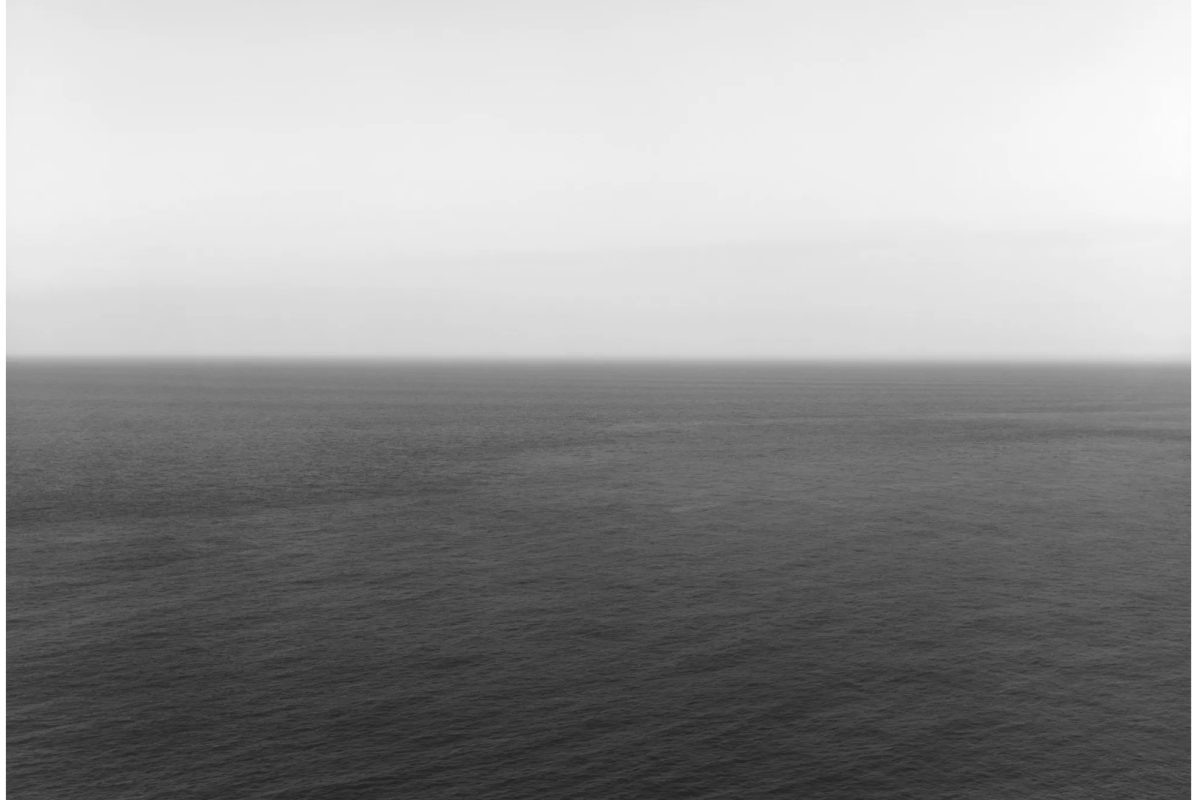
Since studying photography, through my BA and then into my MA, my research at some point has always presented the work of Hiroshi Sugimoto to me, yet I’ve not studied in depth or paid much attention to it, dismissing it as not directly relevant. So, when looking at relevant practitioners for my final project and searching with ‘new eyes’ for photography with a meditative quality, Sugimoto’s work seemed ridiculously obvious. I wonder why I haven’t given more time to study his his photography before.
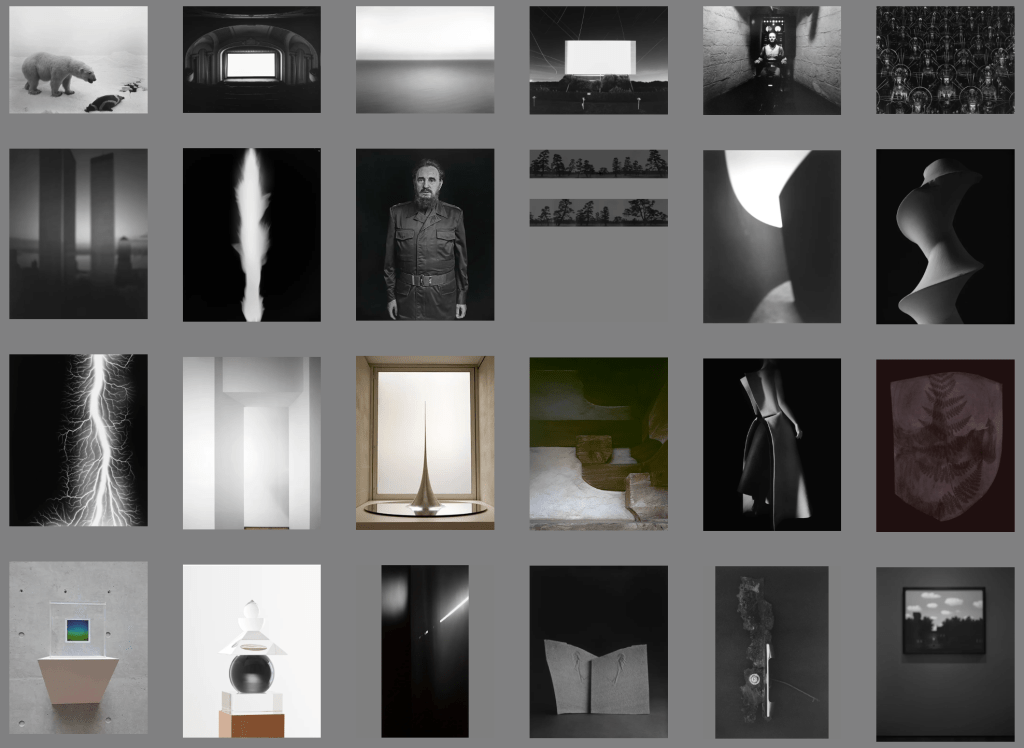
One of the findings from the last few years, more so for the MA, is how interrelated architecture is with landscape based art. It is like a hybrid discipline combining art, engineering, technology and science. Much of the critical theory I’ve studied stems from architecture (e.g. Tilley & Abelman) and so it should have been no surprise to discover that Sugimoto, as well as being a photographer is also an architect. It is clearly evident in Sugimoto’s work. There are many elements in his art which align with the conventions of architecture, just a quick study of his photography shows the lines and forms which are synonymous with the profession.
This is a quick screen grab from his website to demonstrate my point:
His ‘seascapes’ work is perhaps the most well known, at least to me it is. I remember being drawn to these in the first year of my BA but didn’t fully question why (see previous point!) so as I turn my attention to this work, it is sometjing of an epiphany to realise this work is all about meditation, memory and time. The question of whether there might be someone on the other side of the world, seeing the same scene and then the fact that this scene has barely changed since the beginning of time on earth; the sea, the horizon, the sky, all lying in a line. There are questions around climate and how that might make the scene appear different, ie the reflection on the sea from the sky above, the sealife and the conditions it once thrived in, somehow dulling the waters hues.In the photographs below, the dates span 30 years and yet nothing looks particularly different between them. They are all from different parts of the world and in different decades. For me this is an intriguing study into concepts of time, which these images seem to reject.
The sea is something I gravitate towards, when I can. In its absence, I seek out other bodies of water. Although they don’t have the horizon, they still offer a space for reflection and contemplation. This is evident in my work as when I walk through the landscape I would usually chose to photograph near the water or the water itself.
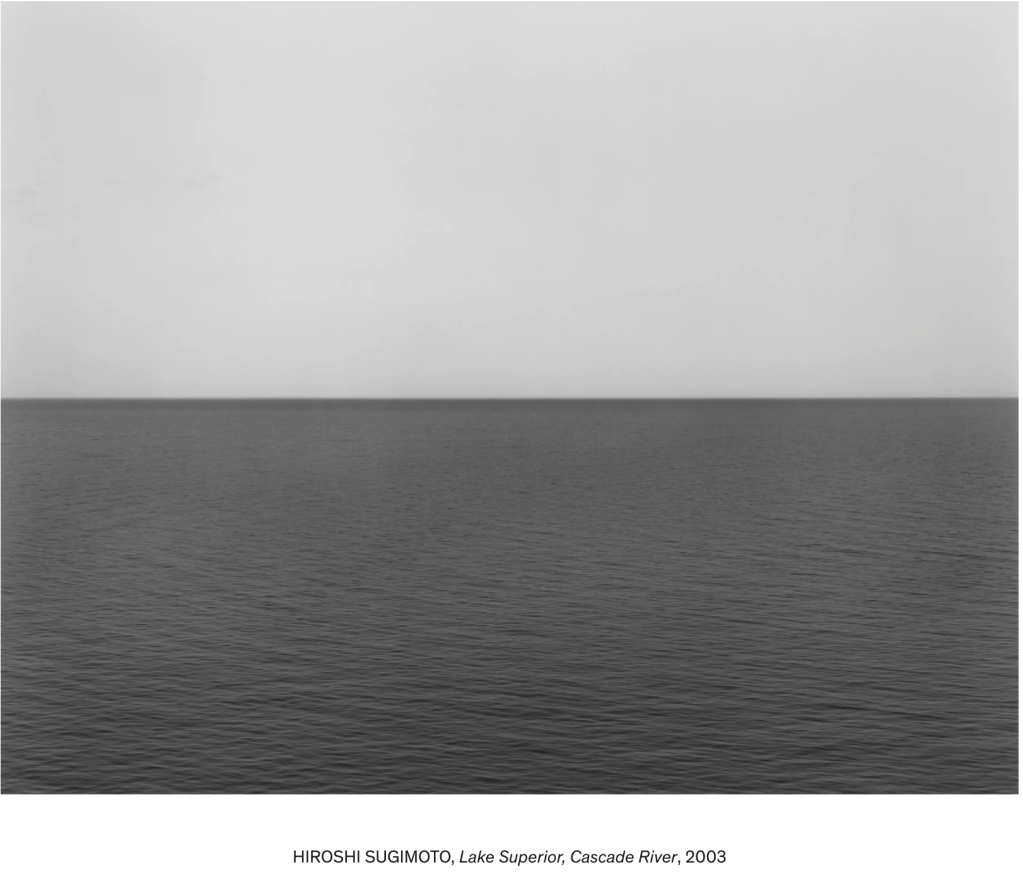
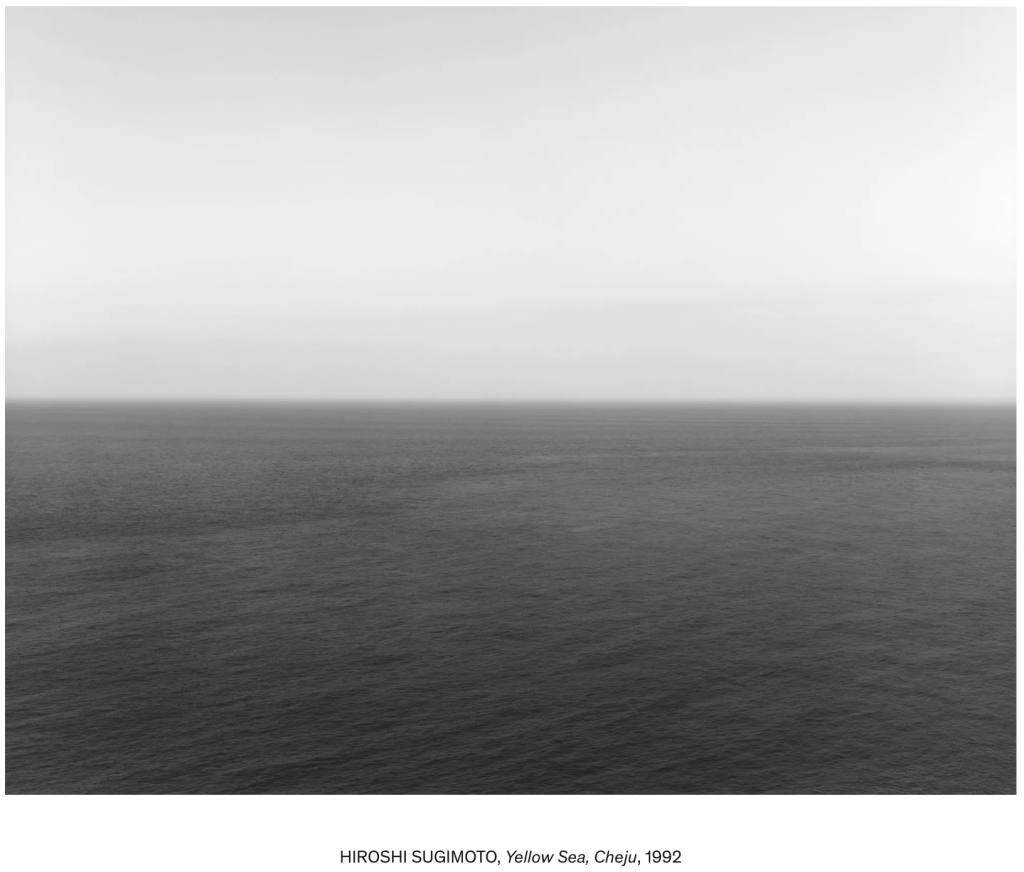
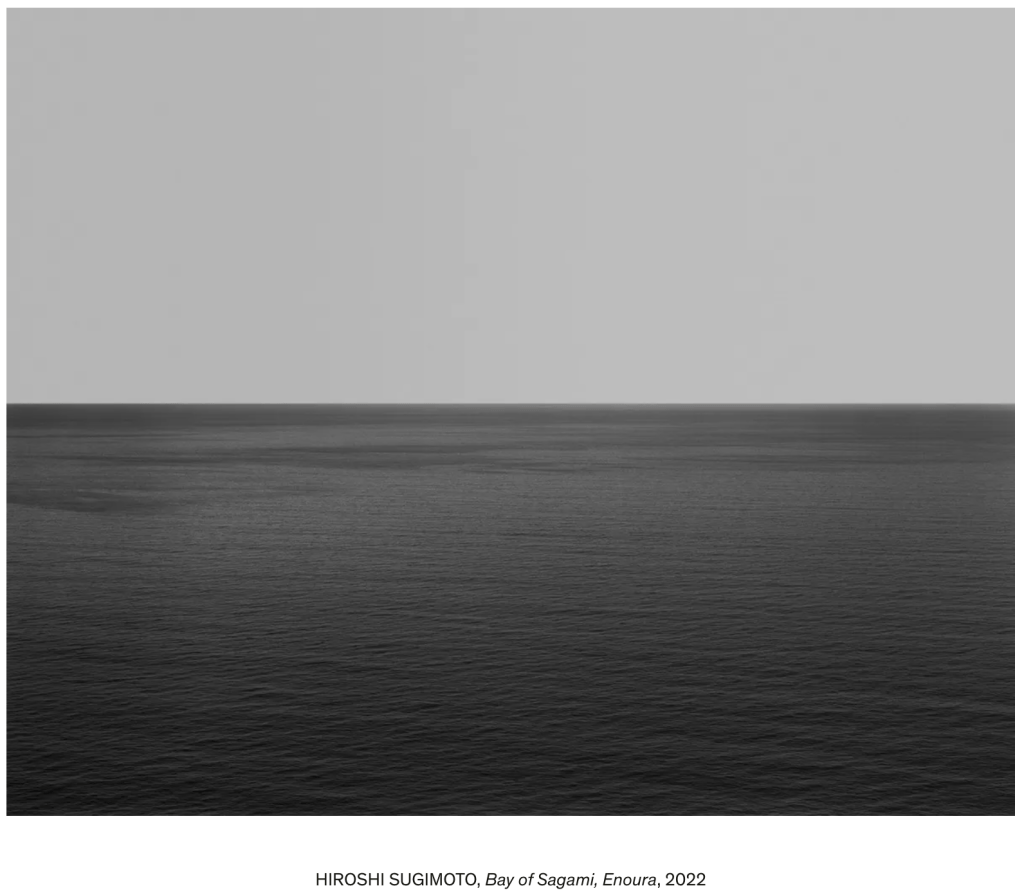
Mystery of mysteries, water and air are right there before us in the sea. Every time I view the sea, I feel a calming sense of security, as if visiting my ancestral home; I embark on a voyage of seeing.
Sugimoto’s seascapes are presented in gallery spaces as large prints (around A0) allowing the viewer to experience the perspective up close. His words below describe his motivation and further evidence of his work being meditative & contemplative.
“A sharp horizon line and a cloudless sky– here began my consciousness… from there my thoughts race to the origins of human consciousness itself. The sea reminds me that within my blood remain traces of human evolution over hundreds of thousands of years.” (Frankael: online)
The work of Hiroshi Sugimoto will be much more of a consideration in my own research as I continue beyond my MA.
 Lucinda Taylor