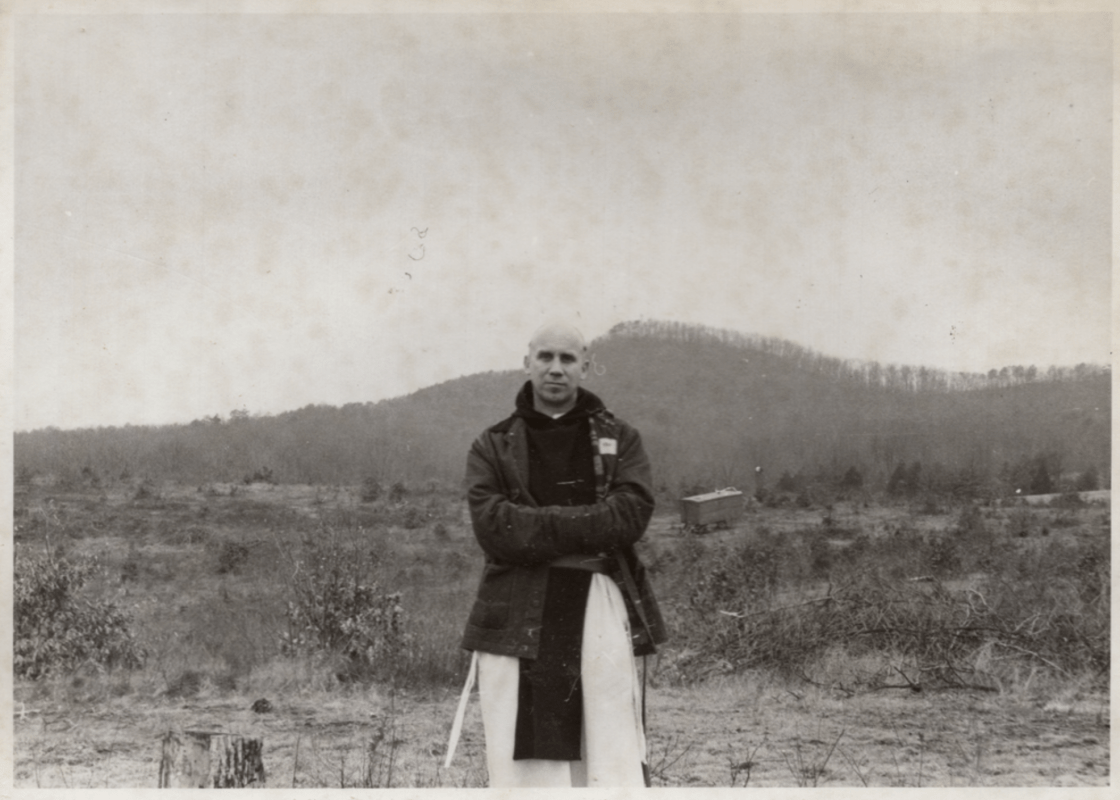
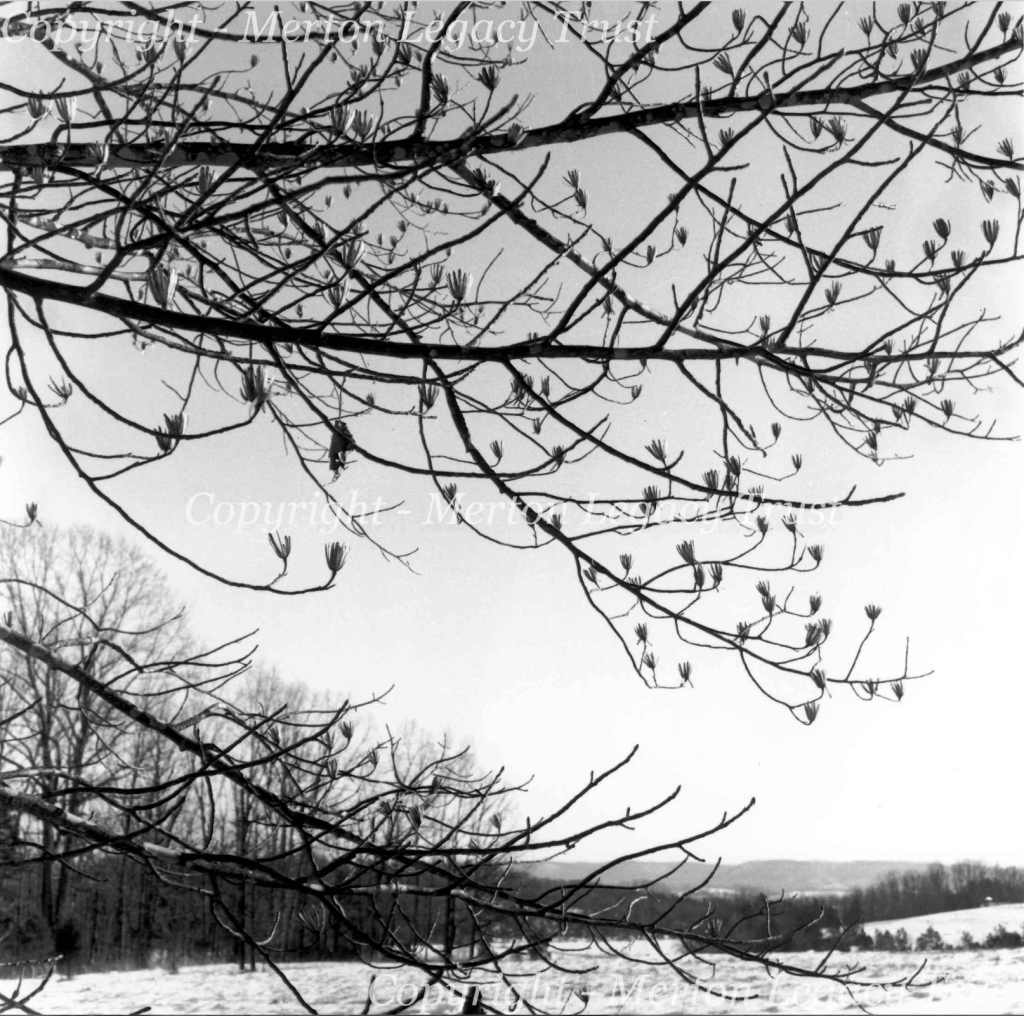
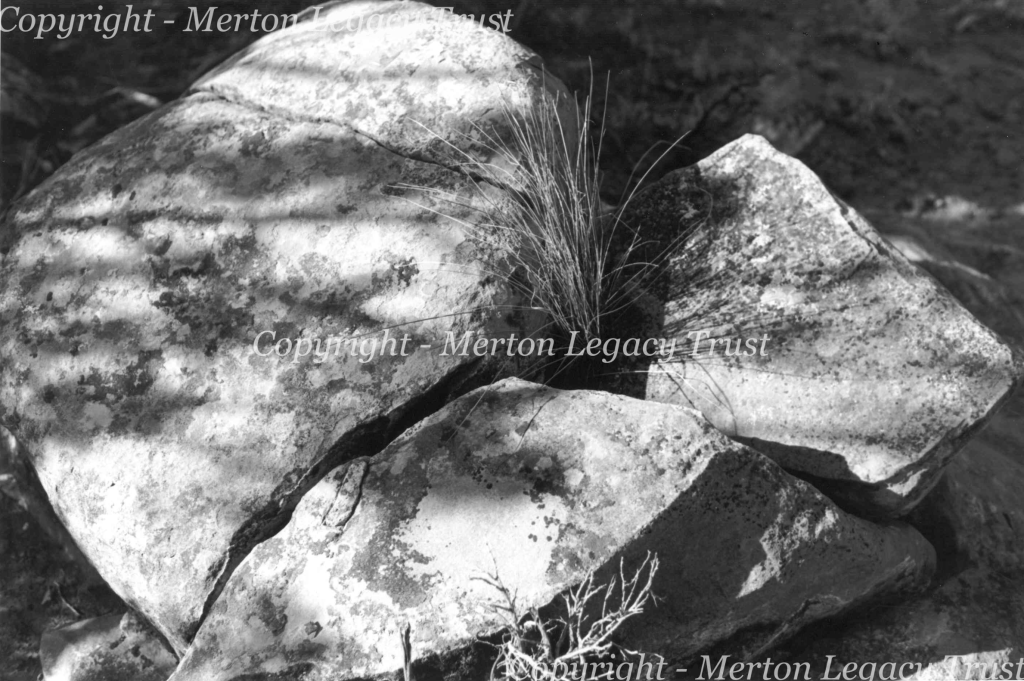
I have researched Thomas Merton because of his methodology in photography and his unique way of seeing and understanding the world. This piece of research has helped me understand the key principles behind contemplative, mindful creative practice and how it can be inter disciplined, combining writing, art and physical activity such as walking. He was a Trappist monk, based at Gethsemani in Kentucky and discovered photography in the last decade of his life, on the back of his prolific production of books (50 in 27 years) He paradoxically, perhaps, took up photography as a way to satisfy his need for simplicity and stillness.
Because he would have taken a vow of stability, he would have been limited to contemplate subjects in the hermitage and the immediate vicinity, his search for photographs was part of a highly developed visual awareness that revealed itself when in an intense contemplative state of mind. It is perhaps unsurprising that photography became a tool with which to study his world in fine detail.
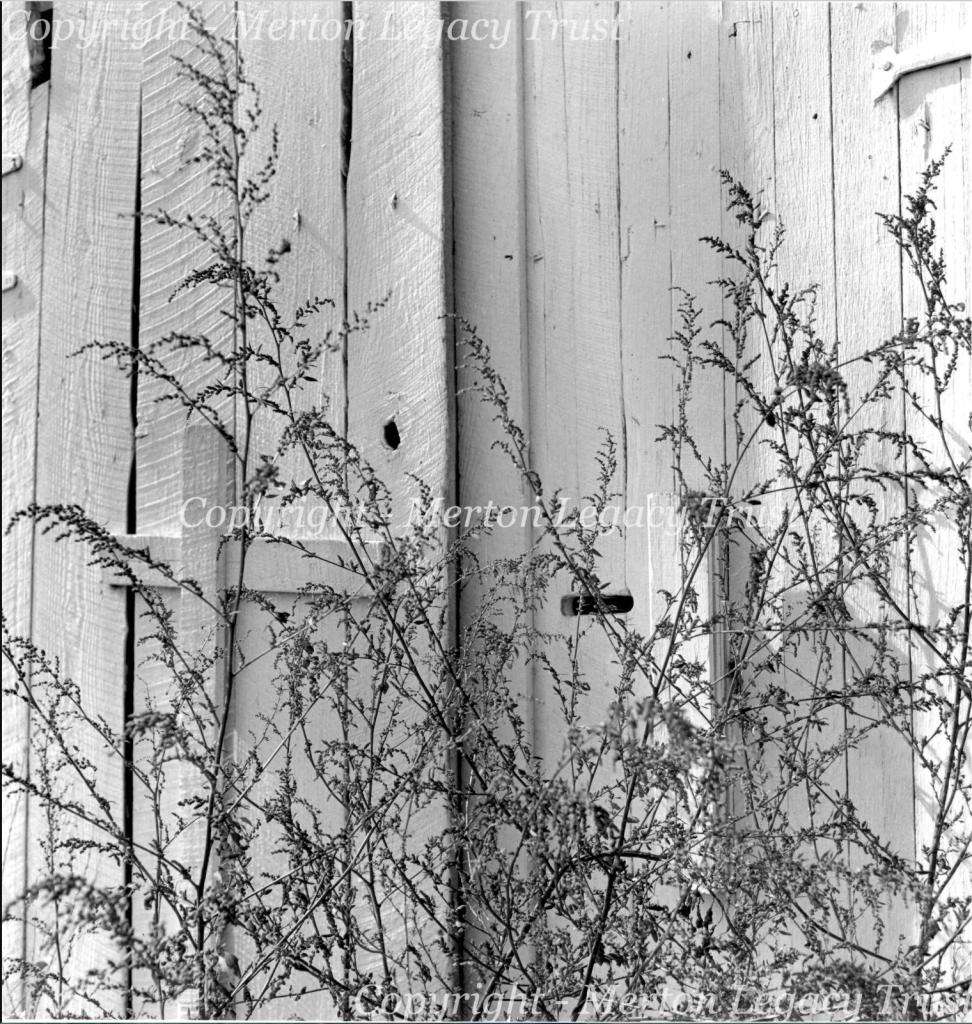
He continued his journaling and writing alongside his photographic practice which means that there is a wealth of insight into his thoughts and wonderings directly related to this. I find this useful because where I have read plenty from nature writers, they are not typically engaged in a related pursuit. For example, in one journal entry, he details that instead of reading a Zen anthology, he was too distracted by his ‘dream camera’ as he kept seeing curious things to shoot instead. he said ‘the whole place is full of fantastic and strange subjects – a mine of zen photography‘ (Hamrick, 2020: online) further to this in another entry, he says “Marvelous, silent, vast spaces around the old buildings…Cold, pure light, and some grand trees…. How the blank side of a frame house can be so completely beautiful I cannot imagine” (Hamrick, 2010) so we can garner from these words just how invested he was in paying close attention to his surroundings.
Paul Pearson is the director of the Thomas Merton centre at Bellarmine University in Kentucky. He has edited a book ‘Beholding Paradise, The Photography of Thomas Merton’ (Pearson, 2020) In this he discusses how Merton is ‘inseeing‘ which is a concept by Rilke, inspired by Rodin and interpreted by Merton as ‘an inner event in the person who sees it, and it takes place in this encounter with something else, not just a subjective thing…our own existence is revealed to us, along with the meaning of our own life’ (p133) It seems to me that this description epitomises the act of mindful, contemplative thinking. Mertons words summarise this a ‘Visio Divinia’ meaning seeing, rather than just looking so that the essence of the thing is revealed to the viewer.
For anyone seeking to absorb themselves in the simplicity of things, the book provides a fascinating insight into a man who as well as being a master at contemplation and mindful practice, had plenty of humour, liked a beer or two and mused and wondered about the marvel of life. Many of his poems and essays are thought provoking, although obviously plenty of reference to a God that I don’t believe in does sometimes detract from the enjoyment for me, so I do read his work through a slightly different lens to the one he may have intended.
NB all images displayed are for analysis under the terms of fair use and belong to Merton Legacy Trust
 Lucinda Taylor