Learning mindfulness.
As I’ve outlined, I have consistently explored themes around family, memory, sense of place but I’ve yet to fully realise my potential in this area. I think that in employing this approach, I’d be able to manifest clearly my thoughts and feelings about ‘place’ beyond representation, providing deeper meaning around an image and in turn, creating a more emotional body of work.
The problem. With the daily busyness of life in general; the pressures and stresses of tasks and deadlines, messy calendars and unexpected changes to routines and schedules, I find it extremely difficult to sit in a space and observe, quietly and patiently, my surroundings. All too often, those places aren’t fully seen by me, as the never ending task list works its way like a ticker tape parade through my mind, I can barely tell you what I looked at, after the event. My biggest successes have tended to be the result of dedicating more time and thought to my observations. To solve this problem, I needed to learn about mindful practice and so searched for relevant materials on the subject.
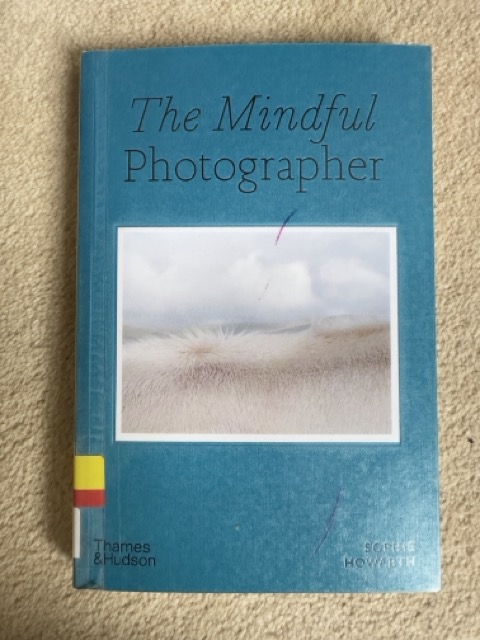
The most useful source I came across, is The Mindful Photographer by Sophie Howarth (2023) in the university library. (I have now bought myself a copy) It has been a key guide to this process, although its ideas are broad, the principles are applicable in any specific scenario and it also revealed to me how the wider uses of this therapeutic method could offer benefits beyond just my own immediate concerns. For example, Howarth refers to The New Economics Foundation, stating that “[NEF] is a think tank focussed on redesigning the economy to work better for both people and planet, they identify 5 evidence based actions that are foundational for individual health and wellbeing, Paying mindful attention to our surroundings, is one of them” (p8) She goes on to say that while improving personal wellbeing is a good reason to develop the skills of mindful practice, there is also a case for larger social value. The world and us are more distracted than ever, as I’ve stated elsewhere, there are immense challenges faced across the world and with our attention being pulled in all directions, we are rarely looking closely or attentively at anything. Many credible sources, including the mental health charity MIND , show there is a significant mental health crisis in the UK, which continues to decline and although there are many explanations as to why that might be, whatever the reason, mindful creative acts have the potential to offer some relief. “…mindfulness has gained widespread interest precisely because states of distraction, anxiety, suffering, and lack of connection are so common and detrimental. As society veers toward more chaotic, techno-centric, globally connected and distracted modes, mindfulness offers an antidote to internalised unrest —particularly for learners who face ever expanding sources of difficulty from stress and distraction”.(Henrikson et al, 2020: p2)
The book is split into chapters as follows:
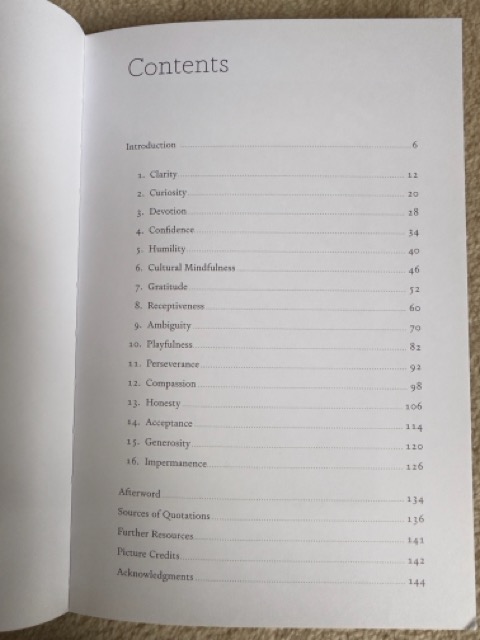
There are practices throughout each chapter which has served to guide me in establishing mindful techniques. Small tasks are set for each chapter. My experience of the most useful of these are listed below, these form the basis of the physical aspects of my project:
- Basic meditation. The foundational practice for mindfulness, where I simply found a comfortable space to just sit and be, without any interruptions, for 10 minutes. Although it is a requirement to be comfortable and relaxed, the discipline of sitting straight is at first difficult! I realise how much time I spend in terrible posture. Strangely, by reminding myself to ‘sit up straight’ my mind wonders back to my ballet classes during my earlier years and so I take this thought and literally, dance my way through the next few minutes. Its a strangely blissful moment. Then I bring my mind back to the here and now, trying to stay focussed, my thoughts keep wondering but Howarth says, not to push them away or engage. I just let them wonder through my mind. I focus on breath as much as possible, this seems to stop my mind veering off all over the place. After the allotted ten minutes, I do feel centred and relaxed, I am less anxious and my mind seems to be calmer.
- Being Like Water. “the mind that is too full of effort, desire and expectation leaves little space for creative response“(p78) explains the barriers to mindful creativity very well I think. I am absolutely guilty of overthinking my practical work and outcomes. I think this is why learning a more mindful approach will ultimately revolutionise my practice. Practicing feeling, thinking and seeing over doing can only serve to bring about a more authentic body of work. I accept that I will make judgements on composition and will even choose favourable conditions but I believe there can be a balance. The ‘being like water’ comes from Taoism ‘wu-wei’ which is translated as ‘effortless action’ or ‘going with the flow’ and was a term made popular in Western cultures by Bruce Lee, when he says to a fictional character “Empty your mind, be formless. Shapeless, like water. If you put water into a cup, it becomes the cup. You put water into a bottle and it becomes the bottle. You put it in a teapot, it becomes the teapot. Now, water can flow or it can crash. Be water, my friend.” (online) I found the practices I tried for AD7803 to be useful in this, by allowing nature to guide instead of being controlled by me.. for example, in making cyanotypes and photograms I am giving up control to the elements to a great extent. Moving around the pathways and following the shape of the land, all come into play here. I think about this a lot now when I am walking and immersing myself in the landscape.
- The Beginners Eye. Howarth uses the ‘childs eye’ to break habitual ways of viewing. She talks about games such as ‘I Spy’ except with variations, rather than something beginning with a letter, use ‘things in pairs, broken things, two circles together… etc’ where you need to ask questions and look at everything around you in much more detail. It gives new perspectives on familiar things. Using different perspectives is another aspect to adopting a beginners eye, looking from the ground up: ‘How many colours are there in a field of grass to the crawling baby unaware of green”? Stan Brakhage so to imagine things without labels, although challenging when we can’t help but name everything, is a start to seeing without preconceptions. Without a camera, I practiced by looking closely at a plant, I stared for a while (I notice that after a while I stop labelling it) and then looked at it from table level, then upside down. I let my vision blur (awkward with contact lenses!) and tried to think of how else this ‘object’ might be presented, other than the conventional. To reset from each time I kept judging or thinking, I used my eyes like a slow shutter and blinked.
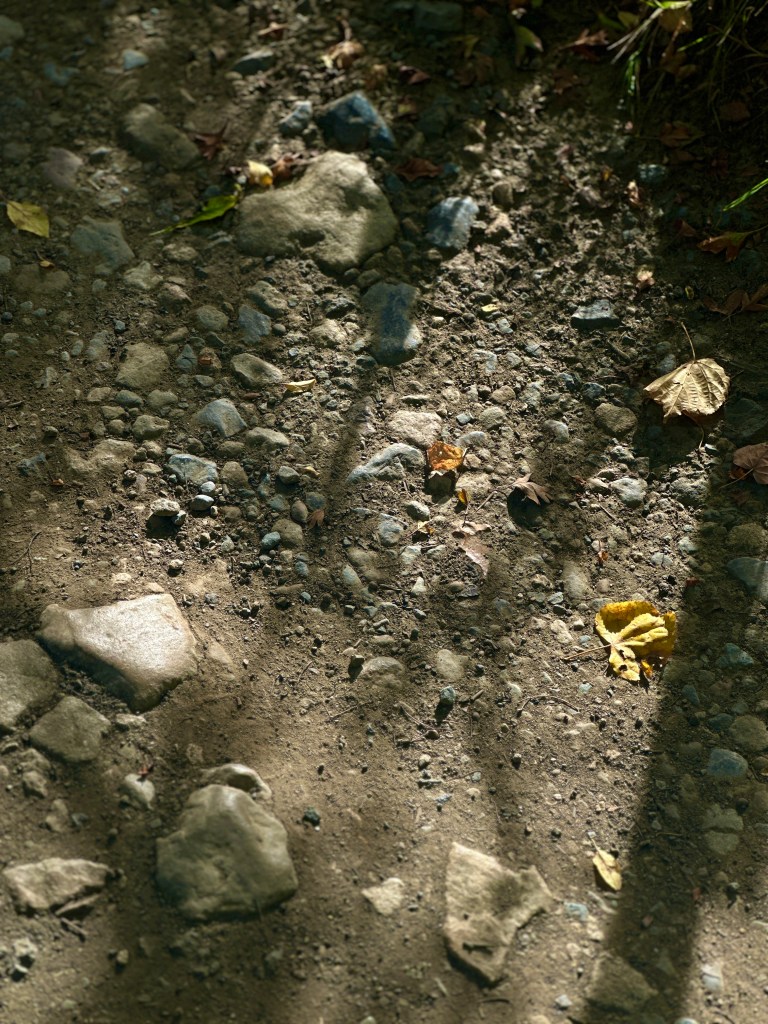
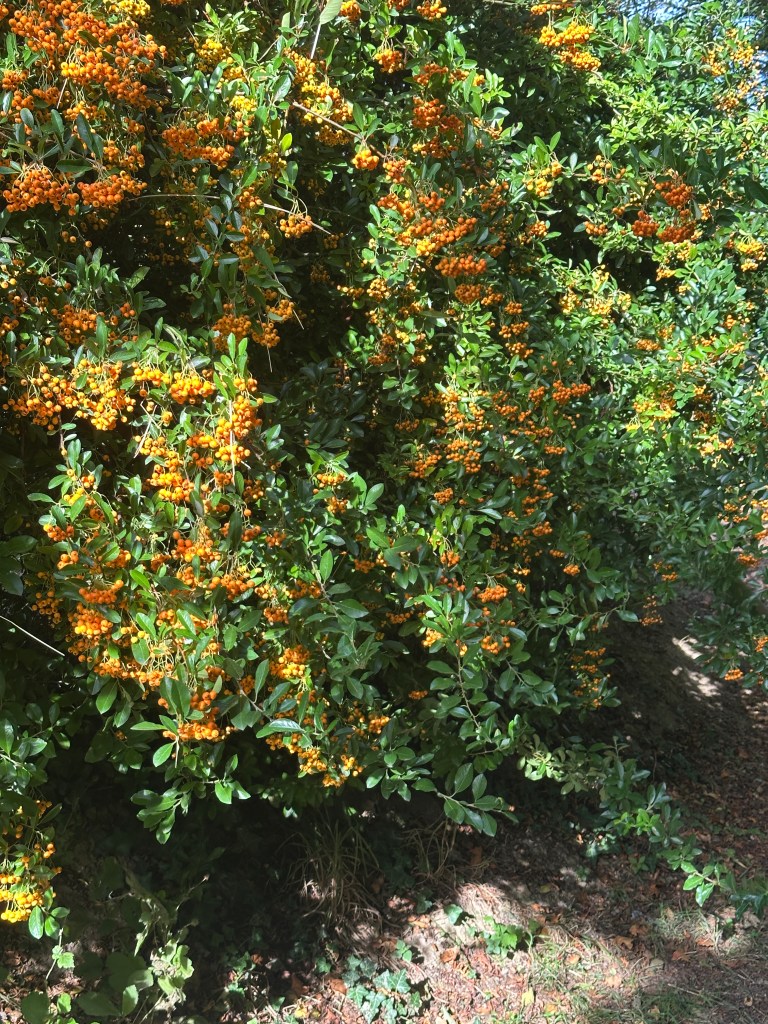
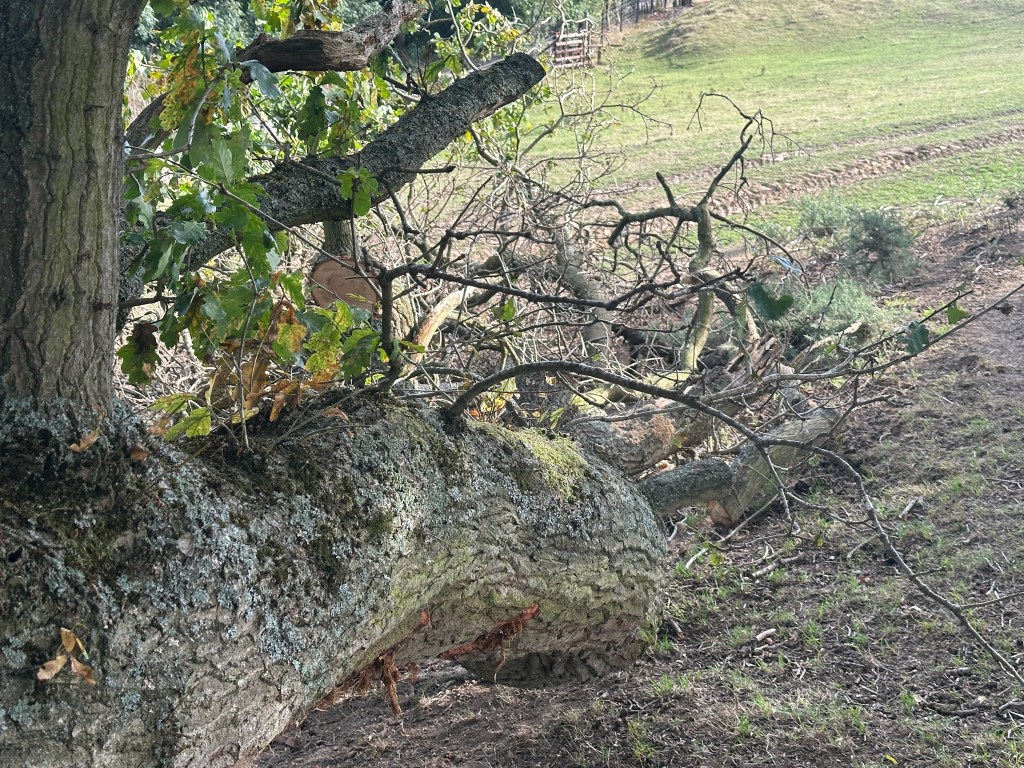
- Photo ‘fishing‘. The purpose of this exercise as far as I can tell, is to take photographs almost at random, so removing any preconceived ideas about compostion, edit, end result etc. Letting go of the idea of perfection and simply recording what I see. I had come to a spot where a very large branch from a tree had fallen, so I just decided to spend a few moments there and would photograph based on an intuitive response to the newly created shape. I spent a few minutes at first, closing my eyes and feeling the sunshine on my face. I tried not to overthink and actually distracted my mind by humming a tune! These are 4 images from that walk. Each spot I would take a moment to try and empty my mind a little and reject the concerns over final results. It was a helpful exercise in learning to let go of perfection and end results and in doing so, being able to become more present in the moment.
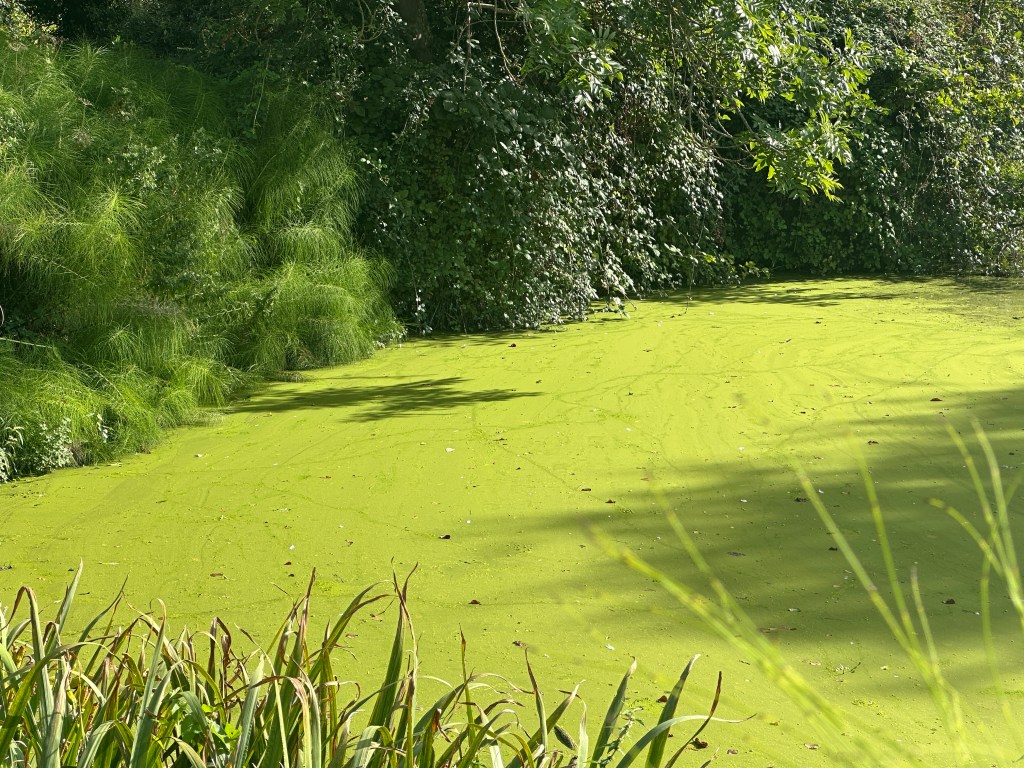
Written word. I had planned to practice this by noting down the words, sensations and sounds, in place; Japanese Haiku poetry is one way I could do this, although I am not practiced in it at all, it is a useful way to record what I see and sense, in a way they are like verbal snapshots of a place and whilst traditionally they were often humorous and use in games of oneupmanship, the principles of ‘say what you see’ are useful in mindfulness practice. 17th century poet Basho, arguably the most famous of Haiku poets, is used as inspiration here:
“The old pond—
a frog jumps in,
sound of water.”
—Basho
A very literal description of a moment / experience. Our own experiences tell us that the frog has created the sound of the water and so we draw on our own memories. This is a useful way to engage with audience, to help them to see what might be heard, seen and felt at the time. These are the poems I have written when reflecting on my shoots. Not typically done ‘in place’ but they are a summary of the things I notice when immersed in the environment.
Rocks and stones, algae marking their age, indigo water
patient, enduring, unbound
time settles here.
The leaves fall, dancing down into the depths, floating, descending
light flickers on the surface in perfect rhythm
as if to applaud their final show
lichen clings to nature, decorating rocks, branches and tree trunks
deep emerald greens, soft grey blues and ochre yellows,
serving as colourful timestamps, reminding me to embrace it all.
winter coats the lake
frozen images, as though printed on satin, hold soft light
silence reigns, I hear myself, Just living, breathing in place. Trees are looking down at me, their branches hiding the tiny spies who watch my every move.
Seeing. In Edward Husserl’s ‘Epoché’ theory, he says that things are not as we see them, we are bogged down in language and our own judgement. Similarly, John Berger discusses in ‘Ways of Seeing’ how our own personal history shapes what and how we see, which can make it difficult to truly ‘see’ something for what it is. In order to change my preconceived ideas and knowledge about an object then, I would need to ‘train my gaze’, which is where mindfulness techniques will come in. I hope that in adopting a beginners mind, I can better reveal an essence of a place or ‘thing’.
 Lucinda Taylor
One thought on “Exploring my theme in more detail”