
Uta Barth offers a unique visual experience, inviting viewers to look at self and, in some of her works, is an exploration in to domestic absorption. I researched her work for part of my BA and used this approach to photograph some otherwise mundane objects and features within my own domestic space. The photographs I made back then are among some of my favourite images, perhaps because the way they transform from the unremarkable into something mysterious and dreamlike, which mirrors the experience of meditation.
In Barth’s ‘In Between Places’ book, there are many examples of domestic spaces to street scenes and rural spaces. Her best known work is that which she refers to as the ‘space in between’ with the focus being on empty space, rather than the expected subject, reinforcing the idea of experiencing mediation. The photograph below (Fig 1) is the one which caught my attention because whilst it is ambiguous, it is also quite clear in what it actually is. A car with headlights on, driving towards the viewer (the colour of the lights can determine this) and the colour palette for rest of the scene suggests a grey, rainy afternoon, the reflection of the car headlights on the ground, tells me this. It could of course be a different time of day but my own experiences lead me immediately to afternoon / early evening.
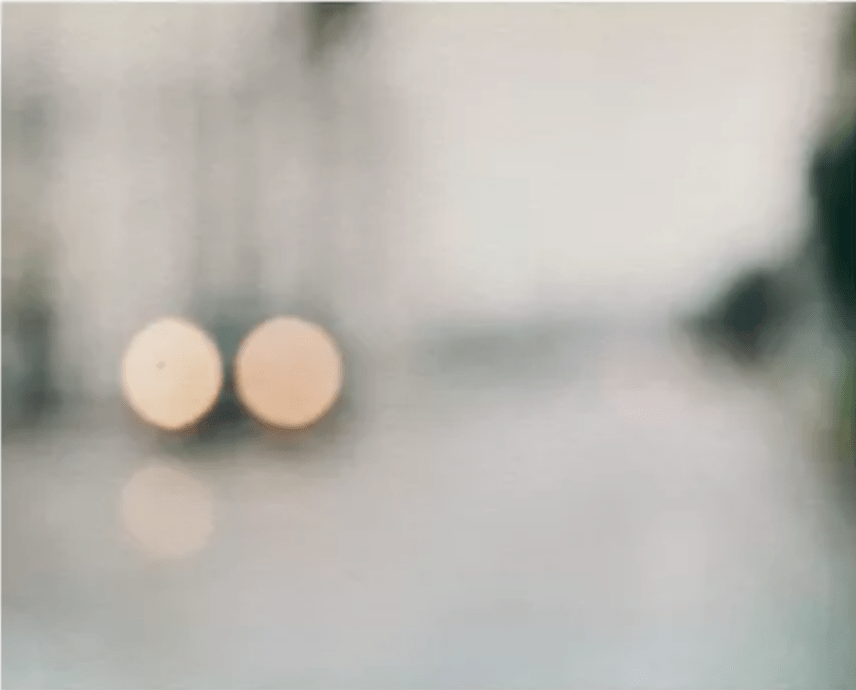
The same hazy effect is created when we stare at something for too long and our focus blurs, like a visual representation of pausing in thought .
Many of Barth’s photographs have a painterly appeal. For example, the photograph below, which appeas to be a corner of a room (Fig 2 ) with a partially revealed window to the left, is reminiscent of Vermeer’s milkmaid painting (Fig 3) whether this was deliberately so, I’ve not discovered but the similarities can’t be denied with the position of the window and the corner of the room. The blurred image creates a chalky, soft texture which only adds to the idea of it being inspired by such a painting. Intentional or not, it shows that creativity is rooted in past experiences. Through moments of pause, deep breaths, and mindful awareness, we can reconnect with those inner resources and shape them into our own masterpieces.
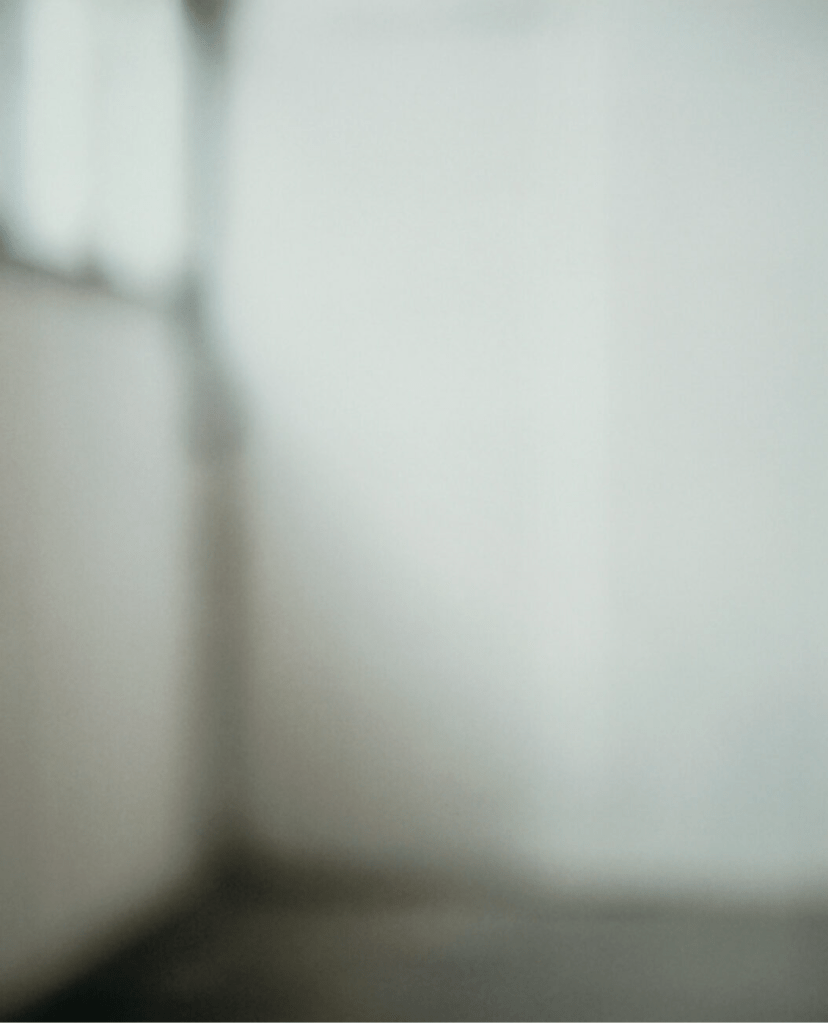
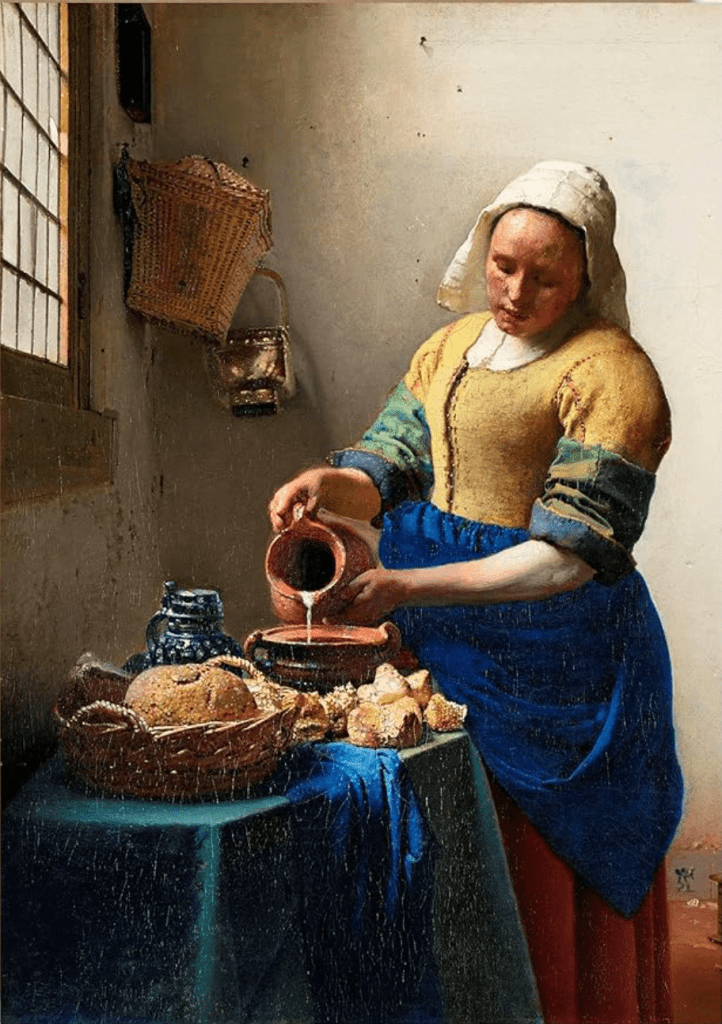
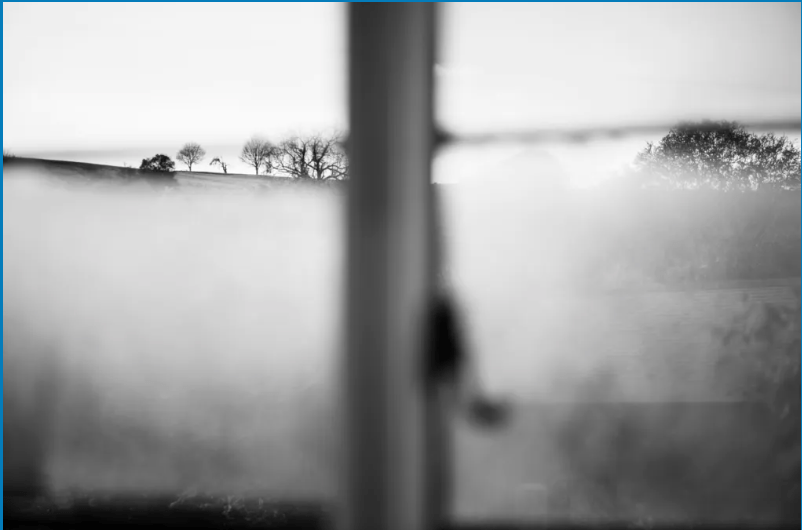
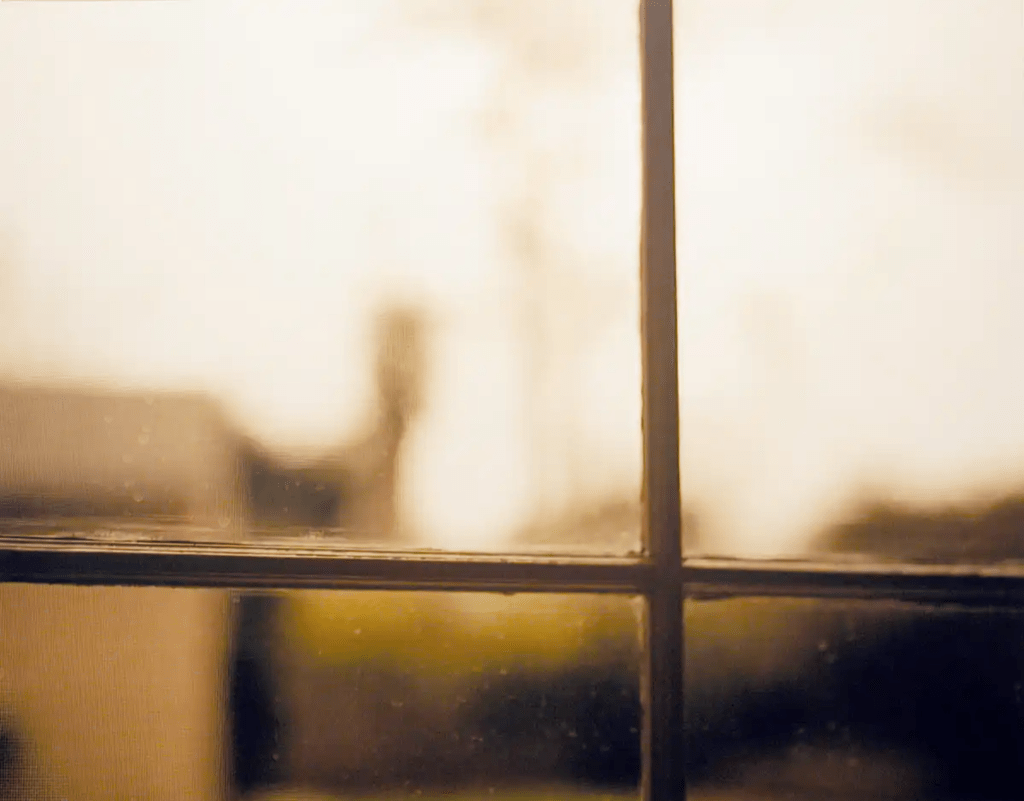
Fig 4. Fig 5
To further this, I note this photo (Fig 4) which I took for a previous module. This was inspired by, I now see, Uta Barth’s photograph in Fig 5. My photograph was taken from my bathroom window and although it appeas as though a sectin of glass is missing, its actually condensation (its a very old house!) with just enough of a clear gap in the glass to see the trees at the top of the first climb onto Bredon Hill from my village. I take this route several times a week and often look up from this window to the trees in recognition, then staring back to the house when I reach them.
Uta Barth’s photographs had an impact on my work from the earliest point in my creative studies. I reflect on this often and I am grateful that I discovered her images, this was a point where I could see how I could creative metaphor in my photography to add potency and dimension to my images.
 Lucinda Taylor