
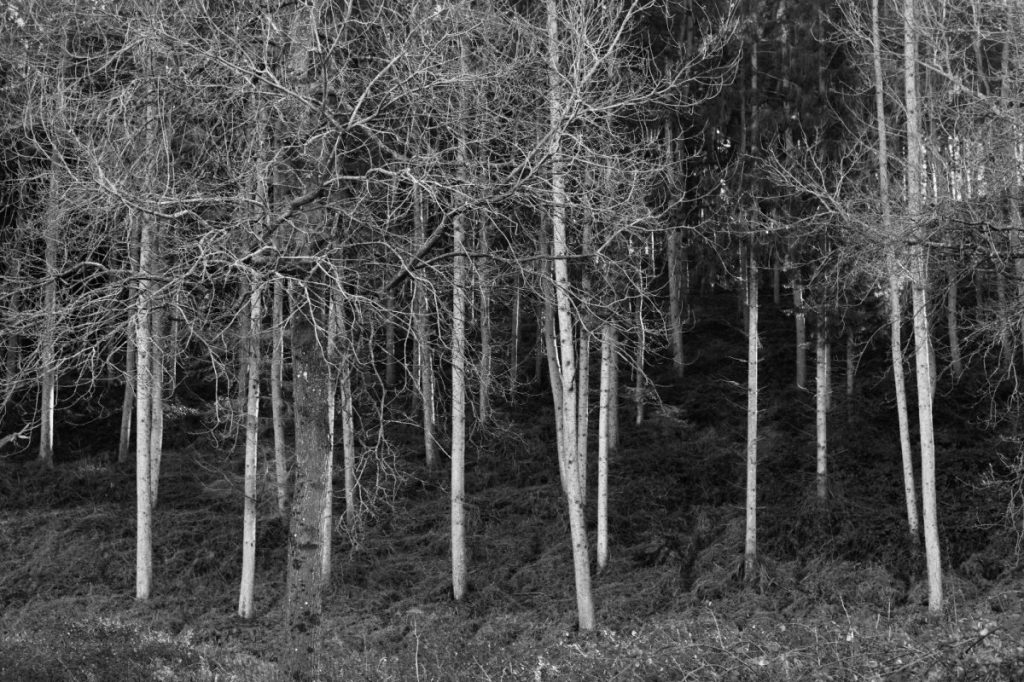
Ashton wood, Taylor, L. 2025
As I continue to look at how and why I think and feel a certain way about the places I chose to photograph, I find lots of different suggestions. I think, like many people, that forests are mysterious, miraculous and awe inspiring places that have a language of their own and seem so far removed from the ordinary, day to day world that we participate in, with its noise and chaos, that maybe its no surprise that many of us feel this way when among the trees. I find it odd that we invest so much time and money in trying to develop artificial systems for leisure, that could never replicate the level of complexity to be found in a forest. Forests hold memories, are central to folklore and stories of old. There is an almost endless list of material I could choose to discuss but I will think of the key information relevant to my process, so far.
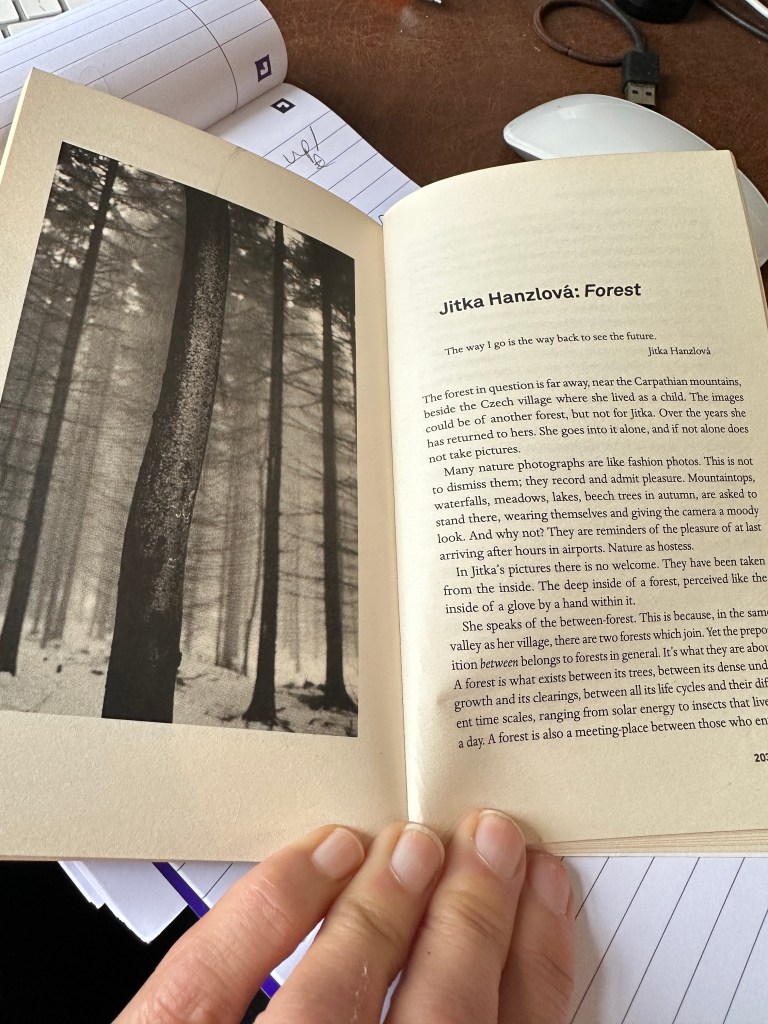
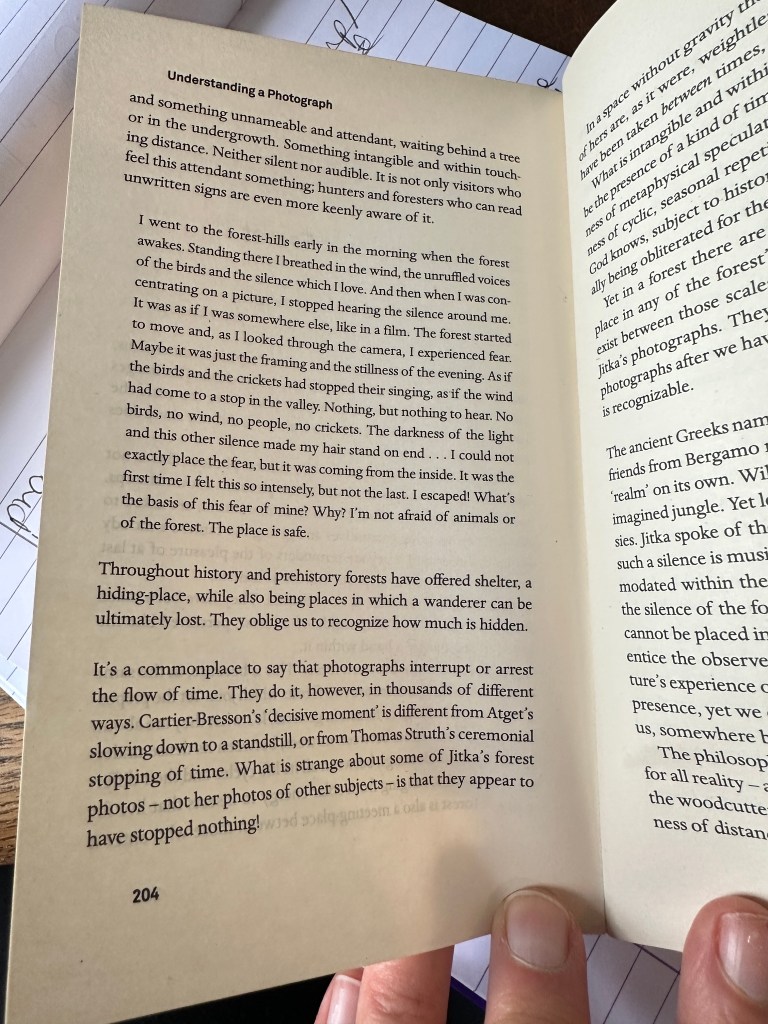
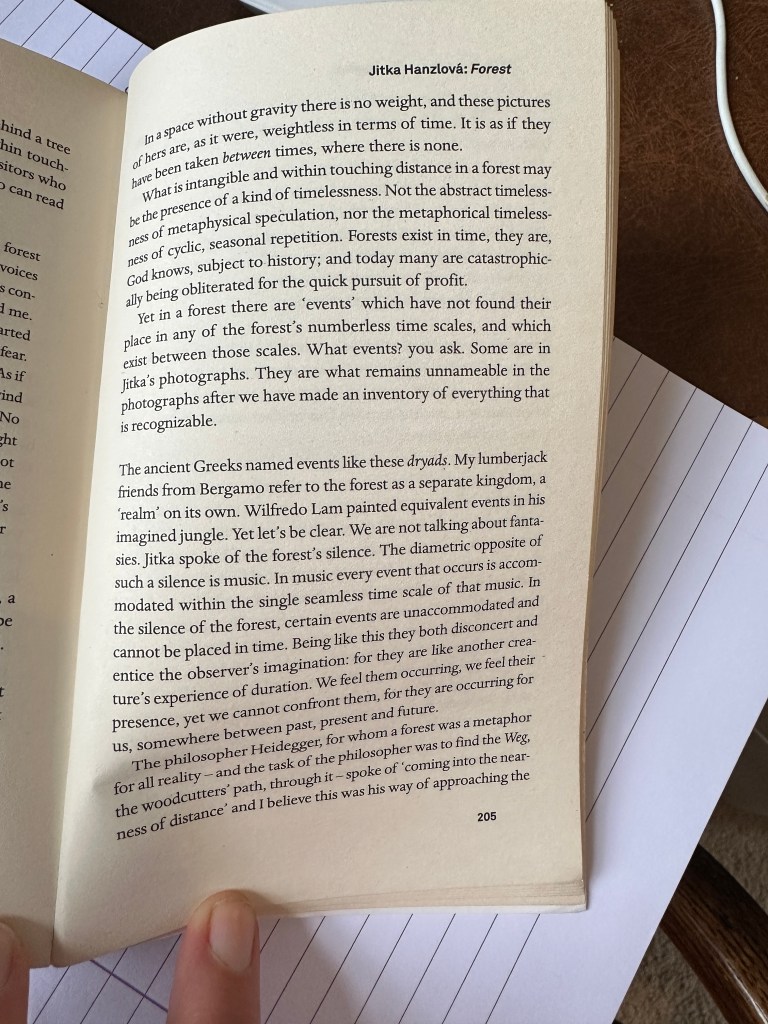
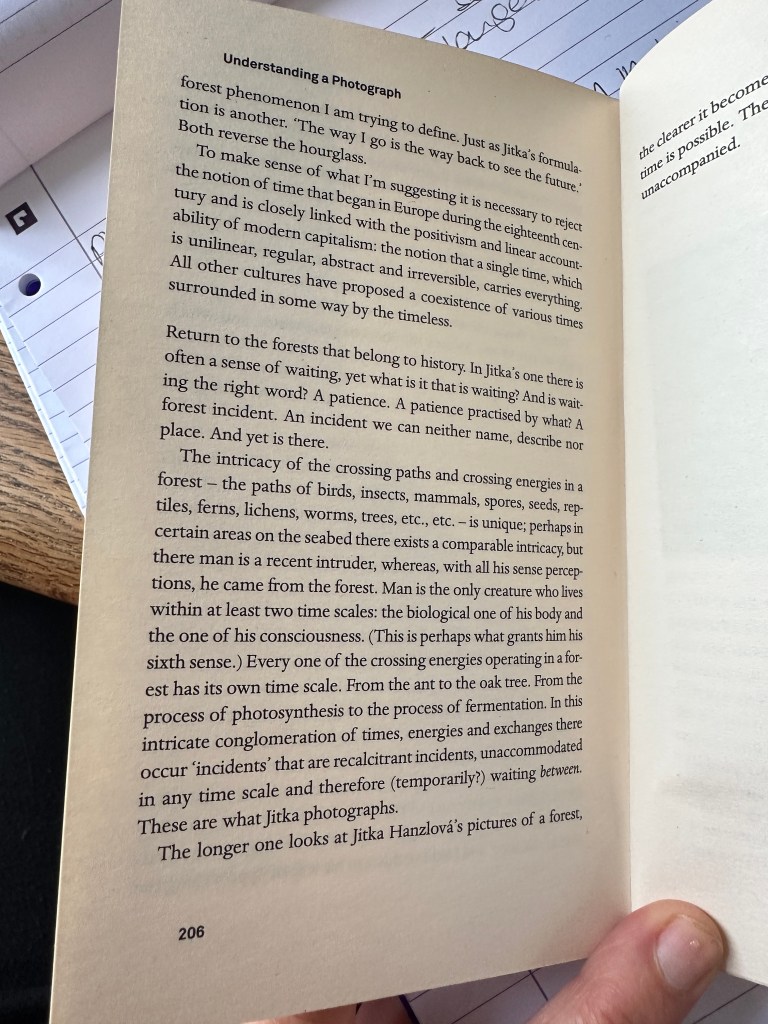
Reading in John Bergers Understanding a Photograph book, I came across his discussion about Jitka Hanzlova’s photography of a Forest. His analysis of this work expanded my thinking about my own landscape subjects. I realise I, like most of us, am often so conditioned to think & behave in a certain way, because of cultural norms including the modern notion of time. The human relationship with time has existed since before the written word, with cultures using measurements derived from astrological phenomena (The Conversation) However, Berger describes how time today is linked to positivism and linear accountability of capitalism and that to understand the ‘forest phenomenon’ it is necessary to reject this notion of time. As the former approach is more circular, it seems more apt to adopt this ‘measurement’ when viewing a landscape or, in this case, a forest. In his description of Hanzlovas work, Berger notes that she offers us a sense of waiting, although changes this for patience as the word ‘waiting’ adheres perhaps to linear time concepts, as I understand it. He says that when you consider how all of the elements (insects, spores, lichens, seeds, birds plants etc) of a forest create these crossing paths and energies and operate in their own individual timescale, there occurs an ‘intricate conglomeration of times, energies and exchanges…within this, there are recalcitrant incidents, unaccommodated in any timescale and therefore waiting in between (p206) which is what Hanzlova photographs. It goes some way to explaining my own response to a forest environment, in that there is a sense of something beyond the obvious material in front and surrounding me and perhaps that is the ‘patient space’ in between.
These same ideas could be applied to broader landscapes, such as large vistas, narrow pathways, lakes, rivers etc. It is an explanation for the senses experienced in these places and that perhaps there is some relief in removing oneself from the ‘prison of modern time’ (p207) This also reminds me of how Monet encouraged us to perceive landscapes differently by seeing texture, colour and shape, over the literal description of the landscape, thus being more intuitive.


When I am among the trees,
especially the willows and the honey locust,
equally the beech, the oaks and the pines,
they give off such hints of gladness.
I would almost say that they save me, and daily.
I am so distant from the hope of myself,
in which I have goodness, and discernment,
and never hurry through the world
but walk slowly, and bow often.
Around me the trees stir in their leaves
and call out, “Stay awhile.”
The light flows from their branches.
And they call again, “It’s simple,” they say,
“and you too have come
into the world to do this, to go easy, to be filled
with light, and to shine.”
Mary Oliver ‘Among The Trees’
 Lucinda Taylor