
Having broadly tried cyanotype and anthoypes previously, I have researched several alternative process practitioners, to see how to broaden my knowledge and understanding. I’ve found lots of online resources as well as books, there are plenty of creatives trying many different techniques, including sustainable practices alongside the more harsh, heavily chemical based processes. There is quite an overwhelming choice of ideas and it seems that almost anything goes, when it comes to experimentation. I have decided that I will try and refine some of the skills I’ve aleady learned, for the sake of ensuring I don’t disappear down a rabbit hole which will likely cost me dearly in time and resources!
This is the page where I will be trying to refine my skills with this process and share my failures and successes.
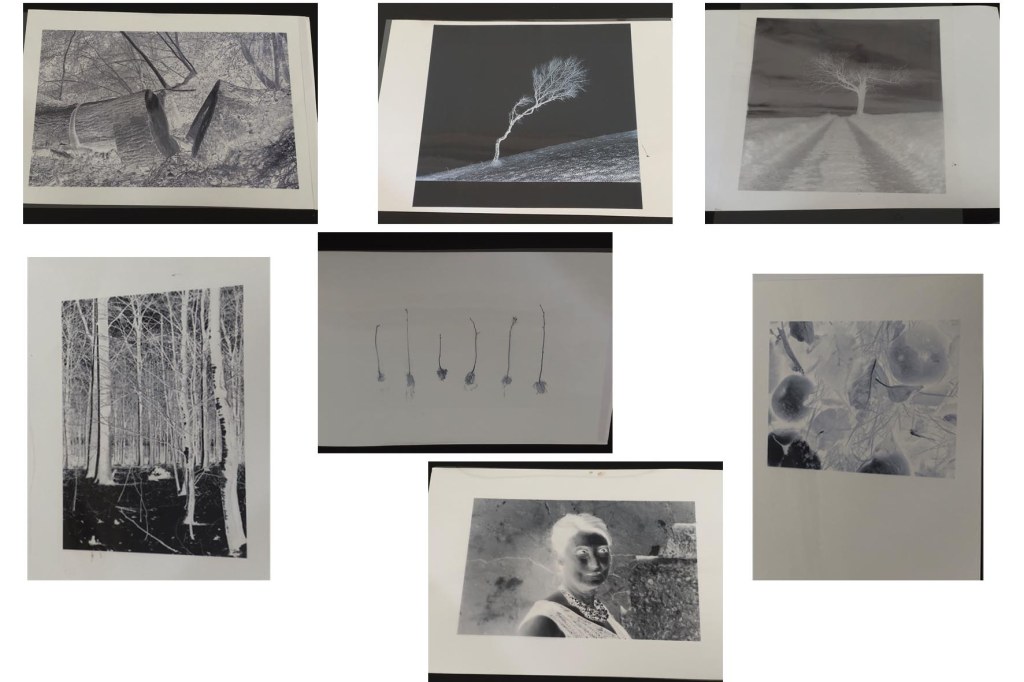
Initially, with cyanotype, gum bichromate & salt printing in mind, I tried a few images that I had to hand, by printing digital negatives onto a standard inkjet acetate. I then used this for a few experiments but realised quite quickly that the ink wasn’t dense or contrasting enough (see images below) To improve this I would need to obtain higher quality acetate and create a preset on photoshop for printing. I would also need to look at images with stronger contrast, as these would be better suited to the processes I am looking at.
Acetates on standard inkjet in black & white:
I used the resource ‘The Experimental Darkroom’ by Christina Z. Anderson to set up my photoshop preset:
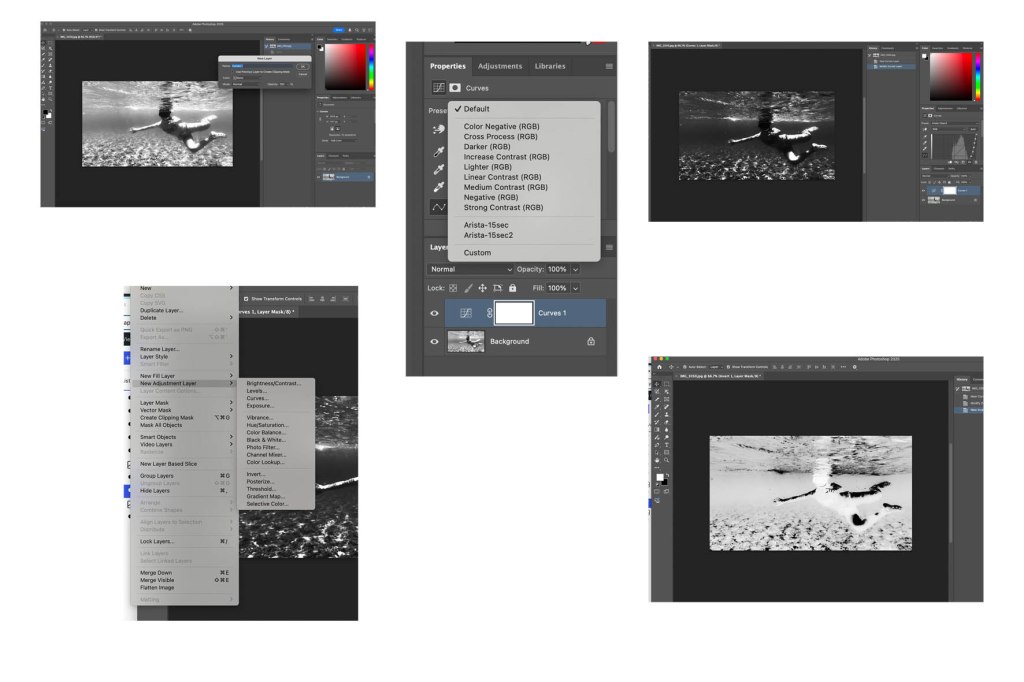
I also invested in Fotospeed inkjet digital contact film, which would allow the ink to better adhere to the acetate.
Another issue I came up against was the type of paper used. I did find that using basic cartridge paper wasn’t sufficient to keep the solution on the page and so during the wash process, I found it faded to almost nothing. To remedy this, again I chose to invest in something more reliable, having researched in Christina Z. Andersons book. I bought Hahneműhle Platinum Rag 300gsm in natural white. It is acid free which enables it to have good clearing properties.
I also tried using a Khadi paper which I’ve had for some time. It has a rough, uneven texture that I particularly love. It has torn uneven edges and lends itself well to a slow process. Concerns are whether it will be a strong enough substrate to stand the wash process and whether it is too absorbent, which may have the opposite effect of the cartridge paper by making the chemicals cling and not wash out..
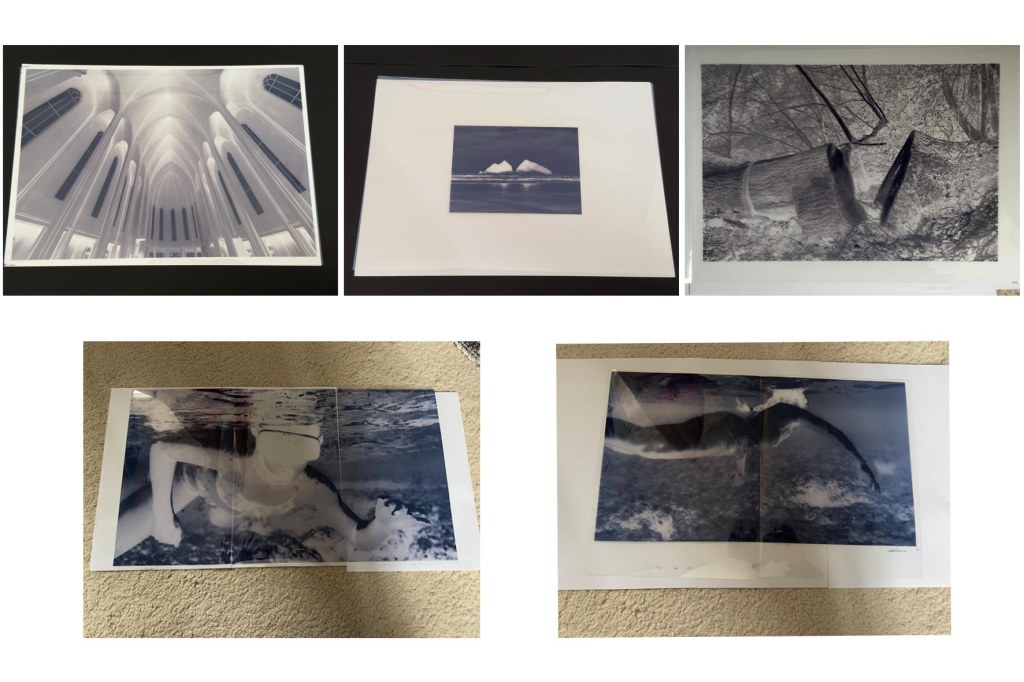
Acetates on Fotospeed, using ‘correct’ curves:
 Lucinda Taylor